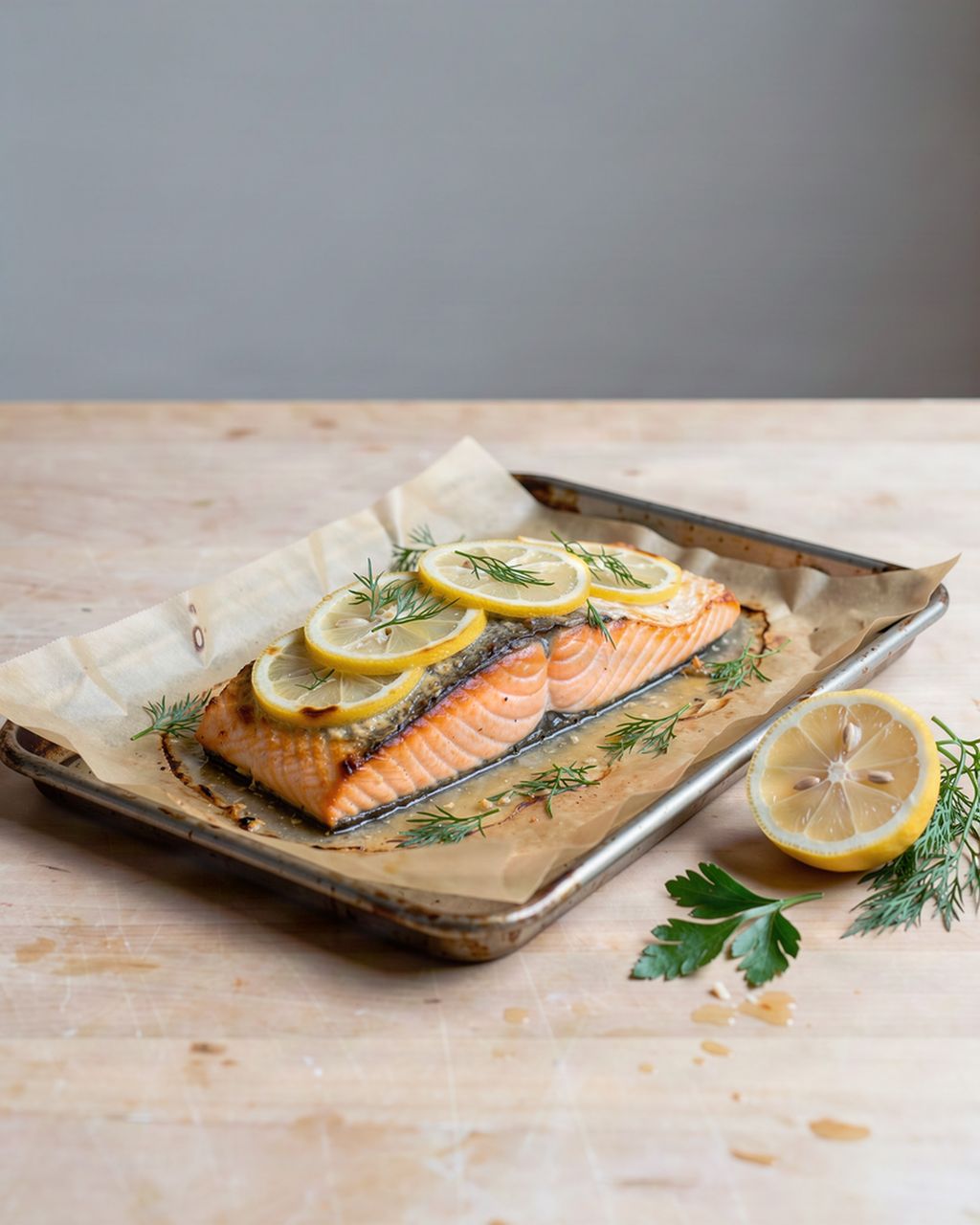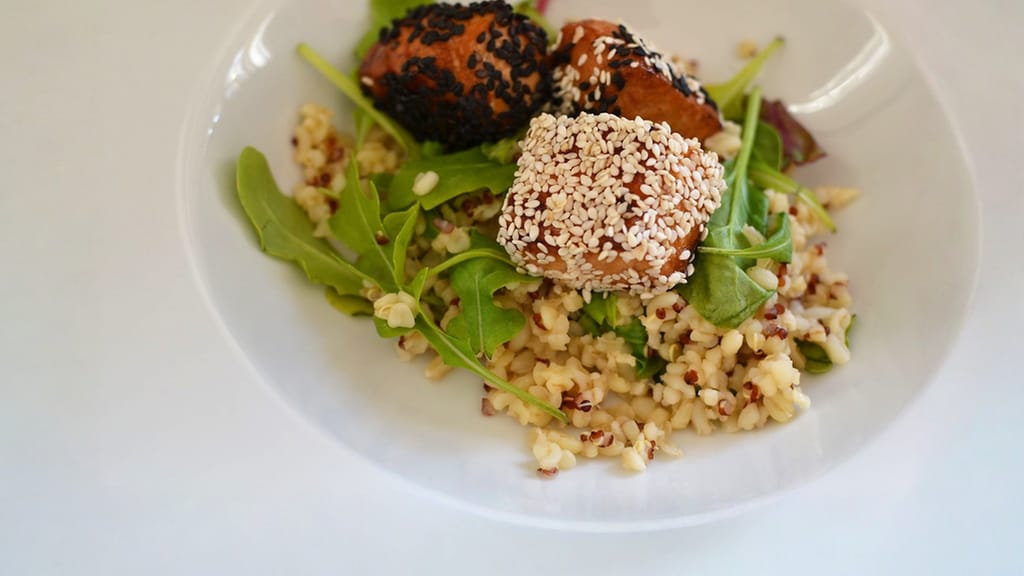
Amazing sesame-crusted salmon
Salmon in the Oven or Pan: What Temperature and How Long So It Doesn't Dry Out
Updated Nov 17, 2026
Salmon in the oven takes roughly 10 minutes per 2.5 cm (1 inch) of thickness at the thickest point of the fillet. This rule ("10 minutes per inch") was published by Canada's fisheries department and works for the oven, skillet, foil packet and poaching alike. Fishmongers who use the rule (e.g., Monahan's Seafood Market) recommend roasting fillets at 200°C (400°F). Salmon is done when the center reaches 63°C (145°F), the official safe temperature for fish according to the US USDA/FSIS and the FDA. The most common mistake is cooking it too long, not too briefly. Together we'll go through oven temperature and time, foil, the skillet, poaching, how to tell when it's done, and why it dries out.
Bake a salmon fillet at 200°C (400°F) for about 10 minutes per 2.5 cm (1 inch) of thickness. You go by thickness at the thickest point, not by weight. That's the whole Canadian rule ("10 minutes per inch"), published by Canada's fisheries department. The 200°C temperature for fillets is recommended by fishmongers who use the rule (e.g., the US Monahan's Seafood Market).
In practice, following this rule:
thin fillet or tail end, about 1.5 cm: roughly 6 minutes
average fillet, about 2.5 cm: roughly 10 minutes
thick center of the back, about 3.5–4 cm: roughly 14–16 minutes
Treat this as a guide for when to start checking, not an exact time. Every oven heats a little differently, and a fillet straight from the fridge needs longer than one that has sat on the counter for a while. What decides it in the end is the internal temperature (see below).
How to prepare it:
Pat the fillet dry with a paper towel. A wet surface steams instead of browning.
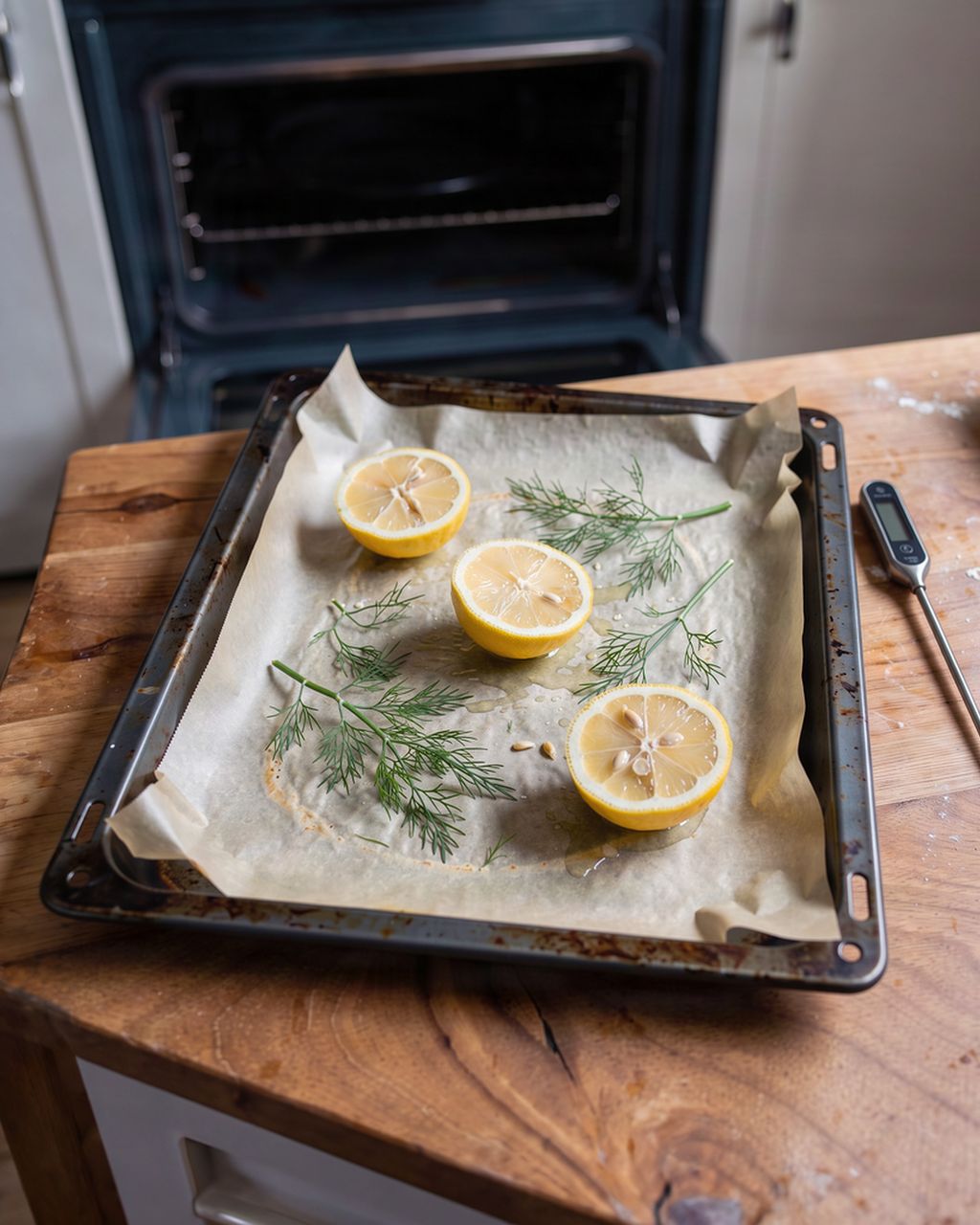
Salt it, rub with a little oil and place it skin side down on a baking sheet lined with parchment paper. The skin protects the underside from direct heat.
Bake in the middle of a preheated oven. Insert the thermometer from the side into the thickest part.
If you have fillets of different thicknesses on one pan, take the thin ones out earlier. A whole side of salmon (a whole fillet from one side of the fish) cooks more evenly if you tuck the thin tail end under, so the thickness is roughly the same throughout.
Seasonal baking plans, tested recipes and kitchen tricks that save you time. Unsubscribe in one click.
Bake salmon in foil at 200°C (400°F) too, and work out the time the same way: 10 minutes per 2.5 cm (1 inch) of fillet thickness. The Canadian rule also covers steamed fish, and that's exactly what happens in a sealed packet: the salmon doesn't roast, it steams in its own juices and whatever you add (a lemon slice, a splash of wine, butter, herbs).
What's different in foil:
It won't brown. Don't expect a crisp crust. The result is tender, juicy and pale.
You can't see inside. At the end, open one corner and check the temperature with a thermometer. Then leave the packet closed for a little while so the fish can finish cooking in the steam.
Vegetables must be thin. Zucchini, leek or fennel sliced thinly cook in the same time as the fish. Diced potatoes or carrots don't, so parboil them or roast them separately.
Seal the edges tightly so the steam can't escape. Instead of aluminum foil, you can also fold the packet from parchment paper.
Cook salmon in a skillet skin side down over medium-high heat for about three quarters of the time, then finish it briefly on the other side. The total time is again around 10 minutes per 2.5 cm (1 inch) of thickness. The skin acts as insulation: the flesh heats slowly from below while the skin crisps up.
Dry the skin thoroughly with a paper towel and salt it just before cooking. Damp skin sticks to the pan and won't crisp.
Heat the skillet with a thin layer of oil until the oil shimmers and ripples slightly. Skin sticks to a cold pan.
Lay the fillet skin side down and press it with a spatula for the first few seconds. The skin contracts in the heat and the fillet curls. Pressing it down keeps the whole skin in contact with the pan.
Don't move it. The skin releases by itself when it's cooked through. While it's still sticking, it isn't done.
Watch the sides of the fillet: a pale, opaque color climbs up from the pan. When it reaches about three quarters of the way up, flip the fillet and finish it briefly on the other side.
For skinless fillets, cook a shorter time on each side and watch them more closely, because nothing protects the underside. At the end you can add a knob of butter to the pan and spoon it over the fish.
You "boil" salmon by poaching it: submerge it in liquid at roughly 70–80°C (160–175°F) that barely trembles and isn't boiling, and let it cook, again about 10 minutes per 2.5 cm (1 inch) of thickness. Boiling water would dry out the outer layer before the center heats through. Gentle heat is the whole secret.
In a pot: salted water or broth with onion, bay leaf, peppercorns and a slice of lemon. Bring to a boil, turn the heat down so the surface only lightly quivers (70–80°C/160–175°F), and add the fillet.
In a skillet: a deep skillet with a lid, with enough liquid to cover the fillet at least halfway. Cover so steam finishes the top.
What to use: broth, milk, white wine diluted with water, coconut milk with curry. The fish absorbs the flavor of the liquid.
Poached salmon is the juiciest and most delicate of all the methods. It suits salads and pasta, or serve it cold with mayonnaise and dill. Lift it out with a slotted spatula, as it's fragile.
Salmon is done when the thickest part reaches 63°C (145°F) inside. That's the safe temperature for fish according to USDA/FSIS and the FDA. The only reliable way to know is an instant-read thermometer inserted from the side into the center of the fillet.
Without a thermometer, go by the flesh being opaque and flaking easily with a fork (FDA). You can also tell by color and texture:
color: the flesh turns from glossy, translucent orange to matte, opaque light pink
texture: when you press a fork into the thickest part, the flesh separates easily into flakes
Fish keeps cooking after you take it out of the oven or pan, because heat from the edges continues to travel inward. So take it out as soon as the center reaches the target temperature, and don't leave it in the oven for a few extra minutes "just to be safe".
If you come across salmon served "medium" (still slightly translucent in the middle), that's a culinary choice, not an official recommendation. It only makes sense with very fresh fish. In its 2024 opinion, EFSA stated that for commercially farmed Atlantic salmon there is so far no published evidence of infection with parasites transmissible to humans (including Anisakis), though data are still limited. That doesn't automatically apply to wild salmon or to fish whose origin you don't know.
Salmon dries out because it's cooked too long: the proteins in the muscle contract with heat and squeeze water out of the flesh. The longer the fish stays in the heat after reaching the target temperature, the more juice it loses. The white curds that appear on the surface are a protein (albumin) pushed out of the flesh. The more of it there is, the more overcooked the fish.
What helps:
Time by thickness, not by recipe. A thin fillet next to a thick one overcooks first.
A thermometer instead of guesswork. Take the fish out as soon as it reaches the target temperature.
Leave the skin on the fillet. The skin protects the underside and the fat beneath it keeps the flesh moist.
Fat or a coating. Oil, butter, an herb crust or a sesame coating slows the drying of the surface.
Avoid very lean, thin pieces for long cooking. They suit the skillet better.
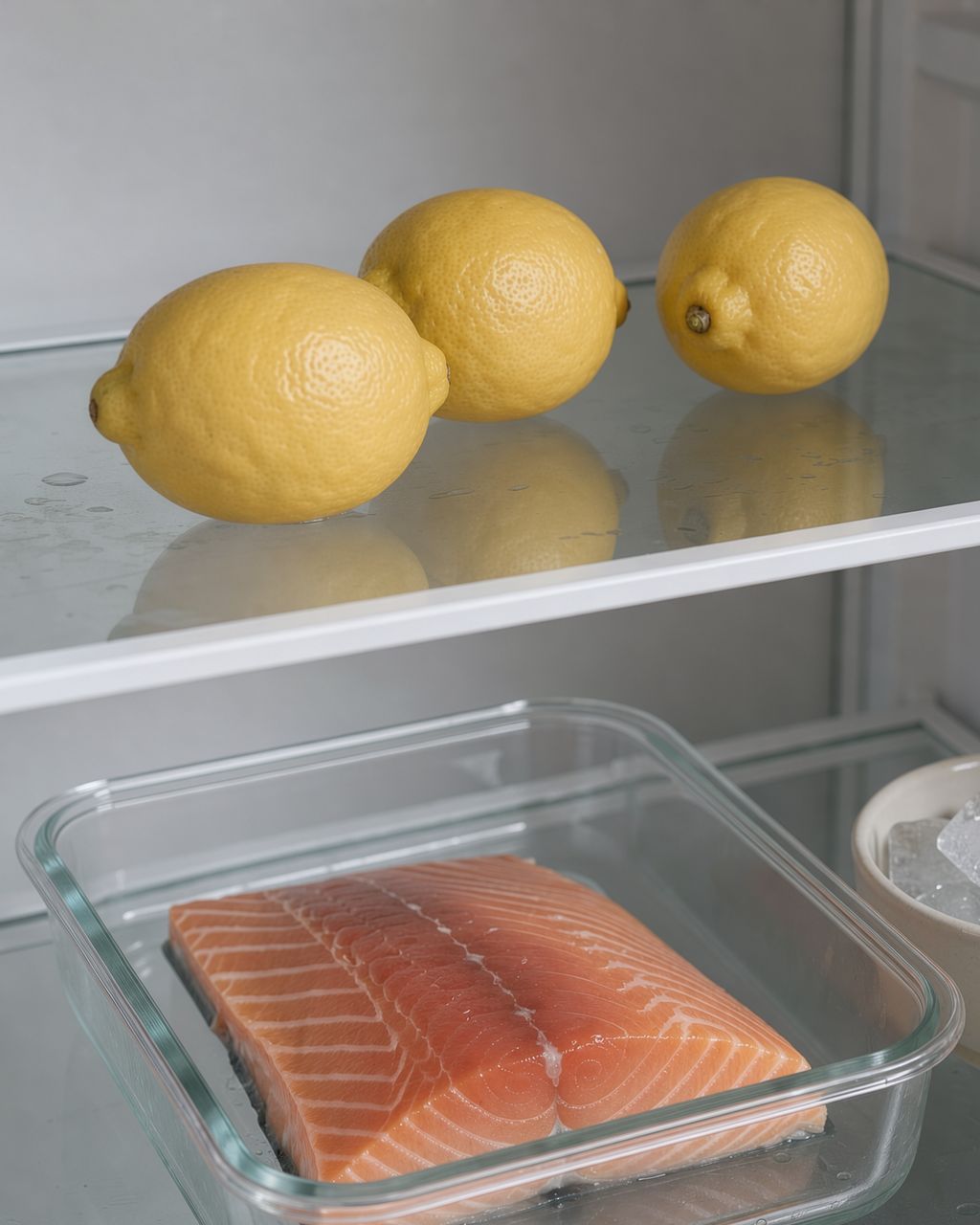
Raw salmon keeps 1–2 days in the fridge, cooked salmon 3–4 days (USDA/FSIS, storage chart on FoodSafety.gov).
Raw salmon, fridge (at or below 4°C/40°F): 1–2 days (USDA/FSIS). The FDA recommends freezing raw fish right away if you won't use it within 2 days of buying it.
Raw salmon, freezer (−18°C/0°F): 2–3 months for best quality (USDA/FSIS). Fatty fish like salmon turn rancid faster in the freezer than lean fish.
Cooked salmon, fridge: 3–4 days (USDA/FSIS).
Cooked salmon, freezer: 4–6 months for best quality (USDA/FSIS).
Room temperature: don't leave cooked salmon out for more than 2 hours, or more than 1 hour in heat above 32°C (90°F) (USDA/FSIS).
Thaw frozen salmon in the fridge overnight (FDA). If you're in a hurry, the FDA also allows thawing in the microwave on the "defrost" setting. Stop while the fish is still icy but pliable, and cook it right away.
Once you have temperature and timing down, try them out on a real dish. Sesame-crusted salmon shows how a coating protects the fillet from drying out. Smoky salmon with quick spinach is ready in a few minutes. For summer, try pulled grilled salmon with rice salad, and with poached or leftover baked salmon you can make quick summer pasta with salmon.
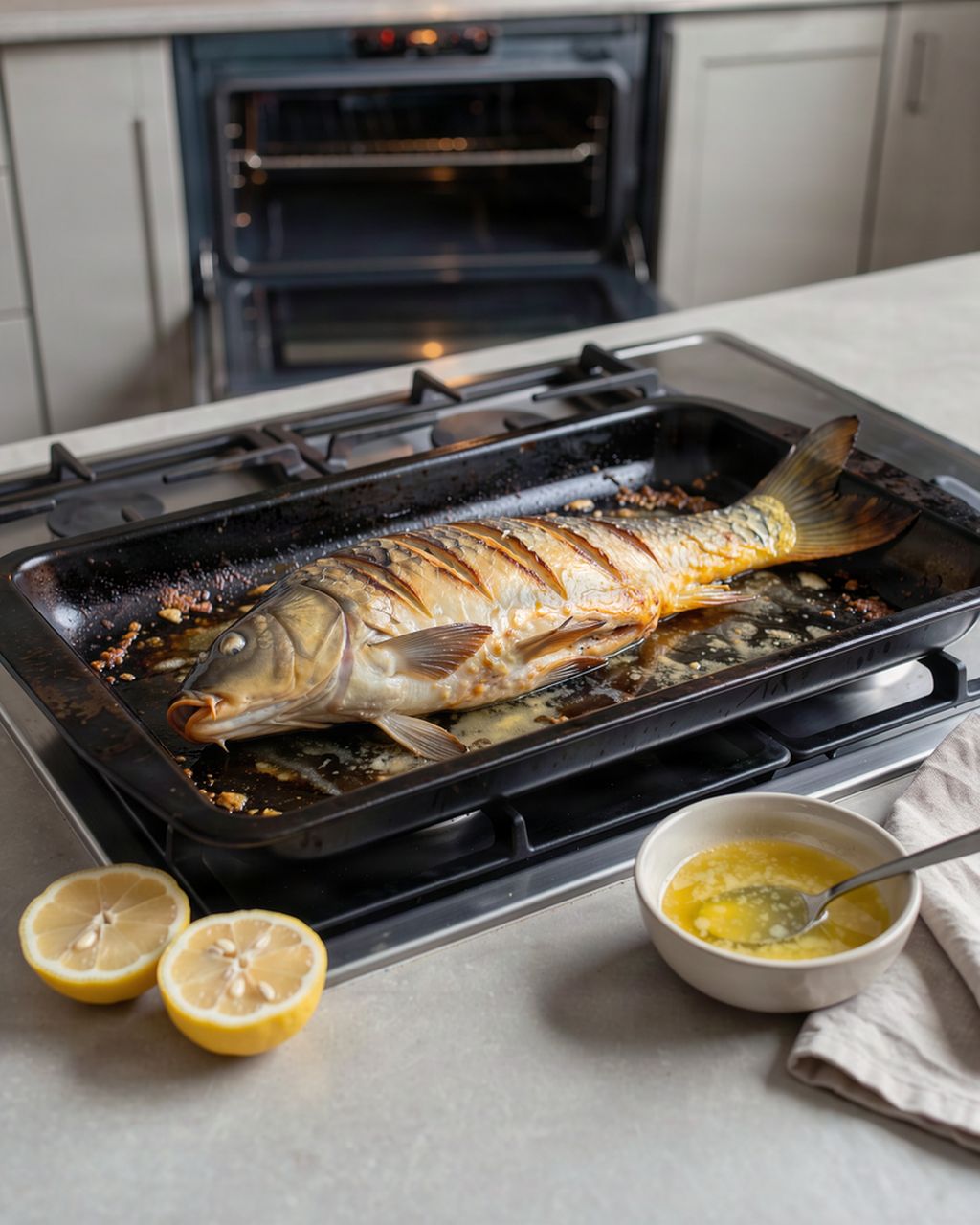
Thinking of salmon for a festive dinner? We compare it with other fish for Christmas Eve in the article what to serve instead of carp on Christmas Eve. And if you end up sticking with tradition, you'll find times for portions and a whole fish in the article how long to bake carp in the oven.
Amazing sesame-crusted salmon
Sesame-crusted salmon: crispy coating, juicy fillet
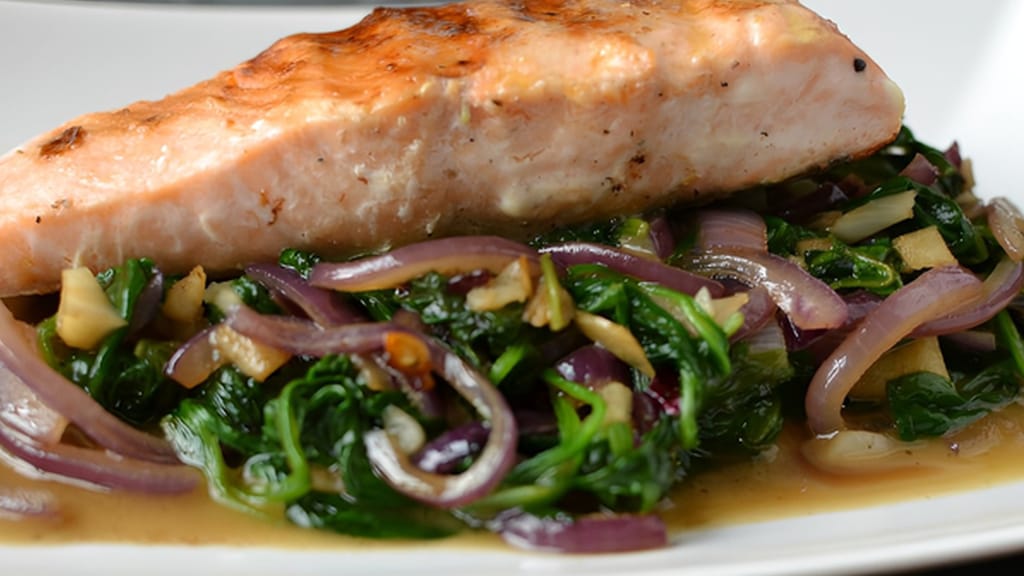
Smoky salmon with quick-wilted spinach
Smoky salmon with quick spinach
Yes, you can bake a frozen salmon fillet without thawing it, just allow roughly double the time. The Canadian rule for frozen fish gives 20 minutes per 2.5 cm (1 inch) of thickness instead of 10. Rinse off the icy glaze, pat the fillet dry and rub it with oil. Add the seasoning after a few minutes, once the surface has loosened up. Check that the center has reached 63°C (145°F) (USDA/FSIS) with a thermometer, because the center of frozen fish heats up the slowest.
Bake salmon skin side down. The skin shields the underside of the fillet from the heat of the pan, and the fat beneath it keeps the flesh moist, so the fillet dries out less. Once it's cooked, a spatula slides easily under the flesh and leaves the skin behind on the paper.
No, you can cook salmon straight from the fridge. Just expect it to need a little longer and check doneness with a thermometer (63°C/145°F in the center according to USDA/FSIS). If you do let it sit on the counter, keep it brief. USDA/FSIS advises not leaving raw meat and fish at room temperature for more than 2 hours.
In a convection (fan) oven, bake salmon at about 180°C (350°F), roughly 20°C lower than the 200°C you'd use for conventional baking. Circulating air cooks faster and dries the surface more, so start checking a few minutes earlier than the chart suggests. It's done at 63°C (145°F) at the thickest point (USDA/FSIS).
Reheat cooked salmon gently and covered: put it in a baking dish with a spoonful of water or broth, cover with aluminum foil and leave it in a 150°C (300°F) oven until warmed through. USDA/FSIS recommends reheating leftovers to 74°C (165°F) in the center. Avoid high heat and the microwave at full power, since fish dries out fastest in those. Chilled salmon from the fridge can also be eaten cold, for example in a salad or on pasta.
One recipe worth heating the oven for, one tip, and one deal from the shop. Nothing else.