How to Cook Pasta: How Much Water and Salt, How Long, and How to Keep It From Sticking
What to Cook with Pasta: Meatless, with Chicken or Ground Meat, with Leftover Pasta and Quick Ideas
Updated Nov 18, 2026
What can you cook with pasta? Almost anything: aglio e olio or pesto in ten minutes, tomato sauce in half an hour, a proper dinner with chicken or ground meat, and pasta bakes or salads from the leftovers. Here you'll find ideas with and without meat, quick dishes ready in 15 minutes, what to do with leftover pasta, how much to cook per person and which sauce suits which shape. Every sauce comes with the principle behind it, so you'll be able to make it without a recipe.
Long, thin pasta suits thin, oil-based sauces, while thick, chunky sauces call for sturdy, ridged or hollow shapes. The thicker the sauce, the bigger and more textured the shape should be, so the sauce has something to cling to.
Long and thin (spaghetti, linguine, spaghettini): aglio e olio, carbonara, light tomato sauces, seafood.
Wide ribbons (tagliatelle, pappardelle, fettuccine): cream sauces and thick meat ragù, which sticks well to a flat surface.
Tubes (penne, rigatoni, maccheroni): thick tomato sauces, sauces with chunks of vegetables and meat, pasta bakes.
Spirals and bow ties (fusilli, farfalle): pesto and pasta salads, since the twists catch both sauce and small pieces.
Small shapes (elbows, shells, ditalini): soups, mac and cheese, kids' meals.
Don't have the right shape at home? No problem. The rule helps you pick the best option from what's in your pantry, but nobody is going to arrest you for penne with pesto.
We send seasonal cooking and baking plans and recipes made from everyday ingredients. Unsubscribe in one click.
Without meat, you can make four basic sauces: aglio e olio (oil, garlic, chili), creamy cheese sauce, pesto and tomato sauce. Almost everything else can be derived from them. Each works on a different principle, and once you understand it, you can vary the sauce endlessly. For all four, you'll want a cup of the water the pasta cooked in. It contains starch, which thickens the sauce and helps it cling to the pasta.
Aglio e olio is spaghetti with garlic sautéed in olive oil, chili and parsley. It's ready in the time it takes to cook the pasta.
Per person, allow 2–3 cloves of garlic cut into slices and 3–4 tablespoons of olive oil.
Put the garlic into cold oil and heat slowly over low heat. As soon as it starts to turn light golden, add the chili and turn the heat down. Brown garlic is bitter and can't be rescued.
Take the pasta out a minute before the time on the package and move it straight into the pan with 50–100 ml of pasta water.
Stir vigorously and toss over the heat. The starchy water and oil combine into a lightly creamy emulsion that coats every strand. Without this step, the pasta ends up both greasy and dry.
Add salt, then chopped parsley and grated cheese if you like.
Variations: a handful of halved cherry tomatoes, anchovies melted into the oil, lemon zest, or a few handfuls of baby spinach at the end.
A cream sauce for pasta is whipping cream (30–33%) reduced in a pan with cheese and seasoning. Rich cream doesn't curdle when cooked. You don't need flour to thicken the sauce; reducing is enough.
For 2 servings, use about 200 ml of cream. Let it bubble for 3–5 minutes, until it thickens enough to coat a spoon.
Add grated hard cheese (Parmesan, grana padano, pecorino) off the heat and a handful at a time. In a boiling sauce, the cheese clumps.
Add the pasta and a few spoonfuls of pasta water so the sauce stays glossy and doesn't set on the plate.
Garlic sautéed in butter at the start, nutmeg, lemon zest or plenty of freshly ground pepper lift the flavor.
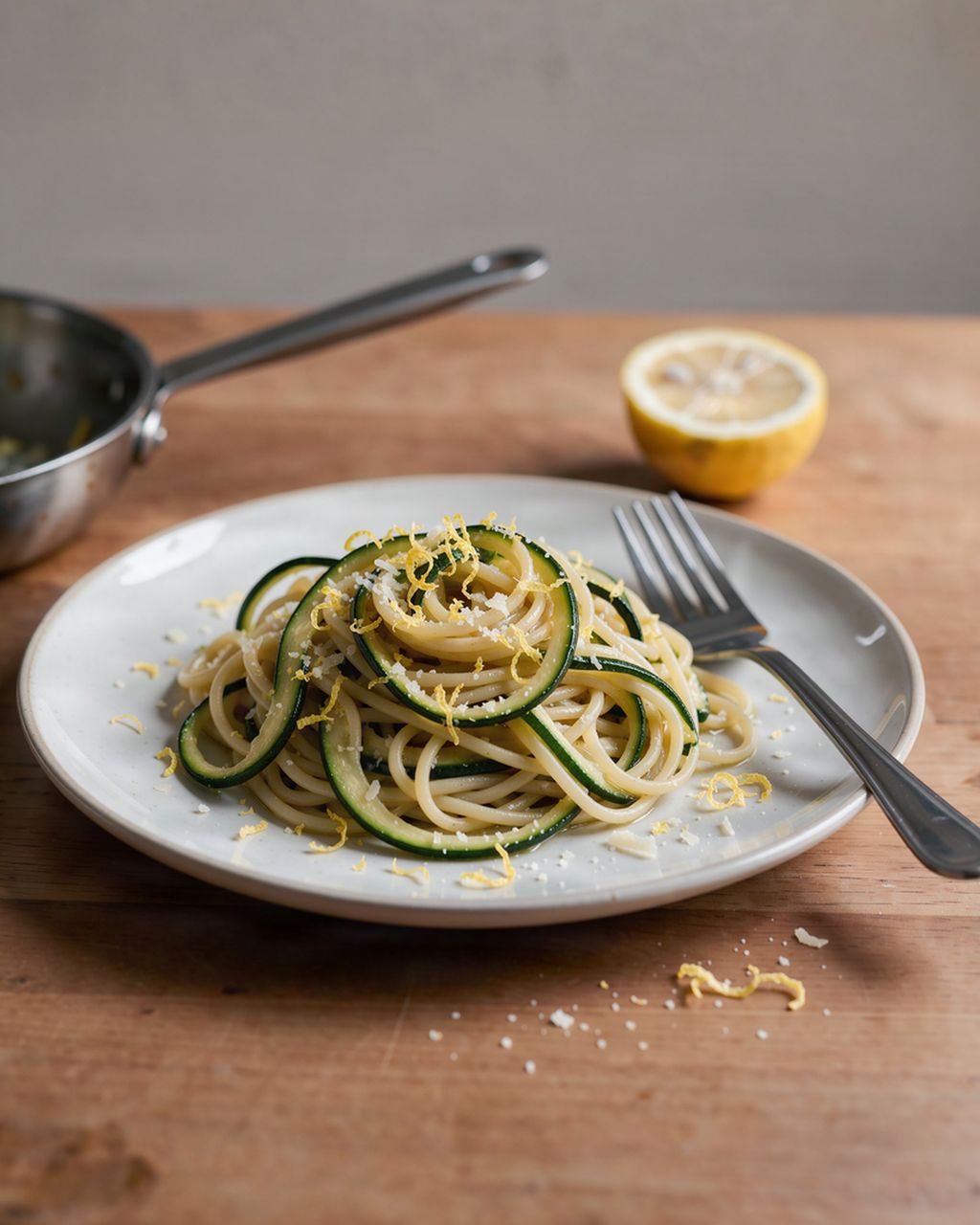
Where to take it next: mushrooms sautéed until golden, spinach, peas and ham, or the cheesy classic in baked form, mac and cheese, the American pasta with cheese. You can also make it without cream and with a stronger cheese flavor. See how in pasta with zucchini and lemon.
Pesto is a cold sauce of herbs, oil, nuts and cheese. Never cook it. Heat turns the basil brown and the cheese separates from the oil.
Put the pesto in a bowl, loosen it with 2–3 tablespoons of hot pasta water, and only then stir in the drained pasta. The sauce spreads evenly and won't be greasy.
1.5–2 tablespoons of pesto per serving is enough. It's potent, so you don't need more.
The classic Genoese combination: cook diced potatoes and green beans in the same pot as the pasta for pesto pasta.
In spring, make wild garlic pesto. In autumn the same method works with parsley and walnuts, and in winter with sun-dried tomatoes.
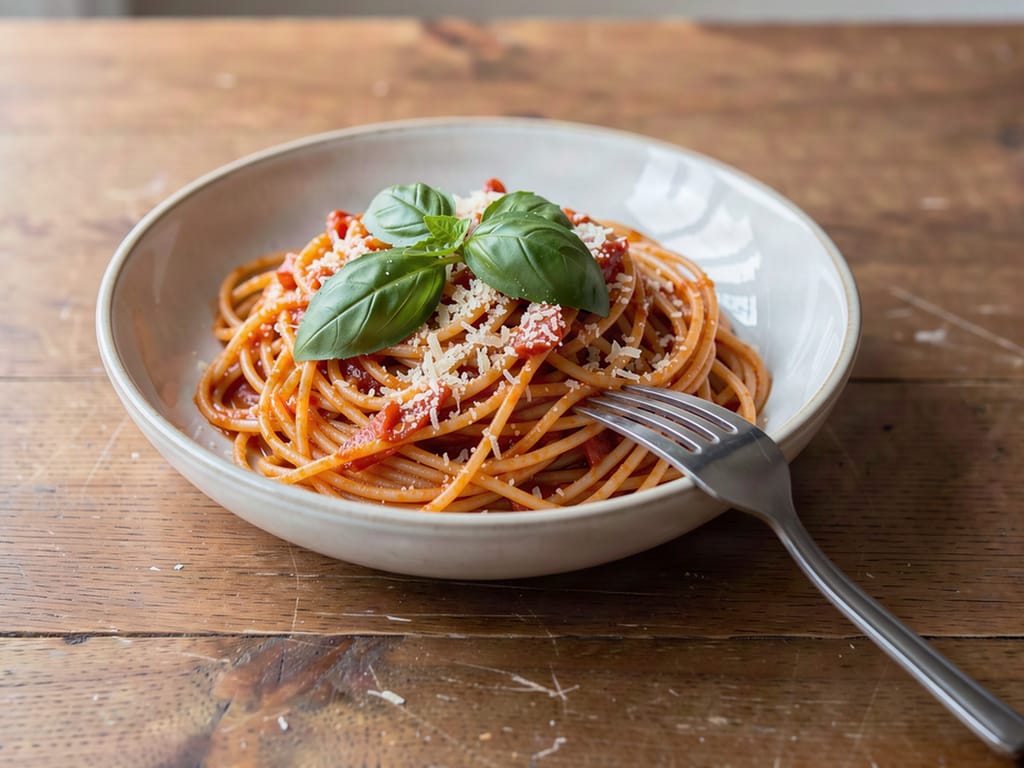
A basic tomato sauce for pasta is canned peeled tomatoes, briefly simmered with oil or butter, garlic and salt. It's ready in 15–20 minutes and is often better than a sauce made from fresh tomatoes out of season.
Briefly sauté garlic or finely chopped onion in oil.
Add 400 g of peeled tomatoes (for 2–3 servings), crush them with a wooden spoon and let them bubble for 15–20 minutes, until the sauce thickens and loses its raw acidity.
Add salt. If it's too sour, a piece of butter at the end helps; sugar isn't needed.
Let the pasta finish cooking in the sauce for 1–2 minutes and add a little pasta water. Only then does the sauce come together with the pasta instead of sitting on top in a heap.
The Neapolitan version with fresh cherry tomatoes, basil and pecorino is spaghetti allo scarpariello. Olives, capers and chili also suit tomato sauce, as does fish, as in pasta with tilapia, olives and tomatoes. Baked salmon broken into pieces works too. You'll find how to cook it so it doesn't dry out in the article salmon in the oven and in the pan.
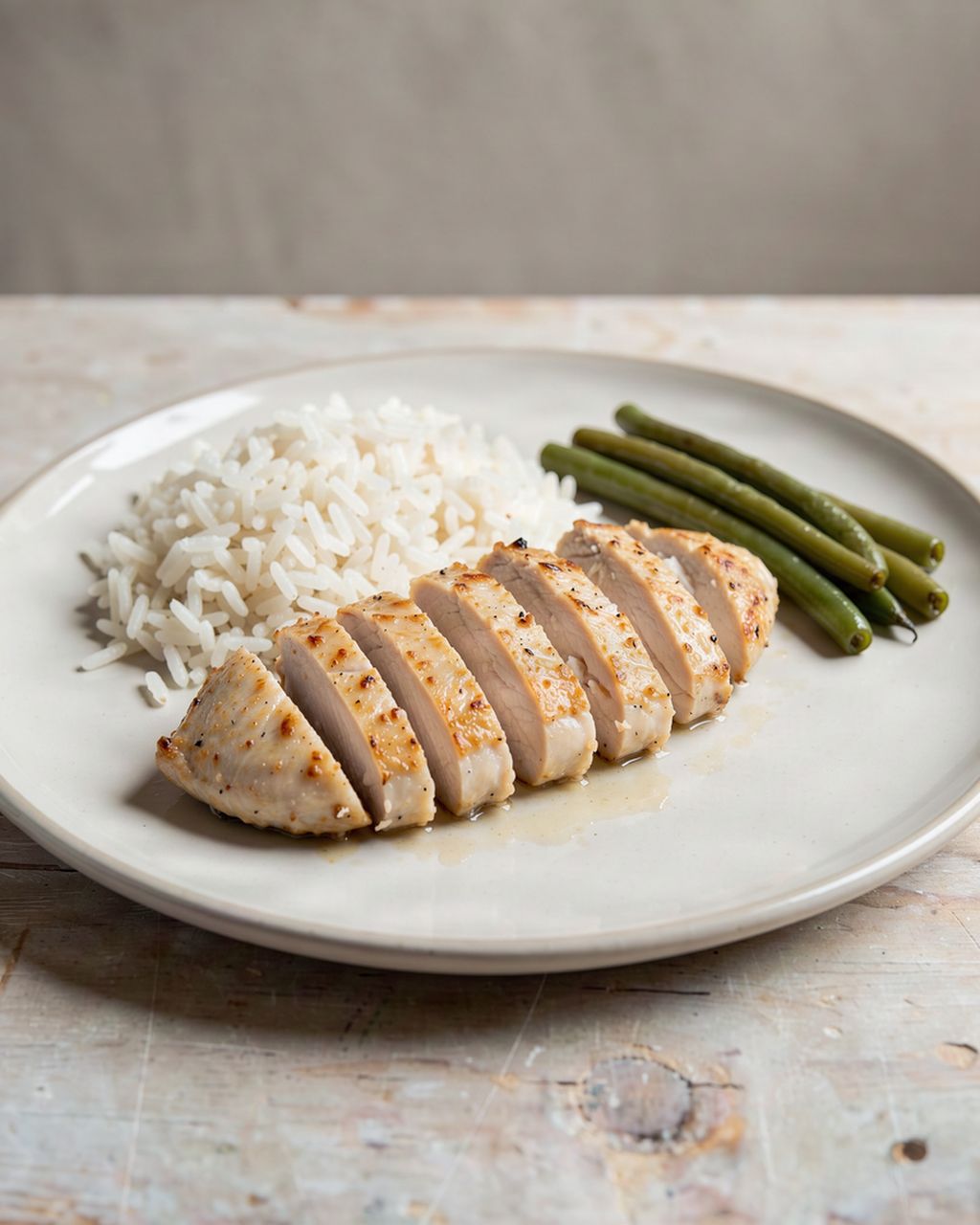
Pasta with chicken turns out best when you brown the chicken separately until golden, take it out and return it only to the finished sauce. The meat doesn't dry out, and the pan keeps the browned bits you build the sauce on.
Chicken with cream and mushrooms or spinach: brown chicken strips, remove them, sauté mushrooms in the pan drippings, add cream, reduce and return the meat. Good with tagliatelle and penne.
Chicken with pumpkin: a creamy sauce without cream, like pasta with pumpkin purée and chicken.
Chicken with tomatoes and basil: add seared chicken pieces to the tomato sauce from the previous section for the last 5 minutes.
Cold chicken in a salad: pasta salad with chicken strips, tomatoes and arugula.
Cut chicken breast into strips of even thickness and sear them in a hot pan for only 4–6 minutes, after which they start to dry out. Thigh meat tolerates longer cooking and stays juicy. You'll find more tips in the article what to cook with chicken breast. Leftover roast or boiled chicken pulled off the bone is also great in pasta; ideas are in the article boiled chicken: how to cook, store and use it.
The best-known pasta dish with ground meat is bolognese sauce (ragù alla bolognese): ground meat slowly simmered with a vegetable base, tomatoes and wine. Here is a tried and tested recipe: sugo bolognese, the beloved bolognese sauce.
Brown the meat in small batches in a very hot pan and leave it alone for a while so it sears. If you dump it all into the pan at once, it releases liquid and just stews to gray. Without browning, the sauce lacks depth.
Time matters. Bolognese reaches full flavor after 1.5–3 hours of slow simmering. A quick 30-minute version tastes good, but different.
Which pasta: tagliatelle and rigatoni hold thick ragù better than spaghetti.
For the freezer: a double batch of ragù is also a ready base for lasagna or pasta bakes.
More ideas with ground meat, including with potatoes and rice, are in the article what to cook with ground meat.
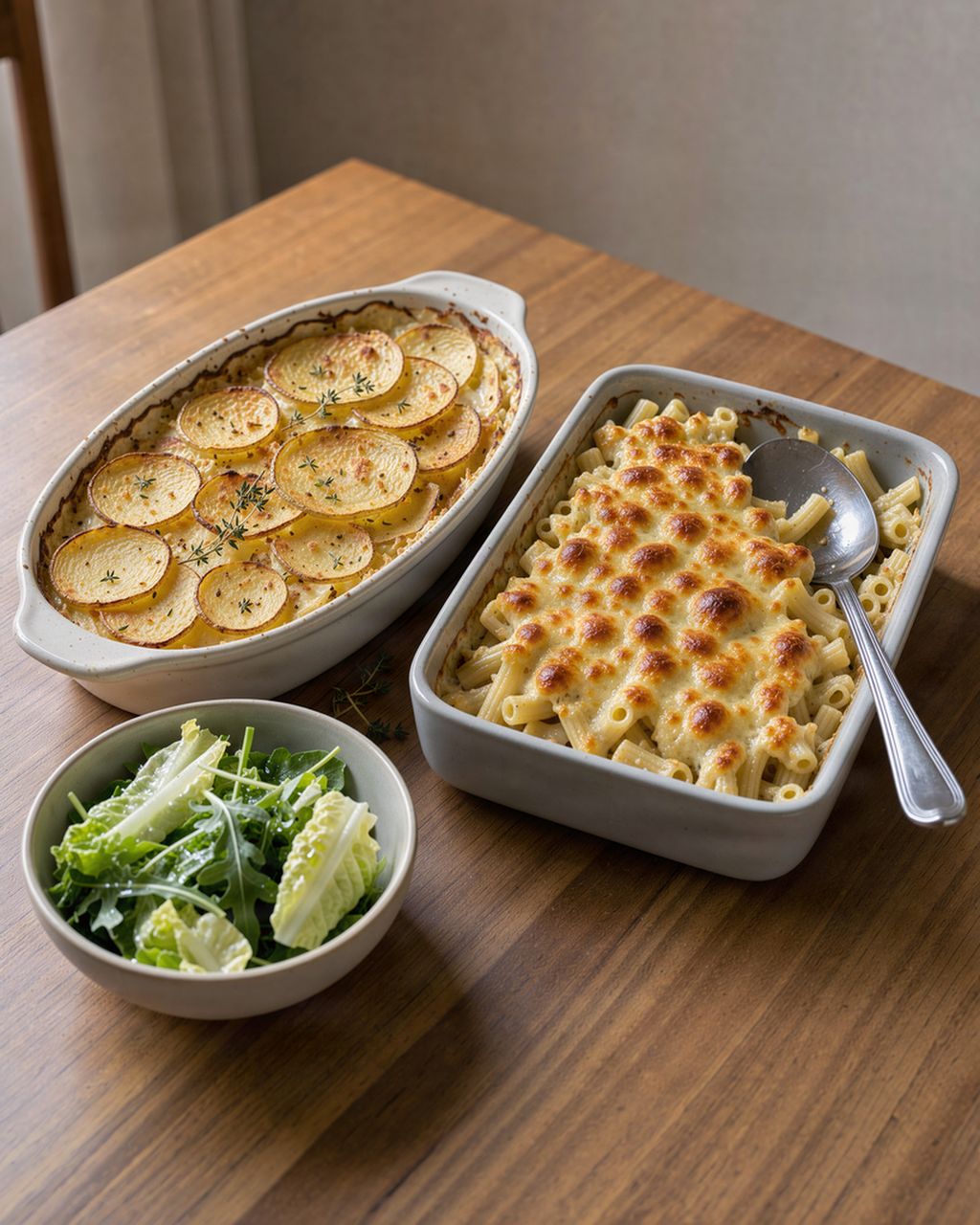
A pasta bake is pre-cooked pasta mixed with sauce, sprinkled with cheese and baked in the oven until golden, usually 20–25 minutes at 200°C (400°F). It's the best way to turn one sauce into a second meal.
Cook the pasta 2–3 minutes less than the package says. In the oven it keeps absorbing sauce and finishes cooking. If you cook it fully, it comes out mushy.
Use more sauce than seems necessary and loosen it a little. The pasta soaks it up in the oven, and otherwise the result would be dry.
A mix of cheeses on top: mozzarella melts, while hard cheese or breadcrumbs make a crisp crust.
Combinations that work: bolognese ragù and béchamel, ham with eggs and cream (the classic Czech šunkofleky, ham-and-noodle bake), tomato sauce with mozzarella, cheese sauce (mac and cheese).
The best-known pasta bake is lasagna, layered from sheets, ragù and béchamel. With elbows or penne and the same sauces, though, you get something similar faster and with less work.
Pasta salad works best with short, textured shapes (fusilli, farfalle, penne) cooked al dente, tossed with the dressing while still lukewarm. Warm pasta absorbs the dressing; cold pasta doesn't.
Rinse pasta for salad with cold water after cooking. This is the one situation where it pays off: you stop the cooking and wash off surface starch, so the pasta doesn't stick together. For hot dishes, don't rinse, because that starch is what holds the sauce on the pasta.
Make the dressing punchier than you'd want on a leafy salad. Pasta mutes flavor and absorbs more in the fridge. Before serving, taste the salad and add a spoonful of oil.
Mediterranean salad: tomatoes, cucumber, olives, feta and red onion with olive oil and oregano.
With chicken: pasta salad with chicken strips, tomatoes and arugula.
With pesto: fusilli, pesto, cherry tomatoes, mozzarella and pine nuts.
With tuna: canned tuna, corn, peas and a yogurt-mayonnaise dressing.
Add arugula and fresh herbs just before serving, as they wilt quickly in the dressing.
You can bake leftover cooked pasta, fry it in a pan, make it into a frittata with eggs, add it to soup or turn it into a salad. Cold pasta from the fridge is actually better for the pan than fresh, because it's firmer and crisps up better.
Pasta bake: mix it with leftover sauce, cream or béchamel, sprinkle with cheese and put it in the oven for 20 minutes (200°C/400°F).
Pasta frittata: for 200–250 g of cooked pasta, whisk 4 eggs, add grated cheese, salt and pepper, pour into a hot pan with oil and cook over low heat until the bottom turns golden and the top sets. A Neapolitan classic for using up leftovers.
Pan-fried: fry it in a little oil or butter until golden, then add an egg, ham, leftover vegetables or cheese. A quick noodle "smaženice" (Czech-style fry-up).
In soup: add small leftover pasta to hot broth only in the bowl, otherwise it soaks up the liquid and overcooks.
Salad: lukewarm or even cold with a punchy dressing (see the section above).
Reheat pasta already mixed with sauce in a pan with a spoonful of water under a lid until it's hot all the way through. In the microwave, cover it and add a drop of water. Without moisture it hardens, and dried-out edges won't soften again. Plain pasta without sauce only needs 30–60 seconds in a sieve dipped into boiling water.
In 15 minutes you can cook pasta whose sauce is made in the time the pasta cooks: aglio e olio, pesto, cacio e pepe, carbonara, pasta with zucchini or with cherry tomatoes. The trick is to put the water on first and prepare everything else while it heats.
Aglio e olio: oil, garlic, chili, parsley. The method is above.
Jarred pesto or homemade from the freezer: loosen with pasta water, done.
Cacio e pepe: just pecorino, freshly crushed pepper and pasta water. Add the cheese off the heat so it doesn't clump.
Carbonara: egg yolks, pecorino and guanciale or bacon. Tried and tested versions are linguine carbonara and spaghetti carbonara, the Italian classic.
Vegetable: quick pasta with zucchini and lemon.
With a little meat: quick pasta with chorizo and sun-dried tomatoes.
Neapolitan with tomatoes: spaghetti allo scarpariello.
Looking for a quick dinner beyond pasta? Check out the article what to cook for dinner.
Allow 80–100 g dry pasta per person as a main course and about 50–60 g as a side or for soup. Cooked pasta roughly doubles in weight: 100 g dry becomes about 200–250 g on the plate.
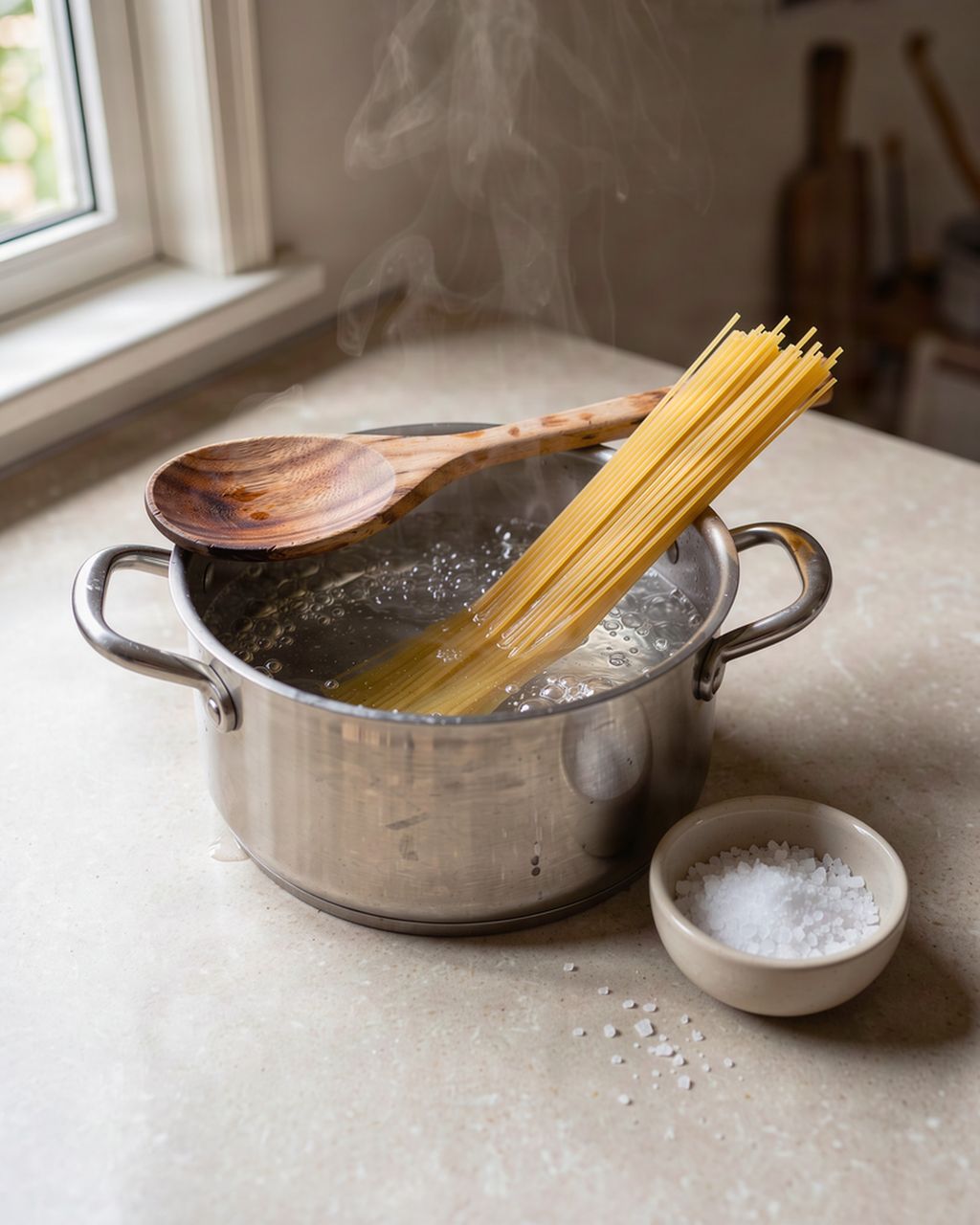
Water: roughly 1 liter per 100 g of pasta. Definitely no less than 3–4 liters for half a kilo. In a small amount of water, the temperature drops when you add the pasta and it sticks together.
Salt: about 10 g per liter of water, which is roughly 1.5 level teaspoons. The water should taste pleasantly salty like soup, not like the sea. Then you only need to adjust the seasoning of the sauce.
Oil doesn't belong in the water. It doesn't prevent sticking, it only makes the sauce cling worse to the pasta. Sticking is prevented by enough water and stirring in the first minute of cooking.
Cooking time: follow the package and taste a minute before the end. If the pasta will finish cooking in the sauce, take it out 1–2 minutes early.
A detailed step-by-step guide is in the article how to cook pasta. An overview of types and shapes is on the page pasta.
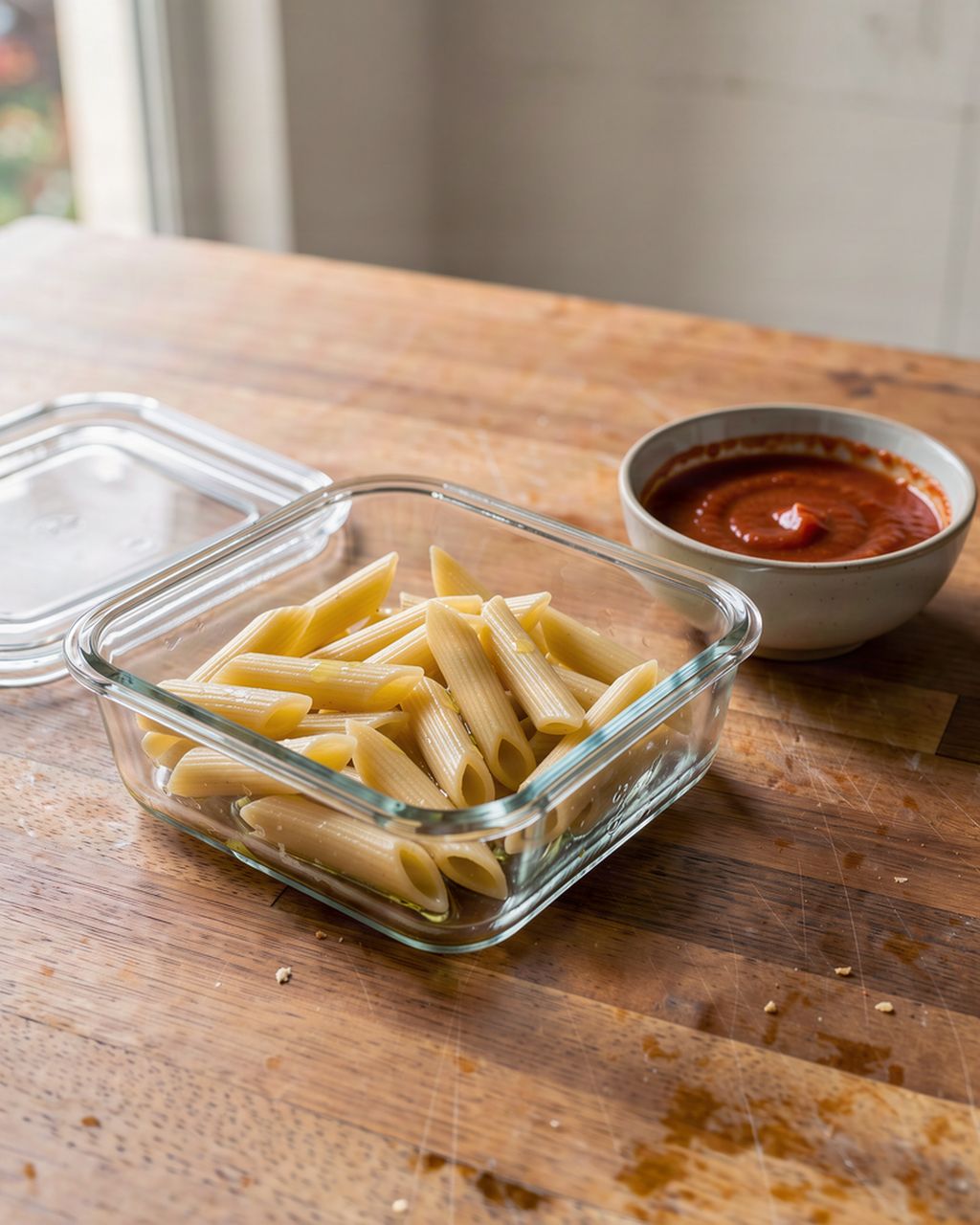
According to the USDA FoodKeeper database, cooked pasta keeps 3–5 days in the fridge in a sealed container. If it's with sauce, plan on 3–4 days. In the freezer it keeps its quality for 1–2 months.
Put it in the fridge as soon as possible, within 2 hours of cooking at the latest. Let it cool just a little, not all afternoon on the stove.
Toss plain pasta with a drop of oil so it doesn't stick into one block in the fridge.
Pasta cooked al dente and baked dishes freeze best. Lasagna and pasta bakes handle freezing very well.
What can be frozen, how to thaw pasta and how to tell it's no longer safe to eat are covered in the article cooked pasta: how long it keeps in the fridge and how to freeze it.
Add the cheese to the pasta sauce off the heat, finely grated and a handful at a time, and loosen the sauce with a little pasta water. At around boiling point the proteins in the cheese tighten and release fat, so a cheese sauce should never be boiled.
You can replace cream in a pasta sauce with pasta water and cheese (cacio e pepe style), mascarpone or ricotta stirred with a little pasta water, or a vegetable purée, for example from pumpkin or roasted cauliflower. Add mascarpone and ricotta at the end and don't boil them.
Grana padano, pecorino or another hard aged cheese that grates finely can replace Parmesan on pasta. Pecorino is saltier, so season the sauce only at the end. Edam or Gouda suit baking better than sauces, because they turn stringy and don't melt smoothly.
Traditional Italian carbonara contains no cream. The creaminess comes from egg yolks, pecorino and pasta water, combined with hot pasta off the heat. The yolks are only warmed, not cooked, so for pregnant women, small children and people with weakened immunity, make it with pasteurized eggs. Adding cream gives you a different dish, though a tasty one. To keep the eggs from scrambling, take the pan off the heat before you add them to the pasta.
Whole wheat pasta usually cooks 1–3 minutes longer than regular pasta, while gluten-free pasta tends to be ready sooner and overcooks easily. For both, follow the package and start tasting 2 minutes before the end. Toss gluten-free pasta with the sauce right after draining, because it sticks quickly once cooled.
For 100 g dry pasta, allow roughly 100–150 ml tomato or meat sauce, about 100 ml cream sauce and 1.5–2 tablespoons pesto. The pasta should be coated in sauce, not swimming in it. Adjust the thickness with pasta water.
One recipe worth heating the oven for, one tip, and one deal from the shop. Nothing else.