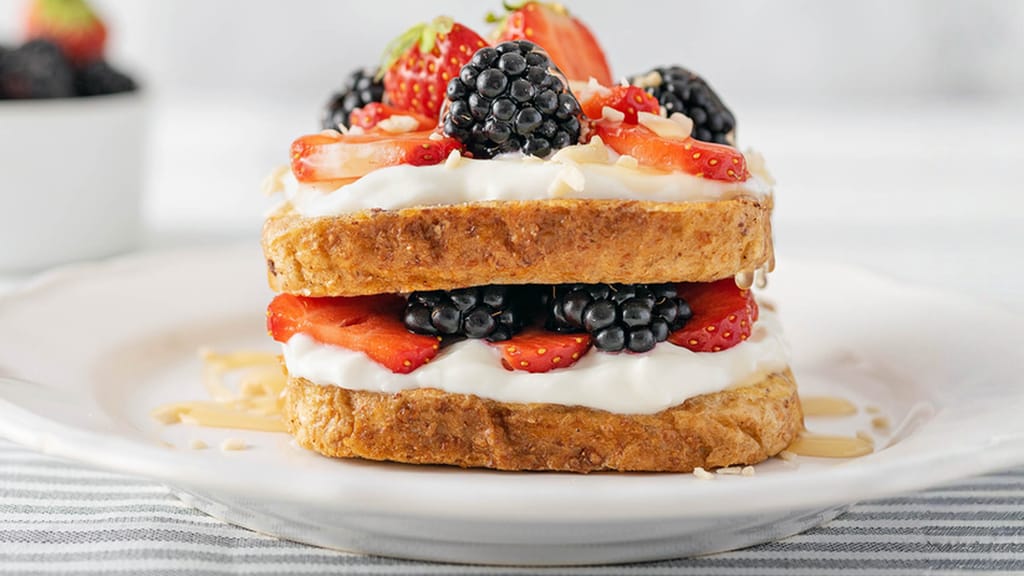
Healthy french toast with skyr
Vánočka: How Long It Stays Fresh and How to Keep It Soft
Updated Sep 17, 2026
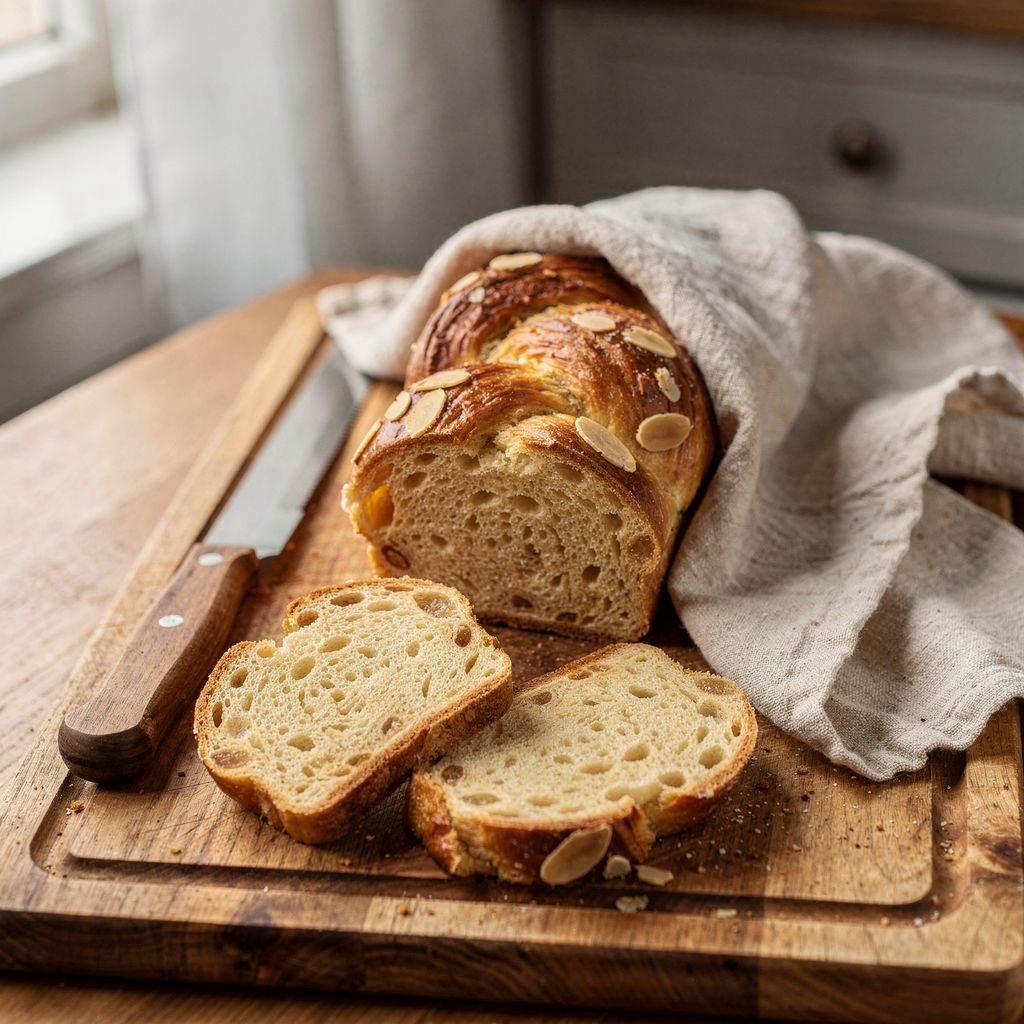
Vánočka stays soft for 3 to 4 days if you wrap it in a tea towel and leave it at room temperature — in the freezer, it'll happily keep for three months. What damages it most is the fridge and a plastic bag pulled over the loaf while it's still warm. Here's a rundown of how long it lasts depending on how you store it, why it actually goes stale, and how to bring it back to life even once it's gone hard as a board.
Homemade vánočka stays soft for 3 to 4 days at room temperature, up to a week in a cool, dry pantry (though it'll firm up faster that way), and three months in the freezer. Count from the day you baked it, not from when you first cut into it.
Tea towel and bread bin, room temperature: 3–4 days at its best; by day five or six it's really only good for toast.
Cool pantry (10–12°C / 50–54°F): 5–7 days, but here's the catch — cold slows mould but speeds up staling. It's only worth it if you're after longer shelf life and don't mind warming the loaf before serving.
Plastic bag alone: the crust goes soft and rubbery within a few hours, and trapped moisture inside the bag means mould shows up much sooner.
Fridge (4–6°C / 39–43°F): the worst option of all. In the fridge it goes stale noticeably faster than sitting out on the counter.
Freezer (−18°C / 0°F): three months with no real drop in quality.
Vánočka filled with curd cheese or cream: two days, and it must go in the fridge — here it's the filling's safety that calls the shots, not the dough's softness.
Vánočka mainly goes stale because the starch in the crumb crystallises — it's not simply a matter of moisture escaping. Scientifically this is called starch retrogradation, and it's the best-documented cause of bread staling there is.
During baking, starch granules gelatinise: they soak up water and loosen up. Once the vánočka cools, the starch molecules (mainly amylopectin) start reorganising back into ordered crystals and squeeze the water back out. That water mostly ends up exactly where you don't want it — in the crust and in the air pockets. Some moisture obviously evaporates from an unwrapped loaf, but even a carefully wrapped one goes stale too. That's exactly why a hard vánočka perks back up in the oven: if drying out were the whole story, there'd be no bringing it back.
What speeds up crystallisation:
Temperatures just above freezing. Starch crystallises fastest roughly between −8 and 8°C (18–46°F), peaking around 4°C (39°F) — which is exactly fridge temperature.
A cut surface. Every slice exposes the crumb to air. A loaf that's already been cut into goes stale noticeably faster than one left whole.
A lean dough. Too little fat and egg yolk leaves the starch granules with nothing to coat them and slow things down.
Overbaking. A vánočka left in the oven a few minutes too long starts out with less water in reserve to begin with.
The fridge is the worst spot in the kitchen for vánočka — not because of the cold itself, but because 4–6°C (39–43°F) falls right into the range where starch crystallises fastest. Bread-storage studies agree that staling runs fastest just above freezing point and all but stops once the water in the bread actually freezes solid. So the fridge does the exact opposite of what you'd expect: it holds off mould but speeds up staling.
The one exception is vánočka filled with curd cheese, cream, or whipped cream. That one belongs in the fridge, no question — there you're managing the filling's food safety, not the dough's texture, and you should eat it within two days regardless.
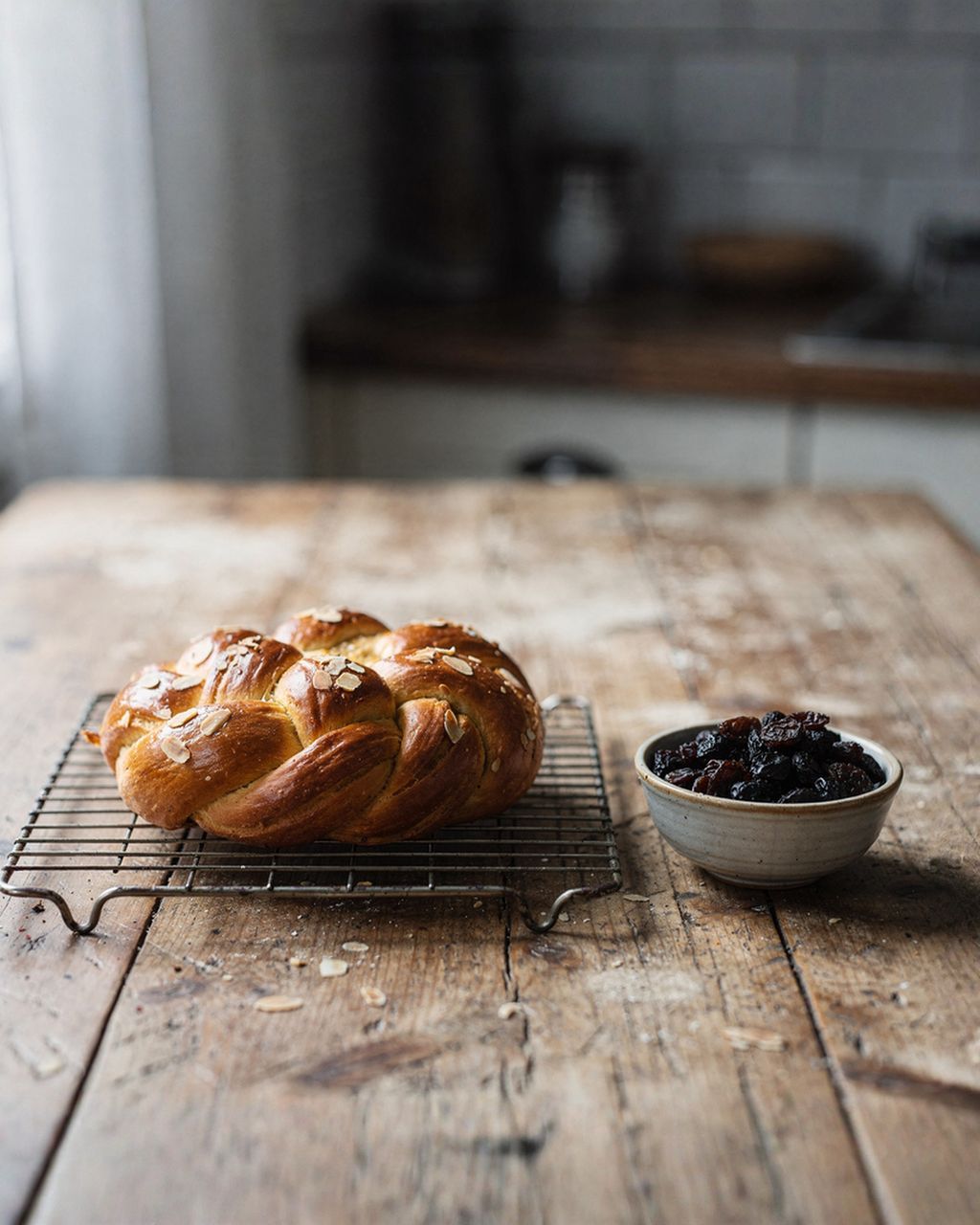
Let the vánočka cool completely, wrap it in a clean cotton tea towel, and store it in a bread bin or paper bag. Never put it straight into a plastic bag, and never in the fridge.
Let it cool all the way. On a wire rack, not a board, for 2–3 hours. A warm loaf sealed up will sweat, the crust turns rubbery, and the damp surface is an open invitation for mould.
Wrap it in a cotton or linen tea towel. A tea towel lets steam escape while still limiting airflow — exactly the balance yeasted bread needs. Use a towel free of fabric softener, or the scent will transfer.
Store it in a bread bin, paper bag, or container. A bread bin is best. If all you've got is a plastic bag, put the vánočka in a tea towel first and only then place it loosely in the bag — don't seal it tightly, and let the towel soak up any condensation.
Slice it only just before serving.Set the remaining piece cut-side down on the board so the crumb isn't left exposed to air.
Mind where you keep it. Somewhere dry and cool, away from the oven, radiators, and direct sun. A steamy kitchen after cooking is about the worst pantry spot there is.
Vánočka and Christmas biscuits want opposite conditions, so they shouldn't share a tin. Vánočka needs to hold onto its moisture; biscuits can't afford to let any moisture in.
Vánočka: breathable wrapping — tea towel, bread bin. It won't go stale as fast in an airtight container, but trapped moisture inside leads straight to mould.
Crisp biscuits: airtight container, kept dry, no outside moisture whatsoever. A linzer biscuit left next to vánočka overnight will go soft and lose its snap for good.
We cover biscuits in full detail elsewhere: how to store Christmas biscuits so they stay crisp, a shelf-life guide by type and a calendar for when to bake which biscuits. If you're curious about staling in specific biscuits, we've also got why linzer biscuits go stale and why gingerbread goes hard and how to soften it.
Softness comes down to the dough's composition and whether you avoid overbaking it — wrapping only prevents damage that's already been done from getting worse, it can't undo it.
Fat and egg yolks. Butter coats the starch granules and slows their crystallisation. A rich dough (80–100g butter and 2–3 egg yolks per 500g flour) stays soft noticeably longer than a lean one.
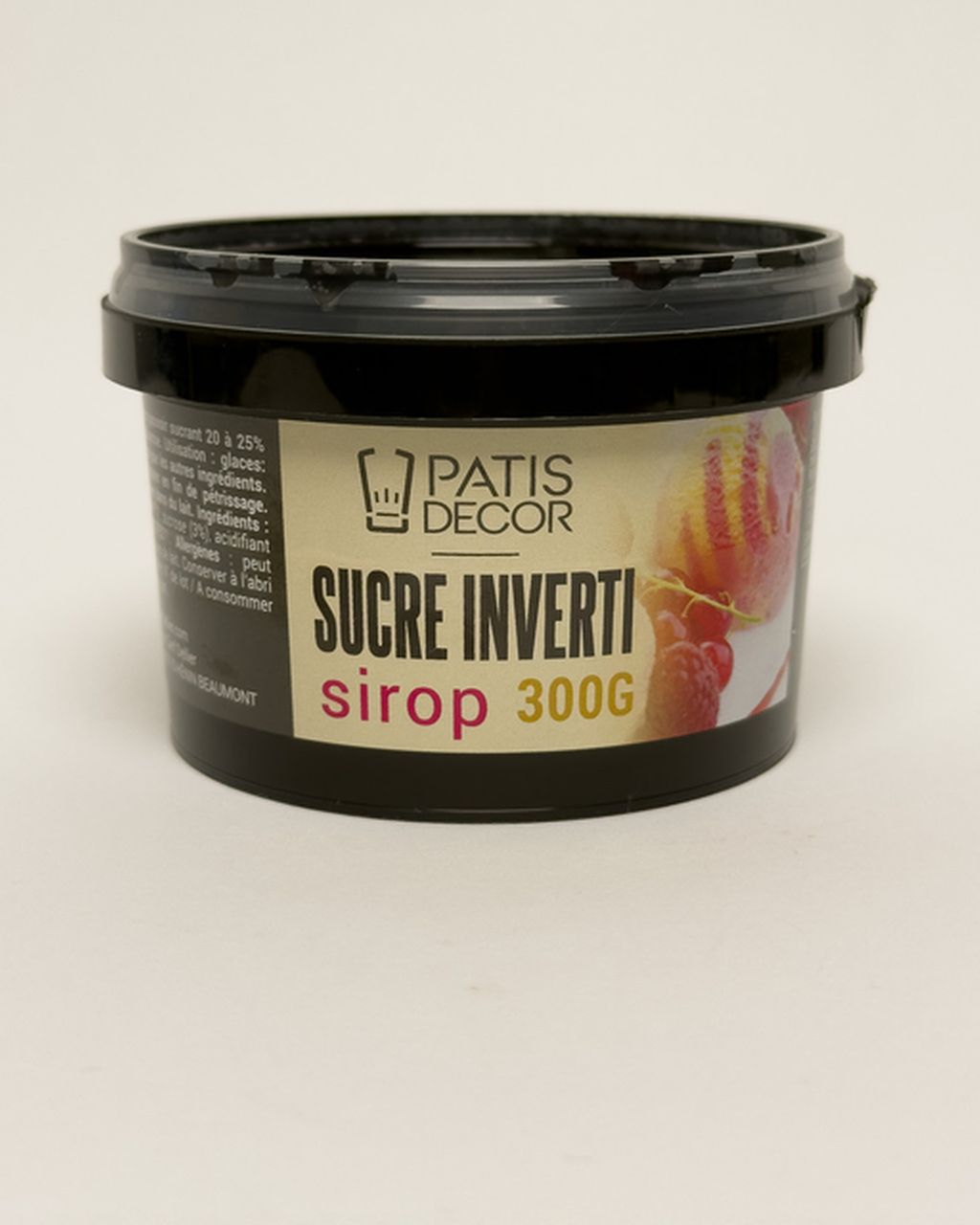
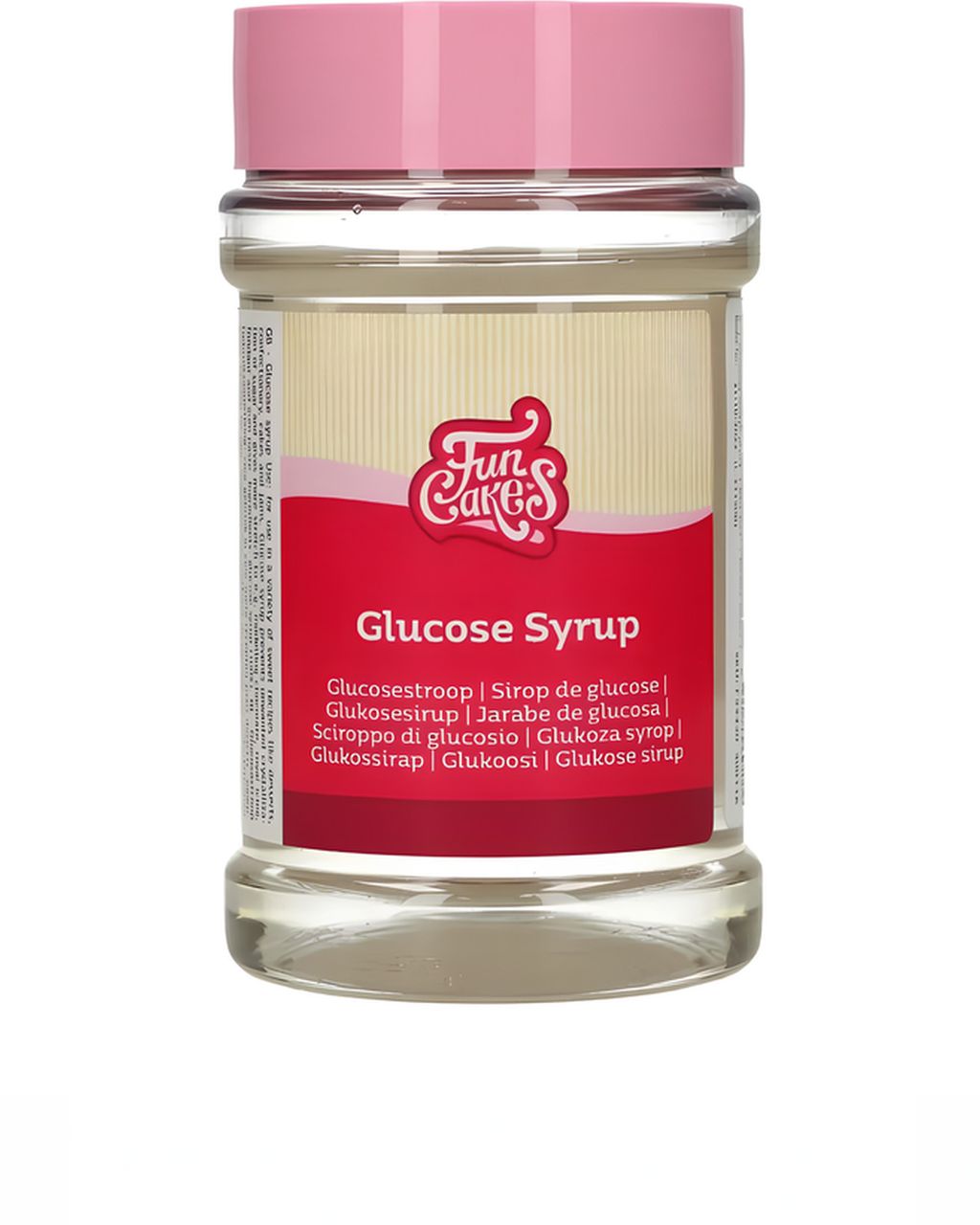
Hygroscopic sugars. A spoonful of honey, invert sugar, or glucose syrup per 500g flour binds water to itself and won't let it escape. It's exactly the trick professional bakers rely on.
Curd cheese or soured cream. 100g per 500g flour adds both water and fat at once. Curd-based vánočka is famous for staying soft for ages.
A flour-and-milk roux (tangzhong). Stir 25g flour into 125ml milk and heat until it turns into a paste (around 65°C/149°F), let it cool, then work it into the dough. The pre-gelatinised starch holds onto more water, so the vánočka stays soft for longer.
Don't skimp on water. A stiff, under-hydrated dough gives you a dry vánočka from day one. Softer dough is trickier to plait but keeps far better.
Don't overbake it. Use a thermometer: pull it out the moment the core hits 82–88°C (180–190°F). A few extra minutes in the oven makes for a noticeably drier crumb.
Bring a hard vánočka back to life in the oven: wrap it in foil and bake at 150°C (300°F) for 8 to 12 minutes. This works because the starch crystals that stiffened the loaf melt at roughly 50–60°C (122–140°F) — the core passes that threshold and the crumb softens up almost like it was fresh.
Whole loaf: lightly mist the crust with water, wrap in foil, 150°C (300°F), 10–12 minutes. Then let it rest for five minutes so the moisture evens out.
Slices: 150°C (300°F), 4–5 minutes unwrapped, or a quick trip through the toaster.
Microwave: cover a slice with a damp tea towel and microwave for 10–20 seconds. The fastest fix, but it goes hard again even quicker once it cools — eat it right away.
Steaming: steam slices for two minutes in a steamer basket over a pan of water. Gentlest option for softness, though you'll lose any crust.
One catch: the revival is only temporary. Once the vánočka cools again, the starch reorganises itself all over again, and faster than the first time. So only reheat as much as you're about to eat.
Vánočka keeps for three months in the freezer at −18°C (0°F), and freezing is the only way to truly stop it going stale — below freezing point, water stops moving and the starch has nothing left to crystallise from.
Freeze it fresh, ideally within 24 hours of baking. The freezer won't improve the loaf's condition, it just locks it in as-is. Freeze a stale loaf and it'll thaw out stale.
Slice it before freezing. That way you only thaw as much as you need, instead of defrosting the whole loaf for one breakfast. Layer baking paper between the slices.
Wrap it tightly and press out the air. Two layers: cling film first, then a freezer bag over it. Air in the wrapping means freezer burn and ice crystals.
Thaw it wrapped, at room temperature. A whole loaf takes 3–4 hours, slices about 20 minutes. Keep it wrapped so condensation forms on the outside, not on the crumb.
Give it five minutes in the oven. 150°C (300°F) and it's indistinguishable from fresh. Slices can go straight from frozen into the toaster.
The same logic applies to freezing biscuits and dough. With vánočka, there's an extra option: you can also freeze the shaped raw loaf before its final rise — thaw it overnight in the fridge, then let it finish rising somewhere warm.
Turn dry vánočka into French toast, bread pudding, a Christmas-style pudding, sweet breadcrumbs, or pan-fried cubes for yoghurt. It's an enriched, buttery, egg-heavy sweet bread, so it'll always make something better than a plain bread roll would.
French toast. Let slices soak for two minutes in an egg-and-milk mixture, then fry in butter. Dry vánočka actually soaks up the mixture better than fresh — this is the one case where stale beats fresh.
Bread pudding. Use vánočka slices in place of bread rolls, with apples, cinnamon, and a milk-and-egg custard. Go easy on the sugar — vánočka is already sweet on its own.
Vánočka pudding. Pour a cream-and-egg mixture over cubed vánočka, let it soak for 20 minutes, then bake at 170°C (340°F) until golden.
Sweet breadcrumbs. Dry out leftovers in the oven at 120°C (250°F), grate them, and keep them in a jar. Great sprinkled over curd dumplings or stewed fruit.
Cubes for yoghurt. Pan-fry them in butter with a teaspoon of sugar and let cool. You'll end up with a crunchy topping just like granola.
Healthy french toast with skyr
French toast with skyr: a method that works even with slices of dry vánočka
Bake it on 22 or 23 December — by Christmas Eve it'll be two to three days old, which is exactly its best moment. If you're baking earlier than that, freeze it as soon as it cools and thaw it on the morning of the 24th; that's far more reliable than letting it sit in the bread bin for four days. There's no need to bake it on the morning of Christmas Eve itself — warm vánočka is also a nightmare to slice neatly.
It's smell and mould that matter, not firmness — a hard vánočka isn't spoiled, just stale. Give the crumb a sniff: as long as it smells of butter and yeast, it's fine, even if it's too tough to bite into. A musty smell or any trace of mould means it's done for, and the whole loaf needs to go in the bin. If it's dry but otherwise sound, warm it through in the oven or turn it into a bread pudding.
Store-bought vánočka usually lasts a few days longer than homemade, but not because it's better baked. Commercial loaves contain enzymes (usually amylases) and emulsifiers that slow down starch crystallisation, plus preservatives to fight mould. At home you can get a similar effect with a richer dough, honey or invert sugar, and a flour-and-water roux.
Don't refreeze thawed vánočka — you'll lose more in quality than a second freeze could ever give back. Each freeze-thaw cycle tears up the crumb's structure with ice crystals, and after thawing the bread turns crumbly and dry. The fix is to freeze it already sliced, so you only take out what you'll actually eat.
Yes, mazanec is stored exactly the same way: tea towel, bread bin, never the fridge, 3 to 4 days. It tends to have a bit more fat and raisins, so it actually stays soft a day longer than vánočka. The same goes for rolls and loupáky, just with a shorter window — leaner dough goes stale faster.
One recipe worth heating the oven for, one tip, and one deal from the shop. Nothing else.