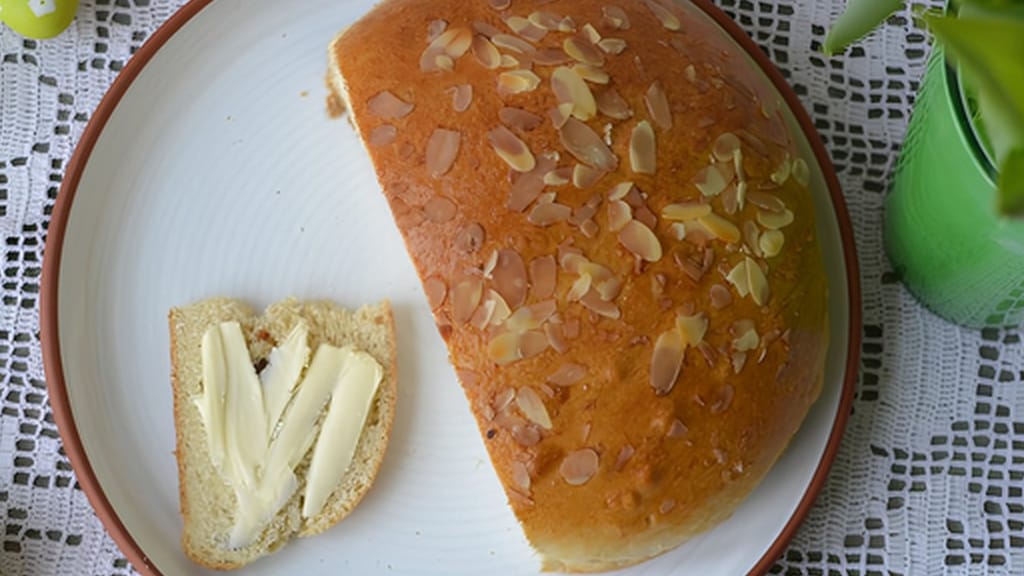
Easter classic: fragrant mazanec bread
Vánočka Spreading Out Sideways: Why It Happens and How to Keep Its Shape
Updated Sep 17, 2026
A vánočka spreads out sideways for the same reason every time: by the time the dough goes into the oven, it simply doesn't have enough structure to hold its own volume. Five specific things cause this — dough that's too soft, underdeveloped gluten, over-proofing, a loosely braided plait, and an oven that isn't hot enough. Work through them in order, because they add up: one mistake alone might not sink you, but two will.
Vánočka spreads out sideways because of five things, and almost always more than one is at play at once:
The dough is too soft. Fix: a firmer ratio, with liquid at around 50–55% of the flour's weight.
The gluten isn't fully developed. Fix: 10–15 minutes in a stand mixer, then check with the windowpane test.
The vánočka over-proofed. Fix: let the final proof reach only about one and a half times its size, not double.
The braid is loosely plaited. Fix: pull the strands snug as you braid, plait all six strands together at once, and secure with skewers.
The oven isn't hot enough. Fix: preheat to 180°C and drop to 160°C once the loaf goes in.
We'll break down each of these below, with numbers. If you're not sure where to start, start with the second one — underdeveloped gluten is by far the most common cause, and the hardest to spot.
Vánočka dough should be noticeably firmer than a bun dough — smooth, springy, and not sticky, so it rolls out on the counter with barely any dusting flour. If it's spreading across the board or sliding off your hands, the braid will splay open in the oven no matter what else you do right.
Rough numbers to work from:
Total liquid: 50–55% of the flour's weight. Count eggs as part of the liquid too — a medium egg is roughly 50g without the shell, and counts as about 38g of water in the liquid balance.
Butter: 15–25% of the flour's weight. Above that, the dough is deliciously rich, but soft — and without properly developed gluten, it will spread.
Flour: plain white flour (T530), or a slightly coarser T400, ideally with a protein content around 10–11.5%. (Watch the labelling: T450 is a coarse flour and too rough for vánočka on its own; T650 is a stronger, bread-style white flour.) The more protein, the more gluten — and the taller the braid.
If a recipe is heavy on butter, egg yolks, and cream, cut back on the liquid rather than the fat — the flavour stays intact and the dough gains firmness. We've covered the basic ratios of enriched dough, and what each ingredient does, in our article Enriched Dough: The Basic Ratios and How to Work With It.
It's the gluten network that holds vánočka's shape, and it only forms with long kneading — plan on 10–15 minutes in a stand mixer on a low speed, or more like 15–20 minutes by hand. Under-kneaded dough will still rise, but it won't hold the gas in, and it spreads under its own weight.
You can tell it's ready with the windowpane test: pinch off a small piece of dough and slowly stretch it between your fingers. If it forms a thin, translucent film you can see light through, without tearing, the gluten is done. If it tears right away, knead for another two minutes and test again.
Two details that make the difference:
Add the butter last. Fat coats the flour's proteins and slows gluten formation, which is why bakers only work it in once the network is already developing. Add it in pieces, softened — not melted.
Don't skip the salt. Besides flavour, it strengthens the gluten network — about 1.5–2% of the flour's weight. Just add it separately from the yeast so the two don't touch directly.
An over-proofed vánočka won't rise upward in the oven — it spreads sideways instead. The yeast has used up the sugars, the bubbles have grown too large, and the walls between them tear, so the structure collapses. This is the sneakiest of the five causes, because the dough looks its absolute best right before it tips over into over-proofed.
First rise: 1–2 hours, until doubled in size. Rich doughs with butter and eggs rise more slowly than plain bread dough — sugar and fat make life harder for the yeast — so go by volume, not the clock.
Final proof, after braiding: 45–60 minutes at room temperature, only up to about one and a half times its size. The vánočka will take care of the rest in the oven. That's the key difference from the first rise, and the fastest way to stop it spreading.
Warmth speeds things up more than you'd think. At 28°C the braid rises roughly 50% faster than at 22°C — check on it after just 30 minutes if your kitchen's warm. (The baker's rule of thumb is that proofing speed roughly doubles for every 8–10°C rise in temperature.)
To be sure, use the finger-poke test: press a finger about 1cm into the side of the braid. If the dent springs back slowly and only partway, it's ready to bake now. If the dent stays exactly as it is, it's over-proofed — get it into the oven immediately; you won't fully save the shape, but at least it won't collapse completely. If the dent springs back straight away, give it another 15 minutes.
You need to pull the strands snug as you braid, but not too tight — a loose braid splays open in the oven, an overtight one cracks. Aim for the middle ground: lay each strand in place and gently draw it in, don't yank on it.
What makes the biggest difference:
Braid all six strands together at once, not three tiers stacked on top of each other. A single-tier, six-strand braid holds its shape far better than a pyramid, where the top tier slides down and pushes the bottom one outward.
Weigh the strands. Weigh the finished dough and divide it into six — the exact weight doesn't matter, what matters is that the strands are equal. Evenly weighted strands braid uniformly; one thicker strand pulls the whole braid off to one side.
Let the strands rest. A rolled-out strand tends to shrink back. Roll them all out, wait 10 minutes, and only then stretch them to their final length — otherwise you're forcing tension into them that will release again in the oven.
Tuck the ends under the braid so they don't come loose during baking.
Secure with skewers. Five skewers, about 12cm long, pushed in at an angle through the braid, hold the strands together and stop the braid splaying out sideways during both proofing and baking. (On a multi-tiered vánočka, they also anchor the top tier to the bottom one.) Pull them out only once it's cooled.
Braid straight onto the baking-sheet paper. Moving a finished braid is the moment it's most likely to lose its shape.
Vánočka needs a blast of heat at the start so the surface sets before the dough has a chance to spread: preheat the oven to 180°C, then drop it to 160°C as soon as the loaf goes in. That initial blast gives the braid one last push upward, and the lower temperature then bakes it through to the centre without scorching the surface.
Time: 35–45 minutes depending on size. A vánočka made from 750g of flour needs about 40 minutes.
Position: middle to lower rack, with top and bottom heat. Fan (convection) settings dry out the surface and set it before the braid has finished rising — if that's your only option, set the temperature 20°C lower.
Don't open the oven for the first 20 minutes. A drop in temperature at this most sensitive stage is the classic reason a braid sinks and spreads sideways.
If the surface is browning too fast, loosely tent the vánočka with foil and finish baking.
Brushing with beaten egg isn't just for shine — the proteins set on the surface and form a thin skin that holds the contours together. Brush it on in two layers: once before the final proof, and again just before baking.
You can only rescue a spreading vánočka before baking — once it's baked, there's no getting the shape back, but the flavour stays just as good.
If it spreads during the final proof: take it off the sheet, gently press the air out of the dough, let it rest for 10 minutes (otherwise the strands won't stretch out), braid it again, and this time pull the strands snugger. Give it just 30 minutes to proof and then bake. You'll lose a little volume, but no shape at all.
If it spreads in the oven: let it cool completely, then slice it up. A flat vánočka is still a rich buttery enriched dough — cut it into thick slices and fry them in butter like French toast, or layer it with apples and curd cheese and bake it as a bread pudding. A slightly drier vánočka is actually perfect for either.
The most reliable indicator is internal temperature: enriched dough with butter and eggs is done at roughly 88 to 91°C at its thickest point — above 92°C it starts drying out. An instant-read thermometer is a better investment for vánočka than any trick, because an underbaked braid will sink once you take it out — and that looks almost exactly like spreading, even though it's a different mistake.
Without a thermometer, go by two things: a skewer poked into the centre comes out with no wet crumbs on it, and tapping the underside of the loaf sounds hollow.
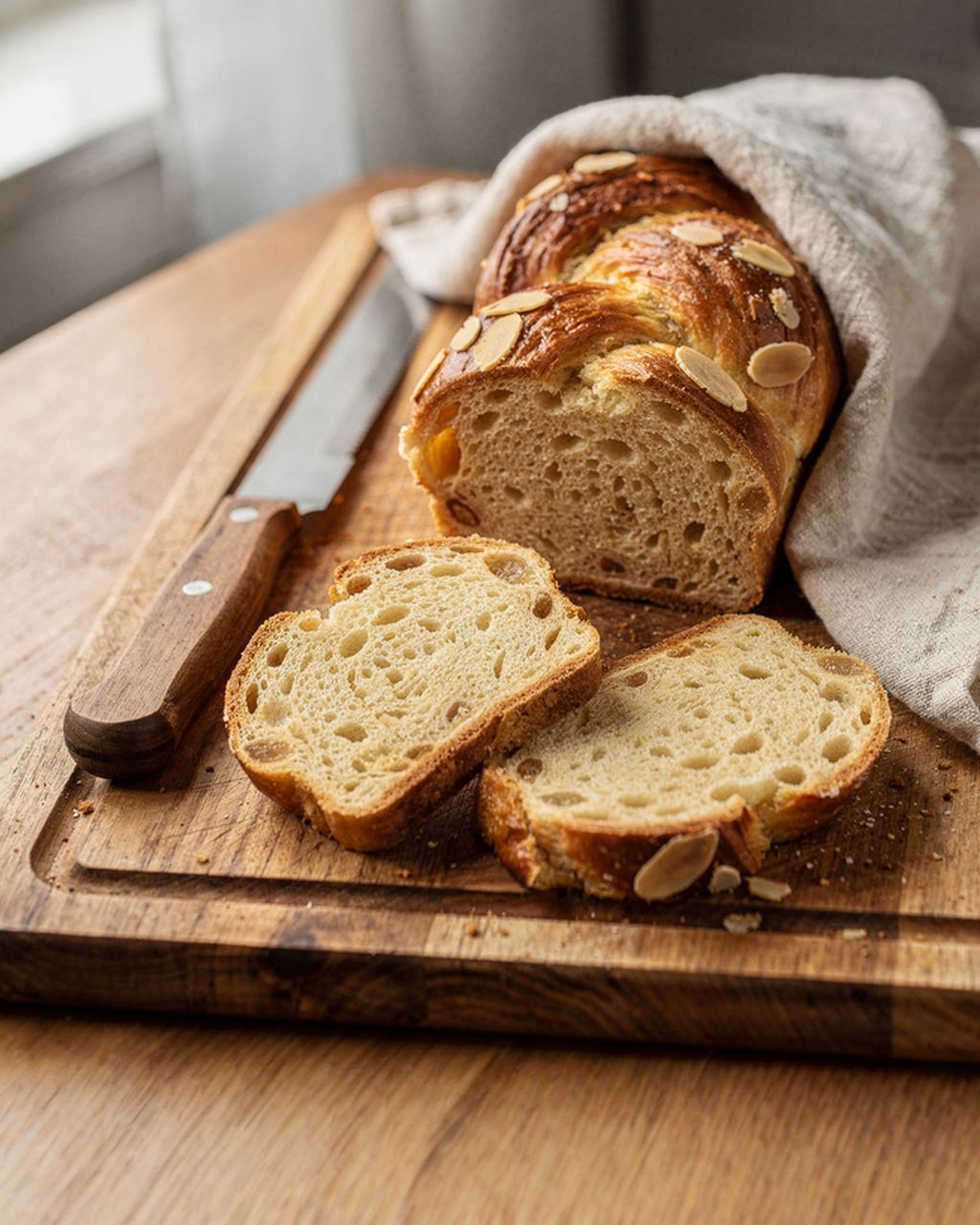
After that, it's just cooling. Turn the vánočka out onto a wire rack, not the baking sheet — on a hot sheet, the base steams and turns soggy. Let it cool slowly, away from any draught; a sudden chill pulls in on structure that hasn't fully set yet.
Mazanec is essentially the same enriched dough as vánočka, just shaped differently — and it spreads for exactly the same reasons. Practise your kneading, the windowpane test, and your proofing timing on it, and you'll have one less variable to worry about come December. You'll find the full method, including how to fix cracks, in our article Easter Mazanec: How to Get Light, Crack-Free Enriched Dough.
And if you're planning your whole Christmas baking schedule ahead, vánočka is the very last thing on the list — it's baked fresh, a day or two before Christmas Eve, unlike Christmas cookies, which actually improve over weeks. We've got a baking schedule by type in When to Bake Christmas Cookies, and the dough can be made ahead and frozen — here's how, in How to Freeze Cookies and Dough.
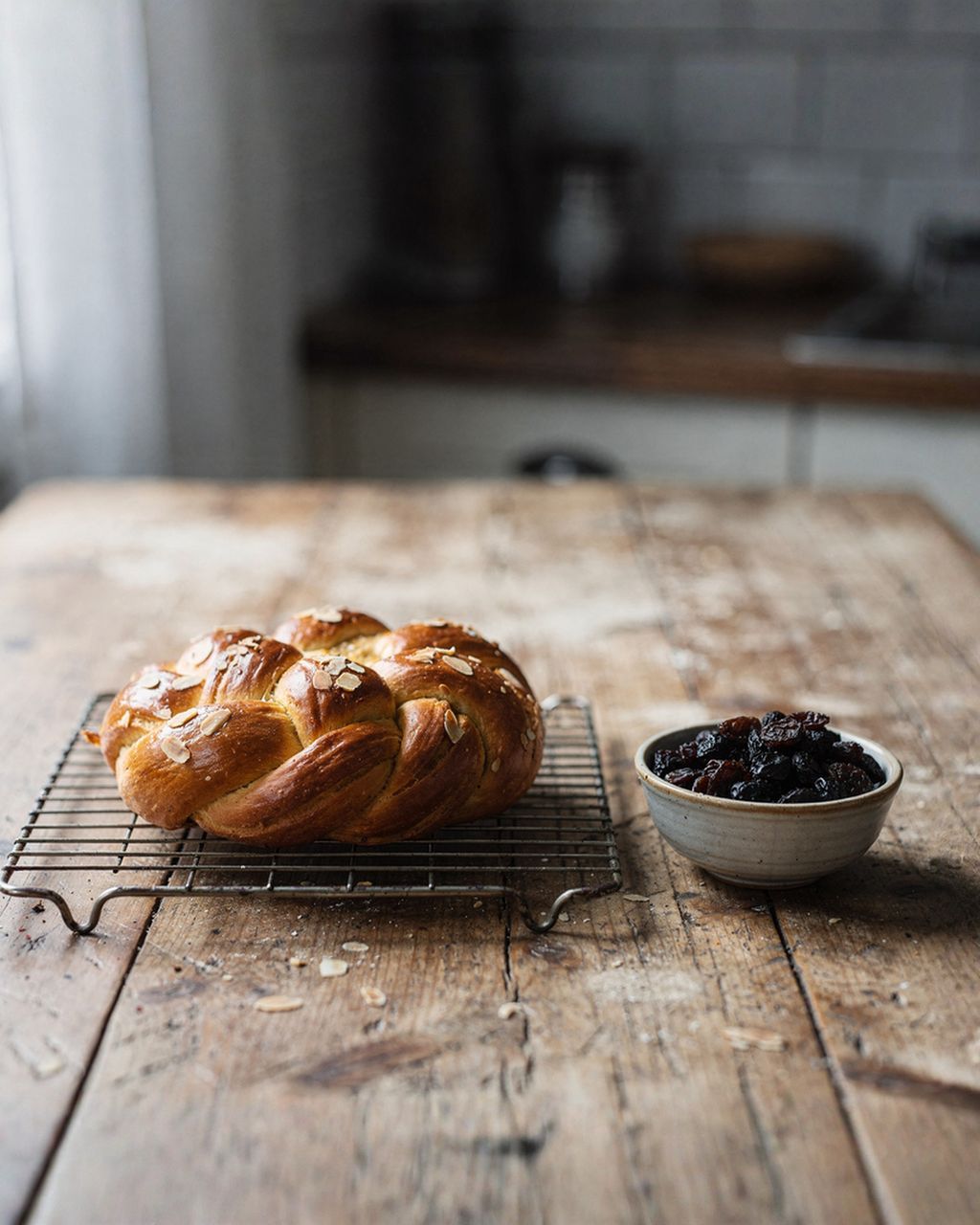
Easter classic: fragrant mazanec bread
Fragrant mazanec: the same rich enriched dough as vánočka, perfect for practising your kneading and proofing
Yes, and it usually helps — a cold overnight rise (8–12 hours at 4–6°C) slows the yeast down but lets the gluten keep working, so by morning the dough is firmer, less sticky, and easier to braid. Take it out, let it warm up for 30–45 minutes, and only then start braiding. Just expect the final proof to take a bit longer, since the dough is starting from cold.
A tin will hold the shape, but at the cost of looks — the braid fuses into a block inside it and loses that classic ridged strand pattern. A better compromise is to let the vánočka sit free on the baking sheet and simply box it in: stand two cake tins on either side, or wrap a strip of foil folded to about 2cm high around the braid, close to the dough. Remove the barrier 20 minutes before the end of baking so the sides have time to turn golden.
Yes, if there are too many or you add them too early — every raisin breaks the gluten network at that spot, weakening the dough there. Stick to roughly 100–150g of raisins per 500g of flour, add them right at the very end of kneading, and mix only briefly. Also soak the raisins beforehand and dry them thoroughly, otherwise they'll leach water into the dough and soften it.
Yes, ideally after the first rise and before braiding — press down the kneaded dough, wrap it tightly in cling film, and freeze for up to a month. Thaw it overnight in the fridge, then let it warm up and finish proofing for 1–2 hours before braiding. Don't freeze a finished raw braided loaf, though: yeast doesn't handle freezing well at that stage and the vánočka will turn out low and dense.
Yes — just use about a third of the weight of fresh yeast, so instead of a 42g cube, use 12–14g of dried. Instant yeast can be mixed straight into the flour, while regular dried yeast needs to be dissolved first in lukewarm milk under 40°C (hot milk will kill it). It won't affect the shape — dried yeast just rises a bit more slowly, so go by the dough's volume rather than the clock either way.
One recipe worth heating the oven for, one tip, and one deal from the shop. Nothing else.