Light and airy génoise sponge cake
Updated Sep 18, 2026
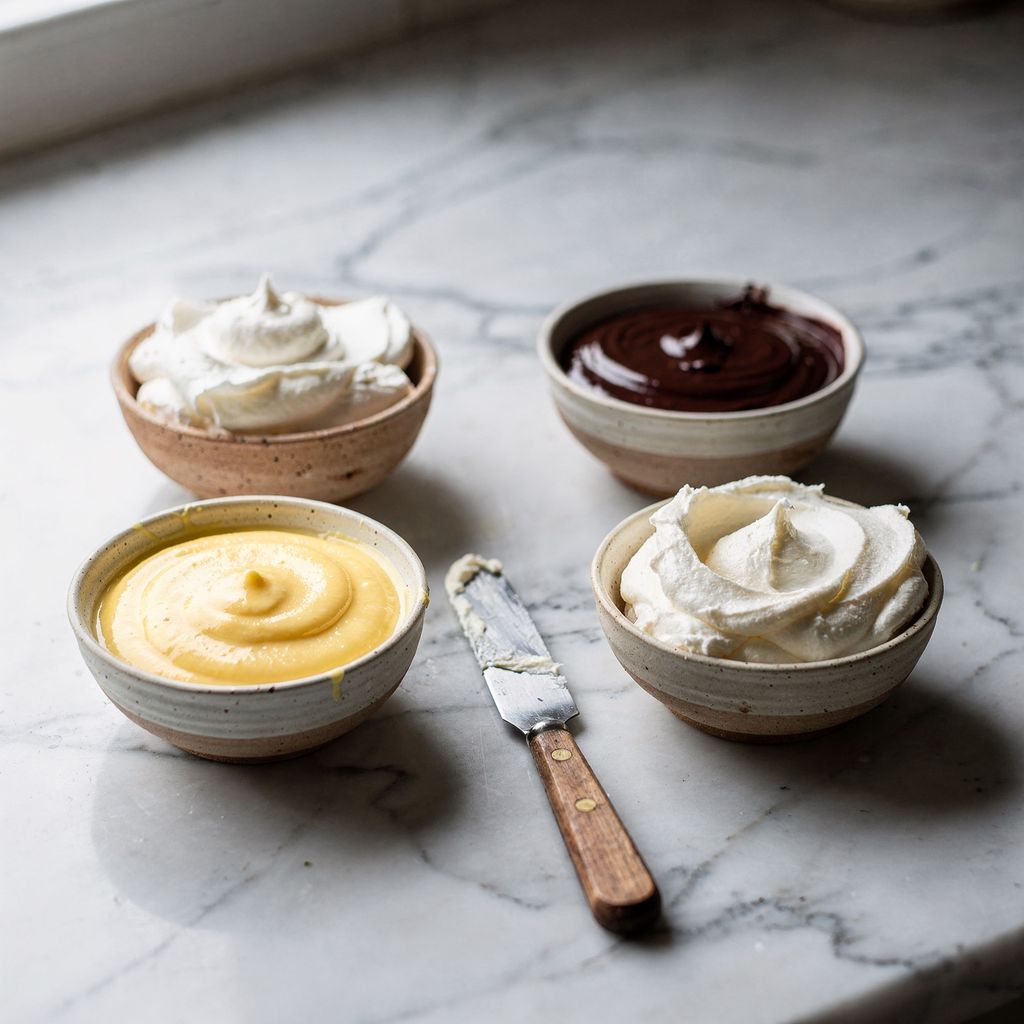
Cake frostings fall into six main families: buttercream, meringue-based (Swiss and Italian), whipped cream, ganache, pastry cream, and cheese-based frostings made with curd cheese, mascarpone or cream cheese. What sets them apart is mainly how well they hold their shape and how much heat they can take — and that's what should guide your choice, not just flavor. Below you'll find the ratios, stability, and best cake pairing for each one.
For tiered cakes and anything going under fondant, reach for ganache or meringue-based buttercream; for a light fruit cake, go with stabilized whipped cream; for Swiss rolls and layer cakes, use pastry cream; and for carrot cake or gingerbread, go with cream cheese frosting. Here's the whole map in six lines:
American buttercream – cupcakes, sharp piping, cakes that need to survive a car ride. The most stable and the sweetest.
Swiss and Italian meringue buttercream – smooth coating, wedding and tiered cakes. Silky, less sweet, stable up to around 25°C (77°F).
Ganache – chocolate cakes, a base under fondant, drip cakes. Holds its shape better than any other frosting.
Stabilized whipped cream – no-bake and fruit cakes. The lightest flavor, but it needs to stay in the fridge.
Pastry cream (crème pâtissière) – filling for Swiss rolls, cream puffs, and layer cakes. Doesn't hold its shape on its own.
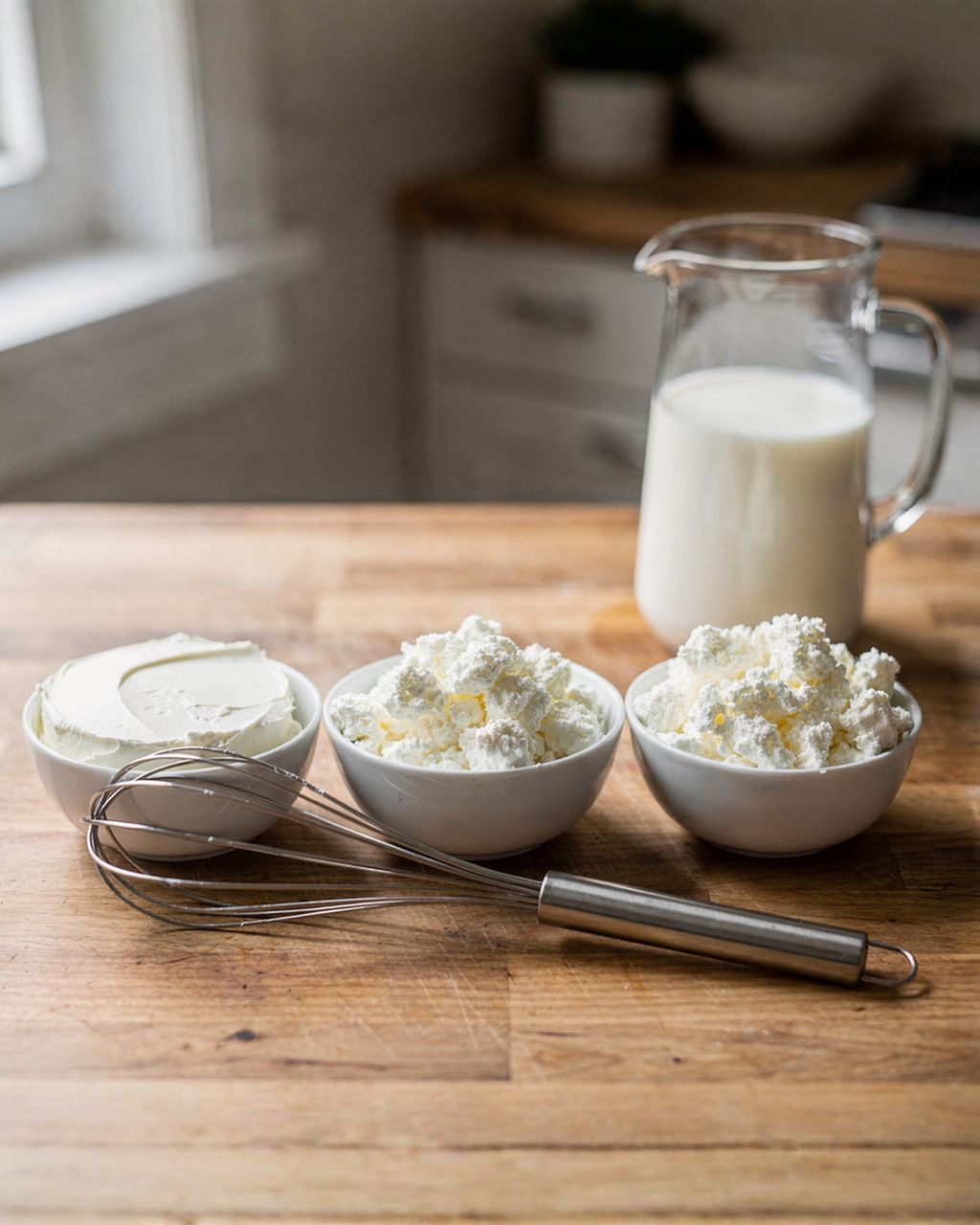
Curd cheese, mascarpone, cream cheese – carrot cake, cheesecake, tiramisu. Fresh, moderately stable.
Choose your frosting only after you've settled on the sponge, and think about where the cake will actually sit. A dry sponge needs a moister frosting; a buttery batter can handle a fresh cheese-based one.
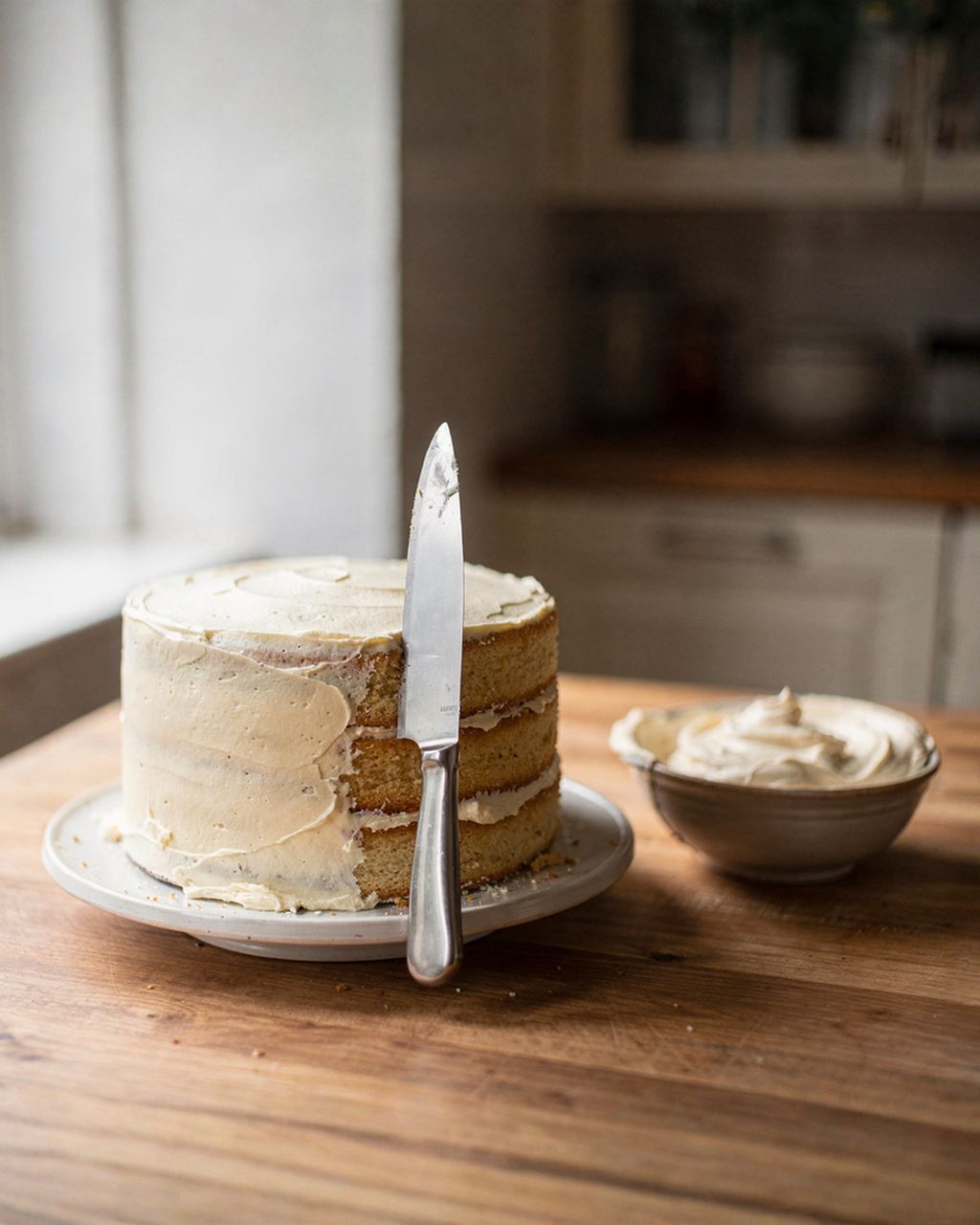
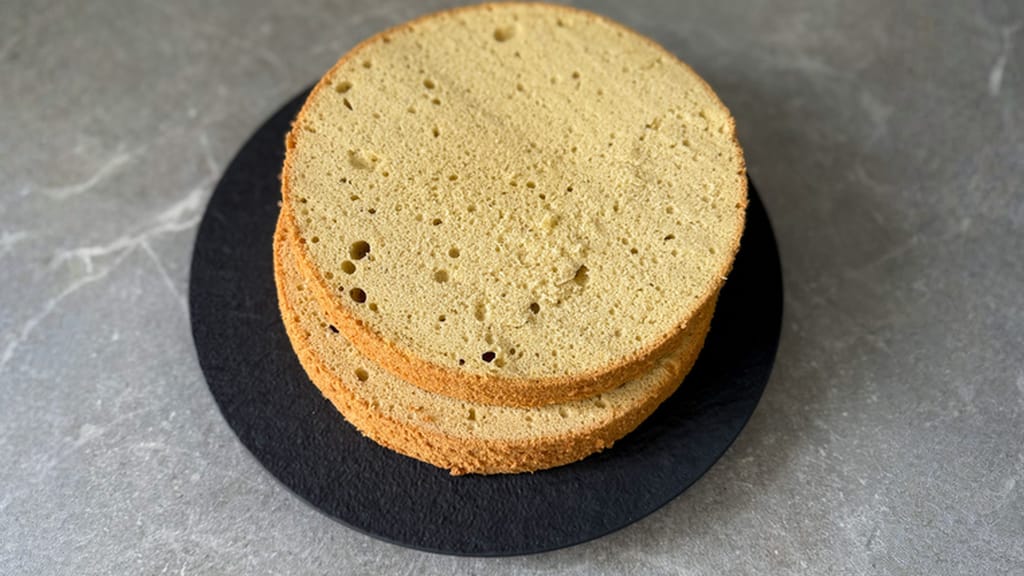
Light and airy génoise sponge cake
A light Génoise sponge — a neutral base that can carry any cake frosting
Buttercream holds its shape better than any other cake frosting: at 20–22°C (68–72°F) it stays firm for hours, handles crisp piping, and can bear the weight of another tier. The reason is simple — butter has its own temperature range that whipped cream and pastry cream simply don't: it's hard below 15°C (59°F), pliable yet load-bearing at 18–22°C (64–72°F), starts to collapse above 26°C (79°F), and melts at 32–35°C (90–95°F). That gives the frosting a built-in skeleton that holds itself up.
The trade-off is flavor: buttercream is richer and heavier than any other option. That's why it works best with dry, bold sponges (chocolate, nut, gingerbread) and less well with delicate fruit-topped sponges.
American buttercream is simply butter whipped with powdered sugar, and the ratio between the two decides both its sweetness and how firm a crust it forms:
1:1 (butter to powdered sugar, by weight) – the least sweet, barely crusts over when exposed to air. Best for filling layers.
1:2 to 1:2.5 – the classic sweet version, which dries to a light crust. Good for cupcakes and everyday decorating.
up to 1:4 – a firm frosting for fine details and piped designs that need to hold their shape.
Let the butter come up to 20°C (68°F), beat it on its own for about 5 minutes until pale and fluffy, then start adding the sugar. At the end, stir in 1–2 tablespoons of cream for every 250 g of butter — it softens the frosting and smooths out any sugar grittiness.
Meringue buttercreams use the same butter, but instead of sugar, warmed whipped egg whites are beaten into it — the result is silky, far less sweet, and the professional standard for a smooth cake coating.
Swiss method (SMBC): whisk egg whites with sugar over a bain-marie until the mixture reaches 71°C (160°F) — the temperature pastry chefs treat as the threshold for pasteurizing egg whites. Then whip until it cools below 25°C (77°F), and only then add the butter, a cube at a time.
Italian method (IMBC): a sugar syrup cooked to 118°C (244°F) is poured in a thin stream into whipped egg whites. It takes one extra step, but it's the most stable of the whole family.
Ratio to start from for both: 1 part egg whites : 2 parts sugar : 3 parts butter, by weight.
Both frostings keep for a week in the fridge and for months in the freezer. Let them come up to room temperature and re-whip before using — they'll go through a stage where they look completely broken, and then suddenly come together.
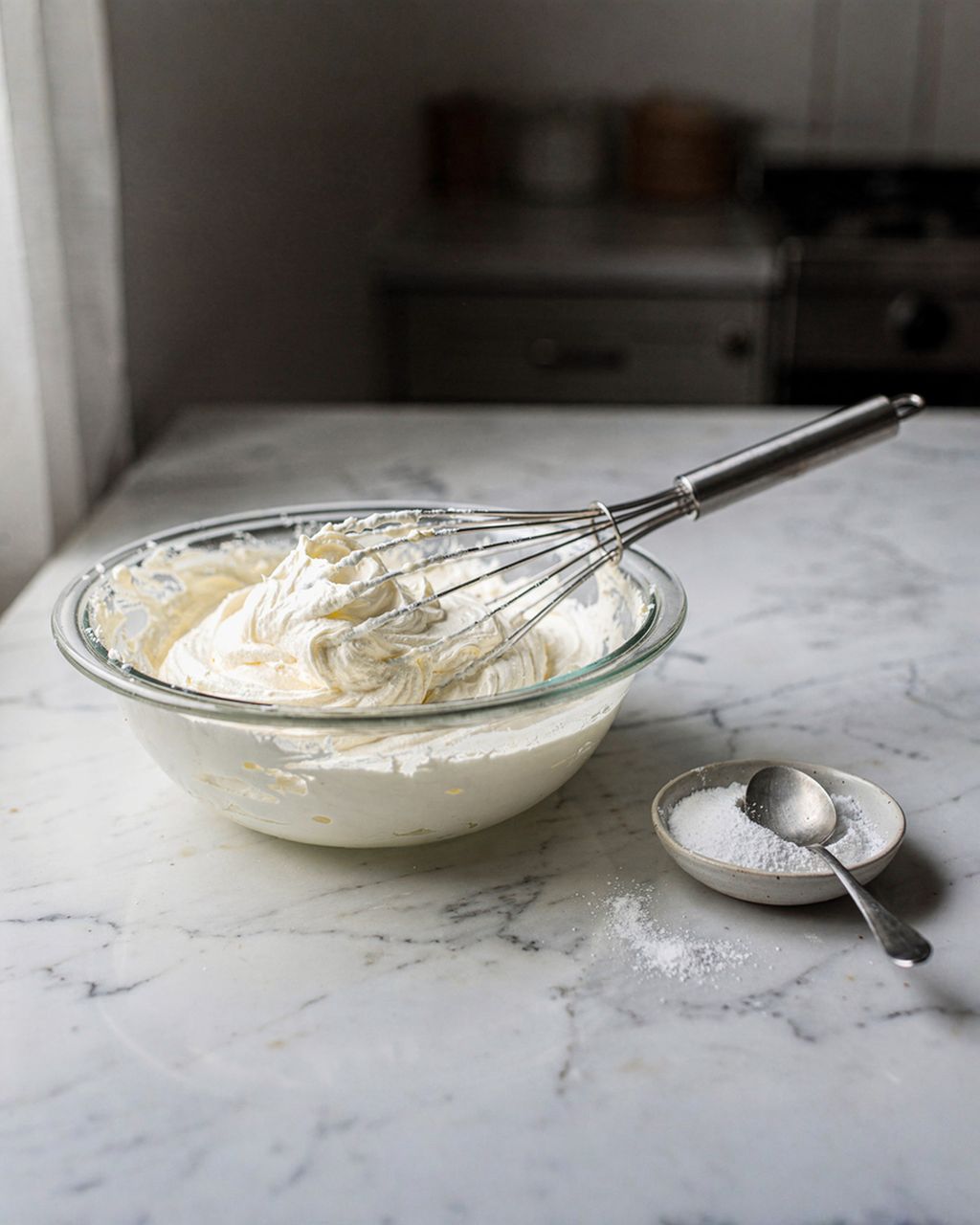
Whipped cream frosting is the lightest cake filling there is, but without stabilizing it, it barely lasts half an hour outside the fridge before it starts weeping water. If the cake isn't going straight from the fridge to the table, stabilize it first.
What needs to be right before you even start whipping:
Whipping cream, at least 30% fat, ideally 33–36%; heavy cream is defined by Czech regulation as at least 35% fat, but any cream in that range will do. Cream under 30% fat simply won't whip, no matter what you try.
Everything cold, the cream and the bowl alike — around 4°C (39°F). Warm cream takes twice as long to whip and turns to butter much more easily.
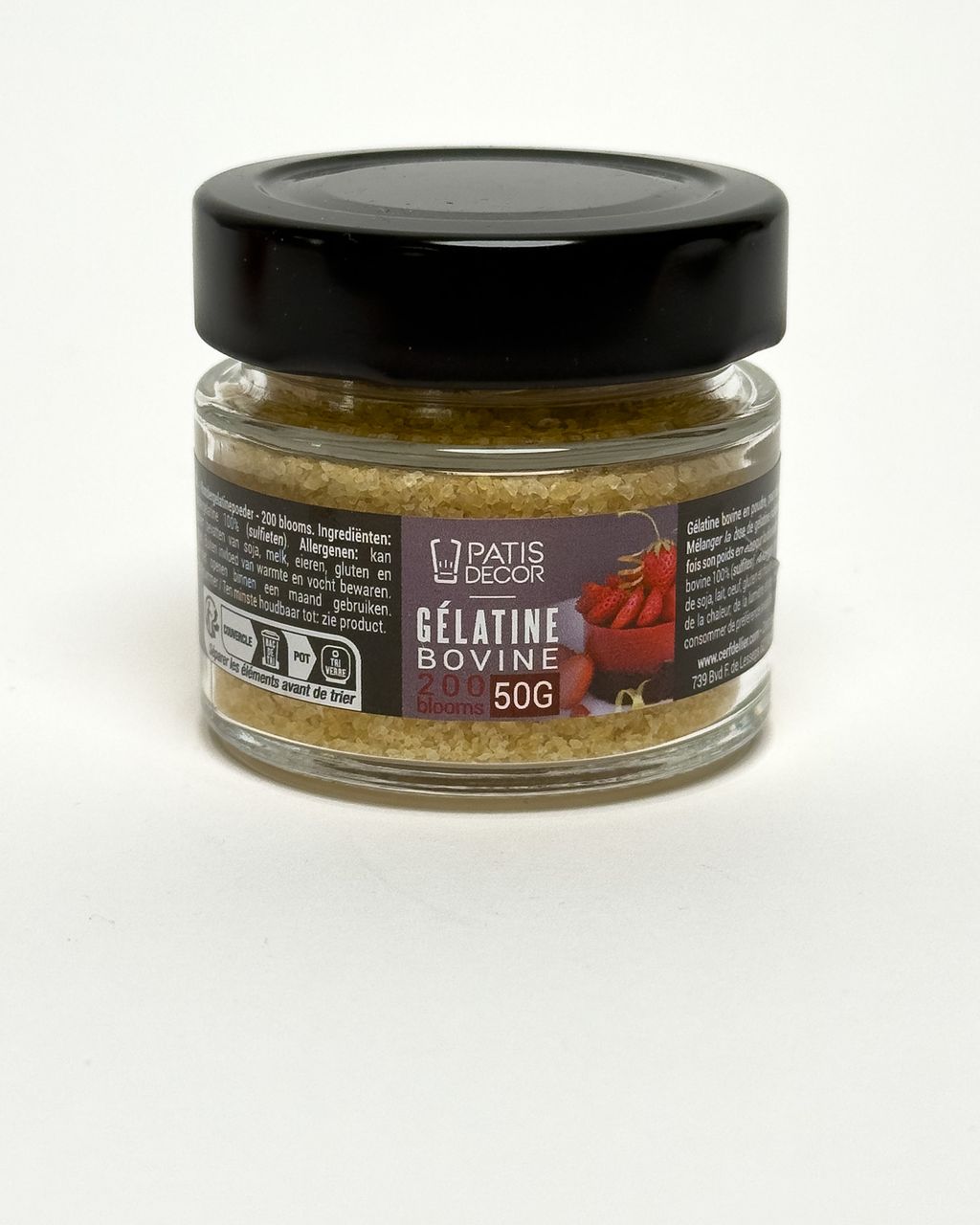
Stabilizing with gelatin: let about 5 g of powdered gelatin bloom in 30 ml of cold water, melt it, let it cool until just lukewarm, then pour it into 500 ml of cream whipped to soft peaks (about halfway whipped) while whisking constantly. Cream stabilized this way holds its shape even outside the fridge, but return the cake to the fridge within 2 hours regardless.
Stabilizing without gelatin: 100 g of mascarpone per 250 ml of cream, or 1 tablespoon of instant pudding mix per 250 ml of cream. The flavor stays light, but the frosting holds up.
Best for: no-bake cakes, sponge cakes with fresh fruit, anything where the frosting should support the flavor rather than dominate it.
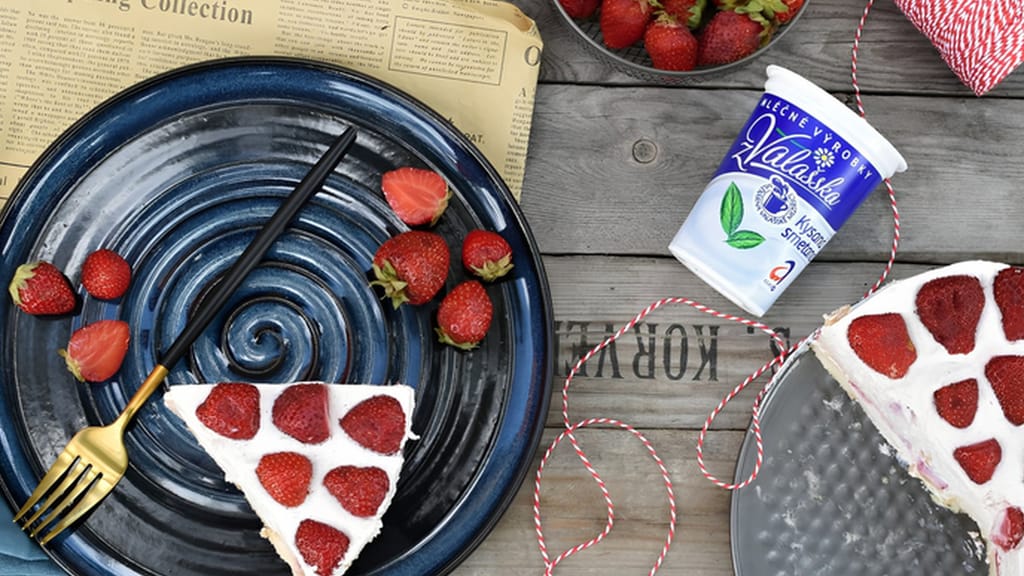
No-bake strawberry cake - a classic from my childhood
A no-bake strawberry cake — a good example of a cake where light whipped cream frosting works better than buttercream
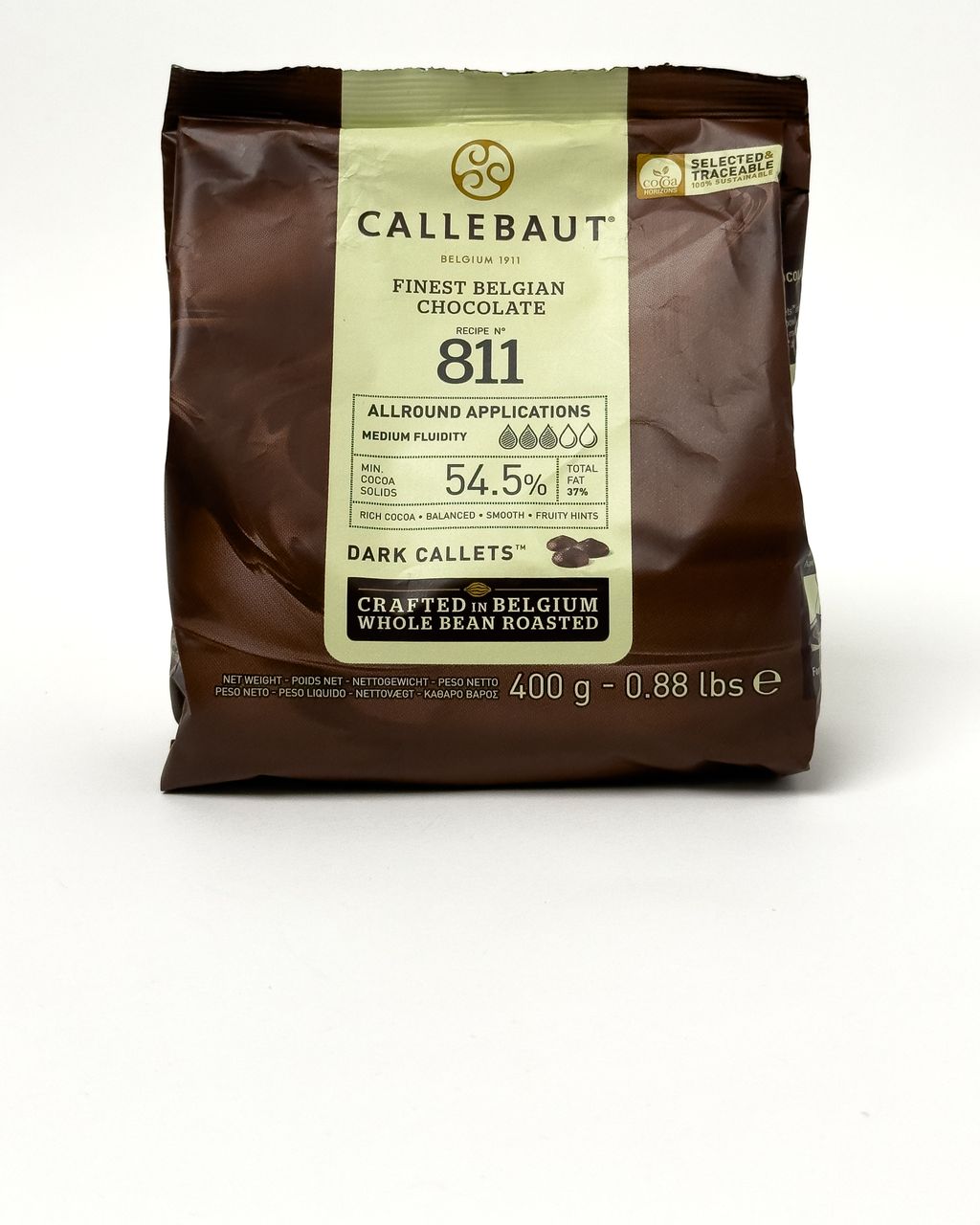
Ganache is an emulsion of chocolate and cream, and the ratio between them decides everything: 1:1 makes a glaze or drip, 2:1 makes a firm filling and a base for fondant, and 1:2 can be whipped after chilling into a light whipped ganache. These ratios are by weight and apply to dark chocolate:
1:1 (chocolate to cream) – pourable while warm, and thick like a heavy cream once cooled. Good for glazing, drips, and soft fillings.
2:1 – firms up into a solid frosting after a few hours at room temperature. The best filling for tiered cakes, a base under fondant, and for sharp edges.
1:2 – chill for at least 4 hours, then whip. This gives you a fluffy whipped ganache that's much less sweet than buttercream.
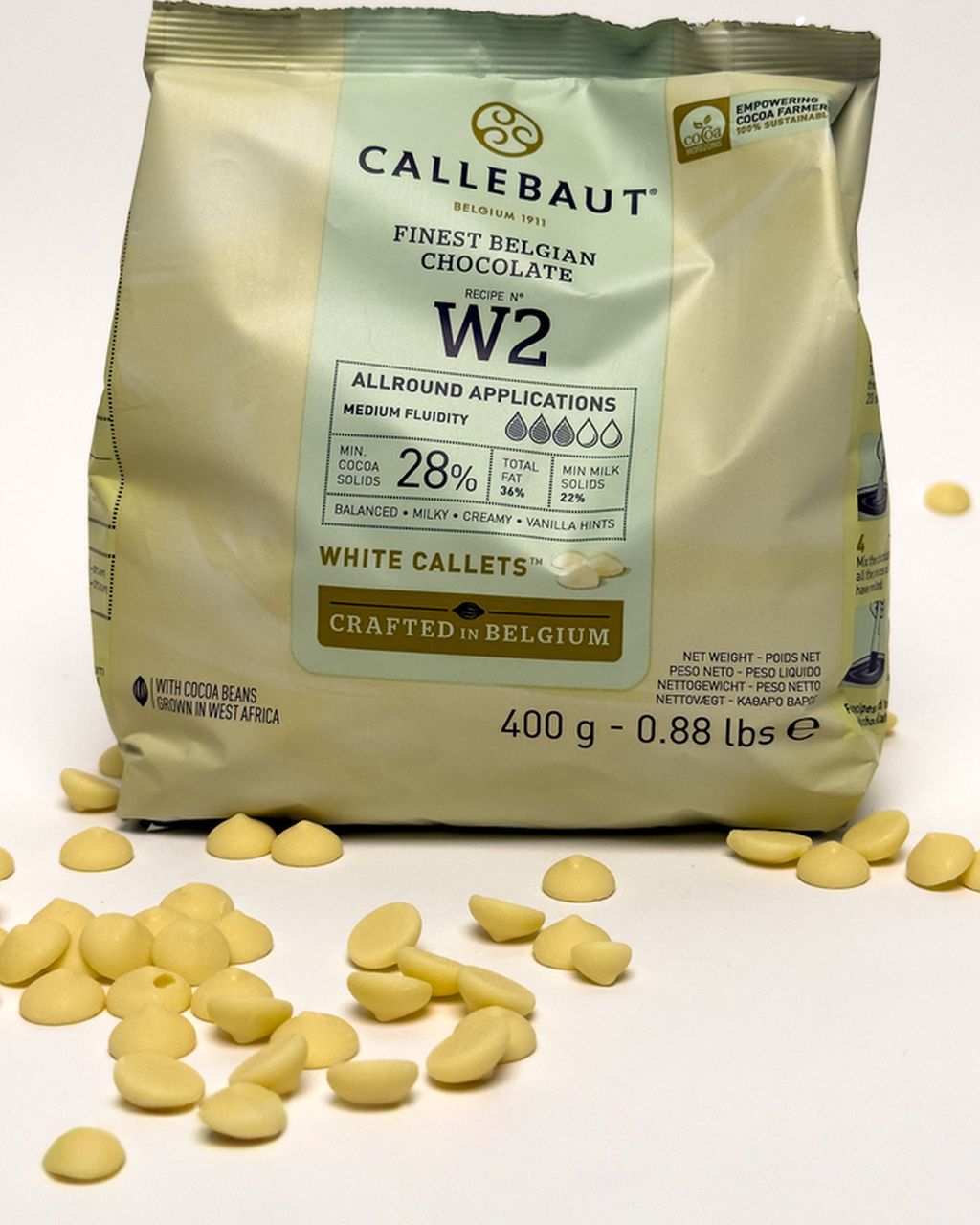
Milk and white chocolate contain less cocoa solids and more sugar and milk solids, so they set less firmly — you'll need roughly 1.5 times more milk chocolate than dark (about 3:1 for a filling), and roughly 3:1 to 4:1 for white. For drip cakes, let the ganache cool to 32–35°C (90–95°F) — any warmer and it'll run straight off the cake; any cooler and it'll stop partway down the side.
A method that never fails: bring the cream just to a boil, pour it over chopped chocolate, let it sit for 2 minutes, then stir from the center outward. You'll find a detailed breakdown of ratios for every type of chocolate in our article Chocolate Ganache: Ratios, Method, and Uses in Desserts, and if a mirror-glaze finish appeals to you more than a frosting, take a look at mirror glaze.
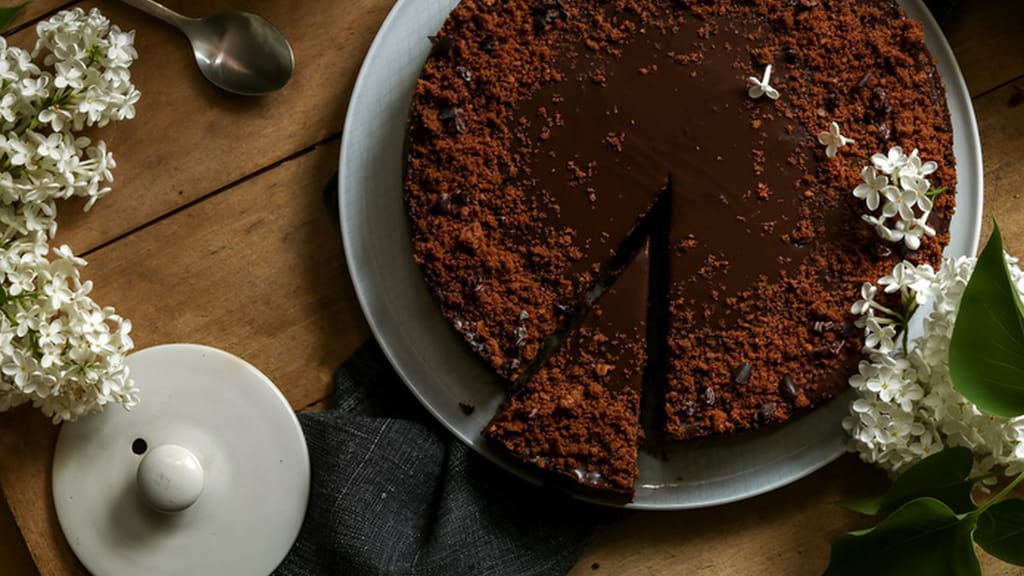
Simple chocolate cake
A simple chocolate cake — the sponge that pairs best with chocolate ganache
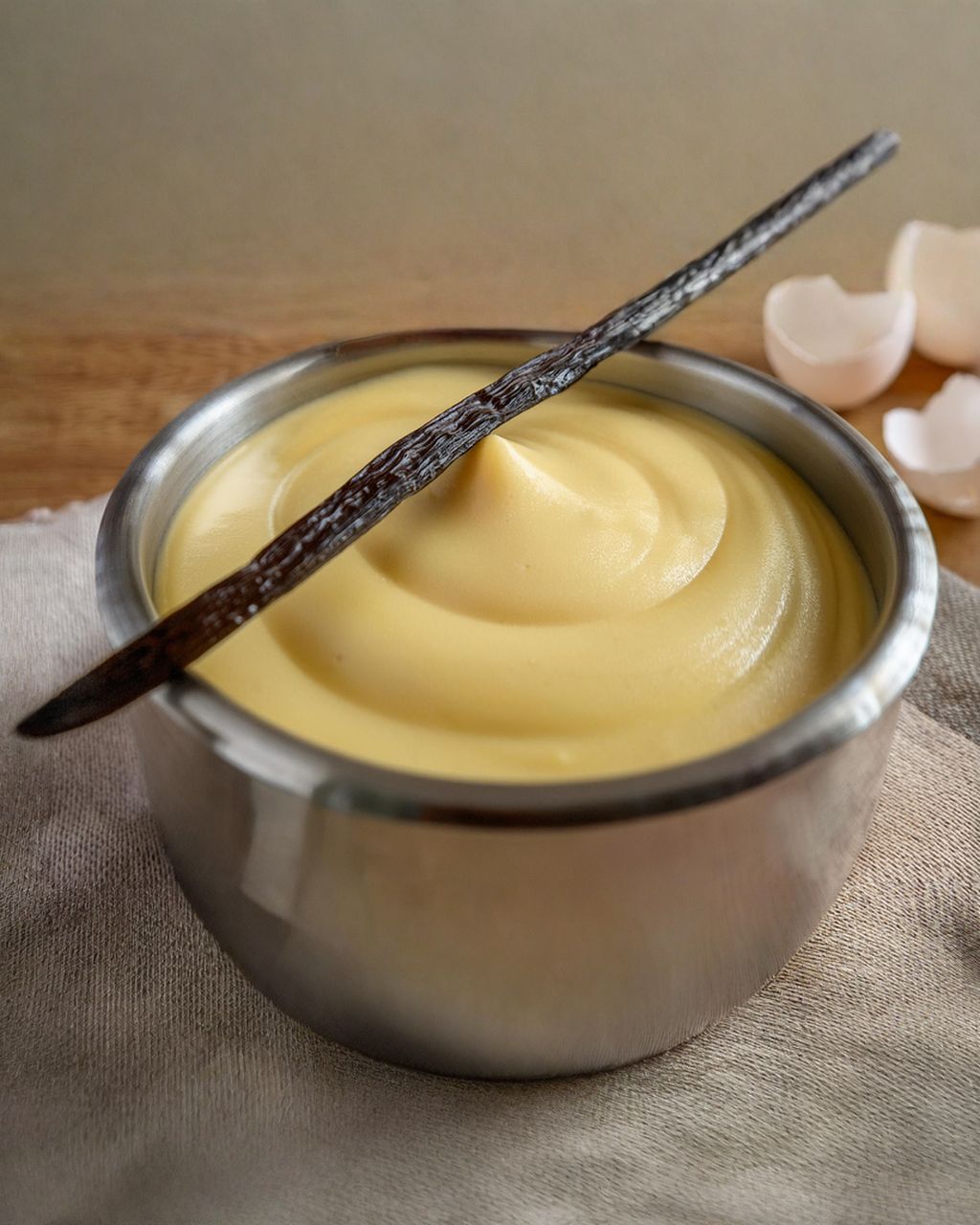
Pastry cream is a cooked custard made from milk, egg yolks, sugar, and starch — it doesn't hold its shape on its own, but it's the base for two of the best fillings for layer cakes. A good starting ratio is roughly 80 g of starch and 6–8 egg yolks per 1 liter of milk (so 40 g of starch per 500 ml).
One rule you can't skip: the cream has to reach a full boil and bubble for at least a minute. Alpha-amylase from the egg yolks is most active at 70–85°C (158–185°F), and sugar protects it from heat — only a full boil will actually deactivate it. So make sure the cream really bubbles for at least a minute, or it'll thin out once it cools. Cover the finished cream with plastic wrap pressed right onto the surface to stop a skin from forming, and whisk it smooth again before using.
What you can build from it:
Diplomat cream = chilled pastry cream + whipped cream, roughly 2:1. Lighter and fresher — ideal for cakes with fruit.
Mousseline cream = pastry cream + butter, in an amount equal to 30–50% of the cream's weight, so 150–250 g of butter per 500 g of pastry cream. Holds its shape well enough to coat and fill a cake; it's the classic filling in a strawberry Fraisier.
Keeps for 2–3 days in the fridge and can't be frozen — the starch weeps water once thawed. Our article Crème Pâtissière: The Perfect Pastry Cream walks through the whole method step by step.
Cheese-based frostings are the freshest option for pairing with very sweet sponges, since their tang balances out the sugar. All three, though, share the same two weak points: they don't handle heat well and they're easy to overwhip.
Mascarpone is around 40% fat, so the frosting thickens almost instantly — and that's exactly the trap. Stop whipping the moment it thickens, not once it reaches stiff peaks; overwhipped mascarpone turns grainy and there's no fixing it. The second rule: mascarpone has to be cold, or it will split when warm. The most reliable ratio is 1:1 with cold whipping cream.
Best for: tiramisu, pumpkin and nut cakes, cupcakes — anywhere you want creaminess without the sweetness of buttercream.
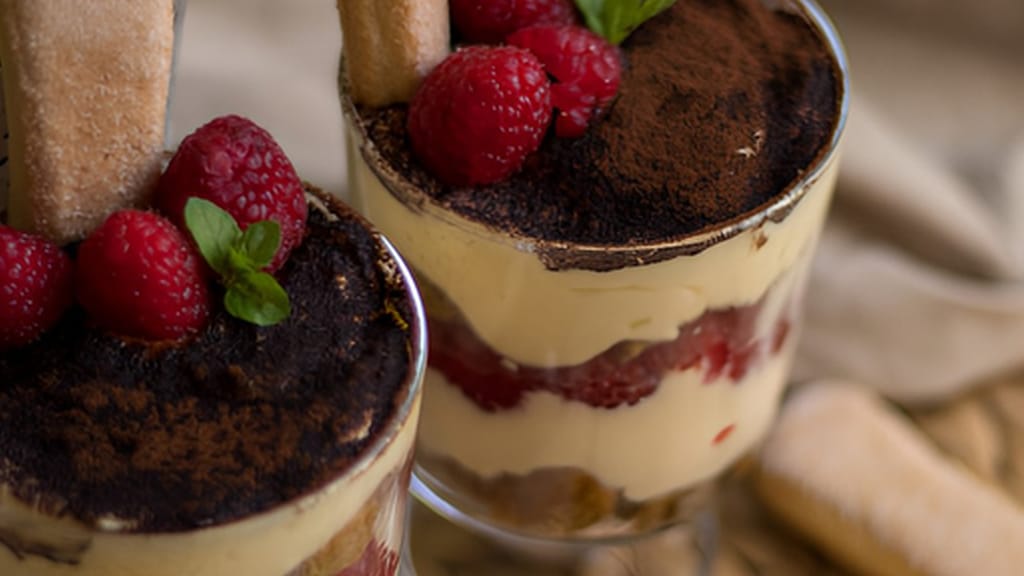
Raspberry tiramisu
Tiramisu with raspberries — a classic use for mascarpone frosting
Cream cheese frosting thins out because sugar pulls water out of the cheese — which is why it's mixed with butter, which gives it back its structure. A ratio of 1:1 butter to full-fat cream cheese plus powdered sugar to taste works well.
Two things determine the result: use block-style cream cheese, not the spreadable tub kind (it holds more water), and mix it only briefly on low speed. Overmixing will make it runny.
Best for: carrot cake, gingerbread and pumpkin cake, red velvet.
Curd cheese frosting is the lightest and cheapest of the cheese-based frostings, and it's a homemade classic for no-bake cakes. Always pass firm curd cheese through a sieve or blend it smooth first — whipping alone won't break down the grains.
For no-bake cakes that need to be cut into neat slices, add gelatin: roughly 10 g of powdered gelatin per 500 g of curd cheese, bloomed and melted, then stirred into the frosting while it's at room temperature. Adding gelatin to a cold frosting makes it clump into strands.
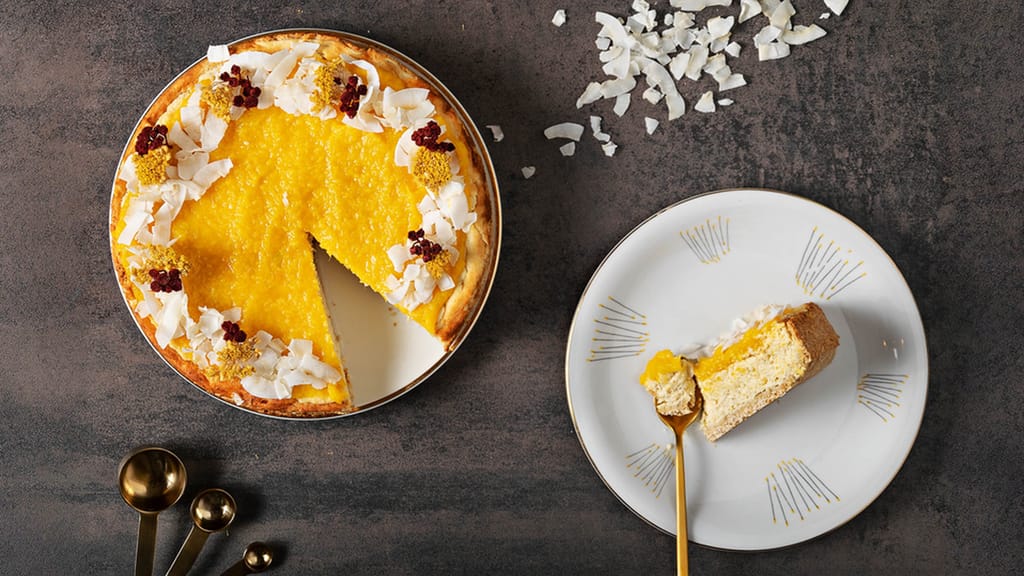
Mango cheesecake
Mango curd cheese cake — a no-bake cake where curd cheese frosting holds its shape
For a 20 cm (8-inch) cake with three layers, plan on roughly 700–900 g of frosting for a thin coating; for a tall layer with generous decoration, go with 1–1.2 kg instead. That 700–900 g breaks down to about 150–200 g per filling layer, plus 400–500 g for coating the sides and top. Here's a rough guide for other sizes, always assuming three layers and a thin coat:
15 cm (6 in) – 450–600 g
18 cm (7 in) – 600–750 g
20 cm (8 in) – 700–900 g
24 cm (9.5 in) – 1.1–1.4 kg
Cupcake – 40–60 g for one generous swirl
Two tips that'll save you from scrambling to do math at the last minute. Set aside about 100 g from your total for a crumb coat — a thin sealing layer that traps loose crumbs and, after 20 minutes in the fridge, lets the final coat go on perfectly smooth. And always mix up about 10% more than you think you'll need: running out of buttercream halfway through decorating a cake is the worst way to spend an evening.
Most ruined frostings can be saved with temperature alone: a curdled frosting is almost always too cold, a runny one almost always too warm. Specifically:
Buttercream has curdled into little grains – the butter was colder than the meringue. Warm a quarter of the frosting over steam until it's liquid, stir it back in, and whip for 2 minutes. It'll come together.
Buttercream is thin and shiny like soup – it's too warm. Chill the bowl in the fridge for 15 minutes, then re-whip.
Mascarpone has turned grainy – it's overwhipped. Fold in 1–2 tablespoons of cold cream by hand; that's about all you can do to fix it. Next time, stop as soon as it thickens.
Ganache has split and is releasing oil – add a tablespoon of hot milk and blend with an immersion blender at the bottom of the bowl, so you don't whip in air. The emulsion will come back together.
Pastry cream is thin once cooled – it didn't boil long enough. Bring it back to a boil with a spoonful of starch dissolved in cold milk, and boil for another minute.
Whipped cream is weeping water – it's either overwhipped or wasn't stabilized. Drain off the liquid and briefly re-whip it with a spoonful of mascarpone.
A cake with buttercream or meringue frosting keeps in the fridge for 4–5 days, one with ganache up to a week, but a cake with pastry cream, whipped cream, or curd cheese frosting should be eaten within 2–3 days. It all comes down to water and egg content: the more moisture and protein a frosting has, the shorter its shelf life. Keep the cake covered, or it'll pick up fridge odors and the sponge will dry out. Let it sit on the counter for 30–60 minutes before serving — cold buttercream tastes like a lump of fat, but at room temperature it turns creamy again.
Buttercream, meringue-based frostings, and ganache all freeze beautifully and keep for 2–3 months, but pastry cream and whipped cream don't freeze well at all. Buttercreams are basically just fat and sugar, and freezing doesn't change that: thaw overnight in the fridge, let it come up to about 20°C (68°F), then re-whip. Pastry cream weeps water once thawed because the starch loses its structure, and whipped cream deflates. Cheese-based frostings made with curd cheese or cream cheese survive freezing fairly well, with just a slight loss of smoothness.
Fondant works best over a 2:1 ganache or a meringue-based buttercream — both firm up into a solid layer that fondant won't slide off of and that can hold sharp edges. Whipped cream, pastry cream, and curd cheese frosting are all wrong for this job: they hold too much water, and within a few hours the fondant will start dissolving and running. Before rolling out the fondant, chill the frosted cake for 30 minutes so the surface truly firms up.
Use gel food coloring, not liquid — gel has concentrated pigment, so a few drops are enough and the consistency stays intact. Liquid coloring adds a spoonful of extra water to the frosting, and that's enough to stop buttercream from holding its shape. For ganache and white chocolate, use only oil-based colors — water will make the chocolate seize into lumps. Mix the color in briefly and let the frosting rest for 20 minutes; the shade will deepen slightly on its own.
Frosting most often oozes out the sides because it's too soft and the layers above are pushing it out — either the frosting was too warm, or you spread it on too thick. Keep filling layers around 5 mm thick, weigh the cake down with a small plate once assembled, and chill it for an hour to let everything settle. For juicy fillings (fruit, lemon curd), first pipe a dam around the edge of the layer using a stiffer buttercream or ganache, then pour the filling inside it.
One recipe worth heating the oven for, one tip, and one deal from the shop. Nothing else.