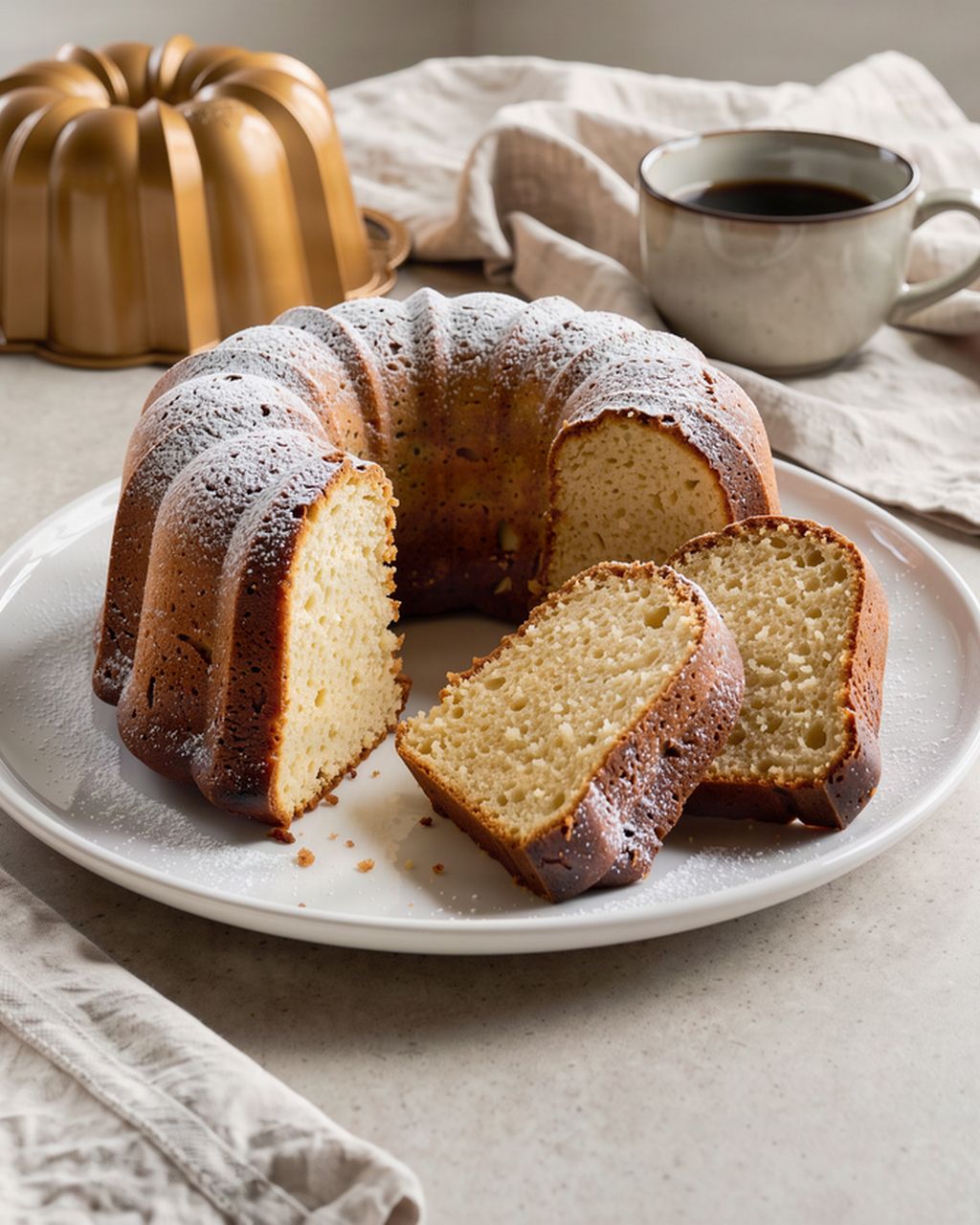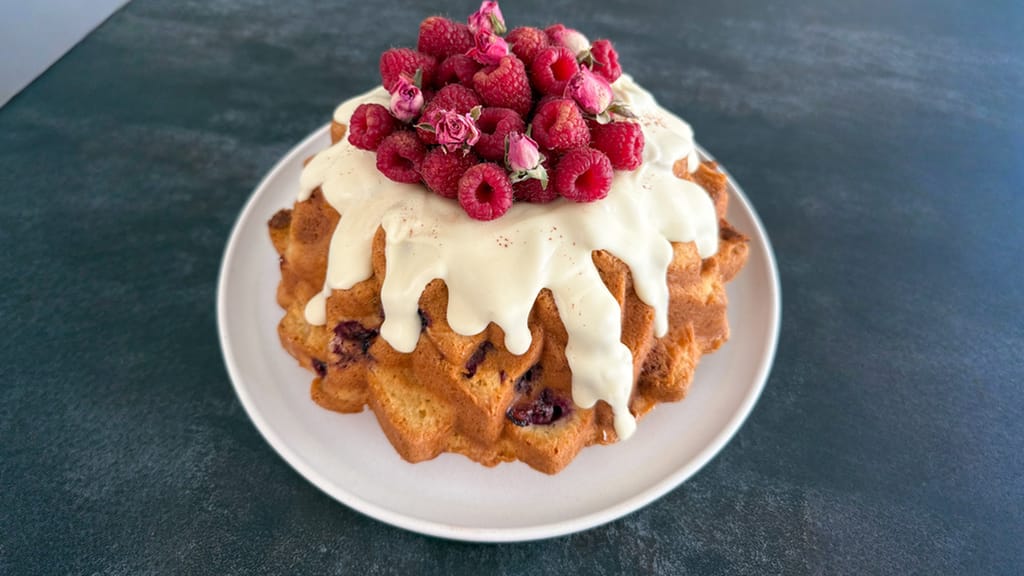
Raspberry bundt cake with white chocolate and sour cream
Substitutes for Greek Yogurt, Skyr and Sour Cream in Batter: Ratios and How They Affect Moistness
Updated Nov 17, 2026
The best swap for Greek yogurt, skyr or sour cream in baking is strained plain yogurt or smooth quark (tvaroh, a Czech fresh curd cheese), used 1:1. Kefir and buttermilk work too, but use a third less (2:3) because they're thinner. Leave the other liquid in the recipe as it is. Three things decide the result: how thick the substitute is, how much fat it has and how acidic it is. Below you'll find ratios for Bundt cakes, muffins, cakes and dips, plus what to do if your substitute costs you moistness or lift.
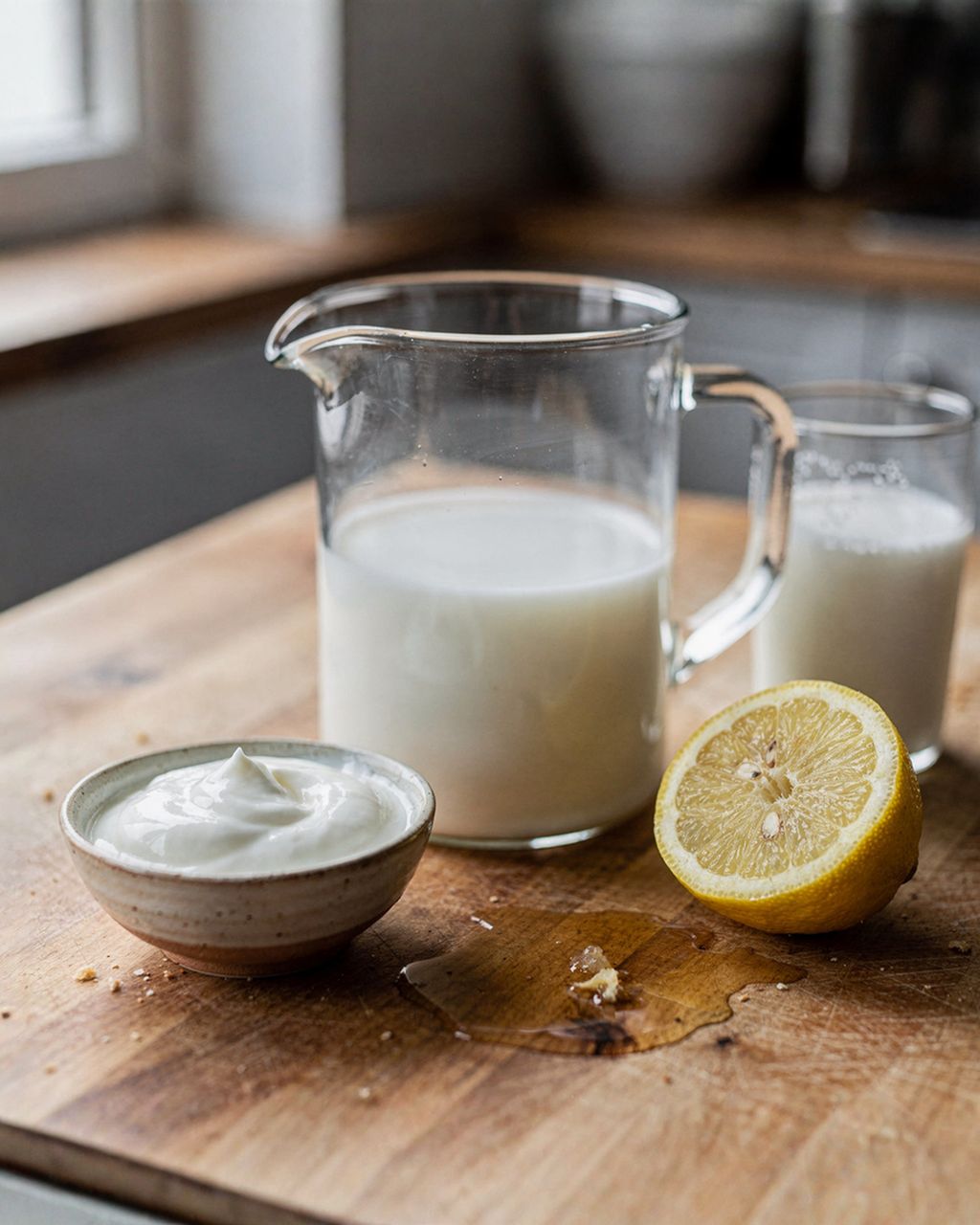
There are four best substitutes: strained plain yogurt, smooth quark, kefir and buttermilk. Here's how much to use in place of 100 g of the original:
Strained plain yogurt – 100 g (1:1). An all-purpose substitute for all three. Full-fat yogurt is closest to Greek yogurt, and well-strained yogurt gets close to skyr.
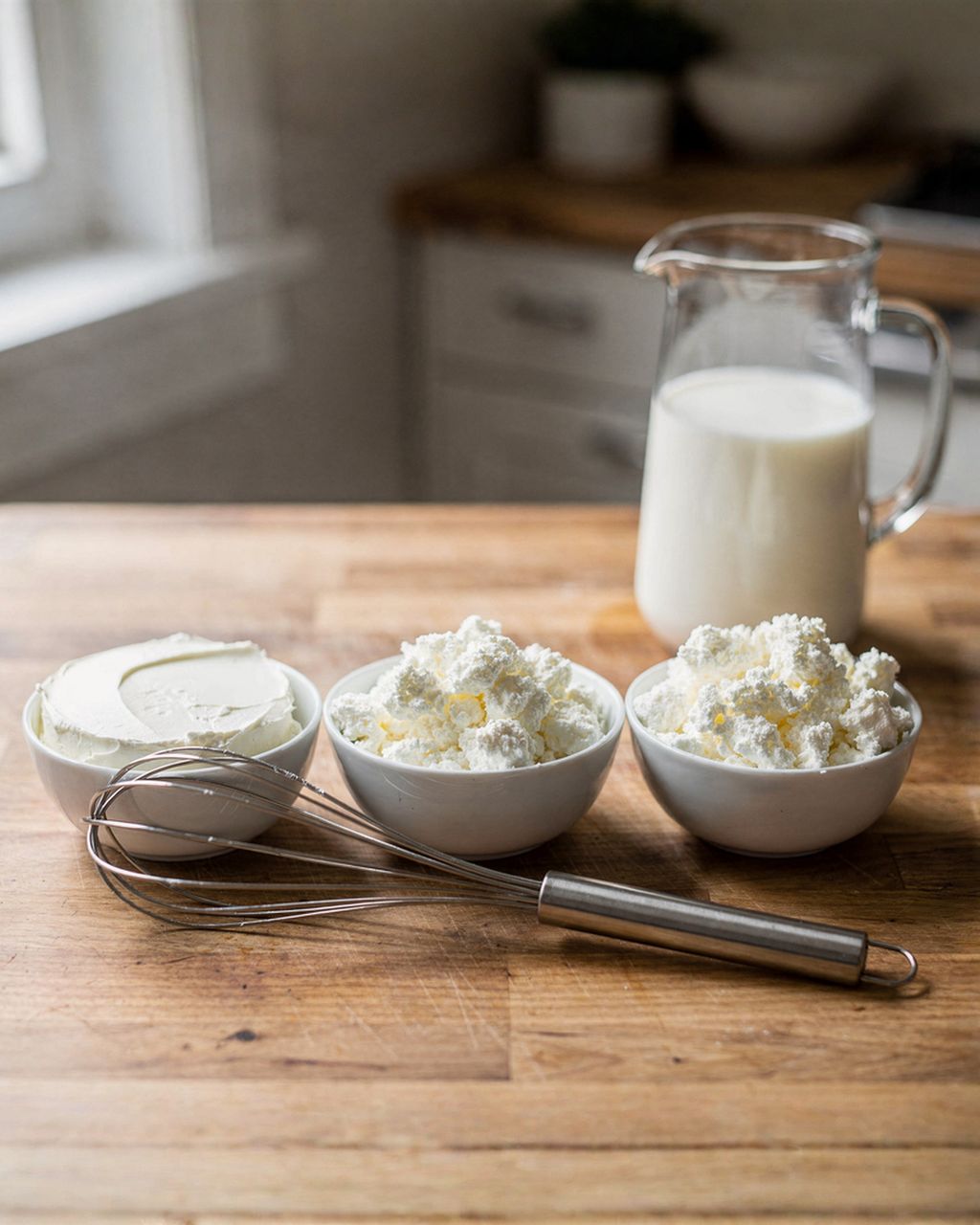
Smooth quark – 100 g (1:1), blended with 1–2 tablespoons of milk until smooth. The closest substitute for skyr, and it gives the batter structure.
Kefir – about 65–70 g (2:3), leaving the other liquid in the recipe as it is. Tangy and thin, and it gives good lift.
Buttermilk – about 65–70 g (2:3), leaving the other liquid as it is, same as with kefir. It's low in fat, so when replacing sour cream, add some fat too (see below).
For special cases:
Unstrained plain yogurt – 100 g (1:1), but only in batters that also contain milk. Reduce that milk by about 2 tablespoons.
Mascarpone + plain yogurt, 1:1 – when you need a stand-in for full-fat sour cream, for example in a tender, rich batter.
One simple rule applies: thick for thick, and use less of anything thin. The consistency of the batter matters more than exact grams.
Seasonal baking plans, tested recipes and kitchen tricks that save you time. Unsubscribe in one click.
Greek yogurt, skyr and sour cream differ mainly in fat and protein content, and that's what determines how they behave in batter. According to a comparison on Vitalia.cz (opens in a new tab), plain skyr has around 12 g of protein and 0.1–0.3 g of fat per 100 g. Greek yogurt varies widely between products: from 0 to 10 g of fat and from 3 to 10 g of protein per 100 g. Creamy "Greek-style" yogurts with 10% fat are low in protein (3–5 g), while truly strained yogurts have 8–10 g. Sour cream must by law contain at least 10% fat, typically 12–18% in shops, and is low in protein.
What this means in batter:
Fat = moistness. It coats the gluten and keeps the crumb tender and moist. That's why a Bundt cake made with sour cream is softer than one made with skyr.
Protein = structure. Skyr and quark firm up the batter. The crumb is then denser and drier, and the crust browns sooner.
Acidity = lift. All three are acidic and react with baking soda.
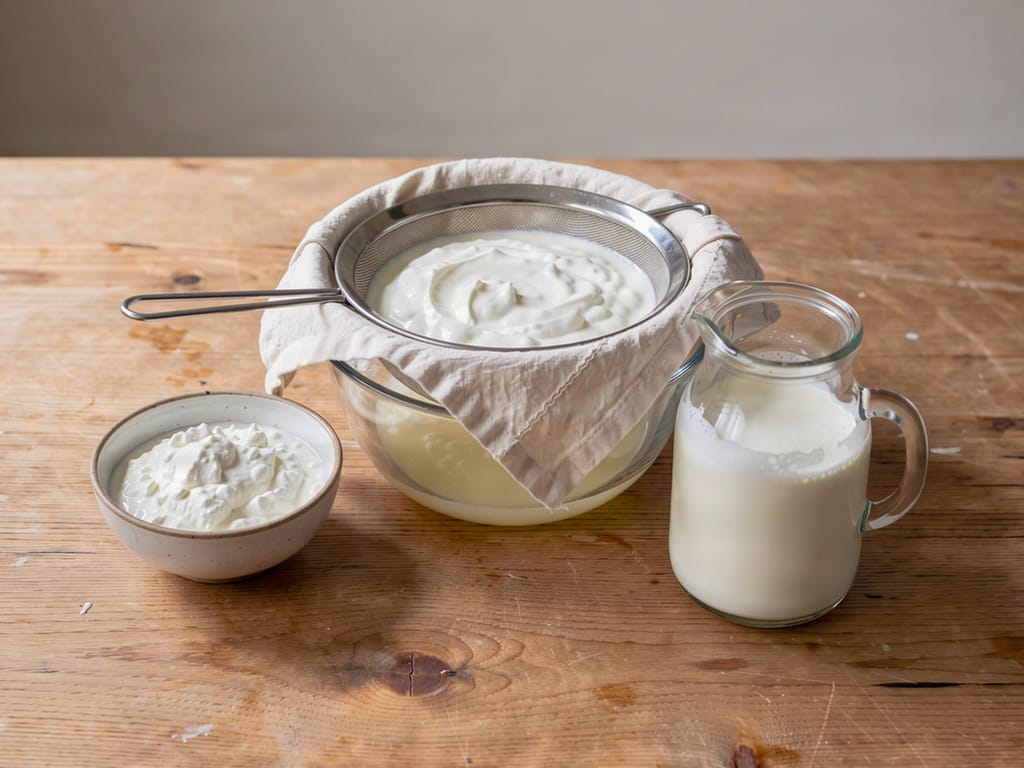
Plain yogurt turns into Greek yogurt once you let the whey drip out for 2–4 hours. It's the cheapest and most precise substitute, because you decide how thick it gets.
Line a sieve with a clean kitchen towel, cheesecloth or a paper coffee filter and set it over a bowl.
Pour in full-fat plain yogurt and cover it.
Let it drain in the fridge, not on the counter: 2–4 hours for Greek yogurt thickness, 8–12 hours (overnight) for skyr thickness.
Keep an eye on the weight: when 500 g is reduced to roughly 300–350 g, you have the thickness of Greek yogurt. If you let it drain even longer, until it holds its shape on a spoon, you're approaching skyr.
Don't pour the whey away. It's acidic, so you can use it in batter in place of milk, for example in pancakes or yeast dough.
The best substitute for sour cream in batter is full-fat Greek yogurt or strained plain yogurt, 1:1. They have similar thickness and acidity, just less fat. In a sour cream Bundt cake, a creamed butter cake or a mug cake, you usually won't notice the difference.
If you reach for something low in fat (skyr, smooth quark, 0% yogurt, buttermilk), put the fat back into the batter another way:
For every 100 g of substitute, add about 1 tablespoon (roughly 15 g) of oil or melted butter. That roughly makes up the fat you lose compared with sour cream.
Don't mix the batter longer than necessary. Without the fat, gluten develops faster and the crumb turns tough.
Expect the baked cake to dry out sooner. The next day, keep it well wrapped.
For how to keep a cake moist when it also lacks butter and eggs, see our article vegan Bundt cake: what to use instead of eggs, butter and milk.
To try it out, a moist yogurt fruit bublanina (Czech sheet cake) or a yogurt and poppy seed cake with pears are good choices. In both, the yogurt batter tolerates sour cream and Greek yogurt alike.
Raspberry bundt cake with white chocolate and sour cream
Raspberry sour cream Bundt cake – try it with Greek yogurt too
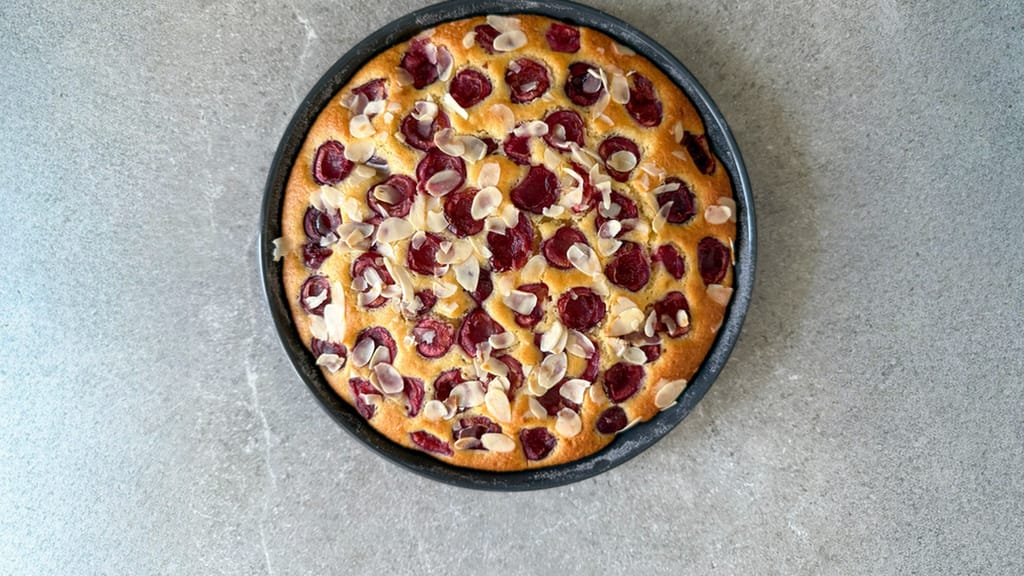
Soft & fluffy yogurt bublanina with fruit
Moist yogurt bublanina with fruit
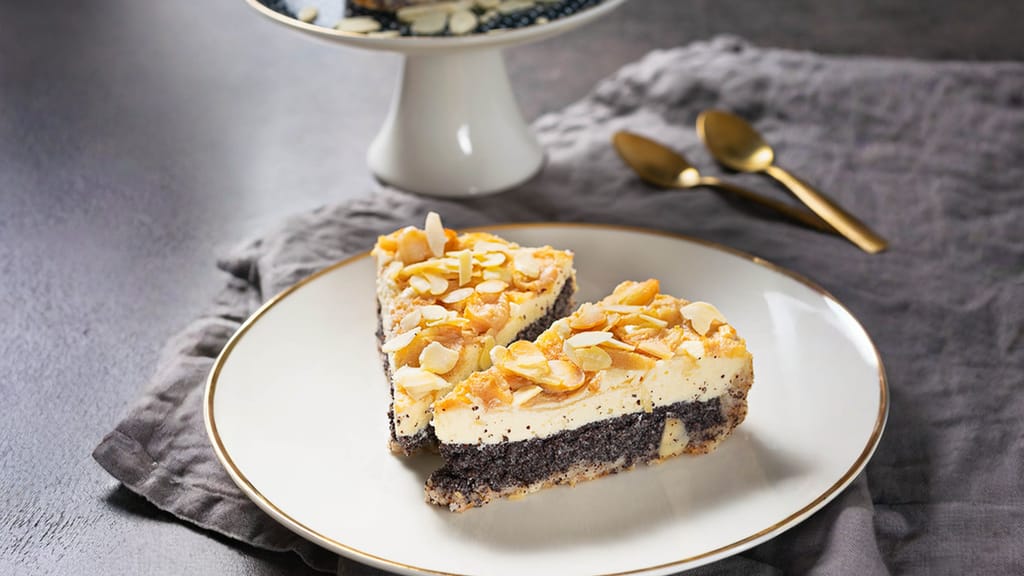
Yogurt & poppy seed cake with pears
Yogurt and poppy seed cake with pears
The most faithful substitute for skyr in batter is smooth quark blended until creamy, 1:1. Both are high in protein and low in water. Greek yogurt, in turn, is best replaced by strained full-fat plain yogurt.
What to watch out for:
Don't add quark lumpy. The lumps don't melt into the batter and leave dry white spots. Blend it with an immersion blender and a little milk.
Skyr instead of Greek yogurt firms up the crumb. In muffins, add a tablespoon of oil per 100 g, or they'll turn rubbery.
Kefir instead of Greek yogurt gives a lighter, moister crumb. Use it at 2:3 (about 65–70 g in place of 100 g) and leave the other liquid as it is, so the batter doesn't thin out.
It works well in, for example, currant yogurt muffins. In a savory yogurt pizza dough, Greek yogurt, skyr or strained plain yogurt all work. Thin kefir doesn't, because the dough would turn sticky.
Cheesecake filling or cream is a different case, since there the fat and whether the cream sets are what matter. If your filling stays soft, see our article why cheesecake doesn't set and stays runny.
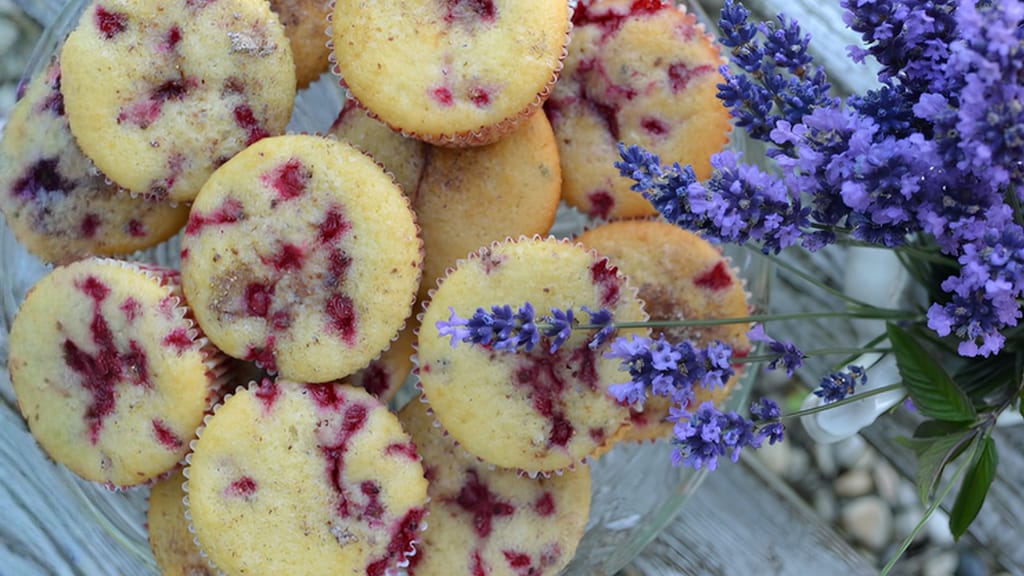
Easy redcurrant yogurt muffins
Currant yogurt muffins – also with skyr or kefir
The substitute affects rise only if the recipe relies on baking soda. It needs an acid, and that's exactly what a cultured dairy product supplies. Baking powder has its acid built in, so swapping is safer with it.
Kefir, buttermilk, yogurt, skyr: acidic enough, so leave the baking soda as it is.
Mascarpone, sweet cream or milk instead of sour cream: these lack acid. Add a tablespoon of lemon juice per 250 g, or replace part of the baking soda with baking powder.
Rule of thumb from baking practice: about ½ teaspoon of baking soda per 250 g of cultured dairy. More soda won't lift the batter any further, it will only leave a soapy aftertaste and darken it.
Have the opposite problem, and your recipe calls for buttermilk? There's an article for that: what to use instead of buttermilk.
The best substitute for Greek yogurt and sour cream in a dip is strained plain yogurt or smooth quark, 1:1. A dip mainly needs thickness, so don't use kefir or buttermilk, which are too thin.
Greek yogurt in a dip: strained plain yogurt, 1:1. For tzatziki, strain it well, because the cucumber releases more water. Try tzatziki made with Greek yogurt.
Sour cream in a dip: quark blended smooth with a little yogurt or milk. For a fuller flavor, add a tablespoon of mayonnaise or mascarpone.
Skyr in a dip: quark, 1:1. Skyr is more tart, so add a little lemon juice or yogurt to the quark.
Don't carry any of this over into a hot sauce. Yogurt and skyr curdle when cooked. How to deal with that is covered in our article what to use instead of cream in a sauce.
Opened yogurt, skyr and sour cream usually keep in the fridge for 3–5 days, as long as you keep the tub closed and scoop with a clean spoon. The exact period after opening is stated by the manufacturer on the packaging, and that takes priority.
Store them in the fridge at up to 5°C (41°F), at most 8°C (46°F), and not in the door, where the temperature fluctuates.
Whey on the surface is fine; just stir it in or pour it off.
Use any leftovers you can't finish in baking: all three are interchangeable in baking according to the ratios above.
Strain full-fat plain yogurt, because the fat keeps the crumb moist. Strained 0% yogurt has very little fat and behaves more like skyr, so in batter add about 1 tablespoon of oil per 100 g.
Yes, in batter you can use Greek-style yogurt 1:1 in place of Greek yogurt. Greek-style yogurt tends to be creamy, with more fat and less protein, so the crumb comes out moister, much like it does with sour cream. It works in a dip only if it's thick enough.
Skyr and quark aren't the same, but in batter and in dips you can swap them 1:1. Skyr is smoother and more tart, while quark is lumpier, so blend it with a little milk before using it, and for a dip add a little lemon juice or yogurt.
Replace sour cream in batter with unsweetened plant-based yogurt, ideally soy, 1:1, and add 1 tablespoon of oil for every 100 g. Soy has the most protein and holds the batter similarly; coconut is richer, but you'll taste it.
Replace Greek yogurt with kefir or buttermilk at 2:3, and leave the other liquid in the recipe as it is. It's not suitable for dips, but it works well in muffins, pancakes and mug cakes, because it adds lift and moistens the batter.
One recipe worth heating the oven for, one tip, and one deal from the shop. Nothing else.