Quiche and Savory Pies: Crust, a Filling That Doesn't Run, and Recipes
Quiche and Savory Pies: Crust, a Filling That Doesn't Run, and Recipes
Updated Nov 20, 2026
Quiche is a French savory tart: a crisp, tender crust filled with eggs and cream, baked with bacon, cheese or vegetables. To keep the filling from running, you need three things: a blind-baked crust, vegetables drained of their water, and a ratio of roughly 1 egg to 80–100 ml (⅓–⅖ cup) of cream. Below you'll find the crust, the technique, how to tell when the center is done, and tested recipes from spinach quiche to a zucchini sheet-pan savory cake.
What is quiche, and how does it differ from a savory pie?
Quiche is a savory tart with an egg filling: you pour a mixture of eggs and cream into a shortcrust shell and bake it until the filling sets into a delicate custard. "Savory pie" is a broader term. It also covers puff pastry pies on a baking sheet, thin flatbreads with toppings, and the zucchini cake (cukeťák), where eggs and flour make a dense batter rather than a custard.
You can tell the difference when you cut into it:
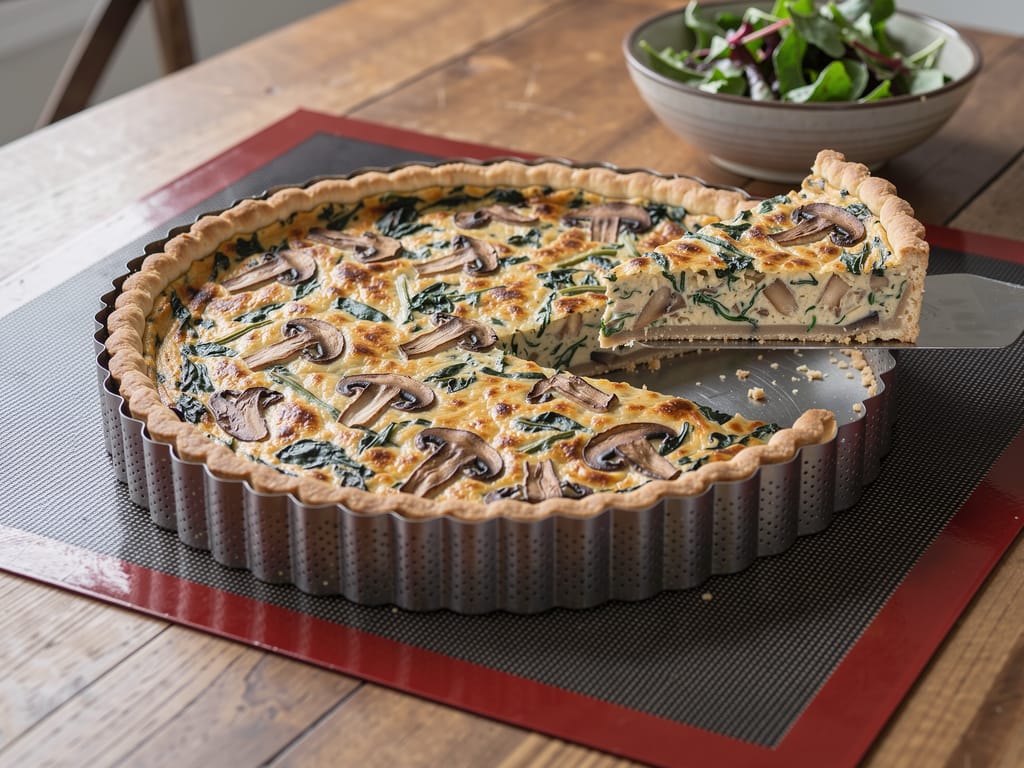
Quiche – a thin, crisp crust and a tall, creamy filling that holds together when sliced but isn't rubbery.
Savory pie made with dough – the filling is mixed right into the batter, so it holds its shape like a coffee cake and has no crust.
Savory sheet-pan tart – a thin base topped with a layer of thick cream or sauce and toppings, baked briefly at high heat.
According to the Oxford English Dictionary, the word quiche has appeared in French since 1805, and its origin is uncertain; it is most often linked to the German Kuchen, meaning cake. So "savory pie quiche" isn't nonsense, just the same thing said twice. In Czech, quiche can be either masculine or feminine; we write it as masculine, as in our recipes.
Did that help? We’ll send you more tips by email.
Seasonal baking plans, tested recipes and kitchen tricks that save you time. Unsubscribe in one click.
Quiche crust: shortcrust, whole-grain or puff pastry?
A classic quiche calls for shortcrust made from cold fat, flour and a few spoonfuls of ice water. It's sturdy, doesn't soak up liquid, and once blind-baked it holds even a runny filling. Whole-grain and oat crusts taste nuttier and crumble more, and puff pastry is the quickest but suffers the most under a wet filling.
The principle of shortcrust is simple. Small pieces of cold fat coated in flour melt in the oven, release steam and separate the dough into layers. If you knead it with warm hands or add too much water, gluten develops, the crust turns tough and shrinks away from the sides of the pan in the oven.
Our quiche crust recipe is built on 280 g all-purpose (plain) flour, 200 g cold butter, 5 g salt, a pinch of sugar and ice water that you add gradually, starting with just half of 100 ml. Quickly work the butter into the flour until it resembles coarse crumbs, bring it together with the water, chill it in the freezer for an hour, then roll it out into a 24–26 cm (9½–10 in) pan, up the sides too, so the tart has a tall edge. Prick the bottom with a fork, cover with parchment paper and pie weights, and blind-bake for 10 minutes at 200°C (400°F). Remove the paper and bake for about 5 more minutes, until the base loses its raw shine and turns lightly golden. Allow an hour and a half in total, most of which the dough spends chilling.
If you're short on time, reach for ready-made shortcrust pastry for pies. Roll it out to 3–4 mm, press it up the sides of the pan and blind-bake it just like homemade; store-bought dough needs weights and blind baking too.
Whole-grain and oat crust for quiche
Whole-grain flour absorbs more water and the dough is crumblier, so don't roll it thinner than 4 mm, and feel free to press it into the pan with your fingers. In the carrot and broccoli quiche, the crust is made from rolled oats, whole-grain rye flour, melted butter and room-temperature milk. You knead it for about 4 minutes and can simply press it into a 30 cm (12 in) pan with your hands. This crust isn't blind-baked; you fill it and bake right away.
Quiche made with puff pastry
You can make quiche with puff pastry, but keep in mind that puff pastry is the most vulnerable under a liquid filling: the layers of fat beneath the eggs won't puff up and the base stays rubbery. Three things help:
Use a shallow tart pan instead of a tall cake pan, so a thinner layer of filling sets before the pastry turns soggy.
Blind-bake for 10–12 minutes at 200°C (400°F) with weights, until the base turns golden.
Put the rack in the lower part of the oven so the base gets the most heat.
You can see how to handle ready-made puff pastry in a pan in the quark and raspberry puff pastry tart: you unroll the pastry together with its paper, lay it in a 28 cm (11 in) pan, snip off the excess with scissors and plug any gaps in the edge with the trimmings so the filling doesn't seep under the pastry. The rack goes in the lower part of the oven there precisely so the tart bakes through from underneath. You prepare a savory puff pastry tart the same way, except that an egg filling goes in instead of the quark (tvaroh, a Czech fresh curd cheese).
A quiche filling that doesn't run: the ratio of eggs to cream
The filling won't run when you keep the right ratio of eggs to liquid, when there's no extra water from the vegetables, and when a blind-baked crust lies beneath it. The starting ratio, which you can hardly go wrong with: 1 egg to 80–100 ml (⅓–⅖ cup) of cream. For a 24–26 cm (9½–10 in) pan, that's 3–4 chicken eggs and 250–350 ml (1–1⅓ cups) of 33% whipping cream.
Why it works: the egg proteins set with heat into a fine mesh that holds the liquid. The fat in the cream softens that mesh, so the filling is creamy rather than rubbery. If you use too few eggs, the mesh is sparse and the center runs. If you add too many, or replace the cream with thin milk, you get a firmer, omelet-like filling that easily weeps water.
Six rules for a filling that holds:
Blind-bake the crust – with paper and dried beans or rice, for 10–15 minutes, until the base turns golden.
Drain the vegetables – wilt spinach and squeeze it out, salt zucchini and wring it out in a towel, and sauté mushrooms until their juices evaporate.
Let the filling cool – hot vegetables release steam and water into the mixture.
Stir in the eggs off the heat if you prepare the filling in a pan, so they don't set before the tart is in the oven.
Salt carefully – bacon, smoked meats, blue cheese and Parmesan are salty enough on their own.
Watch the temperature – our recipes bake at 170–200°C (340–400°F); the taller the layer of filling, the lower the temperature and the longer the time. An oven that's too hot curdles the eggs into lumps and water seeps out of the filling.
Fill the pan no higher than 5 mm below the rim. The eggs puff up a little in the oven, and if they spill over the edge, they run under the crust and it sticks to the pan. The safest way is to set the pan on a baking sheet in the oven and pour in the last few spoonfuls of filling there, so nothing spills on the way.
How to tell when quiche is done
Quiche is done when the edges of the filling are puffed and firm and the center only quivers when you gently shake the pan, without rippling like liquid. The surest method is a thermometer: the US Department of Agriculture (USDA) states that quiche and other egg dishes should reach 71°C (160°F) inside.
More clues:
A knife inserted 2–3 cm (about 1 in) from the center comes out clean, with no liquid egg.
The surface is golden; dark brown blisters mean the oven is too hot.
After taking it out, let the quiche rest for 10–15 minutes. The residual heat finishes the filling, and the slices won't fall apart when cut.
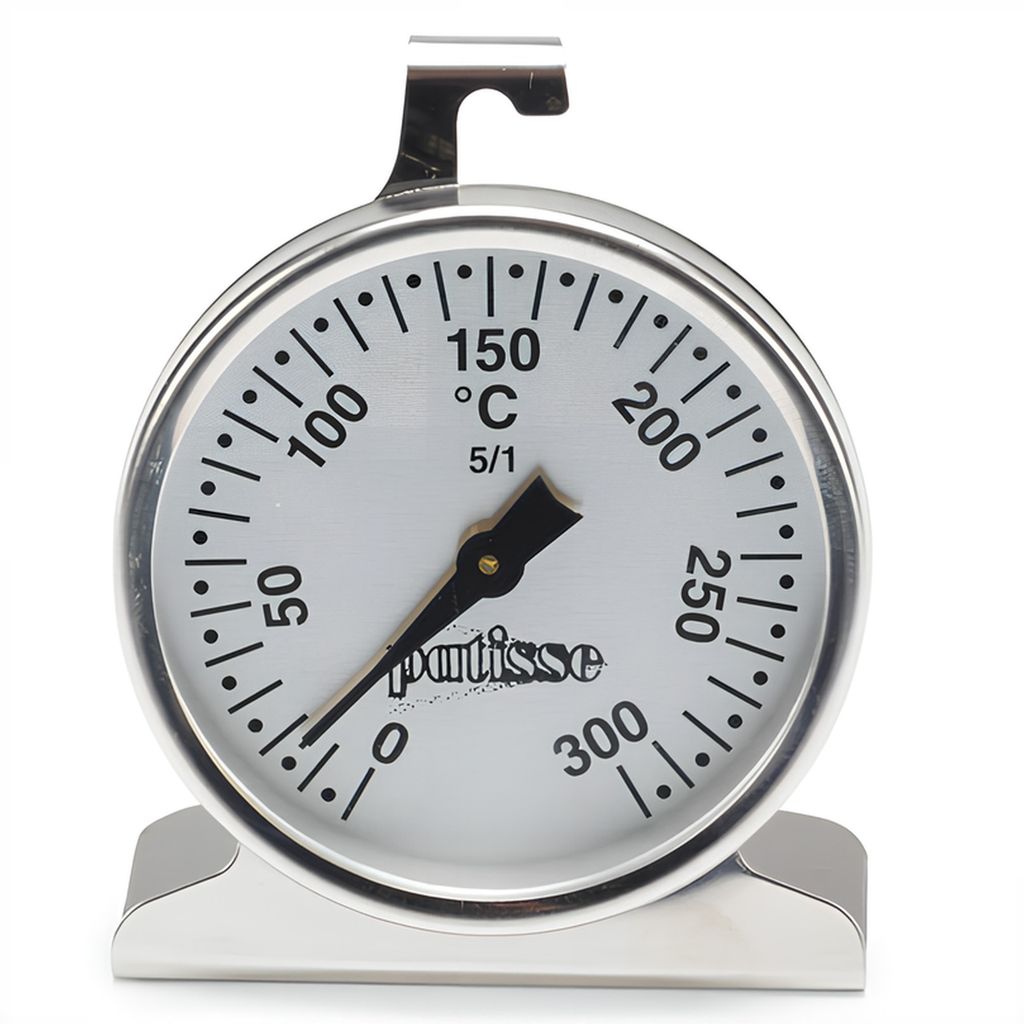
If the surface darkens before the center sets, cover the tart with aluminum foil and lower the temperature by 10–20°C (20–35°F). And if your oven bakes differently from what the dial says, check it with an oven thermometer – with an egg filling, every ten degrees matters.
Quiche Lorraine: what goes in it and how to bake it
Quiche Lorraine is the original quiche from the French region of Lorraine: a crust, eggs, thick cream and smoked bacon. The traditional Lorraine version usually has no cheese; Emmental or Gruyère were added only by later versions, which are common today.
The method for the traditional version is short. Scatter browned diced smoked bacon over a blind-baked shortcrust shell, pour over 3 eggs whisked with 300 ml (1¼ cups) of thick cream, add pepper and a pinch of nutmeg, and bake at 180°C (350°F) for about 30–35 minutes, until the center sets. You hardly need any salt, as the bacon is salty itself.
Lorraine is traditionally considered the home of quiche Lorraine, and it most likely spread beyond the region only in the 20th century – only then did it become the dish you know from bistros around the world.
Want a Lorraine with cheese and something extra? The closest of our recipes is the mushroom quiche with bacon: the same filling of eggs, cream, nutmeg and Emmental, just with mushrooms and onion. We describe the method below, with the vegetable quiches.
Quiche with spinach
Spinach quiche is the most popular variant and also the trickiest: fresh leaves release so much water that they soggy any crust, unless you wilt them and squeeze them out first.
The spinach quiche with chicken solves this in a skillet. In olive oil you sauté a red onion and pieces of Black Forest ham, add sliced chicken breast and cook it until done (74°C inside), then add 250 g spinach. Next you stir ricotta and corn into the pan, season with pepper and sweet paprika, and add four beaten eggs only off the heat. You pour the filling into a crust of rolled oats and whole-grain rye flour and bake at 200°C (400°F) for 20–25 minutes; the whole thing takes about 50 minutes.
A meatless spring version is in the wild garlic and goat cheese quiche. On a blind-baked crust made with vegetable fat and all-purpose flour, you spread chopped wild garlic, crumbled goat cheese and drained sun-dried tomatoes, and pour over crème fraîche whisked with whipping cream and three eggs. It bakes at 190°C (375°F) for 30–40 minutes, but the dough has to rest in the fridge for at least an hour, so make it ahead.
Zucchini quiche and savory zucchini cake
Zucchini is mostly water, so never put it in quiche raw and unsqueezed. Grate it coarsely, toss it with a teaspoon of salt, leave it for 10 minutes, then wring it out thoroughly in a clean towel – you'll see how much liquid would otherwise end up in the filling.
For zucchini quiche, mix the squeezed zucchini with 3 eggs, 250 ml (1 cup) of cream and a handful of grated cheese, season with pepper, pour onto a blind-baked crust and bake at 180°C (350°F) for about 35 minutes, until the center sets. Go easy on the salt, as the zucchini has already been salted.
Savory zucchini cake as Czech kitchens know it is a different discipline: no crust, the zucchini is right in the batter. Cukeťák: savory zucchini cake with smoked meat and cheese is built on a kilo of finely grated zucchini, 300 g of Moravian smoked meat cut into small cubes, 200 g of coarsely grated Gouda, scallions, six eggs and 250 g of semi-coarse flour (Czech polohrubá, slightly grittier than all-purpose) mixed with baking powder. You season it with marjoram, pressed garlic and pepper, pour it into a greased pan or onto a baking sheet and bake at 180°C (350°F) for 45–55 minutes, until the surface turns golden and the edges pull away from the pan. Salt with care, as both the smoked meat and the cheese are salty.
Vegetable quiche: broccoli, carrot and mushrooms
Broccoli, carrots and mushrooms are ideal for quiche because they hold their shape and can be drained of water beforehand – broccoli by brief blanching, mushrooms by sautéing.
The whole-grain quiche with broccoli and smoked ham has a dough made from egg yolks, margarine, whole-grain spelt flour, salt, baking powder and a little water. Instead of cream, the filling is held by cottage cheese whisked with the leftover egg whites from the dough and one whole egg; you stir in diced smoked ham and briefly blanched, fully cooled broccoli. It bakes at 170°C (340°F) for about 40 minutes, and you should allow an hour in total.
The carrot and broccoli quiche is meatless. You drop the broccoli into boiling salted water for 2 minutes and rinse it under cold water, whisk the eggs with milk and stir in grated carrot and the broccoli. Pour the mixture onto the oat crust, after 10 minutes at 200°C (400°F) sprinkle with crumbled blue cheese or Gorgonzola, and bake for about 10 more minutes, until the eggs set.
The mushroom quiche with bacon is a weekend project of roughly three and a half hours, though most of it is waiting. You work the dough of chilled vegetable fat and whole-grain spelt flour in a food processor with short pulses only, so visible pieces of fat remain, chill it, line a pan about 25 cm (10 in) across, and blind-bake at 180°C (350°F) with weights, then another 10 minutes without them. In the fat rendered from diced bacon you sauté an onion and 500 g of mushrooms, spread them over the crust and pour over eggs with cream, nutmeg and grated Emmental. It bakes at 180°C (350°F) for about 35 minutes and is served with a vegetable salad.
Savory pie with ham and cheese
The savory pie with ham and cheese is the quickest quiche you can bake: on a blind-baked crust spread 150 g of diced ham and 100 g of grated cheese (Edam, Emmental or Gouda), pour over 3 eggs whisked with 250 ml (1 cup) of cream, add pepper and bake at 180°C (350°F) for 30–35 minutes. Choose good-quality, drier ham; cheap, watery ham releases juice in the oven.
For lovers of strong cheeses there is the cheese quiche with romadur – without an egg filling, with a tomato base. You blind-bake a crust made from all-purpose flour, butter, processed cheese, an egg and milk at 180°C (350°F), spread it with a sauce of onion, garlic and tomato passata, and top with Canadian-style bacon, slices of romadur and cherry tomatoes with oregano. Allow about an hour and a half in total.
Savory tart with pears and blue cheese
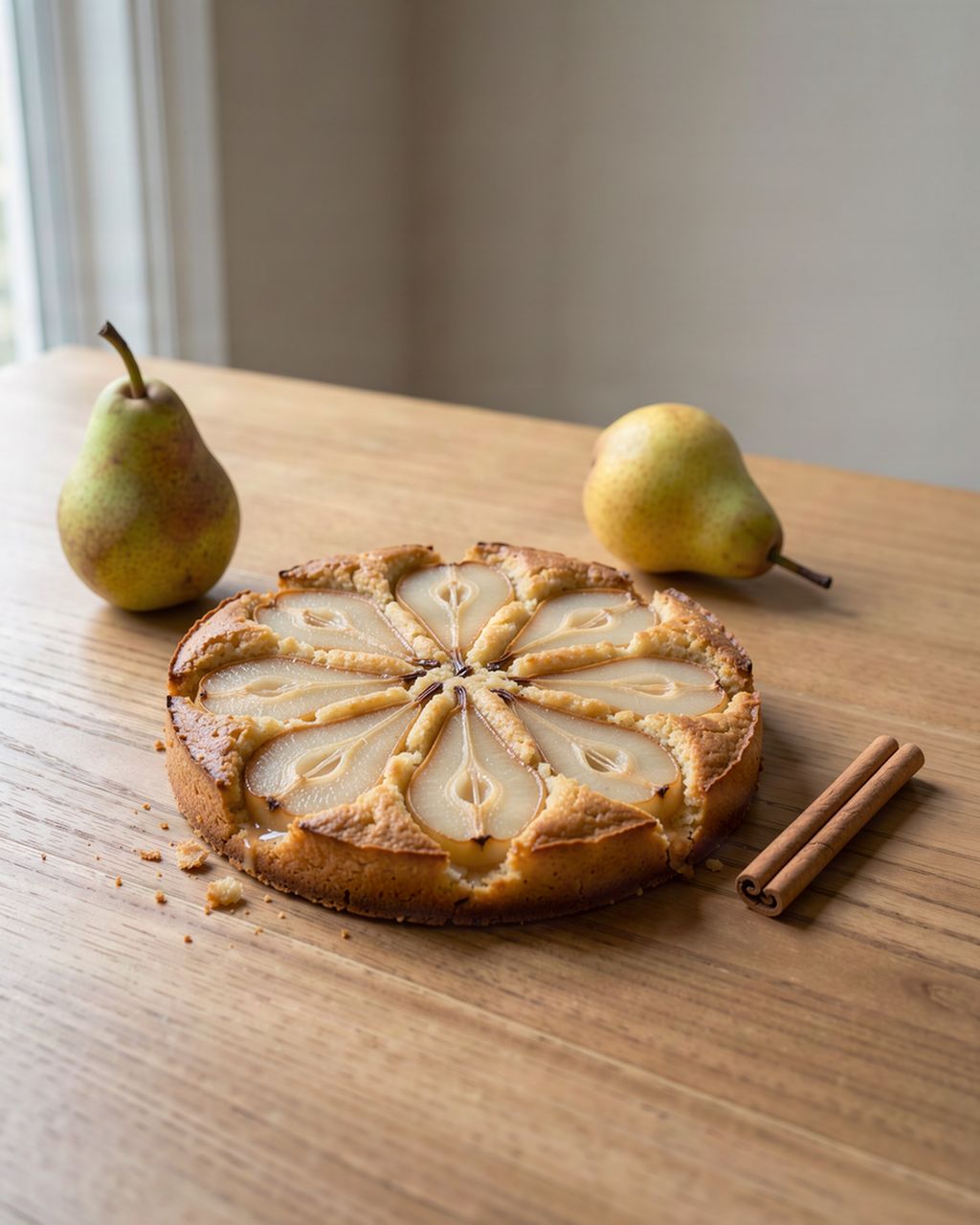
The savory tart with pears and blue cheese is all about contrast: sweet, juicy pear, sharp, salty blue cheese and walnuts on top. Choose ripe but firm pears, cut them into thin wedges and arrange them on the blind-baked crust, crumbling about 100 g of blue cheese between them along with a handful of coarsely chopped walnuts. Pour over 3 eggs with 250 ml (1 cup) of cream, add pepper and bake at 180°C (350°F) for about 30 minutes; barely add any salt, as the blue cheese is salty enough.
Blue cheese or Gorgonzola is also used on top of the carrot and broccoli quiche above – and if you have pears left over, you'll find more ideas in the article what to bake with pears.
Savory sheet-pan tart and puff pastry sheet-pan tart
A savory sheet-pan tart needs a thick layer (crème fraîche, thick cream) or a filling mixed right into the dough, as with cukeťák, because a liquid egg filling would run off without a tall rim.
The savory asparagus tart with bacon and yogurt is a typical sheet-pan tart. You let a quick dough of all-purpose flour, Greek yogurt, an egg, olive oil and baking powder rest for 30 minutes and roll it into the thinnest flatbread you can. Spread it with crème fraîche seasoned with salt, pepper and nutmeg, top with thin slices of red onion, bacon and green asparagus, and bake in an oven heated to 250°C (480°F) for 8–12 minutes. To finish, sprinkle with lemon zest and drizzle with juice.
You make a savory puff pastry sheet-pan tart in a similar way: unroll the sheet together with its paper onto a baking sheet, fold the edges over by 1–2 cm and press with a fork to form a rim, and prick the base. Blind-bake it for 10 minutes at 200°C (400°F), spread with crème fraîche mixed with one egg, top with ham, vegetables or cheese and bake until golden.
Savory tart made with boiled potatoes
A savory tart made with boiled potatoes has a potato base instead of a flour crust: you grate or press cooled boiled potatoes, mix them with an egg and a few spoonfuls of flour and press them into a greased pan as both base and rim. Blind-bake it at 200°C (400°F) for about 15 minutes until golden, pour over eggs with cream and bacon or vegetables, and finish baking at 180°C (350°F) for about 30 minutes. The potatoes must be completely cool and steamed dry, otherwise the dough is sticky.
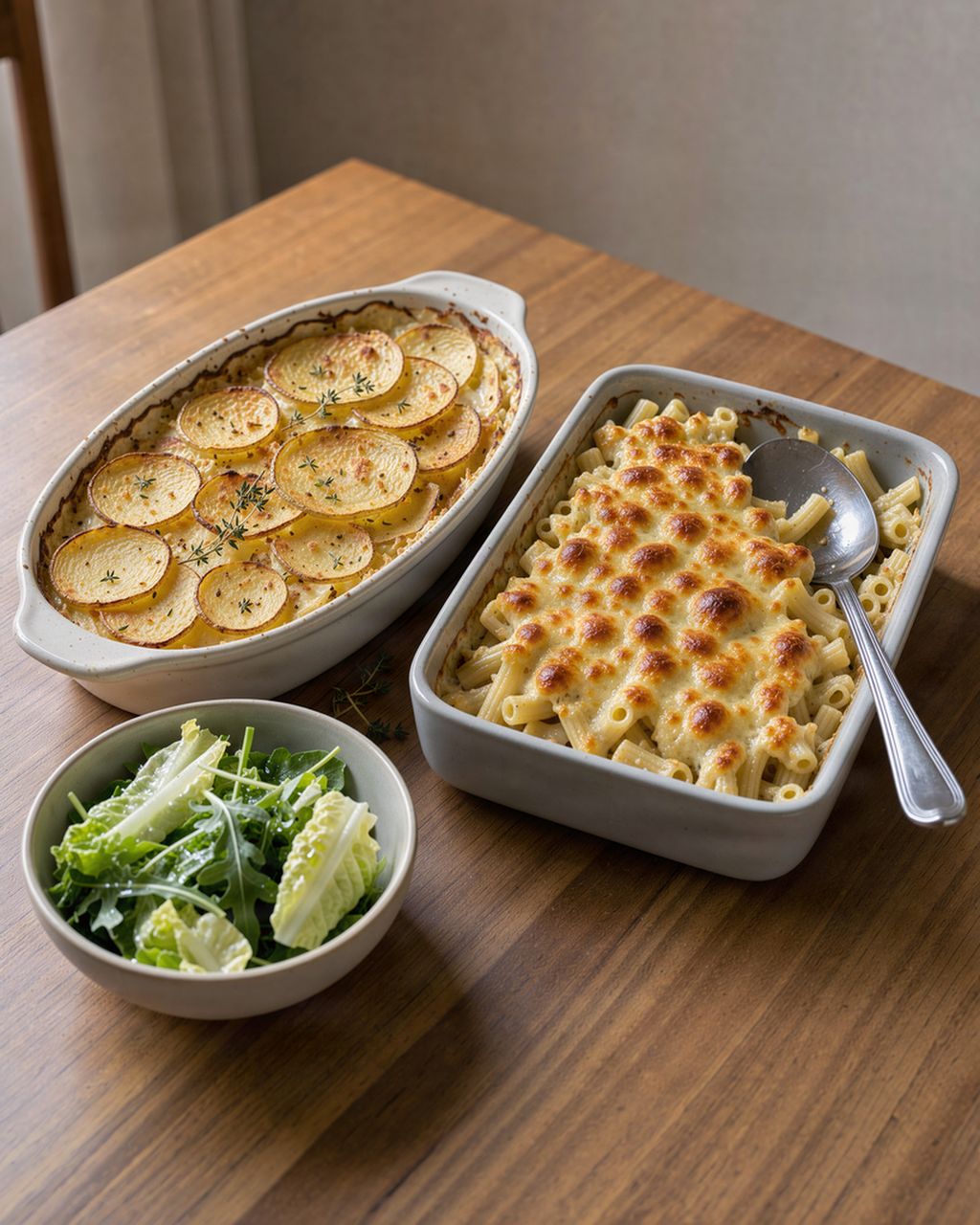
If you want potatoes with an egg topping without shaping a crust, there are the classic baked potatoes. You layer potatoes boiled almost until tender with špekáčky (Czech smoked sausages) in a baking dish greased with butter and dusted with breadcrumbs, pour over five eggs whisked with cream, salt, pepper and mustard, sprinkle with Gouda and bake at 180°C (350°F) for about 20 minutes. More one-dish ideas are in the article on baked potatoes and pasta bakes.
The most common quiche mistakes and how to fix them
Most failed quiches go wrong in one of five ways: a wet bottom, a runny center, a curdled filling with water, a crust that slumps from the sides in the oven, or a bland flavor.
Wet, pale bottom – the crust wasn't blind-baked, or the filling was warm and watery. Next time, blind-bake the base until golden and bake on the bottom rack.
Runny center – too few eggs for the amount of liquid, or the tart came out too soon. Stick to the ratio of 1 egg to 80–100 ml (⅓–⅖ cup) of cream and let the quiche rest after baking.
Filling full of holes and water – the eggs overheated. Lower the temperature by 10–20°C (20–35°F) and take the tart out while the center still jiggles slightly.
Edge slid down the sides – the dough was warm or overworked. Put the lined pan in the fridge for 20–30 minutes or briefly in the freezer before baking, as the mushroom quiche recipe does, and blind-bake with weights all the way up to the edge.
Bland flavor – an egg filling needs bold partners. Pepper, nutmeg, browned onion or mustard make a big difference.
Quiche ahead of time: what to prepare the day before
Quiche can be split over two days with no loss of quality. The dough keeps in the fridge wrapped in plastic wrap until the next day – the wild garlic quiche recipe counts on this directly. You can also blind-bake the crust, cool it and leave it covered at room temperature; but mix the egg and cream filling only right before baking, so the vegetables don't start releasing water.
A whole baked quiche is often better the next day after reheating in the oven than freshly baked: the filling settles and slices more cleanly. Reheat it at 160–170°C (320–340°F) for about 15 minutes, until it reaches 74°C (165°F) in the middle, not in the microwave – that makes the crust soggy.
How to serve quiche and with what
Quiche tastes good warm, lukewarm or cold, which makes it an ideal make-ahead dish: you bake it in the evening, and the next day you have it for lunch or in a lunchbox. The creamy filling needs a counterbalance – best of all a tart green salad with a mustard or lemon dressing.
For lunch: a slice of quiche with salad is as filling as a hot meal. You'll find more dishes that keep for two days in the article what to cook for lunch.
In winter: instead of a leaf salad, a warm salad of roasted beets or citrus fits well – you'll find inspiration in winter salads.
For breakfast or brunch: a cold slice of quiche is a ready-made savory breakfast, and you'll find ideas for more in the article on savory breakfasts.
Cut with a sharp knife dipped in hot water and wiped dry – the cut will be clean and the filling won't smear.
Pans and tools for quiche and savory pies
Patisse
Patisse Oven ThermometerKč 243.00


Frequently asked questions
How long does quiche keep in the fridge?
Eat baked quiche within 2–3 days at most, which is what the Egg Safety Center recommends for leftover egg dishes. Refrigerate it, covered, within 2 hours of baking, as the US Department of Agriculture advises, and reheat it until hot all the way through before eating.
Can you freeze quiche?
Yes, a baked quiche that has cooled completely can be frozen whole or in slices, wrapped tightly in plastic wrap. After thawing, the filling is usually a little less smooth, but the flavor stays. Thaw it in the fridge and reheat it in a 160–170°C (320–340°F) oven until hot all the way through.
What can I use instead of cream in quiche?
You can replace whipping cream with crème fraîche, sour cream thinned with a little milk, or cottage cheese. Crème fraîche makes the filling thicker and slightly tangy, and cottage cheese makes it firmer and less creamy, as in our whole-grain quiche with broccoli and smoked ham. Milk on its own works too, but the filling comes out lighter and firmer.
What cheese goes in quiche?
Hard cheeses that melt well work best in quiche: Emmental, Gruyère, Gouda or Edam. For a stronger flavor, reach for blue cheese, Gorgonzola or goat cheese; a small amount is enough. Use fresh mozzarella only sparingly, as it releases water into the filling in the oven.
Can you bake quiche without a crust?
Yes, you can bake a crustless quiche with the same egg filling in a greased dish dusted with breadcrumbs or grated cheese. Bake it at 170–180°C (340–350°F) until the center only jiggles slightly when shaken, usually for a little less time than with a crust. The result is closer to a frittata and slices best when lukewarm.
Want tips like this every Thursday?
One recipe worth heating the oven for, one tip, and one deal from the shop. Nothing else.