What Temperature to Bake Gingerbread Cookies: Oven Temp and Baking Time by Thickness
Oven Thermometer: How to Find Your Oven's Real Temperature (and Why It's Off)
Updated Nov 2, 2026
An oven thermometer is the only reliable way to find out your oven's real temperature, and it can easily be 5–15 °C (about 10–30 °F) away from what the dial says. The oven doesn't measure the temperature where your cake is actually baking, it heats in cycles, switching on and off, and it drifts out of calibration as it ages. Here's how to measure the real temperature in 30 minutes, why ovens get it wrong, why it matters so much for Christmas cookies, and how to bake around the result so your recipes turn out the way they should.
Use an oven thermometer to find your oven's real temperature: stand it in the middle of the middle rack, set the oven to 180 °C (350 °F), and after 20 minutes take three readings 10 minutes apart. The average tells you the real temperature, and the spread tells you how much the oven swings.
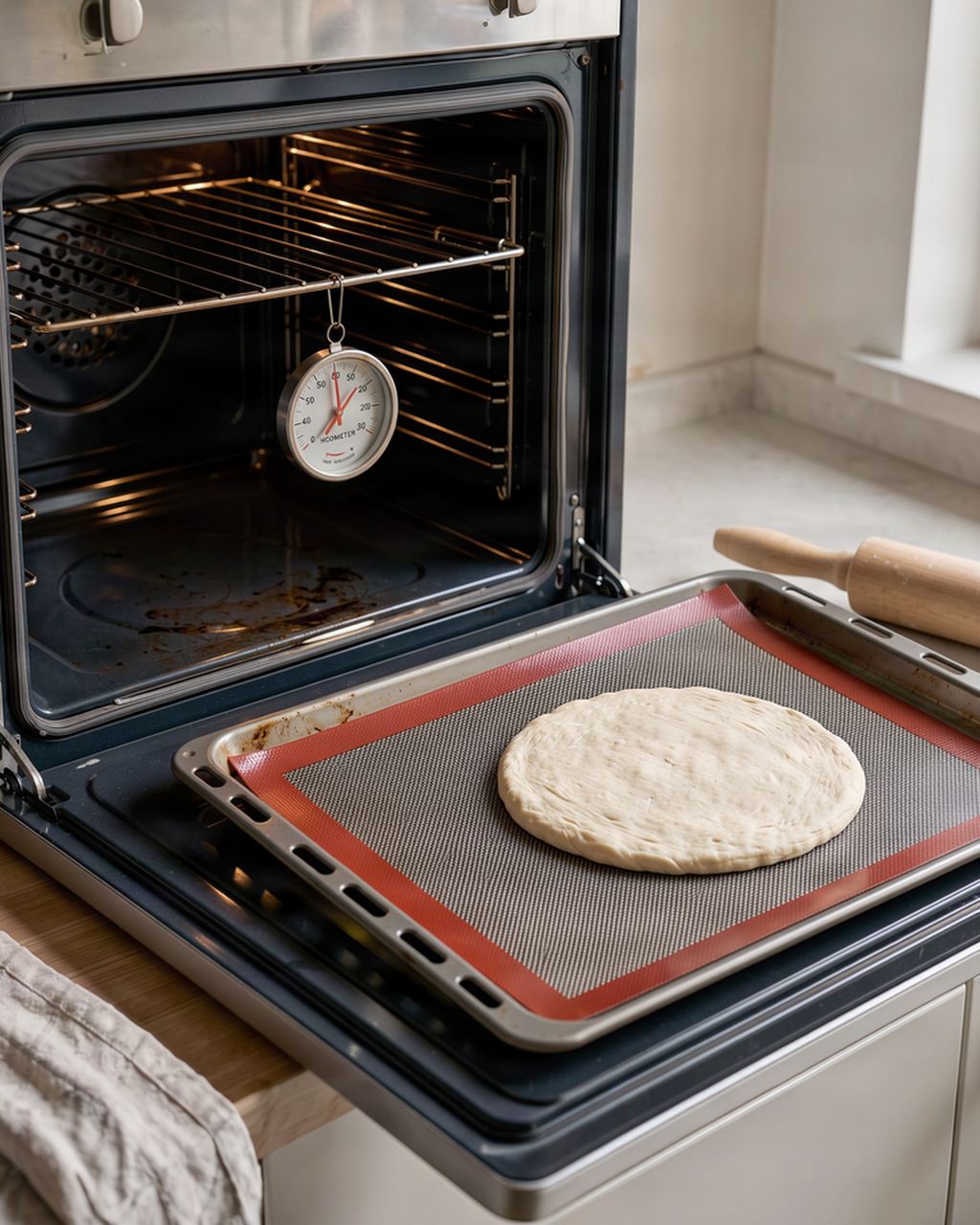
Rack in the middle, thermometer in the middle of the rack. Not against the wall, not near the heating element, where it will always read higher.
Choose the mode you use most (top and bottom heat, or fan) and set it to 180 °C (350 °F).
Wait 20 minutes after switching on, not just until the oven beeps.
Take a reading three times, 10 minutes apart. Look through the glass with the oven light on. Every time you open the door, the temperature drops by dozens of degrees and throws off the measurement.
Write down the average and the spread. For example: "set to 180, actual 168, swings between 160 and 176."
Repeat at 160 and 200 °C (320 and 400 °F). The error isn't always the same across the range; some ovens are accurate at low temperatures and drift at higher ones.
An ordinary dial oven thermometer is all you need. The Patisse oven thermometer we sell is exactly this type: it has a range of 0–300 °C, you stand it on the rack, leave it in the oven, and read it through the glass.
Seasonal baking plans, tested recipes and kitchen tricks that save you time. Unsubscribe in one click.
An oven shows the temperature it's aiming for, not the one it has right now. Four things cause the gap: thermostat cycling, sensor placement, calibration drift with age, and not preheating long enough.
The thermostat heats in cycles. The oven heats past the set temperature, the element switches off, the oven is allowed to fall below it, and then it switches back on. So the temperature is always swinging around the number on the display and never sits exactly on it.
The sensor measures a single point. The temperature sensor is usually near the back or side wall. In the middle, where your pan sits, it may be different, and near the door or in the corners different again.
The thermostat drifts over time. Even an oven that was accurate at first can be off by 10–15 °C (roughly 20–25 °F) after a few years without you noticing.
The "preheated" signal comes early. The oven beeps when the air near the sensor has warmed up. But the walls, racks, and trays haven't absorbed heat yet, and as soon as you open the door, the temperature drops.
A typical home oven is off from the set temperature by roughly 5–15 °C (about 10–25 °F), for two different reasons that add up:
Cycling swings – during baking, the temperature naturally rises and falls by roughly 5–15 °C above and below the set value. Every oven does this, and the average can still be right on target.
Constant offset (calibration) – the thermostat consistently runs hotter or cooler than it shows. Even new ovens can differ from the display by anywhere from a few degrees up to fifteen, and older, cheaper ones by even more.
In practice, with the oven set to 180 °C (350 °F), the air in the middle can range between roughly 165 and 195 °C. For roast meat or vegetables, that doesn't matter. For sponge cake, macarons, meringue kisses such as lilac meringues with lemon cream, or cheesecake, it's the difference between success and a sunken failure.
If your thermometer shows a difference of more than 25–30 °C, or the readings jump around wildly between measurements, it's no longer normal swinging. The thermostat or heating element is probably failing, and it's time to call a repair service.
Not accurately. Without a thermometer, you can only tell where the oven bakes hotter and where it bakes cooler, not how many degrees it really is. Eyeballing it, or judging by how fast paper browns, is far too imprecise to justify turning the dial.
What you can tell without a thermometer:
Hot spots: the toast test (described below) shows which parts of the tray bake faster.
That the oven runs hotter than it should: bakes are dark outside and raw inside, and the edges of cookies brown before the recipe says they should.
That the oven runs cooler: baking takes much longer than the recipe says, cookies stay pale, and sponge cake sinks.
To get an actual number for how many degrees your oven is off, you need a thermometer. One measurement is enough, and you'll know it for good, until the oven breaks or drifts out of calibration.
The back corners and the areas near the heating elements are usually the hottest, and the area by the door is the coolest. The difference between a corner and the center can be several dozen degrees, which is why cookies burn at one end of the tray and stay pale at the other.
You can map them with a simple toast test: cover an entire baking tray with slices of plain white sandwich bread, put it in an oven preheated to 180 °C (350 °F), and watch how it browns. After a few minutes you'll see a map of your oven: dark slices are hot spots, light ones are cool spots.
What to do about it:
Rotate the tray 180° halfway through baking. The simplest and most effective trick for even baking.
Put the pan in the center, not in a corner and not too close to the top element.
Don't bake on two racks at once in a mode without a fan. The top tray shades the bottom one. For several trays at once, fan mode is better.
Preheat the oven for 15–20 minutes at 180 °C (350 °F), and 20–25 minutes at 220 °C (430 °F) and above, even if it beeps sooner. The "preheated" signal means the air near the sensor has reached the temperature, not that the walls and racks have heated through.
Why it matters: heated walls act as a heat reservoir. When you open the door and put in a cold pan, the hot walls quickly bring the temperature back up. In an oven that has only just beeped, the temperature falls much lower once the pan goes in and recovers slowly, and the first minutes of baking are exactly when the batter rises and sets its shape.
An oven thermometer takes the guesswork out: don't bake until it shows your target temperature (and for another 5–10 minutes after that).
Cookies bake at a low temperature for a short time, so a 10–15 °C (roughly 20–25 °F) error decides between a pale, tender cookie and a burnt edge. In a cake, a few degrees get lost over the longer bake; small, thin cookies react within minutes.
Vanilla crescents should stay pale. In an oven that runs hot, the tips brown before the center bakes through, and they break. You'll find the temperatures in the article what temperature to bake vanilla crescents.
Linzer cookies in an overheated oven turn golden at the edges quickly and dry out. See what temperature to bake Linzer cookies.
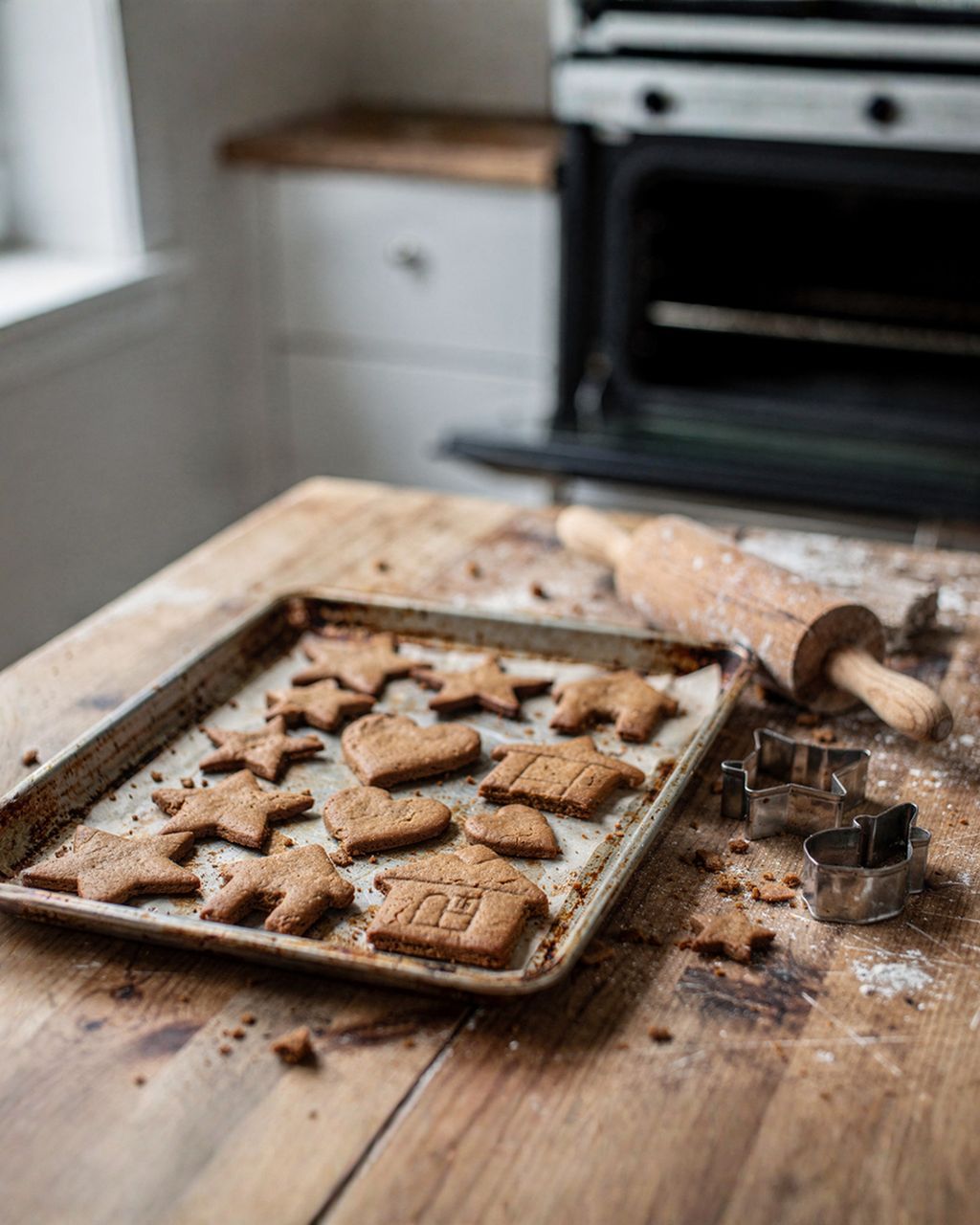
Gingerbread cookies in an oven that's too hot turn hard and dark. See what temperature to bake gingerbread cookies.
Baking several trays in a row: every time you open the door, the temperature drops. The thermometer shows when the oven is ready for the next tray.
You'll find an overview of temperatures for other types in the article what temperature to bake Christmas cookies. The same applies to all of them: the numbers in a recipe only work if your oven really heats to what it shows.
An oven that's too hot bakes the outside faster than the inside, and one that's too cool bakes slowly, so the batter loses its shape in the meantime. Typical problems that are often caused by just a few degrees:
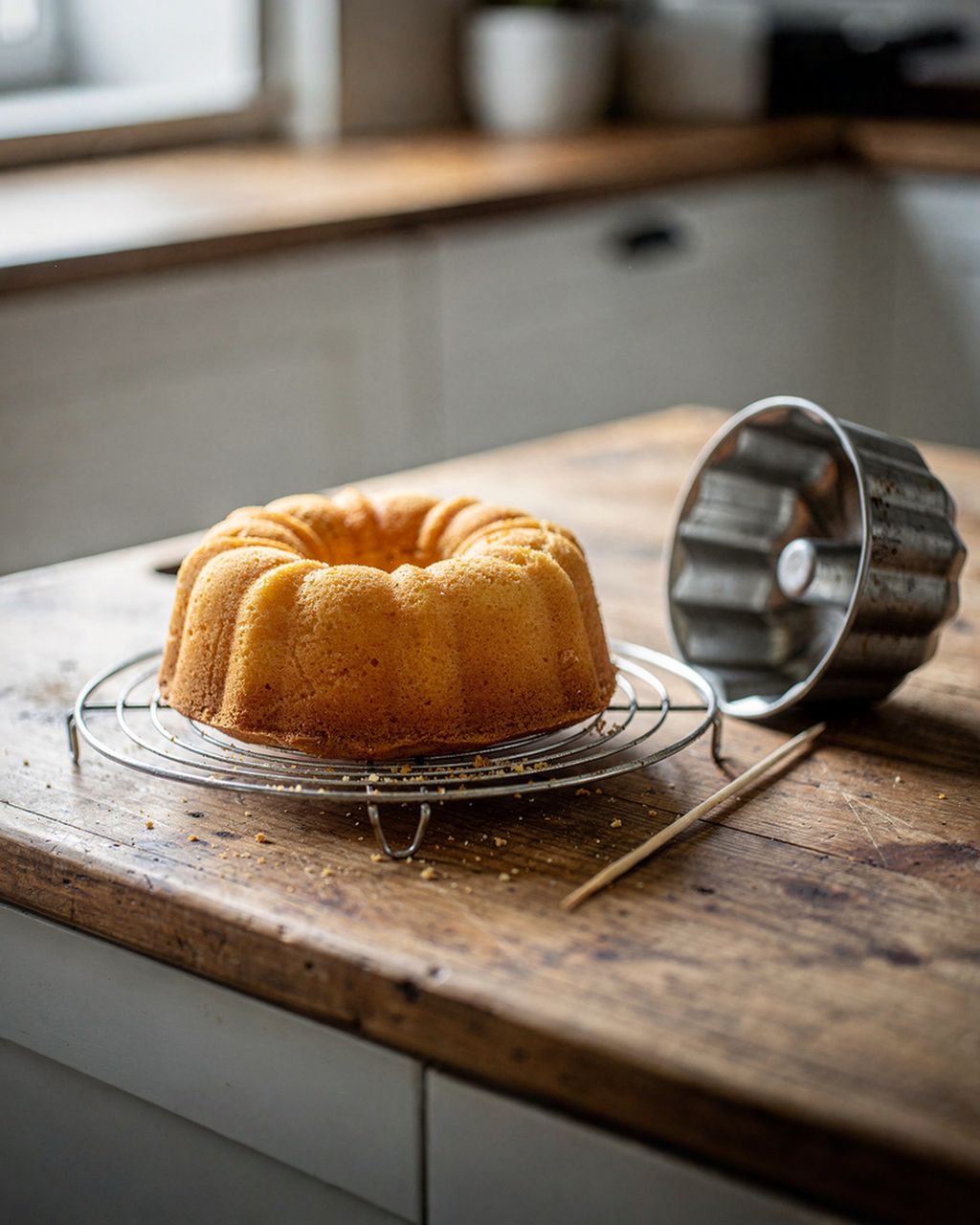
Sponge cake sinks – in an oven that's too cool, the structure doesn't set before the bubbles escape. More in the article why a sponge cake sinks; for a test run, try a fluffy Génoise sponge, which is sensitive to temperature.
Cookies spread – the butter melts before the dough has time to set. Other causes are covered in the article why cookies spread on the baking sheet; you can try it with chocolate cookies with fleur de sel.
Pavlova cracks or browns – meringue can't tolerate even one extra degree. See why pavlova cracks and why it sticks.
Cupcakes dome and crack on top – high heat pushes the center up before the edges set. If you want them flat for decorating, temperature is the first thing to check; you'll find the method in the article cupcakes with flat tops, and you can try it with pistachio cupcakes with lemon curd and mascarpone frosting.
Cheesecake cracks – too high a temperature makes the filling puff up, and it splits as it cools. This also applies to mango cheesecake and similar creamy fillings.
Dark outside, raw inside – the classic sign of an oven that runs hotter than it shows.
The thermometers you'll come across fall into five types: dial oven thermometers, digital probe thermometers, infrared thermometers, built-in oven probes, and instant-read (probe) thermometers. To measure the air temperature in the oven, a dial thermometer is enough; a digital probe is more practical but costs more; the other three measure something other than the air in the oven.
Dial oven thermometer – you stand it or hang it on the rack and leave it inside. It needs no batteries, can stay in the oven permanently, and is read through the glass. It reacts more slowly, so it shows more of an average than momentary swings, which is an advantage when checking your oven. This is the type we sell: the Patisse oven thermometer.
Digital thermometer with a cable probe – the probe sits in the oven and the display stays outside, so you can see the temperature without opening the door, and some models have an alarm. It's handy if you also want to monitor the core of the meat. We don't carry one yet.
Infrared (non-contact) thermometer – measures only the surface you point it at (a wall, a tray, a stone), not the air. Good for a pizza stone, misleading for checking your oven.
Built-in oven probe – measures the core of the dish, not the temperature of the oven space. Useful for meat, but it won't reveal your oven's offset.
Instant-read (probe) thermometer – for the temperature inside baked goods, meat, or caramel. A supplement to an oven thermometer, not a replacement.
Once you know the offset, compensate for it: if your oven reads 168 °C when set to 180 °C, set it 10–15 °C higher. After that, just leave the thermometer in the oven and check once in a while that nothing has changed.
Write the offset on a sticky note on the oven or in your recipes, for example "+12 °C". It saves you recalculating.
Check the manual. Many digital ovens let you shift the displayed temperature in the settings (calibration, offset). Then you can correct the error once and for all.
Fan vs. top and bottom heat: a fan moves heat faster, so with a fan you usually set the temperature roughly 10–20 °C lower than the recipe gives for conventional heat. Measure your oven's offset separately for each mode.
Don't open the door unnecessarily. During the first two thirds of the baking time, keep the door closed; check the temperature and your bake through the glass.
Re-measure after any change. After a repair, after replacing the door seal, or when your recipes suddenly start turning out differently.
Without a thermometer you can't know the exact temperature. You can only spot hot and cool zones (with the toast test) and notice whether your bakes brown faster or slower than the recipe promises. To get a number for how many degrees your oven is off, you need an oven thermometer. The good news is that one measurement will serve you for a long time.
Yes, a dial oven thermometer is designed to stay in the oven while you bake. Take it out before a self-cleaning (pyrolytic) cycle, when the temperature goes far above the thermometer's range, and before broiling under the top element, where it would sit too close to the heat source.
In a fan (convection) oven, place the thermometer in the middle of the rack, but not directly in front of the fan in the back wall, where the hottest air flows. A hanging or freestanding thermometer won't be knocked over by the airflow. In a conventional (static) oven, the main thing is to keep it away from the top and bottom elements.
No, a metal thermometer doesn't belong in a microwave: metal sparks in microwaves and can damage the oven. The exception is a combination microwave used in pure convection mode with no microwaves, but even then, follow the manufacturer's instructions.
The simplest way is to compare it with a second thermometer. Put both side by side in the middle of the rack and compare the readings after 20 minutes. If they agree within 5 °C (about 10 °F), you can trust them. If not, a third reading (with a digital probe, for example) will show which one is off.
Yes. Even new ovens can differ from their display by several degrees, and you can't tell without measuring. One reading right after you buy it tells you how your oven really heats, and a later reading shows whether it drifts over time.
One recipe worth heating the oven for, one tip, and one deal from the shop. Nothing else.