Chocolate cupcakes with salted caramel cream
Flat-Top Cupcakes: How to Bake Them for Decorating
Updated Oct 8, 2026
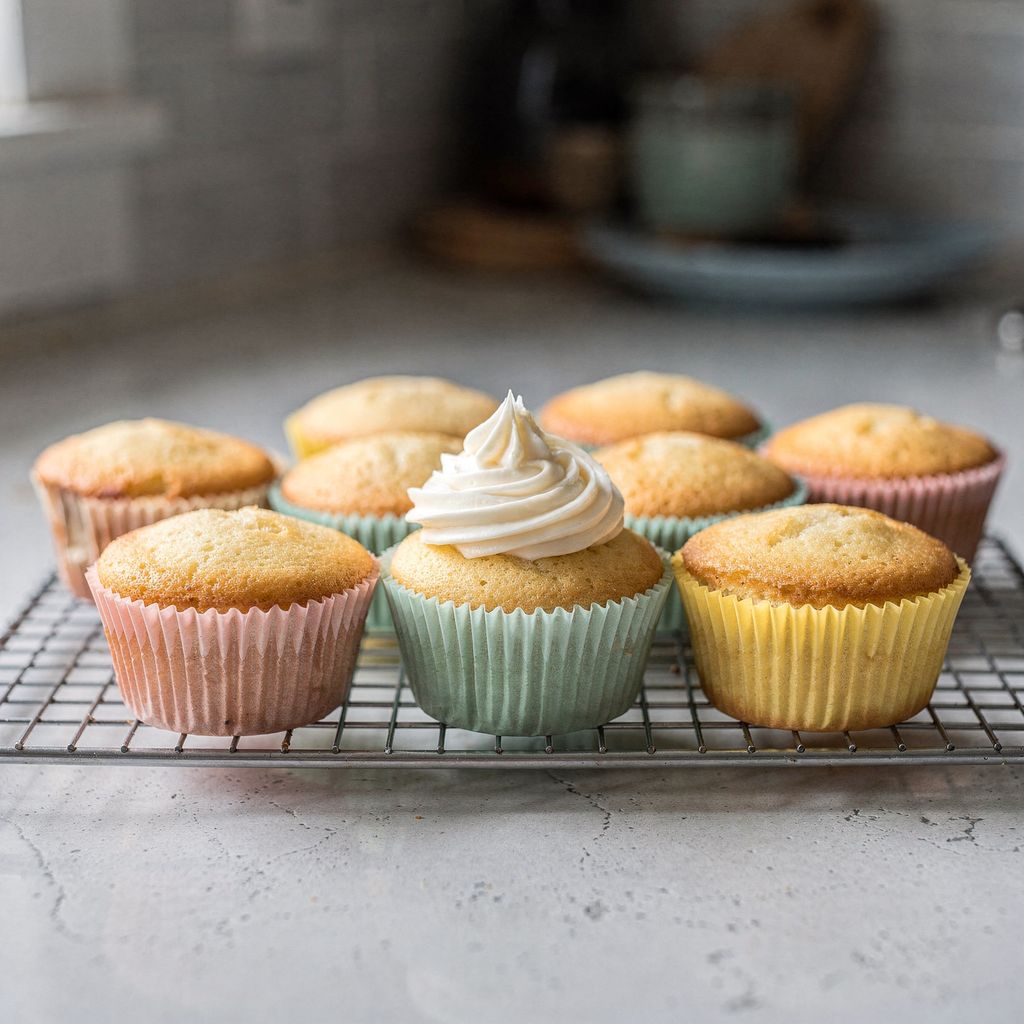
Flat-top cupcakes come from baking at 160°C/320°F, filling liners no more than two-thirds full, and going easy on the baking powder. A flat top is the foundation for decorating: piped frosting sits properly, a fondant disc doesn't slide off, and every cupcake in the batch comes out the same height. Here's why that dome forms, exactly what to change, and how to rescue a batch that peaked anyway.
A dome forms because the edges of the batter firm up in the hot oven before the center does, so the still-liquid center has nowhere to go but up. The higher the temperature, the faster the edges set, and the taller and pointier the dome.
Three other things make it worse:
Too much batter in the liner – more mixture means a longer bake and more pressure pushing up from below.
Too much baking powder – the gas pushes the center up faster than the batter can set, and with a big excess the top rises and then either cracks or collapses.
Overmixed batter – mixing too long after adding the flour develops gluten, which lets the batter hold its shape as it's pushed into a peak.
For muffins, a dome is exactly what you want. If you're dealing with the opposite problem — flat muffins with no dome at all — check out our article on why muffins don't rise and don't dome.
For a flat top, fill liners about half full, two-thirds at most. In a standard liner (base around 5 cm/2 in across), that's roughly 40–50 g of batter. Liners filled halfway tend to bake flattest; two-thirds gives you a taller cupcake with just a slight curve on top.
Just as important: every liner needs the same amount of batter. Otherwise one cupcake bakes flat while the one next to it domes up.
An ice cream scoop with a release lever (about 50–60 ml) is the fastest way to portion evenly.
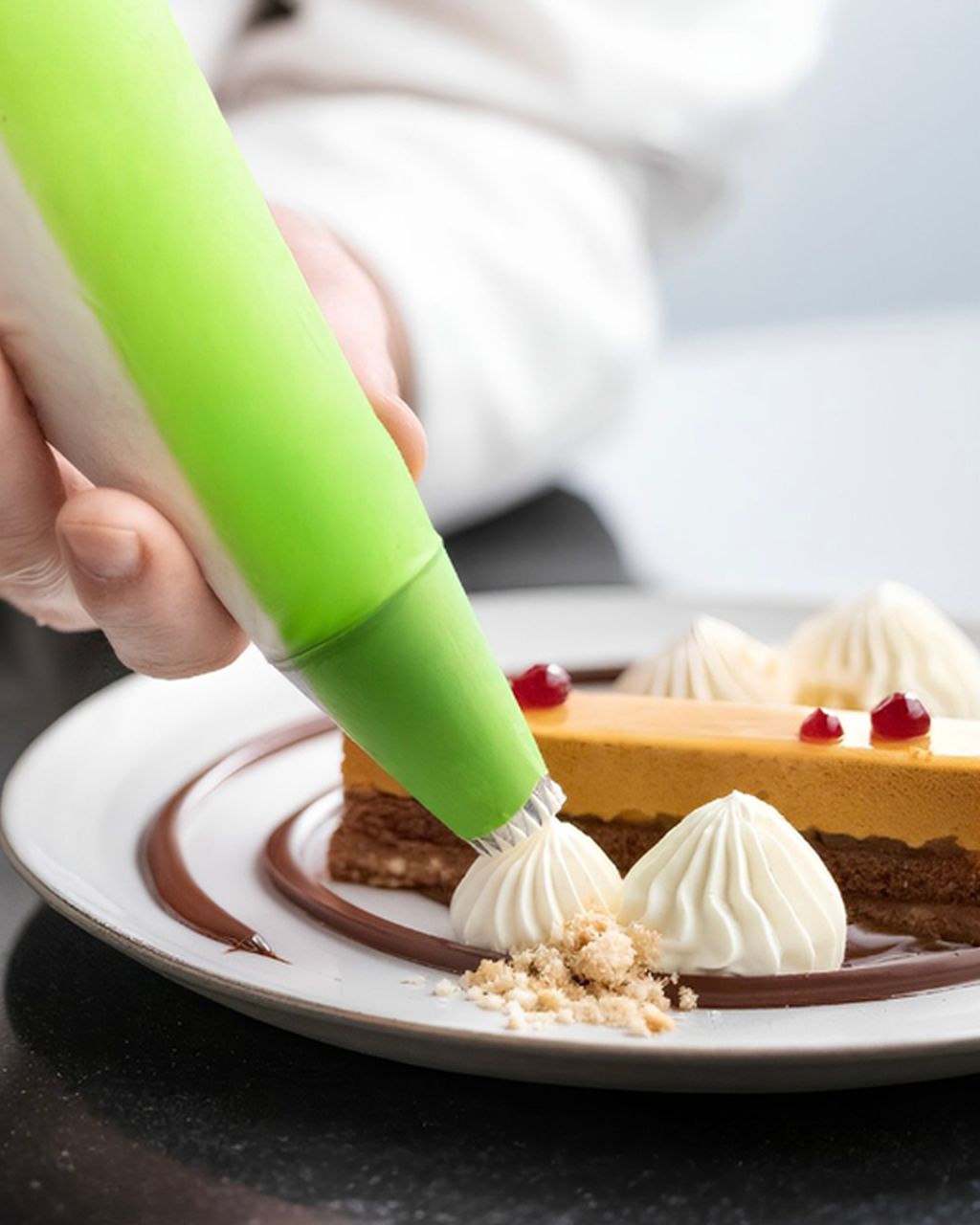
A piping bag with the tip cut on an angle also works well and keeps batter off the liner's rim. For a mess-free method, see our article on how to fill a piping bag.
A kitchen scale gives you total certainty — set the tray on the scale and portion the same 40–50 g of batter into each liner.
Once filled, give the tray one gentle tap on the counter. This levels the surface and releases any big air bubbles.
Bake flat-top cupcakes at 160°C/320°F conventional (around 150°C/300°F fan) for about 20–25 minutes. At 180°C/355°F or higher, which many recipes call for, the edges set too fast and the center shoots up into a peak. If your oven still domes cupcakes even at 150°C fan, try dropping to 140°C/285°F for 25 minutes, checking first at the 20-minute mark. For more on why a lower temperature helps elsewhere too, see our article on why cookies bake better at a lower temperature.
A lower temperature means a longer bake, so judge doneness by the batter, not the clock:
a skewer inserted into the center comes out clean or with just a few dry crumbs,
the top springs back when lightly pressed with a finger,
the edges pull away slightly from the liner.
Bake on the middle rack and don't open the oven door for the first 15 minutes. A sudden temperature drop can cause rising batter to collapse.
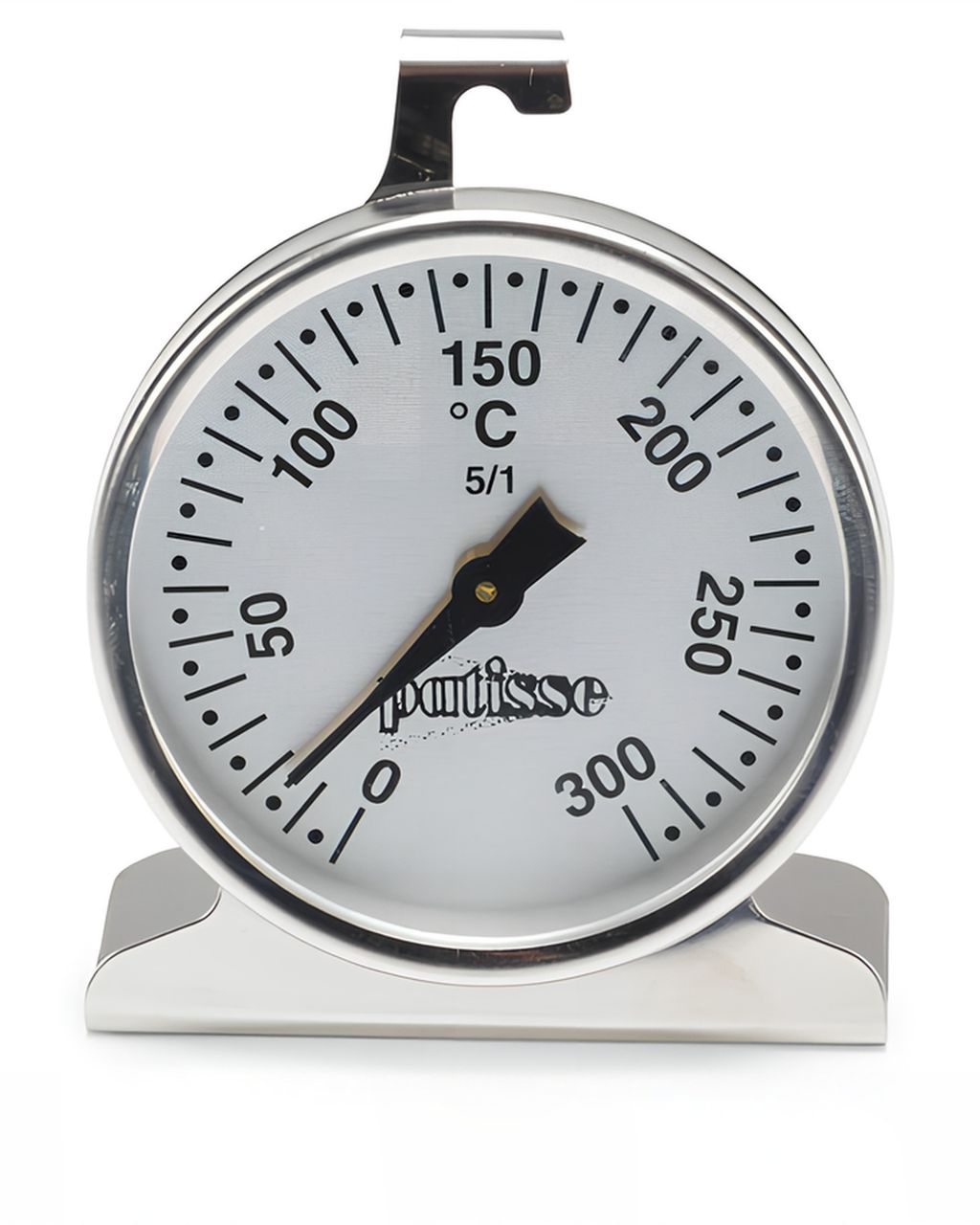
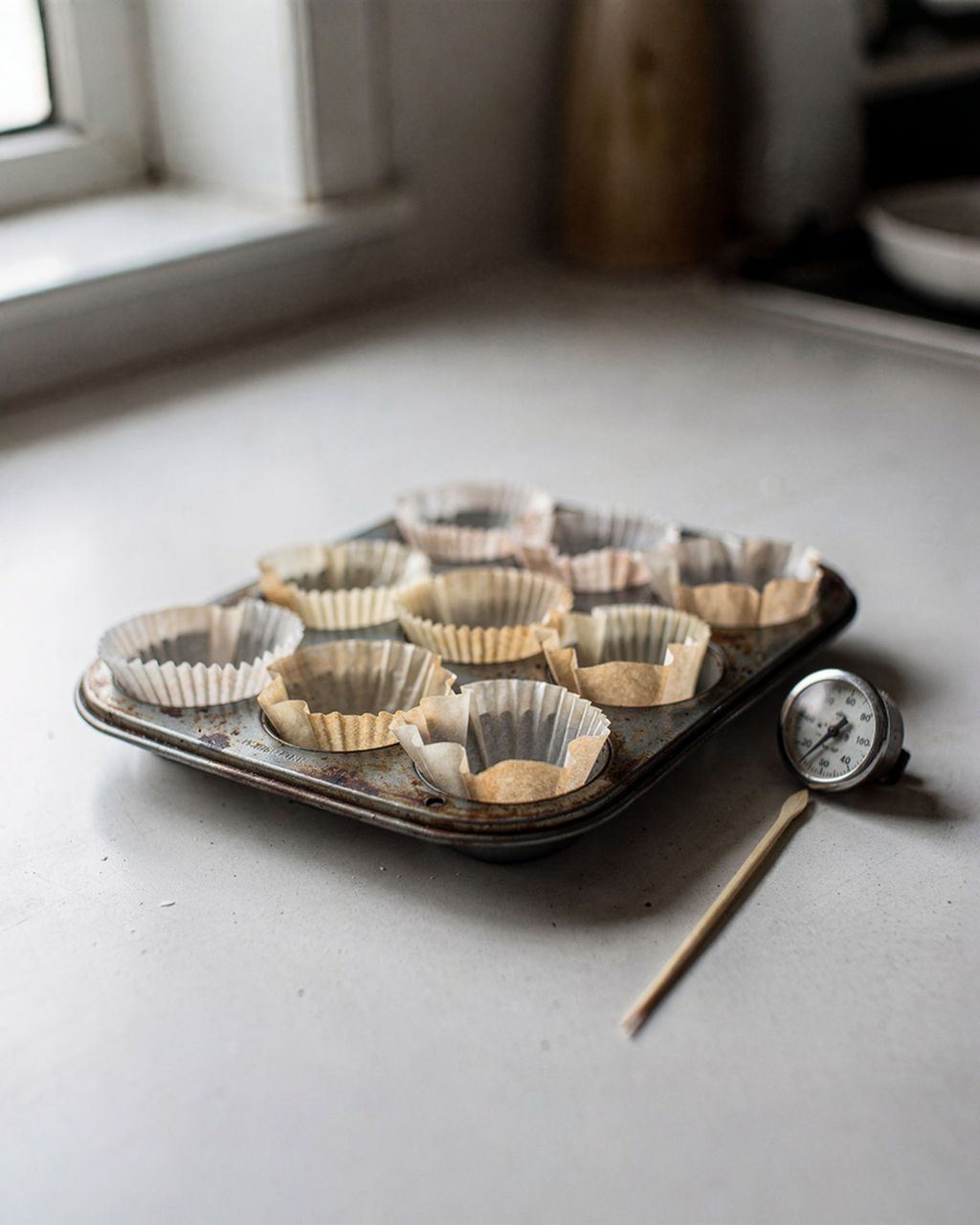
The only way to know your oven's real temperature is with a standalone oven thermometer placed on the rack where you'll be baking. A home oven's thermostat is commonly off by 10–30°C (18–54°F) from the dial setting, in either direction. If your cupcakes keep doming even though you've set 160°C/320°F, the most likely explanation is that your oven is actually running hotter than that.
The process is simple: place the thermometer in the center of the oven, let it preheat for at least 15–20 minutes, then read the temperature. Note the difference, and next time set the dial that much lower or higher to compensate.
A common rule of thumb is around 1 teaspoon (4–5 g) of baking powder per 125 g of flour, with the flour folded in only briefly once added. Many packaged versions use 1 sachet (12 g) per 500 g of flour, which works out to about 3 g per 125 g. If your recipe uses more than that and your cupcakes keep peaking, feel free to cut it by about a quarter. Extra baking powder doesn't make cupcakes rise evenly — it just pushes the center up, and often leaves it to sink back down afterward.
For mixing, keep these points in mind:
Use room-temperature ingredients. Cold eggs or milk will seize the butter, so the batter won't come together smoothly and will bake unevenly.
Cream the butter and sugar thoroughly — 3–5 minutes, until pale and fluffy. This is where the fine air bubbles form that lift the cupcake evenly.
Fold in the flour just until combined, on low speed or by hand with a spatula, until no dry streaks remain. The longer you mix after adding the flour, the more gluten develops — and the taller the peak.
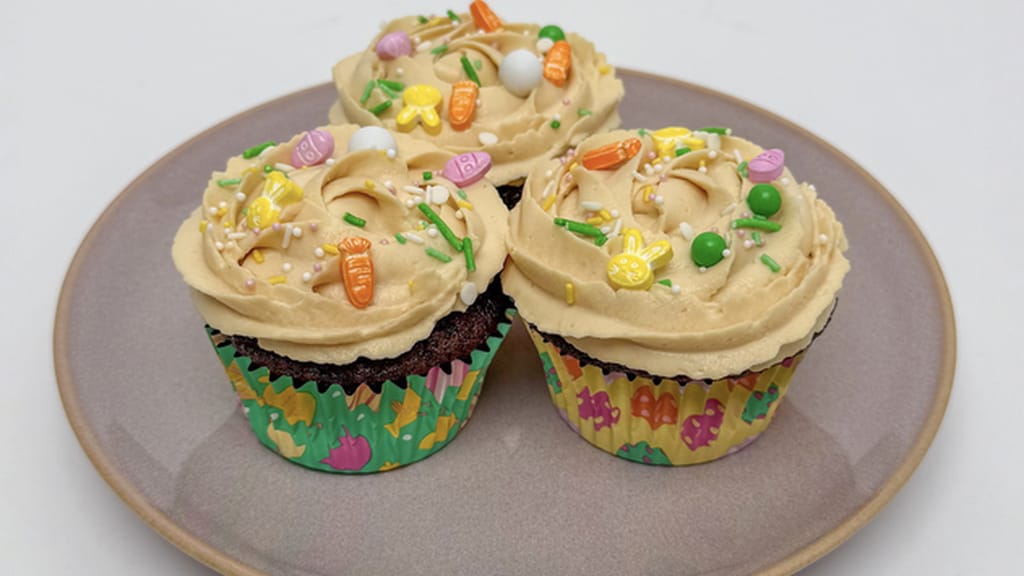
If you want to try this approach on an actual recipe, give our chocolate cupcakes with caramel frosting a go — a flat top here gives the frosting a stable base to sit on.
Chocolate cupcakes with salted caramel cream
Chocolate cupcakes with caramel frosting
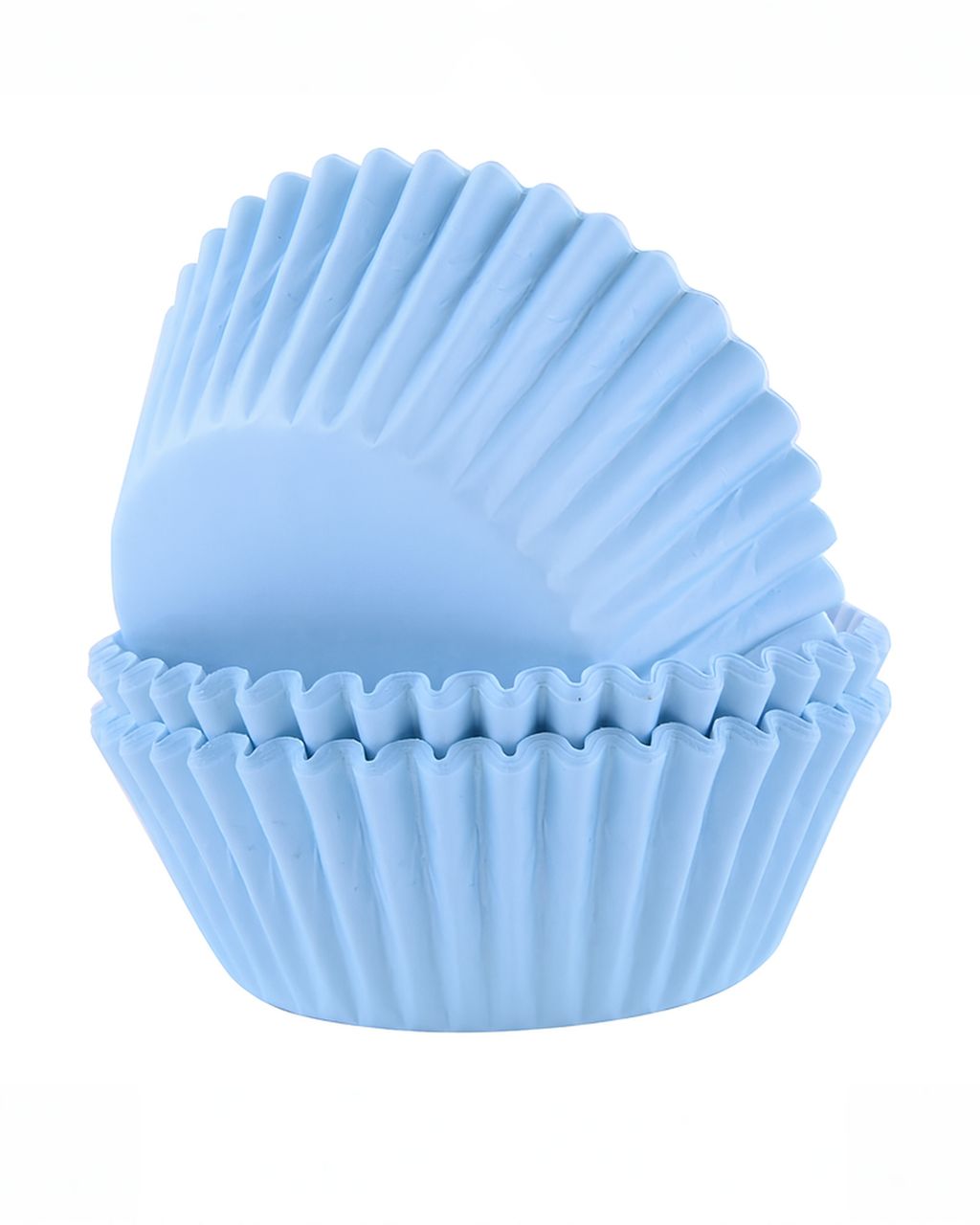
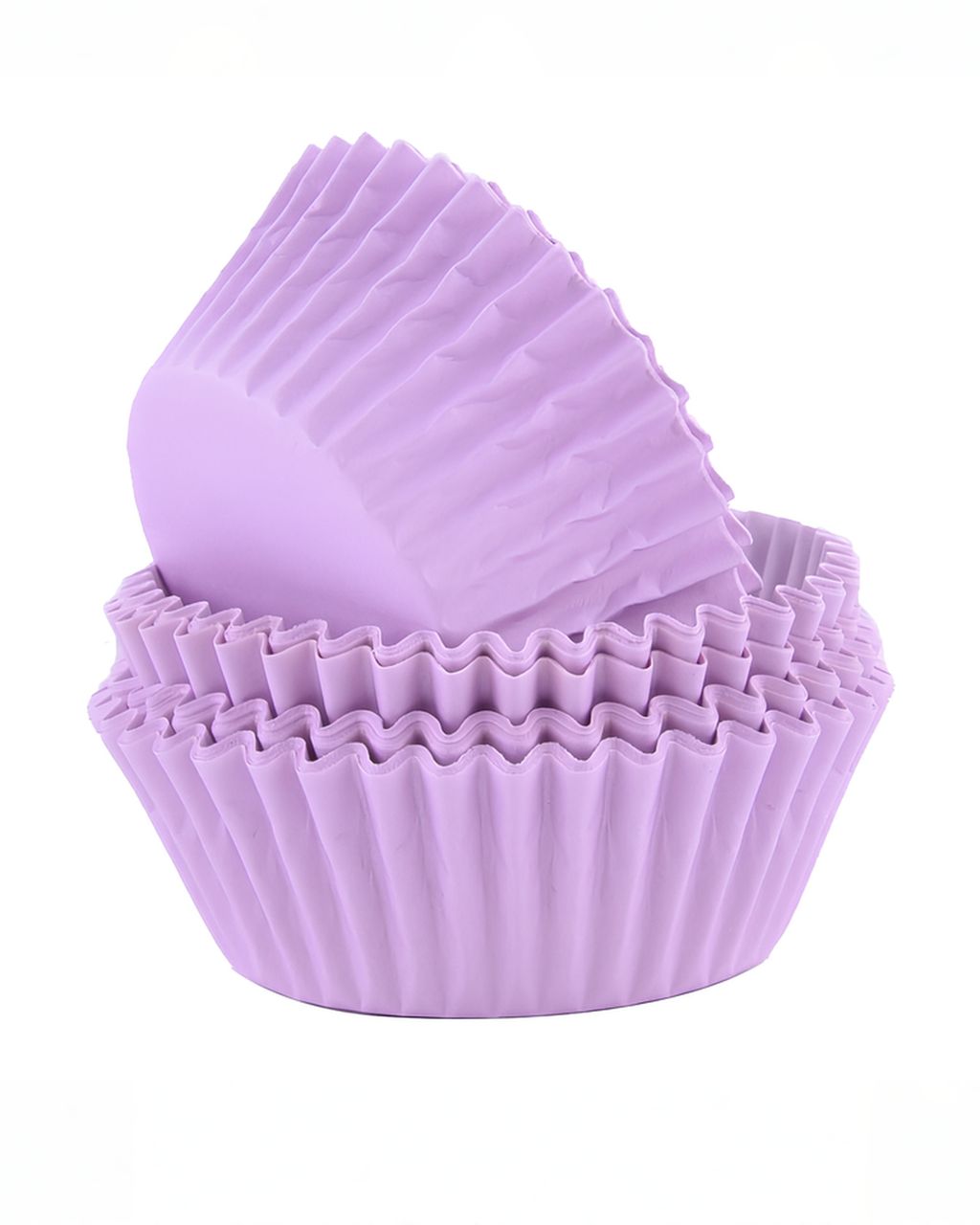
For flat-top cupcakes, your best bet is sturdy paper liners with straight sides, set inside a metal muffin tin. The tin holds the liner's walls upright, so the batter rises evenly and the top stays level with the rim.
A quick comparison:
Paper liners in a tin – the most reliable choice for decorating. Good-quality sturdy paper cupcake liners hold their shape and color after baking and don't peel away from the cake.
Free-standing paper or foil liners without a tin – convenient, but the sides spread outward in the oven, so the cupcake bakes shorter and wider, often with an uneven top. Foil liners hold their shape a bit better than thin paper.
Silicone liners – reusable, but silicone conducts heat more slowly, so cupcakes take a few extra minutes to bake and the top rises into more of a dome. Setting them inside a metal tin still helps.
Tulip-style liners – great for muffins, but the tall sides hide the top of the cupcake and make frosting hard to apply evenly. Not a good fit for decorated cupcakes.
If your batter sticks to the paper, see our article on why muffins stick to their liners and how to prevent it.
You can rescue domed cupcakes three ways: press them down while still warm, trim them once cool, or hollow them out and fill them.
Press down while warm. Within 1 minute of taking them out, press down gently on each top with a clean tea towel or the base of a glass the same width as the liner. The crumb is still pliable while warm and will flatten out. This works for mild domes, not tall peaks.
Trim once cooled. Once cupcakes are completely cool, level them with a sharp serrated knife right at the top edge of the liner. The frosting will cover the trimmed surface afterward. Don't throw away the trimmings — they're great in cake pops or as a crumb topping.
Hollow out and fill. Cut a cone out of the top, spoon filling (curd, caramel, jam) into the hollow, then cover with frosting. This is the technique used for our pistachio cupcakes with lemon curd.
Only decorate completely cooled cupcakes, ideally after 1 hour on a wire rack. Buttercream will slide and melt on a warm top.
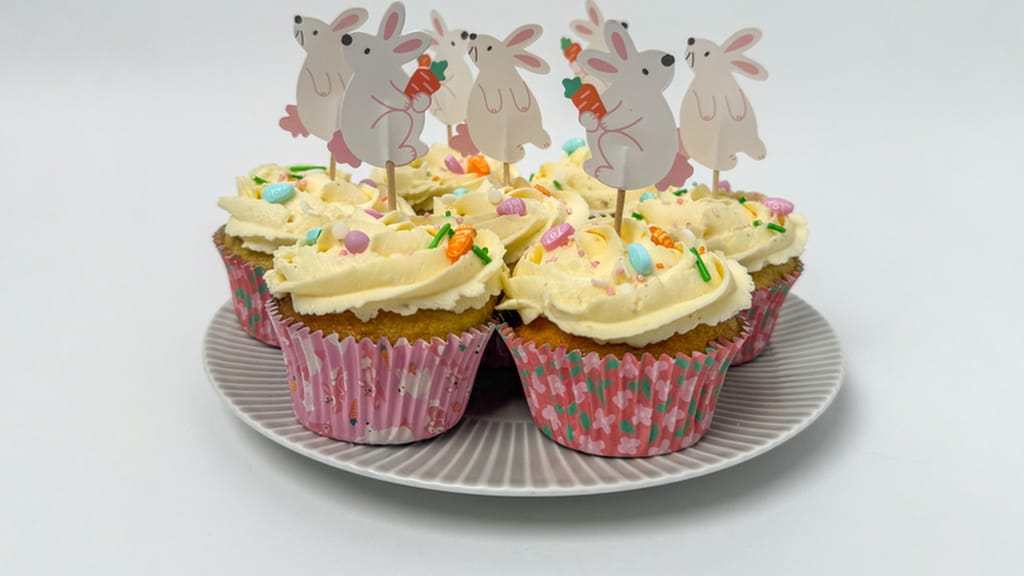
Pistachio cupcakes with lemon curd and mascarpone cream
Pistachio cupcakes with lemon curd and mascarpone frosting
You can, but getting a flat top from it is harder. Muffin batter tends to be thicker, has more leavening, and bakes at a higher temperature precisely to create a dome. If you want to use it anyway, cut the baking powder by about a quarter, fill liners only halfway, and bake at 160°C/320°F.
Cupcakes most often sink due to too much baking powder, an underbaked center, or opening the oven during the first half of baking. The batter rises faster than it can set, then collapses. Cut back on the baking powder, bake until a skewer comes out clean, and don't open the oven door for the first 15 minutes.
Let cupcakes cool on a wire rack for at least 1 hour, until they're cold all the way through, including the center. Take them out of the tin after 5 minutes, though, or trapped steam will condense underneath and the liner will peel away.
A slanted top comes from the strong fan in a convection oven pushing the rising tops to one side. Rotating the tray halfway through baking helps even this out. Fan ovens also dry and set the surface faster, so drop the temperature by about 10–20°C (18–36°F) compared to conventional top/bottom heat.
One recipe worth heating the oven for, one tip, and one deal from the shop. Nothing else.