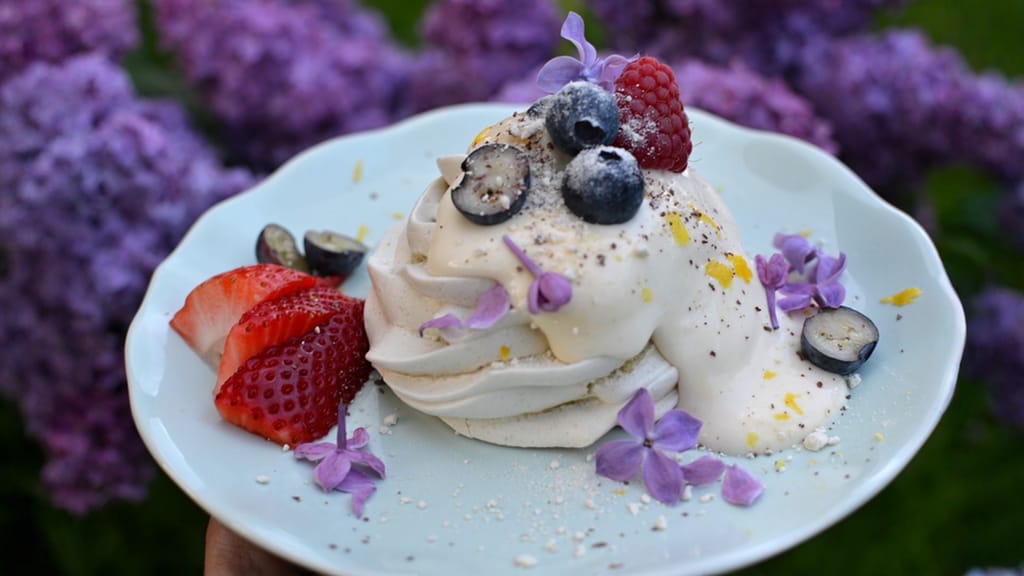
Lilac meringue kisses with lemon curd cream and fresh fruit
Why Pavlova Cracks and Turns Sticky: Causes and How to Prevent It
Updated Oct 8, 2026
Pavlova cracks mainly because the oven is too hot or it cools too abruptly, and it turns sticky because of undissolved sugar, damp air, or underbaking. Fine hairline cracks on the surface are completely normal — the dry shell shrinks around the soft centre as it cools. But big splits, a sunken middle, syrup pooling under the shell, or a tacky surface all have specific causes you can actually control. We'll go through each one, with the temperatures and ratios that actually work.
Pavlova cracks when the shell and the centre expand and contract at different rates — most often because the oven is too hot, it cools too abruptly, the meringue is overwhipped or unstable, or the shape is too tall.
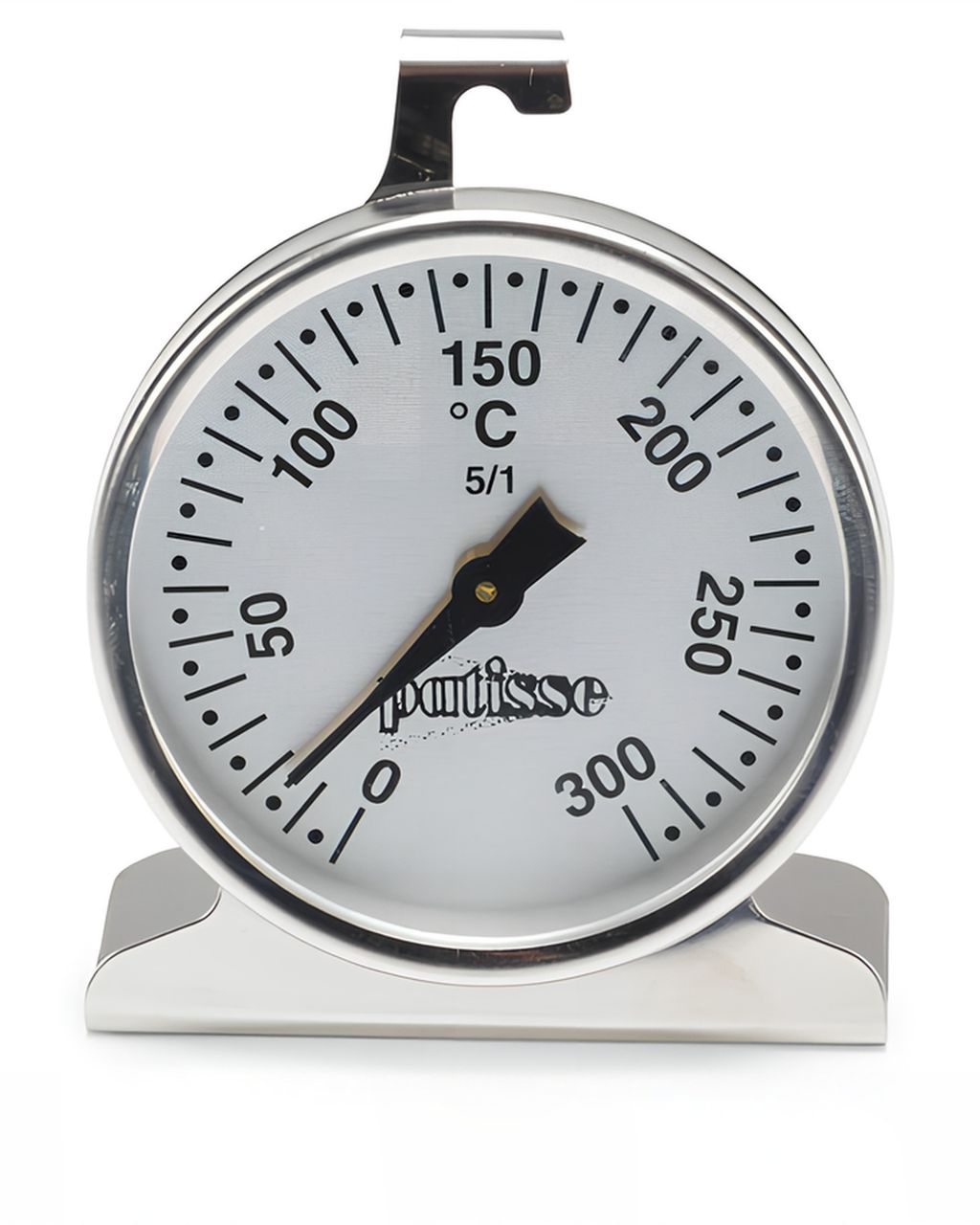
Oven too hot. Above about 130°C/266°F, the air trapped in the meringue expands too quickly, the pavlova puffs up, then collapses. Aim for 100–120°C/212–248°F. Ovens often run hotter or cooler than their dial suggests — more on that in our article on why your oven doesn't show the real temperature.
Temperature shock. Opening the oven straight after baking lets cold air shrink the shell faster than the centre, and it tears.
Overwhipped meringue. Once a foam turns grainy and dry, its proteins are stretched tight with no give left. It expands in the oven but can't shrink back fully afterwards.
Unstable foam. Even a drop of yolk or fat in the bowl weakens the protein network, so the meringue holds its shape less well.
Shape too tall. A tall centre bakes more slowly than the edges: the shell is already set while the middle is still expanding, then sinking — and the tension splits it. Aim for a height of around 5–7cm/2–2.75in.
A few fine cracks are completely normal on a pavlova — they're a sign of a nicely crisp shell. What you want to fix are the deep splits that let the centre sink.
Pavlova turns sticky because sugar draws in moisture — and when there's undissolved sugar, damp air, an underbaked centre, overbaking, or decoration added too soon followed by the fridge, the surface turns damp and syrup appears underneath the shell.
Undissolved sugar. Any sugar crystals that didn't fully dissolve while whisking melt into syrup in the oven and leak out. The telltale sign: the shell looks fine right after cooling, but droplets appear on it a few hours later.
Humidity. Sugar is hygroscopic — it literally pulls moisture out of the air. On a rainy day, or in a kitchen where something else is cooking, a crisp shell can soften while it's cooling.
Underbaking. A wet centre releases water into the surrounding shell, which absorbs it from the inside.
Overbaking. Baking too long or too hot, on the other hand, forces water out of the egg proteins, leaving amber beads of caramelised syrup on the surface.
Decorating too soon, then the fridge. Whipped cream and juicy fruit transfer moisture into the shell within an hour. The fridge is the worst place for the bare shell itself — it's too humid in there.
A rough rule of thumb: if the pavlova looks dull and damp within 20 minutes of cooling, it's humidity or underbaking. If droplets only show up after several hours, it was undissolved sugar.
A pavlova stuck to the paper almost always means an underbaked base — leave it in the oven to dry out further, and only lift it off once it's completely cool.
Bake on baking paper, not foil or a greased tray. A silicone mat works too, but paper makes it much easier to slide the shell off afterwards.
Anchor the paper to the tray with a dab of meringue in each corner so it doesn't curl up.
If the base still sticks, give the pavlova another 15–20 minutes in the oven at 100°C/212°F, then let it cool in there again.
To release it, slide a thin, long knife or palette knife underneath the shell rather than pulling on it. Alternatively, peel the paper away carefully, pulling it downward over the edge of the table.
A pavlova stays whole and dry when you stick to a 2:1 sugar-to-egg-white ratio, dissolve the sugar completely, bake at 100–120°C/212–248°F, and let it cool inside the closed oven.
Clean equipment. Wipe the bowl and whisk with a paper towel dipped in vinegar or lemon juice. Separate the eggs one at a time into a cup, so one stray yolk doesn't ruin the whole batch.
Room-temperature egg whites. They whip faster and into a bigger foam.
2:1 ratio. For every egg white (about 30–35g), use 60–70g of sugar. For a 20–22cm/8–8.5in pavlova, 4 egg whites and 240g of sugar is enough.
Add the sugar gradually. Whip the whites to soft peaks, then add the sugar a spoonful at a time, every 20–30 seconds. Fine caster or icing sugar dissolves faster than granulated.
The finger test. Rub a little of the meringue between your thumb and finger. If you can feel grains, keep whipping. The meringue should feel glossy, smooth and firm, not grainy.
Stabilise at the end. Fold in 1 teaspoon of cornflour and 1 teaspoon of vinegar or lemon juice per 4 egg whites (more on these below).
Shaping. Spread the meringue into a 20–22cm/8–8.5in circle, pulling the edges up and leaving the centre slightly dipped. A layer around 5–7cm/2–2.75in thick bakes evenly.
Baking. Put it into an oven preheated to 150°C/300°F, then immediately drop it to 110–120°C/230–248°F as soon as the door is closed. The pavlova never actually experiences 150°C/300°F — preheating that high just offsets the heat lost when you open the door, and the oven settles into the safe range within a few minutes. The real problem is baking above 130°C/266°F for an extended time. Bake for 1–1.5 hours (small nests, 45–60 minutes). No fan, or the lowest fan setting if you must.
Cooling in the oven. Turn off the oven and let the pavlova cool inside for at least 2 hours, or overnight if you like. Keep the door closed for the first half hour, then prop it open slightly with a wooden spoon.
The pavlova is done when the shell feels dry to the touch, looks lightly creamy rather than golden-brown, and sounds hollow when tapped underneath.
For a stable pavlova, cornflour and vinegar are enough; add dried egg white if you're baking in humid conditions or your meringue keeps collapsing.
Cornflour (1 teaspoon per 4 egg whites) binds water, firms up the foam, and gives pavlova its signature soft, "marshmallowy" centre. Without it, you get something closer to a crisp meringue all the way through.
Vinegar or lemon juice (1 teaspoon per 4 egg whites) acidifies the egg whites so the proteins hold the foam more firmly, with less risk of overwhipping. White wine vinegar won't affect the flavour.
Cream of tartar does the same job as vinegar, just in powder form — a pinch (about 1/8 teaspoon per egg white) is enough. It's a fine option if you have it at home, but vinegar works just as reliably.
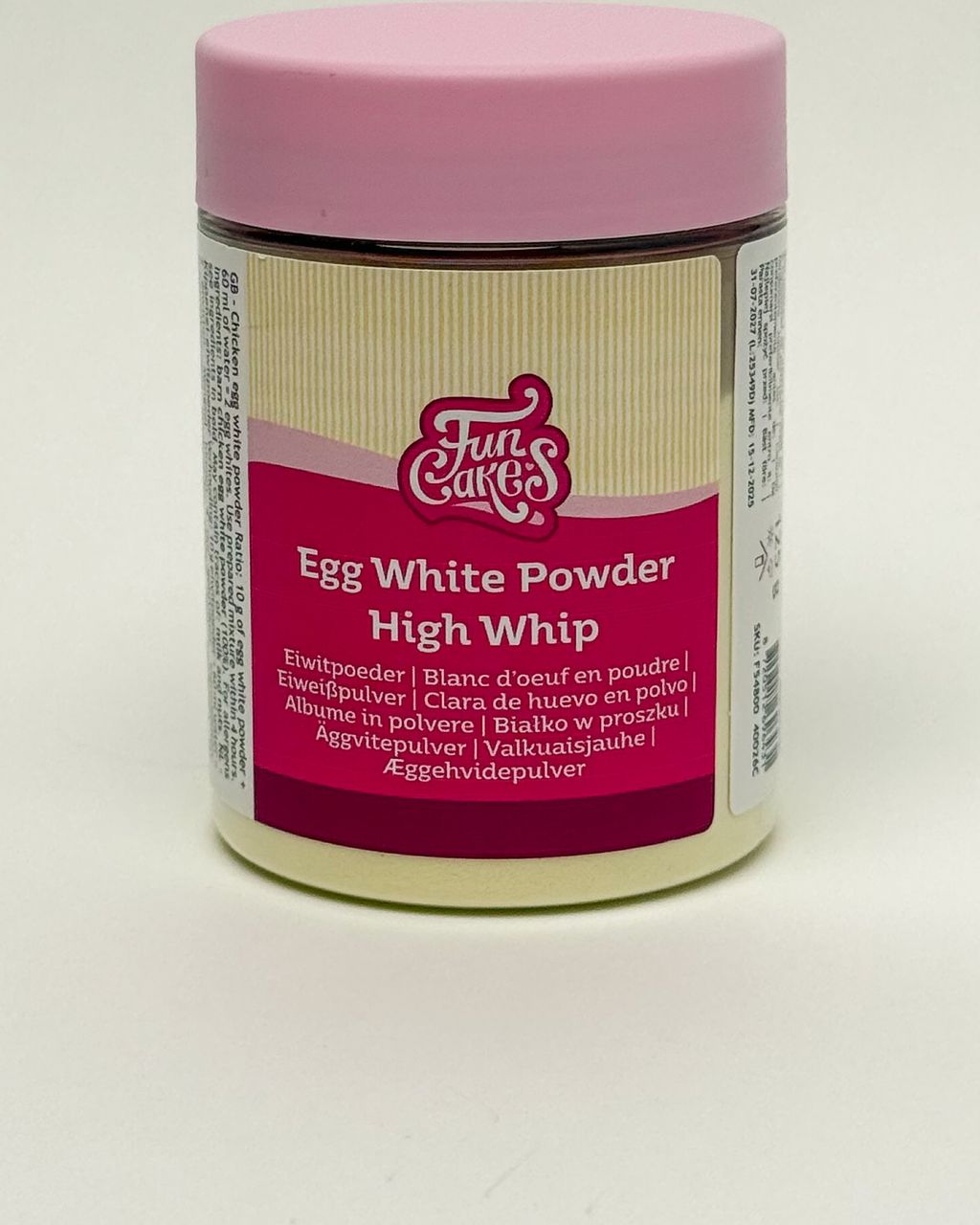
Dried egg white adds extra protein to the meringue without extra water. The foam becomes denser, holds its peaks longer, and leaks less syrup even in a humid kitchen. Roughly a teaspoon (3–5g) per 4 fresh egg whites is usually enough, though exact amounts vary by brand, so check the packet. In a very dry environment it can actually make the shell dry out too fast, so you won't need it there.
What doesn't help: using more sugar than the 2:1 ratio (the meringue becomes heavy and leaks more syrup), or cranking up the heat to "speed things up" — that's actually the main cause of cracking.
Decorate pavlova just before serving, no more than 30–60 minutes ahead, and keep anything wet as far from the shell as possible.
Whipped cream or a mascarpone cream should go into the dip in the centre, not over the edges. Cream whipped with a little mascarpone holds up longer and releases less liquid.
Fresh fruit — strawberries, raspberries, mango, passion fruit — should be cut at the very last moment and left to drain. Cut fruit releases juice, and that's the fastest route to a soggy shell.
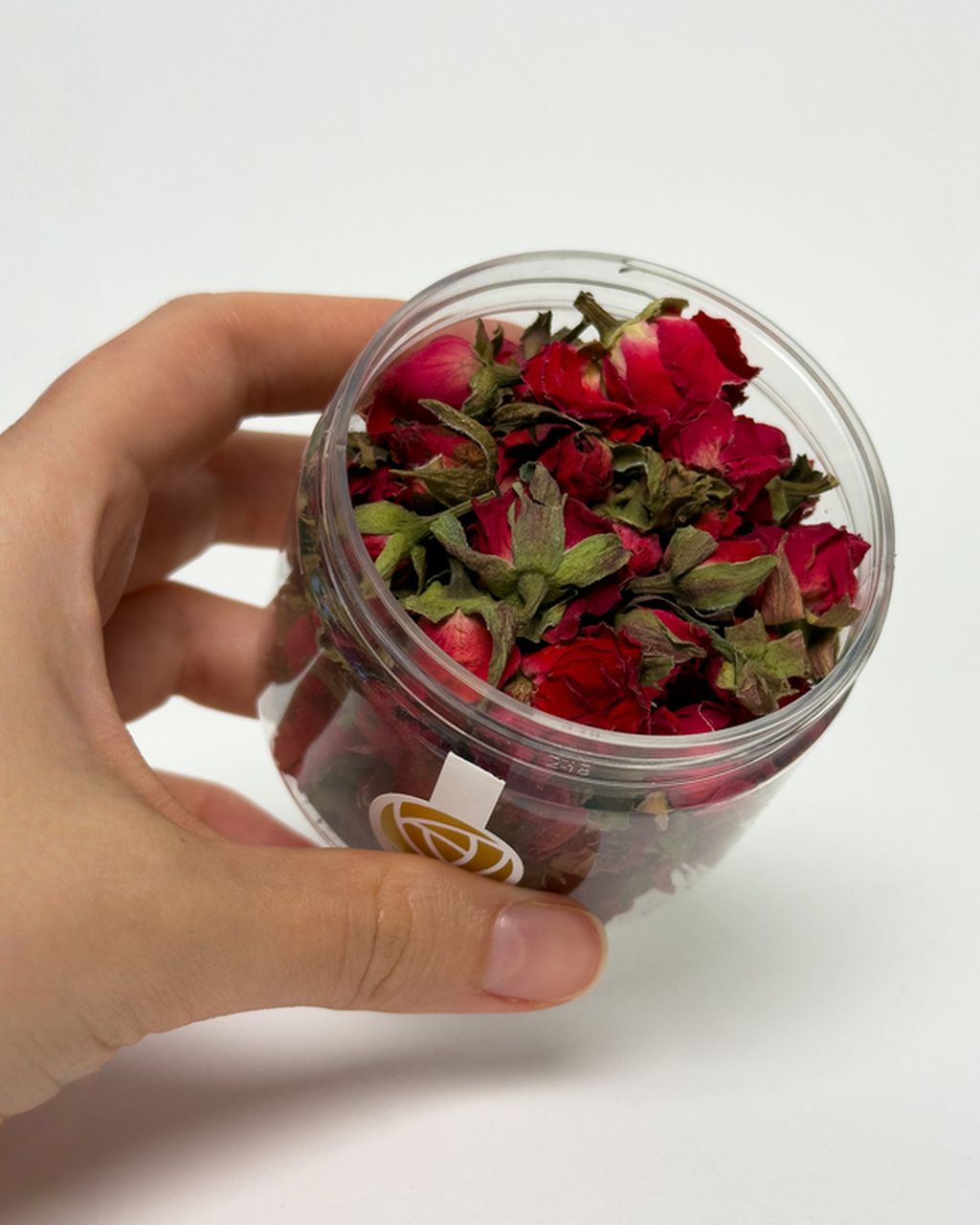
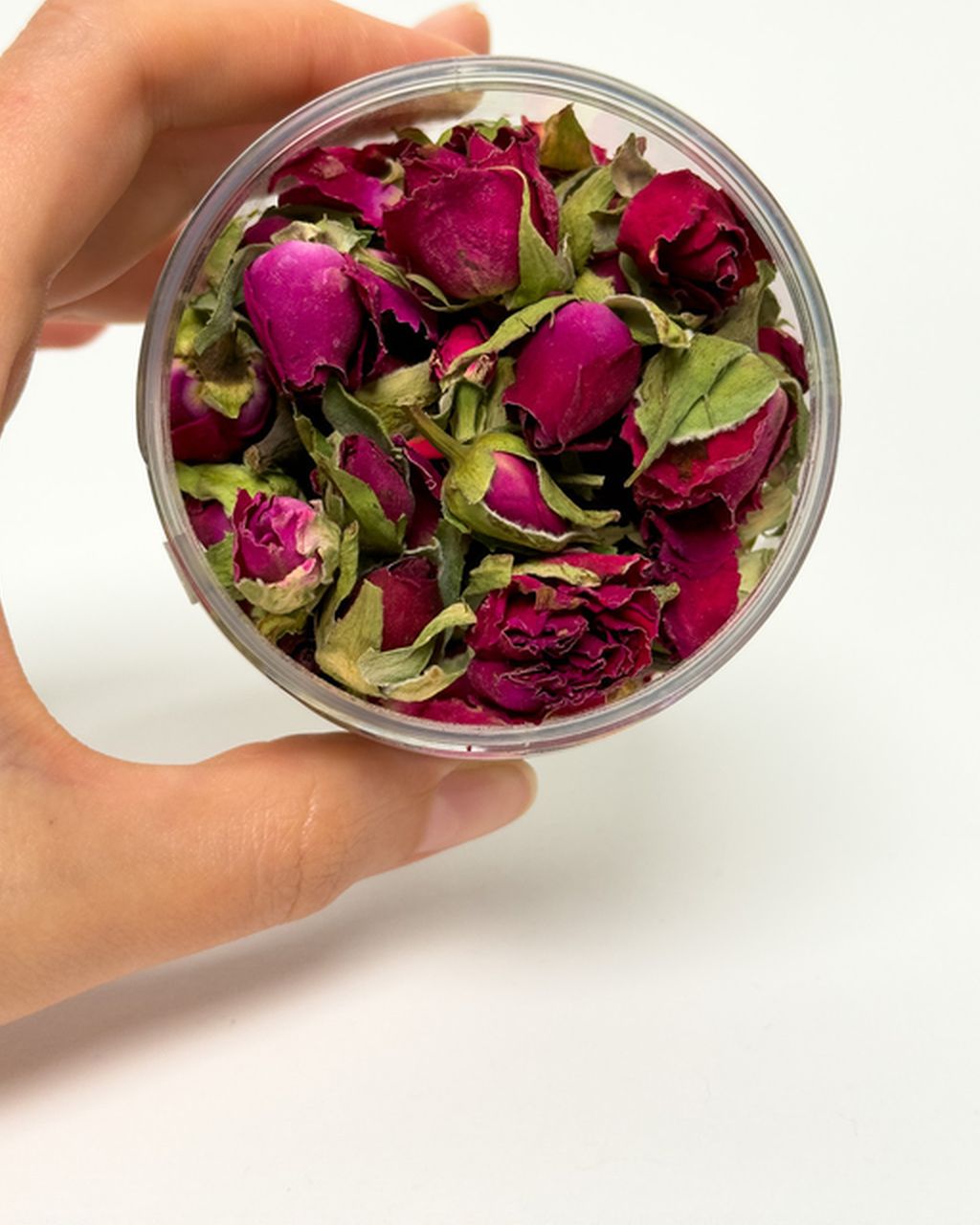
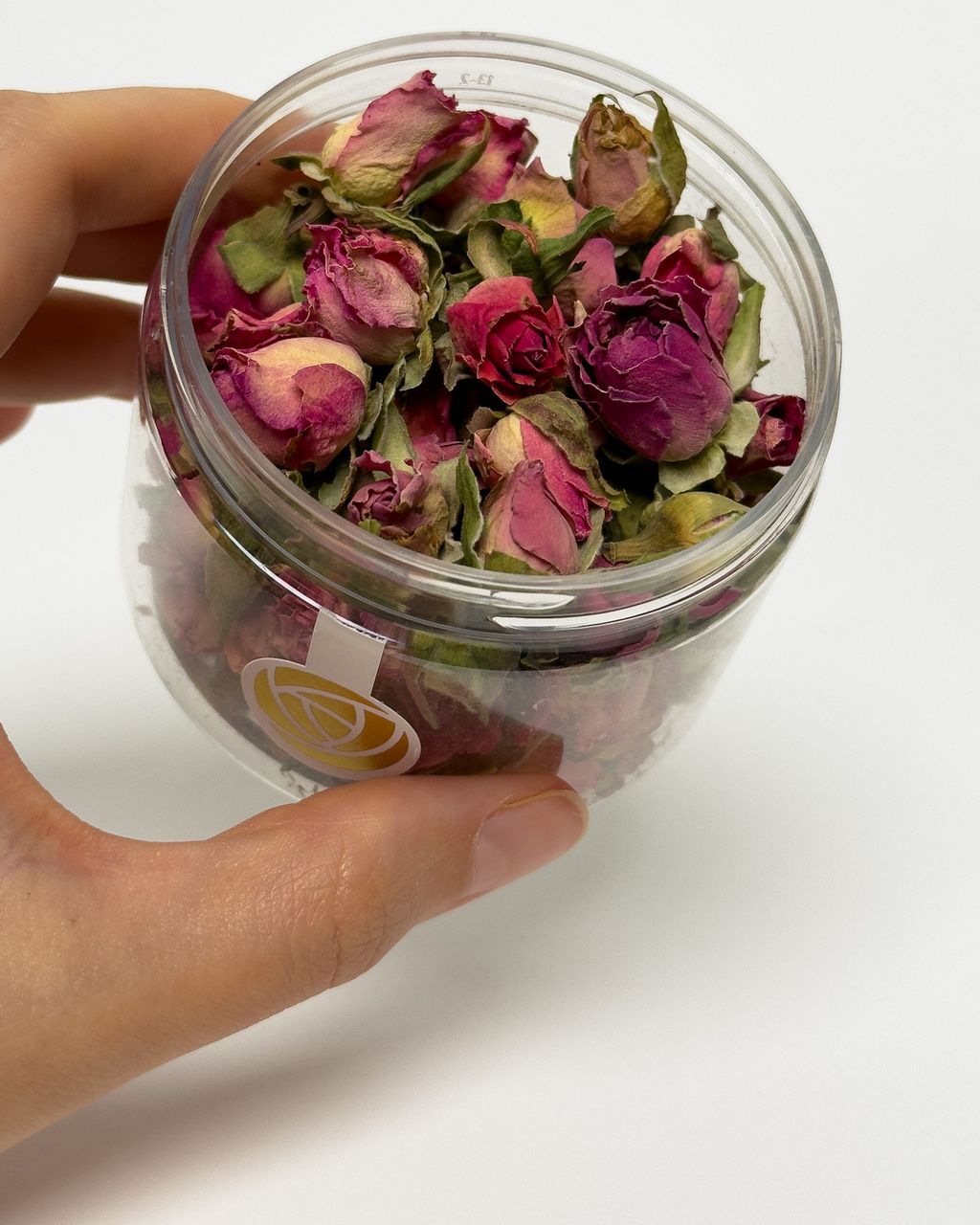
Dry decorations like rose buds or dried edible flowers don't add any moisture, so they last much longer on the shell than fruit does, while still giving the pavlova colour and a delicate floral note. Place them on top of the cream or along the edge, away from any fruit juice.
Freeze-dried fruit or chopped pistachios work on the same principle — a dry garnish on a dry shell.
The best approach is a combination: fresh fruit in the cream in the centre, dry decorations around the edge.
Lilac meringue kisses with lemon curd cream and fresh fruit
Lilac meringue kisses with lemon curd and fresh fruit — mini meringue nests decorated the same way as pavlova
Save a cracked pavlova with cream and fruit, dry out a sticky one in the oven — and if it falls apart completely, just layer it in glasses.
Surface cracks get hidden under cream and fruit. Fill deep splits with cream, which also helps glue the shell back together.
A sticky surface can be dried out for 20–30 minutes in the oven at 90–100°C/194–212°F, then cooled inside again. This only works if the problem is humidity, not undissolved sugar.
A pavlova that's fallen apart can be broken into pieces and layered into glasses with whipped cream and fruit — that's essentially how the British dessert Eton mess is made. No one needs to know it wasn't the plan all along.
Temperature and cooling matter just as much for sponge cake as they do for pavlova — see why sponge cake sinks in the middle.
You can bake the plain, undecorated pavlova shell a day or two in advance and store it in an airtight container at room temperature. Keep the container somewhere dry, away from the stove and the dishwasher, and only decorate it just before serving.
Don't put the bare pavlova shell in the fridge — it's humid in there, and the shell will soften and turn sticky within a few hours. A decorated pavlova with cream can go in briefly to chill, but expect it to go soft by the next day.
Yes, a proper pavlova has a crisp shell with a soft, slightly chewy, marshmallow-like centre. If the middle is runny or wet, it's underbaked; if it's crisp all the way through, it's really more of a giant meringue — usually a sign that cornflour was missing or the oven ran too hot.
A classic pavlova made with a sugar substitute (erythritol, stevia) rarely turns out reliably, because sugar in the meringue provides structure, not just sweetness. Substitutes dissolve differently and bind water differently, so the meringue holds less well, cracks more, and the shell doesn't form the same way.
Pasteurised carton egg whites work fine for pavlova, but they whip more slowly and the foam tends to be looser. Whipping them at room temperature and adding a little dried egg white to firm up the foam helps.
One recipe worth heating the oven for, one tip, and one deal from the shop. Nothing else.