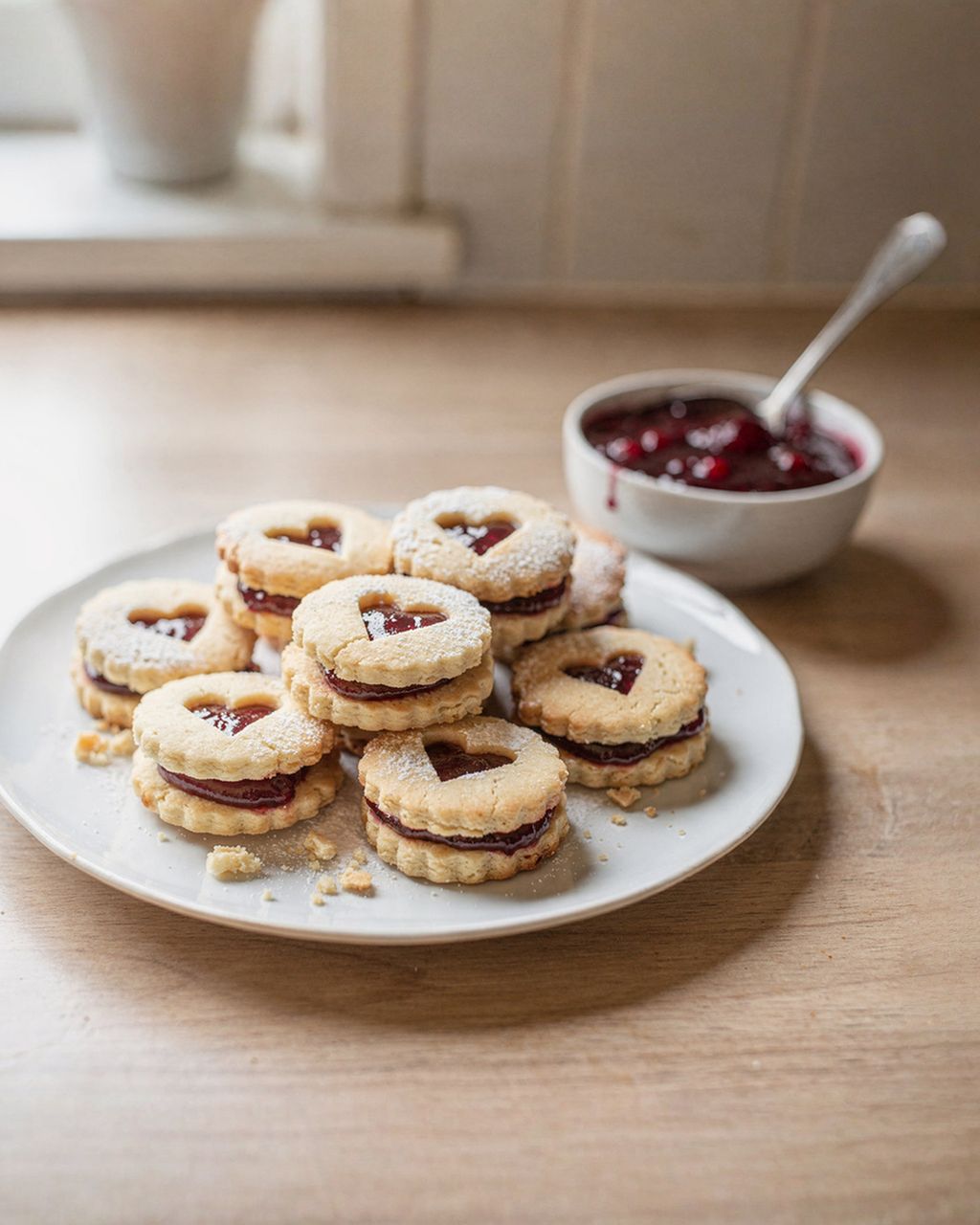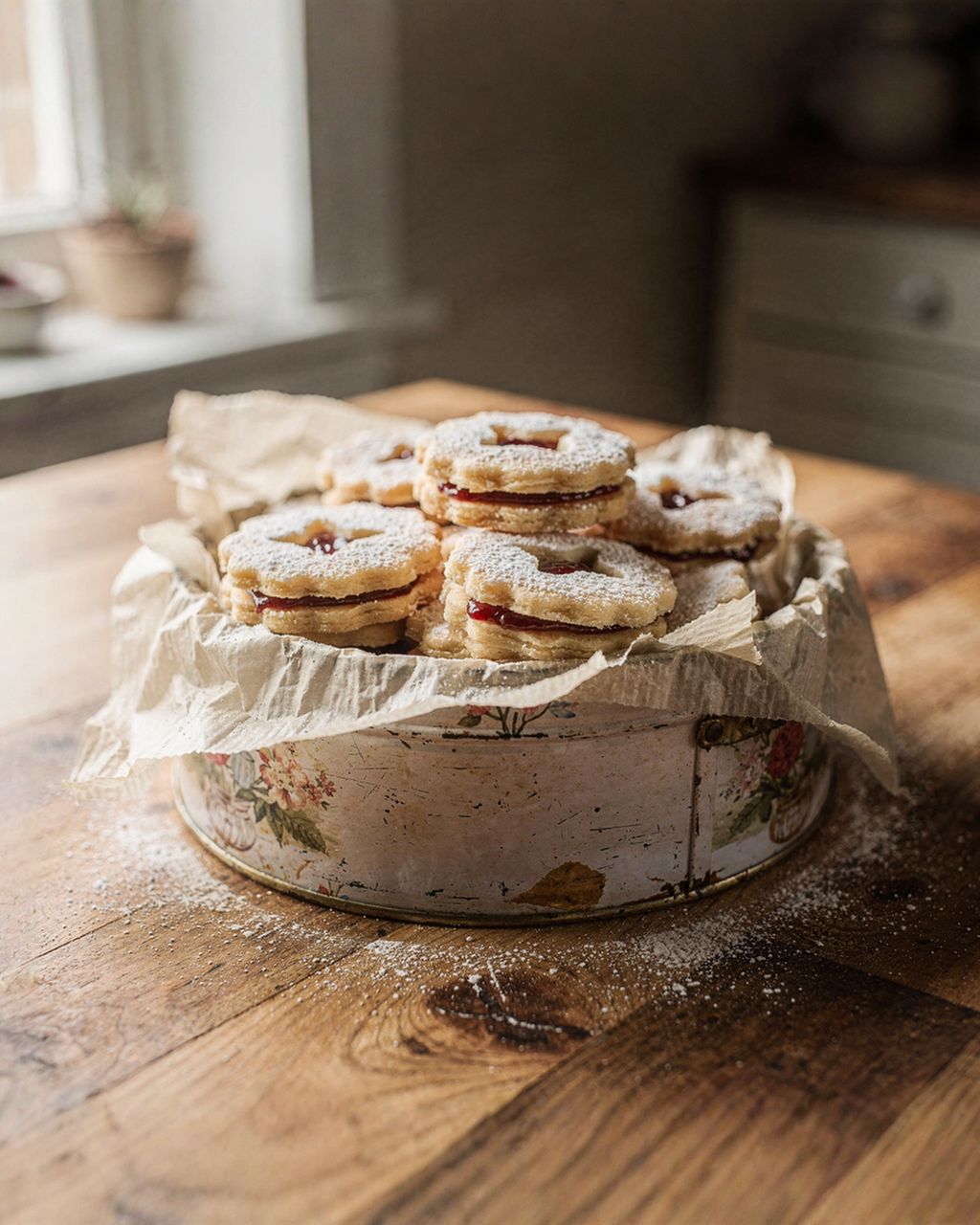
Classic christmas cookies: delicate linzer cookies
How to Decorate Linzer Cookies: Lemon Glaze, Chocolate, Powdered Sugar & Gold — Before or After Sandwiching
Updated Oct 27, 2026
How should you decorate Linzer cookies? The best options are a thin lemon glaze, a chocolate dip, powdered sugar on the top halves and a touch of edible shimmer, and timing matters most. Sugar and glaze go on the top halves **before sandwiching**. Chocolate and shimmer go on **after sandwiching**, once the jam has set. Linzer cookies are buttery and delicate, so every decoration needs to be thin and dry, or it will make them soggy or overpower them.
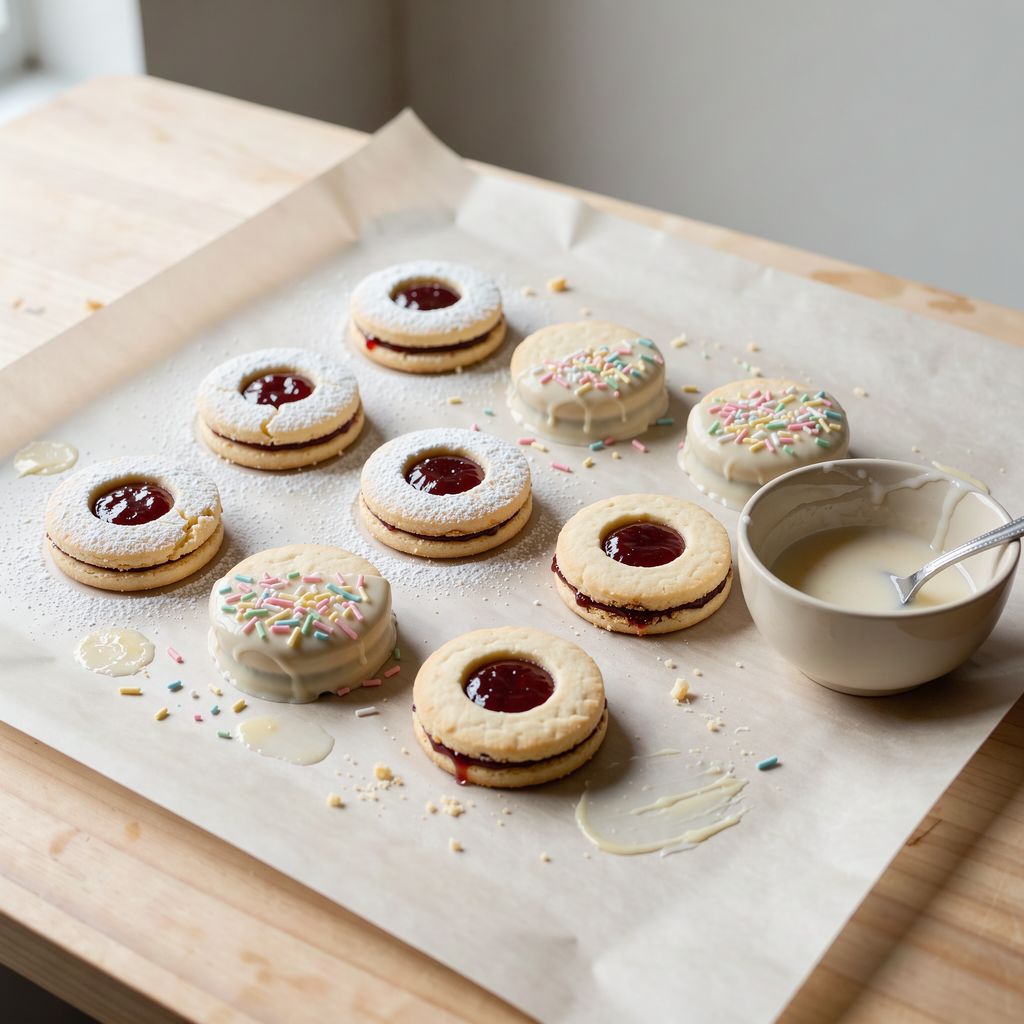
You decorate Linzer cookies in two rounds: the top halves before sandwiching (glaze, sugar, icing lines) and the finished sandwiched cookies once the jam has set (chocolate, sprinkles, shimmer).
Lemon glaze — a thin layer on the top half, before sandwiching. Keep the cutout clear.
Powdered sugar — on the top halves before sandwiching, so it doesn't sink into the jam in the cutout.
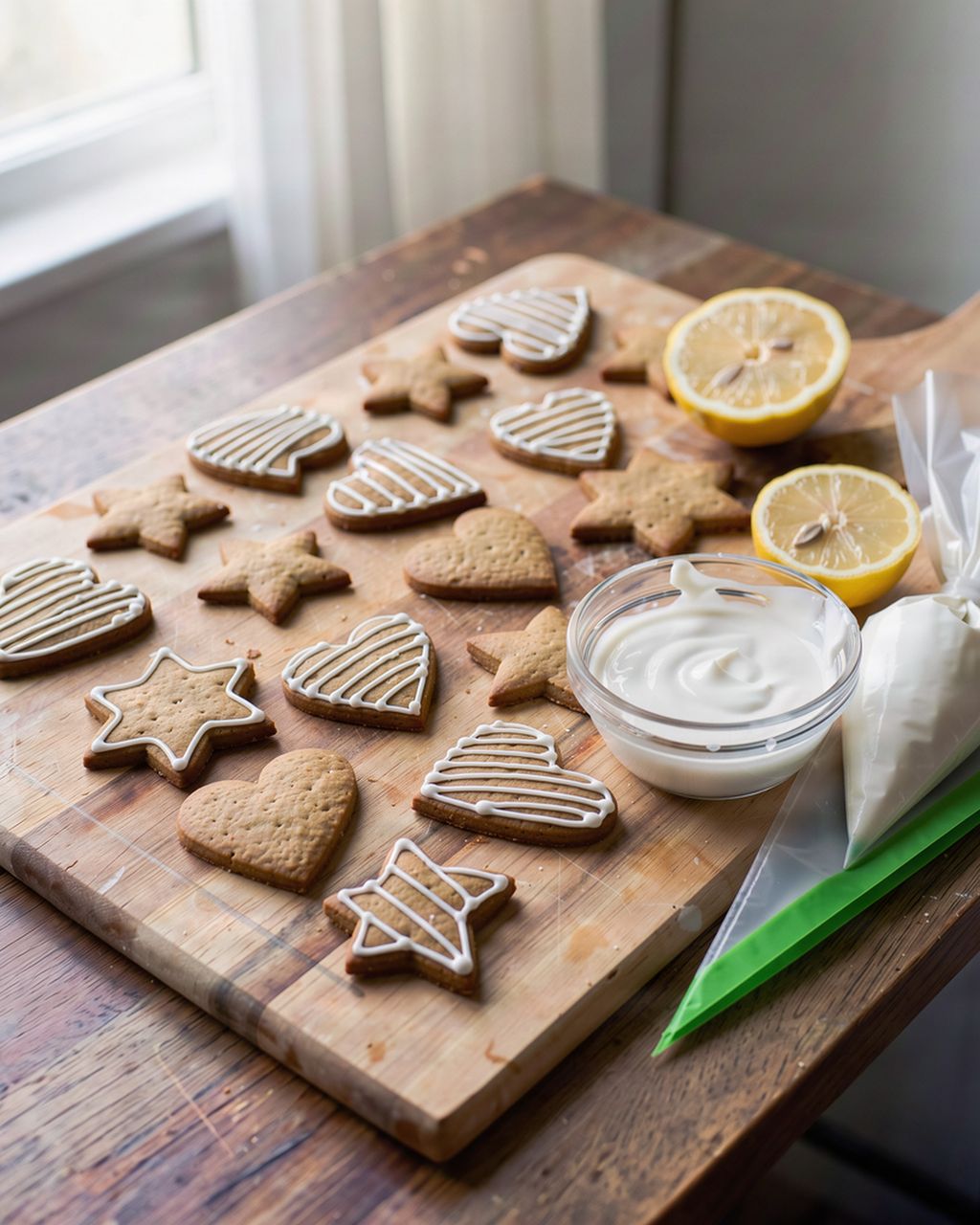
Royal icing lines — on the top half before sandwiching, ideally the day before.
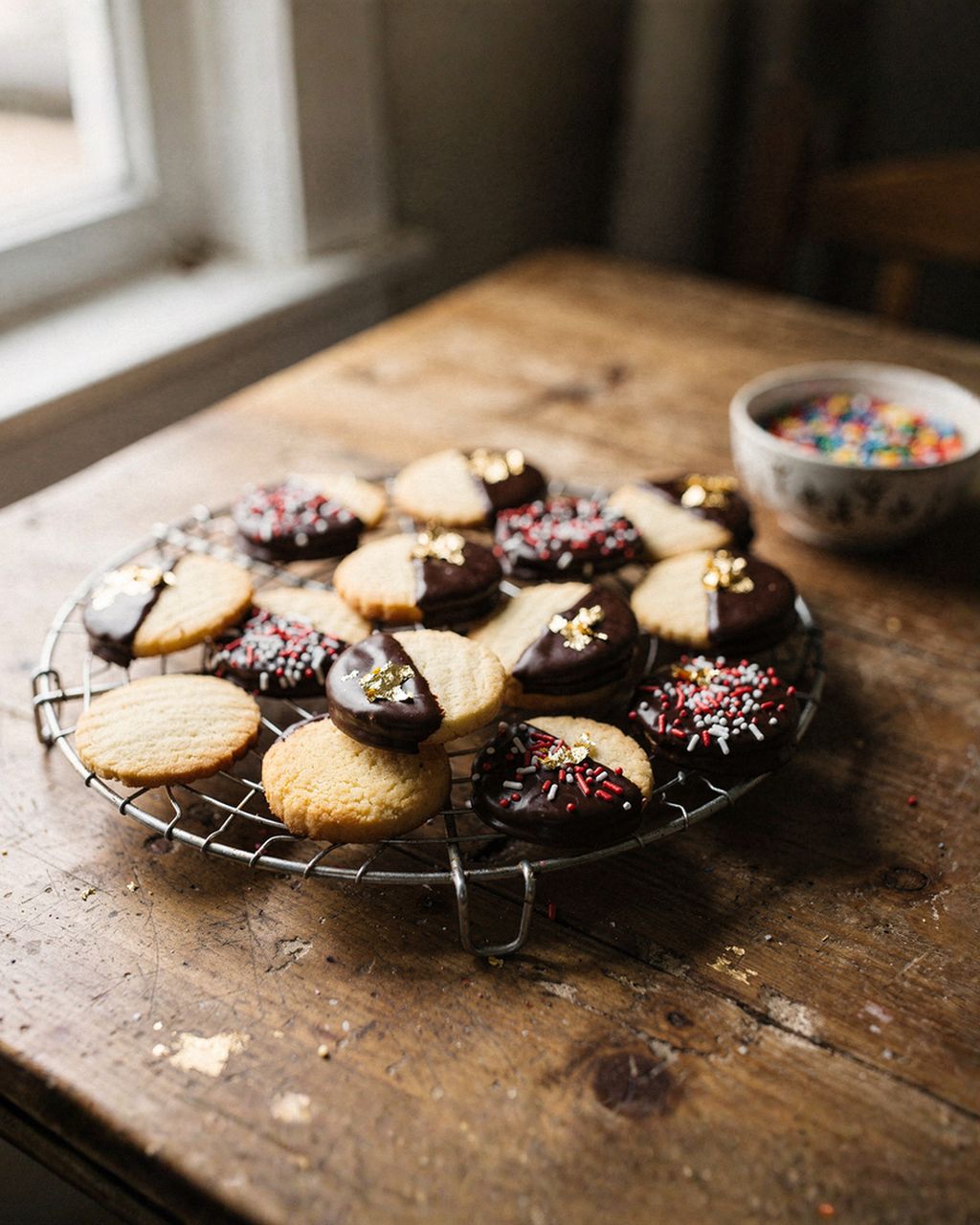
Chocolate — dip the sandwiched cookies only after the jam has "caught," the next day at the earliest.
Sprinkles — into wet chocolate or glaze, right after applying it (within a minute).
Edible shimmer — brushed onto set glaze or chocolate, right at the very end.
The foundation is a well-baked dough that holds its shape. You'll find the method in our recipe for classic buttery Linzer cookies. And if you're after decorating ideas for all kinds of cookies, have a look at how to decorate Christmas cookies, from sprinkles to edible gold.
Classic christmas cookies: delicate linzer cookies
Classic Buttery Linzer Cookies — a Base That Decorates Well
Anything that could smear the cutout or dissolve into the jam goes on the top half before sandwiching. Anything that needs a sturdy finished cookie goes on after.
The reason is simple: jam is moist and sticky. Sugar that lands on it dissolves within a few hours and the cutout turns dull and grey. Glaze that runs over the edge of the cutout mixes with the jam and never sets. On the other hand, don't put chocolate on loose top halves, because you'll press on them while sandwiching and the chocolate will crack or smudge.
A practical schedule:
Day 1: bake and let the cookies cool. Glaze the top halves (the ones with the cutout) or pipe icing lines on them, then leave to dry overnight.
Day 2: sandwich the glazed top halves right away; dust the sugar-topped halves and sandwich them immediately. Let the jam set for at least 12 hours.
Day 3: dip in chocolate, add sprinkles, and brush on shimmer last of all.
For help choosing a jam that doesn't run and holds its shape, see our article on what to fill Linzer cookies with.
For Linzer cookies, make a thicker lemon glaze with roughly 100 g sifted powdered sugar to 15–20 ml lemon juice, and apply it in a layer about 1 mm thick. A glaze like this sets in 1–2 hours at room temperature and doesn't soak into the buttery dough.
Why it works: Linzer dough is largely butter, so it absorbs water slowly. It isn't the glaze itself that makes the cookies soggy, but too much liquid in it. A thin glaze (over 25 ml juice per 100 g sugar) spreads, runs over the edge and soaks into the borders. A thick glaze stays on top and sets into a thin, glassy shell.
How to do it:
Sift the sugar, otherwise the glaze will have lumps, which look like a mistake on a small cookie.
Add the juice a teaspoon at a time. The right consistency: glaze falling from a spoon flows in a slow ribbon, and the trail melts back in after 5–8 seconds.
Apply it to completely cooled halves. On warm dough the glaze thins out and cracks.
The easiest way is to dip the top half face down into the glaze, let it drip, and wipe the edge of the cutout with your finger or a toothpick. It's quicker than a brush and the layer is even.
Keep the cutout clear — the jam doesn't show through the glaze, and glaze won't set on top of it.
For exact ratios, shine and variations (orange, rum), see lemon glaze: the exact ratio of sugar to juice. A glaze without egg white and with a different flavouring is also covered in egg-white-free glaze for gingerbread cookies.
For thin lines, dots and lacework, lemon glaze is too soft, so reach for royal (egg white) icing. It holds a sharp edge and dries hard, so the sandwiched cookies can be layered in a tin afterwards.
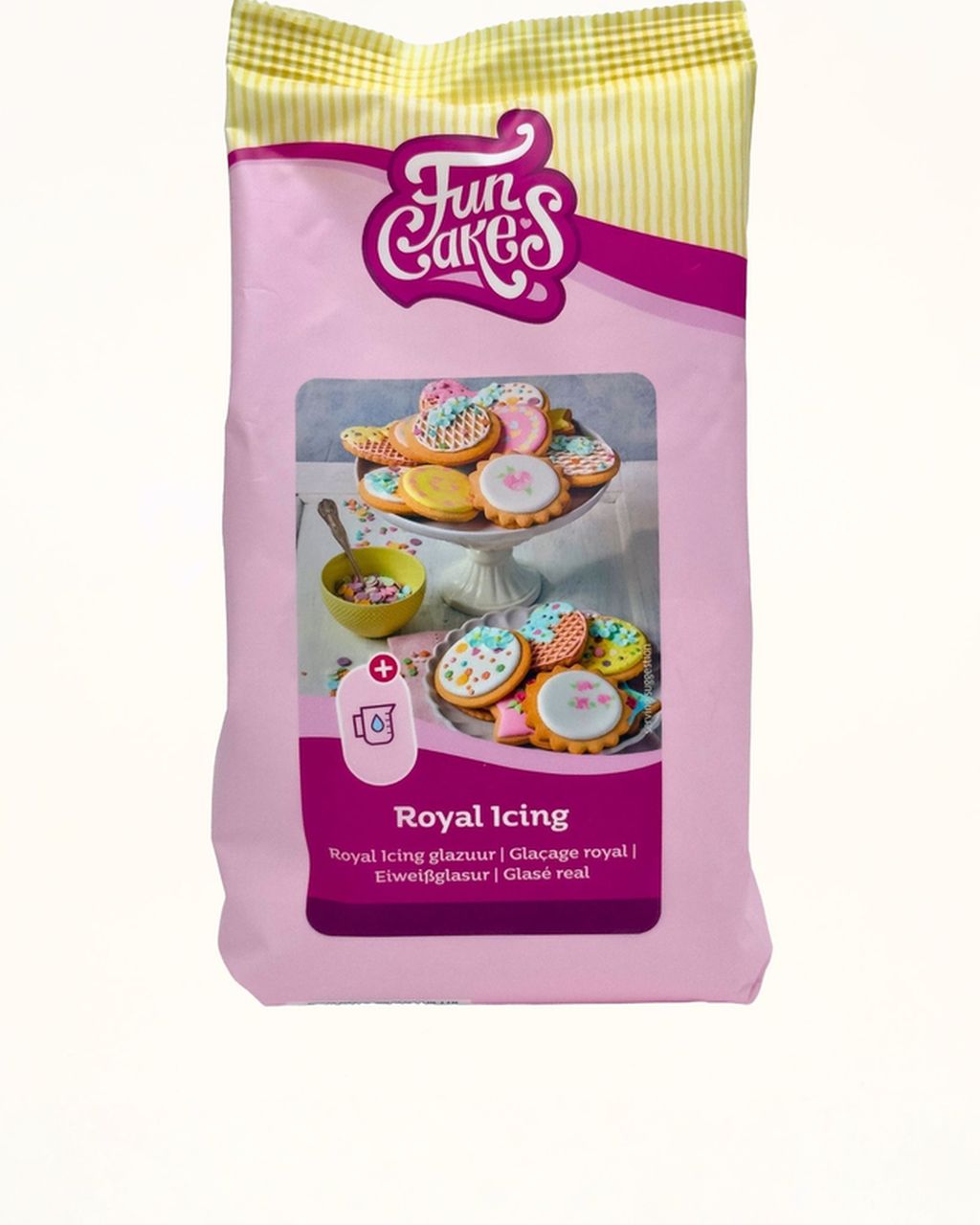
You can make it at home from egg white and sugar, but getting the consistency right takes a while, and raw egg white isn't for everyone. A ready-made mix, such as Royal Icing for Perfect Details, is simply stirred with water and gives the same result every time. For lines, a piping bag with the tip snipped off or a round tip of about 1–2 mm is enough.
Pipe the top halves the day before sandwiching. Thin lines feel dry to the touch within an hour, but they only withstand the pressure of your fingers during sandwiching after several hours.
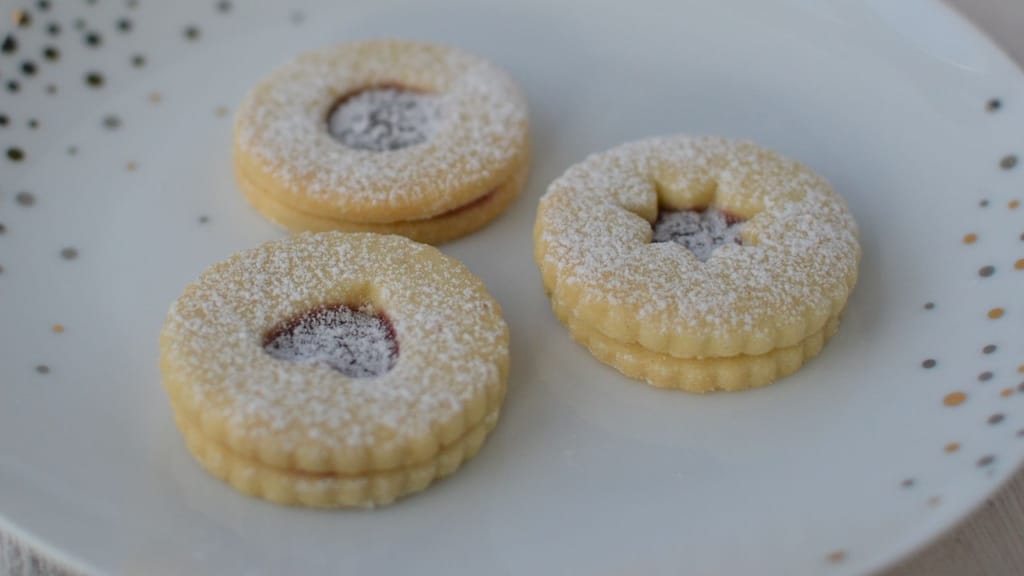
Dust the top halves with powdered sugar before sandwiching. At that point the cutout is just an empty hole, so the jam underneath stays clean and glossy. If you dust the sandwiched cookies, the sugar sinks into the jam, dissolves within a few hours and the cutout turns dull.
How to do it:
Lay the top halves out on paper and dust them through a fine sieve with a layer thin enough that the colour of the dough still shows through.
Sandwich immediately — a bottom half spread with jam, the top half on top, pressed gently at the edges, not the centre.
If you've already sandwiched the cookies and want to add sugar afterwards, lay a small ring (a cut-out circle) over the cutout as a stencil, so the sugar doesn't fall into the jam.
Keep in mind that ordinary powdered sugar on Linzer cookies will eventually "disappear": it absorbs moisture from the jam and the air and turns translucent. If you're baking well ahead, store the bottom and top halves separately, then dust the tops and sandwich them only a few days before serving. The other option is non-melting (decorating) sugar, which is treated with fat and doesn't melt as readily on a moist surface. We don't carry it in our shop yet, but you can usually find it at baking supply stores.
Dip only sandwiched Linzer cookies in chocolate, the day after sandwiching at the earliest, and only a third to a half of the way, so the cutout and the dough stay visible. Tempered chocolate sets best and shines most; a fat-based coating is easier but tastes waxy.
A plain comparison:
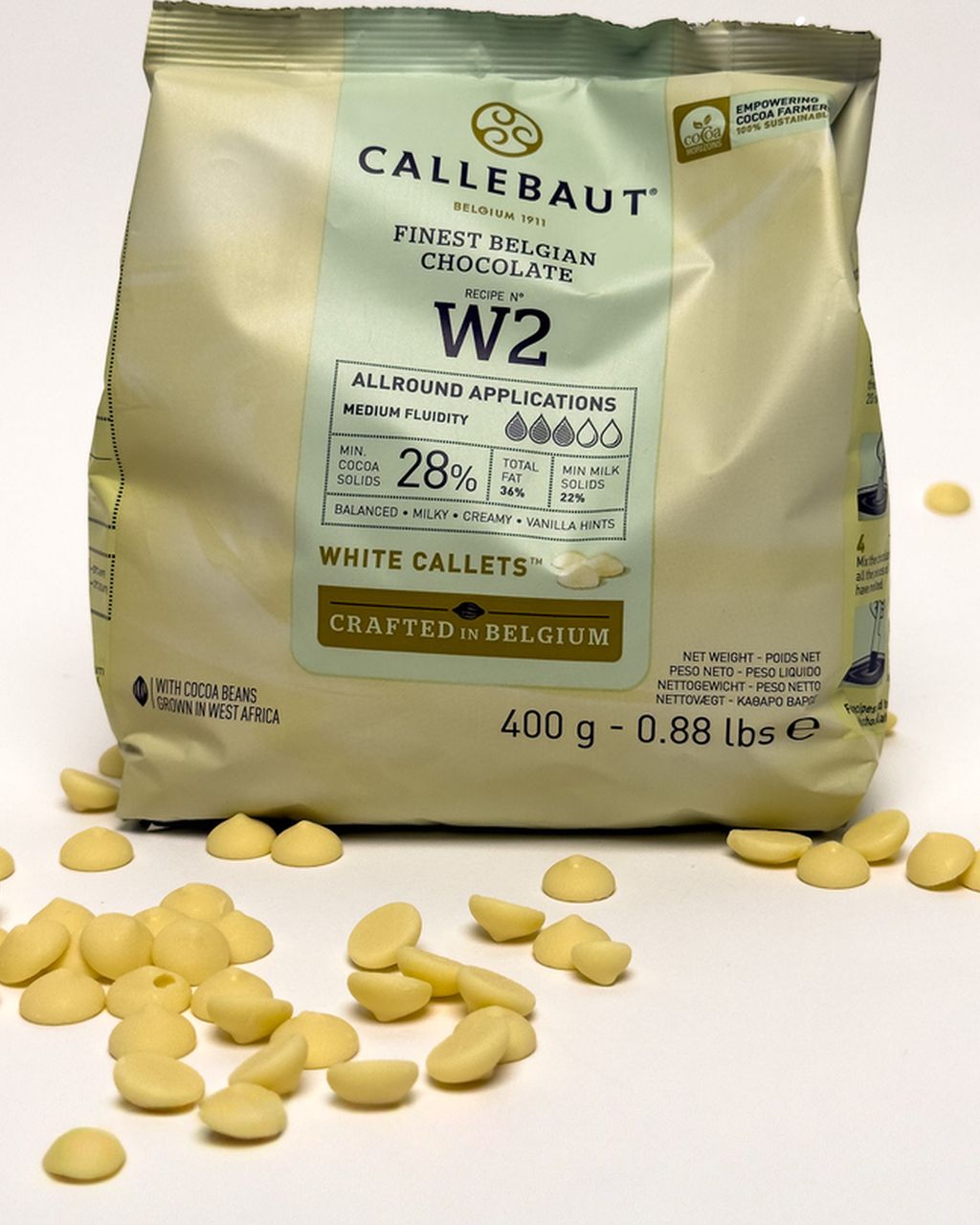
White chocolate — the best match for Linzer cookies with redcurrant or raspberry jam, as its sweetness balances the tart fruit. Callebaut white chocolate callets (W2) have medium fluidity and are good for dipping.
Dark chocolate (54–70%) — a contrast to the buttery dough, suited to apricot jam and to marbled Linzer cookies made with cocoa dough.
Milk chocolate — usually wins with kids, but with jam it's the sweetest combination.
Fat-based (cocoa) coating — you don't need to temper it and it doesn't crack, but it's softer, holds up less well in a tin and tastes less of chocolate. Fine for a few cookies in a hurry; for a whole batch, use real chocolate.
For chocolate to set glossy without grey streaks, temper it: melt white to 40–45 °C and work with it at around 28–29 °C, dark at around 31–32 °C, milk at around 29–30 °C (these are indicative working temperatures given by manufacturers such as Callebaut). The easiest home method is to melt two thirds of the callets and stir in the remaining third until the temperature drops.
Dip vertically, let the excess drip off, wipe the bottom edge on the rim of the bowl and place the cookie on parchment paper. At 18–20 °C the chocolate sets in 10–15 minutes. Avoid the fridge — moisture condenses on the chocolate when you take the cookies out, and the dough underneath goes soft.
Details on how much fat to add to the chocolate and why the cookies won't soften underneath are in chocolate glaze for gingerbread cookies, and the whole dipping process is shown step by step in chocolate-dipped banana-shaped Linzer cookies.
Sprinkles go onto wet chocolate or glaze within a minute of applying it, while shimmer goes onto a completely set surface. Sprinkles added too late fall off, and shimmer applied too early bleeds into a smear on wet glaze.
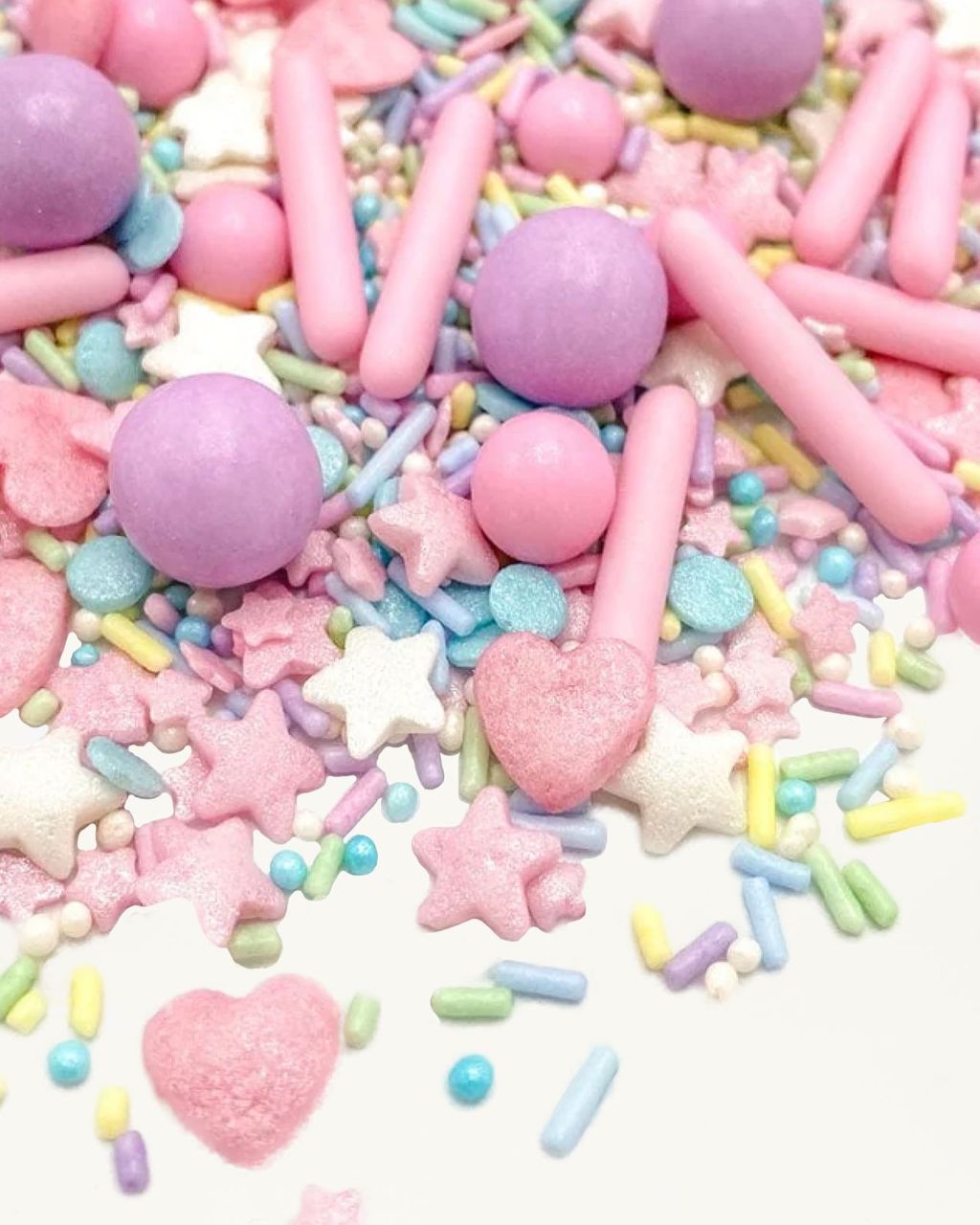
Sprinkles: a pinch on the chocolate tip is enough — Linzer cookies are small, and more looks cheap. Pastel sprinkles such as Sugar Sprinkles: Pastel Party stand out most on white chocolate. A no-store-bought alternative: chopped pistachios or freeze-dried raspberries.
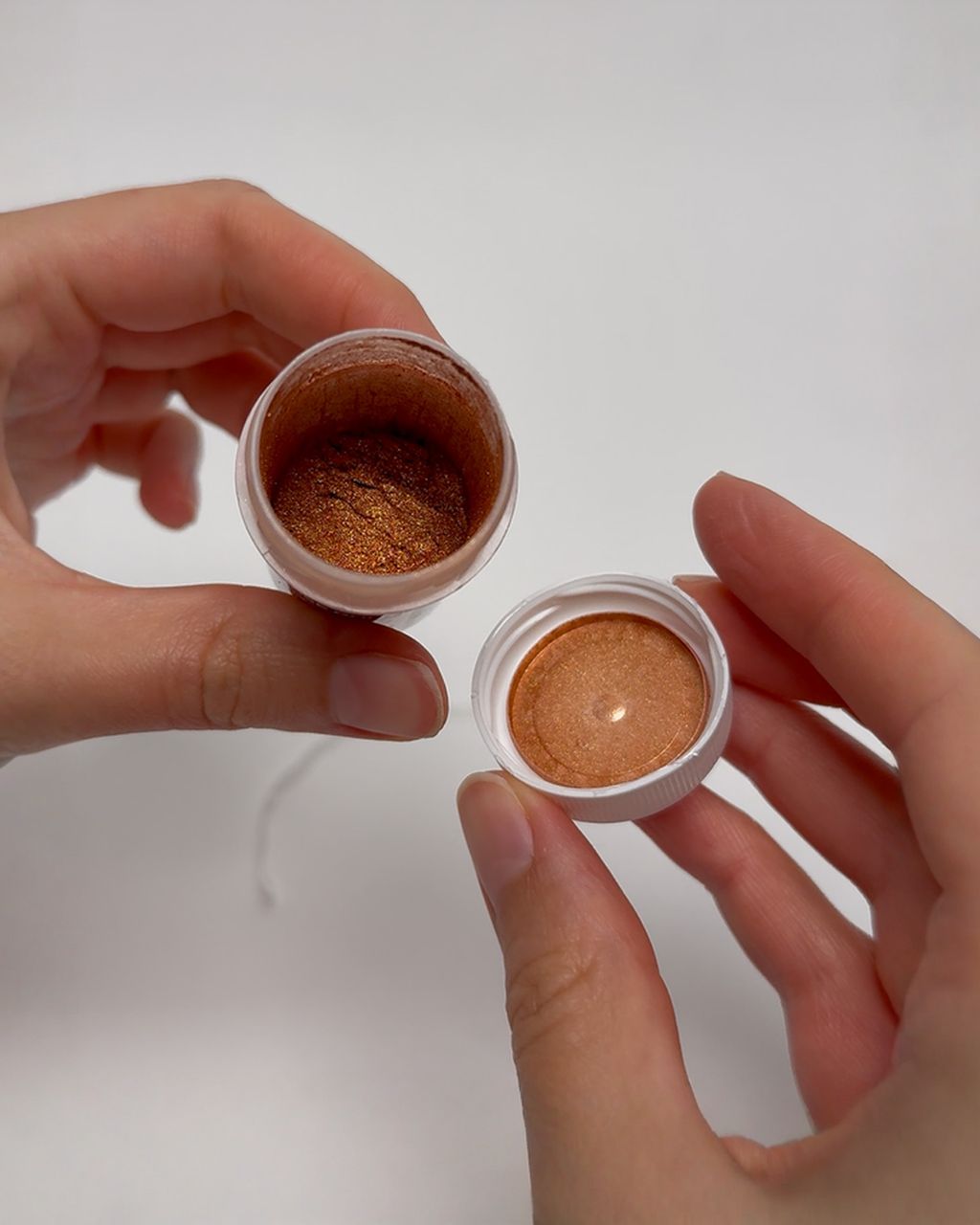
Edible shimmer: pick up a little powder on a dry brush and lightly sweep it over the edge of the glaze or chocolate. For a richer effect, mix it with a few drops of clear alcohol (vodka, rum) and paint it on — the alcohol evaporates, whereas water would dissolve the glaze. You'll find gold with a pink tint in Edible Glitter Powder – Rosy Gold; for red jam, Christmas red works well too.
Gold leaf: the most expensive and most impressive — a single piece placed with tweezers on the corner of the glaze is enough.
Always check that the shimmer is labelled edible, not just "non-toxic" — the latter is meant for decorations that aren't eaten.
For more ideas for your Christmas baking, see our Christmas cookie recipes.
Decorating Linzer cookies most often goes wrong because of too much moisture (thin glaze, sugar in the jam) or poor timing.
The glaze runs over the edge and the borders go soft — it's too thin. Add more sugar until the trail melts back in 5–8 seconds.
The glaze cracks — it was applied to warm dough, or in a layer over 2 mm thick.
The cutout is grey and sticky — sugar or glaze got into the jam. Dust with sugar and glaze before sandwiching.
The chocolate has grey streaks — it wasn't tempered, or it set in the fridge.
The top half shifts when dipping — the jam hasn't set yet. Wait until the next day.
Sprinkles fall off — they were added too late, onto an already set surface.
If your Linzer cookies crumble even before decorating, the problem is the dough, not the decorating — see how cookie doughs differ and how long to bake Linzer cookies by thickness. If you want to master the dough in depth, there are eighteen chapters on why Linzer cookies crumble, why they didn't turn soft and how to bake them the same way every time in the e-book Linzer Cookies — The Complete Dough Guide.
You can decorate Linzer cookies before baking: brush the top halves with lightly beaten egg white and sprinkle with sliced almonds, chopped nuts or coarse sugar. The decoration sticks as the cookies bake, so you don't need any glaze. Bake them a minute or two less, since nuts brown quickly.
Only pack decorated Linzer cookies into a tin and store them somewhere cool once the glaze, icing and chocolate have set completely, and layer them with parchment paper. Don't put them in the fridge, because moisture condenses on chocolate and glaze when you take them out. Royal icing lines stand up to layering best, as they dry rock hard.
Linzer cookies with glaze or chocolate can be decorated 2–3 weeks ahead, as soon as the jam has set. The exception is powdered sugar: over time it absorbs moisture and turns translucent, so dust the top halves and sandwich the cookies only a few days before serving.
Linzer cookies with lemon glaze keep for about 2–3 weeks in a tin in a cool place, just like undecorated ones. The glaze doesn't shorten their shelf life, and it actually protects the surface a little from drying out. You'll find more on storage in our article [how long Linzer cookies keep](/cs/articles/jak-dlouho-vydrzi-linecke).
It's best to freeze the cookie halves undecorated and unsandwiched. Decorated Linzer cookies freeze less well. As they thaw, moisture condenses on the glaze and chocolate, the glaze turns sticky and the chocolate dulls. Thaw the halves in a closed tin at room temperature, then sandwich and decorate them.
One recipe worth heating the oven for, one tip, and one deal from the shop. Nothing else.