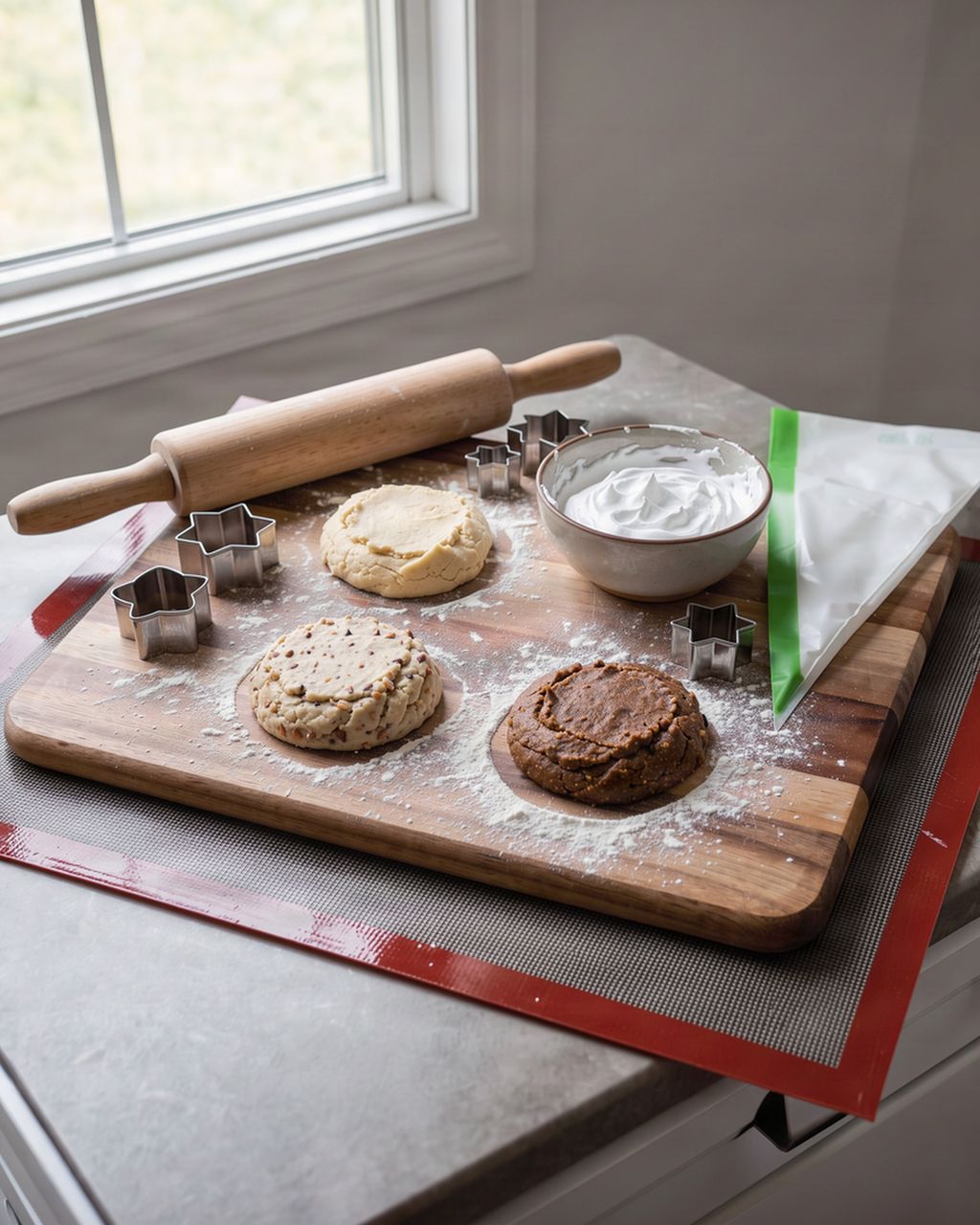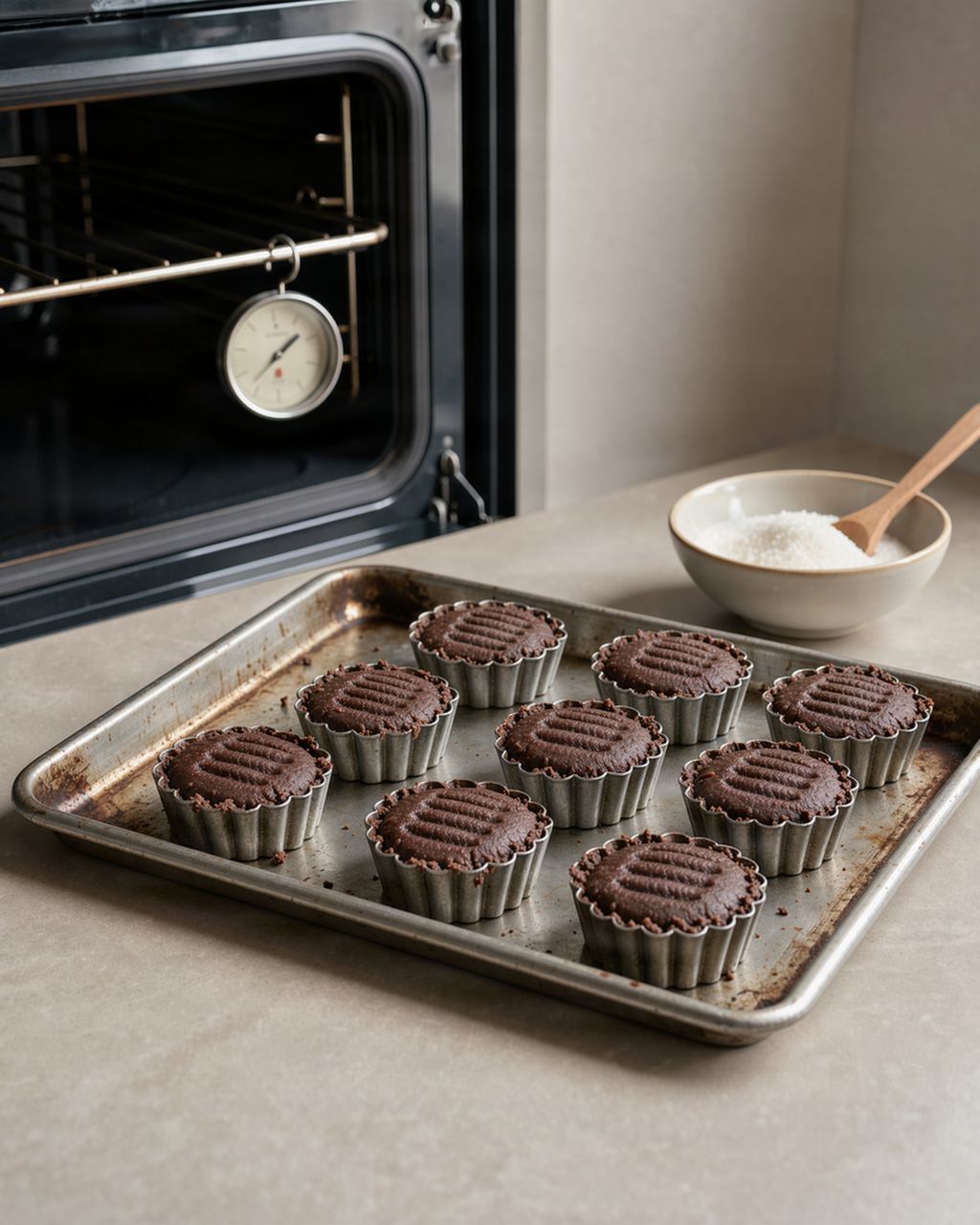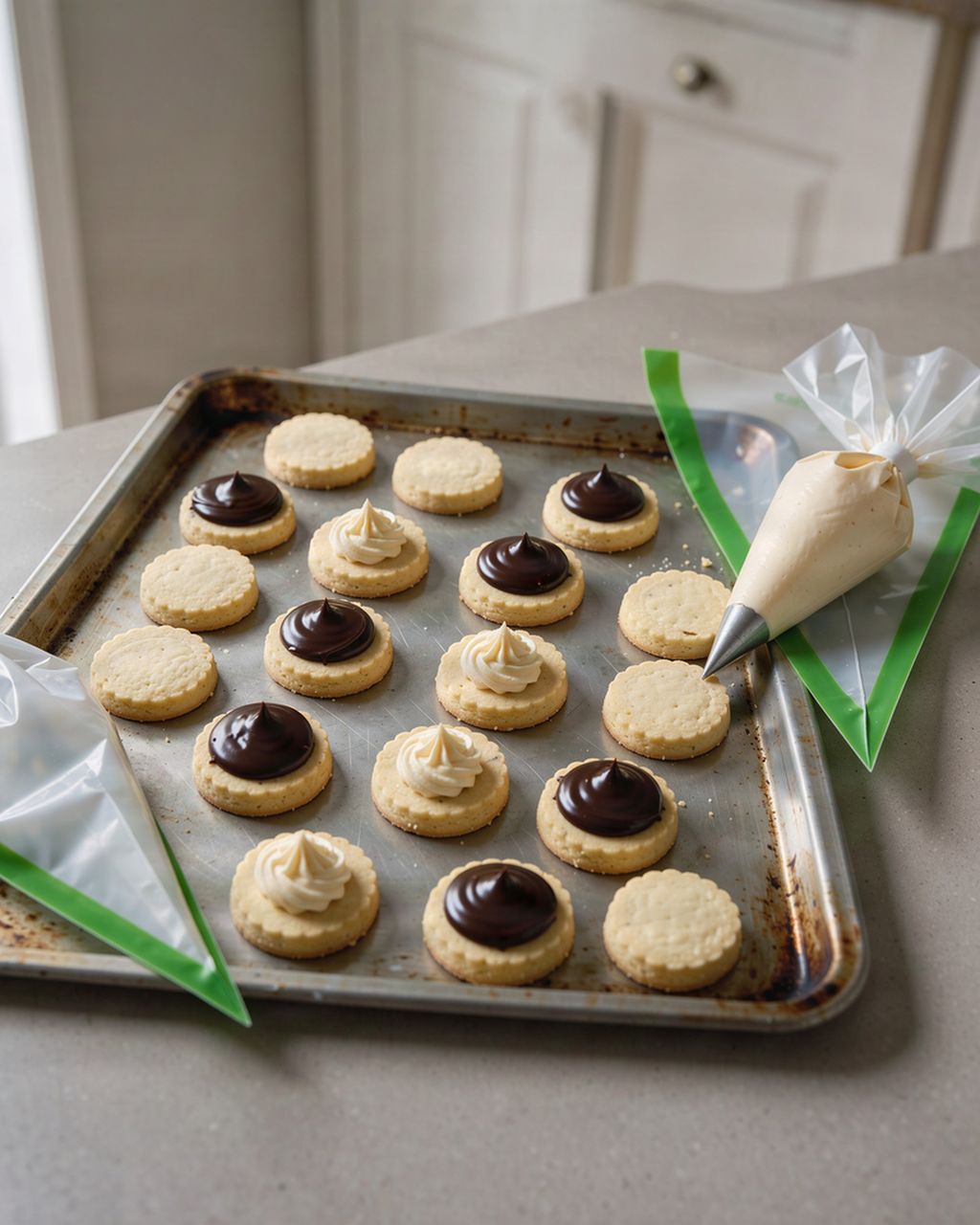
Soft gingerbread cookies
Lemon Icing: Exact Sugar-to-Juice Ratio, Thickness, Shine & Variations

Updated Oct 24, 2026
Lemon icing is a smooth mix of sifted powdered sugar and fresh lemon juice at roughly 4:1 by weight: 100 g sugar to 25 g juice (about 5 teaspoons). There's no cooking involved. You stir it together cold in two minutes. After that, you control the thickness with the ratio alone: more juice for a thin glaze that runs down a bundt cake, more sugar for a firmer icing for gingerbread cookies. This guide gives you the exact ratios for every use, shows you how to judge the right consistency, explains why icing soaks in, cracks or won't set, and covers variations with lime, orange and rum.
Lemon icing (often called lemon glaze) is a simple mix of two ingredients: sifted powdered sugar (icing sugar) and lemon juice. Here's one thing many recipes get wrong: basic lemon icing is not cooked. You need no butter and no saucepan. Heat would caramelise the sugar or turn it into syrup, and the icing would then turn dull or crystallise.
So what goes into it?
Powdered (icing) sugar — it must be finely ground and sifted. Granulated or coarse sugar won't dissolve when cold, and the icing stays grainy.
Lemon juice — ideally freshly squeezed and strained through a sieve. It supplies both the tartness and the liquid. One medium lemon gives you roughly 30–45 ml (2–3 tablespoons). Bottled juice works, but the flavour is flatter.
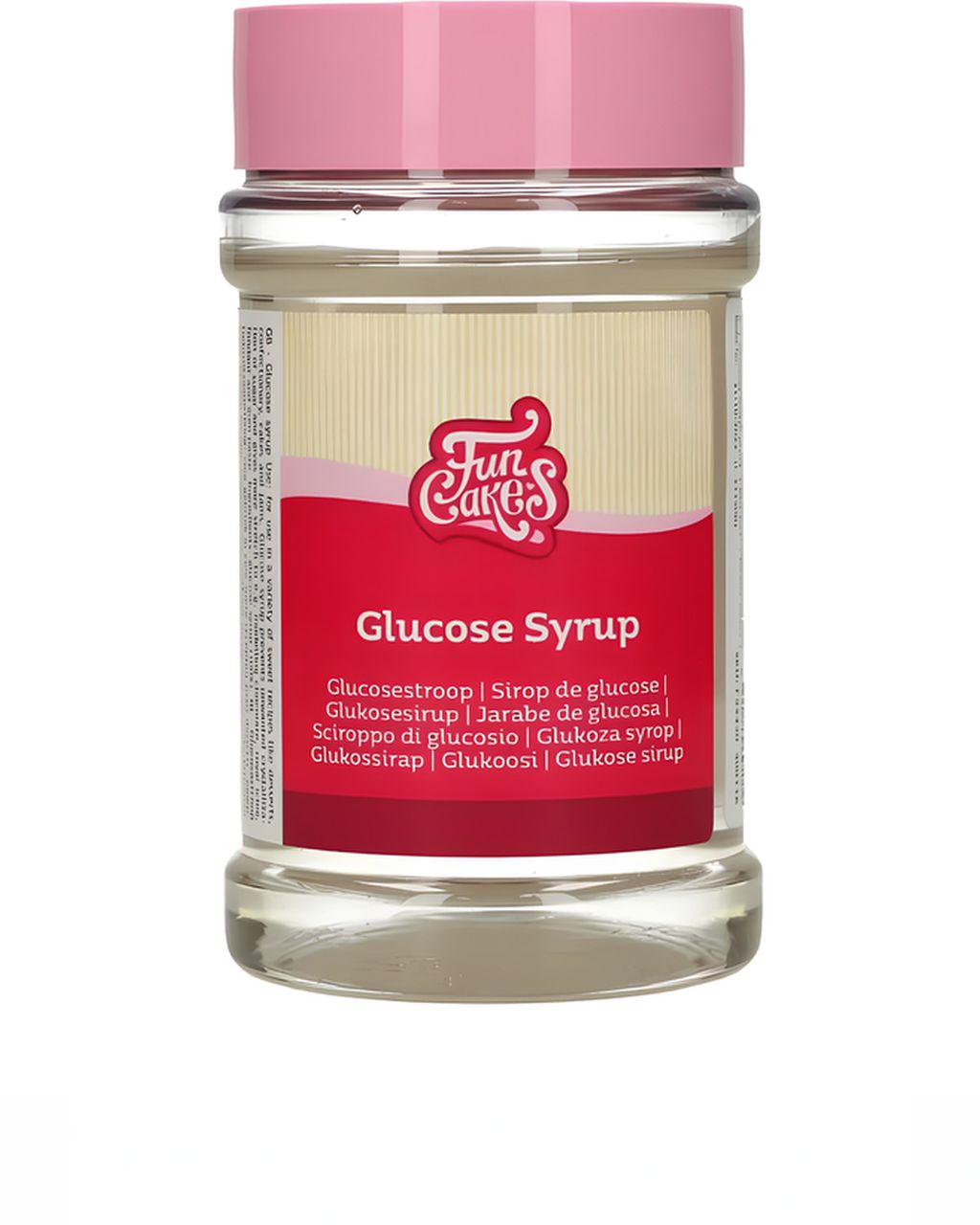
Optional: lemon zest (the yellow part only, as the white pith turns bitter) for a stronger aroma, a pinch of salt to round out the flavour, and a teaspoon of glucose syrup for extra shine and flexibility.
Lemon glaze belongs to the water-icing family: sugar dissolved in liquid, with no fat and no egg white. For how it differs from chocolate, meringue-based and fondant icings, and when to use each, see our overview of icing types for cookies and cakes.
The all-purpose ratio is 4 parts powdered sugar to 1 part lemon juice by weight, which means 100 g sugar to 25 g juice (about 5 teaspoons, or 1⅔ tablespoons; lemon juice weighs almost the same as water, so 25 g ≈ 25 ml). The result is an icing with the consistency of runny honey. It falls slowly from the spoon in a continuous ribbon and can be poured or spread.
It only takes a few minutes:
Sift the powdered sugar into a bowl so there are no lumps.
Pour in about three quarters of the juice and stir with a spoon or whisk until the sugar has dissolved completely and the icing starts to look glossy (about 1 minute).
Add the rest of the juice a teaspoon at a time until you reach the consistency you want. At this stage each teaspoon visibly changes the thickness.
Adjust the consistency to suit the use:
Pourable glaze (bundt cake, poppy seed cake, muffins): thinner, so it spreads by itself and runs down in streaks.
Thicker icing for cookies (gingerbread cookies, little wreath cookies): firmer, so it holds its shape and doesn't run.
If you overdo it, it's easy to fix: too thin → stir in a spoonful of sifted sugar; too thick → add juice or water a few drops at a time. The exact ratios for each use are just below.
Lemon icing comes in four basic consistencies: lemon soak (2:1), pouring glaze (4:1), spreading icing (5:1) and thick gingerbread-cookie icing (6–7:1). They differ only in the ratio of sugar to juice (always by weight, per 100 g powdered sugar):
2:1 — lemon soak (50 g juice): runny like syrup. You pour it over a warm cake that you've pricked with a skewer, so it soaks in and forms a juicy, crisp, sugary crust just under the surface. Think of a lemon-soaked bundt cake or buchta, or the English lemon drizzle cake.
4:1 — pouring glaze (25 g juice, about 5 teaspoons): runs down a bundt cake in streaks and dries on a cooled cake into a thin, glossy layer.
5:1 — spreading icing (20 g juice, 4 teaspoons): flows out into a smooth, even layer but doesn't run off the edges. Ideal for gingerbread cake or poppy seed cake baked in a tray, plus little wreath pastries and doughnuts.
6–7:1 — thick gingerbread-cookie icing (15 g juice, 3 teaspoons): holds an outline, can be spread with a knife or piped from a bag for simple decorating.
What you need to know in practice: one teaspoon of juice (5 g) more or less moves the icing a whole step. That's why you should add the juice a teaspoon at a time, not all at once.
How to judge the right thickness: drag a spoon through the icing in the bowl and count how long the trail takes to level out. For pouring over a bundt cake, 3–5 seconds; for spreading, 8–10 seconds; for gingerbread cookies, 15–20 seconds. Lemon soak levels out instantly.
How much icing you need:
Bundt cake (22–24 cm tin): 150 g sugar + 35–40 g juice (about one lemon).
Gingerbread cake or poppy seed cake on a 30 × 40 cm tray: 300 g sugar + 60 g juice (about two lemons). The section on lemon icing for gingerbread cake below explains how to get a glossy layer over a large surface.
About 40 gingerbread cookies: 200 g sugar + 30 g juice.
12 muffins: 100 g sugar + 25 g juice.
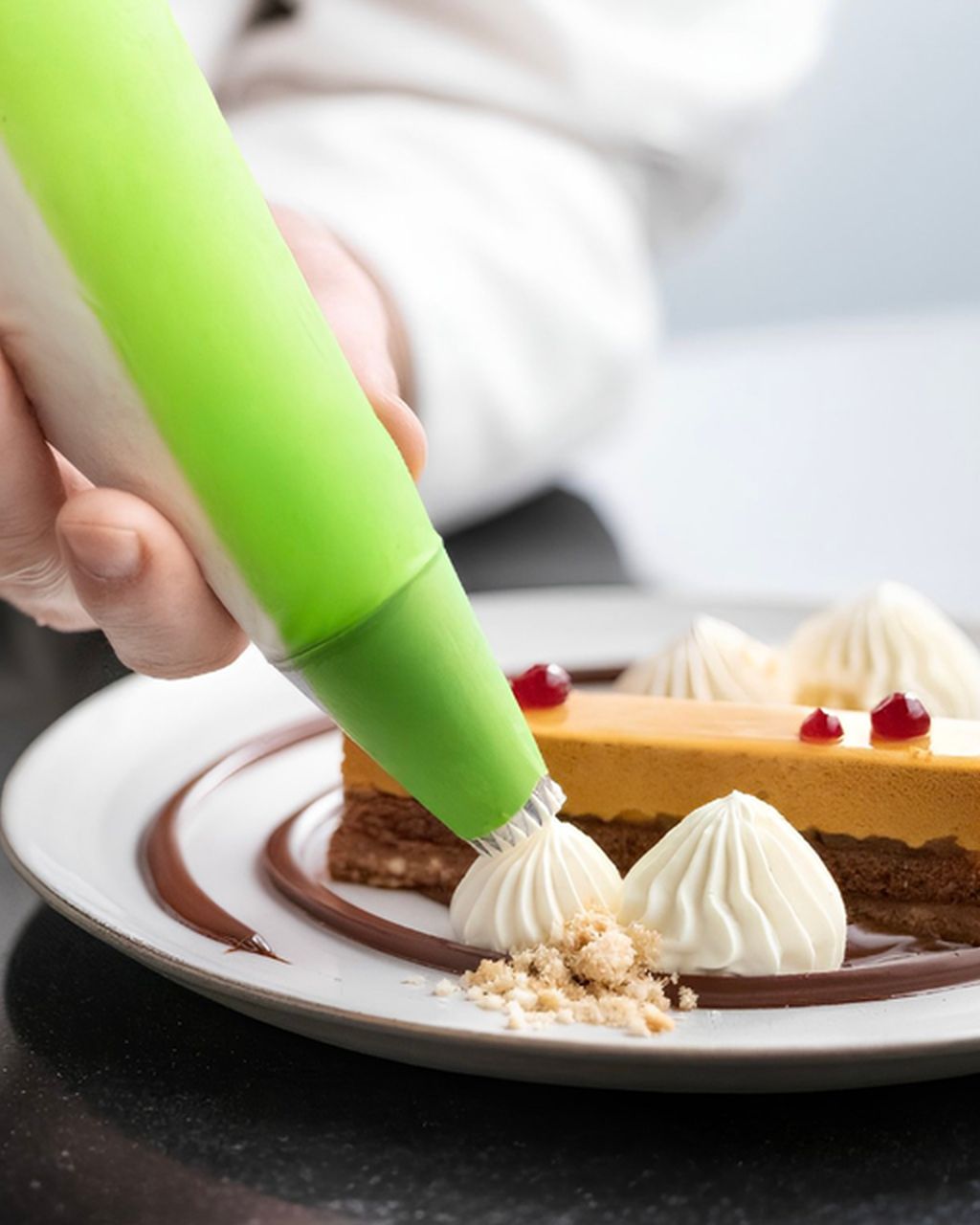
Apply both pouring glaze and spreading icing in a thin layer on a cooled dessert. On a warm surface the icing thins out, soaks in and loses its shine. The one exception is lemon soak, which you pour over a warm cake precisely so that it soaks in. For pouring, tip the glaze into the centre and let it run freely down the sides. For cookies, spread it with a spoon, or pipe it from a piping bag with a small opening, working from the centre to the edges.
A few things decide the result:
A thin layer. Less is more, as a thick layer cracks and takes ages to dry. The ideal is 1–2 mm.
One pass. Icing starts to set right away, so work briskly and don't go back over spots that have started to dry, or they'll be left with dull smears.
Let it dry. Before you stack or wrap the dessert, give the icing time to set, ideally uncovered at room temperature in a dry room.
If you want the glaze to run down a bundt cake in even streaks instead of sliding all onto the plate, take a look at our guide to how to pour icing over a bundt cake.
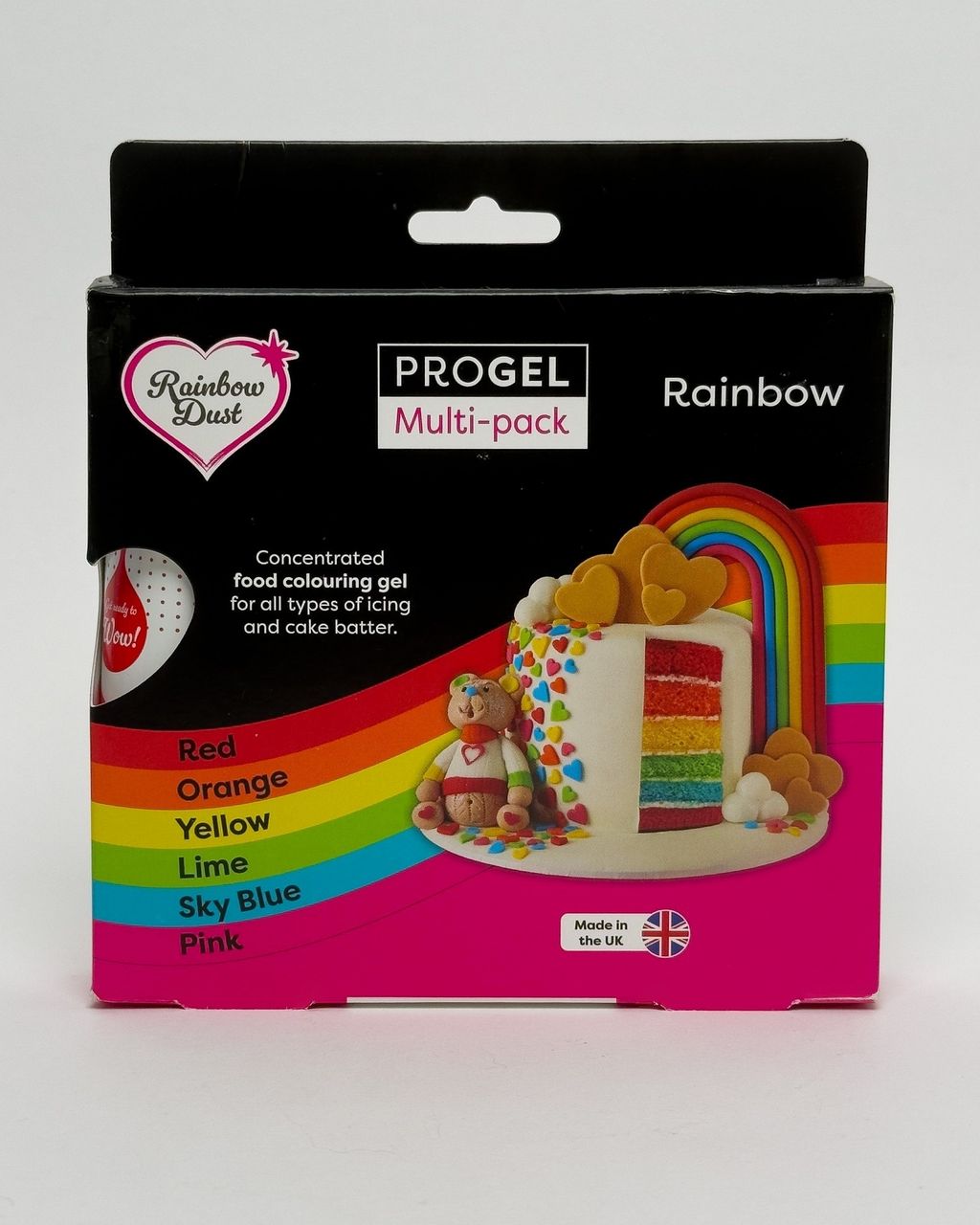
For extra shine, stir a teaspoon of glucose syrup or honey into the finished icing for every 100 g of sugar. For colour, mix a pinch of gel food colouring into part of the icing.
The five most common problems (soaking in, cracking, not setting, going dull, running off) almost always come down to the temperature of the cake, the ratio, humidity or the way you apply the icing. In detail:
It soaks in and disappears — the cake was still warm, or the icing is too thin (a ratio below 4:1). Heat dissolves the sugar again, and the porous crumb sucks it up. The fix: let the cake cool to at least room temperature (1–2 hours for a bundt cake) and thicken the icing. On very porous cakes, pouring twice helps: the first thin layer seals the surface and the second stays on top.
It cracks — the layer is too thick, the icing is too thick and hard, or you've put it on a cake that is still settling and shrinking. The fix: use a thinner layer, ice only when the cake is completely cool, and add a teaspoon of glucose syrup per 100 g of sugar to make the layer more flexible. For more on gingerbread cookies, see why icing cracks on gingerbread cookies.
It won't set and stays sticky — too much liquid, a lot of honey, or humid air. Sugar is hygroscopic and takes water back from damp air. The fix: add sugar, dry the cake in a dry room (not next to a kettle or dishwasher), and don't put freshly iced bakes in the fridge.
It's dull or greyish — the icing was worked after it had started to set, or fridge condensation got into it. The fix: apply it in one pass and store the cake at room temperature.
It all runs off the sides — the icing is too thin for the job. For a bundt cake, the trail left by a spoon should take 3–5 seconds to disappear, not vanish at once.
For gingerbread cookies and little wreath cookies you need a thicker lemon icing (6–7:1) that holds its shape and doesn't bleed into the decoration. Use less juice or add sugar until the icing falls slowly from the spoon and the trail levels out in 15–20 seconds. Apply a thin layer, working from the centre. A few drops of rum flavouring give the icing a traditional Christmas note.
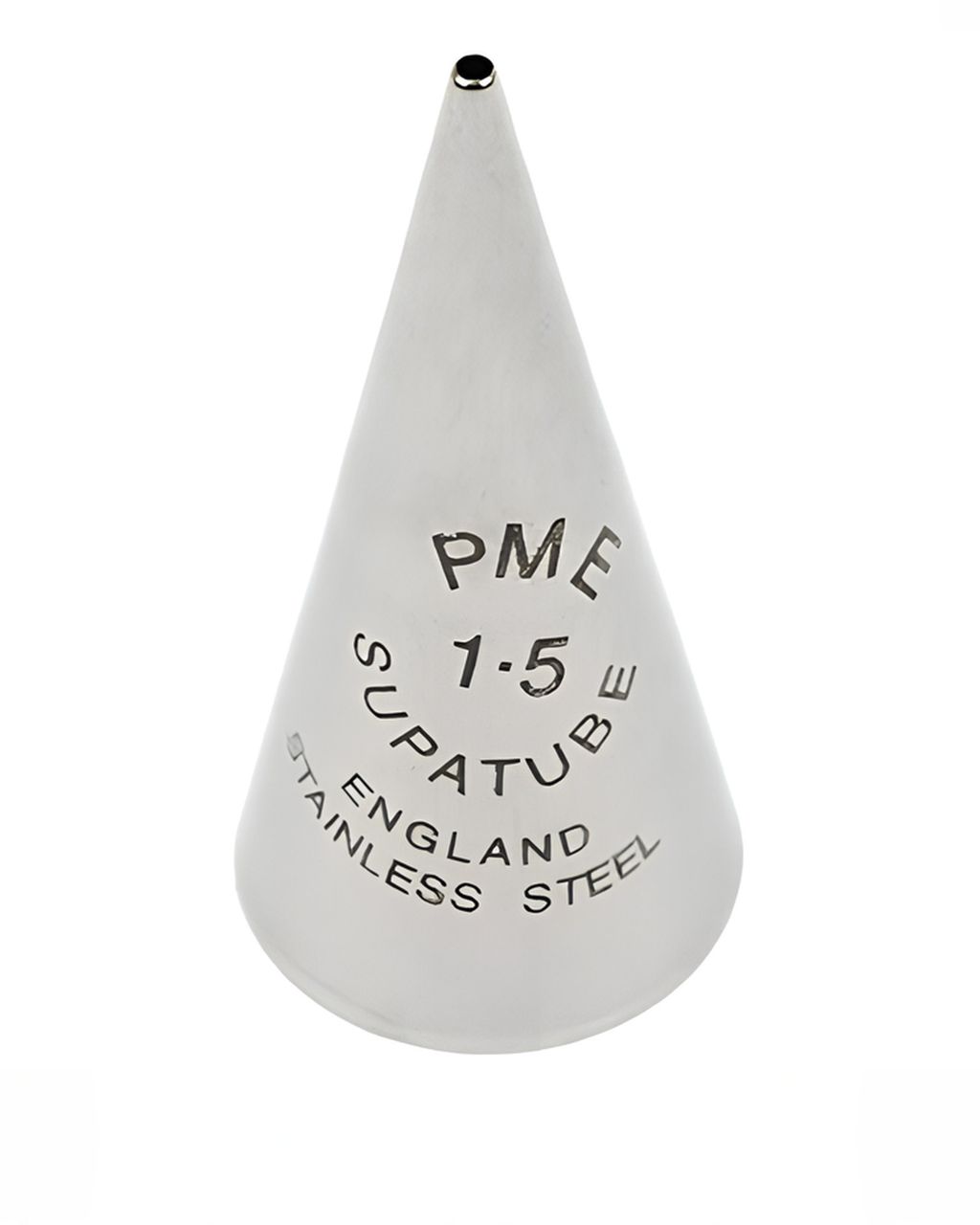
To outline edges and pipe simple ornaments, fill a disposable One Way piping bag with the icing and snip the tip to 1–2 mm. For a thin, even line, fit the bag with a fine writing tip, for example the PME Supatube writing tip no. 1.5. A snipped tip tears differently with every squeeze, whereas a metal tip keeps the same width.
If you want really sharp lines and delicate lacework on cookies, reach for proper egg-white royal icing for cookies instead of lemon icing. It holds its shape better, dries hard and is easier to decorate with.
Soft gingerbread cookies
Soft gingerbread cookies decorated with lemon icing

For gingerbread cake baked in a tray, use a 5:1 spreading lemon icing: 100 g powdered sugar to 20 g lemon juice, so 300 g sugar and 60 g juice for a whole 30 × 40 cm tray. Spread it on the cooled cake in a layer 1–2 mm thick. This icing flows out by itself into a smooth surface, doesn't run over the edges, dries white and glossy, and doesn't flake off when you slice. The trail left by a spoon in the bowl levels out in 8–10 seconds.
Gingerbread cake (the kind baked in a tray or tin) needs a different icing from gingerbread cookies. For cookies you want a thick 6–7:1 icing that holds an outline; for the cake you want an icing that flows out into a flat layer. If you'd like just a translucent veil that lets the brown of the gingerbread show through, thin it to 4:1.
Cooled or lukewarm gingerbread cake? Both work, but the result is different:
Cooled gingerbread cake (room temperature, about 1 hour after baking for a tray bake): the icing stays on top and dries into an opaque, white, glossy layer that contrasts sharply with the dark crumb. This is the classic look and the surest route to shine.
Lukewarm gingerbread cake (warm only to the touch, about 10–15 minutes after baking): the icing melts slightly and spreads by itself into a thin, semi-translucent layer that blends into the surface. It tends to be duller and some of it soaks in, but the cake underneath is a bit moister. Use a thicker icing of 5–6:1, because the heat will thin it.
Hot gingerbread cake straight from the oven will "eat" all the icing. If that's what you want, go straight for a 2:1 lemon soak and prick the cake with a skewer first.
To keep the icing from soaking in and to keep it glossy, follow these steps:
Let the gingerbread cake cool on a rack, uncovered. Under a tea towel the surface steams and turns damp, and the icing then goes dull on it.
On a very porous or cut surface, first brush on a thin layer of warmed, strained apricot jam and let it dry. It seals the pores so the icing stays on top.
Stir a teaspoon of glucose syrup into the icing for every 100 g of sugar. The shine lasts longer and the layer doesn't crack when you slice.
Pour the icing into the centre of the tray and spread it to the edges with a spatula in one pass, without going back over spots that have started to dry.
Slice only after 1–2 hours, when the icing has set, using a knife dipped in hot water and wiped dry.
If the icing soaked in because the gingerbread came out dry and crumbly, the fault isn't the icing but the batter. Our article why tray-baked gingerbread cake turns out hard and how to bake it moist explains what to do. If you're choosing between lemon and chocolate, you'll find a comparison in icing for tray-baked gingerbread cake: chocolate and lemon.
How lemon pairs with the spices: gingerbread is sweet from honey and heavy with cinnamon, cloves, star anise and aniseed. The tartness of lemon cuts through that sweetness and lifts the spices. Citrus zest is, after all, a common part of gingerbread spice mix. You can deepen the flavour further like this:
zest of ½ lemon per 100 g sugar for a stronger citrus note,
orange juice in place of part of the lemon juice (say 10 g + 10 g) for a softer, rounder flavour that melts into the honey,
a pinch of cinnamon or gingerbread spice right in the icing, so the flavour of the cake and the icing connect,
a few drops of rum flavouring for a traditional Christmas note.
For a honey gingerbread with fruit, try lemon icing on this honey spelt gingerbread with plum butter and raspberries, where the fresh tartness of the lemon balances the sweet plum butter.
Moist cakes such as bundt cake, poppy seed cake and muffins call for a thinner lemon glaze (4:1) that spreads out on its own and clings lightly to the surface. Pour it on once the cake has cooled: on warm batter the glaze vanishes and no glossy layer is left. If you'd rather have a juicy lemon cake with the icing soaked right in, use a 2:1 lemon soak, a thin syrupy icing that you pour over a warm cake pricked with a skewer so it soaks in. Thin lemon slices or grated zest make a nice decoration for a bundt cake, and the sweeter orange version suits poppy seed.
Among bundt cakes, try lemon icing on this orange bundt cake with almonds, where citrus and nuts go together beautifully, or on Grandma's quark bundt cake, the Dvěstěpadesátka.
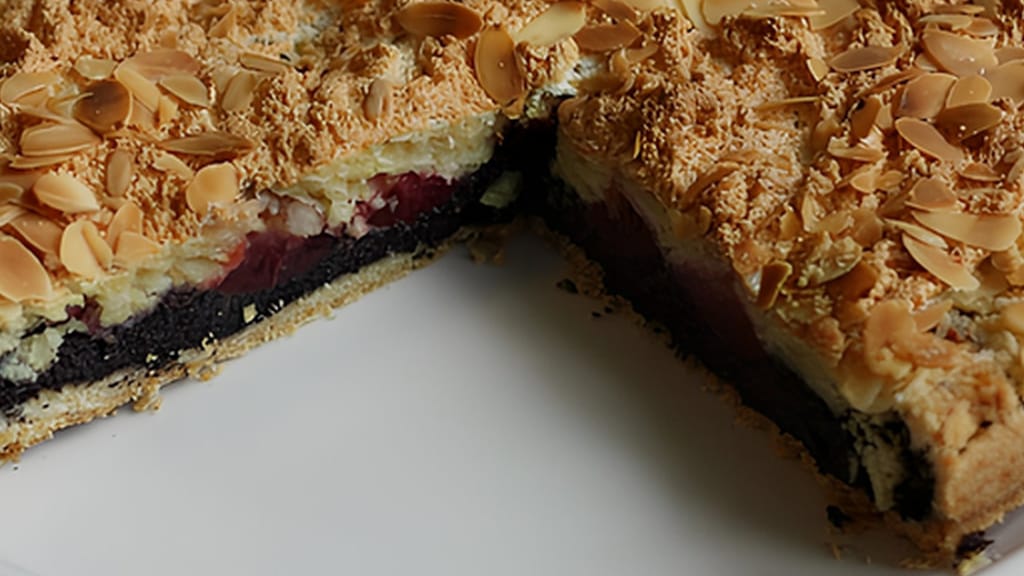
Heavenly poppy seed cake with plums
Poppy seed cake, with lemon icing adding a fresh contrast
You can vary lemon icing in five ways: with lime, orange, rum, zest with vanilla, and butter. The base stays the same, sugar plus a tart liquid at around 4:1, and only the citrus and add-ins change:
Lime: swap the lemon juice for lime juice and add a little grated zest. It's sharper and more aromatic, and great on summer desserts.
Orange: orange juice is sweeter and less tart, so the flavour is milder. For more punch, add zest and a few drops of lemon. It goes beautifully with poppy seed and chocolate.
Rum-lemon: for 150 g powdered sugar, use 20 g lemon juice and 15 ml (1 tablespoon) dark rum. The total amount of liquid stays around 4:1, so the icing sets normally. It suits bundt cakes and traybakes. For a milder version, replace part of the rum with juice.
Lemon zest and vanilla: stir the zest of half a lemon and the seeds from a piece of vanilla pod into the basic icing for a more aromatic icing with visible flecks.
Butter-lemon: stir 10 g melted, slightly cooled butter into 100 g sugar, and only then add the juice. The icing is creamier and less sweet, but it dries softer and duller.
Pour rum-lemon icing slowly so it spreads evenly, and decorate with lemon slices or grated zest.
You can make lemon icing without powdered sugar too: from powdered erythritol or xylitol for a firmer layer, or from honey or agave syrup with coconut oil for a softer, more supple glaze.
Erythritol and xylitol can be ground to a powder, sifted and stirred with lemon juice in the same ratio as powdered sugar. The icing sets, but expect some differences. Erythritol dries rather dull, leaves a slight cooling sensation in the mouth, and after a day or two it can crystallise again and turn grainy, so it's best fresh. Xylitol dissolves more readily and behaves more like sugar, but eating too much can have a laxative effect, and it's poisonous to dogs, so watch the crumbs.
Honey and agave give a softer, rather sticky icing, and a teaspoon of melted coconut oil gives it a silkier texture. This glaze doesn't set hard and stays soft, so it suits a cake that's eaten right away, not stacked cookies.

You can make lemon icing ahead: in a sealed container in the fridge it keeps for 3–4 days. A skin forms on top and the icing stiffens. Before using it, leave it at room temperature for a while and whisk it again, or bring back the consistency with a few drops of lemon juice. You can cover the surface with cling film pressed directly onto the icing, and then no skin forms.
Store a dessert that's already iced and set at room temperature in a closed tin. Dried icing also acts as a thin protective layer that helps baked goods stay moist longer. Put the dessert in the fridge only because of the filling (such as cream or quark), not because of the icing, since in cold, damp conditions the glaze turns damp and loses its shine.
A thin lemon glaze is dry to the touch in about 15–30 minutes and fully hard within 1–2 hours at room temperature. The thinner the layer, the more sugar in it and the drier the air, the faster it sets. Thick icing on gingerbread cookies can need several hours to dry through.
Yes. The icing isn't cooked, so the rum doesn't evaporate and the alcohol stays in. For children, pregnant guests or drivers, swap the rum for a few drops of rum flavouring, which gives you the taste without the alcohol.
You can, but as the cake thaws the icing turns damp and sticky and loses its shine. It's better to freeze the cake without icing, let it thaw in its wrapping at room temperature, and pour fresh lemon icing over it just before serving.
Basic lemon icing made from powdered sugar and lemon juice is vegan and naturally gluten-free. If you follow a strict gluten-free diet, check the powdered sugar packaging. To stop clumping, it usually contains added starch, either potato or corn, and in some special anti-humidity sugars even wheat starch. Some powdered sugars contain no starch at all, or use a different anti-caking agent instead.
One recipe worth heating the oven for, one tip, and one deal from the shop. Nothing else.