Classic czech beef goulash with chilli and bread dumplings
How Much Meat per Person: Schnitzels, Goulash, Roasts, Chicken, Duck and Ground Meat for Parties, Christmas and New Year's Eve
How much meat should you plan per person? For an adult at a main meal with a side, buy 150–250 g (5–9 oz) of raw boneless meat, 300–400 g (11–14 oz) of bone-in meat, and 400–800 g (14–28 oz) of whole poultry, depending on the bird. Bones and the water that cooks out of the meat account for the difference. Below you'll find a table by type of meat and dish, portions for kids and big eaters, and worked calculations for 10 and 20 guests. The numbers come from our kitchen experience, not from any official standard, so feel free to adjust them to how your family eats.
For an adult, plan about 200 g (7 oz) of boneless meat, about 350 g (12 oz) of bone-in meat, about 500 g (1 lb 2 oz) of whole poultry, and half as much again for duck and goose. The whole table is built on this rule, and the rest is fine-tuning for each dish.
All the figures are raw weight per adult when the meat is the main course and served with a side. It's the weight you see at the butcher's counter or on the scale, not what ends up on the plate. When there's more than one meat on the table, plan a smaller share of each (more on that in the section on parties and buffets).
Schnitzels (boneless pork, chicken or turkey cutlets): 150–200 g (5–7 oz), which is one large or two smaller schnitzels
Goulash (beef shin, shoulder, or pork roast cut into cubes): 200–250 g (7–9 oz)
Boneless whole roasts (pork neck, shoulder, beef round, turkey breast): 200–250 g (7–9 oz)
Bone-in meat (chops, bone-in shoulder, pork hock): 300–400 g (11–14 oz); pork ribs 400–500 g (14–18 oz)
Whole chicken: 400–500 g (14–18 oz), so a chicken of about 1.6 kg (3.5 lb) feeds 3–4 people
Whole turkey: 500–600 g (1 lb 2 oz–1 lb 5 oz)
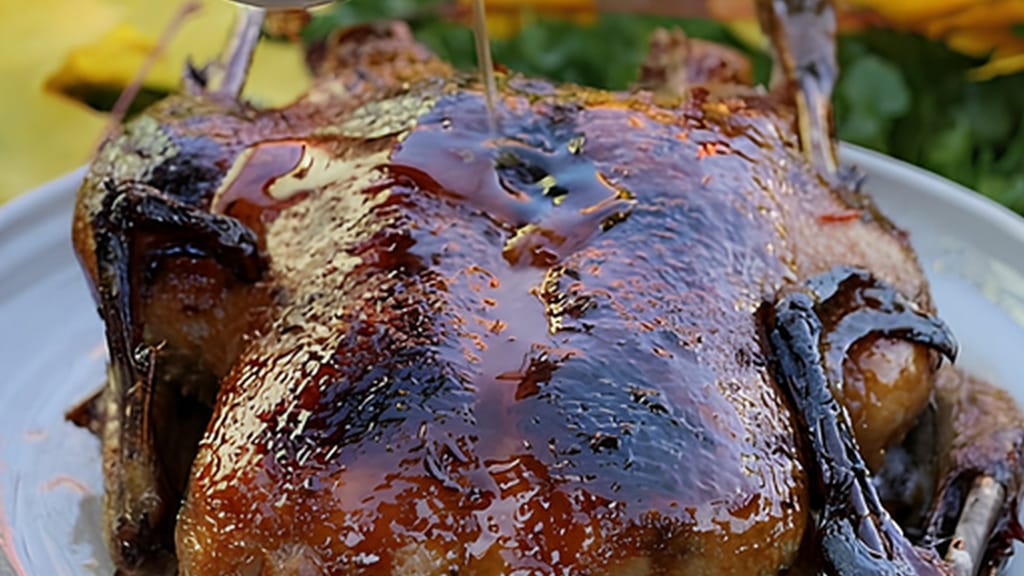
Duck: 600–800 g (1 lb 5 oz–1 lb 12 oz), so a duck of about 2.4 kg (5.3 lb) feeds 3–4 people
Goose: 600–800 g (1 lb 5 oz–1 lb 12 oz), so a goose of about 4.8 kg (10.5 lb) feeds 6–8 people
Ground meat: 120–150 g (4–5 oz) for patties and meatballs, 100–125 g (3.5–4.5 oz) for sauces and lasagna
Grilling: 250–300 g (9–11 oz) in total across all kinds of meat, closer to 350 g (12 oz) with bones and sausages
How to soften gingerbread that’s gone hard, when to fill Linzer cookies and how to tell the carp is done. One recipe and one tip a week. Unsubscribe in one click.
Always count in raw weight, because that's how you buy and weigh meat. A cooked portion of boneless meat is about 150 g (5 oz) on the plate, and to get that you need roughly 200 g (7 oz) raw. The difference isn't a mistake in the recipe. It's the water and fat that cook out.
If you're wondering how many kilograms of meat to buy per person, the math is simple: multiply the grams from the table by the number of adults and divide by a thousand. For six people and a boneless roast, that's 6 × 220 g = 1.32 kg (2.9 lb), so ask the butcher for 1.3–1.4 kg. With a whole cut it pays to round up: a piece 100 g larger roasts just the same, and the leftovers come in handy the next day.
For all your meat and fish in one place, from quick dinners to festive roasts, browse our collection of meat and fish recipes. Every recipe lists the number of servings and the weight of the meat, so you can easily scale portions to your number of guests.
Meat loses roughly a fifth to a third of its weight during cooking, most of all in long braising, and the bones in poultry make up a big share of what you pay for. Those are the two reasons raw weight and the cooked portion differ so much.
The loss in cooking is mostly water. Heat makes the muscle fibers contract and squeeze out juice, some of it evaporates and some ends up in the pan drippings. With fatty meat, fat also renders out. The longer and hotter you cook, the more is lost: a quickly fried schnitzel loses less than a roast that spends three hours in the oven, and a braised goulash made with shin shrinks the most. That's why we plan more raw meat for goulash than for schnitzels, even though the portions look similar on the plate in the end.
Bones and inedible parts are the second big factor. In our experience, a whole chicken yields roughly half its raw weight as edible meat, and the rest is bones, cartilage, fat and the water that cooks out. With duck and goose the share of meat is even smaller: they have a heavy frame and a thick layer of fat under the skin, much of which renders into the roasting pan. From a 2.4 kg (5.3 lb) duck, you typically get about 800 g to 1 kg (1.8–2.2 lb) of meat with skin on the plate. That's why duck gets about half as much again as chicken in the table.
With bone-in pork (chops, bone-in shoulder, ribs), the bone is lighter than in poultry but still takes up roughly a quarter to a third of the weight. Ribs are the extreme case: there's little meat on them and it's heavily marbled with fat, which is why you plan 400–500 g (14–18 oz) for them.
For an adult, plan 150–200 g (5–7 oz) of raw meat for schnitzels, which is one large schnitzel or two smaller ones. When schnitzels are the only main dish, for example on Christmas Eve with a fresh potato salad with yogurt and honey mustard, go to the upper end, because people like to go back for more. At a party with other good things on the table, 120–150 g (4–5 oz) is enough.
So how many kilograms of schnitzel meat should you buy per person? For ten adults, that works out to 1.5–2 kg (3.3–4.4 lb) of meat, and from 1 kg of pork leg or chicken breast you'll cut roughly 8–10 slices. The breading (flour, egg, breadcrumbs) adds weight to the schnitzel, but don't count it in your meat calculation. Schnitzels are good cold too, so whatever is left disappears into sandwiches the next day.
We've written up how to make schnitzel step by step, from pounding to oil temperature, in our guide to how to make fried schnitzel with pork, chicken or veal.
You can save on portions with Dutch-style schnitzel made from ground pork belly and Gouda: the recipe uses 500 g (1 lb 2 oz) of meat and 250 g (9 oz) of cheese for 4 servings. The cheese replaces part of the meat, so 125 g (4.5 oz) of meat per person is enough. They're breaded patties of ground meat and cheese, fried like a classic schnitzel.
For goulash, plan 200–250 g (7–9 oz) of raw meat per adult. That's more than for schnitzels because the meat shrinks a lot during long braising, and goulash is eaten with dumplings or bread, which invite extra sauce and meat.
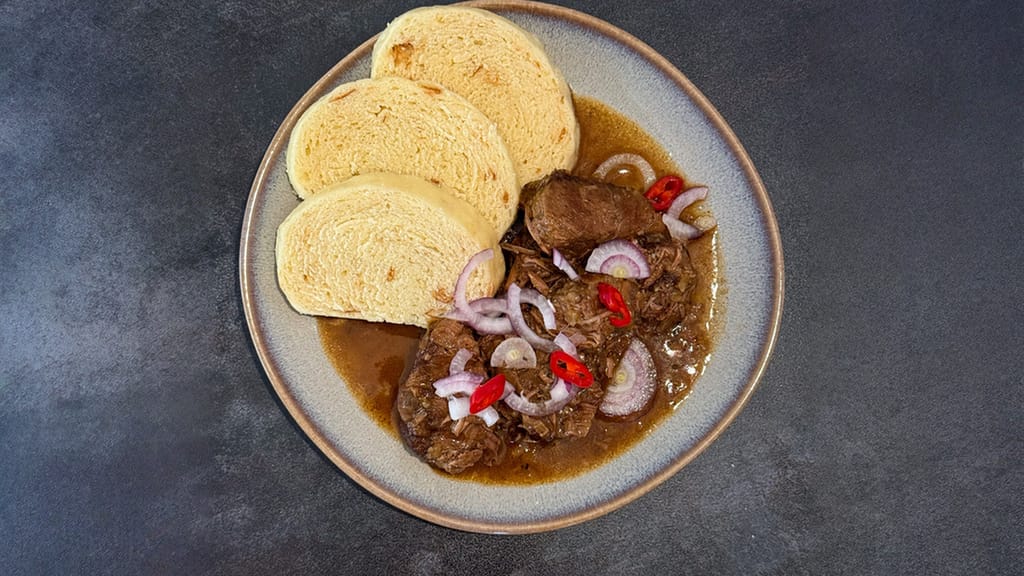
Our classic beef goulash with chili and bread dumplings uses 1 kg (2.2 lb) of beef shin for 4 servings, which is 250 g (9 oz) per person. The shin braises for about three hours, which is exactly why it shrinks so much. Homemade yeast dumplings are part of the recipe.
Goulash is the most rewarding dish for a party with lots of guests: you cook it a day ahead, it's better the next day, and the batch scales up easily. Just keep in mind that a big pot heats and cools slowly. So divide the cooked goulash into smaller shallow containers and refrigerate within 2 hours. When reheating, warm it through gradually and stir so it doesn't catch on the bottom, and let it simmer properly, to at least 74°C (165°F).
Classic czech beef goulash with chilli and bread dumplings
Classic beef goulash with chili and bread dumplings: 1 kg shin for 4 servings
For a boneless whole roast, plan 200–250 g (7–9 oz) of raw meat per adult, and for a bone-in roast 300–400 g (11–14 oz). After roasting, 220 g (7.5 oz) of raw pork neck leaves about 150–170 g (5–6 oz), a decent portion to go with dumplings and sauerkraut.
A large cut has one advantage: it's easier to portion to appetite. Whoever wants less gets one thin slice, whoever wants more gets two. That's why for a roast you can just plan on an average and don't need to think about each guest separately.
Very slow-roasted pork shoulder with apples and onion uses 1 kg (2.2 lb) of shoulder for 4 servings, which is 250 g (9 oz) per person, and it roasts overnight. Cabbage goes with pork roast: according to the recipe, sweet-and-sour braised red cabbage should rest for at least an hour, so feel free to make it a day ahead.
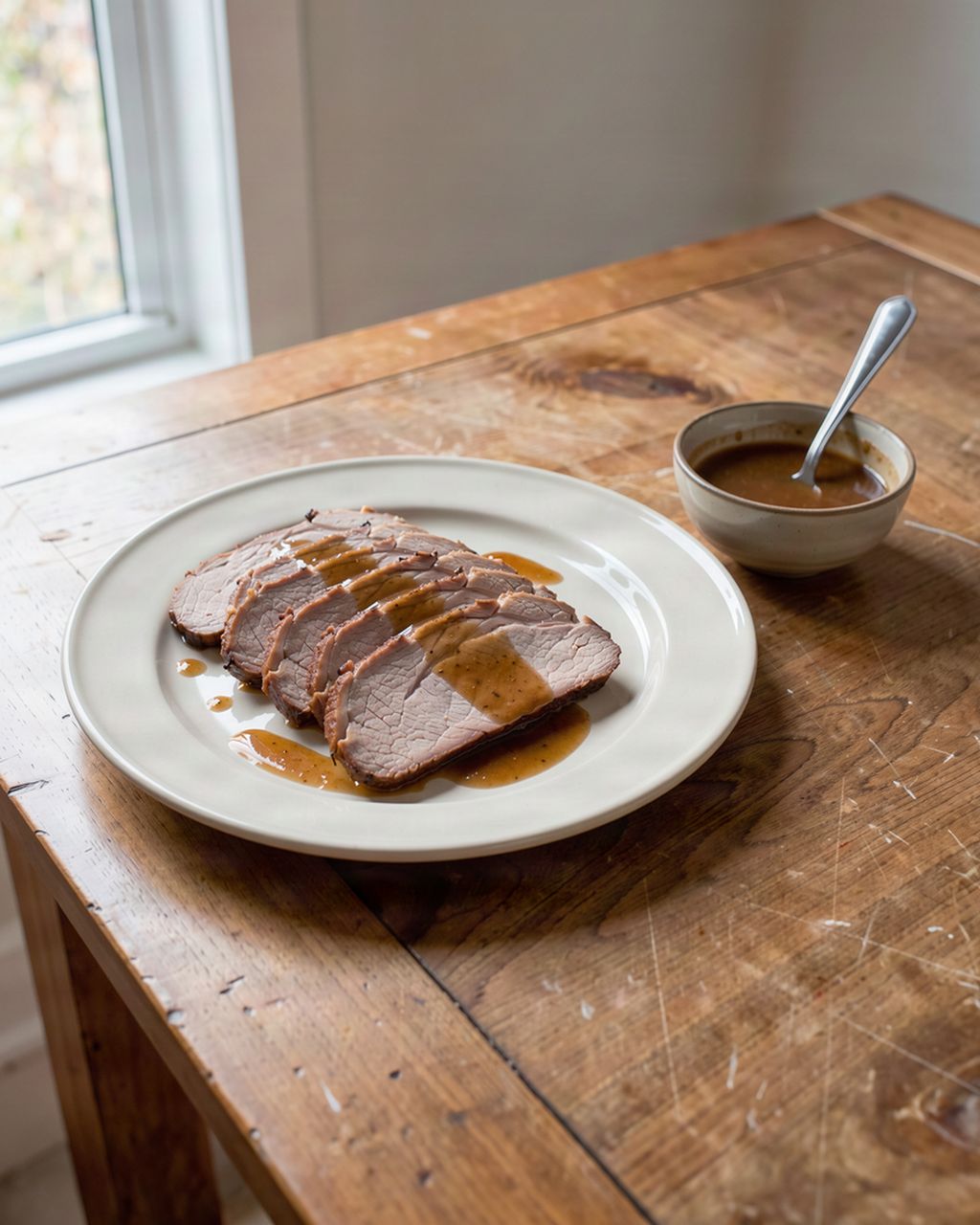
Beef in sauce is a different case. Oven-braised beef with wine and vegetables uses only 480 g (1 lb 1 oz) of beef round for 4 servings, which is 120 g (4 oz) per person, because the portion is rounded out with plenty of carrots, celery and sauce. For very hungry guests, feel free to increase the meat to 200 g (7 oz) per person, since there will be enough sauce.
For boneless chicken (breasts, boned thighs), plan 150–200 g (5–7 oz) per adult, and 400–500 g (14–18 oz) for a whole chicken. A 1.6 kg (3.5 lb) chicken therefore feeds three very hungry people or four with a generous side.
Bone-in thighs are the easiest to portion: one whole thigh (upper and lower part together) weighing 250–350 g (9–12 oz) is a portion for an adult. With boneless breasts you pay only for meat: there's no bone or skin to throw away, and little fat renders out. They dry out easily, though, so don't cook them longer than necessary.
Chicken in milk with lemon and sage uses one whole chicken for 4 servings and is ready in 105 minutes. It's cooked in milk with garlic, sage and lemon zest, which turn into the sauce. It goes well with smooth, creamy mashed potatoes with nutmeg, which uses 800 g (1 lb 12 oz) of potatoes for 6 servings.
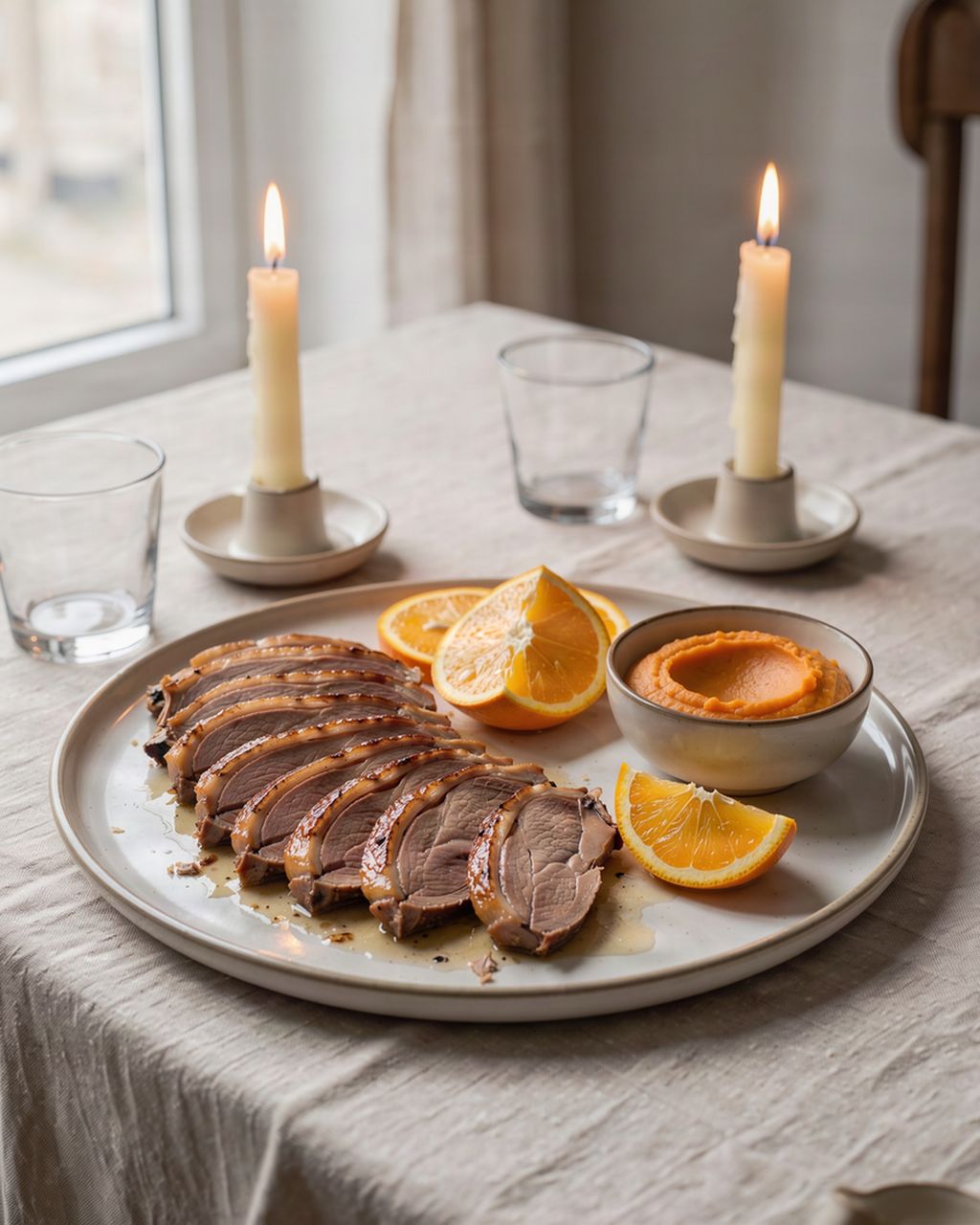
For duck and goose, plan 600–800 g (1 lb 5 oz–1 lb 12 oz) of raw weight per adult. A duck of about 2.4 kg (5.3 lb) is therefore enough for 3–4 people, and a goose of about 4.8 kg (10.5 lb) for 6–8 people. Those numbers look high, but with both birds a large part of the weight is the frame and the fat that renders into the roasting pan.
For four people, buy one larger duck rather than two small ones: the bigger bird has a better ratio of meat to bones. For eight people, on the other hand, get two ducks of 2.3–2.5 kg (5–5.5 lb) each, because one huge duck roasts unevenly in a home oven. Pour the rendered fat into a jar and refrigerate it. It's a bonus on potatoes or bread that you paid for anyway.
Slow-roasted honey duck uses one whole duck for 4 servings. It roasts slowly and is glazed at the end with honey, soy sauce and white wine so the skin crisps.
If you want goose but not a whole bird, reach for the breasts. Goose breasts with apples and potato lokše uses 600 g (1 lb 5 oz) of skinless breast for 6 servings, which is just 100 g (3.5 oz) per person, because the meat is served in lokše (Czech potato flatbreads) with apples. For a hungrier table, plan 150 g (5 oz) per person.
For boneless turkey breast, plan 200–250 g (7–9 oz) per adult, and 500–600 g (1 lb 2 oz–1 lb 5 oz) for a whole turkey. Turkey breast is practical for a big party: it shrinks little, slices into neat pieces, and tastes good warm or cold.
Slow-roasted turkey breast uses 1 kg (2.2 lb) of skinless meat for 4 servings, which is 250 g (9 oz) per person. The recipe itself advises that, chilled and sliced thin, it's even better the next day with bread and cucumber, which is exactly what you need for a cold buffet.
How to roast a whole turkey, the legs and the breast, for how long and at what temperature, we cover in our article on roast turkey.
For ground meat, plan 120–150 g (4–5 oz) per adult when making patties or meatballs, and 100–125 g (3.5–4.5 oz) when it goes into a sauce or lasagna. Ground meat gets mixed with bread, egg or vegetables, which stretch the portion, so you need less than with whole cuts.
Meatballs in vegetable sauce use 360 g (13 oz) of beef for 4 servings, which is only 90 g (3 oz) per person, because the meatballs, made with a bread roll and egg, swim in a thick sauce of carrots, celery and tomatoes. For a hungrier table, increase the meat to 120 g (4 oz) per person.
Lasagna with ground beef and mushrooms uses 500 g (1 lb 2 oz) of ground beef for 4 servings, which is 125 g (4.5 oz) per person, with the mushrooms, béchamel and pasta making up the rest.
Beef patties with red beets use 1 kg (2.2 lb) of beef round for 6 servings, about 165 g (6 oz) per person. The meat is marinated with beets and garlic the day before and then ground.
Ground meat is also the easiest way to stretch a batch: if more guests turn up than you expected, a kilogram of ground meat makes twelve patties, enough for six to eight people.
For a party with one meat, plan 200–250 g (7–9 oz) of raw boneless meat per adult, and 250–300 g (9–11 oz) in total with two or three meats. When you offer two or three meats, don't count a full portion of each: divide the total amount among all the kinds. That's a quarter to a half more than a single portion, because guests take a little of each but nobody eats two whole portions. For bone-in meat and whole poultry, convert each share using the table (see the example below).
For a buffet that's mostly cold food and canapés, plan 150–200 g (5–7 oz) of warm or cold meat in total per person. Open-faced sandwiches, cheeses, salads and bread make up the rest. We've written up how much of everything else you need separately: how many open-faced sandwiches and canapés per person and how much cheese per person for a cheese board.
Three tips that pay off at parties:
The longer the party, the more you need. For a three-hour afternoon party the table is enough, but for an evening that runs to midnight, add 20–30%, since people keep coming back to the food.
The more sides and salads, the less meat. When the table is groaning with potato salad, dumplings and bread, stay at the lower end.
Make one meat that tastes good cold too: turkey breast, a sliced roast, or schnitzels. Whatever is left from the warm part goes into sandwiches the next day.
On Christmas Eve, when schnitzel stands in for carp as the only main dish, plan 180–200 g (6–7 oz) of meat per adult, which is two smaller schnitzels. Potato salad is filling, but at Christmas people go back for more schnitzel than usual. If you're sticking with fish, you'll find how much carp and potato salad per person in our article on how much carp and salad per person for Christmas Eve.
On Christmas Day and Boxing Day, duck, goose or pork roast is traditionally served. The table applies unchanged, but keep in mind that people are less hungry after the Christmas Eve dinner, so stay closer to the lower end and prepare more cabbage and dumplings instead. You can also cook duck or a roast in a slow cooker, and we cover the LOW and HIGH times in our article on slow cooker recipes.
On New Year's Eve, people mostly graze all evening. Plan 150–200 g (5–7 oz) of warm meat in total per person, plus cold canapés and open-faced sandwiches. Goulash is ideal for New Year's Eve: you cook it ahead, and if you keep it on the stove or in a slow cooker on the keep-warm setting so it stays hot above 60°C (140°F), guests can help themselves whenever they like. Baked pork ribs with hard cider and BBQ sauce also work well: the recipe uses 550 g (1 lb 3 oz) of ribs for 2 servings as a main dish with fries, which is 275 g (10 oz) per person. That's below the rule in the table, so when ribs are the only main dish, increase the amount to 400–500 g (14–18 oz) per person. Among the other dishes on a New Year's Eve table, more people will taste them.
For a barbecue, plan 250–300 g (9–11 oz) of raw meat per adult across all kinds, closer to 350 g (12 oz) with bones and sausages. People eat more slowly and for longer at the grill than at lunch, so you plan a bit more than for a single dish.
Chicken with lemon and oregano is good for the grill: boned chicken with skin, marinated in lemon, olive oil and oregano. Among the ground meat dishes, the beef patties with red beets from the previous section are good on the grill.
A child aged 3–6 eats roughly a quarter to a half of an adult portion, a child between seven and twelve eats half to three quarters, and a teenager counts as an adult, often more. For big eaters, add 30–50%.
Kids 3–6: 50–100 g (2–3.5 oz) of raw boneless meat, one small schnitzel or a few meatballs
Kids 7–12: 100–150 g (3.5–5 oz)
Teenagers: same as an adult, 200–250 g (7–9 oz)
Big eaters and people who do physical work: 250–350 g (9–12 oz) boneless
With kids, it pays to bet on meat they like that's easy to cut: schnitzels, meatballs, turkey breast. Kids mostly just taste duck on the bone. When calculating for the whole family, count a child aged 3–6 as half an adult and an older child as two thirds, and you're done.
For 10 guests with one main dish, you need roughly 2.2–2.5 kg (4.9–5.5 lb) of boneless meat, and for 20 guests with two meats, about 2.4 kg (5.3 lb) of meat for schnitzels and 4 ducks. Here's how to work it out.
Example 1: a family party, 10 guests, beef goulash with dumplings. 8 adults and 2 children (aged 5 and 9) are coming.
Adults: 8 × 220 g = 1.76 kg (3.9 lb)
Child aged 5 (half): 110 g
Child aged 9 (two thirds): 150 g
Total 2.02 kg (4.5 lb). Rounded up, with a reserve for seconds, buy 2.2–2.5 kg (4.9–5.5 lb) of beef shin.
According to the goulash recipe, which uses 1 kg of shin for 4 servings, 2.5 kg comes out to exactly 10 large portions.
Example 2: a festive party, 20 guests, schnitzels and roast duck, plus canapés. 16 adults and 4 children are coming.
Two meats, so about two thirds of the usual portion of each: 130 g of schnitzel meat and 450 g of bone-in duck per adult.
Schnitzels: 16 × 130 g + 4 × 80 g = 2.4 kg (5.3 lb) of meat, which is roughly 20–24 cutlets.
Duck: 16 × 450 g + 4 × 250 g = 8.2 kg (18 lb), which is 4 ducks of 2.3–2.5 kg (5–5.5 lb) each.
That's about 580 g of raw weight per adult in total, most of it duck with bones and fat. Converted to boneless meat, it comes to roughly 260 g, within the 250–300 g range for a party with several meats.
Four ducks won't fit in one oven, so roast them in two rounds, or prepare one batch a day ahead and just re-crisp the skin the next day. Fry the schnitzels last so they're served warm.
Cooked meat, sauces and salads can sit at room temperature for 2 hours at most, then they belong in the fridge. The US Department of Agriculture (USDA) gives this two-hour rule, and it applies to buffets, self-serve spreads and party leftovers. When the room is above 32°C (90°F), the USDA shortens it to 1 hour.
At a big party it's easy to overlook, since people eat gradually. It helps not to put out the whole batch at once: keep half the roast or schnitzels in the fridge and refill the platter when it empties. Keep warm dishes like goulash on the stove or in a slow cooker, where they stay hot, instead of letting them cool on the table.
Divide leftovers into smaller shallow containers so they cool quickly, and refrigerate them. According to the USDA, cooked meat keeps 3–4 days in the fridge. In the freezer it's safe for longer, but the flavor holds up best for roughly 2–6 months (a USDA quality recommendation, not a safety one).
Count meat only for the guests who eat it, and add a reserve of about 10%. That covers guests who take more meat than you expected. Prepare a meatless main in a full portion for everyone who doesn't eat meat.
Plan for the upper estimate of guests and the lower end of the table's portion, which is about 150 g (5 oz) of boneless meat per adult. As a backup, prepare one dish made from ground meat or turkey breast that's quick to make extra or can be frozen if it isn't needed.
For an adult, plan roughly 200–250 g (7–9 oz) of potatoes, 3–4 slices of bread dumpling (houskový knedlík), or 70–80 g (2.5–2.8 oz) of dry rice. The more sides and salads on the table, the more you can stay at the lower end of the table for the meat.
Yes. Goulash, braised beef, roast turkey breast and whole roasts all handle being made a day ahead well, and goulash is even better the next day. After cooking, divide it into smaller shallow containers and refrigerate within 2 hours at the latest, then reheat before serving. Make schnitzels and duck skin on the day of the party so they stay crisp.
Stay at the lower end of the table, about 150 g (5 oz) of boneless meat per person, and add more vegetables and sides. Older people and guests with smaller appetites usually eat noticeably less.