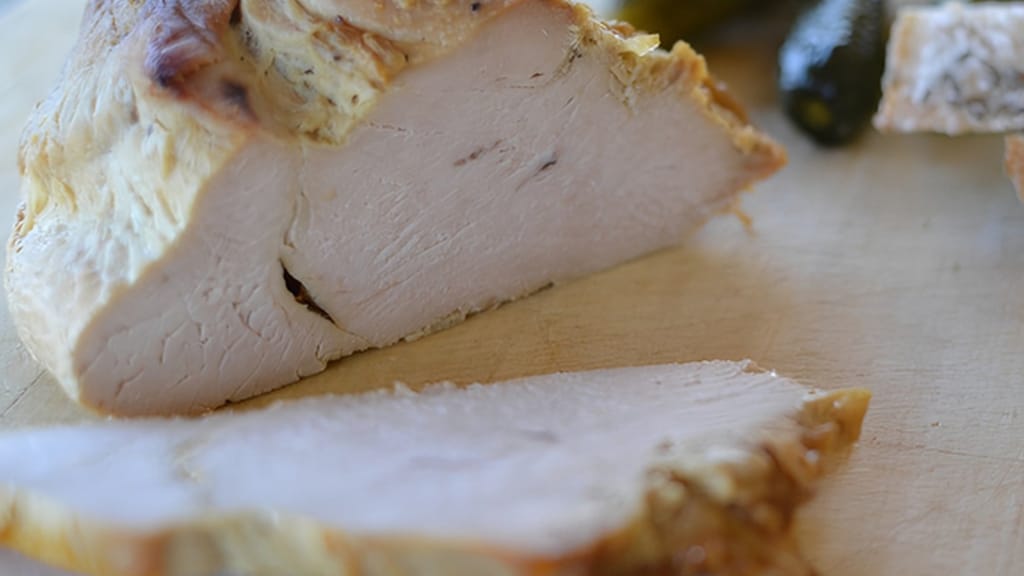
Slow-roasted turkey breast
Roast Turkey: How to Cook a Whole Bird, Breast and Thighs, How Long, and Why 74°C
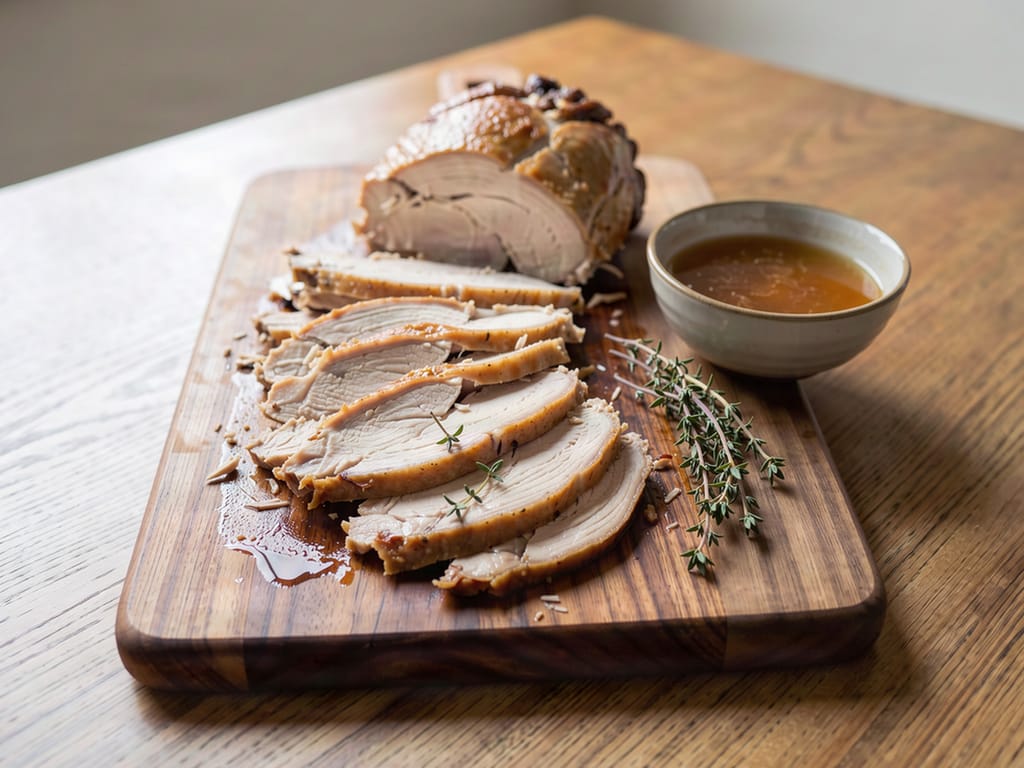
Roast turkey takes about 35–40 minutes per kilogram at 165–170°C (330–340°F), or 30–35 minutes per kilogram for birds over 6 kg. It's done when a thermometer reads 74°C (165°F) in the thickest part of the breast and the inner thigh. Four things matter: thaw the turkey slowly in the fridge, don't rinse it, keep the breast under aluminum foil for the first two thirds of roasting, and rest it at least 20 minutes before carving. Here's the full method for a whole bird, times by weight, turkey breast, thighs, a roulade, stuffing, side dishes and what to do with the leftovers.
You can roast a whole turkey in eight steps: thaw it in the fridge, pat it dry without rinsing, salt it a day ahead, roast at 165–170°C (330–340°F) with the breast under aluminum foil, baste with the drippings, uncover at the end to brown, check for 74°C (165°F), and let it rest before carving.
A whole turkey is the biggest piece of poultry you'll roast at home, and the easiest one to get wrong. The breast is lean and cooks sooner, while the thighs have more connective tissue and need more time. So the whole method comes down to one thing: finishing the thighs without drying out the breast. We go through each step below.
Thaw a frozen turkey in the fridge, allowing about 24 hours for every 2 kg (USDA: 24 hours per 4–5 pounds, about 1.8–2.3 kg).
3 kg baby turkey: about 1.5–2 days
5 kg turkey: 2–3 days
8 kg turkey: 4–5 days
Leave the turkey in its original packaging and set it on a tray or in a bowl on the lowest shelf, so the juices can't drip onto anything else. Don't thaw it on the kitchen counter: the surface warms into the range where bacteria multiply while the center is still frozen. According to the USDA, a thawed turkey keeps in the fridge for another 1–2 days, so you can plan the thawing with some margin. If you buy a fresh turkey, you can skip this step; just keep it in the fridge until roasting.
Don't rinse raw turkey under water. Both the American USDA and the British Food Standards Agency (FSA) warn that splashing water spreads bacteria from raw poultry around the sink, counter and dishes, while roasting reliably destroys them. Simply take the turkey out of its packaging, pull the giblets (neck, heart, gizzard, liver) out of the cavity, and dry the skin and cavity thoroughly with paper towels. Then wash your hands and wipe down the counter.
If you have time, salt the turkey a day ahead. Use about 10 g of salt per kilogram, rub it into the skin and the cavity, and leave the turkey uncovered in the fridge overnight. The salt works into the meat and the skin dries out in the air, so it turns golden more easily in the oven. You can then put a halved onion, an apple and a few sprigs of thyme into the cavity; this isn't stuffing, just aroma.
Tie the legs together with kitchen string and tuck the wing tips under the back so they don't burn. Don't throw away the giblets: put the neck and gizzard in the bottom of the roasting pan, where they add flavor to the drippings.
Roast the turkey at 165–170°C (330–340°F) in a conventional oven, or at 150–160°C (300–320°F) with convection (about 20°C lower than conventional). The USDA recommends not roasting a whole turkey in an oven set below 325°F, which is about 163°C. A lower temperature would keep the meat too long in the range where bacteria multiply; a higher one would burn the skin before the thigh is done.
The method that works:
Put the turkey breast side up in a roasting pan, ideally on a rack or a bed of sliced onion and carrot, and add 2–3 dl (about 1 cup) of water or broth.
Loosely cover the breast with aluminum foil. The skin under it browns less, but the meat underneath cooks more slowly, which gives the thighs time to catch up.
After about two thirds of the time, remove the foil and roast uncovered.
For the last 20–30 minutes you can raise the oven to 200°C (400°F) to crisp the skin. Watch it, as the skin darkens quickly at this temperature.
Ovens often differ by tens of degrees from what the dial shows. If you're not sure, put an oven thermometer inside and you'll see how hot it really is.
Baste the turkey with the pan drippings every 30–45 minutes. The juices and fat keep the skin supple and help it brown evenly, but they won't moisten the meat under the skin. The foil and pulling the turkey out of the oven at the right moment matter much more for a juicy breast.
Baste quickly and keep the oven door open as briefly as possible. Every opening costs the oven tens of degrees, and if you open it every ten minutes the roasting takes needlessly longer. If the drippings on the bottom start to burn, add a little hot water.
Let the roasted turkey rest at least 20 minutes loosely covered with aluminum foil, or 30–40 minutes for a big bird; the USDA also recommends letting it stand 20 minutes before carving. During that time the juices redistribute through the meat and don't run out onto the board when you carve. The turkey won't go cold, because a large bird holds its heat for a long time.
Carve in this order:
Cut off the legs: pull them away from the body and cut through the skin between the thigh and breast until you reach the joint, then cut through the joint.
Separate the thigh from the drumstick at the joint and slice the thigh along the bone.
Cut off the wings at the shoulder joint.
Cut each breast half off whole along the breastbone, and only then slice it on the board across the grain into slices about 1 cm thick.
Breast carved whole and sliced across the grain is juicier than slices cut straight off the bird. Save the carcass for broth.
One recipe and one tip every Thursday until the end of the year. Unsubscribe in one click.
For the holidays: the morning of December 24, carp roasting times by size and December 31, New Year’s Eve canapés.
At 165–170°C (330–340°F), allow about 35–40 minutes per kilogram for an unstuffed whole turkey up to 6 kg, and about 30–35 minutes per kilogram for larger birds. This is our rough guide; the thermometer, not the clock, decides when it's done.
3 kg (baby turkey): 1 h 45 min – 2 h
4 kg: 2 h 20 min – 2 h 40 min
5 kg: 2 h 55 min – 3 h 20 min
6 kg: 3 h 30 min – 4 h
8 kg: 4 h – 4 h 40 min
A stuffed turkey takes longer, by roughly 15–30 minutes according to the USDA. Don't include resting in these times; add it on top. Start taking its temperature about an hour before the estimated end: a turkey from a fresh source, a flat breast or a strong oven can all shorten the roasting.
If this is your first time and you don't know what size turkey to buy, this guide to how much meat to plan per person will help. The same logic of temperature and time, but for a fattier bird, is in our article on how long to roast a goose.
A turkey is safely cooked when an instant-read thermometer shows 74°C (165°F) in the thickest part of the breast and in the inner thigh. The US Department of Agriculture's Food Safety and Inspection Service (USDA FSIS) gives this threshold (165°F) for all poultry; at that temperature the salmonella and campylobacter that commonly occur on raw poultry are reliably destroyed.
How to measure correctly:
Breast: insert the tip into the thickest part from the side, parallel to the bone, without touching it. Bone conducts heat differently and gives a skewed reading.
Thigh: measure in the inner part of the thigh, where it meets the body. This is where the turkey cooks most slowly.
Stuffing: if it's inside the bird, its center must also reach 74°C.
Clear juices running from a pierced turkey are only a hint, not proof. Juices can run clear before the meat reaches a safe temperature, and conversely, in young birds the meat near the bone can stay pinkish even when fully cooked. Without a thermometer, you're guessing.
Take the turkey out of the oven when the breast and the inner thigh both read 74°C. During resting the internal temperature rises a few more degrees, so there's no need to wait any longer; every extra minute dries out the breast.
The best way to make a butter-roasted turkey is to rub softened butter under the skin, directly on the breast, not just on the surface. During roasting the butter under the skin gradually melts, coating the lean meat from the inside and frying the skin from underneath, so it turns golden more evenly.
Method:
Allow about 20–25 g of butter per kilogram of turkey. Let it soften and mix it with salt, pepper and chopped herbs, such as thyme, sage or parsley, or with grated lemon zest.
Starting at the neck or cavity end, carefully slide your fingers under the skin and gradually loosen it from the breast. Work slowly so the skin doesn't tear.
Spread the butter in an even layer under the skin and smooth the skin back down with your palm.
Melt the rest of the butter and brush it over the outside of the turkey.
Butter under the skin doesn't mean you can skip the foil on the breast or the thermometer. It improves flavor and color; it's not insurance against overcooking.
A baby turkey weighing about 2.5–4 kg roasts the same way as a larger one: at 165–170°C (330–340°F) allow about 35–40 minutes per kilogram, so about 1 h 45 min – 2 h for a 3 kg bird. It's done at 74°C in both the breast and the thigh.
On a small bird the breast and thighs cook more evenly, because the difference in thickness is smaller. So the foil on the breast is needed only for the first half of roasting. Thawing in the fridge takes about 1.5–2 days. A baby turkey is a good choice for 4–6 people, and it fits an ordinary roasting pan and oven, which isn't always true of an 8 kg bird.
There are two ways to roast juicy turkey breast: quickly at a higher temperature with the skin on, or slowly at a low temperature under a lid. In both cases the goal is the same, 74°C (165°F) at the thickest point.
Pat skin-on turkey breast dry, salt it (ideally that morning or a day ahead) and roast it skin side up at 180°C (350°F). A piece of about 1 kg is usually done in about an hour to an hour and 15 minutes, but start taking its temperature after 45 minutes. The skin protects the meat from drying out and turns golden on its own; after taking the breast out, let it rest 10 minutes and slice it across the grain.
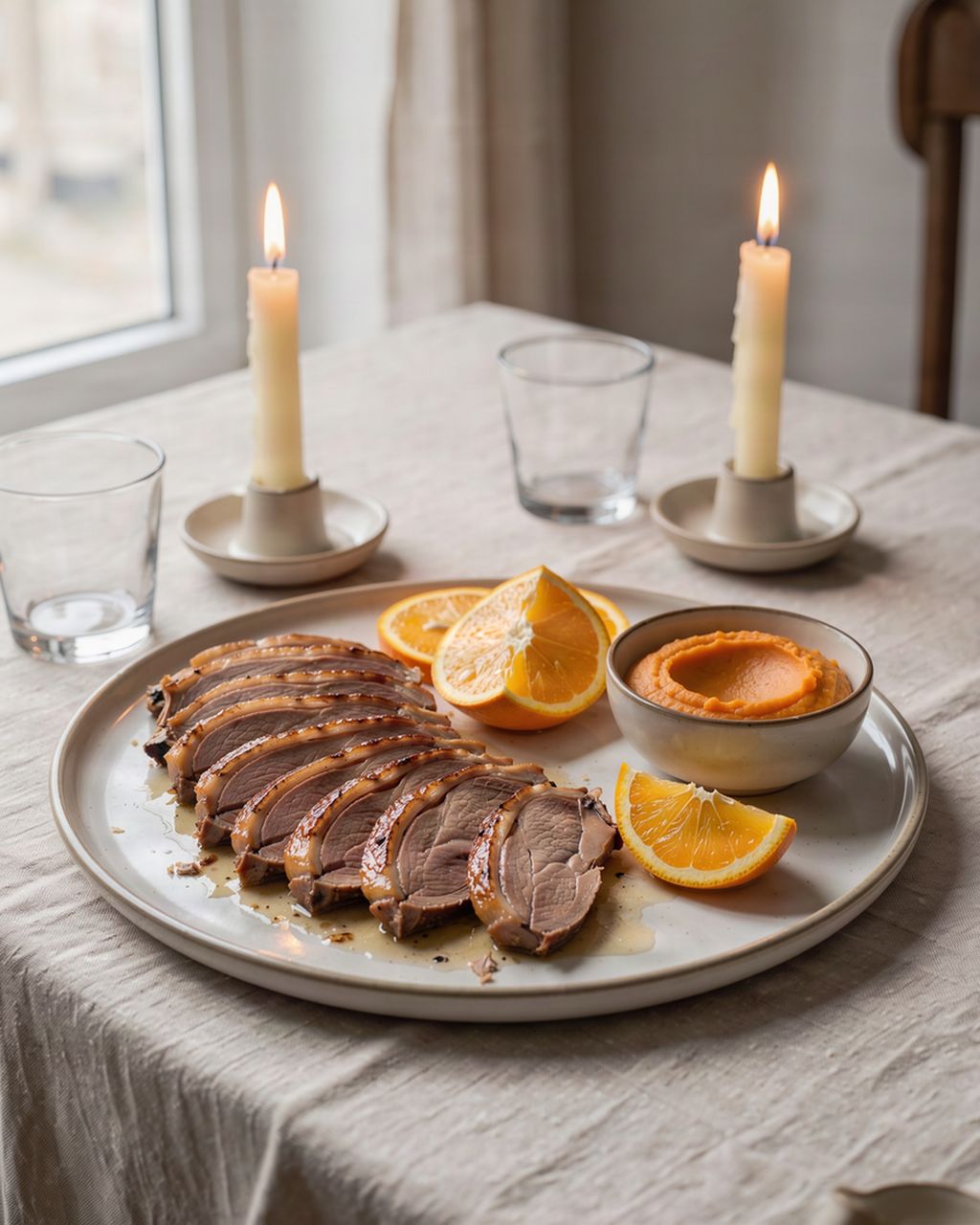
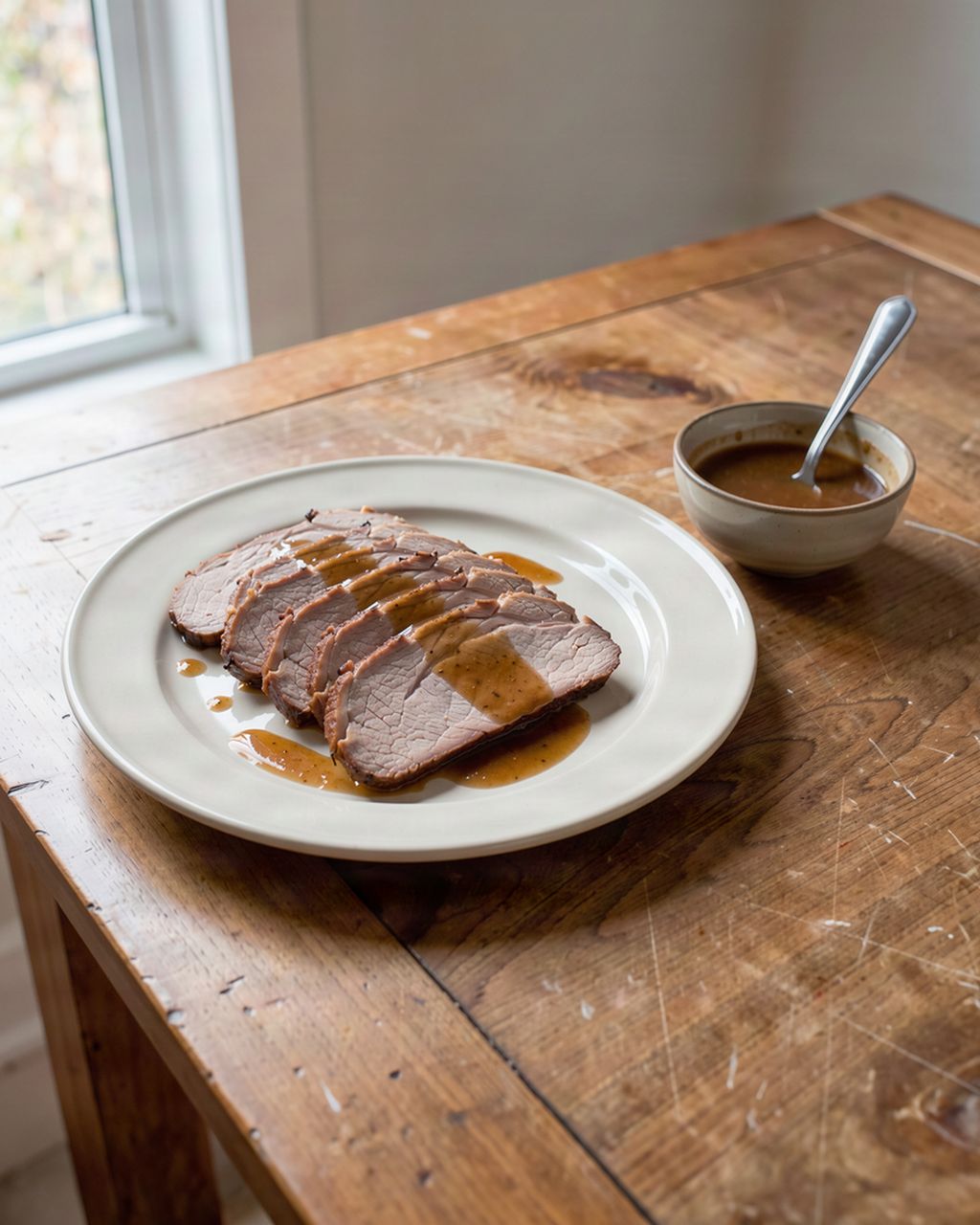
For the slow way, see our slow-roasted turkey breast with mustard and honey. In it, a kilogram of skinless turkey breast marinates overnight in the fridge in a mix of finely chopped shallot, olive oil, mustard, honey, salt and pepper. The next day the breast roasts at 150°C (300°F) in a covered roasting pan with only about 50 ml of water on the bottom, so the meat doesn't boil in liquid. Serve it warm with potatoes or rice, or chilled the next day, sliced thinly across the grain, with bread and cucumber.
Turkey thighs can take, and even need, longer roasting than the breast: they contain more connective tissue, which only dissolves into gelatin with longer cooking, and then the meat falls off the bone. The safe threshold is again 74°C (165°F), but you get the best texture by letting them roast even longer.
Pat bone-in, skin-on turkey thigh dry, salt and pepper it, and roast it skin side up in a pan with a little water at 170°C (340°F) for about an hour and a half to two hours, depending on size. Baste it with the drippings now and then, and for the last 15 minutes raise the temperature to 200°C (400°F) to crisp the skin. Measure next to the bone at the thickest point, but don't touch the bone with the tip.
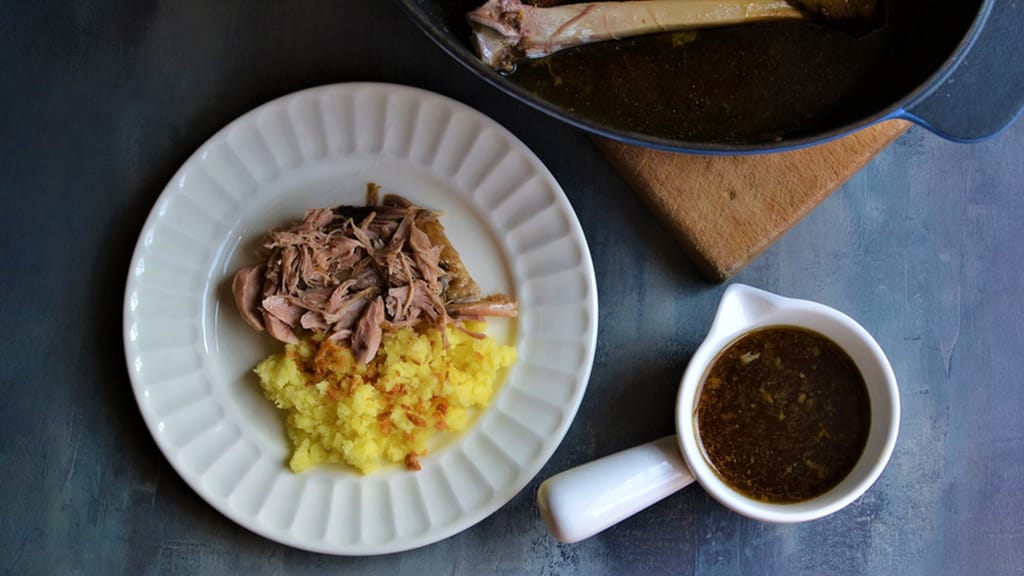
You'll find the slow version in the recipe for turkey thighs slow-roasted in dark beer. Two skinless bone-in thighs are seasoned with salt and pepper, topped with onion, thyme and parsley, and covered with 11° dark beer (a Czech strength rating). They roast covered at 110–120°C (230–250°F) for about 6 hours, then uncovered at 200°C (400°F) for about 15 minutes to brown the surface; the liquid from the pan is strained and reduced to a sauce. Serve with crushed potatoes, mashed potatoes or a slice of bread.
Turkey roulade is the quickest way to turn turkey breast into a festive dish without roasting a whole bird: you wrap thin slices of meat around a filling, sear them and finish them in the oven.
A concrete method is in our turkey roulade stuffed with white asparagus. From 700 g of skinless turkey breast, you cut four large slices and pound them to an even thickness. Lay dry-cured ham on them, sprinkle with scallions and wrap each around peeled white asparagus stalks. The roulades are tied, seared in olive oil until golden, wrapped in aluminum foil and finished in the oven; the remaining asparagus and potatoes are then browned in the pan drippings. Before slicing, let the roulades rest five minutes in the foil so the juices don't run out. The whole thing takes about an hour and a half.
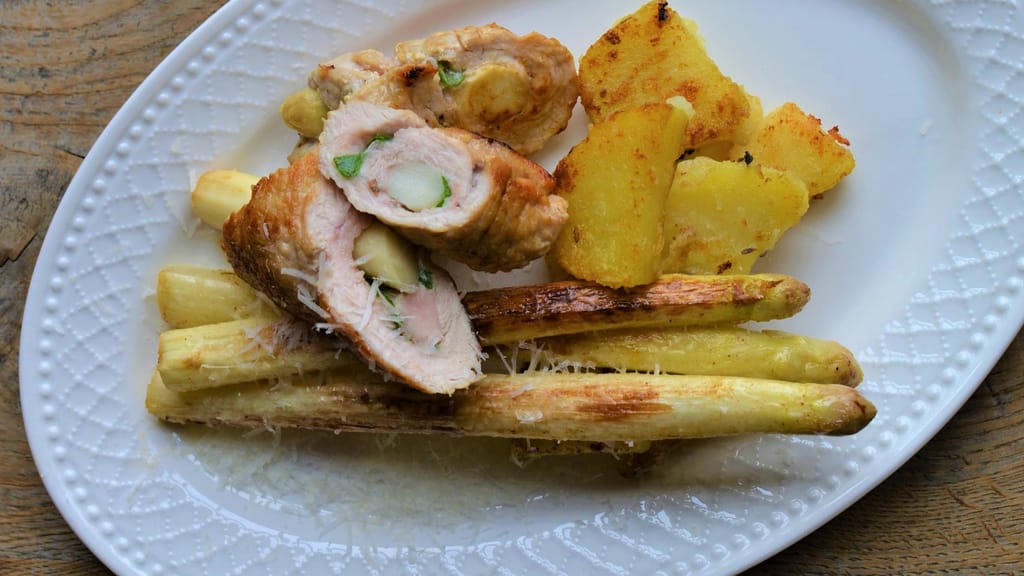
Turkey roulade stuffed with white asparagus and roasted asparagus
Turkey breast roulade stuffed with white asparagus and dry-cured ham
A whole turkey won't fit in a slow cooker, but turkey breast or thighs cook very well in one. Thighs are ideal for a slow cooker: over several hours on LOW the connective tissue dissolves and the meat can be pulled apart with a fork.
Always put fully thawed meat into the slow cooker; the USDA warns that frozen meat would spend too long warming up through the temperatures at which bacteria multiply. Add only a small amount of liquid, since the meat releases its own juices. The thermometer check applies here too: it's done at 74°C. A slow cooker won't give you crisp skin, so finish that at the end briefly under the oven broiler.
Times for LOW and HIGH and for other meats are in our overview of slow cooker recipes.
It's safer to bake stuffing separately in a baking dish than inside the turkey. Inside the cavity the stuffing soaks up raw juices from the meat and cooks more slowly than anything else, so by the time its center reaches 74°C, the breast around it has often dried out.
If you still want it inside, prepare it right before roasting, fill the turkey loosely (stuffing expands as it heats) and roast 15–30 minutes longer. Check the center of the stuffing and the meat with a thermometer; it's done when both read 74°C.
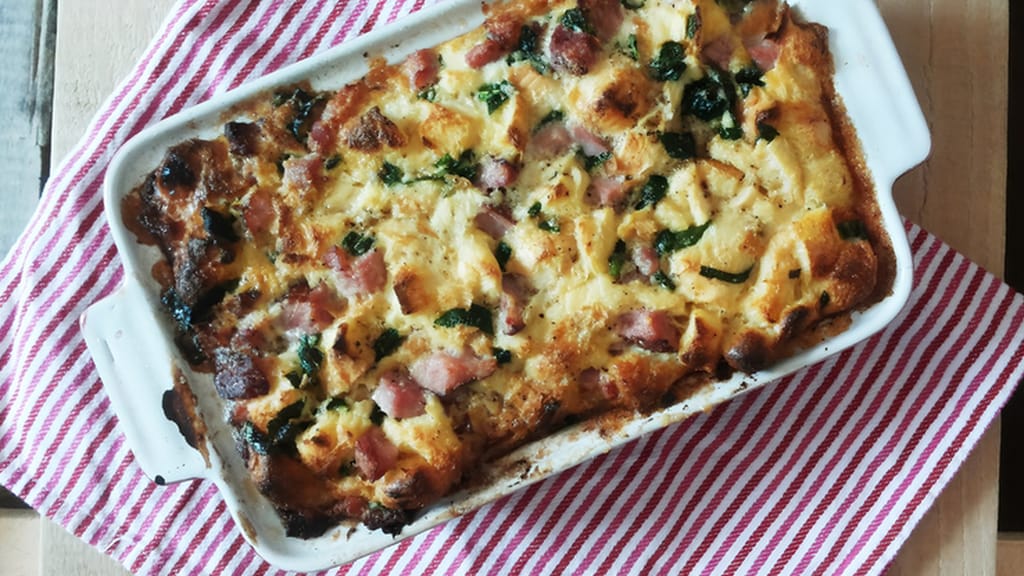
For baking it separately, see our Easter stuffing made with rohlíky and smoked meat. In it, diced rohlíky (Czech crescent rolls) are soaked in egg yolks beaten with melted butter and milk, then cooked smoked meat cut into cubes and ramsons (wild garlic) are added, and finally whipped egg whites are folded in. It bakes in a greased dish at 180°C (350°F) for about 30–40 minutes depending on the depth of the layer, so you can bake it while the turkey rests.
The best sides for roast turkey soak up the drippings, plus something sour to balance the rich skin: typically braised red cabbage, mashed potatoes, roasted potatoes or stuffing.
Sweet-and-sour braised red cabbage: shredded cabbage is scalded with boiling water, then braised with onion browned in lard and butter, with a bay leaf, pepper, allspice and a little wine, then thickened with starch and seasoned with cane sugar and vinegar. Let it rest at least an hour, or even until the next day, so the flavors come together. You can therefore make it a day ahead and make the turkey day easier.
Smooth, creamy mashed potatoes with nutmeg: cooked potatoes are drained and left to steam dry on a hot burner, briefly mashed, and then butter, warm milk, cream and nutmeg are whisked in. Don't beat it for long, or it turns heavy.
Roasted potatoes: cut them into wedges, toss with a little of the pan drippings and roast on a baking sheet at 200°C (400°F) for about 40 minutes, until golden. You can put them in the oven while the turkey rests.
Turn the drippings into gravy: strain them, skim off some of the fat, simmer with a little broth and, to taste, thicken with a teaspoon of starch stirred into cold water.
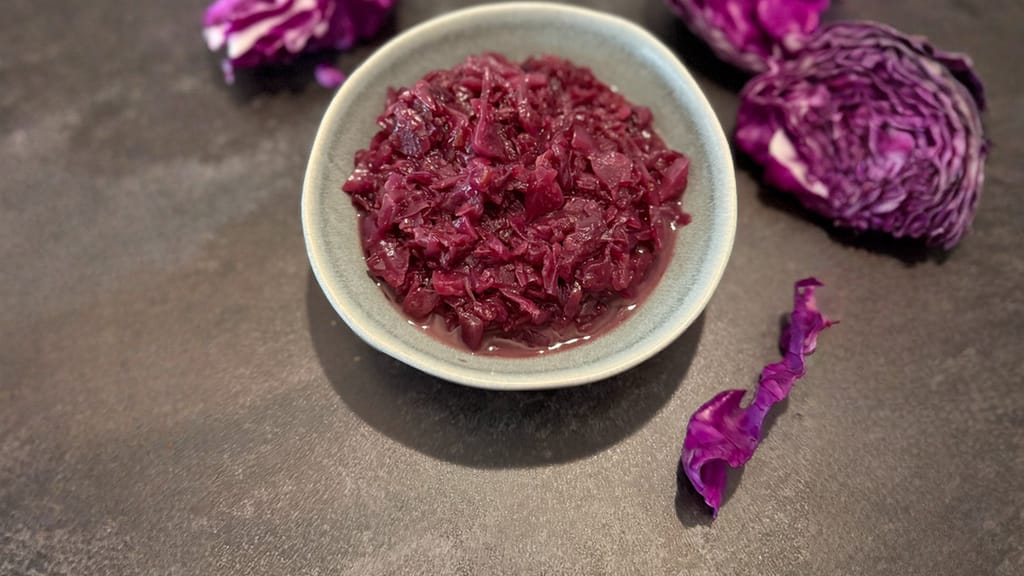
Sweet and sour braised red cabbage
Sweet-and-sour braised red cabbage as a side for roast turkey
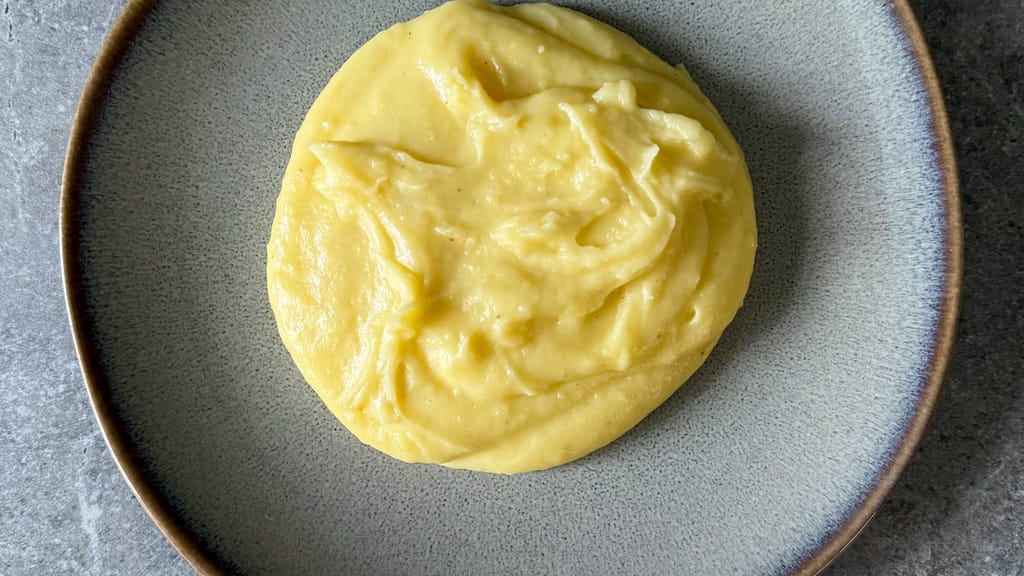
Silky smooth creamy mashed potatoes with nutmeg
Creamy mashed potatoes with nutmeg to serve with roast turkey
Carve the leftover roast turkey off the bones and put it in the fridge within 2 hours of roasting, in shallow covered containers; it keeps in the fridge 3–4 days, according to the USDA. Meat on the bone cools slowly, so cut it off while still warm and divide large pieces into smaller ones.
When reheating, leftovers must again reach 74°C, which is also the USDA threshold. Put them in the freezer as soon as possible, ideally covered with a little broth or juices so they don't dry out.
Two quick dishes can be made from the pulled meat:
Soup with pulled turkey and Brussels sprouts: onion is browned in lard, diced potatoes are added, then broth, and it's seasoned with caraway. After a quarter of an hour the Brussels sprouts and turkey go into the pot, the soup is thickened with semolina and simmered until the meat in it reaches 74°C. The whole thing is ready in under 40 minutes.
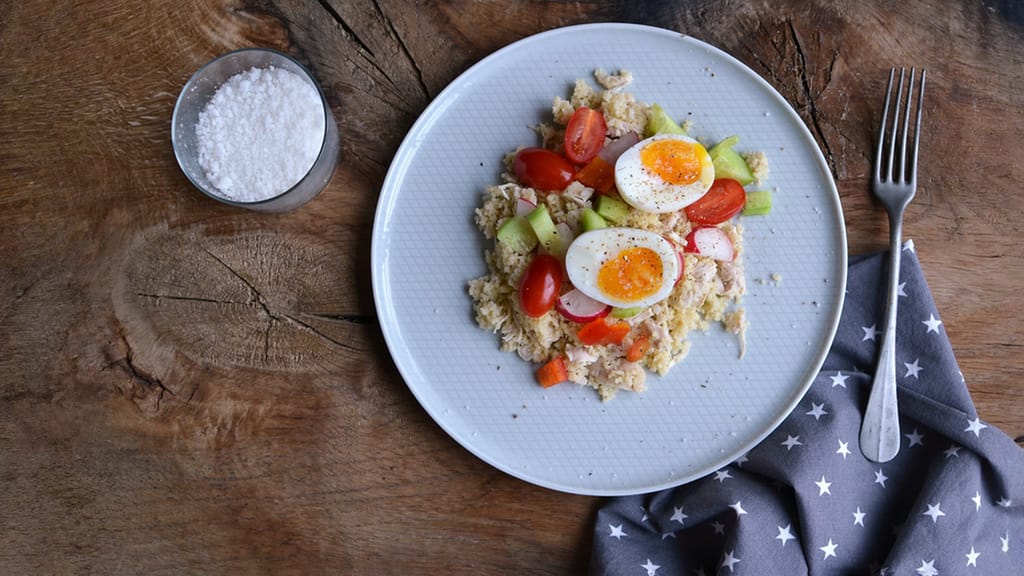
Couscous salad with pulled turkey and vegetables: couscous is covered with boiling water in a couscous to water ratio of 2 : 3 (for example 200 g couscous to 300 ml water), fluffed and cooled, then mixed with cucumber, cherry tomatoes, radishes, red bell pepper and pulled turkey. Boiled eggs go on top. It's a lunch in about 40 minutes.
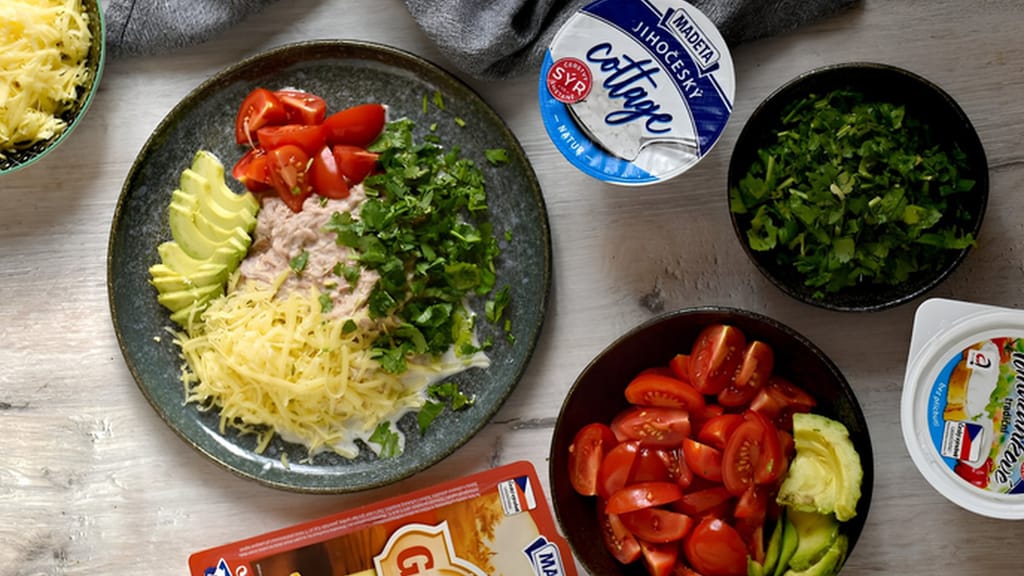
If you want pulled turkey on purpose, not from leftovers, roast thighs straight away. In the recipe for pulled turkey with fresh vegetables, two skinless bone-in thighs are salted, peppered and roasted at 120°C (250°F) for about five hours, then pulled apart right in the drippings and heated through, to at least 74°C, with cottage cheese, pomazánkové máslo (a Czech soft dairy spread, not butter) and a little water into a creamy sauce. They're served with avocado, cherry tomatoes, grated Gouda, cilantro and a baguette.
For more ideas for everyday dishes from individual turkey cuts, from breast to ground meat, see our article on what to cook with turkey meat.
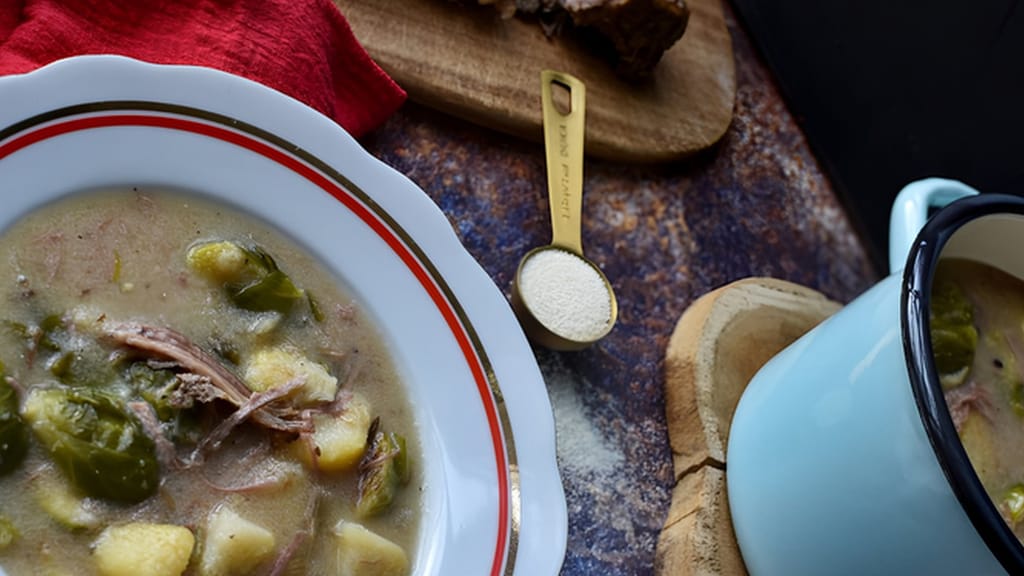
Turkey soup with pulled meat and brussels sprouts
Soup made from leftovers with pulled turkey and Brussels sprouts
You don't need to bring a turkey to room temperature. Just take it out of the fridge about 30 minutes ahead so the surface can dry and isn't icy cold. Room temperature wouldn't reach the center of a whole bird anyway, and raw poultry shouldn't sit on the counter for more than 2 hours.
Classically, roast the turkey breast side up under aluminum foil, so the skin on the breast turns golden at the end. Some cooks roast it breast side down for the first hour, so the breast sits in the drippings and the thighs are higher, closer to the heat, then flip the bird. It works, but flipping a hot 5 kg bird is hard work and the breast skin tears easily.
A tom (krocan) is a male turkey and a hen (krůta) is a female; in shops and kitchens, Czech cooks usually call both krůta. Toms tend to be larger and heavier, hens smaller. The method is the same. Only the time changes with weight, and the turkey is always done at 74°C in both the breast and the thigh.
Yes, ideally turkey breast or thighs. A whole turkey only works on a large grill with a lid, using indirect heat. Put the meat to the side of the hot coals or burners, close the lid and hold the grill at about 165–180°C. Don't rely on time; use a thermometer. It's done at 74°C.
Krůta na paprice is braised turkey in a sauce of ground paprika, onion and cream, usually made from breast or thighs cut into pieces. It's an everyday dish made from turkey parts, not a roast whole bird. You'll find more dishes like it in our article on what to cook with turkey meat.
You can freeze roast turkey sliced and boneless, ideally covered with a little broth or pan drippings. The USDA gives roughly 2–6 months in the freezer for roast turkey; that's the time for best flavor, not a safety limit. Thaw it in the fridge and reheat it to 74°C.