
Callebaut White Chocolate Callets (W2) 400g
How to Colour White Chocolate: Oil-Based or Gel Colouring?
Updated Oct 8, 2026
Only fat-soluble colouring will reliably colour white chocolate: oil-based chocolate colouring, coloured cocoa butter, or powder colouring made for fat. Ordinary gel colouring contains water, and just a few drops can turn smooth chocolate into a lumpy mess. Below you'll find out why this happens, how the different types of colouring differ, how much you're allowed to add, and how to get a nice shade without the chocolate losing its shine.
Gel colouring makes white chocolate seize because it's water-based — and water and melted chocolate simply don't mix.
Melted chocolate is a mix of dry particles (sugar, milk powder, and for dark chocolate, cocoa) suspended in liquid cocoa butter. Those particles only glide freely because they're floating in fat. The moment you add even a small amount of water, the sugar starts dissolving in it and the particles clump together through damp little bridges. You'll notice the result right away:
the glossy liquid chocolate thickens within seconds,
it starts tearing and crumbling, turning dull and grainy,
more stirring only makes it worse.
The tricky part is that it takes very little to cause this — just a few drops of gel per 100 g of chocolate. That's also why chocolate seizes if a drop of water from a water bath or a bit of steam gets into it. White chocolate is the most sensitive of all: it's high in sugar and milk powder and has the lowest working temperature.
Oil-based colouring carries its pigment in fat instead of water, so it simply blends into the cocoa butter without making the chocolate seize.
The pigment is dispersed in vegetable oil or another fat, often with an emulsifier (such as lecithin) to help it mix in evenly. You're not introducing anything the chocolate has to "fight" — just a touch of extra fat. That's why:
the chocolate stays fluid and glossy,
you can still temper it and pour it into moulds,
the colour blends into an even shade with no streaks.
One thing to watch out for: the word "oil-based" alone isn't enough. Look for colouring explicitly labelled for use in chocolate (in English: chocolate colouring, oil-based, candy colour). Some gels are marketed as "concentrated" or "professional" and are still water-based.
Three fat-soluble colourings work in white chocolate — oil-based chocolate colouring, coloured cocoa butter, and fat-soluble powder colouring — while gel colouring only works where there's plenty of water (ganache, creams).
Oil-based chocolate colouring – the simplest option for home kitchens. Liquid or paste form, used in small amounts, and it won't make the chocolate seize. Ideal for lollipops, bars, dipping and poured pralines. We stock Sugarflair oil colours in seven shades (red, yellow, orange, light green, light blue, purple and white), 35 g each.
Coloured cocoa butter – cocoa butter with pigment mixed in, a tool used by chocolatiers. It's melted before use and applied at around 29–32 °C (84–90 °F) — sprayed or painted directly into polycarbonate moulds to give pralines a glossy coloured shell. You can also colour a whole batch of chocolate with it, but it's a pricier route. We don't currently sell this.
Fat-soluble powder colouring – a dry pigment (so-called "lake" colours) stirred directly into the chocolate, or first into a little melted cocoa butter. It needs thorough mixing or you'll end up with speckles. Note that ordinary water-soluble powder colours have no place in chocolate.
Gel colouring – water-based, so it's a no-go for pure melted chocolate. It does work, though, where there's plenty of water around, typically in ganache or in a cream made with white chocolate. With enough liquid present, you don't get a few damp bridges but a stable emulsion, which gel colouring won't disturb. Gels like ProGel belong in creams, batters and ganache — not in chocolate meant for pouring.
You'll find our full range of gel and oil-based colourings in the baking and decorating colours category.
The amount of coloring you're allowed to use is set by the label: for Sugarflair's red, yellow, orange, and light green, it's just 0.6 g per kilogram of chocolate — roughly a drop per 100 g. Light blue, purple, and a few others allow more, and white has no limit at all. Weigh your coloring on an accurate scale rather than counting drops, which are only a rough guide.
Maximum doses for Sugarflair oil colors:
red, yellow, orange, light green: 0.6 g per 1 kg of chocolate (6 g per 10 kg, so 0.06 g per 100 g),
purple: 4 g per 1 kg,
light blue: 6 g per 1 kg,
white: no limit.
How to weigh it: for such tiny amounts, you'll need a jeweler's scale accurate to 0.01 g. If you're coloring a small batch, it's easier to color a larger quantity of chocolate at once (say, 500 g) so the dose is actually measurable.
Add it gradually: start with half the maximum dose, mix it in, check the shade, and only then adjust further — but never go above the label's limit. The limits vary by shade because of legal restrictions on individual colorants, so always go by the figure printed on the bottle you're actually using.
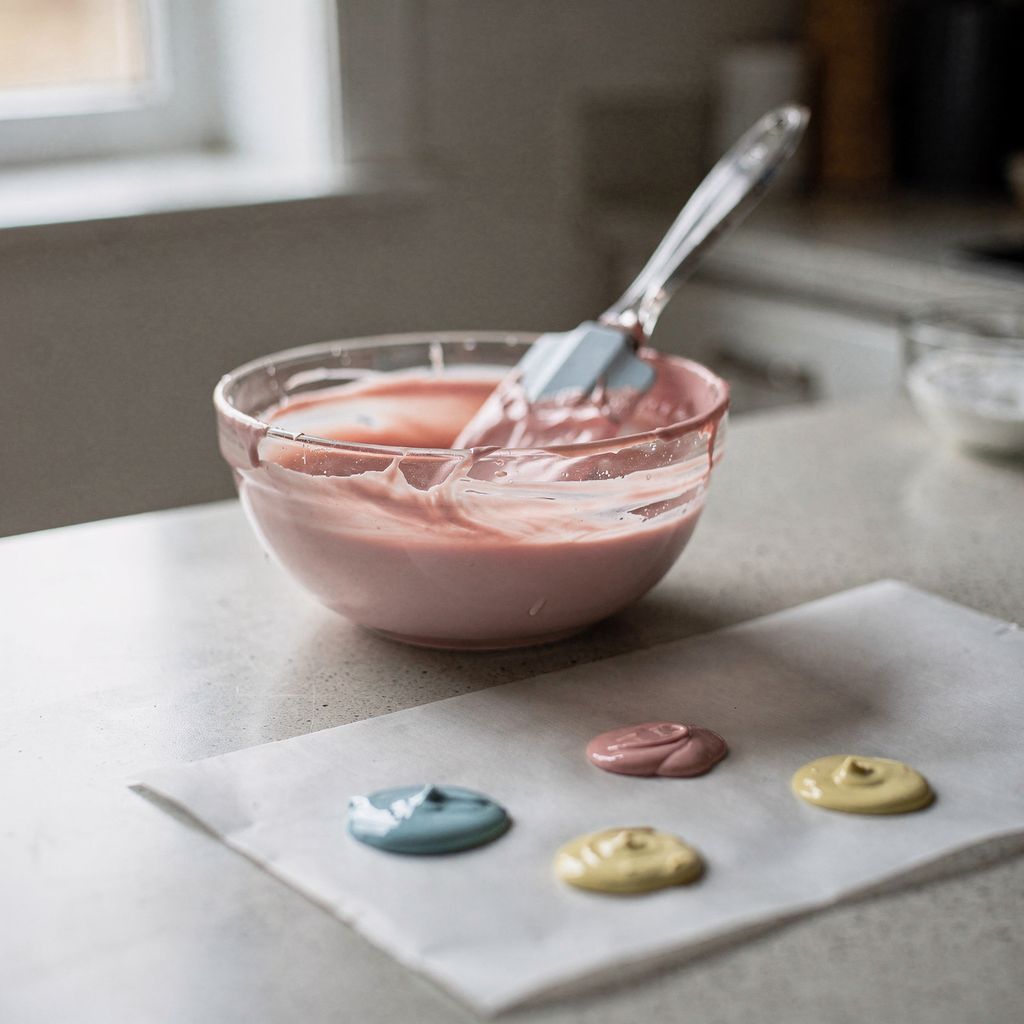
A good habit: drop a teaspoon of the colored chocolate onto baking paper and chill it in the fridge for 3–5 minutes. Set chocolate reveals the true shade far better than the liquid in the bowl.
You can colour white chocolate in six steps: choose a good-quality white chocolate, melt it carefully with no moisture, warm and shake the oil colouring, stir in the weighed amount of colouring, temper, and check the shade.
Pick a good white chocolate. Professional-grade white chocolate with a higher cocoa butter content melts more smoothly and holds its shine better. A versatile choice is Callebaut W2 — a medium-fluid white chocolate in callets, suitable for pouring into moulds, dipping and colouring. We explain the differences between the various grades in our article on Callebaut 811, 823, W2 and RB2.
Melt it with no moisture around. Use the microwave in 20–30 second bursts, stirring between each, or a water bath — just make sure the bowl doesn't touch the water and no steam reaches the chocolate. Don't let white chocolate go above 40–45 °C (104–113 °F), or it will thicken and can scorch.
Shake and warm the colouring. Oil-based chocolate colourings thicken in the cold and the pigment settles. Shake the bottle well, and if the colouring is thick, stand it in warm water for a few minutes. Cold colouring could chill the chocolate locally.
Add the weighed colouring and mix. Use the amount from the label (see above), ideally stirring slowly with a spatula so you don't beat air into the mixture. Keep stirring until all streaks disappear.
Temper it. If you want shine and a crisp snap (bars, pralines, lollipops), temper the chocolate: for white chocolate, cool to around 26–27 °C (79–81 °F), then warm back up to a working temperature of 28–29 °C (82–84 °F). For dipping or drizzling, untempered chocolate works fine too — it just won't be as glossy and will soften faster in warm conditions.
Check the shade and get to work. Drop a bit on baking paper, chill for a few minutes, and adjust further if you're still within the limit.
If you're making several shades, melt the whole batch at once, divide it into smaller bowls, and colour each one separately. For pralines, you might also like our article on choosing and using praline moulds, and for gift bars, try our piece on chocolate bars with edible flowers and nuts.
White chocolate is made for pastel shades: get them with a small amount of oil colouring within the label's limit, using white oil colouring to neutralise the yellowish base; for dark, rich tones, start with milk or dark chocolate instead.
White chocolate isn't pure white — it's a creamy, slightly yellow shade, and that undertone affects every colour you add to it. Keep this in mind:
Blue turns greenish. The yellowish base combined with blue gives a turquoise-to-green tone. For a cleaner blue, add a bit of white oil colouring first (it has no dosage limit) to lighten and neutralise the base.
Purple turns grey. Same reason. White colouring helps here too, along with a smaller dose of purple.
Pastel yellow, peach and pink turn out beautifully — the warm undertone works in their favour.
You won't get a deep, rich red in white chocolate, since the limit on red colouring is very low. The same goes for a deep yellow or orange. For dark, saturated shades, start with milk or dark chocolate instead. You can read more about dark colours in our article Black cream and black icing: how to make them without turning grey.
If you overdo it, stir in more melted white chocolate — you can't take colour back out once it's in.
Mixing shades works just like mixing paint: yellow and blue make green, red and yellow make orange, and white lightens anything. When combining colours, make sure each one stays within its own individual limit.
You can't bring seized white chocolate back to its original glossy, temperable state, but that doesn't mean it has to go to waste.
Turn it into a sauce or ganache. Add hot cream or milk a spoonful at a time, stirring as you go. Once there's enough liquid, the mixture comes back together into a smooth emulsion. It's great for drizzling, stirring into a cream, or using as a filling. For inspiration, check out our article on chocolate truffles and ganache.
Fold it into a batter. The grainy texture disappears once baked — perfect for brownies, cookies, or a raspberry bundt cake with white chocolate and soured cream.
Adding oil or cocoa butter to seized chocolate will loosen it up a bit, but it won't bring back the shine or snap. For lollipops and bars, you're better off starting a fresh batch with oil-based colouring instead.
Callebaut White Chocolate Callets (W2) 400g
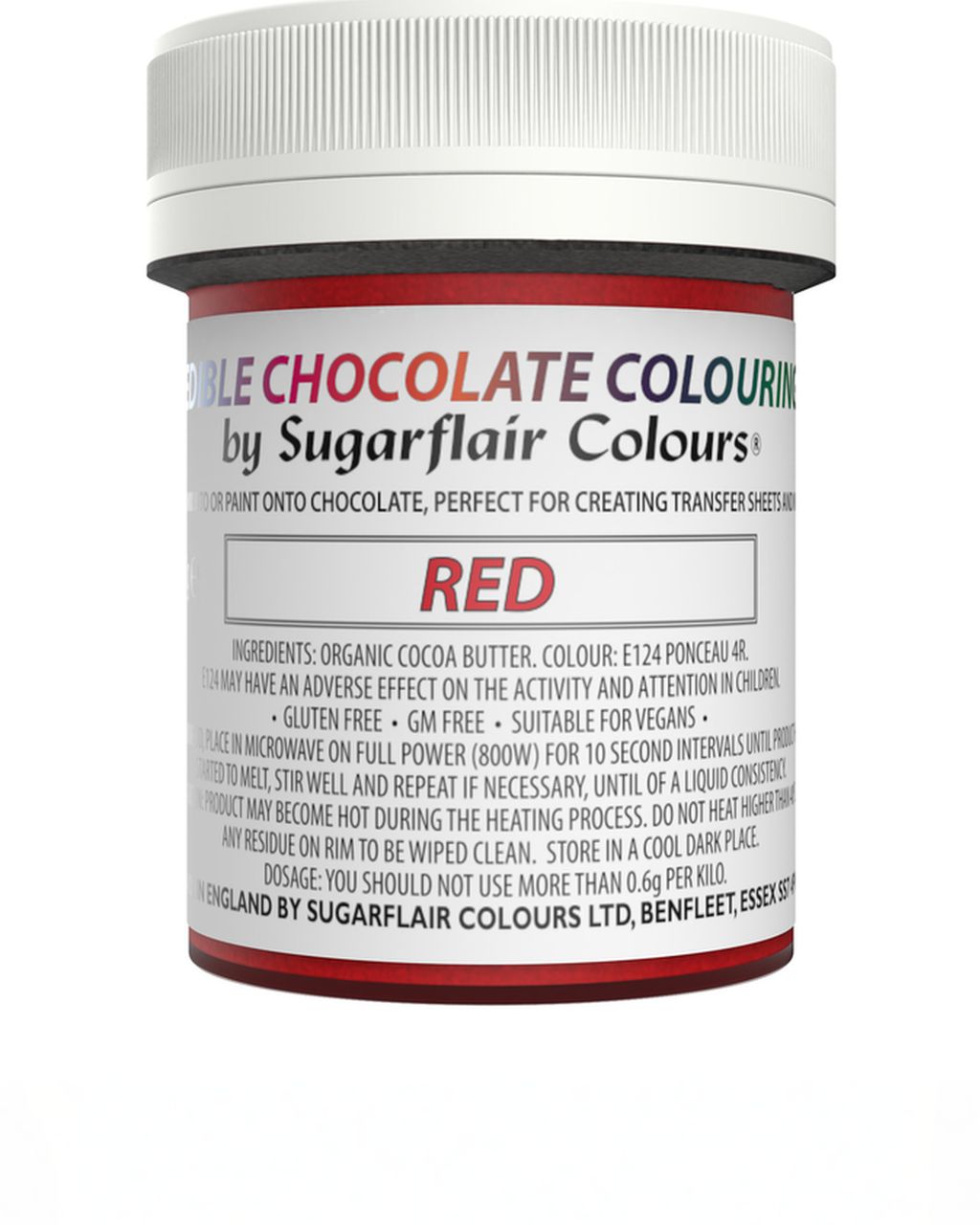
Sugarflair Oil-Based Chocolate Colouring – Red (35 g)
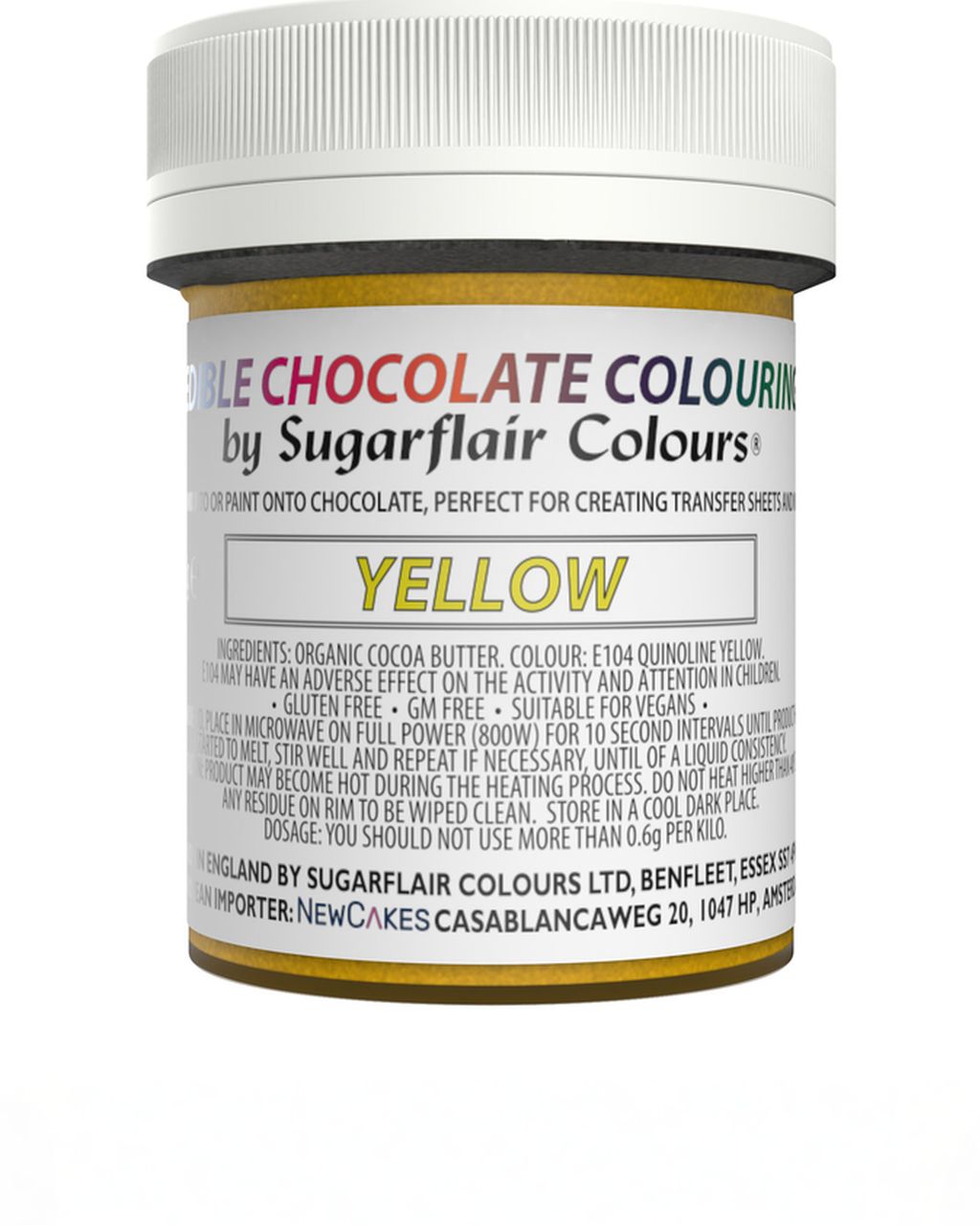
Sugarflair Oil-Based Chocolate Colour – Yellow (35 g)
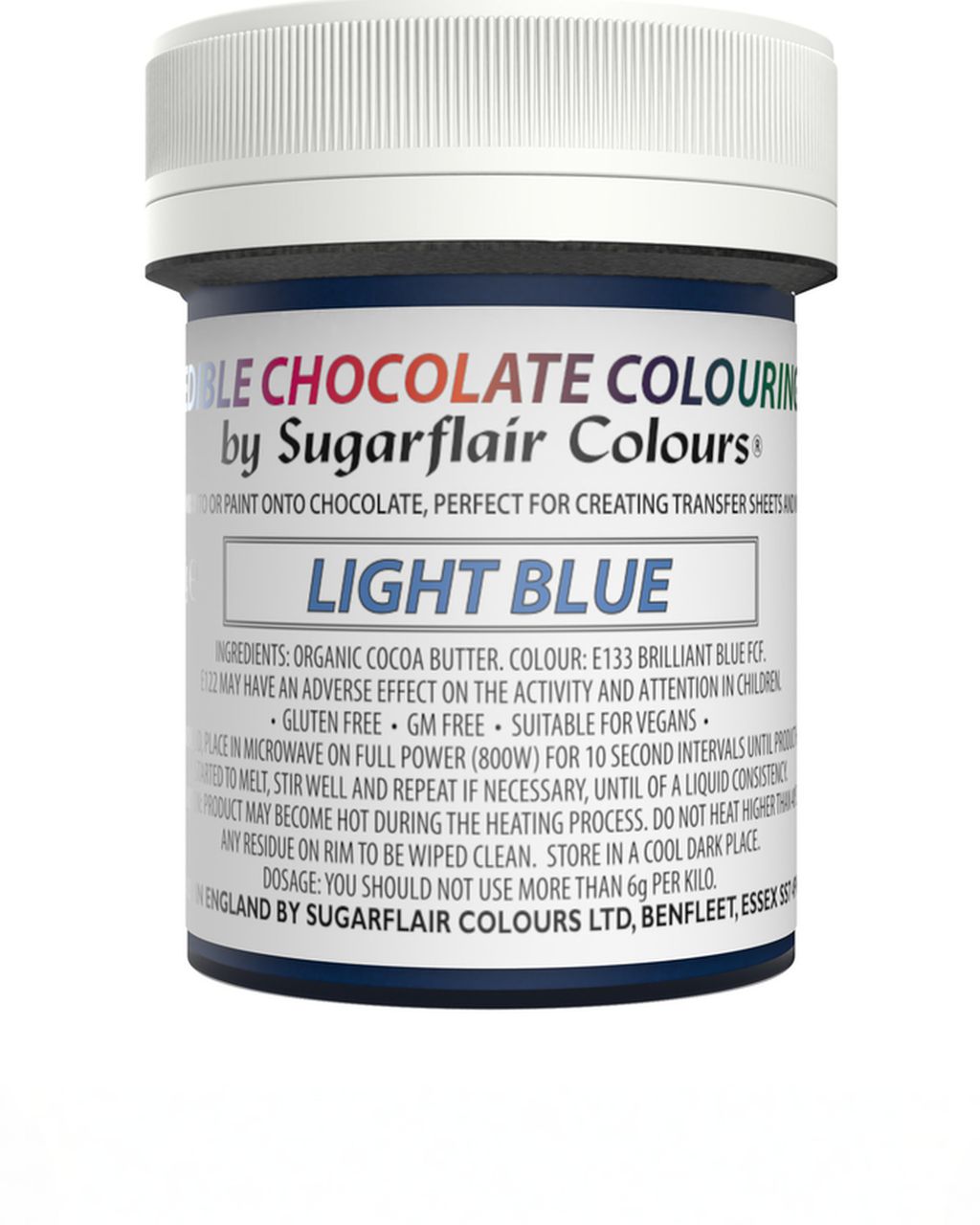
Sugarflair Oil-Based Chocolate Colour – Baby Blue (35 g)
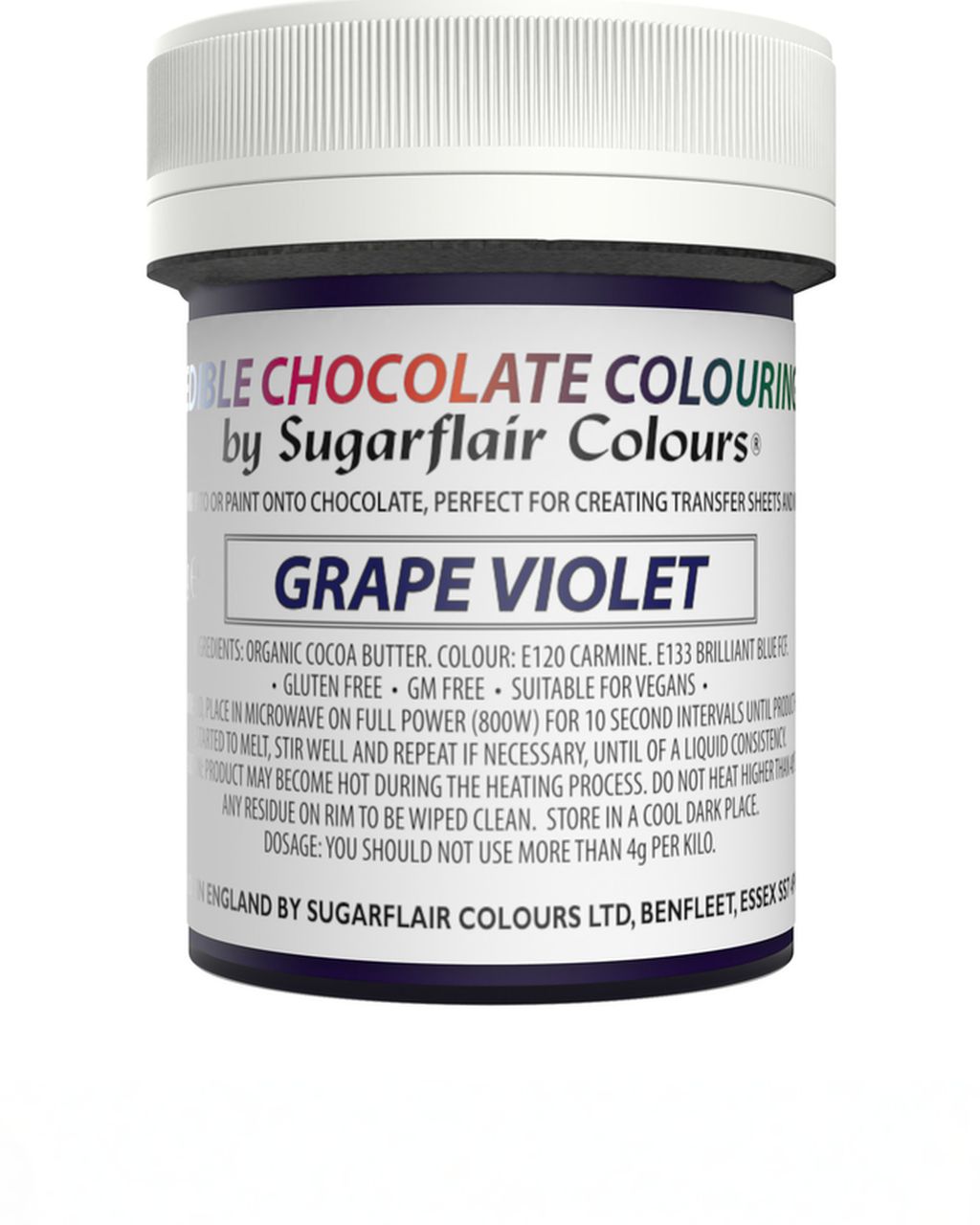
Sugarflair Oil-Based Chocolate Colour – Purple (35 g)
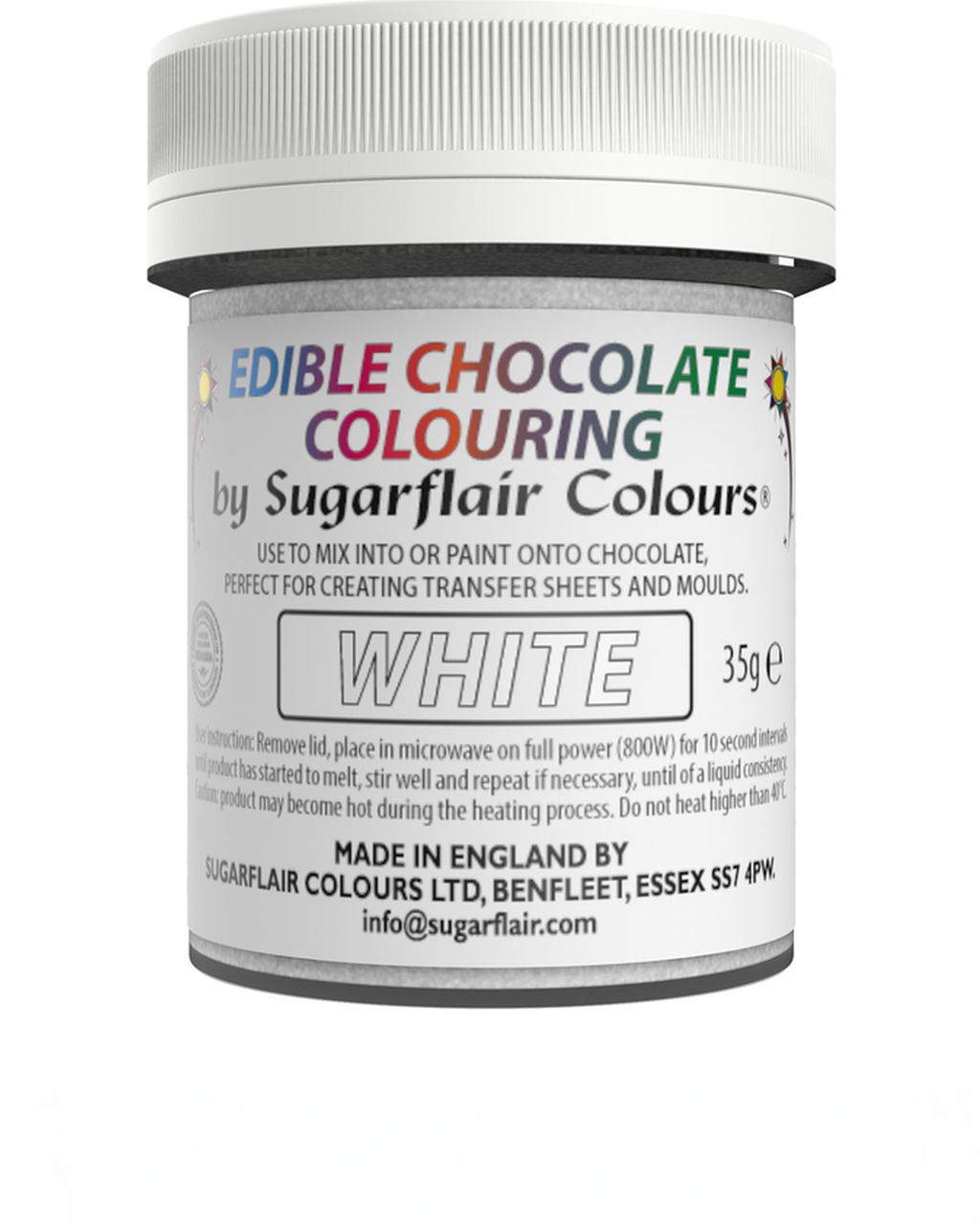
Sugarflair Oil-Based Chocolate Colour – White (35 g)
Yes, you can colour both milk and ruby chocolate with oil-based colouring, but the shade will be more muted since the colour mixes with a brown or pink base. Milk chocolate works best with warm, dark tones — light blue or pastel shades tend to get lost. Ruby chocolate already has its own pink colour, so you're usually just nudging it slightly. The same maximum dose from the label still applies.
Yes, dry natural powders won't make white chocolate seize, since they contain no water. Matcha gives you green, freeze-dried raspberry or strawberry powder gives pink, and turmeric gives yellow. Use a very finely ground powder, around 1–3% of the chocolate's weight, and keep in mind it will also affect the flavour, with the shades coming out fairly muted.
Store oil-based chocolate colouring tightly sealed, somewhere dry and at room temperature, away from direct sunlight, and go by the date on the bottle. It may thicken or solidify in the cold, which is normal — just warm the bottle in warm water and give it a shake. Never dip a wet spoon into it, as water will ruin it.
Yes, oil-based chocolate colourings work in anything fat-based, including buttercream. The pigment mixes into the butter more evenly than gel would, and the cream won't start to curdle even with a larger amount of colouring. Just keep an eye on the maximum dose from the label here too.
At doses within the label's limit, you won't really notice any change in the taste of white chocolate. An off-taste is more of a risk with large amounts of colouring, which aren't allowed anyway. That's why, for dark shades, it's better to start with a darker chocolate rather than pushing white chocolate to its limit.
One recipe worth heating the oven for, one tip, and one deal from the shop. Nothing else.



