Chocolate peanut butter truffles
Sparkling New Year's Eve Desserts: Edible Gold, Shimmer Dust & Sprinkles
Updated Oct 8, 2026
You can create sparkling New Year's Eve desserts with three things: **edible gold** (sheets or flakes of real gold), **edible shimmer dust** (a fine pearlescent powder applied with a brush), and **sugar sprinkles** (pearls, sticks, confetti). Each suits something different, and each goes on differently — gold as an accent on chocolate and pralines, dust as a shine over a surface, sprinkles for texture and colour. Here's what to pick, how to apply it so it's still glittering at midnight, and what to watch out for so whatever you sprinkle on your dessert is actually edible.
The short answer: gold leaf on chocolate and pralines, shimmer dust on chocolate and glazes, sprinkles on creams and cupcakes. You can combine them, but one should always lead while the others just support it.
Edible gold (sheets, flakes) — the biggest impact on the smallest surface. It belongs on chocolate and confectionery: truffles, pralines, chocolate shards and decorations. It stands out most on dark chocolate.
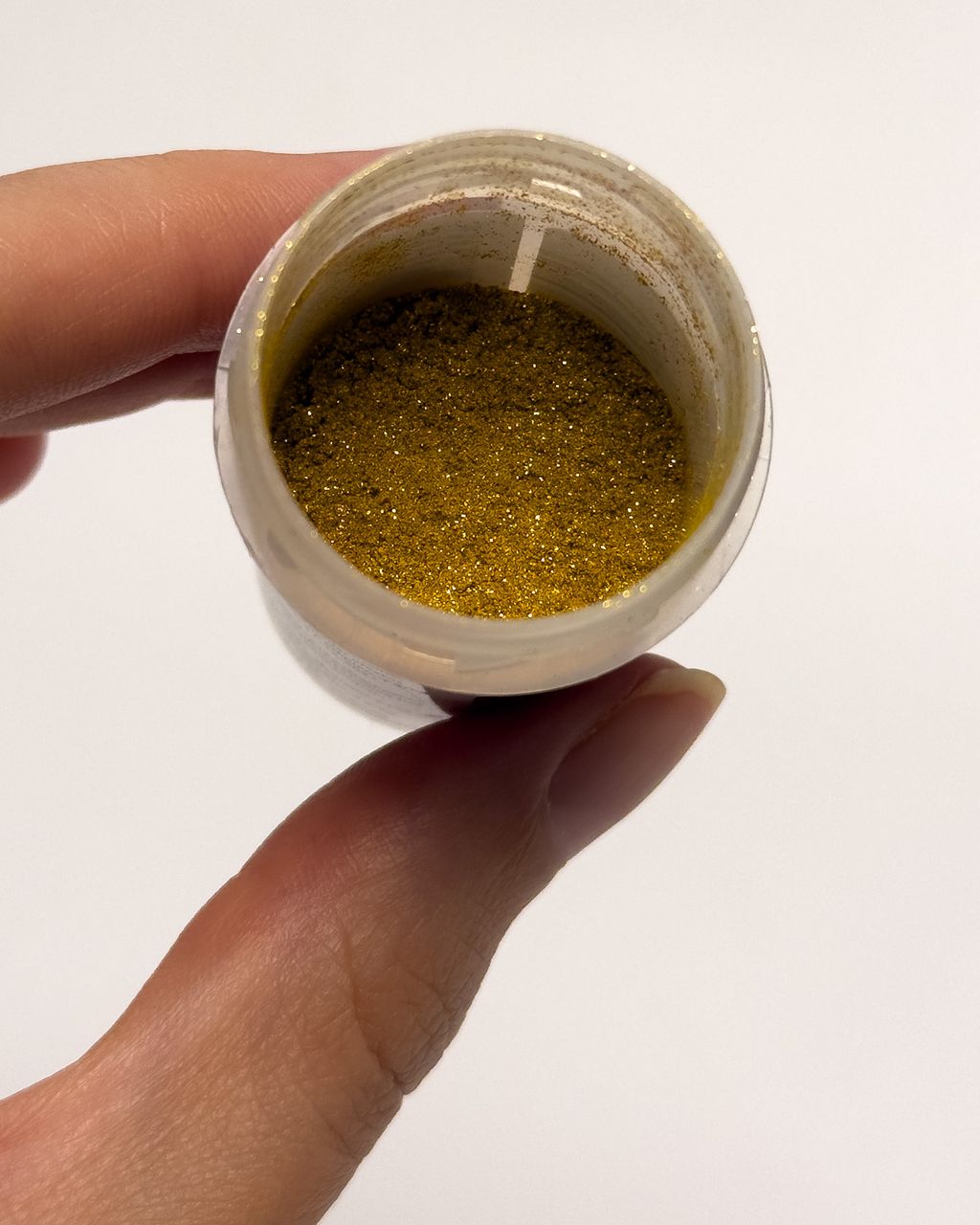
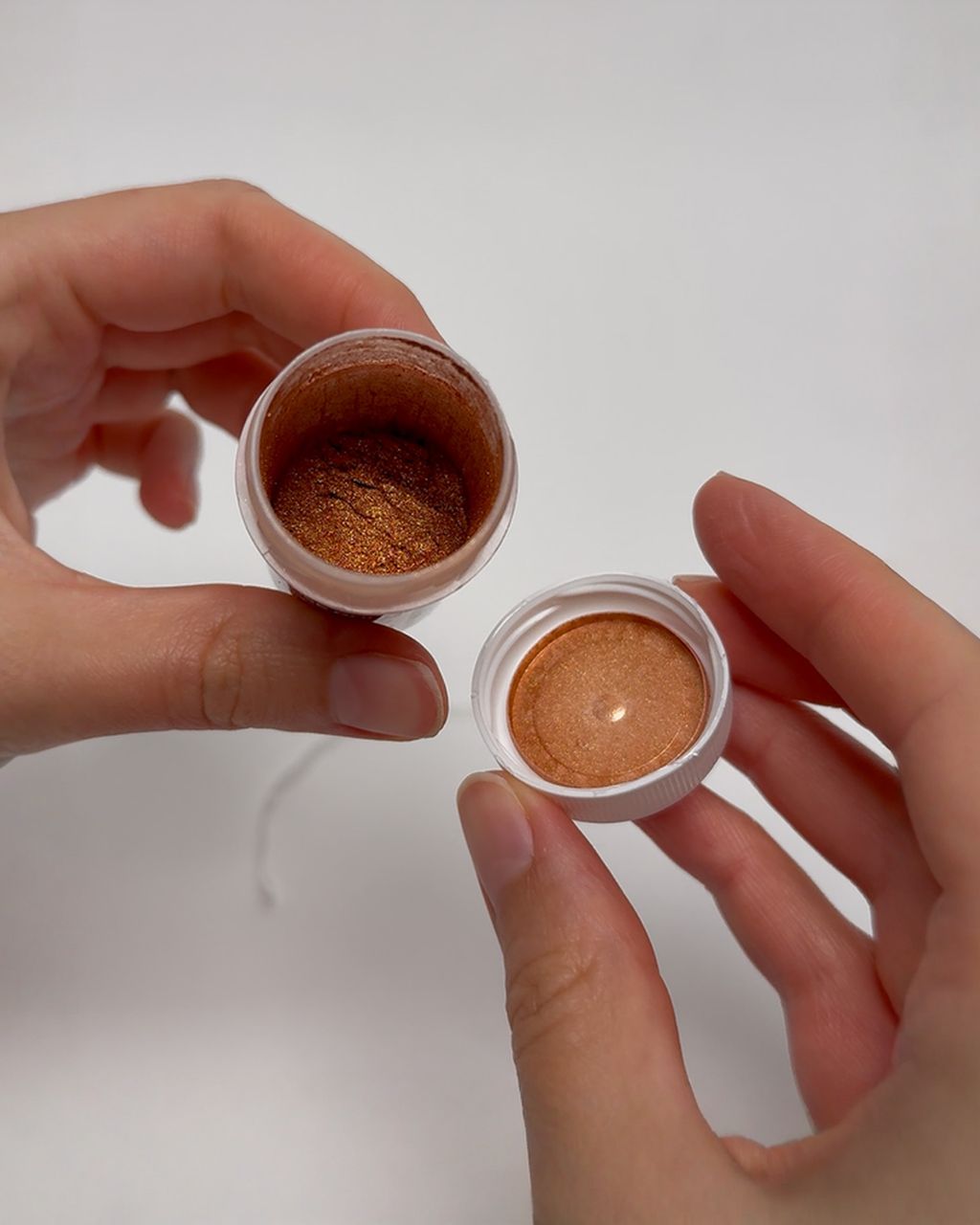
Edible shimmer dust — an even metallic or pearlescent shine. Perfect for pralines, truffles, macarons, cake edges and iced gingerbread. Used dry it gives a subtle veil; mixed with alcohol it covers like paint.
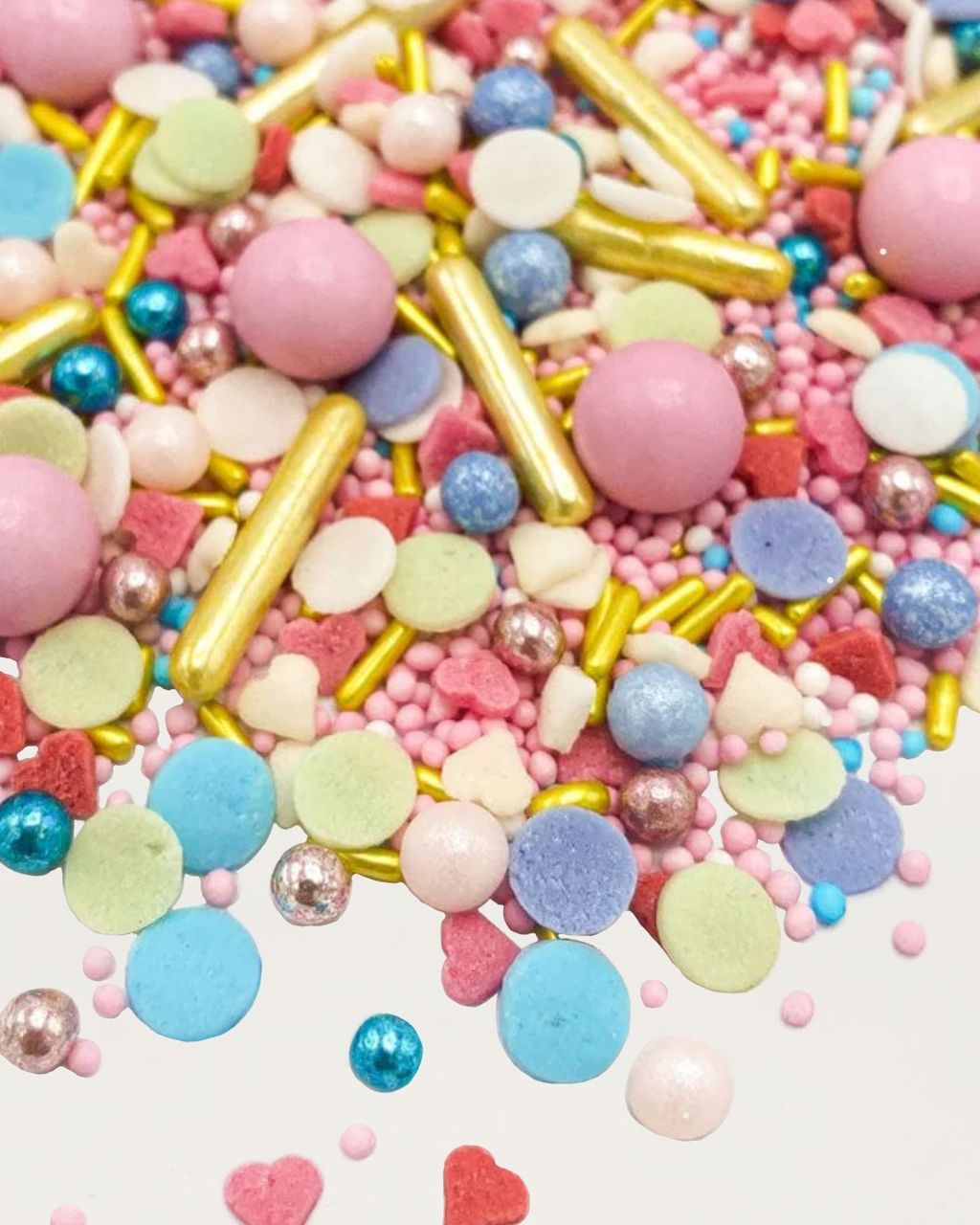
Sugar sprinkles — colour, crunch and party mood. They work best on the swirled cream tops of cupcakes, on the side of a cake, and on chocolate sticks or lollipops.
A good New Year's Eve rule: stick to two colours — gold + black, gold + white, or rose gold + cream. More colours than that starts to look like a kids' party rather than midnight.
Only something labelled on the packaging as a food or food decoration, with a composition made of approved substances, is actually edible. The words "non-toxic" or "for decoration only" mean it's safe to touch food, not that it's safe to eat — this is often craft-grade plastic glitter.
What to look for:
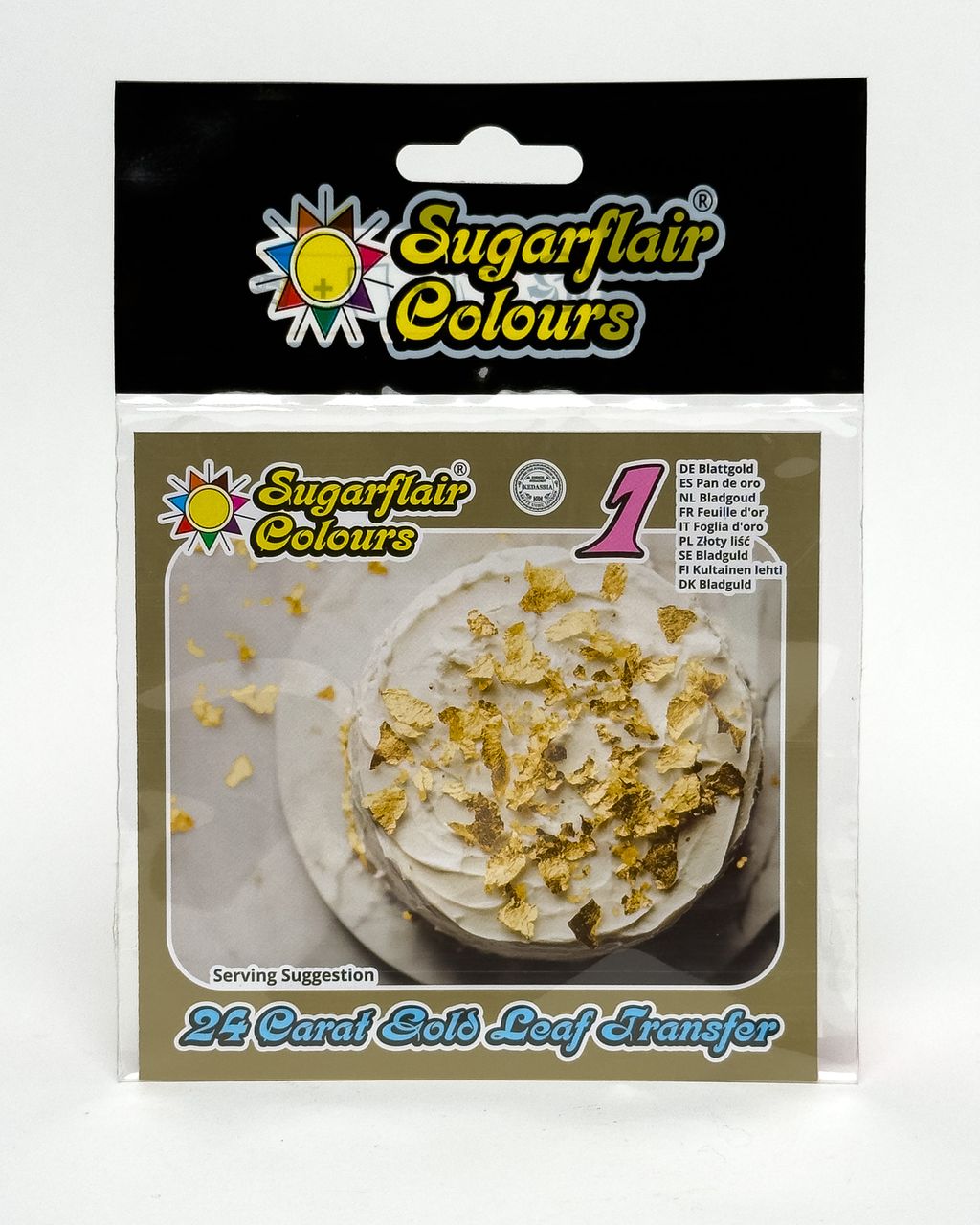
Genuine edible gold is marked E175 and is usually 23–24 carat. E175 gold is approved in the EU for decorating the outside of confectionery and chocolate, and for use in liqueurs — which is why in this article we only recommend it on chocolate and sweets, not directly on cream, whipped cream, sponge or ice cream. Gold leaf from craft shops (the kind used for frames) is usually a brass imitation, and even when it is real gold, it isn't intended for eating — so keep it off food.
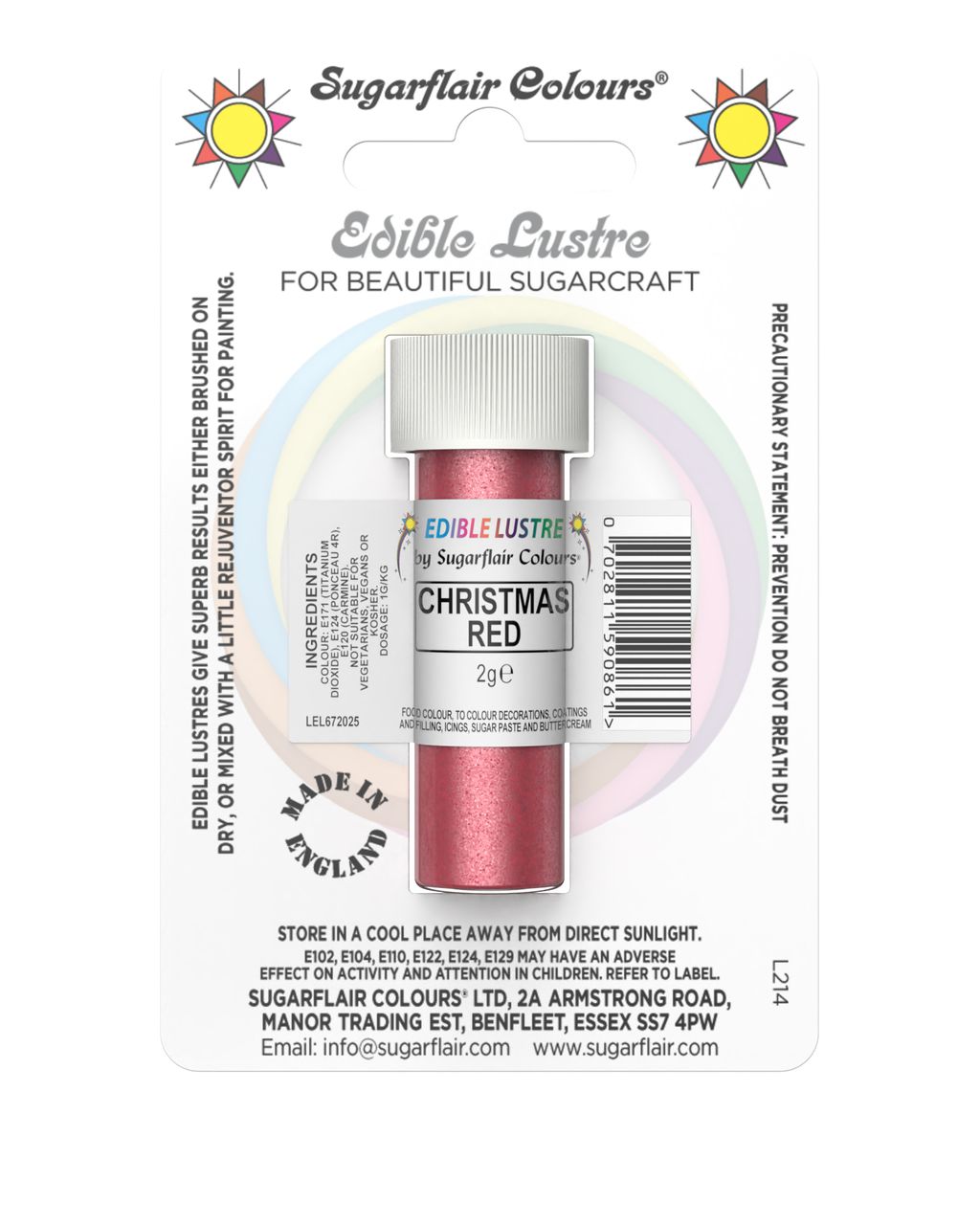
Shimmer dusts: look for the word edible and check the ingredients. Titanium dioxide, E171, which used to give dusts their white, opaque coverage, has been banned as a food additive in the EU since 2022 (fully in force from August 2022 after a transition period). EFSA no longer considers it safe. If you have an older dust at home, or one imported from outside the EU, check it.
Sugar sprinkles are just sugar and colourings, so things are simpler here — just check metallic-finish decorations like silver and gold pearls to see whether they're meant to be eaten or are decoration only.
We go into more detail, including how to read labels, in our article on edible gold and shimmer dust for cakes: what you can eat and what's decoration only.
Apply gold leaf with a dry brush or tweezers onto a slightly sticky chocolate or praline surface — never with your fingers. The sheet is only a fraction of a micrometre thick, so it will stick to warm skin instantly and tear.
Prep the surface. Gold will stick on its own to fresh chocolate coating on truffles and pralines. On set chocolate, "activate" it with your breath (a short exhale will dampen it slightly) or with a drop of water or syrup applied with a brush.
Tear off a piece. Lift straight from the booklet with a dry brush or tweezers, peeling the backing paper only halfway. Keep your hands dry and cool.
Place and press. Just touch it lightly with the brush — the gold will cling on its own. Don't pull at it; a crumpled edge actually looks good, giving it a handmade feel.
Flakes for speed. If you have sheet gold and want fine flakes, rub a sheet between two pieces of baking paper and scatter it over the chocolate.
More gold doesn't mean a more luxurious result — one irregular flake per praline, or a few flashes on chocolate shards, looks more expensive than covering the whole surface in gold.
There are two ways to apply edible shimmer dust: dry with a brush for a subtle shine, or mixed with a little alcohol to use as a metallic paint. Don't use water — it dissolves the sugar underneath and leaves streaks.
Dry dusting gives a soft, layered shine:
Apply with a wide, soft brush onto a set, dry surface — chocolate, tempered pralines, dried icing, fondant.
Load just a pinch onto the brush, tap off the excess, and work it in with circular motions. Build the shine up in layers.
For moulded pralines, you can dust the empty mould directly before pouring in the chocolate — the shine transfers onto the surface and won't rub off. For more on filling and decorating moulds, see our article on homemade chocolate pralines, from choosing the chocolate to decorating.
Painting with dust gives a solid, opaque metallic finish:
To ¼ teaspoon of dust, add vodka or another clear alcohol (food-grade spirit; not rum) drop by drop, up to about ½ teaspoon in total. The alcohol evaporates within a few minutes and leaves no taste.
Aim for a consistency like runny honey. If it thickens while you're painting, add another drop.
Paint onto a dry surface: a cake edge, fondant stars, the tops of macarons, or dried icing on gingerbread — for example on soft honey gingerbread that doesn't go hard.
Don't dust whipped cream or soft cream with shimmer dust — it absorbs the moisture and turns grey. Sprinkles are the right choice for cream.
Add sugar sprinkles to a dessert as late as possible — ideally within 2–3 hours of serving — and always onto cream or icing that's still slightly sticky. In humidity, sugar starts to dissolve and the colour bleeds into the cream.
On cream (buttercream, mascarpone), sprinkle immediately after piping, while the surface is still tacky — which also means piping the cream within that same 2–3-hour window before serving. Afterwards, keep the dessert covered in the fridge so moisture doesn't condense on it.
On whipped cream, sprinkle just before serving — whipped cream is the most moisture-prone of all, and it will pull colour out of the sprinkles fastest.
On the side of a cake, pour the sprinkles into your palm and gently press them onto the lower edge of the cream. Put a tray underneath to catch and reuse any that fall.
On chocolate, sprinkle onto a half-set layer — the sprinkles will sink into warm chocolate and won't stick to cold chocolate.
For New Year's Eve, mixes with gold and pearl pearls, stars and confetti work well, ideally combined in gold-black-white. We cover the technique in more detail in our article on sugar sprinkles: how to use them so they stick and don't bleed colour.
Five things take sparkle best: chocolate truffles, chocolate mousse in glasses, cupcakes, one showpiece cake for the centre of the table, and popping sugar as a midnight effect. Gold should always sit on a chocolate element — a truffle, a praline, a chocolate decoration — never directly on plain cream.
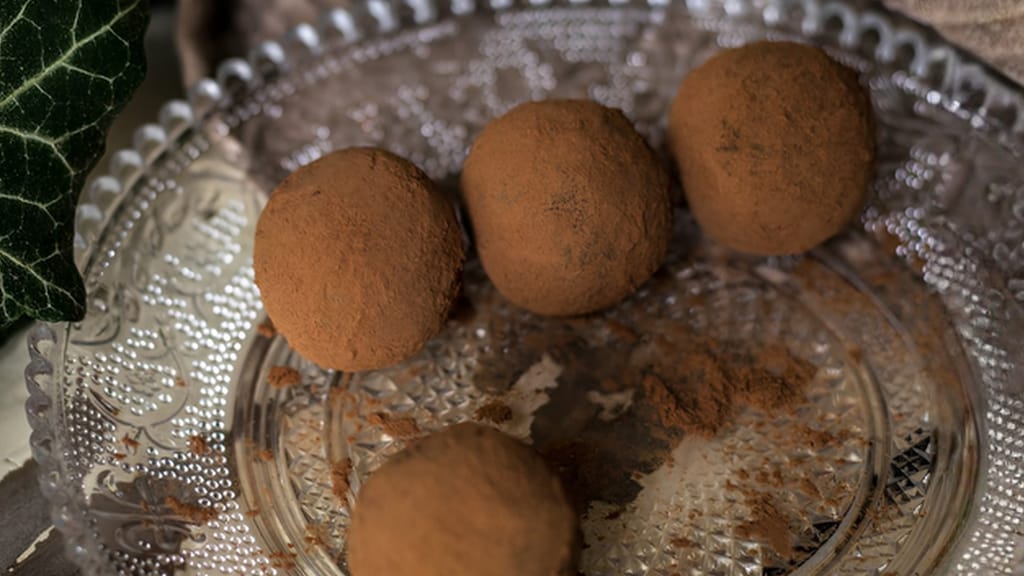
Chocolate truffles — coat them in cocoa and top with a single flake of gold, or dip them in dark chocolate and dust with gold powder. Try peanut butter chocolate truffles.
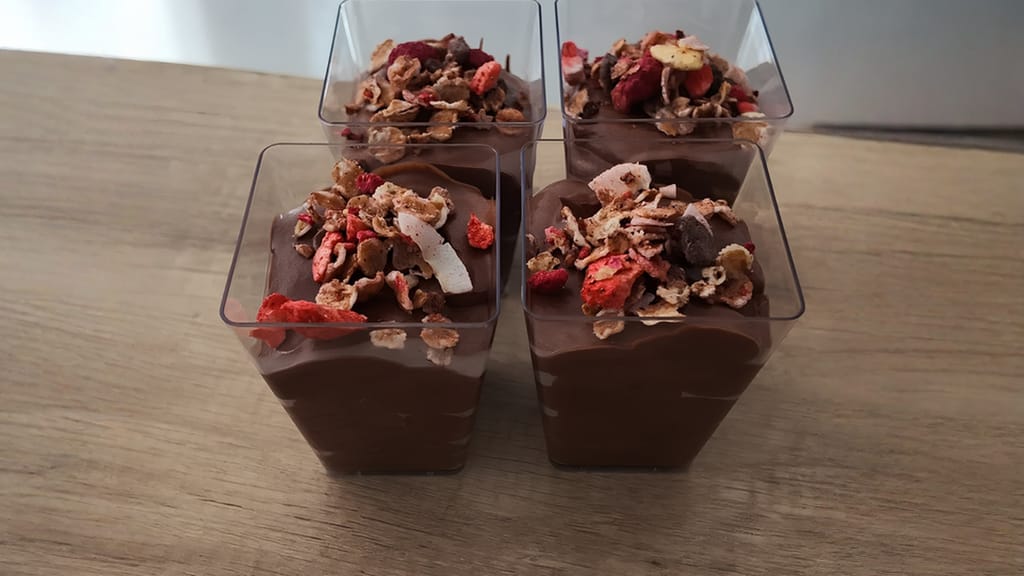
Chocolate mousse in glasses — just before serving, set a chocolate shard topped with a gold flake onto the dark surface. Recipe: chocolate mousse.
Cupcakes — pipe a cream swirl, add gold sprinkles, and finish with a chocolate decoration carrying a gold flake. A great base is these chocolate cupcakes with caramel buttercream.
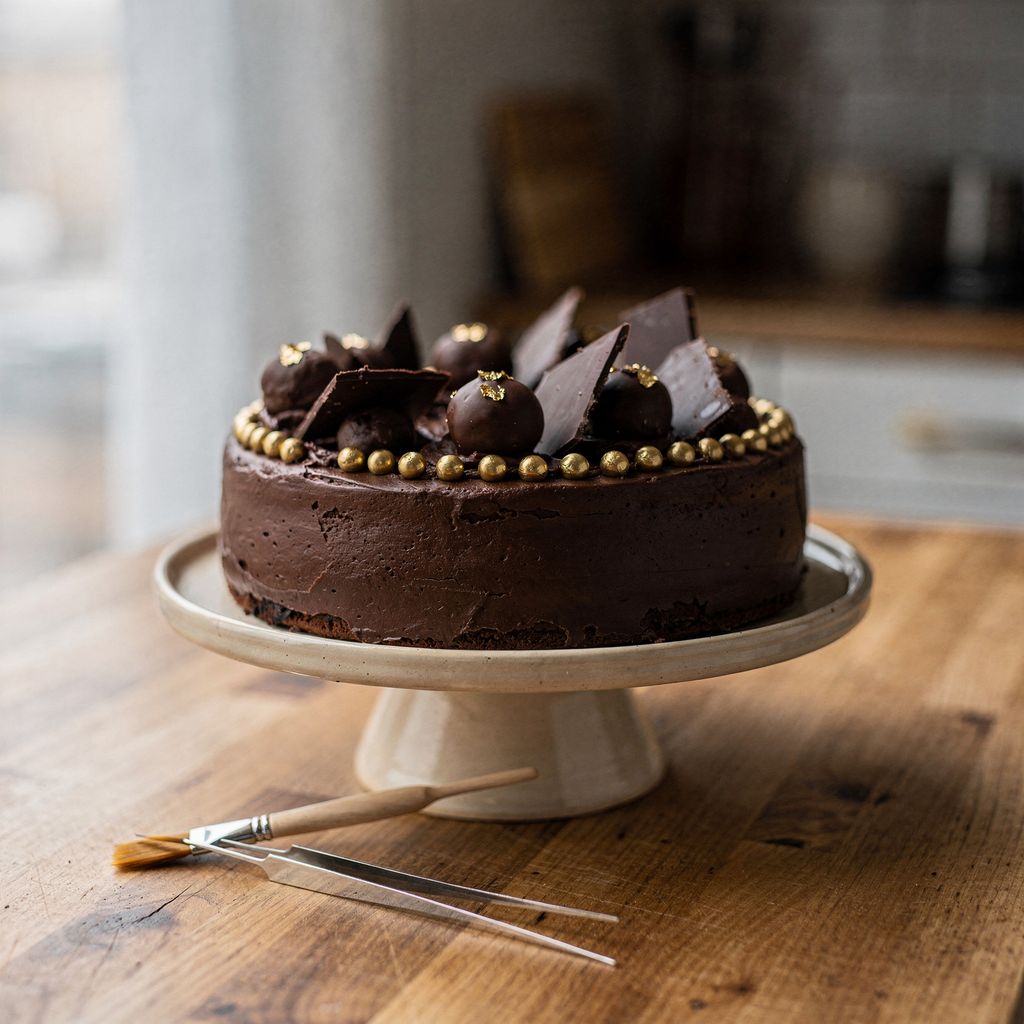
Cake — a dark ganache coating, chocolate shards or pralines touched with gold along the edge, and gold star sprinkles on top. Stick to a gold-and-black palette and leave plenty of bare space on the cake.
Popping sugar for midnight — stir it into the sprinkles for a little "firework" fizz in the mouth. Add it only just before serving, as moisture kills the pop.
And don't forget the toast — sparkle belongs in the glass too. For tips on keeping edible glitter floating in champagne instead of sinking to the bottom, see our article on edible glitter for New Year's Eve drinks.
Chocolate peanut butter truffles
Chocolate mousse in glasses with a gold-topped chocolate decoration
Chocolate mousse
Chocolate cupcakes with caramel cream for gold sprinkles
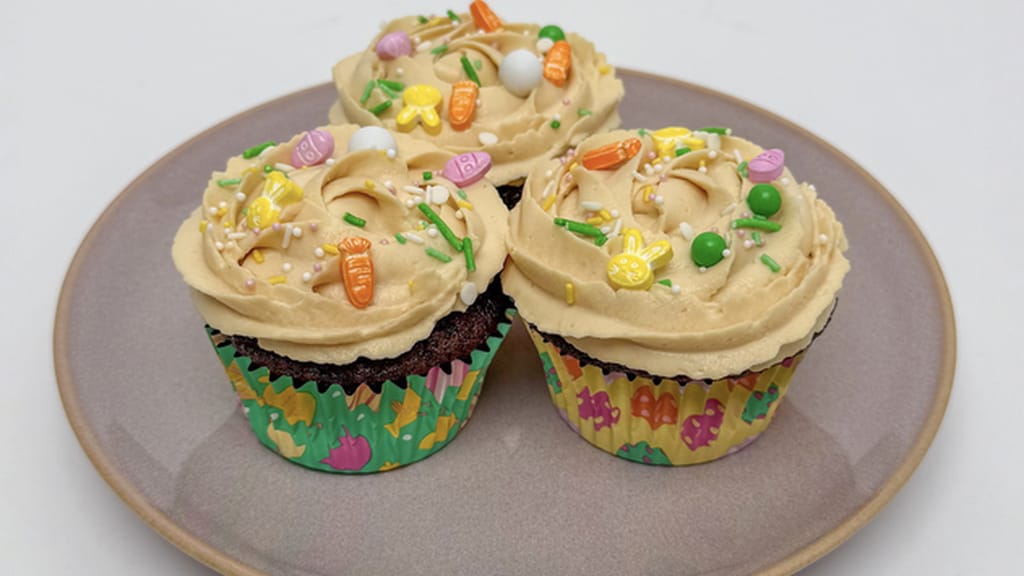
Chocolate cupcakes with salted caramel cream
New Year's Eve desserts that suit sparkle best Five things suit sparkle best: chocolate truffles, chocolate mousse in glasses, cupcakes, one show-stopping centrepiece cake, and popping sugar as a midnight effect. Gold should always sit on a chocolate element — a truffle, praline, or chocolate decoration — never directly on cream. Chocolate truffles — coat in cocoa and top with a single flake of gold, or coat in dark chocolate and dust with gold powder. Try our chocolate peanut butter truffles. Chocolate mousse in glasses — just before serving, place a chocolate shard topped with a gold flake onto the dark surface. Recipe: chocolate mousse. Cupcakes — a swirl of cream, gold sprinkles, and a chocolate decoration with a gold flake on top. A good base recipe is chocolate cupcakes with caramel cream. Cake — dark ganache, chocolate shards or gold-topped pralines along the edge, and gold star sprinkles. Stick to a gold-and-black combination and leave plenty of open space on the cake. Popping sugar for midnight — mix it into the sprinkles and it'll "pop" in your mouth like fireworks. Add it just before serving, as moisture kills the fizz. And a toast calls for sparkle too — in your glass included: for tips on getting glitter to float in champagne instead of settling, see our article on edible glitter for New Year's Eve drinks.
For starters, one jar of gold shimmer dust and one pack of sugar sprinkles will do; buy gold leaf when you want to really elevate one standout dessert. You have five options to choose from: gold leaf, shimmer dust, sugar sprinkles, edible spray paint, and homemade alternatives that cost nothing extra.
Genuine gold leaf, usually 23–24 carat — the strongest effect, flavourless, pricier per gram, but it goes a long way across many desserts. Choose this when you want "wow" on pralines, truffles and chocolate decorations.
Gold shimmer dust — cheaper, versatile, one jar lasts through many occasions. Choose this when you want shiny surfaces, pralines or painted decoration. Rose gold is softer and pairs better with white and pink chocolate, while pearlescent silver gives white icing an icy, champagne-like shine for midnight.
Sugar sprinkles — the cheapest and quickest option, even kids can manage it. Use these on cupcakes and around the sides of a cake.
Gold edible spray paint (food-safe spray) — check the packaging confirms it's edible. It quickly covers a large area, like a whole cake or a tray of cake pops for a New Year's Eve spread, but the finish is more matte and harder to control for fine detail. It makes sense if you're decorating in bulk.
Homemade alternatives that cost nothing extra — pulled caramelised sugar threads, caramel shards, or cocoa dusted through a paper star stencil. It won't have a metallic shimmer, but it still looks festive and costs you nothing.
Edible gold has no taste at all — genuine edible gold is neutral in both flavour and texture, so you barely notice it in your mouth. Its job is purely visual, so you don't need to worry about whether it suits chocolate, fruit or coffee.
Edible gold and dry shimmer dust on chocolate will easily hold up a day in advance, as long as you store the dessert somewhere cool and dry.
Keep both shimmer dust and edible gold sheets somewhere dry, well sealed and out of direct sunlight — the dust in its original container, the gold sheets in their booklet between the protective sheets. Moisture is the main enemy: it will cake the dust and make the gold sheets stick together, so don't store either in the fridge.
Don't mix shimmer dust into batter or cream — it loses its shine, and not every dust is even meant to be mixed in; some are for surface decoration only. Always check the packaging to see what the dust is intended for. The shimmer only shows up on a dry surface, so apply it to the finished, cooled dessert.
One recipe worth heating the oven for, one tip, and one deal from the shop. Nothing else.