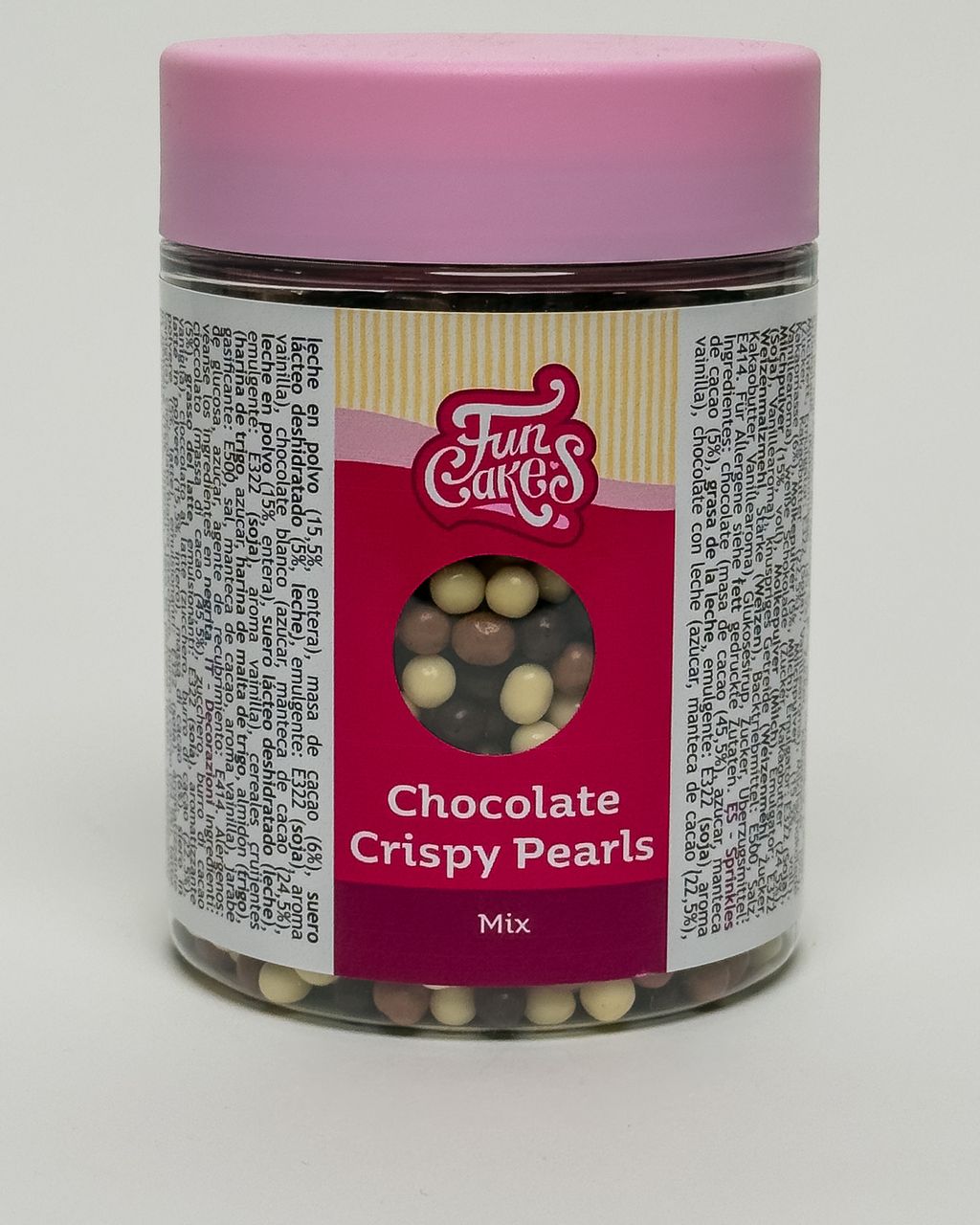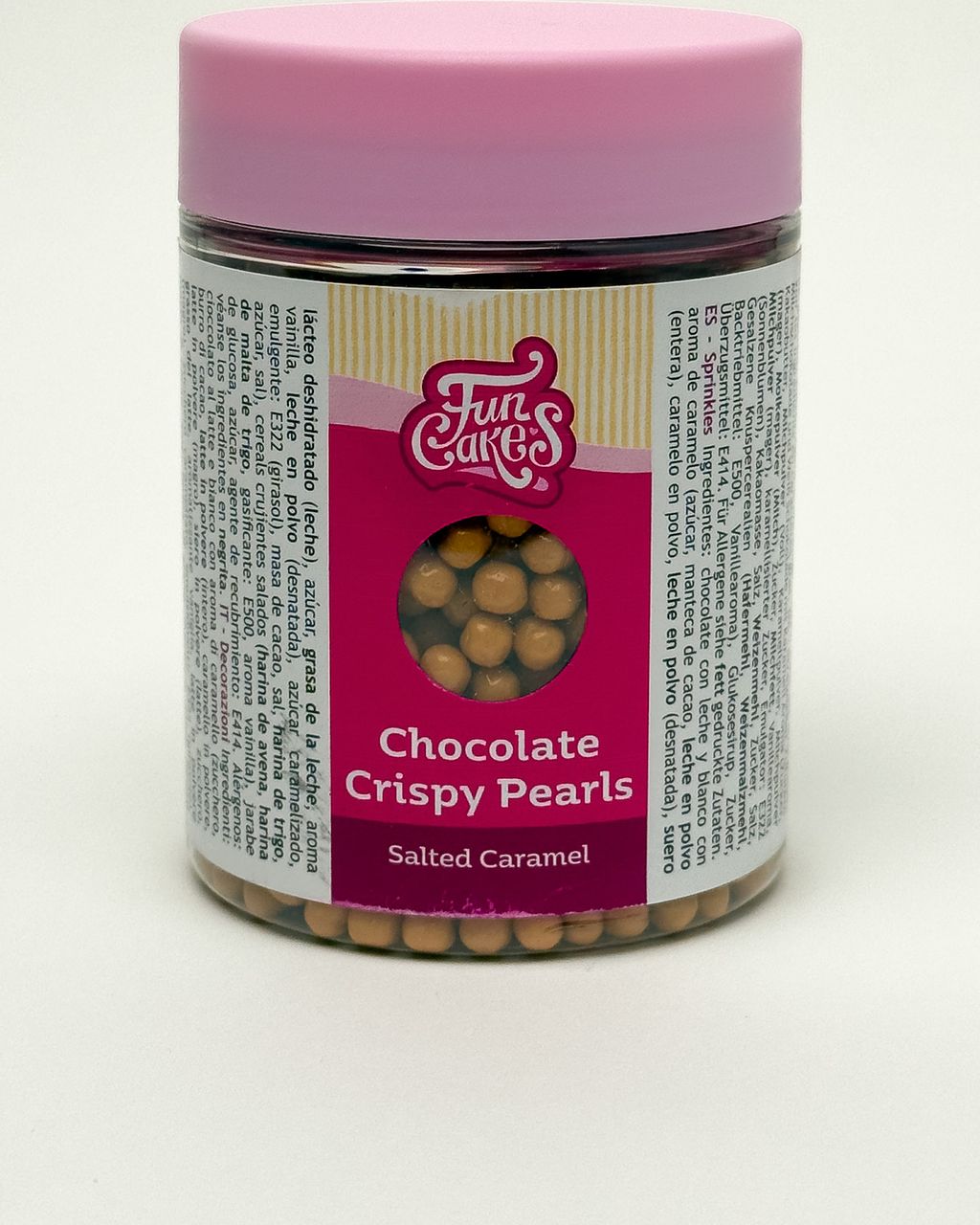
Crunchy Chocolate Pearls – Salted Caramel
Crispy Chocolate Balls on Cakes and Cookies: How to Keep Them From Going Soft
Updated Oct 8, 2026
Crispy chocolate balls stay crunchy as long as the chocolate shell protects them and they don't meet water. A fat-based cream won't bother them, but whipped cream, cream cheese, fruit and fridge condensation will. Put them on the right cream and sprinkle them at the right moment, and they'll still be crunchy the next day. Here's how to use them on a cake, inside a cake, and on cookies.
Crispy chocolate balls are small crunchy cereal cores coated in a layer of chocolate. In FunCakes' salted caramel version, the manufacturer's ingredient list shows a core made from wheat, oat and malt flour, with cocoa butter making up around 28%. The core gives the crunch; the chocolate shell protects it.
They go soft for two reasons:
Water gets through the shell. The chocolate coating is thin. After extended contact with a moist cream or fruit, water seeps into the core, which softens just like a biscuit dunked in milk.
The shell cracks or melts. Balls with a cracked coating, stored too long above 25°C (77°F), or baked in the oven, lose that protection. The core then draws moisture straight from the air.
Everything else follows from this: put them on a fat-based base, sprinkle them as late as possible, and keep them cool and dry.
Crispy chocolate balls are best placed on a cream that's mostly fat: ganache, chocolate glaze or buttercream. The more water a cream contains, the faster the balls will soften.
Ganache and chocolate glaze: the best base. The balls stick to it and stay crunchy even overnight.
Buttercream (Swiss, American): very good too. Butter and sugar release almost no water, so the balls hold up for 1–2 days.
Crème diplomate, mascarpone-whipped-cream filling, cream cheese frosting, plain whipped cream: these all release water. Crème diplomate is chocolate-based, but it's whipped ganache with a high proportion of cream, so it belongs in this group too. Sprinkle the balls no more than 2–3 hours before serving.
Fruit, fruit jelly, curd, jam: direct contact won't hold up. Add the balls just before serving, or separate them from the fruit with a layer of cream.
A real-world example: a cream cheese cake with salted caramel and peanuts practically calls out for salted caramel crispy balls, but the cream cheese filling is moist. So place the balls on the caramel layer on top rather than directly on the cream cheese, and add them just before serving.
Sprinkle crispy chocolate balls onto a cake as late as possible: the evening before if it's going onto ganache or buttercream, but no more than 2–3 hours ahead for whipped cream, crème diplomate or cream cheese frosting.
The fridge is even more of a threat to them than the cream itself. When you take a cold cake out into a warm kitchen, moisture condenses on the surface — and that moisture soaks straight into the balls. So:
Decorate and chill the cake without the balls.
Take it out of the fridge and wait 10–15 minutes until the surface loses its sheen and the condensation disappears.
Only now press the balls gently into the cream, using a finger or your palm, so the shell doesn't crack.
If the decorated cake has to go back in the fridge, store it in a closed box. That way condensation forms mainly on the box walls rather than on the cake.
Rough quantities: for the edge of a 20 cm (8-inch) cake, 40–60 g is enough; for the whole top, 80–100 g; and for one cupcake, 3–5 g — roughly a teaspoon per swirl of cream.
Inside a cake, crispy chocolate balls stay crunchy only when set in chocolate. Mix them with melted chocolate and form a thin disc to sandwich between the cake layers.
Melt 60–80 g of chocolate (milk or dark). For a softer, creamier layer, stir in 1–2 tablespoons of nut paste.
Let the chocolate cool to 30–32°C (86–90°F) and stir in 100 g of crispy balls. Brief contact with chocolate at this temperature won't harm them: the chocolate coats them straight away and sets within a few minutes.
Spread the mixture on baking paper into a circle about 1–2 cm smaller than the cake layer, and let it set in the fridge — about 15 minutes is enough.
Place the set disc onto a layer of cream, then add the next filling on top of it.
The chocolate coats even cracked balls and keeps them separate from the moist cream. In a cake with buttercream or ganache, this layer stays crunchy for 2–3 days. With a fruit filling, always keep at least one layer of cream between the fruit and the crunchy disc. A cream dam will keep fruit filling in place inside the cake.
For an honest comparison: pastry shops mostly use feuilletine — crushed crêpes dentelles — for crunchy layers. It mixes into praline layers more easily than whole balls because it's flat and thin, but we're not covering it here. Crispy chocolate balls give a layer a coarser, more pronounced crunch and also work well scattered on top. Feuilletine on the surface just looks like crumbs.
On cookies, stick the balls on with chocolate only after baking — never bake them. Don't put them into the dough: the chocolate melts in the oven, leaving behind nothing but a softened crumb from the core. For baking into dough, use chocolate chips made specifically for baking, which hold their shape in the oven.
Dipped cookies: dip the edge of the cookie in chocolate and, while the chocolate is still wet, roll it in the balls or sprinkle them on. For a method that keeps the chocolate glossy, see how to dip cookies in chocolate.
Linzer and filled cookies: place a single ball in a dot of chocolate in the centre. Don't put it directly on the jam filling, as it will soften by the next day.
No-bake cookies and rum balls: put the crispy balls on top, not mixed into the dough. The moist mixture would soak them soft within a few days.
Storage matters just as much as decorating. Keep cookies with crispy balls in a separate tin — never together with gingerbread softened with apple, or with filled cookies. Moisture spreads inside a closed container, and the balls will be the first to soak it up. Stored somewhere cool and dry, ideally at 15–20°C (59–68°F), cookies with crispy balls will keep for 2–3 weeks.
Choose salted caramel crispy balls for a flavour accent, and the chocolate mix for visual colour contrast.
Salted caramel crispy balls are coated in caramel chocolate with a pinch of salt. They pair best with chocolate, coffee, banana, peanuts and caramel cream. Try them on chocolate cupcakes with caramel buttercream or coffee cupcakes — the salt brings out the sweetness of the cream so the dessert doesn't end up too sweet. If you want caramel in the cream itself too, check out how to make salted caramel at home.
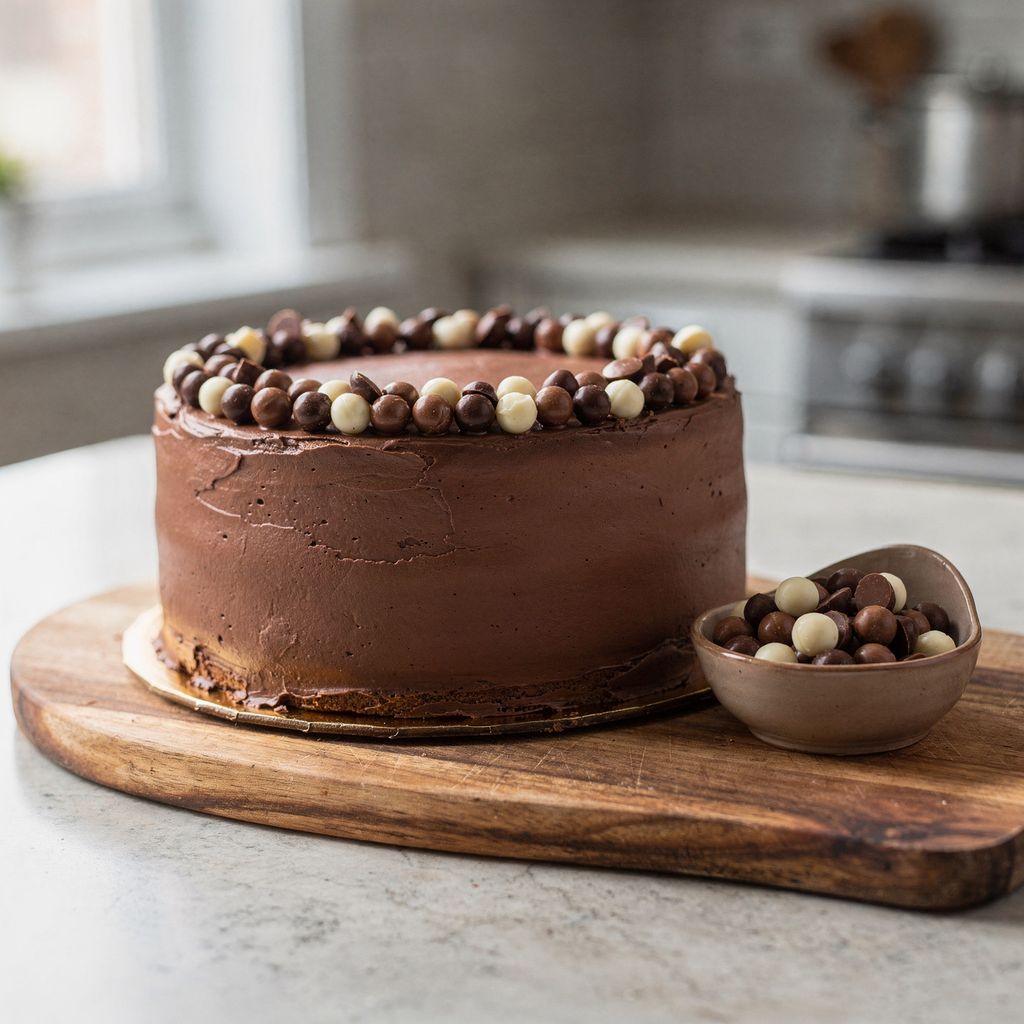
Chocolate mix contains white, milk and dark balls. It's flavour-neutral, and the white balls create a striking colour contrast against a dark cream. It works well on a simple chocolate cake and on Christmas cookies.
What about other crunchy toppings? Puffed rice (rice crispies) is cheap but has no coating, so it softens on cream within an hour — it only really works in mixtures with marshmallow or chocolate. Caramelised nuts stay crunchy for a long time, but their sugar crust turns sticky in moisture. Popping candy doesn't crunch but crackles on the tongue, and it loses its effect even faster in moisture. Of this whole group, chocolate-coated crispy balls hold up best on cream. For the full rundown of other options, see the article on edible cake decorations and our range of cake and cookie decorations.
Store opened crispy chocolate balls tightly sealed in a dry cupboard at 15–20°C (59–68°F), never in the fridge — this is exactly the range the manufacturer recommends. In the fridge, the chocolate picks up moisture and odours, then fogs up with condensation once you take it out.
Don't store them above the cooker, near the oven, or on a windowsill. Above 25°C (77°F) the chocolate softens and the balls stick together.
If you spot a white bloom on them, it's just fat or sugar bloom from a temperature change — they're not spoiled, just less glossy. It's best not to use them on the surface of a cake, but they still work fine in a crunchy layer inside one.
Don't use balls for decorating once they've stopped crunching even when dry — they won't improve once they're on the cake.
Yes, fondant is dry and won't bother crispy balls — just stick them on with a drop of melted chocolate. Avoid water or water-based edible glue, as they'll make the balls go soft. Don't refrigerate a fondant cake with crispy balls on it afterwards: condensation on the fondant would soften them.
Once crispy chocolate balls have gone soft, there's practically no way to get the crunch back, since drying them in the oven would just melt the chocolate shell. You can stir them into warm chocolate or into a cream where crunch doesn't matter. For decorating, use a fresh batch instead.
Yes — according to the manufacturer's ingredient list, they contain wheat flour (both the salted caramel and oat versions), so they do contain gluten, as well as milk-based ingredients; the chocolate mix also contains soy. They're not suitable for a gluten-free cake. Always check the packaging before decorating for anyone with allergies.
You can freeze it, but the balls will almost certainly go soft once thawed, since a lot of moisture condenses on the cake during defrosting. Freeze the cake without the balls and add them only after thawing, once the surface has dried. A crunchy layer sealed in chocolate inside the cake holds up to freezing much better.
For a 20 cm (8-inch) cake, allow 40–60 g for the edge, 80–100 g to cover the whole top, and about 100 g for a crunchy layer inside. If you want both a layer and decoration, prepare around 200 g in total. Always check the exact weight on the pack.
One recipe worth heating the oven for, one tip, and one deal from the shop. Nothing else.