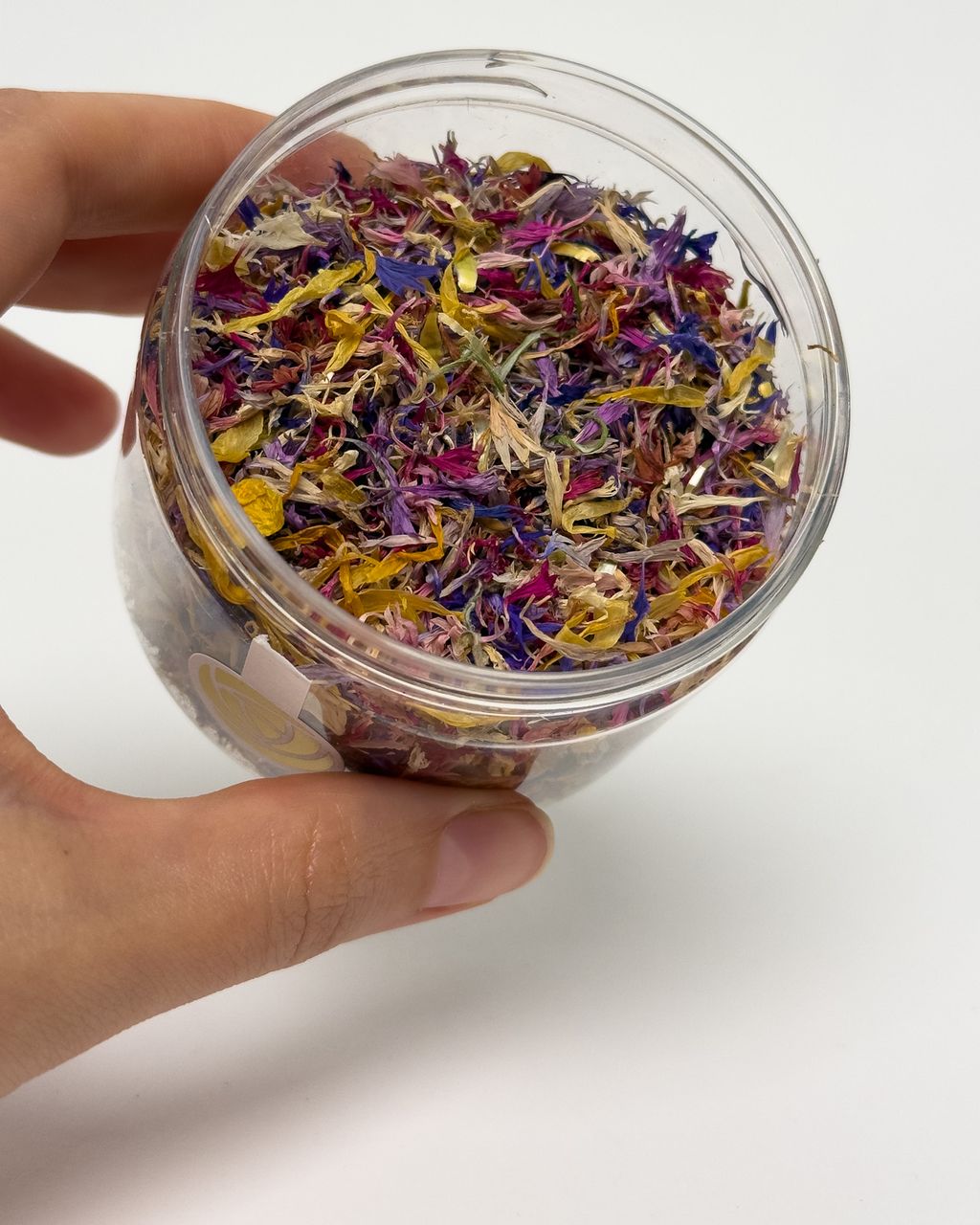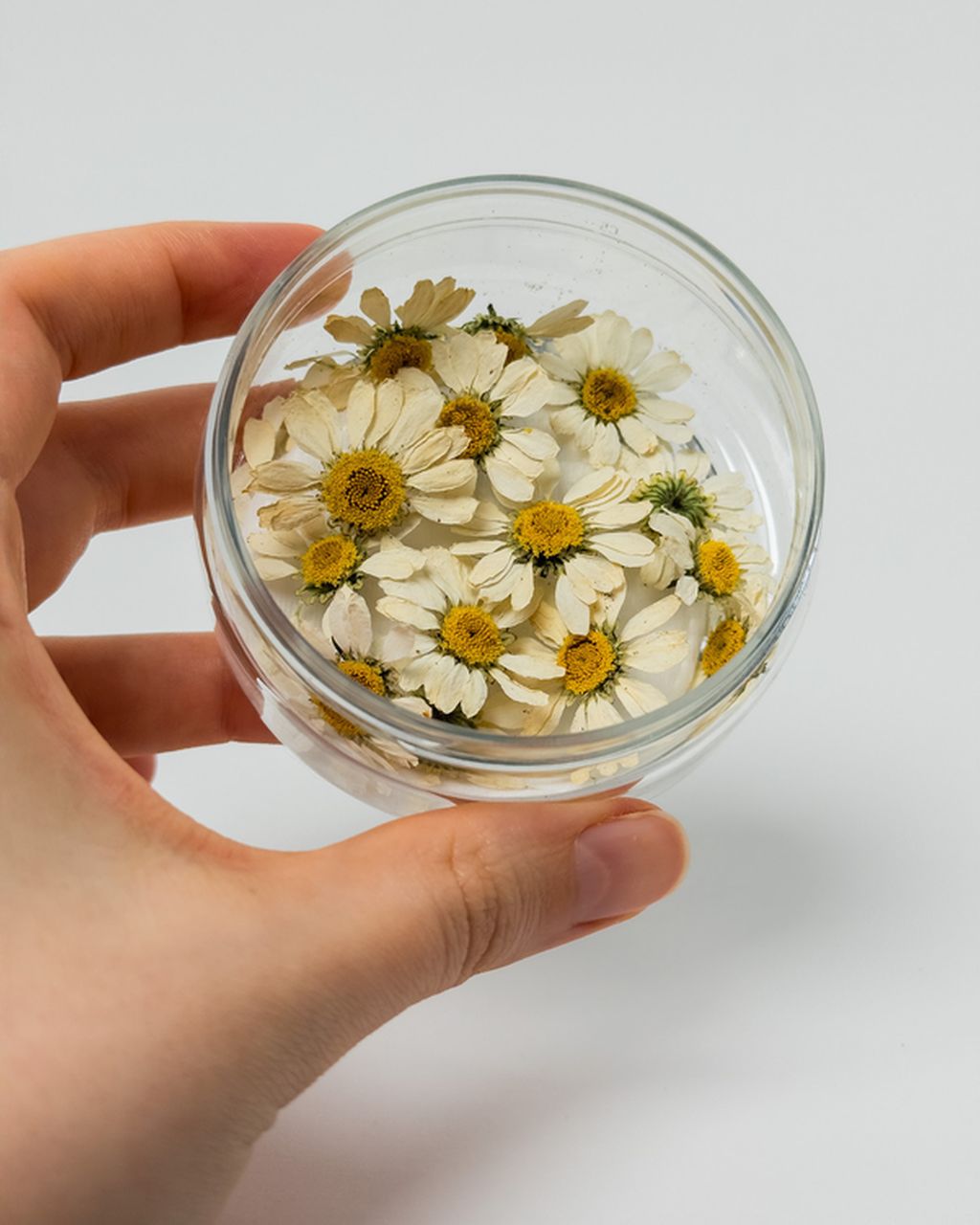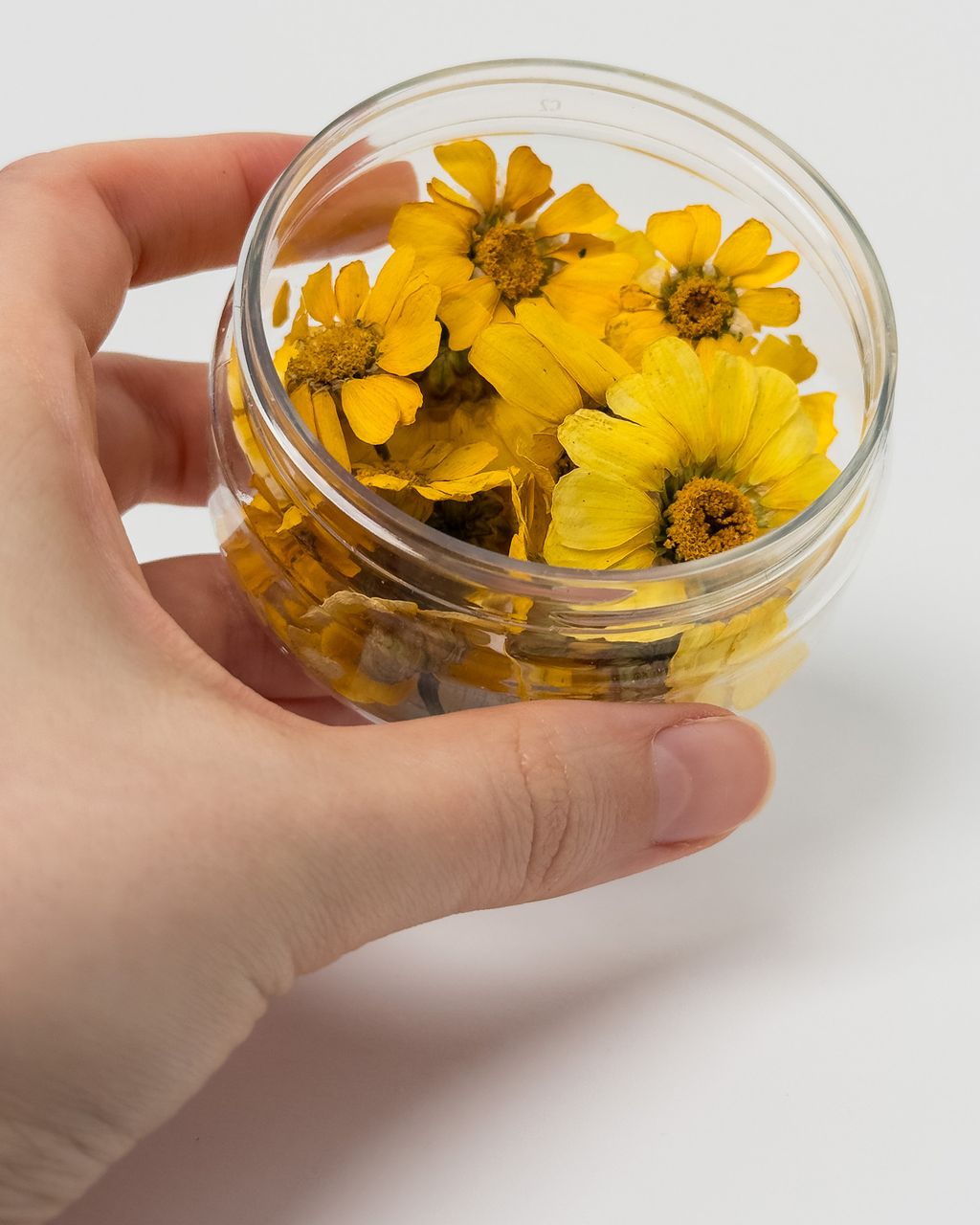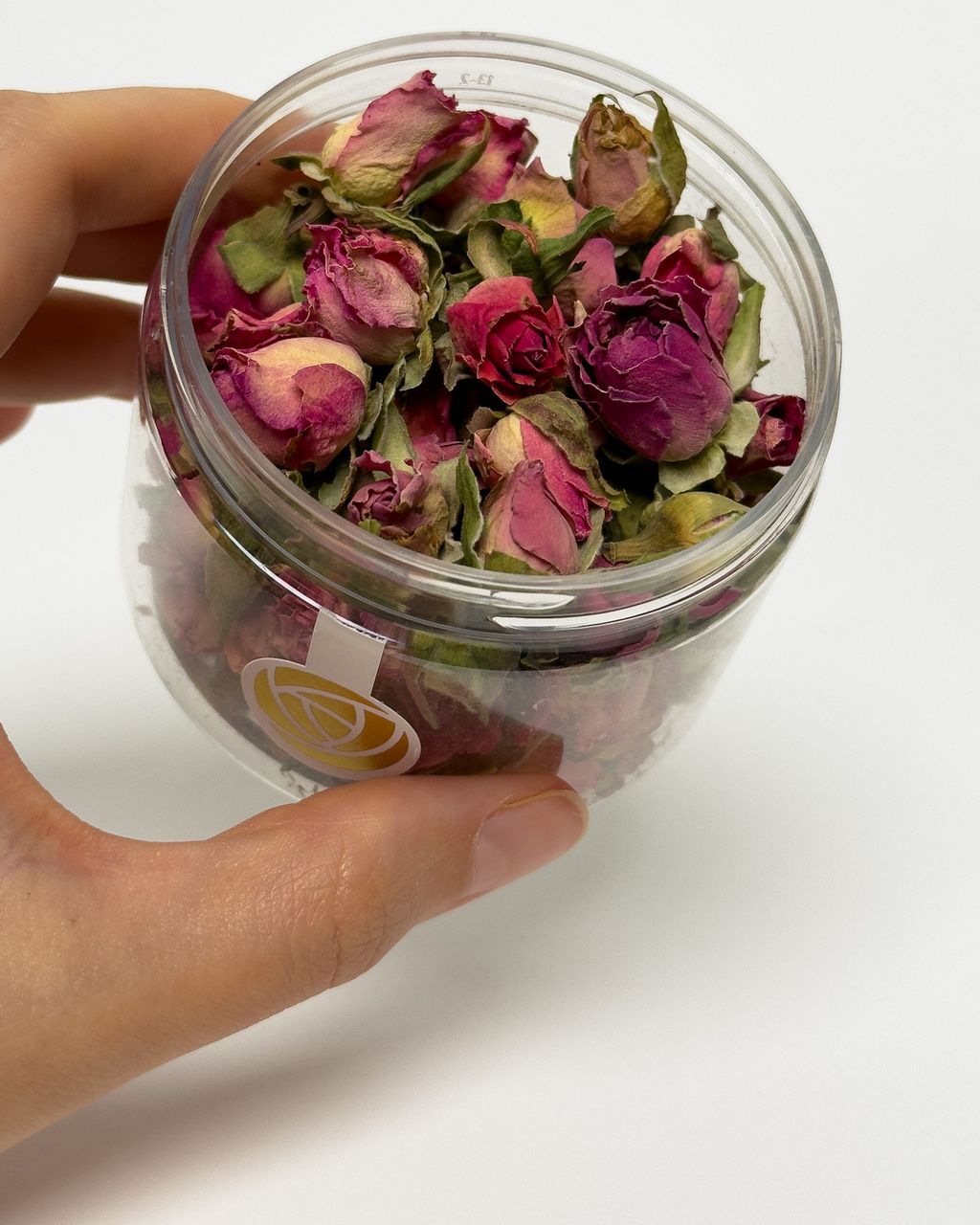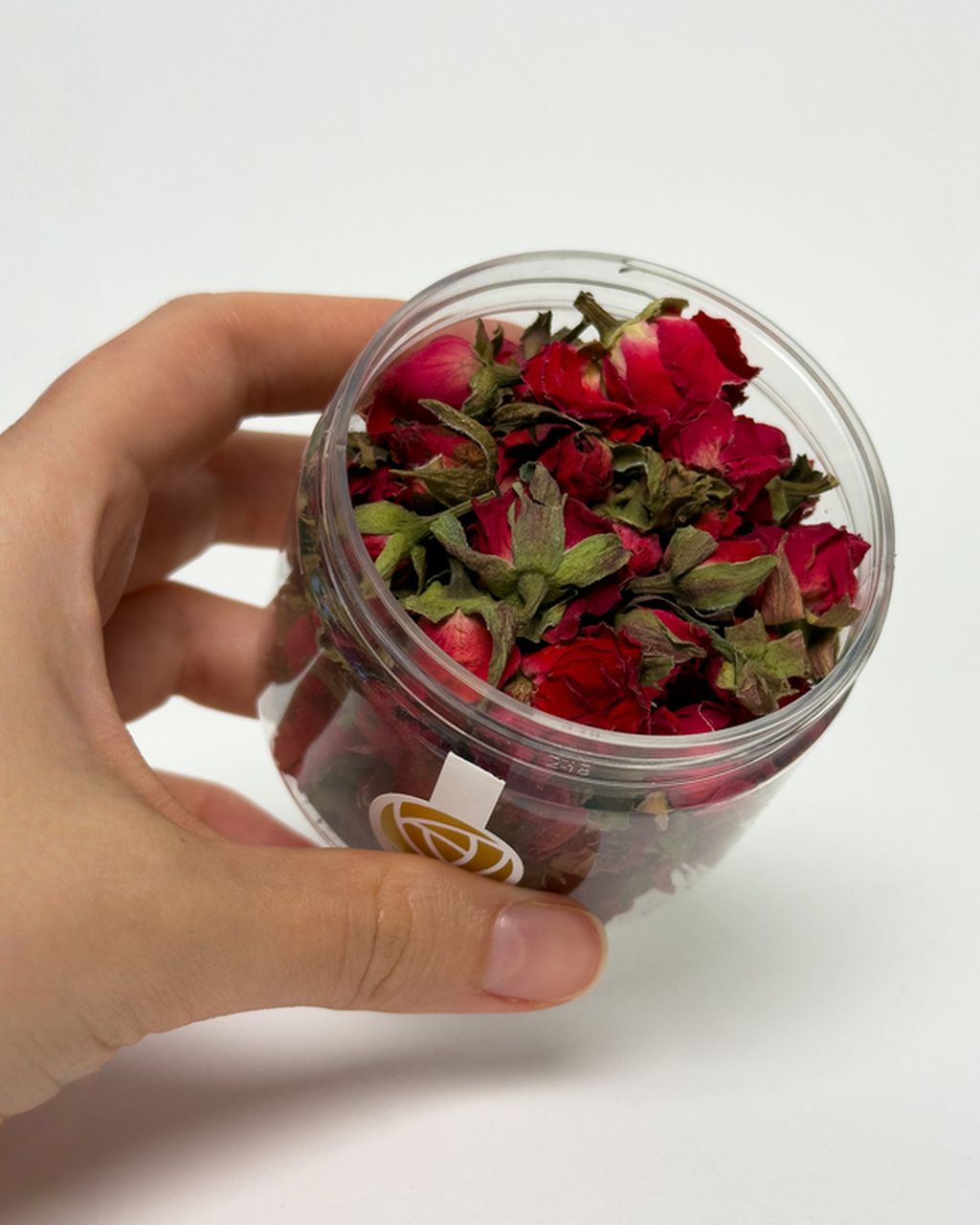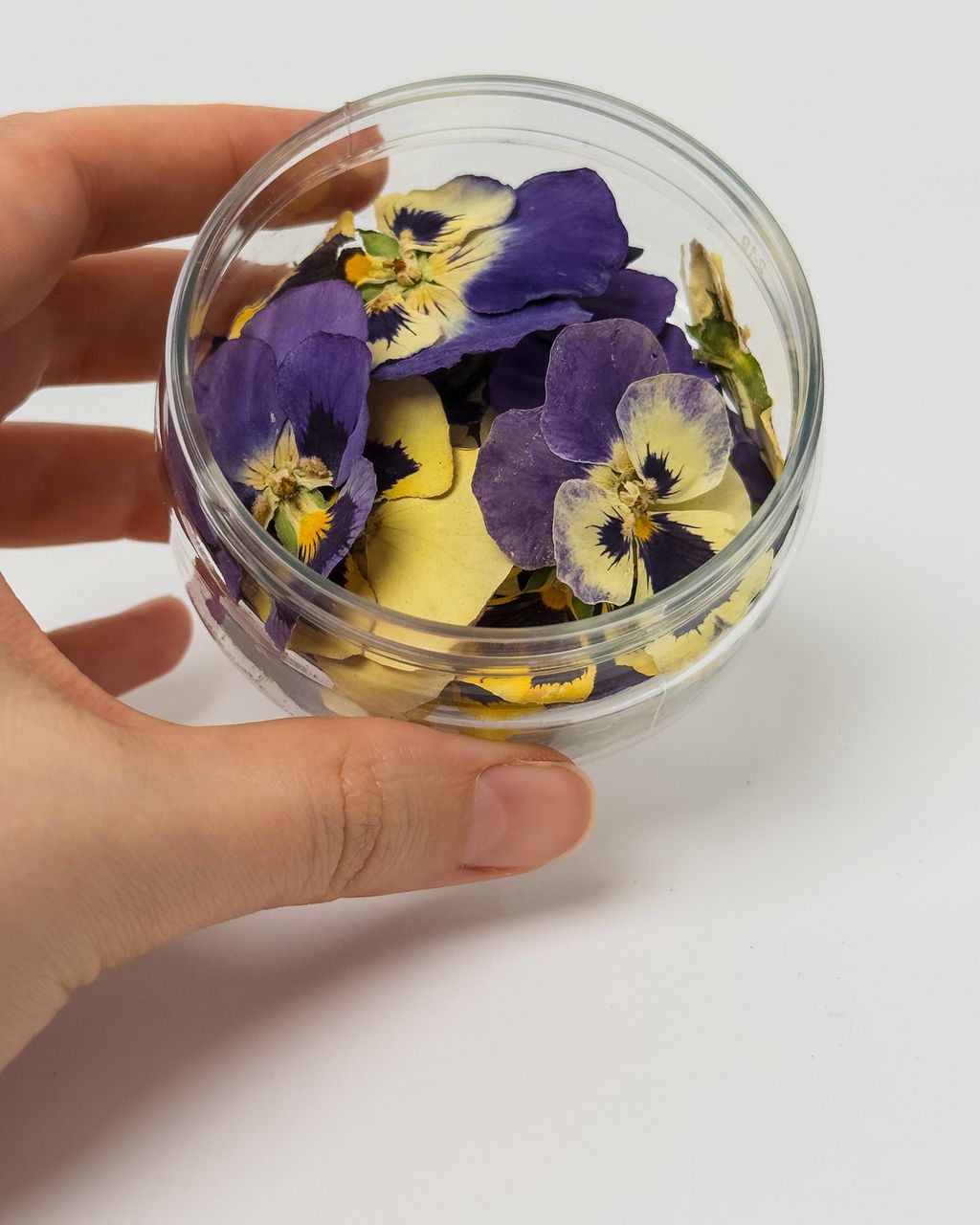
Dried Flowers – Pansies
Dried Edible Flowers & Rose Buds: Where to Use Them and How
Updated Oct 8, 2026
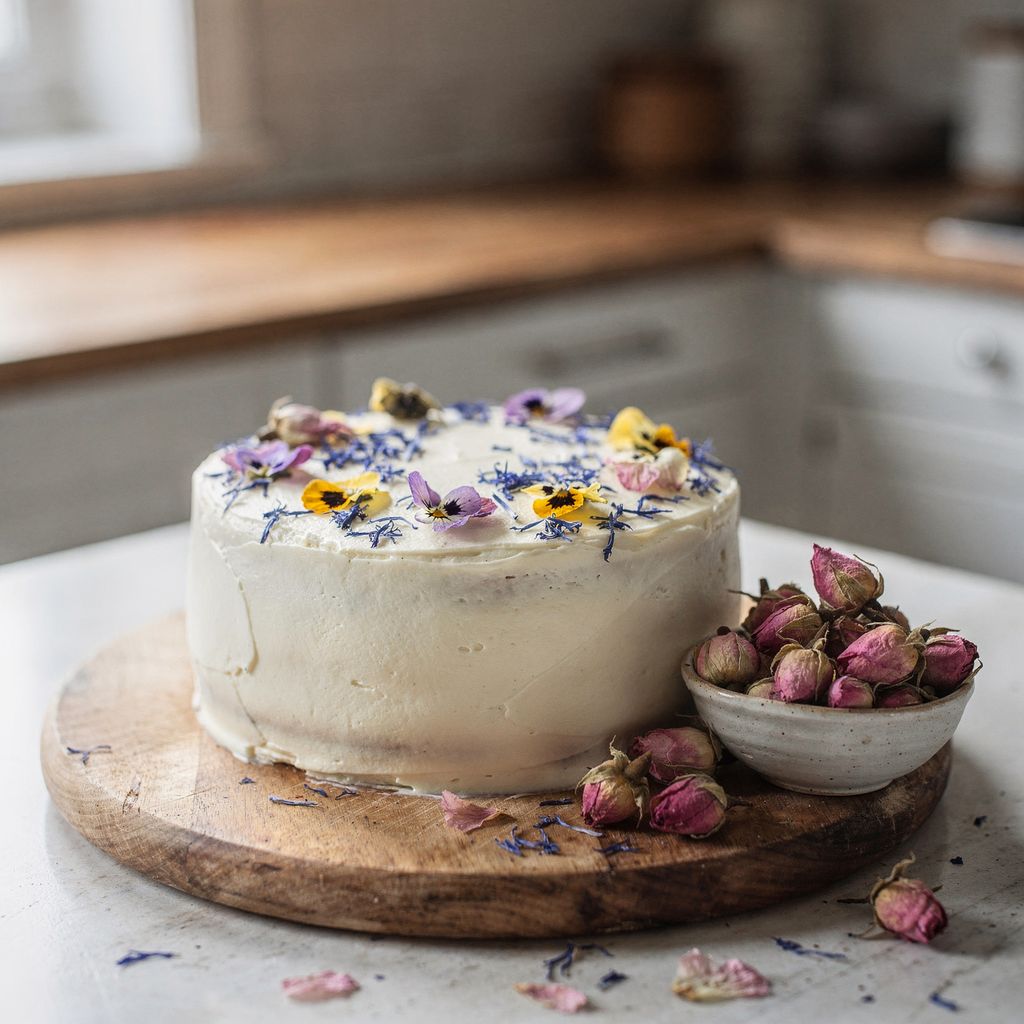
Dried edible flowers belong on desserts with a dry or fatty surface: buttercream, chocolate, icing, and biscuits. Add them to whipped cream or jelly only right before serving. Rose buds work best in drinks, syrup, and rose sugar. Unlike fresh flowers, they'll keep for months in a sealed container, so you always have them on hand whenever a dessert needs that finishing touch. Below you'll find which flower suits which use, how to work with them, and how they differ from pressed, freeze-dried, candied, and fresh flowers.
Dried edible flowers are grown as food and gently dried down to a low moisture content. That means they don't rot, they keep for months, and you don't need to grow your own. The trade-off is two things: they're delicate, and they'll soak up moisture from a wet surface, wilt, and can bleed colour.
Fresh flowers are juicy and pliable, but they only last a few days, and you need to be certain they're edible and haven't been sprayed. Find out which ones qualify in our article Edible flowers: which ones are truly edible and which to avoid.
Dried flowers have a milder flavour and stay colourful. They're best for spots where moisture isn't an issue, or for finishing touches added at the very last moment.
One rule applies to both: only flowers sold as food belong on a dessert. Dried flowers from decorative bouquets or florists are often treated with chemicals and shouldn't be eaten.
In short: cornflower for sprinkling and for chocolate, pansies as the main decoration on a cake, daisies and yellow marguerites for small decorations and biscuits, rose buds for drinks, syrup and sugar, as well as a bold accent on a cake.
Cornflower – deep blue, thin petals. The flavour is nearly neutral, so it works as an all-purpose colourful sprinkle. Use it to decorate the edge of a cake, chocolate bars, granola, and macarons. Besides blue, there are also mixes with pink, white and purple – you'll find them among our dried edible flowers for cakes.
Pansies – whole, flat blooms with such a striking pattern that they work as a standalone feature, so you only need a few per cake. They're the most delicate, so pick them up with tweezers.
Daisies – small white flowers with a yellow centre. Great on cupcakes, biscuits, and anywhere you want a fresh, meadow-like feel.
Yellow marguerites – whole yellow flowers. Don't confuse them with meadow daisies, which are white with a yellow centre. They pair well with lemon and apricot desserts and add a warm pop of colour to white icing and white chocolate.
Rose buds – whole dried buds with a strong fragrance. On a cake they're sturdy and last the longest, but their real strength is in the kitchen: in tea, syrup, lemonade, and for flavouring sugar. Rosie Rose comes in several shades from dusky pink to cherry red, so you can match them to the colour of your frosting.
Whether dried flowers hold up depends on how moist the surface is. On buttercream, chocolate and fondant they'll last several days; on whipped cream and fruit jelly they wilt within a few hours.
Buttercream, cream cheese frosting with butter, ganache: press the flowers on while the surface is still slightly tacky, so right after smoothing it out or after 10–15 minutes in the fridge. They'll then stay put on their own for roughly 2–3 days.
Whipped cream, mascarpone cream, jelly, fruit: add the flowers just before serving, ideally within 1–2 hours. If the cake needs to wait, sit them on a small island of buttercream or a chocolate disc rather than directly on anything moist.
Fondant and sugar icing: dab the spot with a drop of water or edible glue and press the flower on. Decorate while the icing is still wet, so it sets around the flower.
For this job you'll need tweezers. Fingers are too clumsy for pansies and buds, and the petals will break. Sprinkle cornflower from a height of about 15–20cm (6–8in) for a more even spread. A few grams of petals is plenty for the edge of a cake, since they're so light.
You'll find every flower we stock in one place in our dried edible flowers for cakes category. If you're decorating a cake with fruit and fresh flowers too, check out our guide to decorating fruit cakes step by step.
Dried flowers suit chocolate best of all: the fat protects them from moisture, so they last as long as the chocolate itself.
Chocolate bars and bark: pour tempered chocolate into a mould or onto paper and wait 2–5 minutes until it starts setting at the edges, then press the flowers on lightly. If you add them straight into liquid chocolate, they'll sink in and disappear. For more techniques, see chocolate decorations: techniques you can master at home.
Dipped sweets and pralines: sprinkle flowers on right after dipping, while the chocolate is still wet. For tips on getting a shiny finish, see homemade chocolate pralines, from choosing chocolate to decorating.
Biscuits and linzer cookies: press flowers onto the dough before baking only at low temperatures with a short baking time (up to 170°C/340°F and around 10 minutes), since they brown at higher heat. It's more reliable to stick them on after baking, onto a thin layer of icing or white chocolate. For more ideas, see our roundup what to decorate biscuits with, from sprinkles to edible gold.
On white chocolate, blue cornflower and dried yellow marguerites really stand out. On dark chocolate, pale daisies and dusky-pink rose buds look best.
Rose buds come into their own where they can release fragrance: in tea, syrup, sugar and cream. As a cake decoration, they're more of a secondary role.
Tea and infusions: use roughly 5–8 buds per 250ml of water at around 90°C (195°F), steeped for 5 minutes.
Rose syrup and lemonade: add the buds to hot sugar syrup, let it cool, then strain. Use the result in lemonade, a cocktail, or to soak a cake base. For inspiration, try our recipe for a homemade rose and ginger mocktail. The basic syrup method is shown in our homemade lemonade and other syrups recipe.
Rose sugar: grind about 1 tablespoon of buds with 100g of sugar and let it sit for a few days in a sealed jar. Use it to sprinkle over cakes, or stir into whipped cream or buttercream.
Rose-infused cream: let the buds steep overnight in cold cream in the fridge, then strain and whip. The result is a delicately pink whipped cream, no essence needed.
On a cake: whole buds are sturdy, won't break, and hold their shape in buttercream. On a cake, they look best grouped in clusters of 3–5.
Rose is a strong flavour. Start with less and add more gradually, because an over-roséd syrup ends up tasting like soap.
For most home desserts, dried flowers are all you need: they last the longest and are the easiest to work with. Pressed, freeze-dried, candied and fresh flowers each have their own specific uses.
Dried (what we sell): check the label for shelf life — dried flowers typically keep for several months. They're easy to store and ideal for frosting, chocolate and drinks. Their weak point is moisture.
Pressed: flat, so they can be stuck onto the sides of a cake or onto biscuits like a picture. We don't sell pressed flowers, but you can press your own edible flowers at home or buy them elsewhere. They must be food-grade, not craft flowers.
Freeze-dried: keep their volume and colour better than regular dried flowers, but cost more and pull moisture from the air faster. We don't carry these either.
Candied (sugar-coated): the classic treatment for violets and rose petals. They're sweet, crunchy and keep for months, but they're labour-intensive to make. We don't carry these.
Fresh: the most natural look, but they only last 1–3 days and you need to be certain they're edible and unsprayed. See our guide to edible flowers.
If you're torn between flowers and other decorations, check out cake decorating for beginners: 7 techniques you can nail on the first try or edible gold and shimmer dust for cakes.
Store dried edible flowers in a sealed container, somewhere dry, dark, and at room temperature. This keeps their colour for the longest time.
Light is colour's biggest enemy. On a shelf by a window, cornflower will fade within a few weeks.
The fridge isn't the place for these. Moisture condenses on the flowers when you take them out, and they go soft.
An open bag should be sealed tightly. If the flowers turn soft and lose their crispness, they've absorbed moisture. If you spot any staining or a musty smell, throw them out.
For a 20cm (8in) cake, 1–3 pansies as the main feature, 3–5 rose buds, and a pinch of cornflower are usually enough — just a few grams in total. Dried petals are very light, so one pack will cover several cakes.
Yes, dried flowers from herbal tea are fine to use on a cake since they're a food product, but flowers from decorative bouquets or florists are not. Just keep in mind tea flowers are often broken up and less vibrant than ones meant for decorating.
You can mix dried edible flowers into batter or frosting, but they'll lose their colour in batter and bleed colour into frosting, so they'll flavour it more than decorate it. Ground rose buds work well in batter for the fragrance. Save colourful cornflower petals for the surface instead.
Dried cornflower, daisies, and marguerites are all part of the daisy (Asteraceae) family, so if you're allergic to this family — ragweed or chamomile, for instance — be cautious. If you're unsure, check with a doctor, and let your guests know what the dessert is decorated with.
You can put a cake decorated with dried edible flowers in the fridge, but it's best to freeze it undecorated. In the fridge, keep the cake in a box or under a dome so the flowers don't pick up moisture or odours, and take it out only right before serving. During thawing, condensation forms on the surface and the flowers wilt and bleed colour, so decorate a frozen cake only after it has thawed.
One recipe worth heating the oven for, one tip, and one deal from the shop. Nothing else.