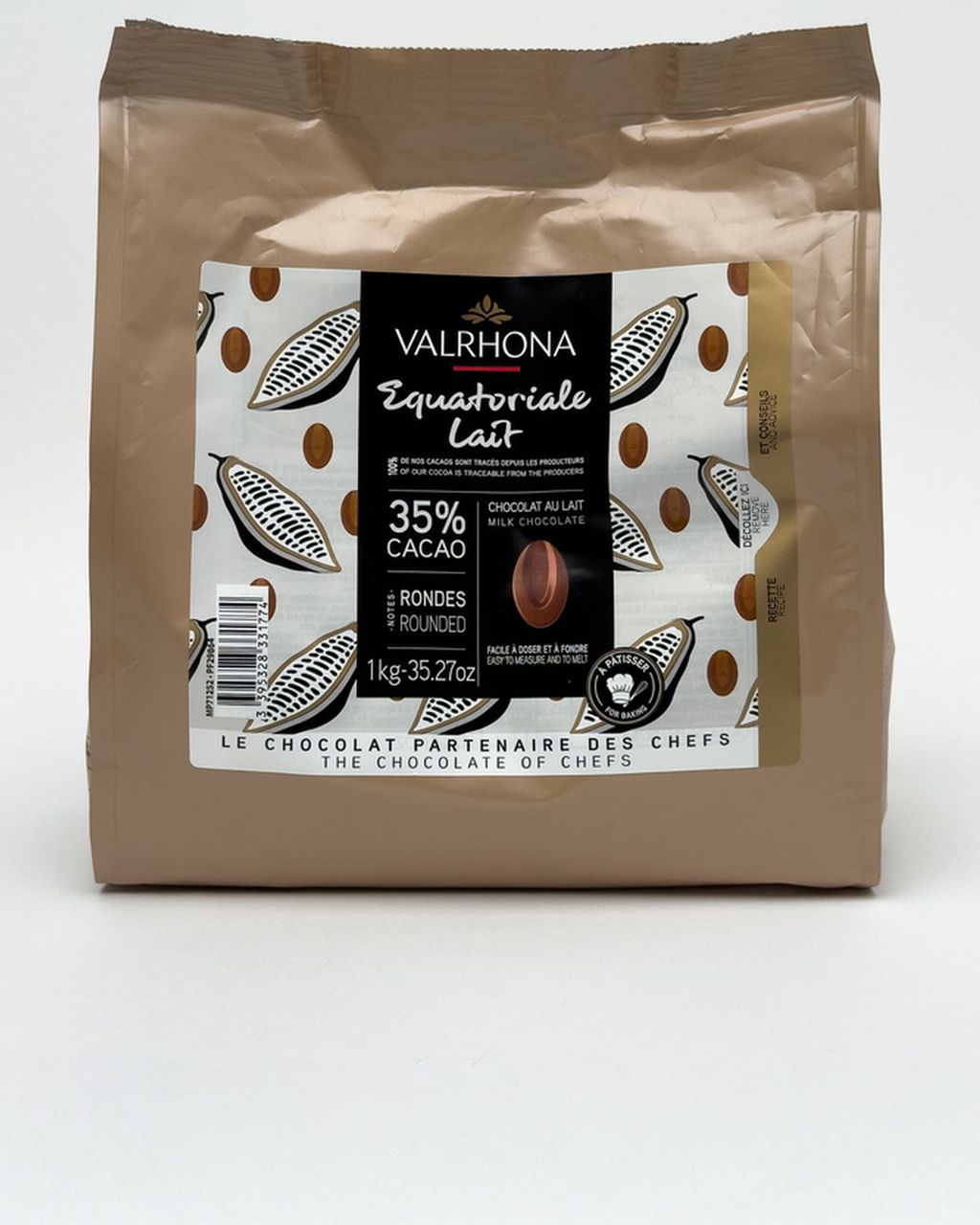
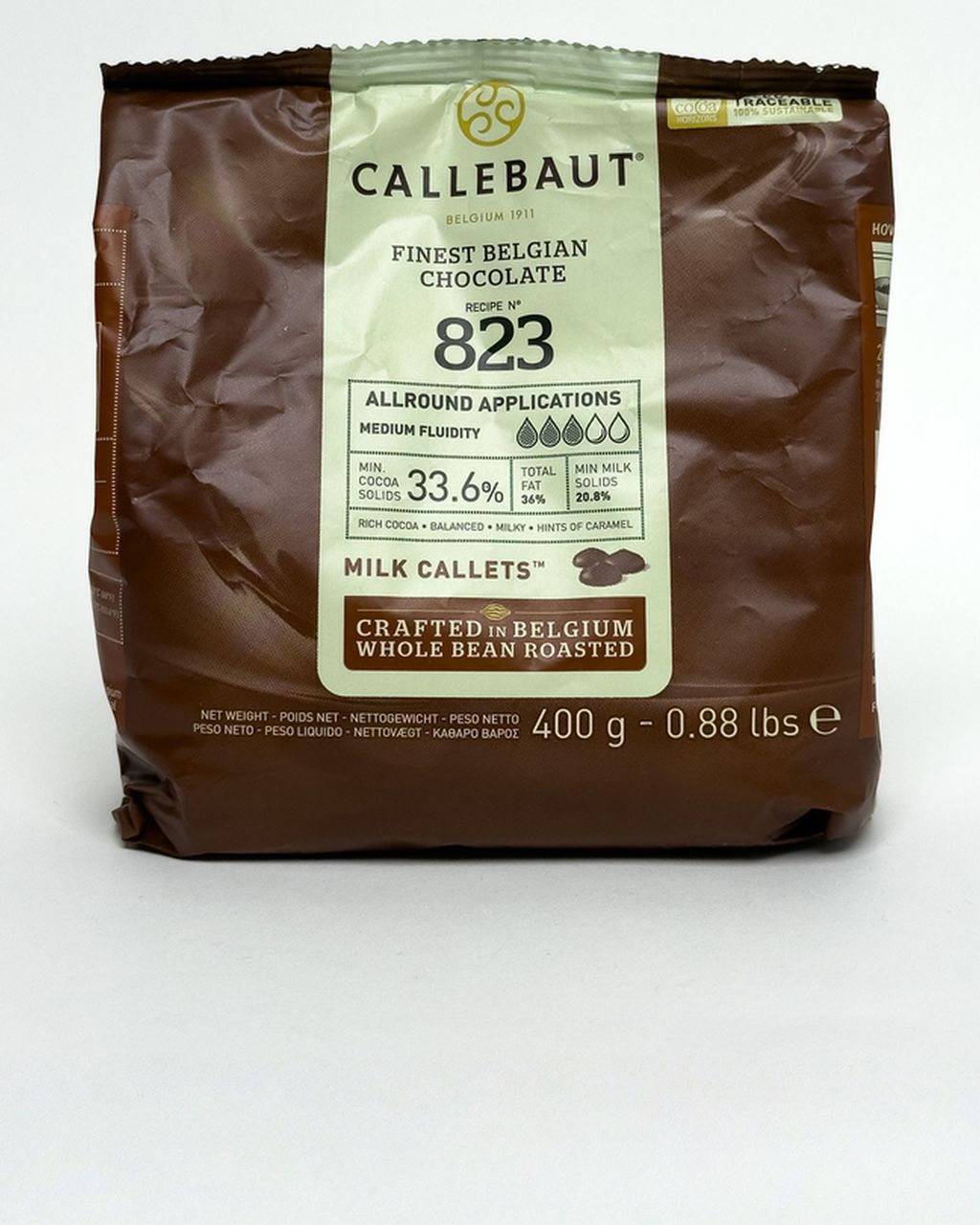
Callebaut Dark Chocolate Callets (811) 400g
Callebaut or Valrhona: Which Couverture to Choose for Baking and Pralines
Updated Oct 8, 2026
Callebaut or Valrhona? For baking and ganache, Callebaut is all you need: it's reliable, tempers easily and costs less. Valrhona is worth it when chocolate is the main flavour, or when you need a thin coating for praline shells and dipping. Callebaut rates fluidity with drops (811 scores 3 out of 5); Valrhona doesn't use this scale, though it does describe its milk Equatoriale Lactée as more fluid, developed specifically for dipping and moulds.
Use Callebaut for baking, and save Valrhona for pralines with a thin shell and desserts built entirely around chocolate flavour. Here's how to decide:
Brownies, cakes, cookies, cake glazes: Callebaut 811. Any flavour difference gets lost among the butter, sugar and flour anyway.
Cake ganache and cream fillings: Callebaut does the job just fine. Valrhona only makes sense where chocolate has no competition, like in a pure chocolate mousse.
Praline shells and dipping: Valrhona Equatoriale. Valrhona itself lists its milk Equatoriale Lactée as more fluid, so your shells come out thinner and the dipping more even.
Just starting out with tempering: Callebaut. It forgives more mistakes, and it won't sting as much if you ruin a few hundred grams while practising.
Gift pralines and bars meant to be eaten on their own: Valrhona, if you want a bolder, cleaner cocoa flavour.
Callebaut is Belgian, makes reliable chocolate with a consistent taste batch after batch, and is easy to work with. Valrhona is French, builds its range around flavour profile and cocoa origin, and costs more. Both are couverture — chocolate with a higher cocoa butter content that can be tempered to a glossy, snappy finish. We explain why that matters in our article on couverture vs. baking chocolate.
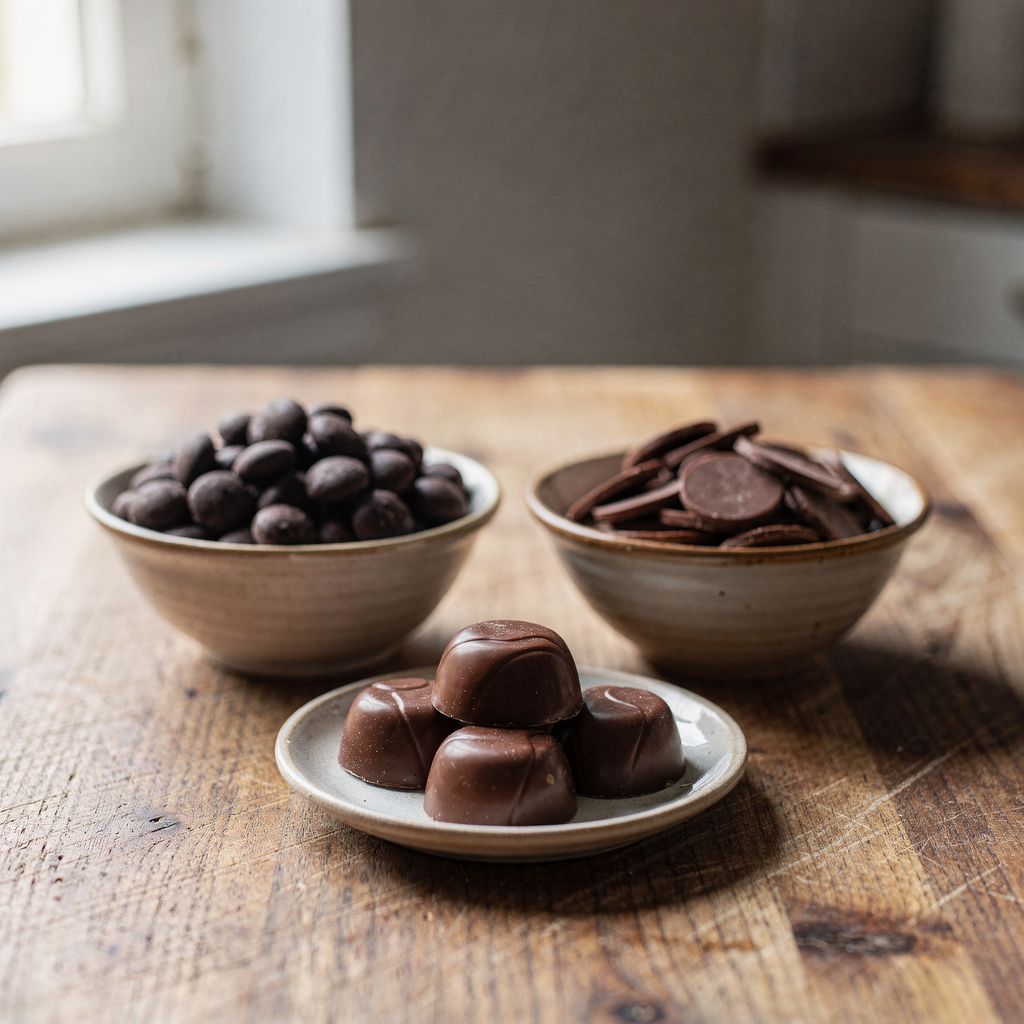
Shape: Callebaut sells small round pieces (callets), Valrhona flat oval discs (fèves). Both melt quickly and evenly, so there's no chopping involved.
Flavour: Callebaut 811 is balanced and rounded, with a pronounced cocoa taste and a slightly roasted edge. It works in almost everything and never overpowers. Valrhona Equatoriale is an equally all-purpose range, just with a softer, longer finish. Valrhona's bolder Grand Cru chocolates (Guanaja, Caraïbe and others) sit higher up in its more expensive lines.
Numbering: with Callebaut, the code refers to a specific recipe. We cover this in detail in what the Callebaut 811, 823, W2 and RB2 numbers mean.
Price: Valrhona tends to cost noticeably more per kilogram than Callebaut. It's not worth paying extra for baking, where the flavour difference disappears anyway.
Fluidity matters for pralines: the more fluid the melted chocolate, the thinner the layer it forms. Callebaut rates this on a 1–5 drop scale; Valrhona doesn't use this scale at all. It's driven by cocoa butter content, but also by how finely the chocolate is ground and its overall composition, so fat percentage alone won't tell you the fluidity.
Callebaut 811: 3 out of 5 drops, with 54.5% cocoa and 36.6% fat according to the maker. This is an all-purpose medium fluidity for baking, ganache, glazes and moulded work.
Valrhona Equatoriale Noire 55%: around 38% fat according to Valrhona's technical sheet. Valrhona doesn't give a drop rating for fluidity.
Valrhona Equatoriale Lactée 35%: Valrhona developed this one with higher fluidity specifically for dipping and moulds. Around 36% fat.
Callebaut 823 and W2: 3 out of 5 drops.
In practice, this means: with a more fluid chocolate, you'll tap out more excess from a praline mould, so the shell comes out thinner and the pralines snap instead of chewing. When dipping, the excess drains off faster, so you won't end up with a thick blob on the bottom. In batter or ganache, fluidity barely matters — you control ganache through the ratio of chocolate to cream, not the brand.
Callebaut 811 wins for baking. It's cheaper, tastes the same every time, and you won't notice the subtle difference from Valrhona once it's baked into a cake. Butter, sugar, eggs and heat all flatten chocolate's flavour, so you'd simply bake away the delicate fruity notes of a pricier chocolate.
Brownies and chocolate cakes: reach for 811, topped up with cocoa powder if needed. We go into how much chocolate to use and at what percentage in what chocolate to use for brownies and chocolate cake.
Cake glazes: 811 with a splash of cream or butter, like in our quick whole poppy seed cake with chocolate glaze.
Chunks mixed into batter: couverture melts in the oven because it has more cocoa butter than bake-stable chocolate chips, which hold their shape for that reason. Find out why this happens and what to use instead in chocolate chips for baking that won't melt away.
Where Valrhona is worth it even in baking: desserts where chocolate is essentially the only flavour. In a chocolate mousse or a chocolate tart with plain ganache and nothing else going on, you'll actually taste the difference, because there's nothing to mask it.
For praline shells and dipping, Valrhona Equatoriale Lactée has the edge — Valrhona developed it with higher fluidity, so it gives a thinner, more even coating. Callebaut 811 works for pralines too, and plenty of chocolatiers use it. The shell just comes out a touch thicker, and you'll need to tap the mould a bit longer to clear the excess.
Moulded shells: more fluid chocolate gives a thinner wall. With Callebaut 811, work at the top end of its working temperature range, around 32°C/90°F (go above that and the chocolate loses its temper), and tap the mould out thoroughly.
Dipping sweets and truffles: more fluid chocolate gives a thinner, glossier coating. You'll find the full dipping method in how to dip sweets in chocolate so they stay glossy.
Ganache fillings: here the brand matters less than the ratio and shelf life — see praline fillings: ganache, caramel and fruit pastes. But if the filling has no other flavour besides chocolate, you'll notice the Valrhona.
Mould: for shiny pralines you need a polycarbonate mould; we explain the differences in polycarbonate vs. silicone praline moulds.
Honestly, if you're just starting out with pralines, you'll make fewer costly mistakes with the cheaper Callebaut. Switch to Valrhona once you've got tempering under control.
Use Callebaut 823 for baking and creams, and Valrhona Equatoriale Lactée 35% for milk chocolate shells, dipping and pralines. Callebaut 823 is sweeter with a creamy caramel note, so it's a safe bet in milk ganache for cakes and in glazes. Valrhona Equatoriale 35% is more fluid, and Valrhona describes it as easy to work with for dipping and moulds, so it suits thin milk chocolate shells better. It tastes less sweet, with more pronounced cocoa.
Watch the temperatures: milk chocolate tolerates less heat than dark. Melt it more gently and stick to the working temperature from the manufacturer's curve. Overheat it and it will thicken and lose its shine.
Dark Callebaut 811 and Valrhona Equatoriale Noire 55% are both worked at 31–32°C/88–90°F; the main difference is melting temperature (40–50°C/104–122°F vs. 55–58°C/131–136°F). Manufacturer figures:
Callebaut 811 (dark): melt at 40–50°C/104–122°F, cool to 27°C/81°F, work at 31–32°C/88–90°F.
Callebaut 823 (milk): melt at 45°C/113°F, cool to 27°C/81°F, work at 29–30°C/84–86°F.
Callebaut W2 (white): melt at 45°C/113°F, cool to 27°C/81°F, work at 28–29°C/82–84°F.
Valrhona Equatoriale Noire 55% (dark): melt at 55–58°C/131–136°F, cool to 28–29°C/82–84°F, work at 31–32°C/88–90°F.
Valrhona Equatoriale Lactée 35% (milk): melt at 45–48°C/113–118°F, cool to 27–28°C/81–82°F, work at 29–30°C/84–86°F.
The easiest method is seeding: melt two-thirds of the chocolate, stir in the remaining third as solid pieces or discs, and keep mixing until it drops to the working temperature. The pieces and discs are made for this and are already correctly tempered. Keep track of temperatures with a probe thermometer — guessing by eye simply doesn't work for tempering.
For thin dark shells, the best substitute for Valrhona Equatoriale Noire 55% is Callebaut 811 worked at the top end of its working temperature range, around 32°C/90°F; go above that and the chocolate loses its temper. We don't currently stock dark Equatoriale Noire. In our chocolate range you'll find Callebaut 811, 823 and W2, and for milk pralines, Valrhona Equatoriale Lactée 35%.
Yes — for baking, creams and ganache, you can swap Valrhona for the same type of Callebaut at a 1:1 ratio: dark for dark, milk for milk, with a similar cocoa percentage. Just watch the percentages: if the recipe calls for 70% chocolate and you use 54.5% Callebaut 811 instead, the ganache will turn out softer and sweeter. For praline shells, expect Callebaut to give you a slightly thicker shell.
Yes, you can mix dark Callebaut with dark Valrhona (and the same goes for milk chocolates) in ganache, creams and batter without any issues. When tempering a mix, it's safer to go with the lower of the two working temperatures, since each chocolate has a slightly different curve. For your first attempts at tempering, it's easier to work with just one chocolate at a time.
Store couverture somewhere dry, dark and cool (ideally around 12–16°C/54–61°F), well sealed, ideally in its original resealable bag. Don't put it in the fridge: moisture condenses on the surface, turning the chocolate grey and making it harder to temper. Check the packaging for the shelf life. Dark chocolate generally keeps longer than milk or white, since it contains no milk solids.
Grey film or white streaks that melt and smear under your finger are fat bloom: the chocolate wasn't tempered correctly, or it overheated again after setting. It doesn't affect taste or safety, just appearance. Re-melt and re-temper it following the manufacturer's curve. A dry, rough white coating that doesn't melt under your finger but disappears under a drop of water is sugar bloom from moisture instead.
Yes, if you work with chocolate regularly, since it works out cheaper per kilogram and keeps well with proper storage. If you only bake with chocolate a few times a year, a smaller bag will do.
One recipe worth heating the oven for, one tip, and one deal from the shop. Nothing else.