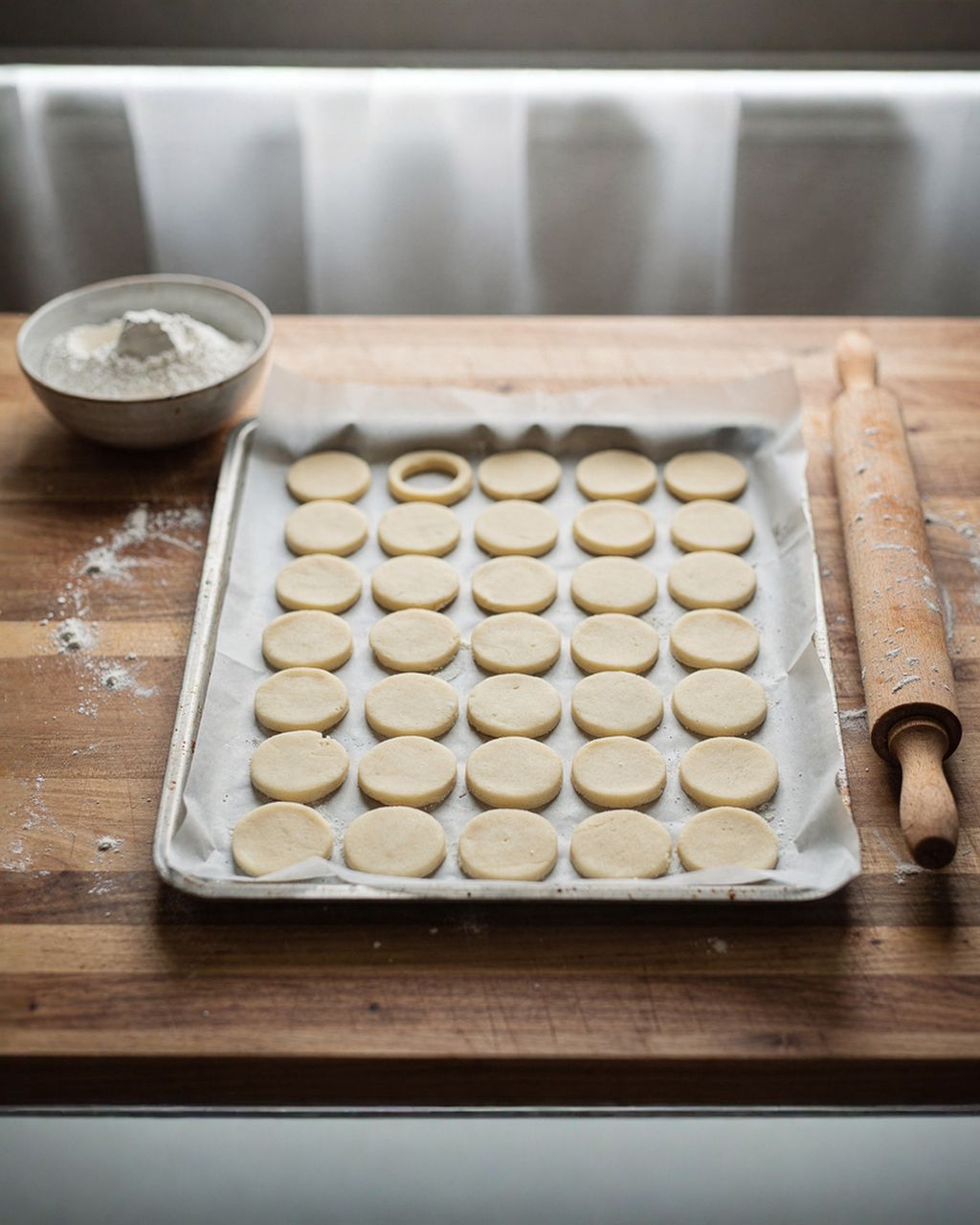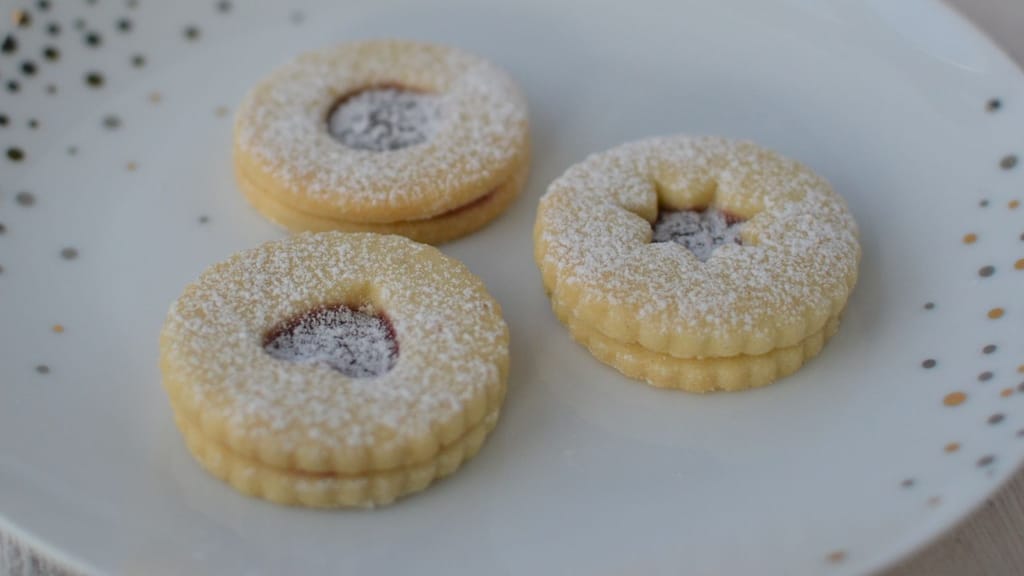
Classic christmas cookies: delicate linzer cookies
Why Cut-Out Cookies Lose Their Shape (and How to Fix It)
Updated Sep 17, 2026
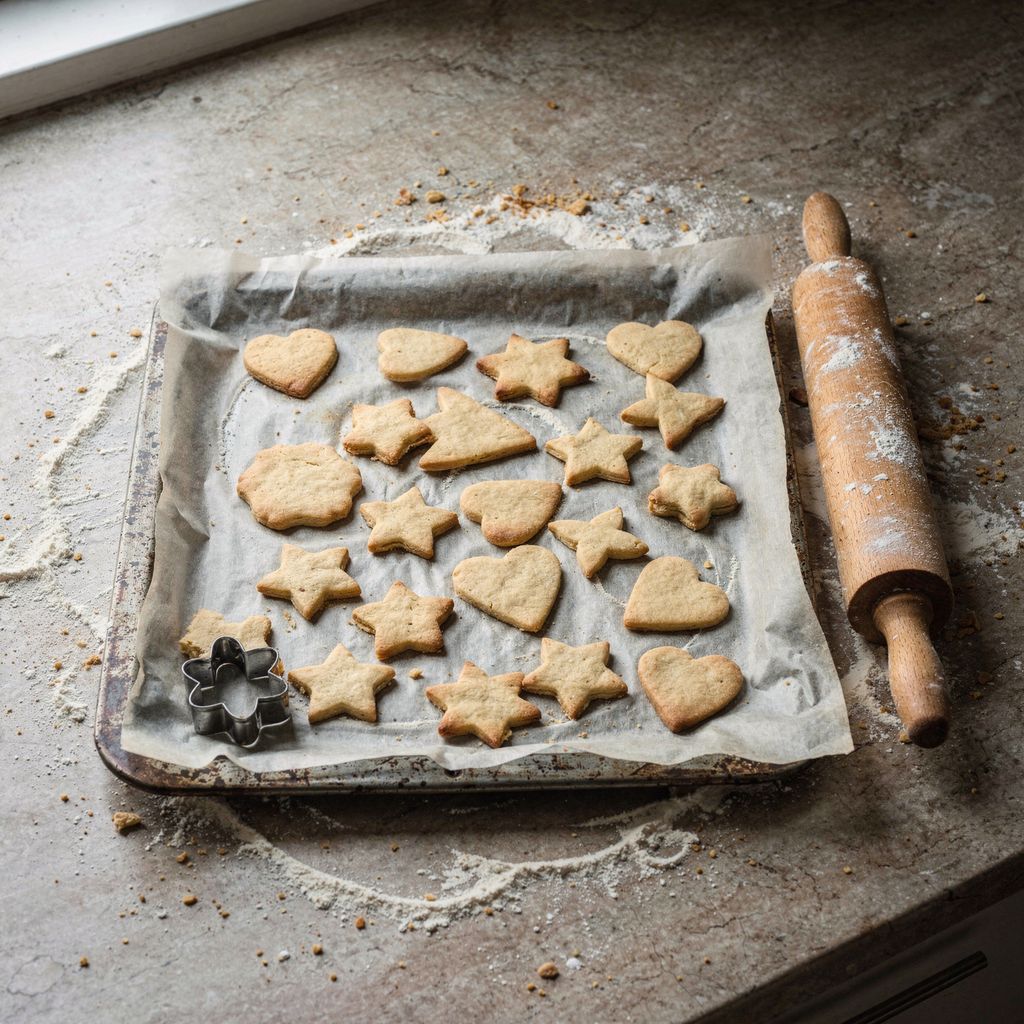
Cut-out cookies lose their shape because the fat in the dough melts before the flour-and-egg structure has a chance to set — and melted butter spreads to the shape of the baking tray, not the cutter. Seven specific culprits are behind this: butter that's too soft, warm dough, extra raising agent, an off-balance ratio of ingredients, overworked scraps from a second rolling, a cold oven or a hot tray, and too thin a sheet of dough. The good news is that almost all of these can be fixed before the tray ever goes in the oven.
Cut-out cookies spread for one of seven reasons:
The butter was too soft when you mixed it or already melted.
The dough went into the oven warm — it never got chilled again after cutting.
There's a raising agent in the dough that has no place in an intricate shape.
The ingredient ratio is off — too much fat or sugar, too little flour, an extra egg.
The scraps went through a third rolling and the dough is over-buttery and warm.
The oven was cold, or the tray was hot from the previous batch.
The sheet was rolled too thin for a large, intricate shape.
Below each cause you'll find the specific fix, in the same order. Almost every case boils down to one of two things: either the fat is too warm the moment it goes into the oven, or there's simply too much of it relative to the flour.
Butter for cut-out cookies should be roughly 16–18°C — firm but pliable, so that pressing it with a finger leaves a dent without smearing. Above 21°C it's already too soft and won't hold a shape.
Why this matters: it's a race in the oven. Butter melts and the dough spreads sideways, while at the same time the protein from the flour and eggs, plus the starch, is heating up and the structure is setting. Whichever process wins, wins. The softer the butter you put into the dough, the sooner the spreading kicks off in the cutter's shape — and the more time your star has to turn into a circle.
What to do about it:
Never melt butter or give it a quick blast in the microwave. Take it out of the fridge
30–45 minutes
beforehand, depending on how warm your kitchen is.If it's already too soft, pop it back in the fridge for 15 minutes. You can't fix this later — you won't get good shortbread dough out of butter that's gone runny.Butter with a higher fat content (
82%
Don't cream the butter and sugar into a fluffy, airy mixture. In cut-out dough you don't want air — you want structure. Just beat until combined.How to chill the dough so your cookies keep their shapeThe cut-out shapes need another
15–20 minutes in the fridge
(or 10 minutes in the freezer) right before baking — this is the one step most people skip, and on its own it fixes most problems.
Chilling works on two levels. Cold fat needs more time in the oven to melt, which delays the onset of spreading and gives the structure time to set. At the same time, resting lets the flour fully absorb the moisture and the gluten relax, so the dough rolls out more easily and springs back less.A method that works:Wrap the finished sheet of dough and chill it in the fridge
for at least 2 hours, or overnight if you like.Roll out and cut
just part of the dough at a time, keeping the rest in the fridge. By the time you finish the first sheet, a second one would have softened in a warm kitchen.Move the cut shapes onto a tray lined with baking parchment, then
put the whole tray back in the fridge
until the oven is properly hot. In winter, a cold balcony or unheated hallway works just as well as the fridge.Straight from the cold into a fully preheated oven. No waiting around on the counter.If you're preparing the dough ahead of time, take a look at
— a frozen sheet is actually even nicer to cut than a fresh one.
Raising agent in the dough: why it makes cut-out shapes spread
Intricate cut-out shapes have no business having a raising agent in the dough — no baking powder, no baking soda. Baking soda pushes the dough sideways: in a more alkaline dough the structure firms up later, giving the fat more time to spread. Baking powder, on the other hand, pushes the dough upward — the shape puffs up and any points or fine cut-outs round off.There is a difference depending on the type of dough, though:
Shortbread-style dough doesn't need any raising agent at all. Its shortness comes from the fat-to-flour ratio, not from gas.
Gingerbread
actually needs the baking soda — without it, it would come out hard and tough. That's why gingerbread cookies are usually cut into simpler, sturdier shapes, with the expectation that the edges will round off a little.If you're adding a raising agent to a recipe just "to make it lighter," for cut-out cookies you're undoing the very thing you're going for.If your recipe calls for a raising agent and your shapes keep spreading, try
first, and roll the sheet a touch thicker. Don't drop it completely from gingerbread, though — that changes the texture, not just the shape.Ingredient ratio: too much fat, too little flour, one egg too manyClassic shortbread-style dough is built on a
3:2:1 ratio
— 300g plain flour, 200g butter, 100g icing sugar. As soon as you shift to 250g flour for the same amount of butter, the dough starts spreading in the oven, and no amount of chilling will save the shape.Things to watch out for:
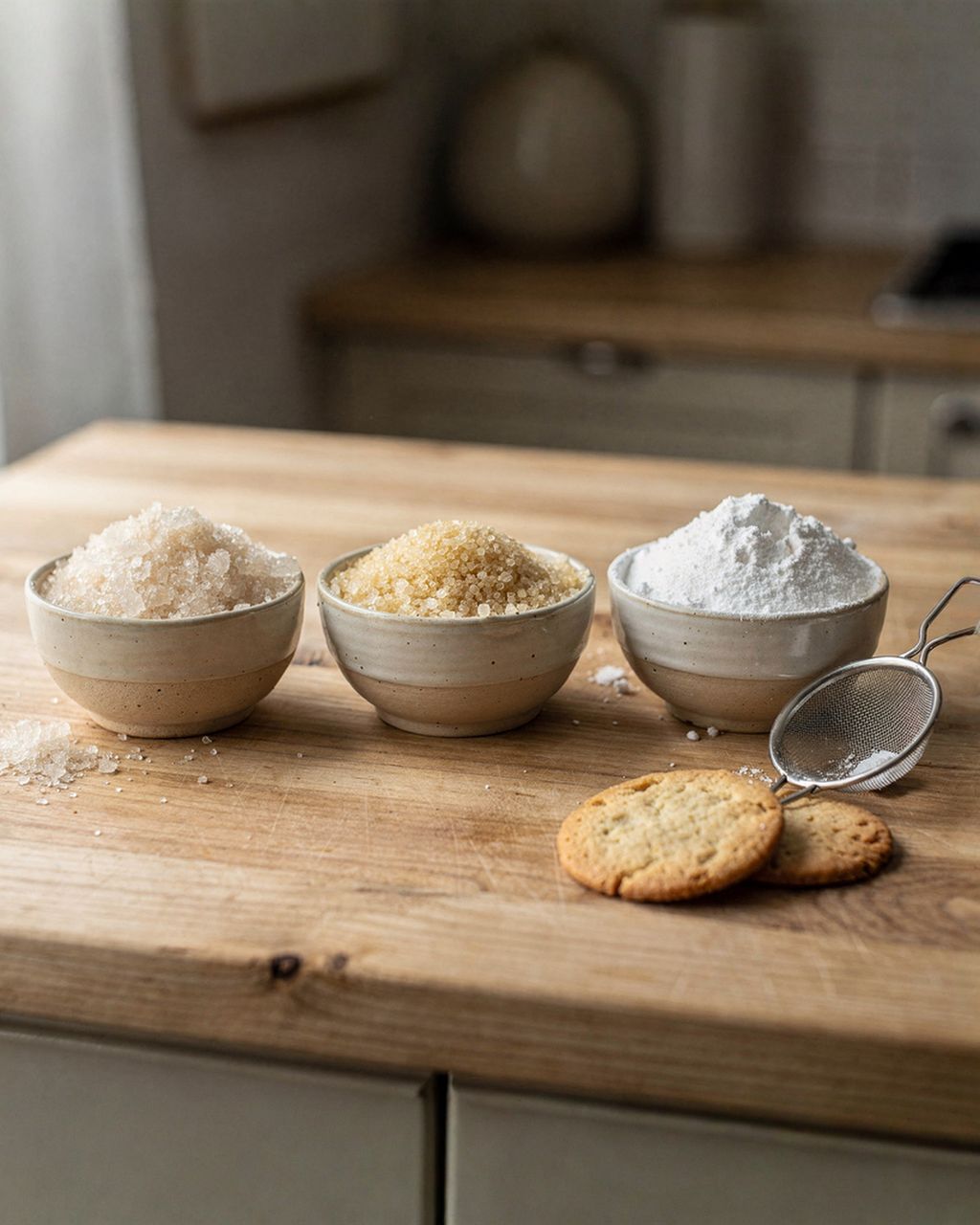
Eggs. Shortbread-style dough calls for egg yolk, not a whole egg. Egg white brings extra water, and water in the dough means more spreading and a tougher result.Sugar. Icing sugar usually contains a small amount of starch (an anti-caking agent, max 3%) and is finer — it dissolves sooner, so the dough holds together better than with granulated sugar. This is covered in detail in our article on
icing sugar vs granulated sugar in cookie dough.
Measuring. A "cup of flour" measurement can be off by 20g in either direction. With cut-out cookies, that difference shows. Weigh your ingredients.Extra flour isn't the fix. Stir another 50g of flour into a too-soft dough and it might hold its shape, but the cookies will turn out hard and dry. Chill it, don't flour it — more on this in our article on
why shortbread turns out tough and how to make it short and crumbly.And the opposite extreme: if your dough is cracking and won't hold together as you roll it, follow the advice in our article on
— don't just add more butter, because that creates exactly the problem we're solving here.
Overworked dough and scraps from a second rolling
Scraps spread more than the first batch for two reasons: the heat from your hands has softened the butter, and repeated rolling has developed the gluten, so after cutting, the dough first shrinks and then spreads in the oven.How to handle scraps properly:Press them back together
gently, don't knead them. Think new ball, not new dough.Before rolling them again, chill them
for 20 minutes in the fridge. Every single time.The biggest time-saver is cutting shapes
as close together as possible — fewer scraps means fewer problems.
Don't roll a third time. Instead, shape the third batch of scraps into balls you flatten with a fork, or use them for a crumble.Press the cutter
straight down and lift it straight back up.
If the dough sticks to the cutter, dip it in flour only very lightly and tap off the excess. Extra flour left on the surface of the shape will show once it's baked.What oven temperature keeps cut-out cookies in shapeBake cut-out cookies at 170–180°C in a thoroughly preheated oven, for roughly
8–12 minutes
depending on the size of the shape. A low temperature is, counterintuitively, worse than a high one: in a gentle oven, the butter has plenty of time to melt and spread before anything gets the chance to set.Three oven-related things that trip people up:Preheat it properly. The indicator light switches off before the oven is actually up to temperature. Give it another
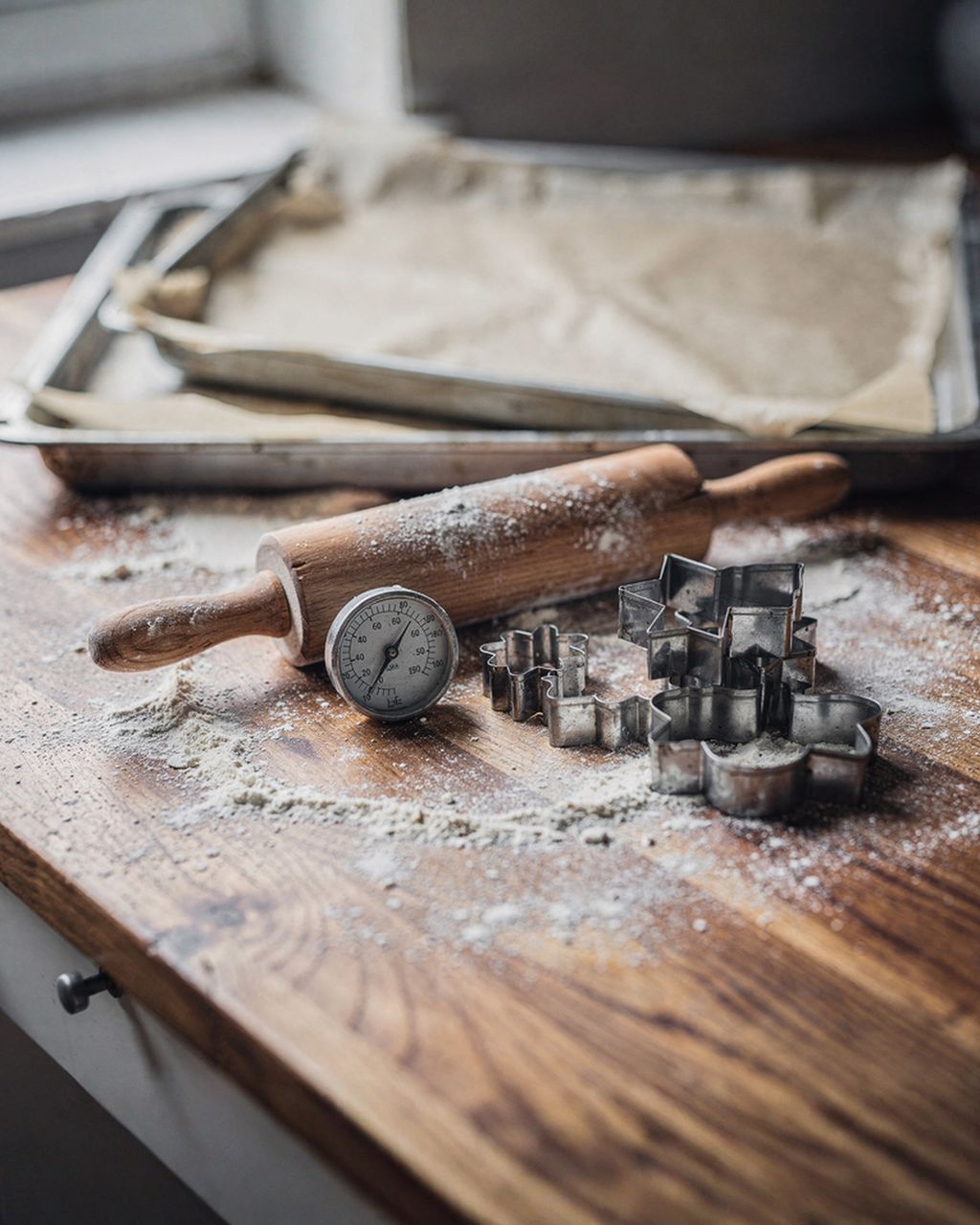
10–15 minutes on top of that. If you're not sure, pick up a cheap oven thermometer — home ovens are commonly off by 5–15°C, and older ones can be off by even more.
Let the tray cool between batches. A hot tray starts melting the dough before it even reaches the oven. Keep two trays and let them cool in rotation, or at least rinse the tray under cold water and dry it off.
Don't grease the tray. A greasy surface helps the dough slide outward. Use baking parchment instead.For a full rundown of temperatures and times by cookie type, see our article on
.Dough thickness and cutter sizeRoll cut-out cookie dough to
4–5mm. A thinner sheet heats through faster in the oven, but it also has less mass to hold the shape — thin points are the first thing to disappear.
Small, intricate shapes (little stars, snowflakes, detailed snowmen) do better at closer to 5mm and with a shorter bake.
Large shapes can get away with 4mm, but need 2–3 minutes longer.
Don't bake large and small shapes on the same tray. The small ones will overbake before the large ones are done, and if you try to finish off the large ones, the small ones will fall apart.
Roll between two sheets of baking parchment
— the edge will straighten back out. This only works for roughly the first 60 seconds, before the structure sets. After that, don't touch the shape at all, or you'll just crack the cookie. Leave the cookies on the tray for another 5 minutes to firm up before moving them — freshly baked cut-out cookies are soft, and they'll break if you move them too soon.
How to bake cut-out cookies so they keep their shape: step by stepCut-out cookies hold their shape when you roll the dough to 4–5mm, chill the cut shapes for 15–20 minutes in the fridge, and bake them straight from the cold at 170–180°C for 8–12 minutes. The full method, top to bottom:
Weigh your ingredients, don't use cup measures. Keep the butter at 16–18°C, no softer.
Don't cream it to a fluffy texture. Just combine the butter and sugar, then work in the egg yolk, and finally the flour — briefly, just until the dough comes together.
Wrap the sheet and chill it in the fridge for at least 2 hours, ideally overnight.
Roll out to 4–5mm, ideally between two sheets of baking parchment. Keep the rest of the dough chilled.
Cut shapes close together, pressing the cutter straight down and lifting it straight back up.Move shapes onto a lined tray and chill the tray
for 15–20 minutes in the fridge (or 10 minutes in the freezer).
Bake straight from the cold in a preheated oven at 170–180°C, for 8–12 minutes.
Let the tray cool between batches. Chill the scraps for 20 minutes too before rolling them again.And on planning ahead: most types can be baked well in advance. For timing by cookie type, see our Christmas baking calendar by cookie type, and to keep both shape and shortness intact until Christmas, check out
.
Shortbread-style dough holds the sharpest outline, gingerbread always rounds off a little, and custard-powder dough falls somewhere in between. Adjust your expectations accordingly: with gingerbread there's no point chasing a perfectly sharp point, while with shortbread every little detail holds up. Dough made with instant vanilla custard powder holds its shape surprisingly well — the starch binds moisture and slows down spreading — it's just softer to work with, so chill it just as carefully as shortbread.
Classic christmas cookies: delicate linzer cookies
Shortbread-style: the sharpest shape, the least room for error
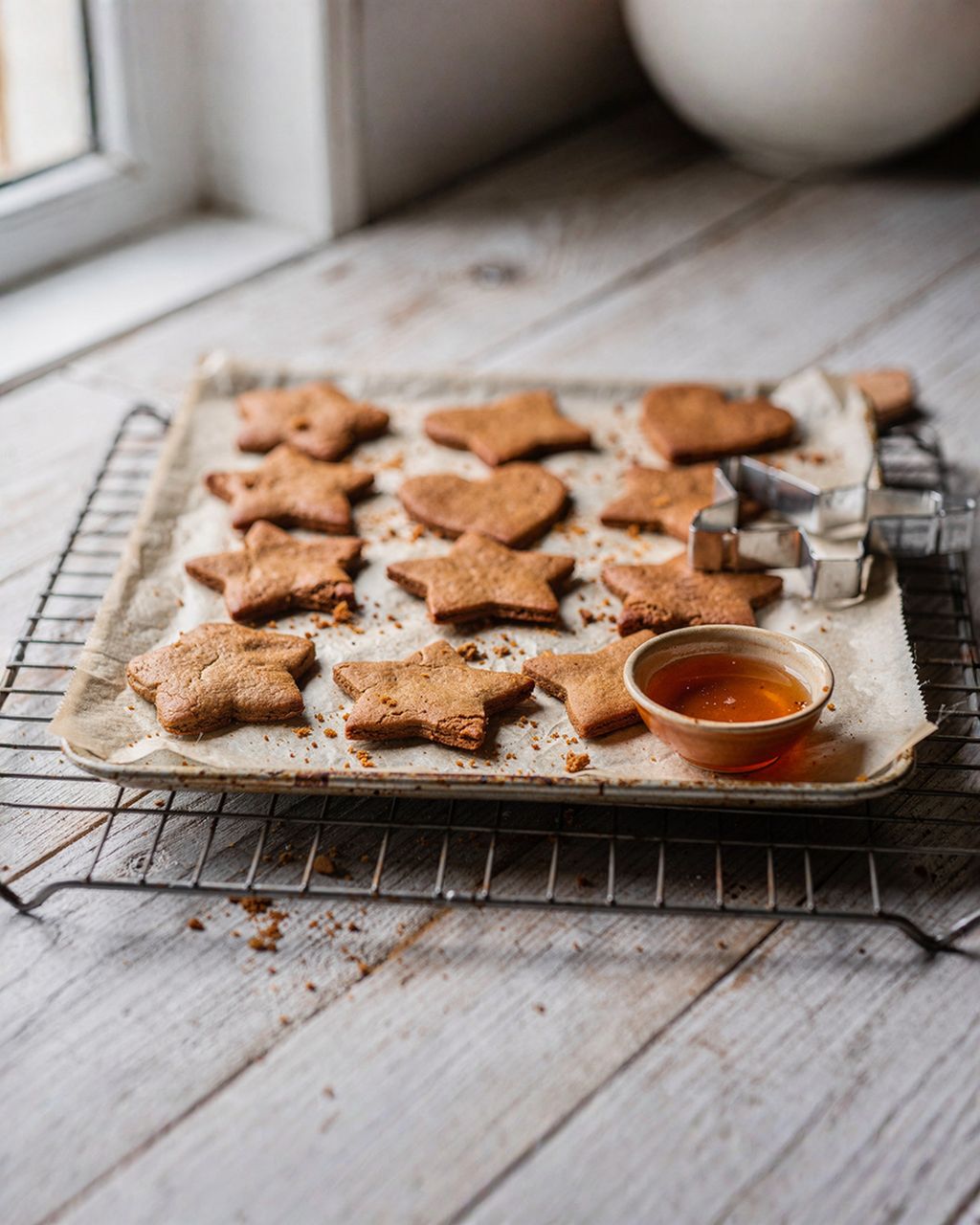
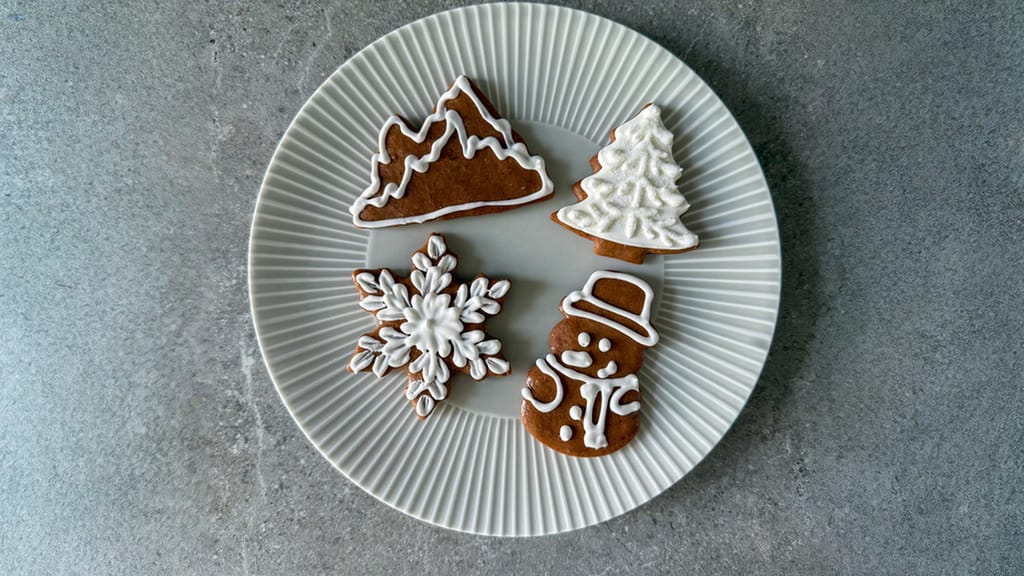
Classic short, crumbly shortbread — dough that holds its shape after cuttingGingerbread: the shape always rounds off a littleGingerbread dough contains baking soda and honey, so the edges spread and round off slightly in the oven — that's normal, and don't try to eliminate it entirely. What you can control: bake from well-chilled dough, cut simpler shapes without thin protrusions, and roll the sheet closer to 5mm. Honey and invert syrups in the dough also bind moisture, so gingerbread cookies gradually soften after baking — that's actually the point. For why they go hard and how to reverse it, see our article on
Soft honey gingerbread cookies that never go hard
why gingerbread cookies go hard and how to make them soft again
Yes — and for cut-out cookies, it's actually the most reliable way to keep their shape. Arrange the cut shapes on a tray, let them firm up in the freezer, then bake them frozen straight in the preheated oven, just adding 1–2 minutes to the baking time. Don't thaw them first: a thawed shape releases moisture, softens, and spreads more than a fresh one would.
They shrink because repeated rolling develops gluten in the dough, and that gluten pulls the shape back in on itself once it's cut. It helps to roll as little as possible and let the sheet rest in the fridge before cutting — relaxed gluten springs back much less. And don't stretch the shapes as you move them to the tray: lift them with a wide spatula or knife, because any stretching with your fingers comes back in the oven as a warped outline.
It helps a little, but it's a weaker fix than chilling, and it's not worth it for butter-based dough. After 20–30 minutes in the open air the surface dries slightly and the edges firm up, but at the same time the butter warms back up to room temperature — and that does more damage to the shape than the drying helps. For gingerbread, which has very little fat, air-drying works well; for shortbread-style dough, always go for the fridge instead.
Yes — solid baking fats (shortenings) have a higher melting point than butter, so they melt later in the oven and hold their shape a bit better. But you pay for that in flavour and shortness — butter cookies are noticeably better. If you do need to swap out some fat, don't go for a full substitution: try combining butter with a small proportion of solid baking fat, so you keep at least some of that buttery flavour.
Both work, but with a fan oven lower the temperature by about 20°C — bake at 150–160°C instead of 170–180°C, and expect the baking time to be a minute or two shorter. A fan oven heats the shape faster and more evenly, so the edges firm up sooner and the shape holds a little better; you can even bake two trays at once. With conventional top-and-bottom heat, always bake one tray at a time in the middle of the oven, or the bottom cookies will overbake.
Well-wrapped shortbread or gingerbread dough keeps in the fridge for 3–4 days, and in the freezer for a good 2–3 months. Wrap it tightly in plastic wrap or seal it in a container — otherwise the surface dries out, darkens, and cracks when rolled. After a longer rest, let the sheet sit on the counter for 10–15 minutes so it rolls out without cracking, then pop the cut shapes back in the fridge before baking.
One recipe worth heating the oven for, one tip, and one deal from the shop. Nothing else.