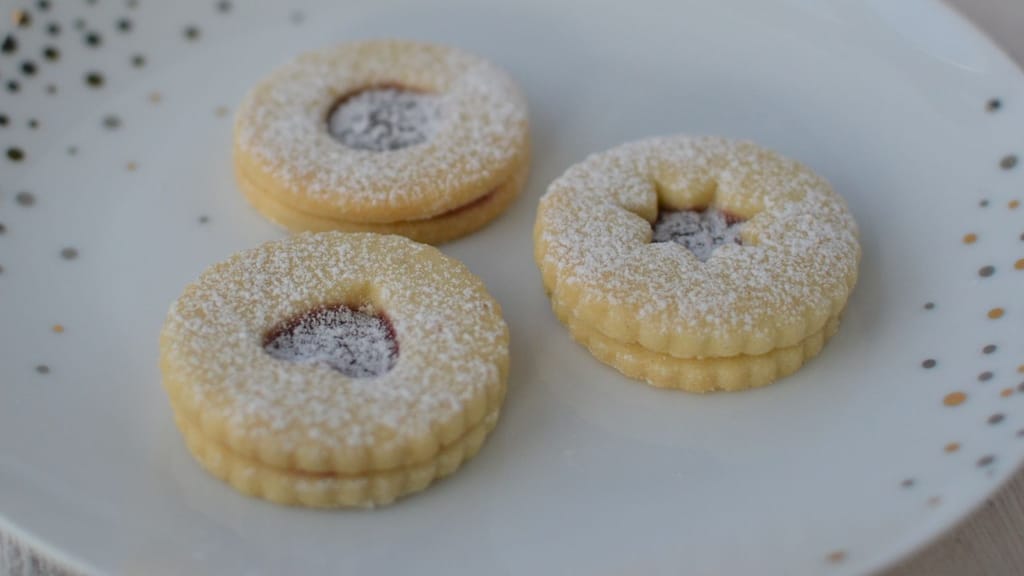
Classic christmas cookies: delicate linzer cookies
How to Cut Out Christmas Cookies So They Keep Their Shape and Sharp Edges
Updated Sep 25, 2026
To cut out Christmas cookies with sharp edges that actually hold their shape, you need three things: cold dough, a clean cut with the cutter, and a short chill for the cut-outs on the tray right before baking. Shape isn't just lost in the oven — it starts going wrong back on the counter, the moment the dough warms up, the cutter drags, and the shapes stretch out of true as you move them. We'll walk through the whole process from fridge to tray, with specific times and thicknesses, and cover how linzer cookies and gingerbread differ.
To cut out cookies, roll cold dough between two sheets of parchment to 3–5 mm, cut shapes with a cutter dipped in flour right on the paper, and chill the cut-outs for 15–20 minutes before baking. Here's the full process in seven steps:
Chill the dough for at least 1 hour in the fridge, wrapped in plastic wrap.
Let it soften for 5–10 minutes so it doesn't crack while rolling.
Roll it out between two sheets of parchment paper to an even thickness (3–4 mm for linzer dough, 4–5 mm for gingerbread).
Dip the cutter in flour before every single cut.
Cut straight down, without twisting, placing the shapes as close together as possible.
Peel away the scraps around the cut-outs, but don't move the cut-outs themselves.
Chill the cut-outs on the tray for 15–20 minutes in the fridge (or 10 minutes in the freezer), then straight into the preheated oven.
Cold butter holds the dough together and gives it the firmness a cutter needs for a clean cut. As soon as the butter softens, the dough sticks to the cutter, the edges smear, and the shape stretches while you lift it — even before it goes anywhere near the oven.
After mixing the dough, flatten it into a disc, wrap it in plastic wrap, and chill for at least 1 hour. A disc chills faster and more evenly than a ball, and it's easier to roll out afterward.
The right consistency feels like cold Play-Doh: press a finger in and it leaves a dent, but the dough doesn't smear or stick.
Dough that's too hard straight from the fridge cracks at the edges. Let it sit on the counter for 5–10 minutes, or press it gently a few times with the rolling pin — not your hands, since palms warm it up fast. If it still cracks after that, it's missing moisture: work in a teaspoon of cold water or a bit of egg yolk.
Work in batches. Take out only as much dough as you'll roll out for one tray, and leave the rest in the fridge.
In a warm kitchen (say, with the oven already running), the dough warms up within minutes. Once it starts sticking, don't reach for more flour — put it back in the fridge for 10 minutes instead. Every extra spoonful of flour makes the cookies tougher.
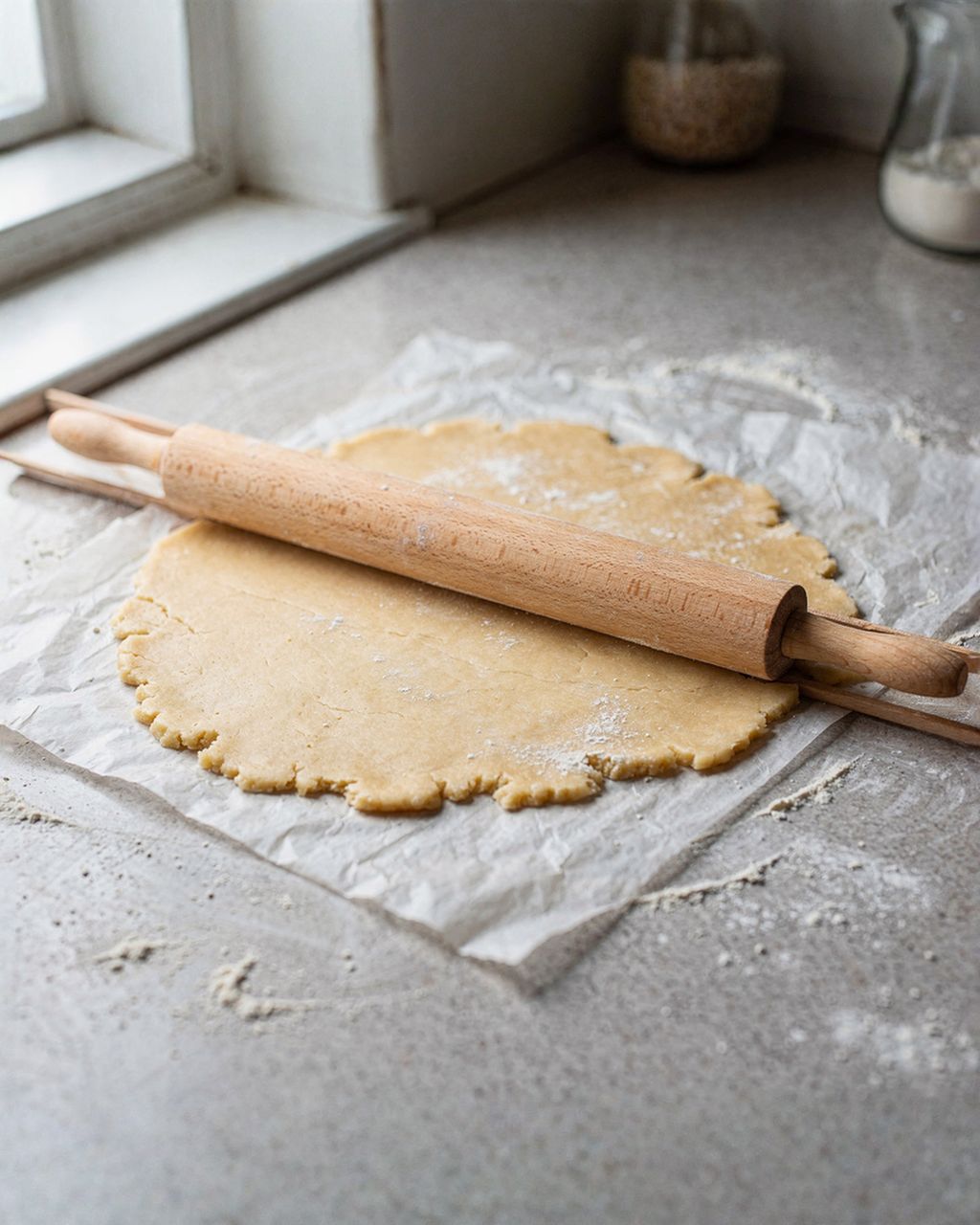
The most reliable way to roll out cookie dough without it sticking is between two sheets of parchment paper to 3–5 mm thick. You barely need any extra flour, the dough won't stick to the rolling pin, and if the rolled sheet softens, you can slide it — paper and all — into the fridge for a moment.
Thickness: 3–4 mm for linzer dough, 4–5 mm for gingerbread. Thinner cut-outs spread faster in the oven and overbake at the edges; thicker ones don't cook through in the middle.
Even thickness across the whole sheet matters more than hitting an exact number — cut-outs from a thinner edge of the sheet will brown before the ones from the middle. Rolling guides or two equally thick wooden dowels on either side of the dough help a lot.
Turn the sheet, not the rolling pin. Roll from the centre outward, and give the sheet a quarter turn every few passes. That way it doesn't stretch out in one direction, and the cut-outs won't shrink into ovals in the oven.
A sharp shape comes from a straight cut: press the cutter straight down with the whole edge at once, then lift it away.Don't twist it — twisting blurs the edge and stretches the dough at the points.
Dip the cutter in flour before every cut — for cocoa dough, dip it in cocoa powder instead. Tap off the excess. A thin coating is enough to let the shape release cleanly instead of sticking inside the cutter.
If a shape gets stuck in the cutter, don't dig it out with your finger. Set the cutter back down with the dough still inside and gently push the shape out from behind with a spatula or the handle end of a wooden spoon.
Metal cutters have a thinner, sharper edge than plastic ones, so they cut more cleanly — especially useful for small, detailed shapes with points, like stars or snowflakes.
Cut shapes close together, working from the edge of the sheet inward. Fewer scraps means less re-rolling — and more delicate cookies.
Cut-out windows and holes (for linzer tops) last, ideally after briefly chilling the sheet again. A tiny cutter in soft dough tends to squash a hole rather than cut it cleanly.
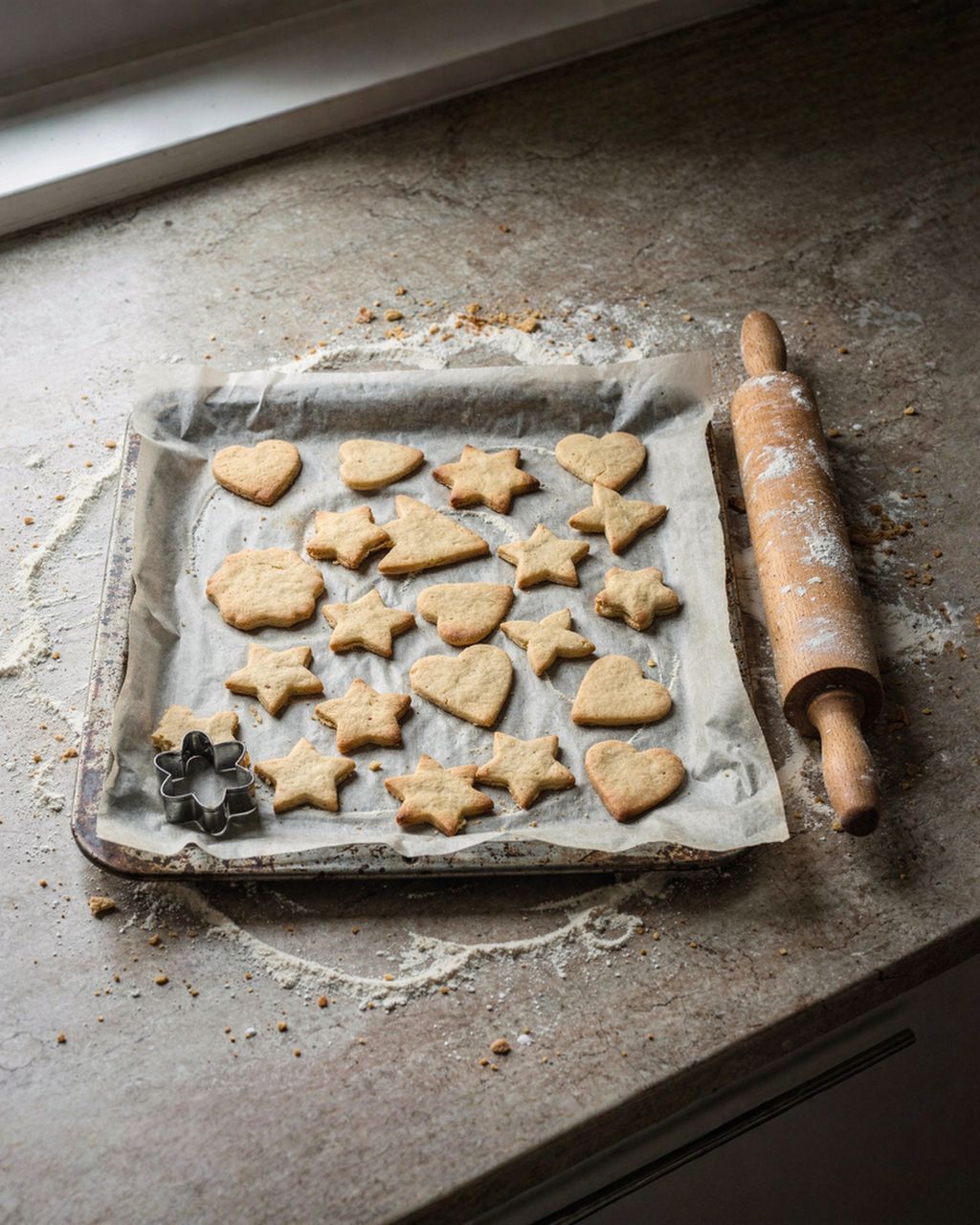
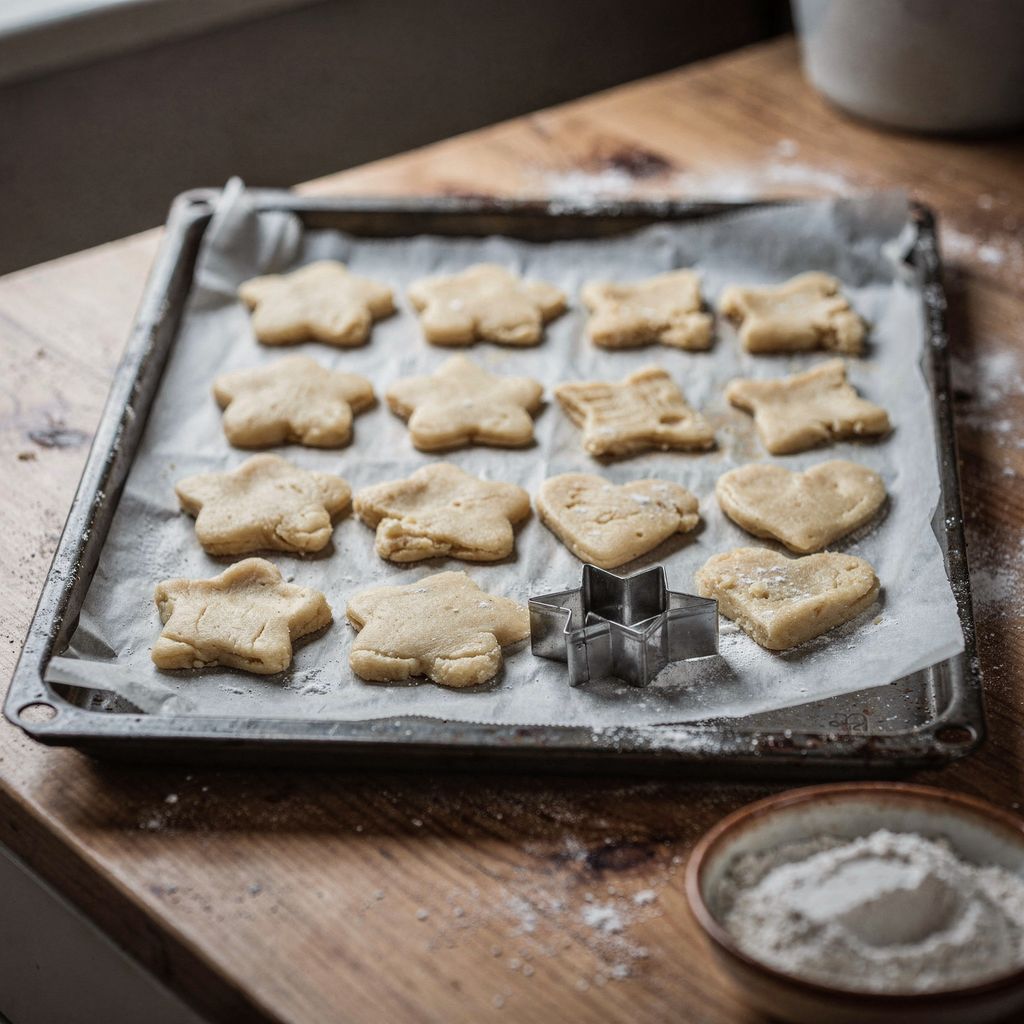
The best way to move cut-out cookies onto the tray without deforming them is not to move them at all: cut the shapes right on the parchment paper, then slide the whole sheet of paper onto the tray. Roll the dough on the paper, cut on the paper, and simply peel away the scraps around the shapes — nothing bends or stretches along the way.
If you're cutting on a work surface instead, move the shapes with a thin, flat spatula or a wide knife, never your fingers. Leave about 2 cm of space between them on the tray — neither linzer nor gingerbread spreads much. Line the tray with parchment paper or a silicone mat; skip greased and floured trays, which are for yeasted baking — the extra fat just helps the shapes slide out of place.
Cut-out cookies go in the fridge before baking so the butter firms up again inside the shapes, keeping the edges from spreading in the oven. Cutting out warms the butter in the dough; if it goes into the oven warm, it melts before the dough has a chance to set.
Put the tray of cut-outs in the fridge for 15–20 minutes, or in the freezer for 10 minutes.
Straight from the fridge, the tray goes directly into the preheated oven — don't let it sit out on the counter first.
Keep in mind that a very brief chill (just a couple of minutes) barely helps at all; the butter needs enough time to firm back up even at the centre of the shape.
The other half of the battle for shape happens in the oven: too high a temperature turns stars into puddles, too low dries them out. For exact temperatures and times by type, see our article What temperature to bake Christmas cookies at, and for why cookies are baked at lower temperatures in the first place, check out what actually happens inside the oven.
Re-roll scraps at most twice. With each extra round they pick up more flour from the counter and get worked more, so the dough becomes tougher, holds its shape worse, and bakes up harder than the first batch.
Just press the scraps together — don't knead them. Chill the disc again for 15 minutes before rolling.
For the third round of scraps, it's better to just bake simple rounds or strips, or put them to other use — see our tips in the article what to do with cookie dough scraps and crumbs after baking.
Linzer dough is buttery and delicate, so it suffers most from warmth; gingerbread dough is firmer but stickier. The method is the same — the risks are different.
Cut linzer dough as cold as possible, and always chill the cut-outs before baking — it's high in butter, so it's the most sensitive to temperature of all.
If it's already crumbling while you roll it, it's either missing moisture or too cold — we cover the fix in why linzer dough crumbles.
If it holds together on the counter but spreads in the oven, take a look at why linzer cookies spread while baking.
Let gingerbread dough rest before cutting — overnight is fine — since it makes the dough softer and easier to roll.
It's stickier, so for dark gingerbread, dip the cutter in cocoa powder instead of flour to avoid white patches on the shapes.
If it spreads out of shape in the oven, take a look at why gingerbread cookies spread while baking.
All three recipes are built for cutting out shapes with cutters, so you can put everything above into practice right away: linzer cookies, gingerbread, and simple sugar cookies.
Classic christmas cookies: delicate linzer cookies
Classic crumbly linzer cut-out cookies

Soft gingerbread cookies
Soft gingerbread for cutting out and decorating
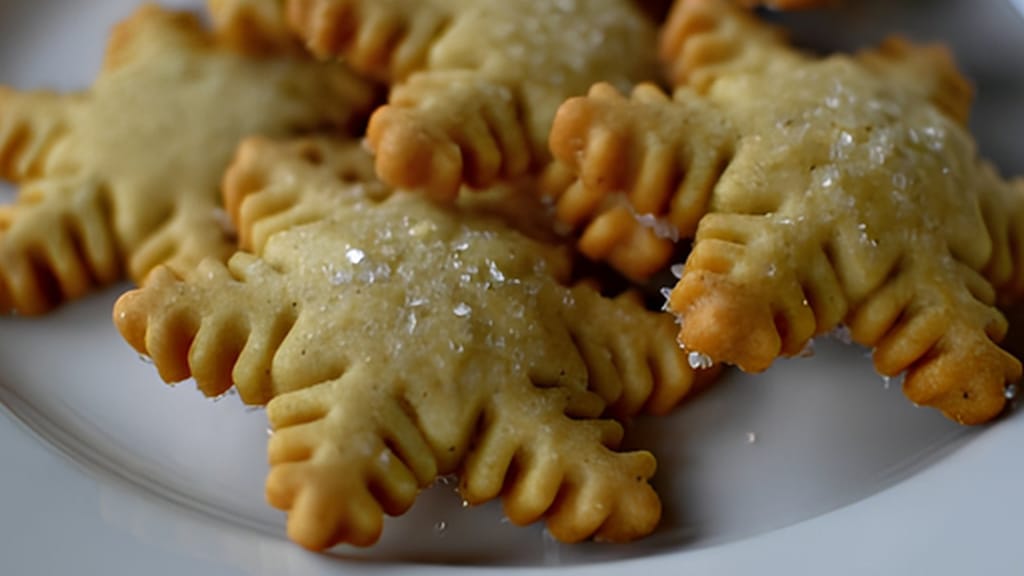
Sugar christmas cookies - delicate and crisp
Crisp cut-out Christmas sugar cookies
Let the baked cookies firm up on the tray for 5 minutes, then move them to a wire rack, and only pack them into a tin once they're completely cool — warm linzer cookies break easily, and a sealed tin would trap moisture and make them go soft. Here are our separate guides on decorating, sticking together, and storing:
When to start with what: a baking calendar for Christmas cookies by type
How to store it: how to store Christmas cookies so they stay crisp and how to store gingerbread so it softens up
How long it keeps: shelf life of Christmas cookies by type
For later: how to freeze cookies and cookie dough
And if your cut-outs still lose their shape in the oven despite all this, work through the troubleshooting guide in why cut-out cookies lose their shape and how to fix it.
Yes — freeze the raw cut-out cookies and bake them straight from frozen, just add 1–2 extra minutes. Freeze them first spread out loosely on a tray, then transfer to a bag or container. They actually hold their shape even better than fresh dough, since they go into the oven completely cold.
Cut a template out of sturdy paper, lay it on the rolled-out dough, and trace around it with a sharp, thin knife or a pizza wheel. Hold the knife straight down and use short cuts rather than dragging it — dragging tears the edges. For simple shapes (diamonds, squares), just cut straight with a knife along a ruler.
Give kids small pieces of dough that you've already rolled out between sheets of parchment, and keep the rest in the fridge. Each rolled piece only lasts a few minutes on the counter before it needs swapping for a cold one — pop the warmed-up piece back in the fridge for 10 minutes. Leave the kneading and rolling to yourself, since little hands warm up dough fastest — kids should just cut out shapes and arrange them on the tray.
Yes, but the dough is more delicate, so roll and cut it out right between two sheets of parchment paper and avoid transferring the cut-outs. Extra chilling time helps too — 30 minutes is fine. For which flours and starches to use, see our article on [what to use instead of flour in gluten-free Christmas cookies](/en/articles/what-to-use-instead-of-flour-in-gluten-free-christmas-cookies).
One recipe worth heating the oven for, one tip, and one deal from the shop. Nothing else.