Lilac meringue kisses with lemon curd cream and fresh fruit
Powdered Sugar in Cookies: Why Not Granulated, and When Granulated Wins
Updated Oct 25, 2026
Powdered sugar (icing sugar) is ordinary sugar ground to a dust, far finer than granulated, usually down to tens of micrometres. Under Czech regulations it may contain no more than 3% starch as an anti-caking agent. It goes into cookies because it has time to dissolve in the dough and granulated sugar doesn't. Tender, short doughs contain very little water and bake briefly, so larger crystals survive as tiny shards: you feel them on your tongue, they tear the dough when you roll it, and in the oven they leave microscopic holes behind. Powdered sugar vanishes and leaves a smooth, delicate structure. It isn't a blanket rule, though. For meringues and caramel, granulated sugar is the better choice, and for a crunchy top you want coarse crystal sugar, because there the bigger grain is exactly the point. Below you'll find what crystal size does to dough, how much a spoonful and a cup of powdered sugar weigh, what else is in it, how to grind your own when you run out two days before Christmas Eve, and how to handle it in icings and for dusting.
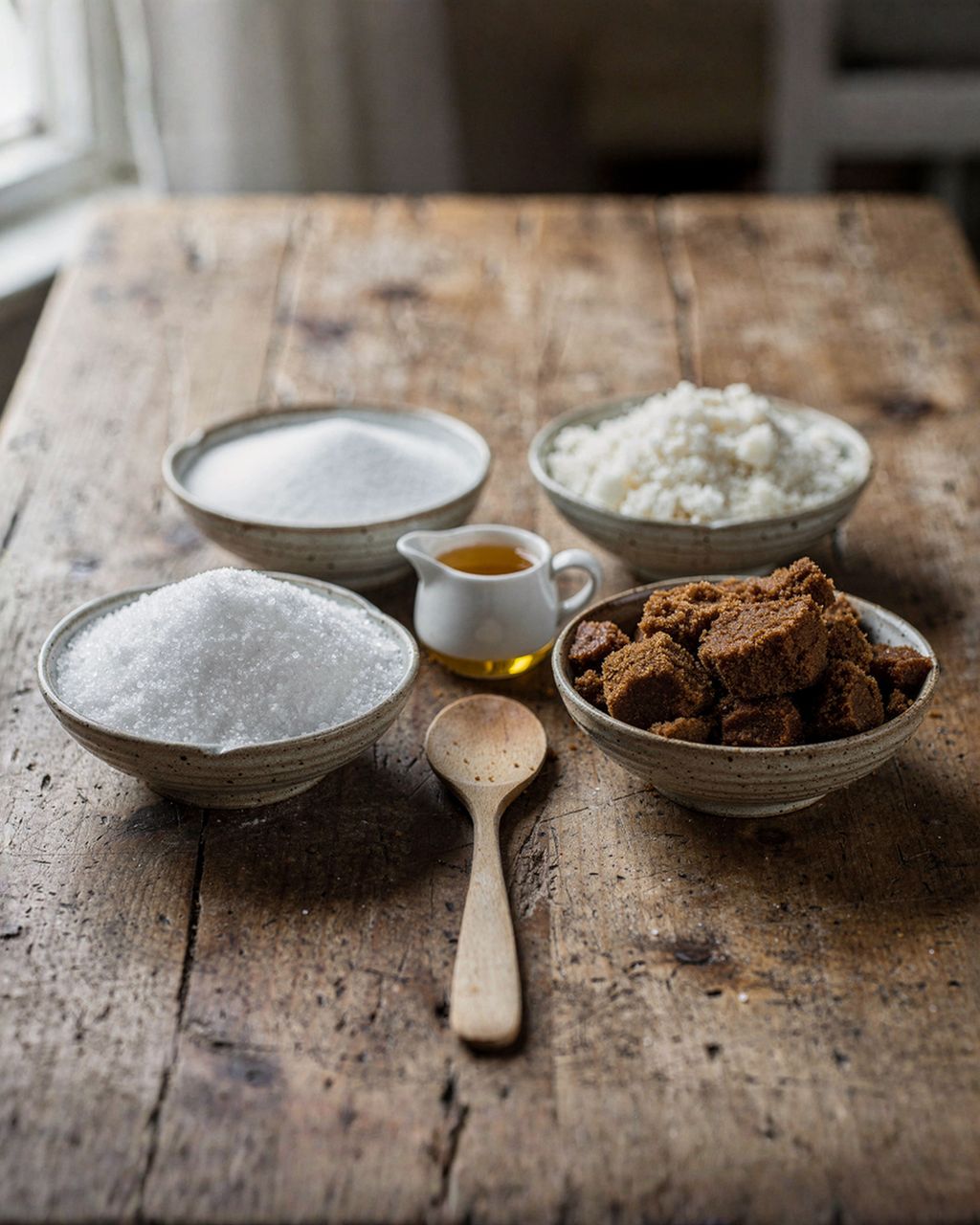
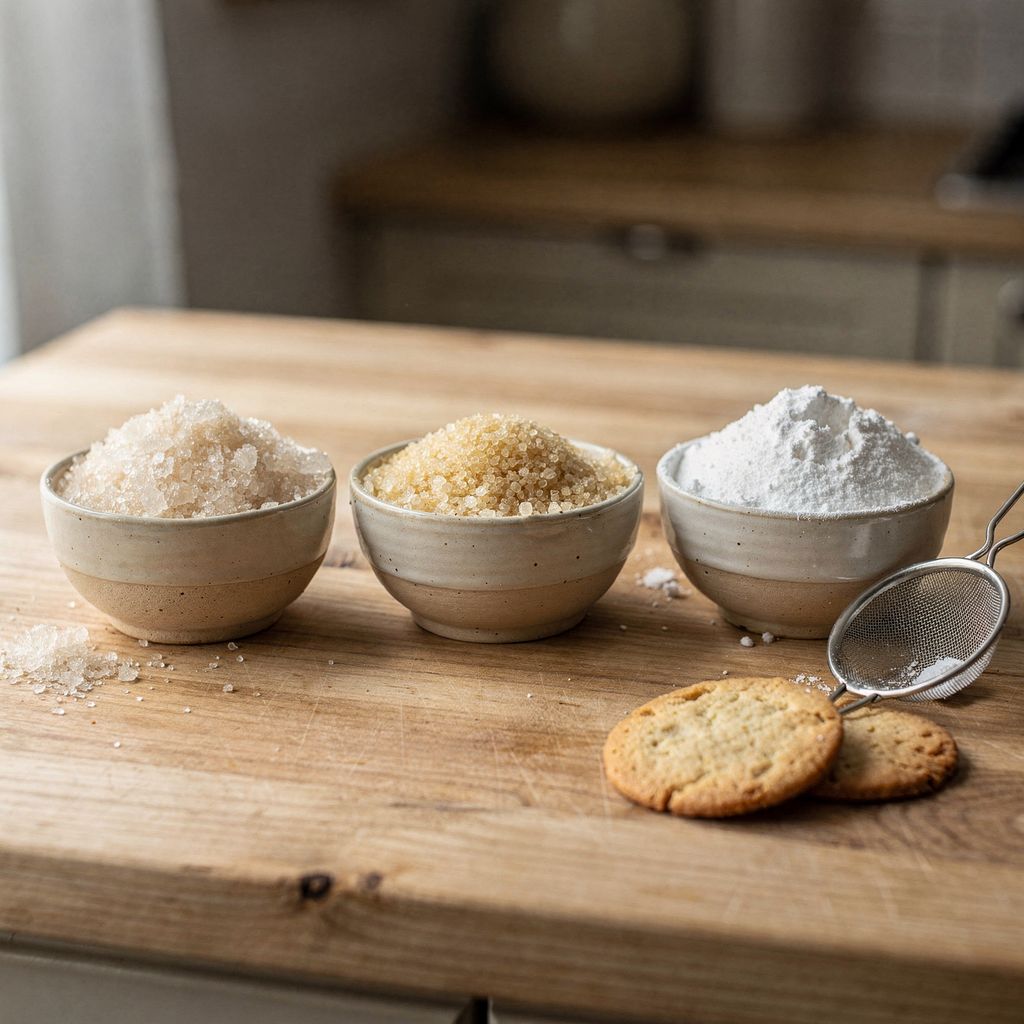
Powdered and granulated sugar are the same sucrose and differ only in how finely it's ground: granulated has a grain of about 0.5 mm, powdered sugar is ground much finer and also contains up to 3% anti-caking starch. For a full overview of sugars from coarse crystals to powder, see Types of Sugar in Baking: Crystal, Granulated, Powdered and When to Use Which.
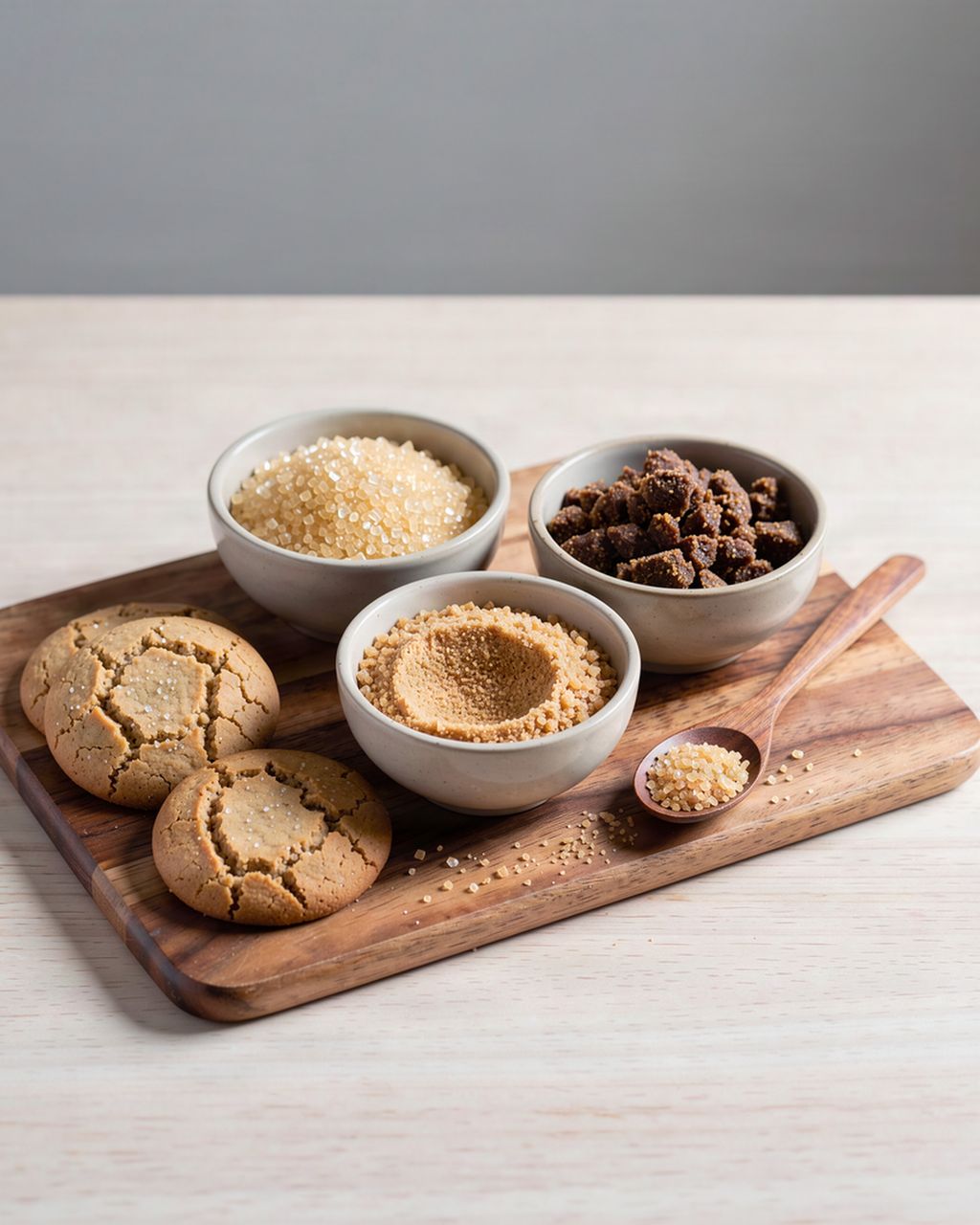
Coarse crystal sugar — the coarse one. The regulation requires at least 70% of grains in the 0.40–2.00 mm band; in practice the grain is around 1 mm and larger. It's the sugar you stir into coffee and can hear dissolving.
Granulated sugar — under the regulation, at least 70% of grains in the 0.16–1.00 mm band, and in practice around 0.5 mm. It's what most recipes mean when they simply say "sugar".
Powdered sugar — the standard requires at least 90% of grains below 0.40 mm, but in practice it's ground far finer than the standard demands, usually to tens of micrometres. Plus up to 3% anti-caking starch.
In the Czech Republic, grain sizes are classified by Decree No. 490/2025 Coll., Annex 2, Table 6, "Classification of crystalline sucrose by particle size". It replaced the older Decree No. 76/2003 Coll. on 14 June 2026. If you come across different numbers elsewhere, such as granulated at 0.80–0.16 mm or powdered at 95% below 0.40 mm, they come from the old decree. The new decree lowered the requirement for powdered sugar from 95% to 90% and raised the upper limit of the granulated band from 0.80 to 1.00 mm.
The gap between granulated and powdered sugar isn't small: a grain of ordinary powdered sugar is many times smaller than a grain of granulated. Because dissolving happens at the surface, a much smaller grain dissolves incomparably faster. That one difference explains almost everything else in this article.
There's one more trap: powdered sugar is fluffy. The same volume weighs roughly 40% less than granulated sugar. You'll find the exact grams per spoonful and cup further down. So never swap sugars by cups or spoons, only by weight.
Seasonal baking plans, tested recipes and kitchen tricks that save you time. Unsubscribe in one click.
A level tablespoon (15 ml) of powdered sugar weighs about 8 g and granulated sugar 12–13 g; a cup (250 ml) of powdered sugar weighs roughly 100–120 g and granulated 200–210 g. These figures are based on King Arthur Baking's conversion chart (US cup of 240 ml: powdered 113 g, granulated 198 g), recalculated for a Czech 250 ml cup.
1 teaspoon (5 ml) — powdered ≈ 3 g, granulated ≈ 4–5 g
1 level tablespoon (15 ml) — powdered ≈ 8 g, granulated ≈ 12–13 g
1 heaped tablespoon — powdered ≈ 12 g, granulated ≈ 18–20 g
1 cup (250 ml), powdered sugar, sifted — ≈ 100–110 g
1 cup (250 ml), powdered sugar, scooped from the bag — ≈ 115–120 g
1 cup (250 ml), granulated sugar — ≈ 200–210 g
1 cup (250 ml), coarse crystal sugar — ≈ 210–220 g
Czech conversion charts often give 12 g for a spoonful of powdered sugar. That matches a heaped spoon, which powdered sugar holds easily thanks to its lightness. This is why the grams for powdered sugar vary so much between sources, and why a scale is the only reliable measure.
How to swap sugars in a recipe:
By weight, 1:1. 100 g of granulated sugar in a recipe = 100 g of powdered sugar and vice versa. The sweetness is practically the same; you won't notice the 3% or less starch in powdered sugar in the finished cookies.
By volume, not 1:1. 1 cup of granulated sugar corresponds to roughly 1¾ cups of powdered sugar. If you simply swap the cup, you'll put about 40% less sugar into the dough.
Watch where the sugar is going. In tender doughs, creams and icings, swap granulated for powdered freely; the other way round (powdered in place of granulated) only where there's enough liquid, see the substitution section below.
Cookies use powdered sugar for four reasons: it dissolves even in a dough with almost no water, it doesn't whip air into butter (so cookies spread less), its starch holds back gluten and absorbs moisture, and it's smooth for coating and icing.
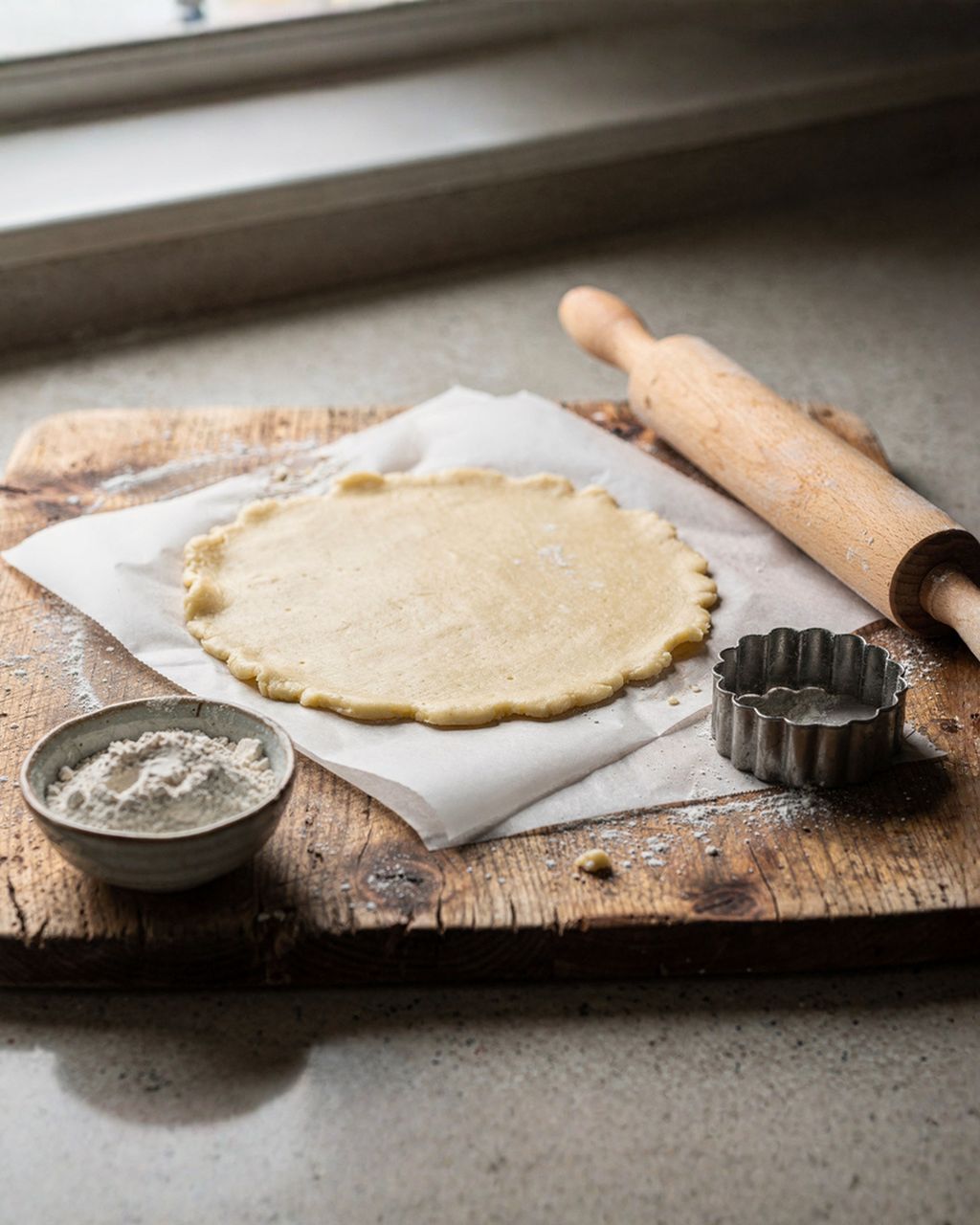
Sugar dissolves in water, not in fat, and a tender dough contains only a few percent water. Linzer dough is butter, flour, sugar and egg yolk; all the water in it comes from the butter (about 16%) and the yolk. You bake for 8–12 minutes at 170–180 °C (340–355 °F), and that little bit of water evaporates before it can dissolve a 0.5 mm crystal. How the ratio of ingredients in Linzer dough works and how to adjust it is covered in Linzer Dough 3:2:1: What the Ratio Means and How to Adjust It.
You can tell what this means from the finished cookies:
A rough tongue feel. You can feel the undissolved grains even when the dough is otherwise perfectly tender.
Holes and crumbling. In the oven a crystal partly dissolves and leaves a tiny cavity. Thousands of cavities turn tenderness into crumbliness.
Tearing when rolling. A hard grain is a foreign body in a thin sheet of dough, and the sheet tears around it, especially with cut-out cookies.
In the same dough, powdered sugar disperses in the fat and dissolves in the little water that's there. There's an underrated bonus: you work the dough faster, so you overwork it less, and less developed gluten means more tenderness.
Powdered sugar doesn't get air into butter because its particles are so tiny and have no sharp edges, so they can't carve bubbles in the fat. Granulated sugar can. When you beat butter with granulated sugar, the sharp edges of the crystals mechanically carve air bubbles into the butter, a form of leavening without baking powder. Powdered sugar doesn't do this.
In a bundt cake or creamed batter that's a disadvantage. In cookies it's exactly what you want:
the dough stays dense and compact, not puffed up,
cut-out shapes keep their edges and don't spread,
the structure is fine, not porous, with a short, clean break.
So the rule can be flipped: the more a cookie needs to hold its shape and be short, the more likely you want powdered sugar. The more it needs to rise and stay soft, the more likely you want granulated.
The starch in powdered sugar binds some of the moisture the flour would otherwise get, and the less water reaches the gluten proteins, the less gluten forms in the dough. The result is a softer, shorter, more tender dough that also spreads less. Even the three percent at most that powdered sugar contains is enough for this.
The same property makes powdered sugar the only sensible base for royal icing: the powder mixes smoothly into egg white, and the starch helps the icing set faster and stay on the gingerbread where you put it.
For coating and icing, powdered sugar is the only choice, because its grain is so fine that it clings to the surface and you can't feel it. Granulated sugar slides off a crescent, since the grain doesn't stick to butter, and whatever does stay crunches under your teeth instead of melting away.
Coating crescents and pracny. Sift the powdered sugar before coating. A lump that has caked in the bag stays on the finished cookie as a white button and only gets crushed in your mouth.
Royal icing. Powdered sugar passes through even the finest piping tip. The tiniest under-ground grain will clog the tip in the middle of a line, so sift the sugar through a fine sieve into the icing instead of pouring it straight from the bag.
You always want coarser sugar when the sugar should stay noticeable or transform: granulated for meringues and caramel, coarse crystal sugar for a crunchy sugar topping. In all three cases the fineness of powdered sugar gets in the way. A fourth reason for granulated sugar, aerating a beaten batter, is covered in the section "Why powdered sugar doesn't whip air into butter (and cookies don't spread)" above.
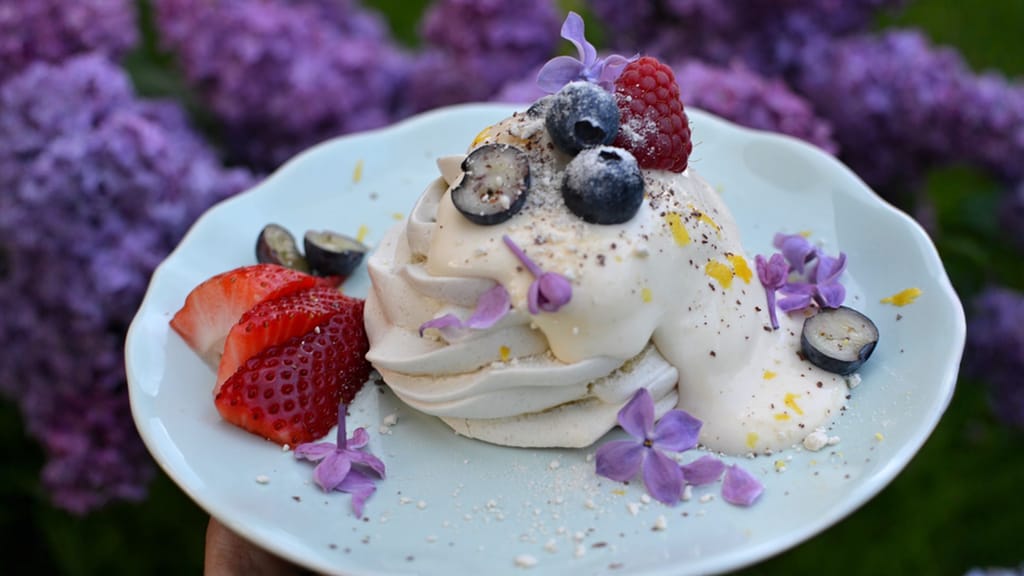
Whipped egg whites call for granulated sugar, because the whites contain enough water for it to dissolve, and dissolved sugar is what holds the foam together. Coarse crystal sugar is too coarse: it won't dissolve, syrup sweats out of it during baking, and a sticky puddle ends up under the meringues.
A practical test: add the sugar a spoonful at a time to whites that are already whipped and keep whisking until you can't feel any grain between your fingers. It takes longer than you'd expect, easily 5–8 minutes.
Powdered sugar can go into meringue, but the starch in it makes meringues duller and slightly chalky. Pastry chefs therefore add it only at the end, and only some of it.
Lilac meringue kisses with lemon curd cream and fresh fruit
Lilac meringues with lemon cream: meringues made from egg whites and granulated sugar
For caramel, use plain granulated or coarse crystal sugar. Sucrose starts to caramelise at about 160 °C (320 °F), and caramel develops around 170–180 °C (340–355 °F). The starch in powdered sugar doesn't dissolve in caramel, clouds it and burns easily.
The same rule applies to sugar syrup, fondant and pulled sugar: the purer the sugar, the cleaner the result.
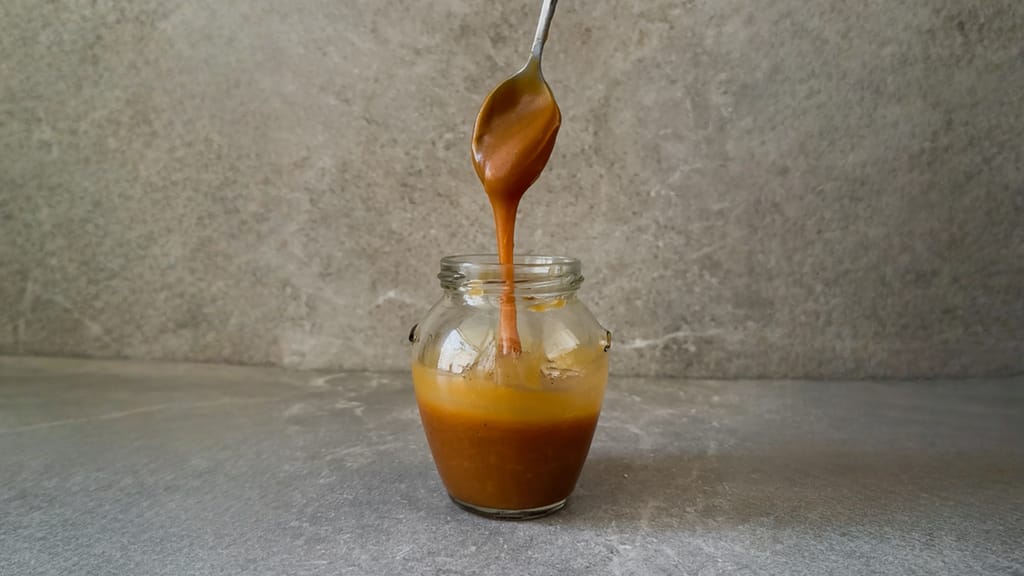
Homemade caramel sauce with just 4 ingredients
Homemade caramel sauce from four ingredients: caramel made from plain granulated sugar
Coarse sugar sprinkled on the surface of the dough just before baking partly melts in the oven and sets into a thin glassy layer that crunches under your teeth. That's exactly the effect you know from gingerbread cookies sprinkled with crystal sugar or from butter cookies with a sugar crust.
Try the same with powdered sugar and nothing happens: it soaks into the dough and disappears. So the rule is simple: powdered sugar inside, coarser sugar on top.
Powdered sugar has starch added, most often potato starch from Czech producers and corn, wheat or tapioca starch in imported brands. Decree No. 490/2025 Coll. allows at most 3% anti-caking agents in powdered sugar, and by definition this means native starch. On the packaging you'll find it in the ingredients as an ordinary component with its type given (for example "potato starch"), and in the product name as the legal designation powdered sugar with anti-caking agents (cukr moučka s protihrudkujícími látkami). It's there so the powder doesn't cake into lumps: sugar ground this finely has an enormous surface on which humidity from the air readily condenses, and without starch a bag would turn into a rock within a few weeks.
What it does in your kitchen:
Icing sets faster and holds better, because starch binds water from the egg white.
Dough turns out shorter, because starch takes water away from the gluten.
It's a problem in hot syrup, where it won't dissolve, clouds the syrup and burns.
It slightly stabilises creams and whipped cream, which is why they're usually sweetened with powdered rather than granulated sugar.
Starch-free versions exist. You can only tell by the ingredients on the packaging, not by the product name, so turn the bag over and look for starch among the ingredients. Without starch the sugar clumps, so always sift it before use.
If an icing or filling has ever mysteriously thickened more than it should have, this is usually the reason. Three percent starch in 300 g of sugar is 9 g, and that's the maximum; typically it's a little less. In a small batch of icing you'll still notice it.
Cane powdered sugar works anywhere a creamy to light-brown colour and a faint caramel flavour don't matter: in Linzer dough, gingerbread cookies, creams and nut doughs. Don't use it where you need pure white, meaning royal icing, pastel colouring and snow-white coating on crescents.
Where the colour comes from: cane powdered sugar is ground from raw (unrefined) cane sugar, which retains traces of molasses. Producers usually stabilise it the same way as white: on packaging you'll find, for example, 98% cane sugar and 2% tapioca starch, or elsewhere potato starch up to 3%.
Linzer, nut and spiced cookies — go ahead, 1:1 by weight for white powdered sugar. The dough will be a shade darker and the flavour stronger, which suits nuts and gingerbread.
Creams and whipped cream — works, the cream just takes on a beige tint.
Royal icing and colouring — a poor choice. The icing comes out beige and colours shift: blue turns greenish, pink turns brownish.
Coating crescents and dusting — comes out beige instead of snowy; fine for flavour, but visually not "Christmassy".
Storage — molasses draws in moisture, so cane powdered sugar clumps faster. Always sift it.
For more on what cane sugar does to the flavour and softness of baked goods, see Cane Sugar in Baking: Flavour, Softness and Coconut Sugar.
You can grind powdered sugar from granulated: 200 g granulated sugar + 6 g (roughly 2 level teaspoons) cornstarch or potato starch, in a high-powered blender or coffee grinder, 30–60 seconds at full speed. The starch is optional. Without it you get pure ground sugar, which cakes quickly, so grind only as much as you'll use right away.
The container and blade must be completely dry, because moisture instantly clumps the sugar.
Fill the blender no more than a third, otherwise the sugar just chases around the blade.
Grind in pulses of 10–15 seconds, shaking it in between.
When finished, let the container stand closed for a minute, or the dust will fly all over your kitchen.
Sift through a fine sieve (a tea strainer is enough). Return what doesn't pass through and grind it again.
How finely to grind: until the sugar stops grating between your fingers and almost everything passes through the sieve. A home blender won't reach industrial fineness, though, and the grain won't be as even.
How home-ground powdered sugar behaves differently from store-bought:
In Linzer dough, crescents and creams — you'll hardly notice a difference.
In royal icing and for fine decorating — coarser particles can clog the tip, and the icing tends to be less glossy. Here store-bought is worth it, or sift the homemade twice.
For dusting — without starch it absorbs moisture from the surface faster, so the dusting lasts a shorter time.
Without starch — it clumps faster and icings set more slowly, because there's no starch to bind water.
Heat from the blender — with longer grinding the sugar warms up. Let it cool before sealing it in a jar, or steam will condense in the lid and the sugar will stick together.
And what if you have nothing to grind with? Decide by how much liquid the dough has:
Gingerbread and honey doughs — you can replace it with granulated sugar 1:1 by weight; honey and egg will dissolve it.
Linzer dough, crescents, pracny — better to go and buy powdered sugar. Granulated will be gritty here, the dough will be harder to roll and the shapes will lose their definition.
Icings and glazes use powdered sugar exclusively, because it mixes smooth in a small amount of liquid without cooking. Granulated sugar would stay like sand in an icing. The basic types:
Royal icing — powdered sugar + egg white, sets hard. Ratios, consistencies for outlining and flooding, and colouring are covered in Royal Icing: Ratios, Consistencies and Colouring.
Lemon or water glaze — powdered sugar + lemon juice or water. As a guide, 100 g of powdered sugar to 15–20 ml of liquid for a thick glaze that stays put on a gingerbread cookie. Add the liquid by the teaspoon, because an extra 5 ml turns it into a translucent puddle.
Buttercream and creams — powdered sugar whips into softened butter without graininess; granulated sugar would stay undissolved in the fat.
For all of them: sift the powdered sugar, add the liquid gradually and apply the icing to cooled cookies. On a warm surface it runs and loses its shine.
To make powdered sugar last on cookies, sprinkle it on completely cooled cookies as close to serving as possible, and store the cookies apart from soft types. Powdered sugar is hygroscopic: it draws in moisture from the cookies and from the air in the tin, and soaks into the surface.
Coat crescents twice. First while still warm right after baking (the sugar sticks and forms a base), then dry just before serving.
Dust other cookies when cold. On a warm surface the powdered sugar dissolves within minutes.
Sprinkle through a fine sieve from a height of 15–20 cm (6–8 in) for an even, thin layer.
Don't store dusted cookies with gingerbread. Powdered sugar pulls moisture from soft types toward itself.
Non-melting sugar. For dusting that needs to last for days, non-melting powdered sugar is sold. Besides sugar, it contains starch (which may be wheat) or dextrose and vegetable fat, sometimes milk protein too. The composition varies by producer, so if you're avoiding gluten or milk, read the packaging. Sprinkle it only on cooled products. It's not suitable for dough or icing, only for the surface.
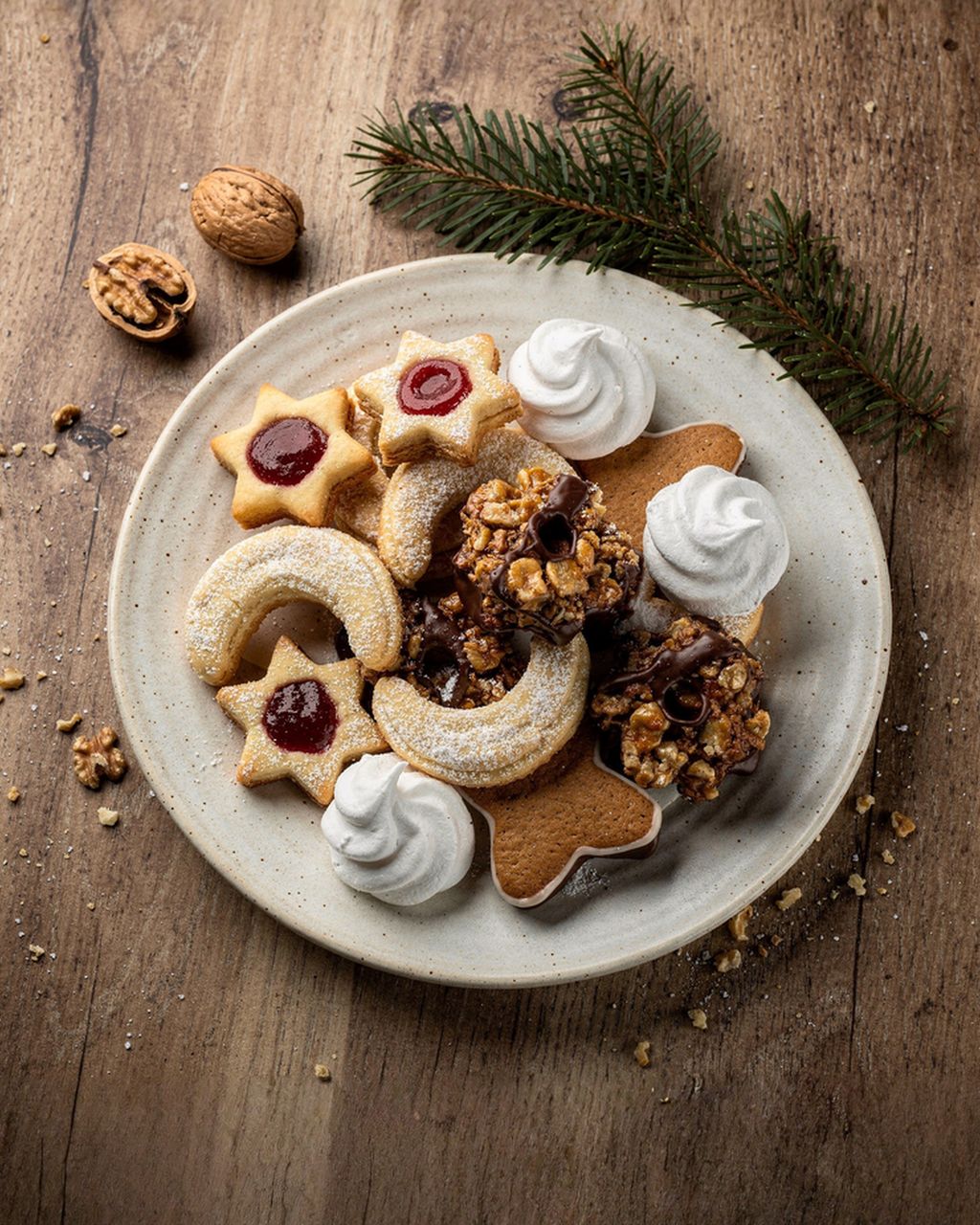
Linzer dough, crescents and pracny take powdered sugar, gingerbread and meringues take granulated, and butter cookies take powdered sugar inside and crystal sugar on top. For a full overview of the classics, see Types of Czech Christmas Cookies: 20 Classics and What Sets Them Apart. In more detail on sugar:
Linzer cookies — powdered sugar in the dough. Little water, short baking, cut-out shapes: exactly the case where granulated sugar ruins tenderness.
Vanilla crescents — powdered sugar in the dough and for coating. Make the vanilla coating sugar by grinding powdered sugar with a scraped vanilla pod; why not to replace it with vanillin sugar is explained in Vanilla Sugar or Vanillin Sugar: What's the Difference.
Gingerbread cookies — granulated sugar or honey in the dough; the dough has enough liquid to dissolve it. Powdered sugar only for the royal icing.
Pracny — powdered sugar. The dough is pressed into molds and must be smooth and compact.
Meringues — granulated sugar, added by the spoonful to the whipped whites.
Butter cookies with a crunchy crust — powdered sugar inside, crystal sugar on top before baking.
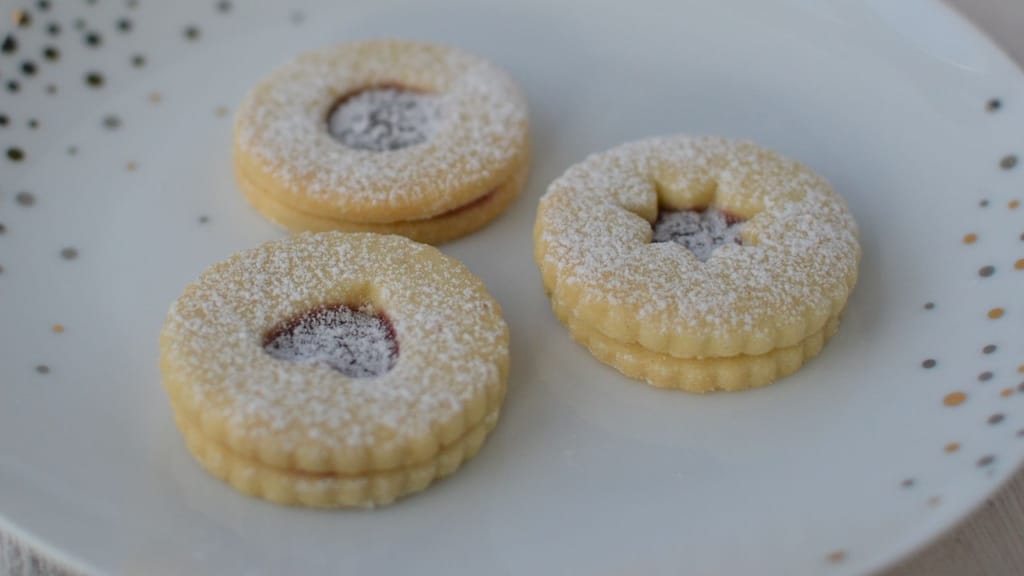
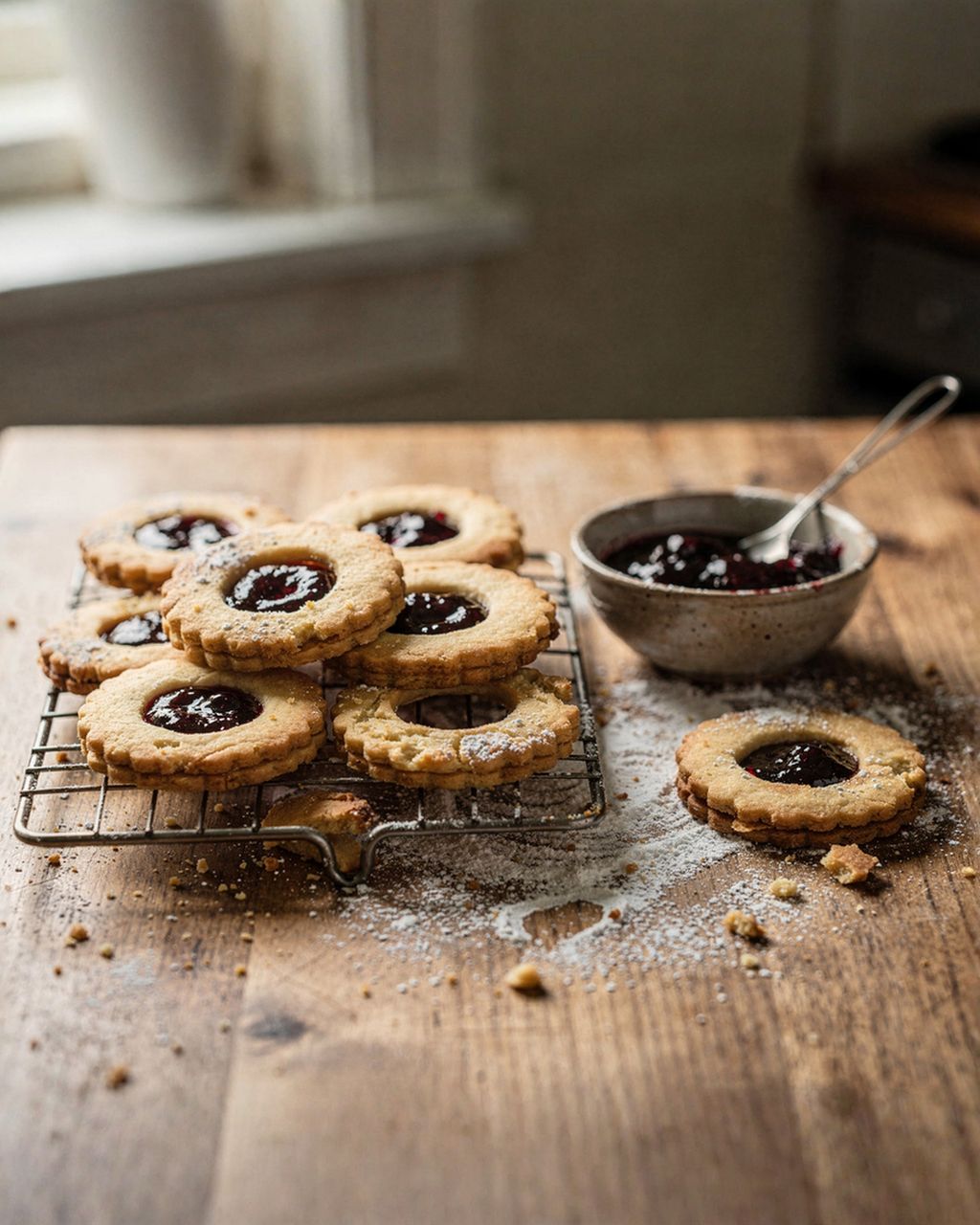
Classic christmas cookies: delicate linzer cookies
Classic tender Linzer cookies: a dough where powdered sugar decides the result
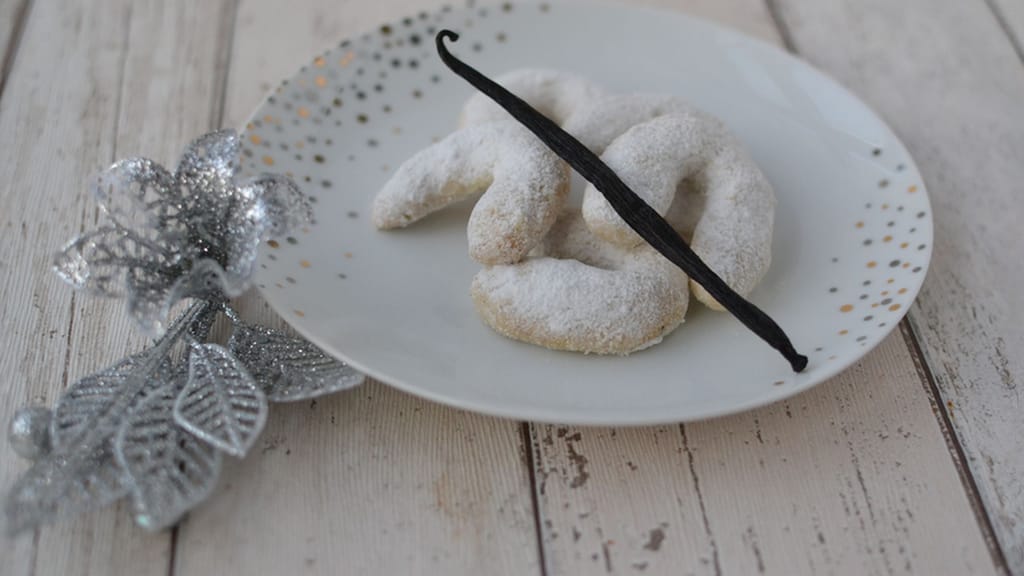
The best christmas cookies? vanilla crescents, of course!
Vanilla crescents coated in vanilla powdered sugar
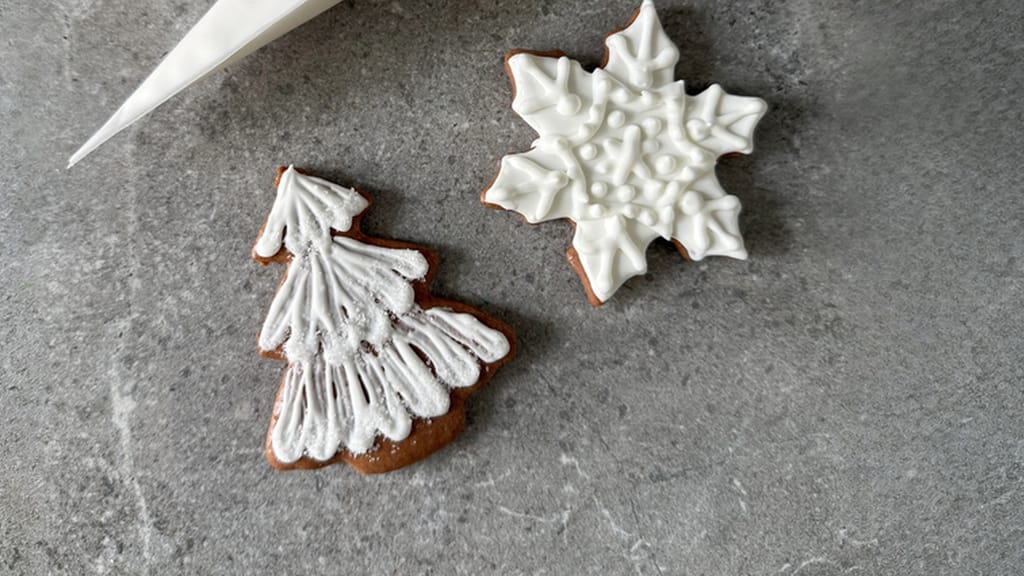
Royal icing for cookies: the perfect base for decorating
Royal icing made from powdered sugar for decorating gingerbread cookies
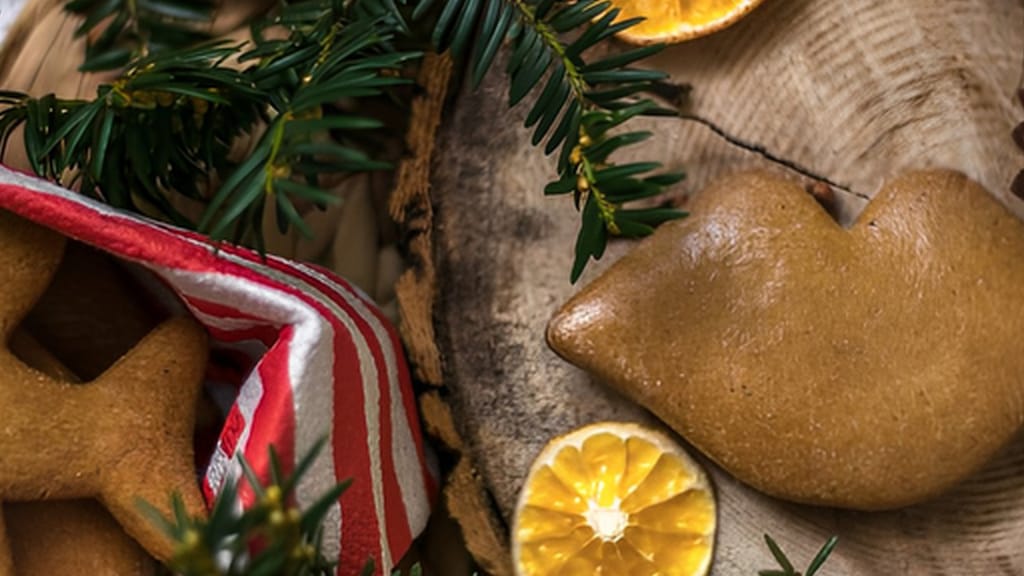
Soft gingerbread cookies
Soft gingerbread cookies: a dough with plenty of liquid, where granulated sugar is enough
Besides sugar, two more variables decide how tender cookies are: fat (how much there is, how cold it is and how it's dispersed in the flour) and dough handling (the less you knead, the less gluten and the shorter the dough). Follow-up articles cover fat and kneading.
Gritty cookies are most often caused by lumps in unsifted powdered sugar, not by grain size. Powdered sugar cakes together in the bag, and a lump dissolves in butter no better than a crystal does. Always sift it, even if it looks loose. Another possibility is home-ground sugar that still contains some under-ground grains; sift it after grinding and grind the leftovers again. A third: granulated sugar got into your cookies another way, through a topping or a filling.
Powdered sugar doesn't spoil when kept dry. Under Annex X of Regulation (EU) No 1169/2011, sugar in solid form is exempt from the requirement to show a best-before date. What can happen is a drop in quality: in humid conditions it hardens into lumps, and in an open bag it picks up smells from the pantry. Crush hardened sugar, sift it and use it, but if it smells of anything other than sugar, keep it out of icing.
Yes, you can sweeten whipped cream and creams with powdered sugar, and it's a better choice than granulated because it dissolves instantly in a cold cream. Granulated sugar won't dissolve there and you'll feel it, while the starch in powdered sugar also stabilises the cream slightly, so whipped cream holds its shape longer and weeps less. Keep this in mind when measuring: powdered sugar is lighter, so weigh it rather than measuring by the spoonful.
Store home-ground powdered sugar in a clean, perfectly dry jar with a lid, not in a bag. Keep it in a pantry or cupboard away from steam, never next to the stove, above the dishwasher or in the fridge, where moisture condenses on the cold sugar. Open the jar as little as possible, never put a damp spoon into it, and sift the sugar before each use.
Sugar itself contains no gluten, but the anti-caking starch in powdered sugar can be wheat starch. Czech producers commonly use potato starch, while imported brands may use corn, tapioca or wheat starch. Under Regulation (EU) No 1169/2011 wheat is an allergen that must be highlighted in the ingredients list, so you'll find it on the packaging. If you're on a gluten-free diet, always read the ingredients, or grind your own from granulated sugar and cornstarch. Be careful with non-melting decorating sugar too, which commonly contains wheat starch.
You can use powdered sugar in yeast dough and in a bundt cake, swapping it 1:1 by weight for granulated, but the cake will come out a little denser. When you beat butter with sugar, powdered sugar doesn't carve air bubbles into the fat the way granulated crystals do, so the batter rises less. In yeast dough you'll barely notice a difference, because the yeast does the rising and the sugar dissolves in the milk anyway.
One recipe worth heating the oven for, one tip, and one deal from the shop. Nothing else.