Yeasted blueberry buns with curd cheese and crumble
Fruit Cakes and Yeast Koláče: With Quark, Streusel, Sheet-Pan and One-Bowl Cup Versions
Updated Nov 20, 2026
Fruit cakes and yeast koláče (Czech filled yeast pastries) differ in the dough: yeast koláče rely on a fluffy yeasted dough, while fruit cakes can use any dough that holds up under a layer of fruit, from yeasted to shortcrust to a quick cup-method batter. A yeast koláč needs time and warmth, while a fruit cake made from a creamed or cup-method batter is in the oven in a quarter of an hour. Here you'll find both: yeast koláče with quark (tvaroh, a Czech fresh curd cheese) and streusel, a sheet-pan plum cake, a cup-method cake, a quark fruit cake and fruit cakes for a round pan. Each comes with a short method, the reason the step works and a link to a tested recipe.
A yeast koláč is made with dough raised with yeast, while a fruit cake is any cake where the fruit plays the main role. The two groups overlap: a plum cake made with yeast dough is both a yeast cake and a fruit cake.
In practice they differ mainly in time and texture:
Yeast koláče: a dough of flour, milk, egg yolks, butter and yeast, which rises for 1–1.5 hours and then again after shaping. The result is soft, tender and smells of butter.
Fruit cakes from creamed or cup-method batter: raised with baking powder, so no waiting; you just mix and pour. They're denser, more like a bundt cake with fruit.
Fruit cakes from shortcrust or puff pastry: a thin, crisp base with the filling on top. They suit a round pan and juicy fruit.
When deciding, ask how much time you have. For yeast koláče, plan on two to three and a half hours including the rise; a cup-method cake you can manage within an hour. The dough itself, its ratios and common mistakes are covered in detail in the article yeast dough for koláče; here we focus on fillings, streusel and specific cakes.
Recipe of the week, one tip that saves you time and one deal from the shop. Unsubscribe in one click.
The next issue goes out on Thursday, November 26.
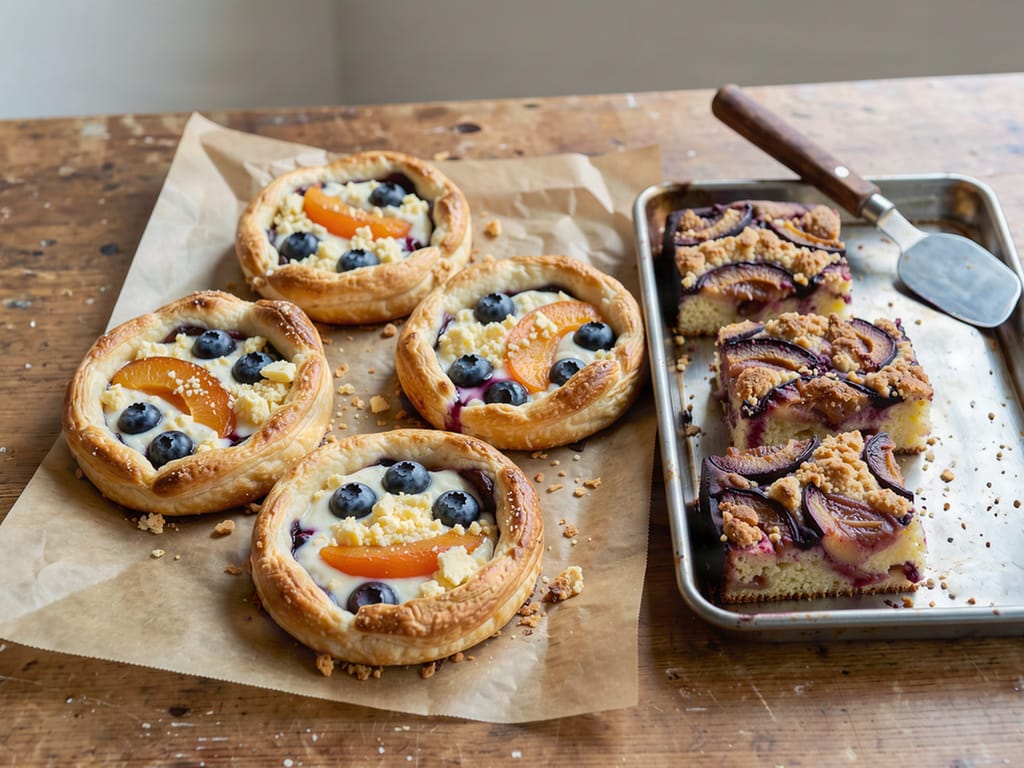
Yeast koláče come together in seven steps: mix the dough, knead it, leave it to rise, divide it into balls, let them rise a second time, shape and fill, then bake at 180°C (350°F). That's how the small yeast koláče with quark below (blueberry, apricot, apple; the apple ones bake five minutes longer) are made, and it's worth understanding why.
Combine the dry ingredients. Flour, a pinch of salt, sugar, yeast and grated lemon zest are mixed dry so the yeast spreads evenly.
Add the lukewarm liquids. Lukewarm milk, room-temperature egg yolks and lukewarm melted butter. Lukewarm, not hot: heat kills yeast, and cold puts it to sleep.
Knead for 10–13 minutes. In a stand mixer with the dough hook on medium speed, until the dough is smooth, elastic and soft: it can be slightly sticky on your hands but should pull away from the sides of the bowl. Dough that's kneaded too briefly holds gas poorly and the koláče come out flat. (The exception is the dough for the apple koláče below, which should stay sticky.)
Leave to rise for 1–1.5 hours. Covered with a kitchen towel in a warm place until doubled in volume. Go by volume, not the clock: in a cool kitchen it takes longer.
Divide into balls. For large filled koláče, about 60 g each (45–50 g for smaller ones); roll each piece in your palms into a smooth ball.
Let them rise again. Cover the balls on the baking sheet and leave them to rest for an hour. The gluten relaxes and the center can then be pressed out almost paper-thin without the dough springing back.
Shape, fill and bake. With your fingers or the bottom of a floured glass, press out a well with a rim of about 1 cm, brush the rim with beaten egg, fill, and bake at 180°C (350°F) for 15–20 minutes until golden.
About the yeast: our recipes use dried yeast because it can go straight into the flour. If you prefer fresh pressed yeast, crumble it into some of the lukewarm milk with a teaspoon of sugar and let it foam. Dried yeast makers commonly state on the packaging that one 7 g sachet replaces about half a cube of fresh yeast, so roughly 21 g (a whole cube is 42 g), a ratio of about 1:3. Dried yeast isn't dissolved in liquid; it goes straight in with the flour.
The quark filling for yeast koláče is quark beaten with an egg yolk, sugar, vanilla and a teaspoon of starch into a smooth cream. The starch and yolk matter: the filling sets as it bakes, so it doesn't run into the dough and can be sliced once cool.
What decides the result:
The moisture of the quark. Thinner quark releases whey, which soaks the thin center of the koláč. Half-fat quark works well but is drier and less creamy than full-fat; if it's very wet, let it drain in a sieve for a while.
Ricotta. Yumsto recipes mix quark with ricotta 1:1 (250 g + 250 g). Ricotta makes the filling smoother, and thanks to it you don't need to drain the quark overnight.
Powdered sugar instead of granulated. It dissolves instantly, so no grains are left in the filling, and it doesn't draw out as much water.
A thin layer. A spoonful of filling spread over the center is enough. A thick layer of quark won't bake through before the edges brown.
In yeast koláče, quark is mainly about contrast: cool, tangy creaminess against buttery dough and sweet fruit. So don't oversweeten it; it stands out best when it's a notch less sweet than the fruit above it.
Yeast koláče with quark and streusel have three layers: a thin center of dough, a spoonful of quark and fruit under a thick layer of buttery streusel. The streusel isn't just decoration; it protects the fruit from drying out and adds the crunch that soft dough lacks.
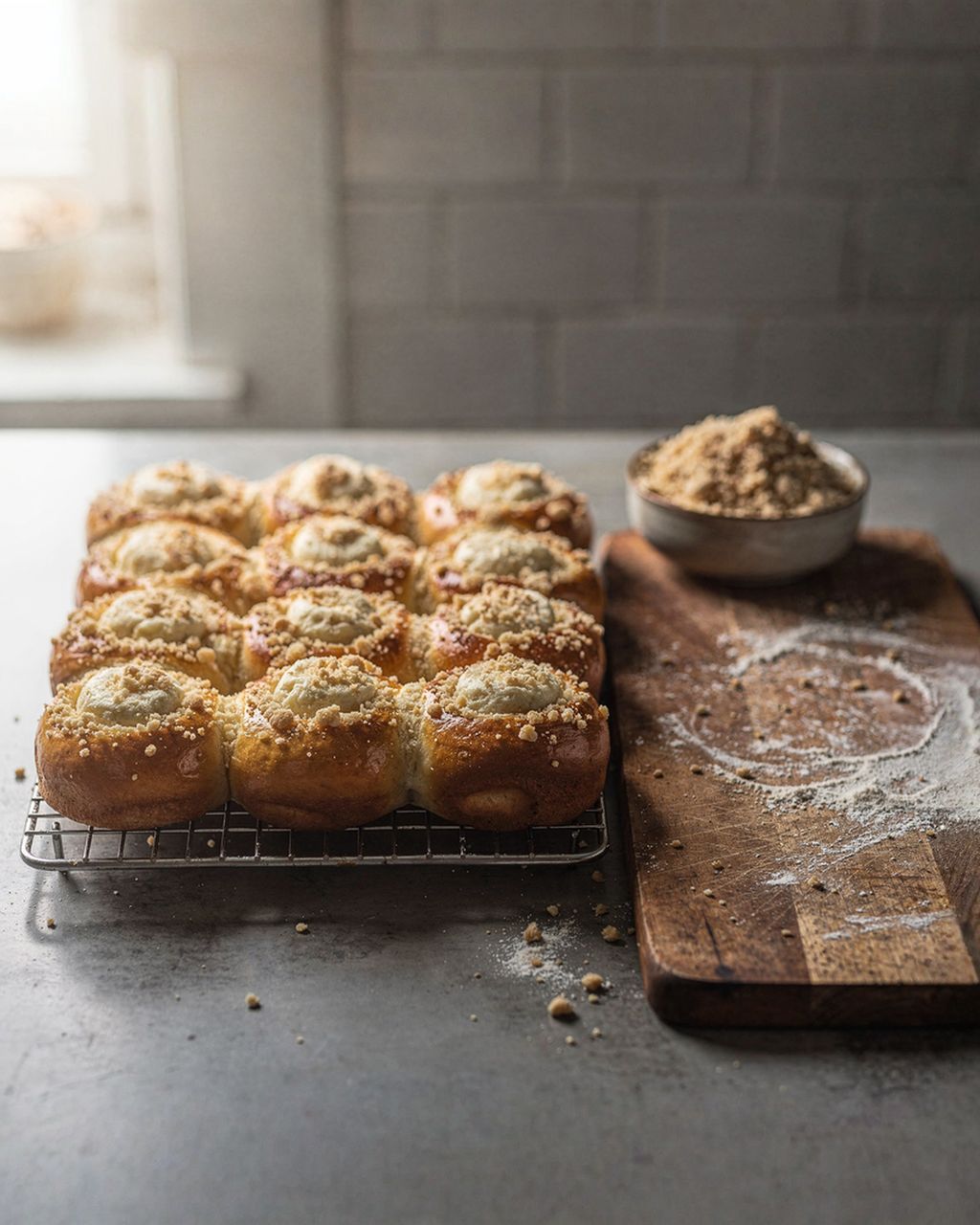
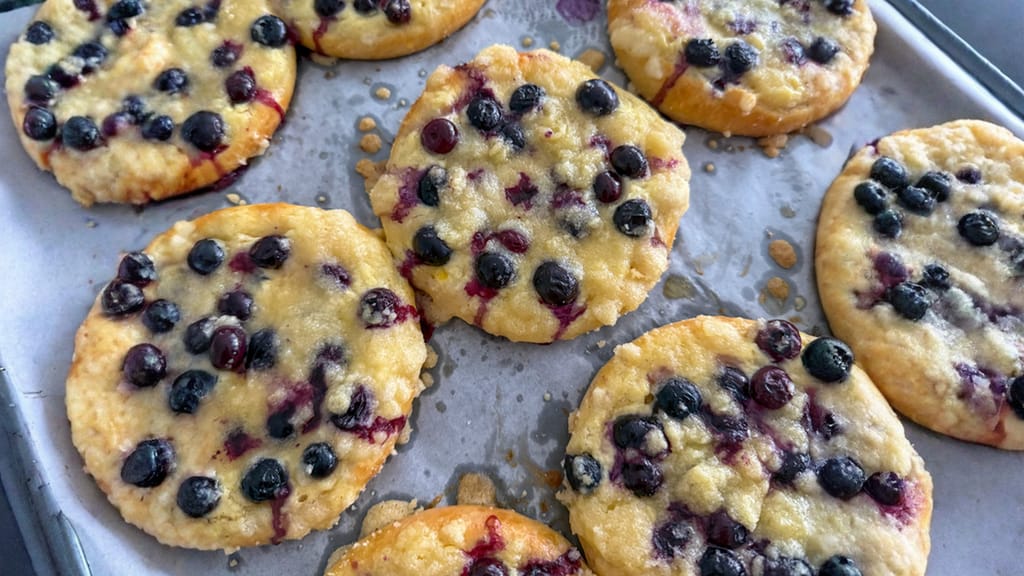
Yeast blueberry koláče with quark and streusel are made from 500 g of flour, dried yeast, lemon zest, lukewarm milk, egg yolks and melted butter. After 1 to 1.5 hours of rising, the dough is divided into 15 balls, which rise for another hour. Then wells are pressed out, the rims brushed with egg, and the centers filled with quark and ricotta, blueberries and a generous layer of streusel made from flour, sugar and cold butter. They bake at 180°C (350°F) for 15–20 minutes, and while still hot the edges are brushed with melted butter and rum.
Apricot koláče with quark and almond streusel use the same dough and the same quark filling. They differ in the streusel, which has sliced almonds and cinnamon, and in 600 g of apricots cut into wedges; tarter apricots only need a light dusting of sugar. After baking, the edges are brushed with melted butter and a little amaretto.
Brushing the hot edges with butter is a small step that's a shame to skip. The butter soaks into the hot crust, which stays soft, so the koláče aren't hard around the edges the next day.
Yeasted blueberry buns with curd cheese and crumble
Yeast blueberry koláče with quark and streusel: quark with ricotta, blueberries and buttery streusel
Crunchy streusel comes down to five rules: cold butter in cubes, coarse flour, rub in rather than knead, flavor it with nuts, almonds or cinnamon, and sprinkle on generously. Once the butter melts in the warmth of your hands, streusel turns into a sticky dough that spreads into a flat sheet in the oven.
Five rules for recognizing good streusel:
Butter straight from the fridge, cut into cubes. Cold fat melts gradually in the oven, leaving little pockets in the streusel that crunch.
Coarse flour, if you have it. Its larger grains make a looser structure; the sheet-pan plum cake and the cup-method cake below both use coarse flour.
Rub in, don't knead. Work with your fingertips, not your palms, and stop when the mixture looks like coarse, damp sand with clumps.
Don't be afraid to flavor it. Ground walnuts, sliced almonds or cinnamon give streusel its own character; almonds and cinnamon suit apricots, walnuts suit plums.
Sprinkle on generously. A thin sprinkling disappears in the oven; the fruit should be properly covered by the streusel.
If you make the streusel before the dough, put it in the fridge. Chilled, it keeps its crumbs even when you scatter it over a warm yeast koláč.
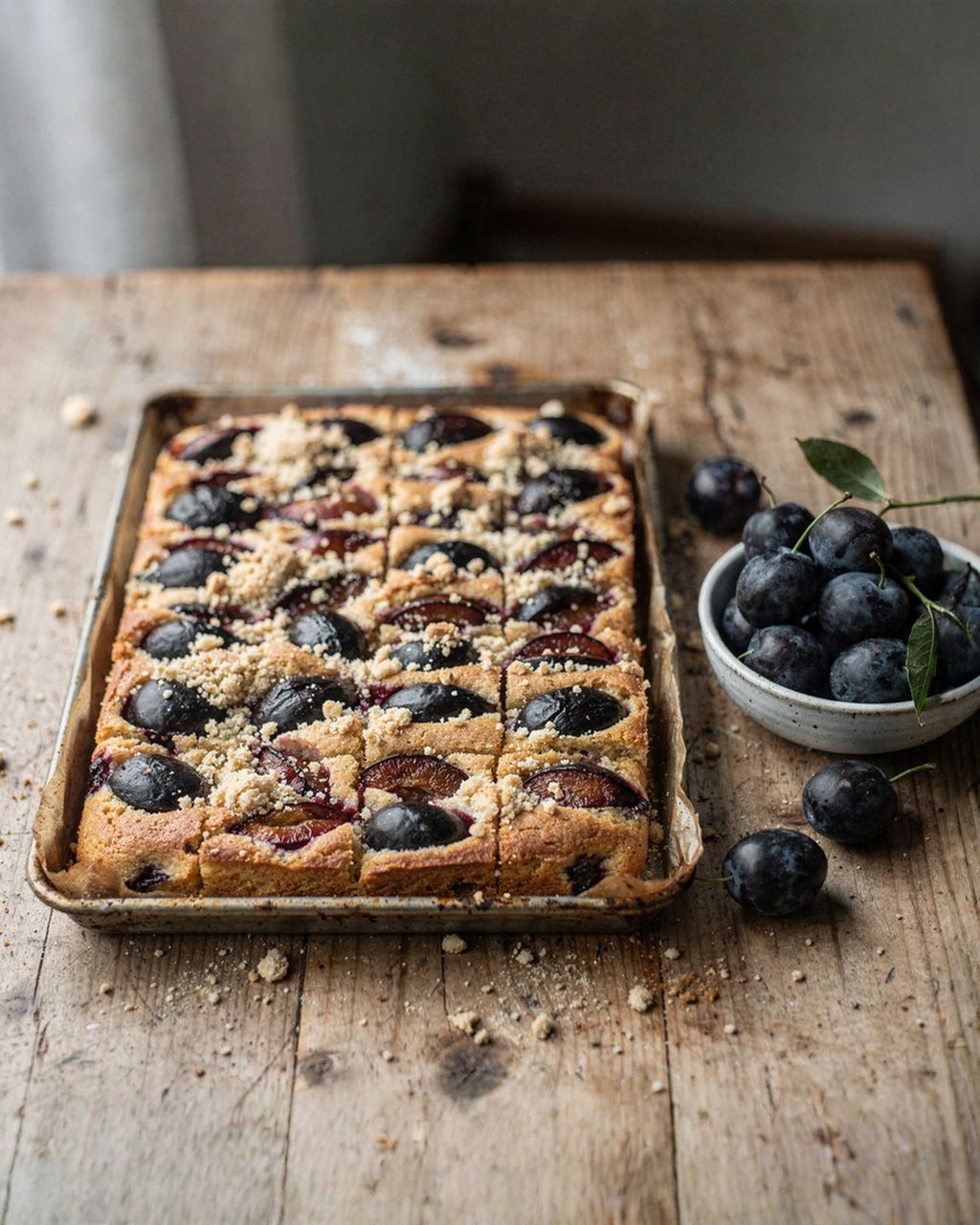
A yeast plum cake is risen dough rolled out onto a baking sheet, topped with plum halves cut side up and covered with streusel. Cut side up so the juice stays in the fruit and doesn't run into the dough.
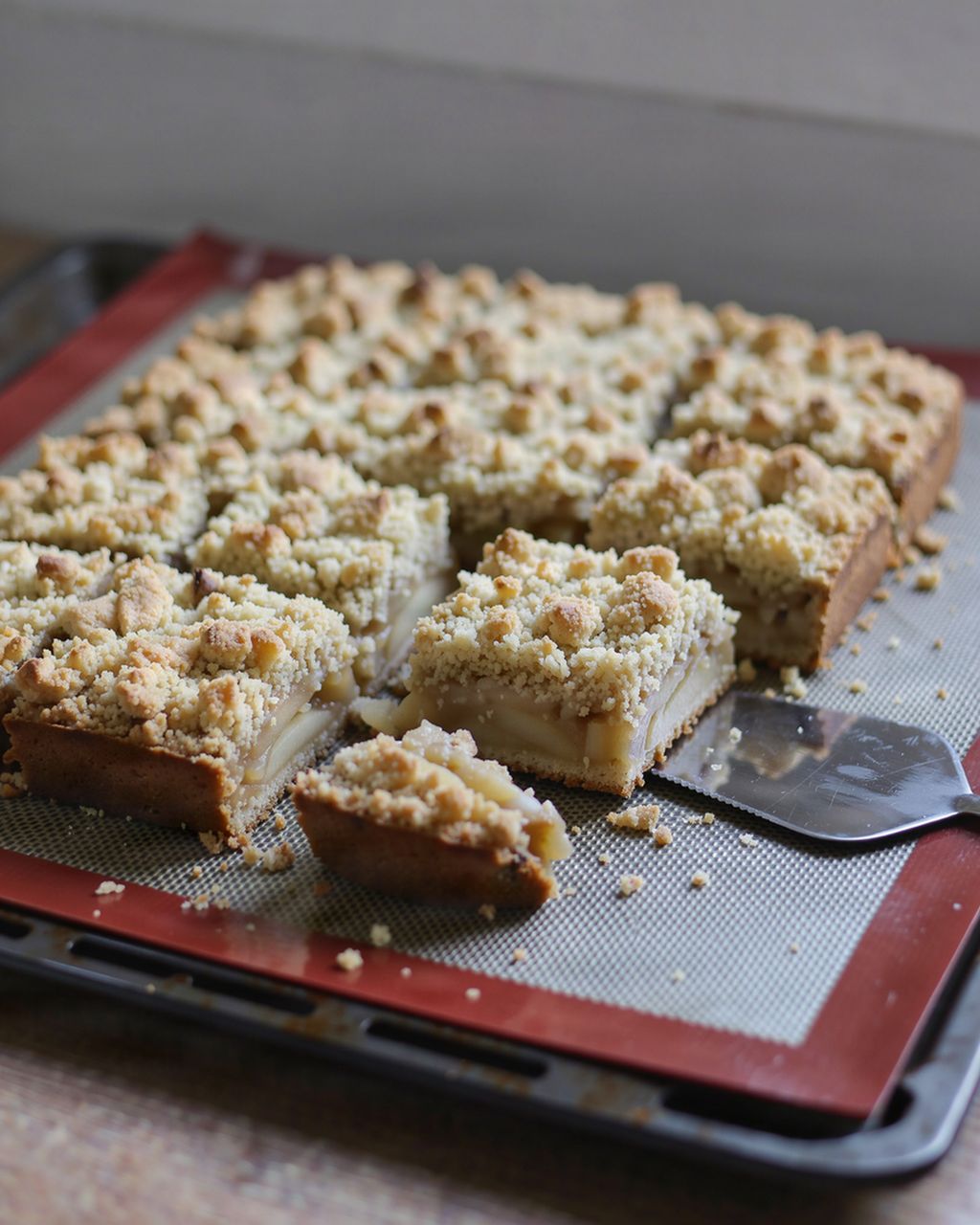
The classic yeast plum sheet-pan cake with streusel combines all-purpose (plain) flour and semi-coarse flour (Czech polohrubá, slightly grittier than all-purpose) with dried yeast and lemon zest; the liquid comes from lukewarm milk, whipping cream, an egg yolk, rum and butter. After ten minutes of kneading, the dough rises for 1–1.5 hours until doubled. Meanwhile 500 g of pitted plums are tossed with poppy seeds and cinnamon, and streusel is made from coarse flour, cold butter, sugar, ground nuts, salt and cinnamon. The dough is rolled out into a pan lined with parchment paper, topped with plums, covered with streusel and left to rest for another 15 minutes; it bakes at 180°C (350°F) for about 30 minutes, and the bare edges are brushed right away with butter and rum.
Plums suit baking better than most fruit because they have firm flesh that doesn't fall apart in the oven and a pronounced tartness that balances the sweet dough. Late, fully ripe plums that come away easily from the stone are best. If you're wondering whether plums are better on yeast, creamed or shortcrust dough, a separate article compares them: what dough to use for plum cake.
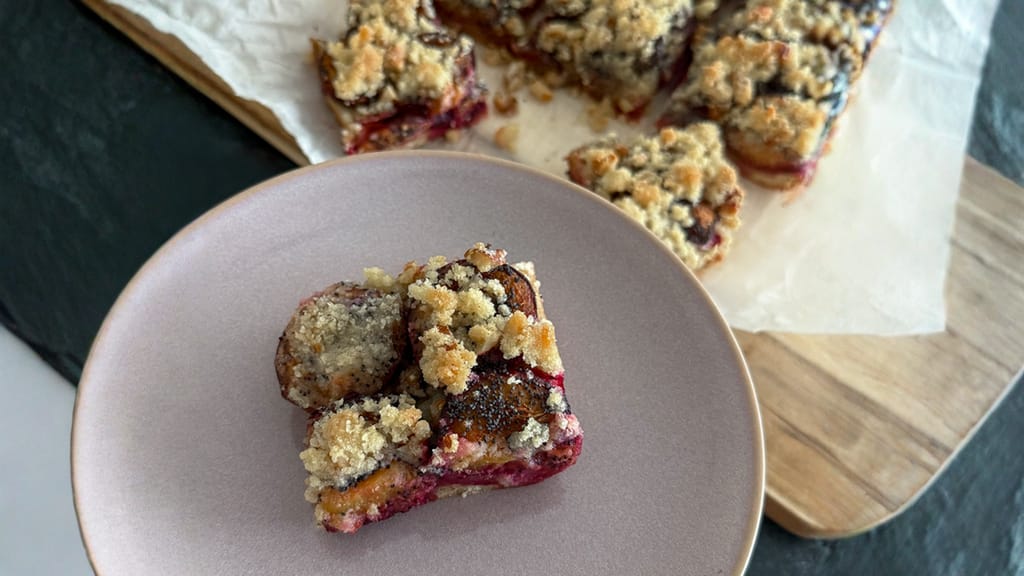
Classic yeasted plum sheet cake with crumble topping
Classic yeast plum sheet-pan cake with nut streusel
Yeast koláče with quark and povidla (thick Czech plum butter) are the classic wedding and fair koláčky: a little well of yeast dough filled with quark and topped with a spoonful of thick plum butter, or with the two fillings placed side by side. The method for the dough and quark filling is the same as for the fruit koláče above, only the fruit is replaced by plum butter.
Two things make the difference. The plum butter must be really thick, ideally thick enough to stand on a spoon; if it's thinner, mix in a little breadcrumbs or ground gingerbread, otherwise it will spread into the quark in the oven. And because plum butter is sweet on its own, keep the quark underneath less sweet so the koláč doesn't become cloying. The finished koláč is traditionally topped with streusel or just dusted with powdered sugar.
We don't yet have a separate recipe for koláčky with plum butter on Yumsto; the method above is based on the dough and filling of the blueberry koláče, where you simply swap the blueberries for plum butter.
Any fruit works for yeast koláče with quark as long as it doesn't release more juice during baking than the thin center of the dough can bear. By season:
June–July: cherries and sour cherries (pitted), currants, blueberries.
July–August: apricots, raspberries, blueberries.
August–September: plums, damsons, the first apples.
Autumn and winter: apples and pears, which are better briefly simmered first, and frozen fruit.
Put juicy fruit (raspberries, thawed strawberries) on the quark at the last moment and cover it with streusel right away. Hard fruit, especially apples, on the other hand needs softening first, or it won't bake through in 20 minutes in the oven.
That's exactly how the yeast apple koláče with quark and streusel handle it. The dough, made with egg, yogurt, lemon zest and nutmeg, is kneaded for about 12 minutes and stays sticky, which is right, so don't add flour. Diced apples are sautéed with butter, sugar, cinnamon and lemon juice until soft and caramelized, then thickened at the end with starch stirred into water. Into the well pressed out with the bottom of a glass go first the quark, then the apples and streusel; the koláče bake at 180°C (350°F) for 20–25 minutes and, once cool, are drizzled with a glaze of powdered sugar and milk.
Thickening with starch is a trick that suits any fruit that releases juice: the juice binds in the filling, and instead of a puddle under the koláč you get a glossy layer of fruit.
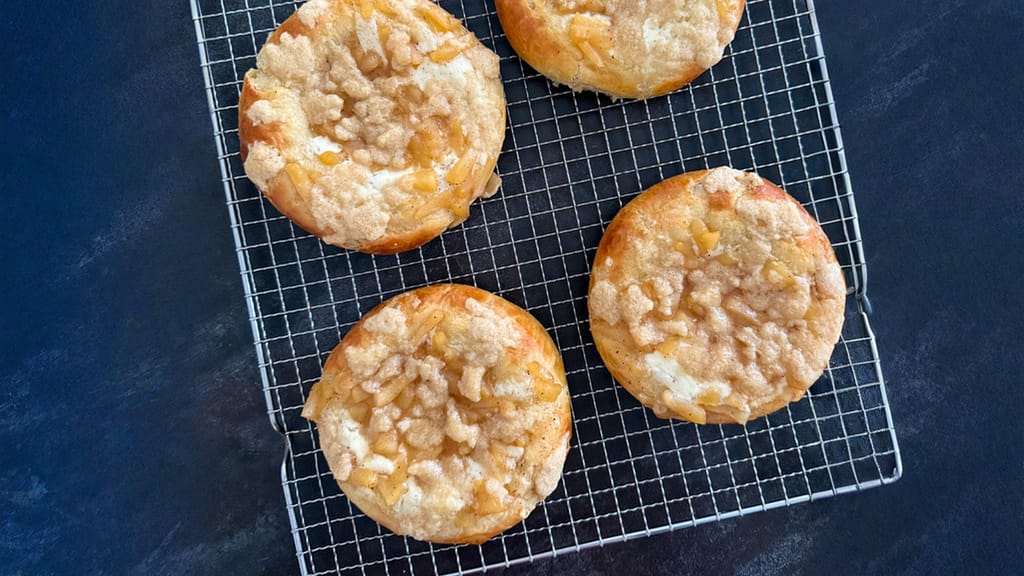
Yeasted apple buns with curd cheese and crumble topping
Yeast apple koláče with quark, cinnamon apples and streusel
Real yeast koláče can't be made without yeast: the fluffy structure comes from yeast, which needs time. But you can make koláče close to them in flavor and shape in a fraction of the time, in three ways: a quark dough with baking powder, ready-made puff pastry or a cup-method batter.
Three routes that work:
Quark dough with baking powder. Quark, flour, oil or butter and baking powder make a soft dough that's shaped like yeast dough and goes straight into the oven. It's denser and more like a buchta, but it suits fruit with streusel. We don't yet have a separate recipe for this on Yumsto.
Puff pastry. A ready-made sheet from the chilled section is a ready-made base; you just fill it. An example is the quark raspberry tart below, which you can make with quark and fruit without a minute of rising.
Cup-method batter. You just mix it, pour it onto a baking sheet, top with fruit and cover with streusel. It's done in 50 minutes.
If you want a yeast koláč but not an afternoon of waiting, the rise can be spread out: make the dough in the evening, let it rise overnight in the fridge and just shape it in the morning. In the cold it rises slowly, so it has more time to develop flavor, and in the morning it's easier to work with because it's firmer.
Sheet-pan fruit cake with streusel is the fastest route to a fruit cake for the whole family: the batter is poured onto a baking sheet, the fruit is arranged close together and covered with streusel. Unlike a yeast koláč, you don't wait, and because the batter is more tender it can carry even very juicy fruit.
So the fruit doesn't sink to the bottom, the batter must be thick, more sticky than runny, and the fruit should be dried off. Place the pieces side by side in a single layer, not on top of each other: fruit piled up steams, releases juice and the cake underneath stays raw. Grease the pan and dust it with coarse or semi-coarse flour, and the cake comes out easily even without paper.
Adjust temperature and time to the height of the cake; exact times and temperatures for different types of sheet-pan cakes are covered in the article what temperature to bake buchty and sheet-pan cakes. You can tell the cake is done by its golden surface and a skewer that comes out of the batter between the fruit dry.
A cup-method fruit cake is a quick cake made from a simple creamed batter without yeast: the ingredients are just mixed, poured into a baking pan, topped with fruit and covered with streusel. Traditionally the ingredients are measured with a cup; the recipe we link to is cup-method by name and method, but lists the ingredients in grams, so get your kitchen scale ready.
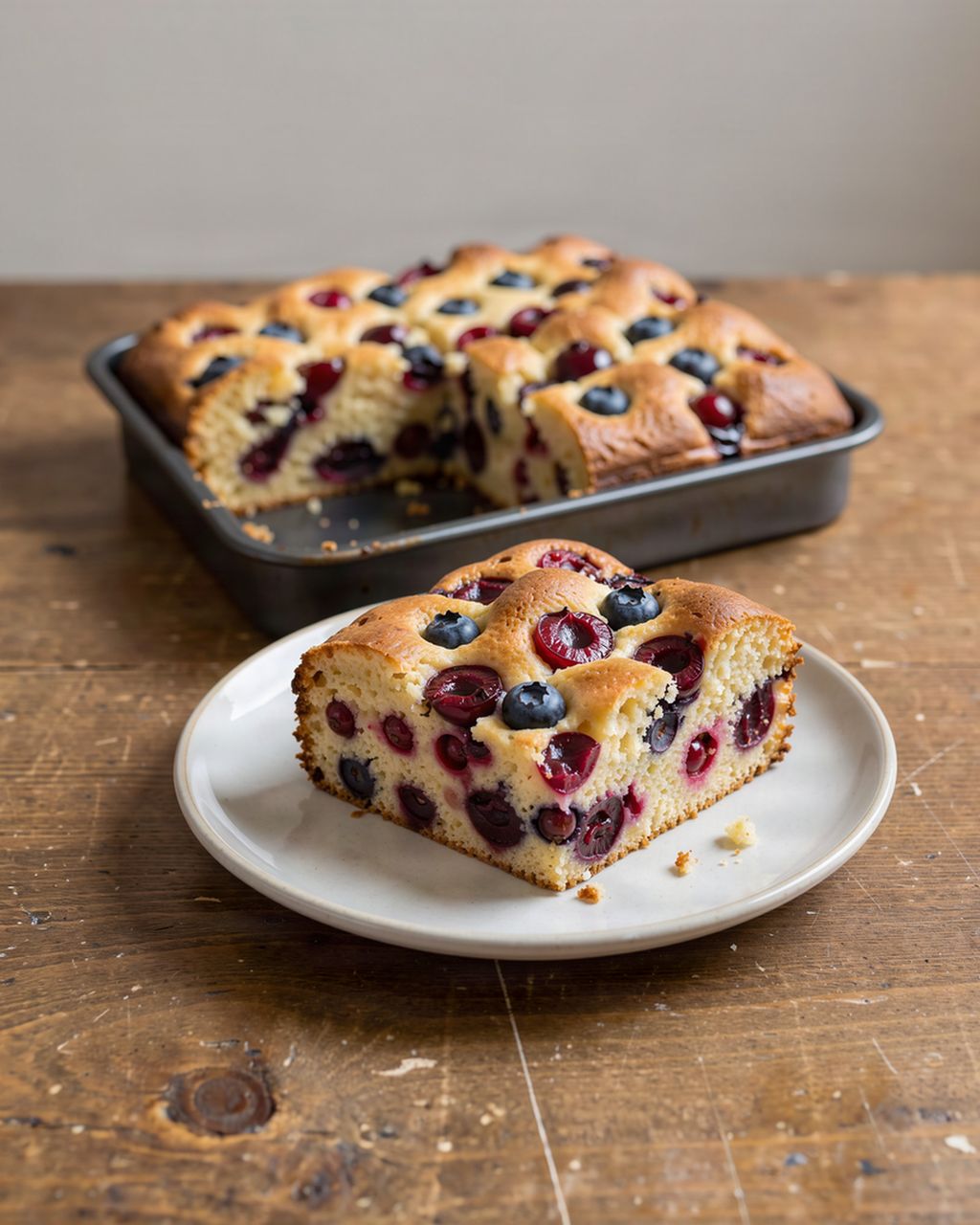
The plum cup-method cake is clever in that the batter and streusel come from one mixture. Butter, sugar and flour are mixed into a loose streusel, and one cup of it is set aside for the topping. Into the rest you mix baking powder, vanilla sugar, eggs and milk, stirring until the batter is smooth. It's poured into a greased, flour-dusted baking pan, plums are arranged on top as close together as possible, covered with the reserved streusel and the cake bakes in an oven preheated to 200°C (400°F) for 20–30 minutes until golden. The whole thing takes about 50 minutes.
In this recipe, feel free to swap the plums for other fruit of similar size and firmness: apricots, damsons, halved cherries. Soft fruit like raspberries or blueberries works too, just scatter it on right before the streusel so it doesn't get mixed into the batter.
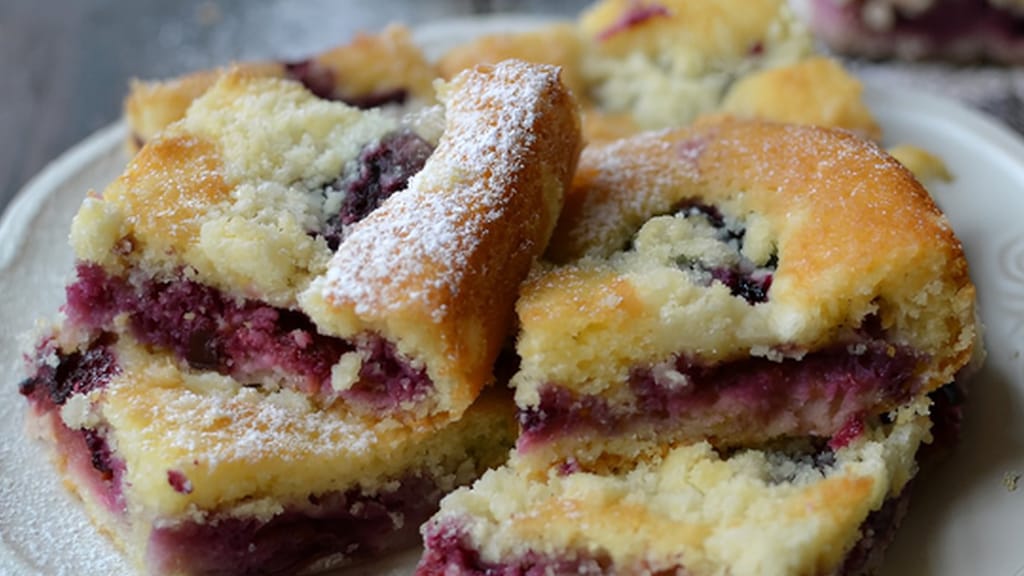
Plum crumble mug cake
Plum cup-method cake: batter and streusel from one mixture, ready in 50 minutes
A fruit cake with quark is a layer of quark filling with eggs and fruit on a thin base, which can be yeasted, shortcrust or puff pastry. The quark layer works like a custard: it sets as it bakes and holds the fruit in place.
The fastest version is the easy and quick quark raspberry tart on ready-made puff pastry. The sheet, paper and all, is laid into a round pan about 28 cm in diameter, the overhanging pastry is trimmed off and the strips are patched in where the edge is missing so the filling can't leak out. The filling is full-fat quark with two eggs, powdered sugar, vanilla extract and whipping cream, mixed until smooth. The raspberries are pressed in straight from frozen, because thawed ones would release juice, and the tart bakes at 170°C (340°F) on the lower rack for 40–50 minutes, until the center only wobbles slightly when you shake the pan.
Don't taste the filling with raw eggs in it; adjust the sweetness with sugar before adding the eggs. And let the cake cool in the pan after baking: the quark layer keeps setting outside the oven, and while warm it would run when sliced.
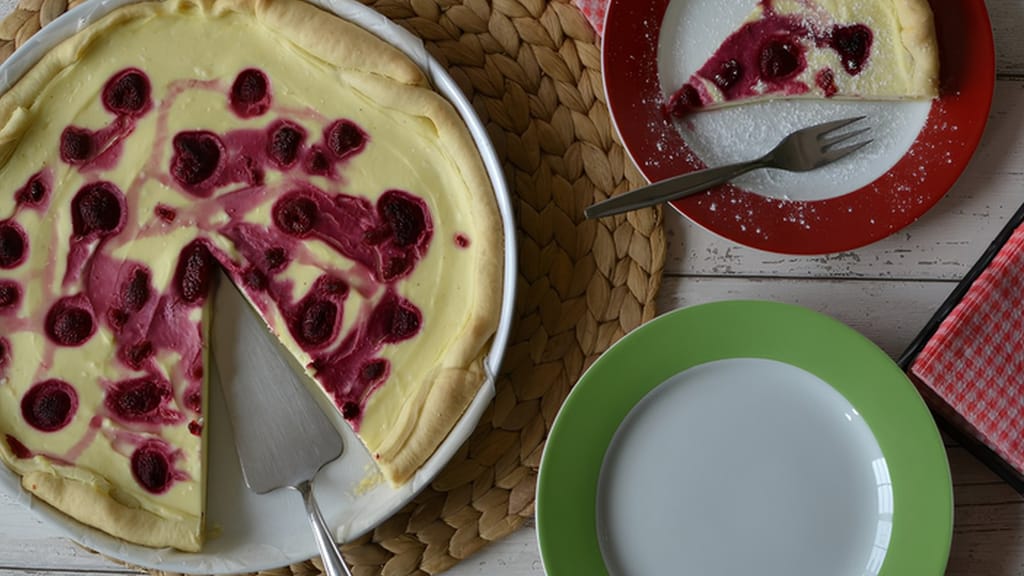
Easy & quick raspberry cheesecake tart
Quick quark raspberry tart on puff pastry
Round pans suit fruit cakes made with shortcrust and a creamy filling, and upside-down cakes where the fruit sits at the bottom. A round pan holds a taller layer of filling, so it can carry juicy fruit that would soak the dough on a baking sheet.
The currant cake with almond filling starts with a shortcrust of flour, sugar, salt, butter, eggs, water and rum, worked as quickly as possible and rested in the cold. Chilled, it's rolled out and used to line a pan sprayed with olive oil, and the bottom is sprinkled with almond flour, which soaks up the currant juice so the base stays crisp. On top goes a filling of soft butter, eggs, cream and almond flour, then 200 g each of red and black currants, and it bakes at 180°C (350°F) for 45–50 minutes, until the center is firm to the touch.
A layer of ground almonds, breadcrumbs or crushed cookies on the bottom is a universal safeguard for any fruit cake in a pan. It works like a sponge: juice that would otherwise seep into the dough is caught in it.
The second route is an upside-down cake. The upside-down cherry cake with caramel is made in a 25 cm pan: caramel of sugar and butter is poured into the bottom, cherries go on it, and on top comes a batter of butter beaten with powdered sugar and eggs, flour, sour cream, whipping cream and baking soda. It bakes at 180°C (350°F) for 45–50 minutes and is turned out immediately after coming out of the oven, so the caramel doesn't have time to set and the fruit stays on the cake, not in the pan.
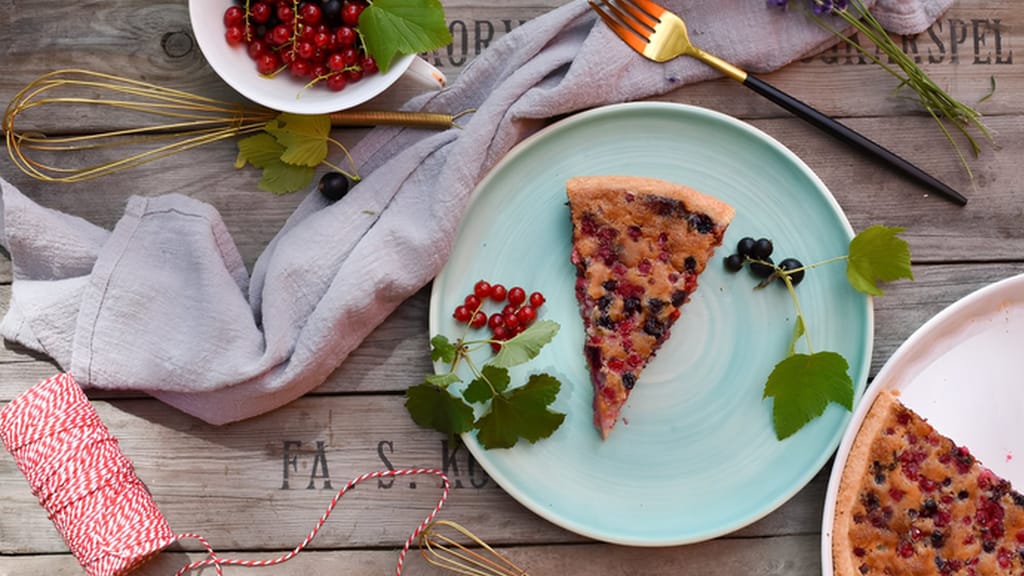
Currant tart with almond filling
Currant cake with almond filling in a round pan
Sour cream and yogurt make a fruit cake more tender and slightly tangy: the acid in them reacts with baking soda and the batter rises (baking powder raises it even without them, as it has its own acid component), and the fat and water keep it soft the next day too. That's why you'll find them in the batter of the upside-down cherry cake above, where sour cream with baking soda raises the batter and also balances the sweetness of the caramel.
Yogurt is used in fruit cakes similarly, either in place of part of the milk in the batter or instead of sour cream. You'll find specific yogurt cakes, bundt cakes and buchty in the article what to bake with yogurt.
A fruit cake with gelatin and sour cream is a different type: a baked, cooled base topped with a layer of sour cream set with gelatin and fruit, most often covered with clear cake glaze. The gelatin layer isn't baked; it's poured onto the fully cooled base and sets in the fridge. We don't yet have a separate recipe for this on Yumsto.
A fruit cake most often stays raw in the middle because the fruit released its juice into the batter before the batter had time to bake through. The fix is almost always in the fruit, not the oven.
Too much fruit piled up. One layer side by side, not a heap.
Wet fruit. Dry it after washing, let thawed fruit drain, or use it frozen straight into the filling, as the raspberry tart does.
No safeguard on the bottom. Ground almonds, breadcrumbs or coarse flour under the fruit soak up the juice.
Juicy fruit without thickening. Briefly simmer apples, rhubarb or plums with starch beforehand, or toss them in a spoonful of starch.
Cut side down. Place plum and apricot halves cut side up, so the juice stays in them.
Too high a temperature. The surface turns golden and the batter inside is raw; if the cake darkens too fast, cover it with parchment paper and lower the temperature by 10°C (about 20°F).
Slicing while warm. Quark and fruit fillings keep setting as they cool; let the cake cool to at least lukewarm.
When you're baking with frozen fruit out of season, all of this applies twice over.
Yes, yeast koláče can be baked a day ahead if you brush the edges with melted butter after baking and store them in an airtight container once they've cooled. The butter keeps the crust soft. Keep koláče with a quark filling in the fridge and let them sit at room temperature for a while before serving, or warm them briefly in the oven.
Yes, you can freeze yeast koláče baked and fully cooled, ideally each one wrapped separately so the streusel doesn't break off. Thaw them wrapped at room temperature, then warm them in the oven for a few minutes so the streusel crisps up again. Juicy fruit suffers most from freezing and turns a little softer after thawing.
Yeast koláče most often turn out hard because of too much flour, too short a rise or baking longer than necessary. A soft dough that is slightly sticky on your hands but pulls away from the sides of the bowl is right, so don't keep adding flour. Take the koláče out as soon as the edges turn golden and brush them with butter while still hot.
Both work. Full-fat quark gives a creamier, more tender filling, while half-fat is drier and has a more pronounced flavor. If the half-fat quark is wet, let it drain, or mix it with ricotta, which makes the filling smoother.
Yes, you can use frozen fruit in a fruit cake, ideally straight from the freezer and pressed into the filling or batter. Thawed fruit releases juice and makes the cake soggy underneath. A layer of ground almonds or breadcrumbs on the bottom and a spoonful of starch tossed with the fruit also help.
A fruit cake is done when the top is golden and a skewer pushed into the batter between the fruit comes out dry, with no raw batter on it. For cakes with a quark filling, the center should only wobble slightly when you shake the pan, not run. It sets as it cools.
One recipe worth heating the oven for, one tip, and one deal from the shop. Nothing else.