Tofu risotto with peas and zucchini
Vegan Protein: Best Sources, Protein Content, and How to Fit It Into Your Diet
Updated Aug 27, 2026
Vegan protein is protein from plants — soy, legumes, grains, nuts and seeds — and hitting your daily protein target on it is entirely doable, you just need to know where to look. Among ingredients that can carry a whole meal, the biggest hitters are seitan (~20–28 g per 100 g depending on the product), tempeh (~19 g), firm tofu (13–17 g depending on the coagulant), and cooked legumes (around 9 g); seeds pack more per 100 g, but nobody eats them in that quantity. Below you'll find protein values by the portion you'd actually put on your plate, technique tips for each source, the truth about "combining amino acids," and four nutrients you genuinely need to watch on a plant-based diet.
Vegan protein is protein sourced entirely from plants — soy, legumes, grains, nuts, seeds and mushrooms. Chemically it's identical to protein from meat: a chain of amino acids that your body breaks down and reassembles according to its needs. Where it differs is in the ratio of amino acids it carries and how well your body absorbs it — and both of those are things you can address through your choice of ingredients and portion size.
The term gets used two different ways, and it's worth keeping them separate:
Plant protein in food — lentils, tofu, tempeh, chickpeas, oats. This is what most of this article is about.
Vegan protein powder — soy, pea, rice or hemp concentrate in a tub. A supplement, not a foundation; it gets its own section near the end.
Nine of the twenty amino acids are essential — your body can't make them, so they have to come from food. A "complete" protein contains all nine in sufficient amounts, and that applies to several plants too, not just meat and eggs.
Complete plant sources: soy (tofu, tempeh, edamame, soy milk), quinoa, buckwheat, amaranth and hemp seeds.
For everything else, it's not that an amino acid is missing entirely — it's an imbalance:
Grains (wheat, rice, oats) are low in lysine.
Legumes have plenty of lysine but are low in methionine and cysteine.
That's why legumes and grains are often talked about as a pair that complements each other. But the idea that you have to combine them on the same plate is long outdated — more on that below.
Among ingredients that can carry a whole meal, seitan tops the list (~20–28 g per 100 g), followed by tempeh (~19 g) and firm tofu (13–17 g); cooked legumes come in around 9 g. Seeds pack more per 100 g (hemp ~31 g, pumpkin ~30 g), but nobody eats them in those quantities. The figures below are deliberately given for food in the state you'd actually eat it.
From soy and seitan, per 100 g of the finished food:
Seitan: ~20–28 g depending on the product — it's made from wheat gluten
Tempeh: ~19 g
Firm tofu: ~17 g, but only for tofu set with calcium sulphate; for standard retail tofu you'll typically find, count on more like 13–14 g
Edamame, cooked: ~12 g
Silken tofu: ~4.5–7.5 g
Soy milk: ~3 g per 100 ml
From legumes after cooking, per 100 g:
Lentils: ~9 g (around 25 g dry)
Chickpeas: ~9 g
Beans: ~8–9 g
Green peas: ~5 g
From nuts and seeds, per 100 g:
Hulled hemp seeds: ~31 g
Pumpkin seeds: ~30 g
Peanut butter: ~22 g (ranges 22–24 g; only the defatted version reaches the higher figures)
Almonds: ~21 g
Chia seeds: ~17 g (2 tbsp ≈ 4 g)
From grains and pseudo-grains, per 100 g:
Rolled oats, raw: ~13 g (European labels typically show 11–13 g)
Wholegrain bread: ~9 g
Quinoa, cooked: ~4.5 g (around 14 g dry)
Legumes and grains soak up water during cooking and roughly triple in weight — but not a single gram of protein is added. Start with 100 g of dry lentils at ~25 g protein, and after cooking you end up with about 250 g of cooked lentils, still carrying that same 25 g. So per 100 g of cooked lentils, you're looking at around 9 g.
If you read "lentils: 25 g protein" on a chart and then weigh out 100 g of the cooked stuff, you're crediting yourself with almost three times what you actually ate. This exact mistake is behind most meal plans that add up on paper but fall apart in practice.
The second trap is in the name of the ingredient itself: "oats" as a whole grain and "rolled oats" aren't the same entry in nutrition tables, and they differ by several grams of protein per 100 g.
Rule of thumb: for legumes, rice, oats and quinoa, always check whether a figure refers to the dry or cooked state. The safest bet is to weigh the ingredient before cooking and calculate from there.
The most protein-dense options are soy foods (tofu, tempeh, edamame) and seitan; legumes are the cheapest and most accessible; nuts and seeds top things up but can't carry a meal on their own. The gap between "I eat this because I'm supposed to" and "I actually enjoy this" is almost always down to technique, not the ingredient itself.
Firm tofu tastes as good as the amount of water you manage to get out of it — water stops the surface from browning and caramelising, so instead of searing, the tofu just steams. Wrap the block in a tea towel, weigh it down with a plate and a tin of something, and let it sit for 20–30 minutes; you'll press out somewhere around 30–50 ml of water.
Salt it beforehand, not just at the table. Salted tofu, or a quick dip in a light brine, tastes seasoned all the way through, not just on the surface.
Cornstarch — one tablespoon per 200 g of diced tofu — gives you a genuinely crisp crust when frying.
A hot pan and enough space. Crowded cubes release water and start to steam instead of sear; better to fry in two batches.
Marinate after searing, not before. Pressed and seared tofu soaks up marinade far better than raw tofu, which mostly just lets the marinade run off.
When shopping, check the ingredients list for calcium sulphate. According to USDA data, firm tofu set with calcium sulphate has around 683 mg of calcium per 100 g — tofu set with nigari, or standard retail tofu, contains only a fraction of that (European tables put it around 100 mg). Protein content varies with the coagulant too: calcium-sulphate-set tofu is typically listed around 17 g per 100 g in databases, while standard tofu from a typical fridge is more like 13–14 g. On a 150 g portion, that's the difference between ~26 g and ~20 g of protein — worth flipping the pack over to check.
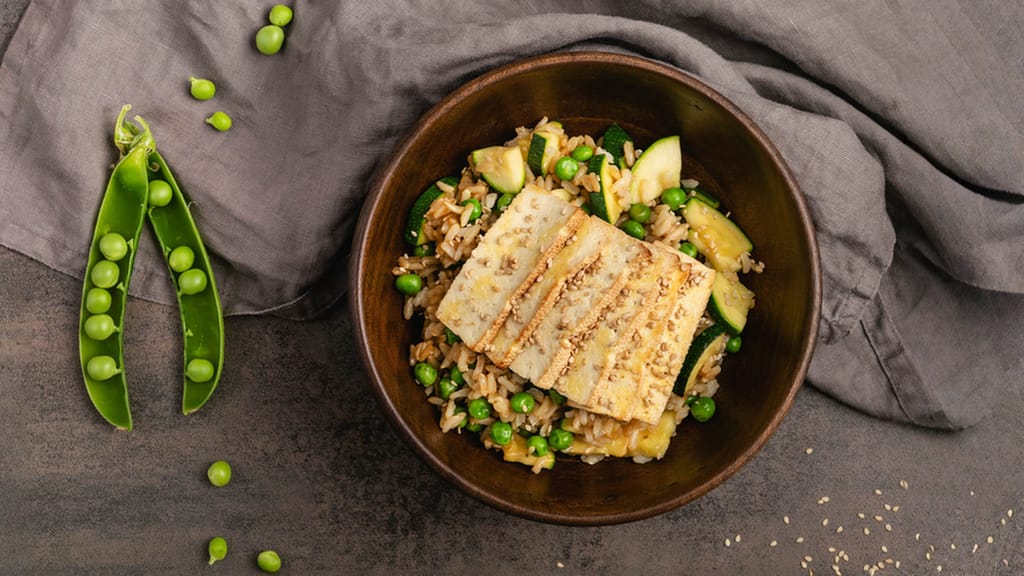
Tofu risotto with peas and zucchini
Tofu risotto with peas and courgette: a filling dinner where both the tofu and the peas carry the protein
Tempeh is made from whole soybeans fermented with a Rhizopus mould and pressed into a firm block. It has around 19 g of protein per 100 g and a firm, chewy texture that tofu simply never has.
Fermentation has one more practical upshot: tempeh is made from whole soybeans, skins and all, so it carries more fibre than tofu — and the flavour runs noticeably deeper too.
Tempeh tastes nutty, with a slight bitter edge. If the bitterness bothers you, steam it for 10 minutes before cooking with it — it noticeably mellows things out. Then slice it thin, sear until golden, and season with soy sauce, maple syrup and smoked paprika; the sugar caramelises in a hot pan and turns tempeh into something else entirely.
Seitan has roughly 20–28 g of protein per 100 g depending on the product — the highest of any ingredient that can carry a whole meal, since it's essentially pure wheat gluten washed out of dough. That range isn't sloppiness: pre-packaged seitan tends to sit lower (European tables list around 20.6 g), while homemade or denser branded versions can reach up to 28 g. It's unsuitable for anyone with coeliac disease or non-coeliac gluten sensitivity, no exceptions.
Amino-acid-wise, it's actually the weakest of the three: wheat protein is low in lysine. So pair it with a legume, or at least a bean-based sauce, rather than serving it with rice alone, which just doubles down on the same weakness.
Legumes are unbeatable on a cost-per-gram-of-protein basis: a kilo of dry lentils cooks up into roughly 2.5 kg of finished food carrying around 250 g of protein. No other source comes close.
Worth knowing how to handle:
Soak overnight and discard the water. For larger legumes (chickpeas, beans) this noticeably shortens cooking time and keeps the skins more intact, so chickpeas don't turn to mush. Soaking and long fermentation also transform flavour — that sour depth in sourdough bread comes from exactly that kind of hours-long proofing.
Red lentils don't need soaking. They're split, cook in 15 minutes, and break down into a creamy purée — perfect for soups, curries and dals, but not for salads. For salads, reach for beluga or green lentils instead.
Add acid at the end. Tomatoes, vinegar or lemon added early on toughen the skins, and beans won't soften even after an hour of cooking. Salt, on the other hand, is fine — salted soaking water actually softens the skins and helps beans hold their shape.
Don't pour out the liquid from canned chickpeas. Aquafaba whips up into a foam much like egg whites — you can build a vegan chocolate mousse with no cream out of it.
More ideas where legumes carry the whole dish: lentil salad, Italian tomato soup with legumes, borlotti bean salad with grilled peppers, crispy spiced roasted chickpeas as a snack instead of crisps, lentil-flour flatbreads or chickpea-flour crackers for dipping.
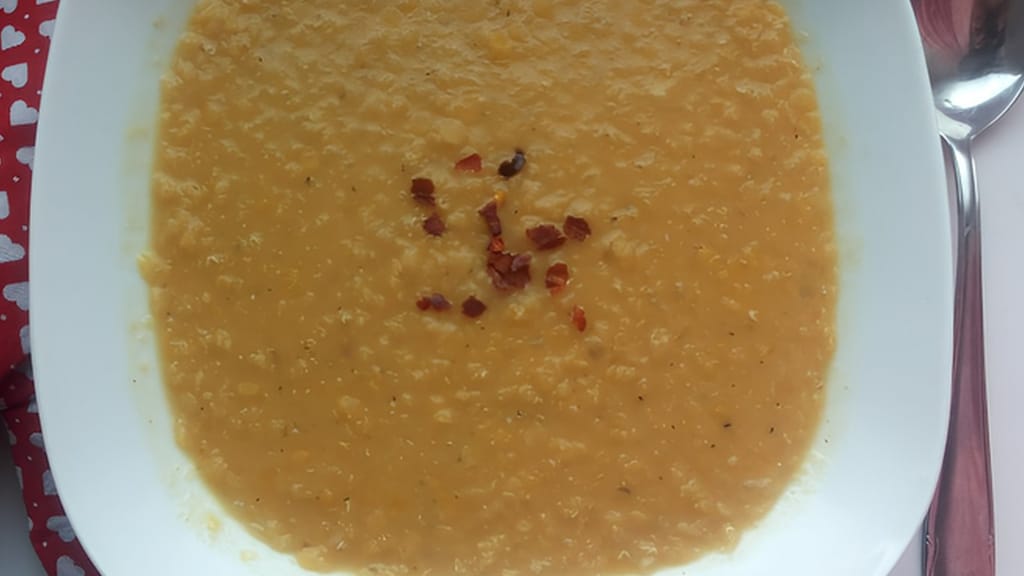
Red lentil soup with coconut milk and chilli
Red lentil soup with coconut milk and chilli — lentil protein on the table in 30 minutes
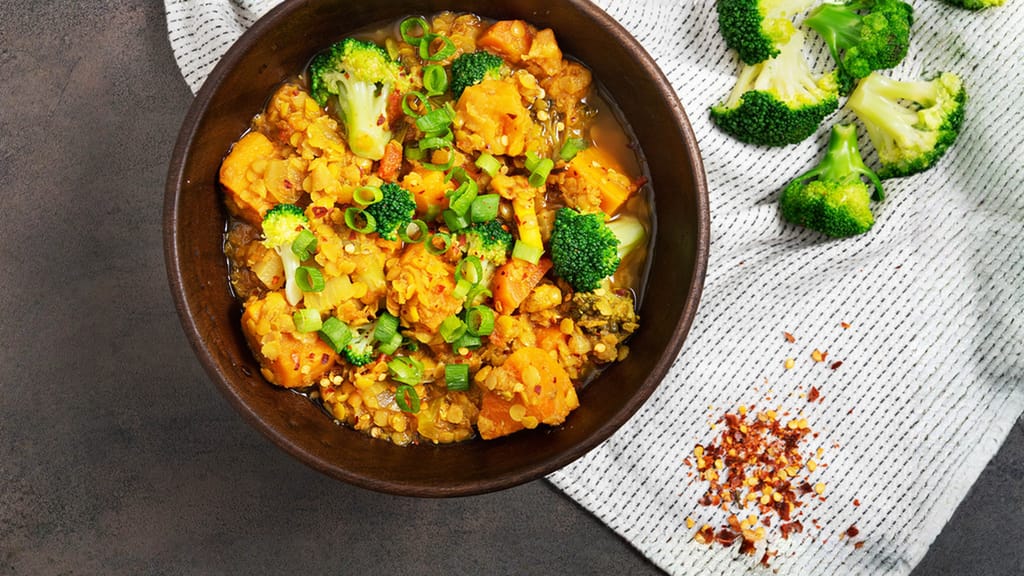
Sweet potato curry with red lentils
Sweet potato and red lentil curry: legume and side dish in one pot
Hemp seeds (~31 g of protein per 100 g) and pumpkin seeds (~30 g) pack roughly as much protein per 100 g as a cooked steak — except 100 g of seeds is also over 500 kcal, and nobody eats them in that quantity. Think of them as a way to add 3–5 g of extra protein to a dish, not as your main source.
A tablespoon of hemp seeds (10 g) on porridge or salad: ~3 g of protein, and it's a complete one.
Two tablespoons of chia (24 g): ~4 g of protein and about 8 g of fibre. Mixed with liquid at roughly a 1:6 ratio, they swell into a gel — the basis for chia pudding, see strawberry chia jam breakfast.
A tablespoon of ground flaxseed plus 3 tablespoons of water, left to sit for 10 minutes, replaces one egg in baking. Always grind flaxseed — ground, it disperses through batter or porridge and releases a nutty flavour; whole, it just stays a hard little seed that crunches and gives you nothing.
Tahini or peanut butter in a dressing: two tablespoons add ~5 g of protein and turn a plain salad into a proper meal. Classic smooth peanut butter has around 22 g of protein per 100 g; higher figures on labels usually belong to defatted versions, where protein is concentrated by removing fat.
Almonds and cashews work the same way — as a topping, not a portion. Homemade almond milk is lovely for flavour, but don't expect protein or calcium from it: both are a fraction of what you'd get from soy milk.
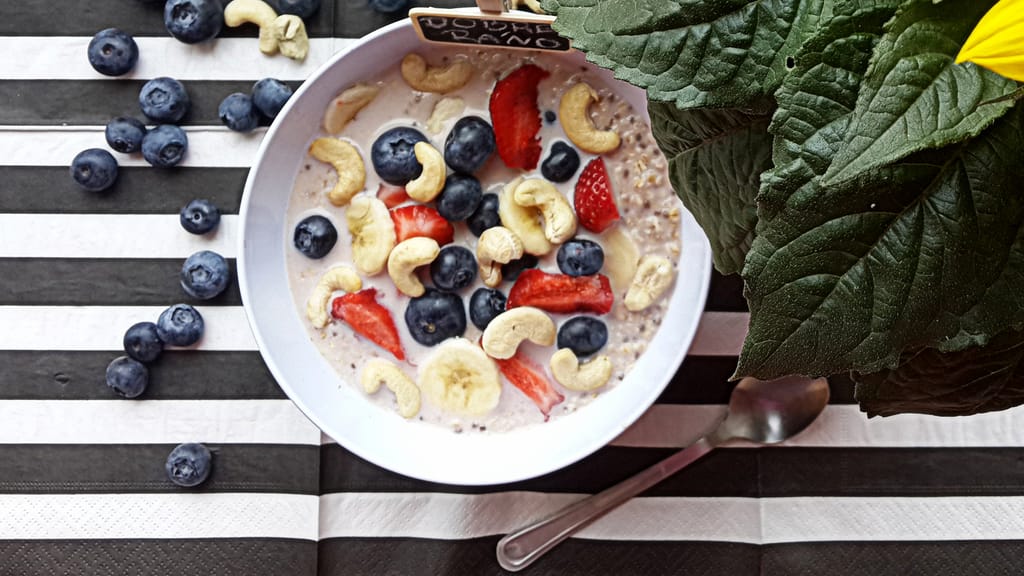
Oatmeal porridge with fruit, cashews and chia seeds
Porridge with fruit, cashews and chia seeds: a breakfast where the protein comes from the oats, the nuts and the seeds alike
You don't need to combine amino acids within a single meal. Your body keeps a pool of free amino acids and tops up whatever's missing across the day. The Academy of Nutrition and Dietetics' position paper on vegetarian diets for adults (Raj et al., 2025) states that a varied plant-based diet with adequate energy intake covers essential amino acid needs over the course of a day — no need to "pair" proteins on every plate. The Academy has no current position specifically for children or pregnancy. The old 1970s-80s advice that rice must appear on the plate alongside beans is outdated.
What still holds true: variety across the day and a decent-sized portion at every main meal. Combinations still matter in that they raise the protein quality of a specific meal — which is worth knowing if you only eat twice a day or train hard.
Reliable pairings where lysine and methionine meet:
Legume + grain: lentils and rice, chickpeas and couscous, beans and tortilla, hummus and wholegrain bread
Legume + seed: chickpeas and tahini (which is basically hummus itself), lentils and pumpkin seeds
Grain + nut or seed: porridge with almonds and chia
Soy on its own: tofu, tempeh and edamame don't need anything added
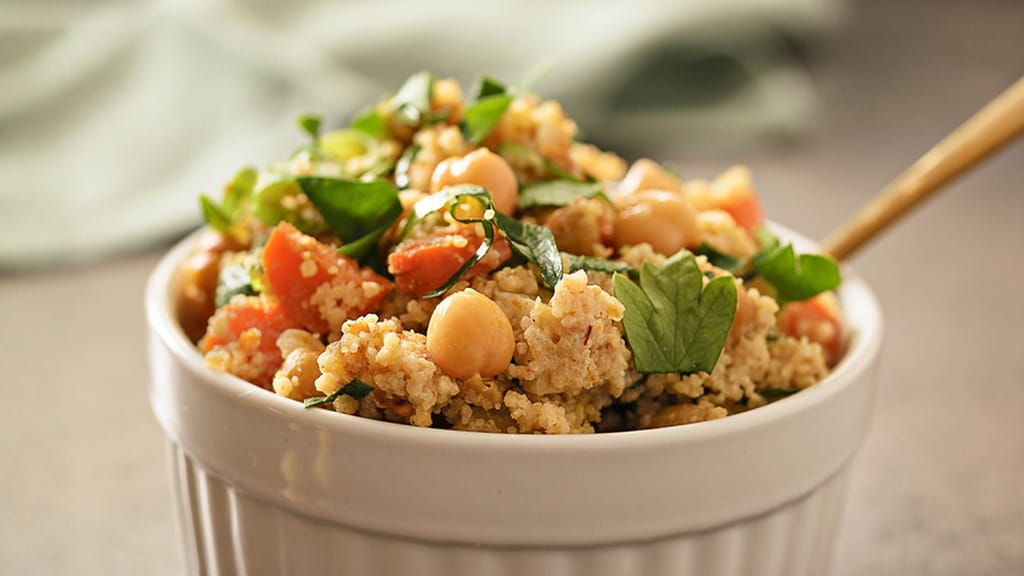
Couscous with chickpeas and roasted vegetables
Couscous with chickpeas and roasted vegetables — the textbook legume-plus-grain plate
EFSA sets the reference protein intake for adults at 0.83 g per kilogram of body weight per day — for a person weighing 70 kg, that's roughly 58 g a day. Only one authority recommends a higher target for plant-based eaters: the Dutch Health Council adds 30% for vegans (roughly 75 g for a 70 kg person), while EFSA, US DRI figures and Germany's DGE all keep the same 0.83 g/kg for plant-based diets too. A practical target that's easy to work with for someone that size is 65–70 g.
Sedentary adult, 70 kg: ~65–70 g a day — a practical target, not an official recommendation
Regularly active: 1.2–2.0 g/kg, so ~85–140 g for a 70 kg person
Per main meal: aiming for 25–30 g is more practical than trying to catch up on a total figure by dinner
Why does the higher target even come up? Protein quality today is measured using the DIAAS score, which combines amino acid profile with actual digestibility. Animal proteins tend to sit around 1.0 or above; most plant proteins fall between 0.4 and 0.9. Soy isolate, based on available measurements, scores 0.84 against the child reference pattern and around 0.98 against the adult one — the reference pattern makes the difference, not the brand. Soy concentrate (0.88) and potato protein (1.00) score similarly high. Values vary across studies, so don't take any single "exact" figure too literally. A lower score doesn't mean "doesn't work" — it means "eat a slightly bigger portion."
A day with ~85 g of plant protein might look like this: breakfast ~24 g (oats, soy milk, chia, almonds), lunch ~29 g (chickpeas, couscous, tahini), dinner ~33 g (tofu, rice, broccoli). Broken down into ingredients you can buy at any decent supermarket:
Breakfast (~24 g) — 60 g rolled oats (8 g), 250 ml soy milk (8 g), 2 tbsp chia (4 g), 20 g almonds (4 g)
Lunch (~29 g) — 200 g cooked chickpeas (18 g), 60 g dry couscous (8 g), 1 tbsp tahini (3 g), roasted vegetables
Dinner (~33 g) — 150 g firm tofu set with calcium sulphate (26 g), 70 g dry rice (5 g), broccoli (3 g)
That adds up to roughly 85 g — comfortably above what a 70 kg adult needs, and without a single scoop of powder. Though tofu brand matters here: with standard retail tofu (13–14 g per 100 g), a 150 g portion comes to about 20 g, bringing the whole day to roughly 80 g. What matters most is having protein at every meal. The classic mistake is bread and jam for breakfast and an all-vegetable lunch — dinner alone can't make up that shortfall.
Plant-based eating has four genuine weak spots — and protein isn't one of them. Keep an eye on vitamin B12, iron and zinc, EPA and DHA omega-3 and iodine. Calcium too, unless you're drinking fortified plant milks.
The main plant sources of iron and zinc are legumes, tofu, wholegrains, pumpkin and hemp seeds, and tahini — lentils, tofu and pumpkin seeds are all solid contributors.
What to do with them in the kitchen:
Pair with vitamin C in the same meal. Vitamin C boosts iron absorption. Tomatoes, peppers and lemon are all good sources — and a squeeze of lemon in lentil soup isn't just a garnish, it genuinely lifts the flavour too.
Dry-toast your seeds. Pumpkin and sunflower seeds toasted in a dry pan for two minutes smell completely different from raw ones — and it's the cheapest way to actually get them into your cooking.
Firm tofu set with calcium sulphate contains around 2.7 mg of iron per 100 g according to USDA data — a genuine source of iron. Serve it with vegetables you've put as much care into as the tofu itself.
Cover EPA and DHA omega-3 with an algae oil supplement, iodine with iodised salt, and calcium with calcium-sulphate-set tofu or a fortified plant milk. In more detail:
Omega-3: flaxseed, chia and walnuts contain ALA. Algae oil is the plant source that supplies EPA and DHA directly — which is exactly why long-term plant-based eaters often turn to it.
Iodine: plant-based diets tend to be low in it. Iodised salt is the simplest fix. Seaweed swings to the opposite extreme — kelp in particular can contain so much that a single serving significantly exceeds the safe intake, so go easy on it.
Calcium: reach for calcium-sulphate-set tofu and plant milks fortified with calcium; the label typically shows around 120 mg per 100 ml, roughly on par with cow's milk. A homemade, unfortified nut milk doesn't fill that role.
You only need protein powder when you're struggling to get enough protein from food — typically with a heavy training load, low appetite, or a stretch where you just don't have time to cook. Otherwise, legumes and soy are cheaper and come with fibre and minerals you won't find in a powder.
If you do reach for one, composition is what matters:
Soy — the most complete amino acid profile among plant proteins; isolate scores 0.84 DIAAS against the child reference pattern and around 0.98 against the adult one, with the pattern making the difference, not the brand. Soy concentrate (0.88) and potato protein (1.00) match or beat it.
Pea — high in lysine, low in methionine.
Rice — the exact opposite: high in methionine, low in lysine.
A pea-rice blend is therefore a smarter choice than either alone. A typical 30 g serving delivers 20–25 g of protein.
Hemp has the least protein per serving of the bunch, but brings fibre and a pleasant nutty flavour.
And it doesn't have to end up in a shaker: a neutral soy or pea powder disappears into porridge or a peanut butter and banana smoothie, where the peanut and banana flavours completely take over.
Plant protein sources carry a significantly smaller carbon footprint than animal ones — and the gap isn't a matter of a few percent, it's an order of magnitude. According to Our World in Data, drawing on Poore and Nemecek's 2018 analysis of more than 38,000 farms, 100 g of protein from beef works out to tens of kilograms of CO₂ equivalent, while the same amount of protein from legumes comes to under one kilogram. Land use follows a similar ratio.
The practical takeaway is gentler than you'd expect: you don't have to go vegan for it to matter. Swapping two meat-based meals a week for lentils or tofu is a measurable step — and you've now got the ingredients and technique to do it.
Here's the drill: soak them overnight and discard the soaking water, boil them thoroughly, and cook with cumin or a piece of kombu seaweed. Introduce them into your diet gradually, not all at once. The mildest in both flavour and texture are the hulled/split legumes — red lentils and split peas.
Soy naturally contains isoflavones — plant compounds that are simply characteristic of soy. One to two servings of tofu or tempeh a day is a perfectly normal amount in a European diet. If you're managing a health condition, discuss your diet with your doctor — don't let an article set the rules for you.
Keep opened tofu submerged in cold water in a sealed container, change the water daily, and use it within 3–4 days. Cooked legumes also keep for 3–4 days in a sealed container in the fridge; if you cook a big batch, portion it out and freeze — once thawed, it's indistinguishable from fresh in soups or curries. Tofu freezes well too, and freezing actually makes it more porous, which is a plus when pan-frying: it soaks up marinade far better.
A plant-based diet for children, during pregnancy or while breastfeeding absolutely belongs in the hands of a registered dietitian or paediatrician — there are more variables at play than any article can cover. This piece will help you with protein sources and how to cook them, but it's no substitute for professional guidance.
Yes. Protein supports muscle growth, and what actually matters is your total daily intake and training — not whether the protein came from tofu or chicken. In practical terms, aim for 1.6–2.0 g of protein per kilogram of bodyweight per day, split across 4–5 servings of 25–40 g, built around soy, seitan and legumes. Plant sources are lower in leucine, so it's worth going for a slightly bigger portion to compensate.
One recipe worth heating the oven for, one tip, and one deal from the shop. Nothing else.