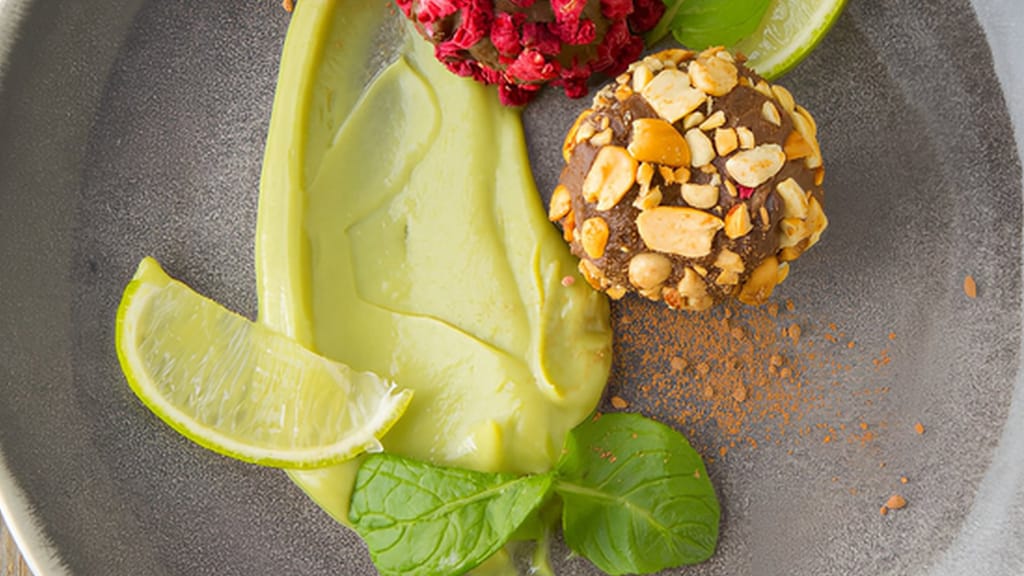
Chocolate avocado truffles with lime & wasabi cream
Vegan Chocolate Mousse Without Cream: Creamy with Avocado, Coconut or Aquafaba

Updated Jul 19, 2026
Vegan chocolate mousse doesn't need cream or eggs to be thick and creamy — you just need the right base to hold the texture. There are three tried-and-tested routes: blended avocado, chilled coconut cream, or whipped aquafaba. Each gives a different result: avocado makes the richest, most filling mousse, coconut a silky-creamy one, and aquafaba the lightest, airiest version. Below you'll find ratios, a step-by-step method, common mistakes, and serving tips.
You can replace both cream and eggs in vegan chocolate mousse with three tried-and-tested bases — each giving a different texture:
Ripe avocado – the thickest, richest mousse, ready in minutes in a blender. Roughly 2 avocados (250–300 g of flesh) to 150 g of chocolate.
Chilled coconut cream – silky and creamy, with a mild coconut flavor. Use the solidified part from a tin of full-fat coconut milk.
Whipped aquafaba – the lightest, airiest mousse, closest to a classic French one. The liquid from one tin of chickpeas (about 120–150 ml) to 150–200 g of chocolate.
A fourth option is silken tofu blended with melted chocolate — this gives a firm, pudding-like mousse. You can also combine bases: whipped coconut cream folded into aquafaba holds its shape while staying airy. If you're just starting out with plant-based cooking, take a look at our guide to what vegans eat and why.
Avocado adds creaminess without cream, and it barely brings any flavor of its own — once mixed with cocoa and chocolate, you simply can't taste it. It does need to be fully ripe and soft, though, or the mousse will end up fibrous and slightly bitter. Blend it until completely smooth (mashing alone won't do) and, if you like, press the mixture through a sieve. Besides texture, avocado brings fat: nutrition databases put it at roughly 15 g of fat per 100 g, mostly monounsaturated (oleic acid) — the same type found in olive oil.
Chocolate avocado truffles with lime & wasabi cream
Chocolate avocado truffles — proof that avocado and chocolate really do belong together
Coconut cream is the simplest 1:1 swap for dairy cream. Buy a tin of full-fat coconut milk and chill it in the fridge for at least 12–24 hours; the fat will rise to the top and firm up. Scoop out just this solid part (save the coconut water underneath for smoothies) and whip it until creamy. Choose a milk with the highest coconut content possible (60% or more) and no unnecessary thickeners — more coconut means a firmer cream. Keep in mind coconut is high in saturated fat, so use it in moderation.
Aquafaba — the liquid from canned chickpeas — whips up into stiff peaks just like egg whites. It works thanks to dissolved chickpea proteins and starches that stabilize the air bubbles. Whip it for 5–10 minutes until stiff peaks form; a pinch of cream of tartar or a few drops of lemon juice at the start helps, as does a chilled bowl. In practice, it's almost impossible to overwhip at home. Then gently fold the whipped aquafaba into the lukewarm melted chocolate in three additions so the mousse doesn't collapse.
Silken tofu makes a firm, pudding-like mousse with a higher protein content. Blend it until smooth with melted chocolate and a pinch of vanilla; the better the chocolate, the better it masks tofu's mild soy flavor. It's a great choice when you want to make the dessert ahead of time — once chilled, it sets nicely and holds its shape.
Go for dark chocolate with 70% cocoa or more — it gives depth of flavor and structure, and usually contains no milk. Always check the ingredients though: even dark chocolate can contain milk fat or milk powder. Anyone with an allergy should also watch out for 'may contain milk' warnings. In such a simple dessert, quality really shows, so it's worth using better chocolate; cheap chocolate loaded with sugar and hardened fat gives a flat taste and sets less well.
The method has four steps: melt the chocolate, prepare the base, gently combine the two, and chill. Below is the coconut cream version; for the avocado version, simply blend everything together, and for the aquafaba version, fold in the whipped aquafaba at the end.
Melt the chocolate over a water bath, or in the microwave in 20–30 second bursts, stirring each time. Keep the temperature under 50°C (122°F).
Prepare the coconut cream – scoop the solid part from the chilled tin and whip it until fluffy.
Combine the two – fold the lukewarm (not hot) chocolate into the cream a little at a time with a spatula, until you get a smooth mixture with no lumps.
Chill – divide between glasses and refrigerate for at least 2 hours. Serve chilled, but not completely firm.
You can fine-tune the texture and flavor with three things: the right sweetener, a pinch of salt and vanilla, and gentle mixing.
Sweetener: maple or agave syrup add a subtle caramel note; erythritol or stevia sweeten without calories but can leave a slight cooling sensation on the tongue.
A pinch of salt brings out the chocolate flavor and balances the sweetness.
Real vanilla extract deepens the flavor and softens the bitterness.
Fold gently, from the top down so you don't knock the air out of the mousse — this matters especially with aquafaba and coconut.
Taste as you go: cold dulls flavor, so the mixture should taste a bit sweeter and bolder than you'd expect before it's chilled.
There are three main problems: seized chocolate, lumps, and a runny mousse. All of them have simple fixes.
Seized (hardened) chocolate happens from overheating or a drop of water getting in. Try rescuing it by whisking in a tablespoon of hot plant-based cream or hot water — sometimes it smooths back out.
Lumps mean the chocolate was too cold and firmed up on contact with a chilled base. Work with lukewarm chocolate (around 35–40°C/95–104°F) and a base at room temperature.
A runny mousse with aquafaba usually means the whipped peaks weren't stiff enough, or the chocolate was too hot and deflated them. Whip to stiff peaks and let the chocolate cool down first. A pinch of dissolved agar can also help firm it up.
Can you taste the avocado? It was underripe — use a soft, dark one instead, and add more cocoa, vanilla and a pinch of salt.
Tart fruit, crunchy nuts and grated chocolate all pair beautifully with chocolate mousse — the contrast in texture and acidity cuts through the richness.
Berries (raspberries, strawberries, blackberries) bring a fresh tartness that lightens every spoonful.
Toasted nuts (almonds, hazelnuts, pistachios) add crunch — roughly chop and sprinkle on top.
Grated dark or vegan white chocolate gives it a luxurious finishing touch.
You can layer the mousse with fruit purée, or serve it alongside coconut ice cream or caramelized bananas.
For more ideas on pairing chocolate with fruit and nuts, check out our guide to the best flavor combinations.
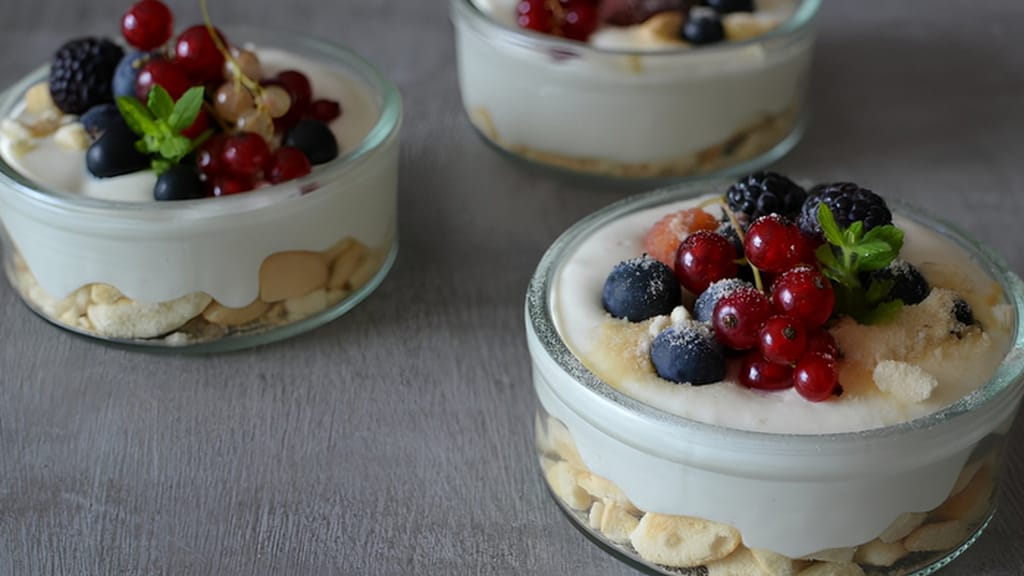
Blackberry dessert with coconut cream
Blackberry dessert with coconut cream — a fresh fruity counterpart to chocolate mousse
Thanks to its plant-based ingredients, vegan chocolate mousse made with avocado, coconut and dark chocolate is a bit more interesting nutritionally than the classic cream version — but it's still a dessert, and it mostly comes down to how much sweetener and chocolate you use.
Avocado provides mostly monounsaturated fats and potassium; reviews generally link it to supporting heart health.
Dark chocolate is rich in cocoa flavanols — studies suggest these may modestly support vascular function and blood pressure, though the effect is strongest with chocolate that's high in cocoa and low in sugar.
Coconut milk adds creaminess but is high in saturated fat, so it's best enjoyed as an occasional treat rather than a staple.
Exact numbers (calories, fat, sugar) vary depending on the recipe and sweetener used — as a rough guide, expect around 200–300 kcal for a generous portion. Think of it as a lighter dessert option, not a health food.
Covered, vegan chocolate mousse keeps in the fridge for 2–3 days. The avocado version is best eaten on day one, since avocado darkens and its flavor changes over time. It can be frozen for 1–2 months, though it tends to turn grainy after thawing — the coconut and tofu versions handle freezing better than the aquafaba one, which deflates once thawed.
In a properly made avocado mousse, you can't taste the avocado at all — the cocoa, chocolate and a pinch of salt mask it completely. The key is using a fully ripe, soft avocado and enough chocolate; an underripe avocado will leave a bitter, grassy aftertaste.
Yes, you can sweeten vegan chocolate mousse without sugar by using erythritol, stevia, or a few blended dates. Choose a chocolate sweetened with erythritol, or use 100% cocoa mass and sweeten it separately yourself — otherwise the sugar will simply come from the chocolate.
To avoid a coconut flavor, swap the coconut cream for blended avocado, silken tofu, or a neutral plant-based whipping cream (soy or oat). All three give a creamy mousse without any coconut taste; avocado also adds the most richness.
Yes, vegan chocolate mousse made with avocado, coconut or aquafaba is naturally gluten-free, since it contains no flour or grains. To be completely sure, check the ingredients on your chocolate and sweeteners — if you're sensitive to gluten, look for a gluten-free label on the chocolate packaging.
One recipe worth heating the oven for, one tip, and one deal from the shop. Nothing else.