Raspberry tiramisu

Updated Jul 19, 2026
Plating desserts like a Paris pâtisserie comes down to three things: a large plate with empty space around the portion, one clear colour contrast, and an odd number of decorations. Everything else is detail — but those details decide whether your dessert looks like it belongs in a pâtissier's window, or just like an extra plate on the table. We'll walk through choosing the right dishware, composing the plate, using edible flowers and gold leaf, and the tableside service tricks pastry chefs rely on. No magic involved — just a handful of rules you can master in an afternoon.
Choose a plate one size larger than the portion actually needs, and leave empty space around the dessert. A rule from fine dining says food should cover no more than two-thirds of the surface — the remaining third frames the dessert and makes its colours pop. White porcelain is the safest choice: it works equally well under dark chocolate, fruit, or pastel-coloured creams. Only reach for a coloured or patterned plate when it complements the dessert rather than competing with it for attention.
Different dessert formats call for different plates:
Cakes and slices: a wide, flat plate 26–30 cm across, so the layers and a clean cut can shine.
Mousse, panna cotta, tiramisu: a short glass or a nicely lit tumbler that shows off the layering.
Macarons, pralines, petit fours: a small porcelain plate with decorations in odd numbers (3 or 5 pieces).
Warm desserts (fondant, pancakes, apple crumble): a pre-warmed plate — cold porcelain will pull the heat out of the dessert within moments.
The simpler the plate, the more the dessert itself stands out — a patterned rim competes with fruit and drizzle for attention.
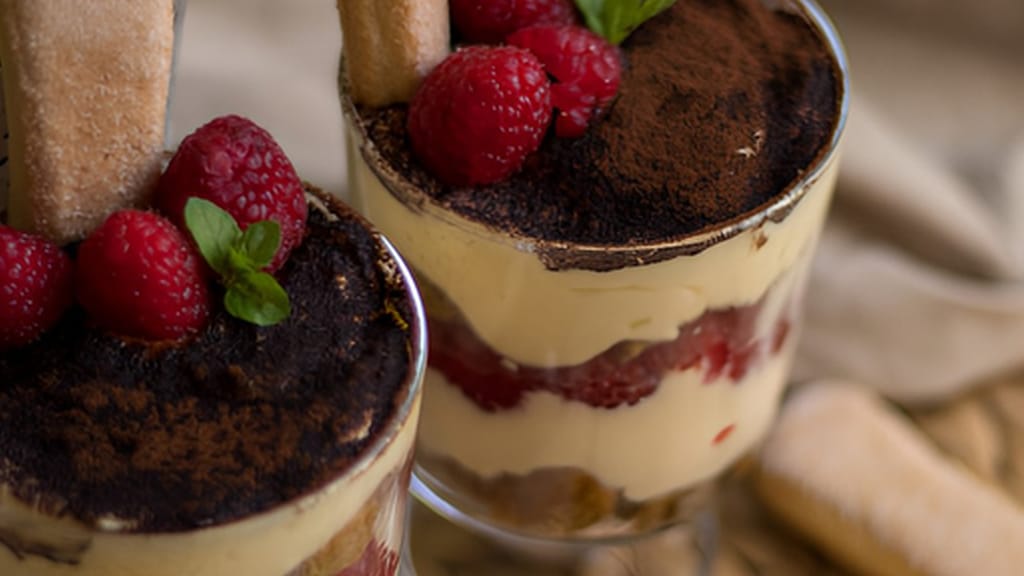
Raspberry tiramisu
Raspberry tiramisu served in a glass, so every layer shows through
Dessert forks and spoons are smaller than the main-course versions, sized to match the portion and the bite. Stainless steel is the low-maintenance classic; silver or gold-plated cutlery adds a festive touch, but make sure it matches the rest of the table setting. Serve creamy desserts with a spoon, and cakes with a crisp layer with a fork or dessert knife instead. Go for a comfortable handle — cutlery should feel good in the hand — and set out a few more pieces than you have guests.
A well-arranged dessert has three colours, one point of height, and an odd number of decorations. Three shades are enough to keep the plate interesting without looking chaotic; height adds drama that a flat plate lacks; and an odd number of pieces (3 raspberries, 5 mint leaves) reads more naturally to the eye than an even one. Place the main element in the centre or slightly off it, and scatter smaller accents around it. Treat the plate like a canvas — every element should have a reason to be there.
Contrast is what catches the eye: a dark chocolate cake with bright red raspberries, pistachio mousse with white almond flakes, caramel cream with a touch of green mint. Stick to the rule of three shades and let one colour dominate. Cool colours (blue, purple from blueberries) feel elegant and restrained, while warm ones (red, orange, gold) feel inviting and festive — choose based on the mood you want to set.

A garnish should add flavour or texture, not just colour. Slices of strawberry and kiwi bring freshness, fresh raspberries add acidity that balances sweet creams, and a few leaves of mint or lemon balm scent the whole plate. A handful of toasted almonds, cocoa nibs or crumble adds crunch. Cut fruit just before serving so it doesn't brown, and pat it dry — wet slices will melt sugar and blur your whole composition.
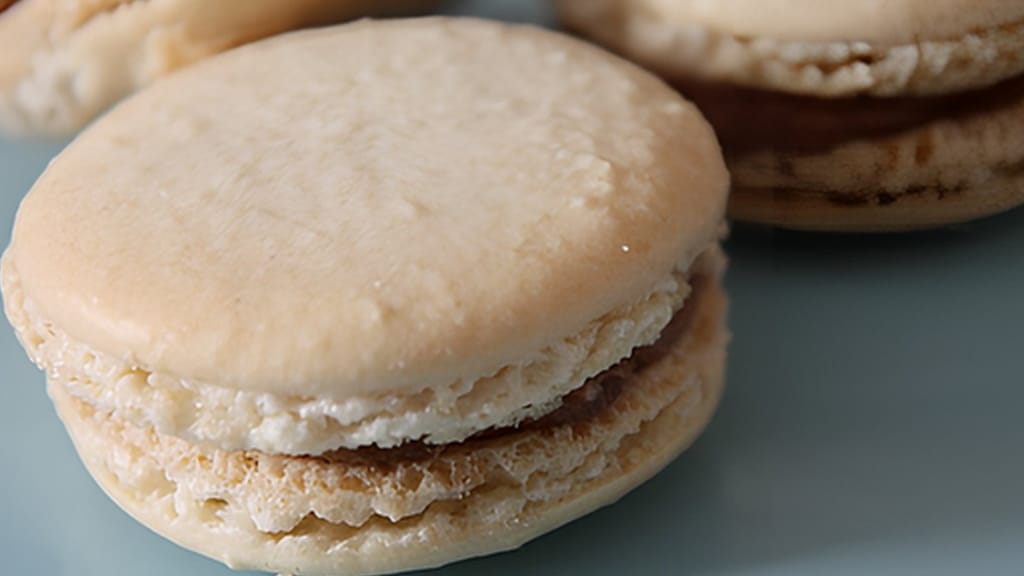
Macarons – the winning recipe
Macarons made from the winning recipe — always plated in odd numbers
A drizzle is a set of thin sauce lines dragged across the plate — the fastest way to elevate any dessert. Scoop melted chocolate or fruit coulis with a spoon and drag it in a zigzag across the plate with a light flick of the wrist; for cleaner lines, use a squeeze bottle with a narrow tip. The key is consistency: coulis should be as thick as runny honey, so it holds its shape without spreading. Loosen a too-thick sauce with a splash of water, or firm up a too-thin one with a reduction or a pinch of pectin. For more techniques — chocolate decorations, isomalt and beyond — see our article on decorating French desserts with chocolate, isomalt and other techniques.
Edible flowers and metal leaf can turn a dessert into a showcase-worthy centrepiece — as long as you follow two rules: decorate only with flowers verified as edible and stick to the mantra less is more. Violets, rose petals, marigold (calendula) or begonia add colour and a delicate scent; edible gold and silver add a sense of luxury. A few well-placed pieces make more of an impact than a plate heavily sprinkled with garnish.
In the EU, edible gold is listed as the additive E175 and silver as E174, sold as leaf, flakes or dust at 23–24 carat purity. According to available sources, gold is chemically inert and passes through the body unchanged — it has no taste or nutritional value, and is purely decorative. Gold leaf suits cakes and pralines, while silver dust works well on macarons or biscuits. Apply with a dry hand or a small brush only once the dessert is finished, and use just a pinch — beyond the visual effect, it's a fairly expensive garnish.
The best results combine elements that also bring different flavours and textures. Strawberries with violets and gold dust make for a beautiful composition with a sweet-floral harmony; raspberries with mint leaves and a shaving of dark chocolate deliver acidity, freshness and bitterness all at once. Stick to the rule of three even here — two or three garnishes, not five. Experiment, but always ask whether each element adds flavour, or just takes up space.
In Paris pâtisseries, service is part of the experience — three tricks you can easily bring home: slicing the cake right in front of the guest, flambéing at the table, and finishing the plate with coulis and garnish just before serving. Each one adds a touch of exclusivity and turns plating into a bit of theatre.
Slicing at the table reveals the cake's layers and textures and gives the moment a festive flourish. The secret to a clean cut: warm a sharp knife in hot water, wipe it dry, then slice — rinsing and drying the blade between each cut. A warmed blade glides through cream and sponge without tearing, so each portion holds its shape.
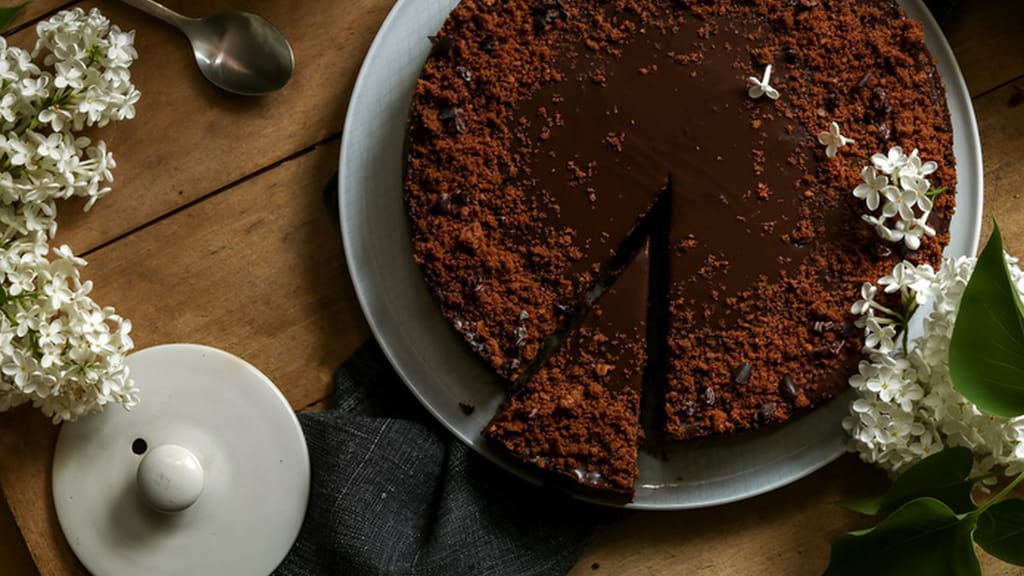
Simple chocolate cake
A simple chocolate cake that slices beautifully in front of guests
Flambéing brings a dramatic flame, and the caramelisation of sugar and alcohol deepens the flavour. In Paris pâtisseries, it's best known from Crêpes Suzette — pancakes in orange butter, doused in liqueur and set alight tableside. At home, it works just as well with ice cream sundaes or pan-fried fruit. Use a liqueur around 40% ABV (Grand Marnier, Cointreau), warm it only gently, and light it away from the stove.
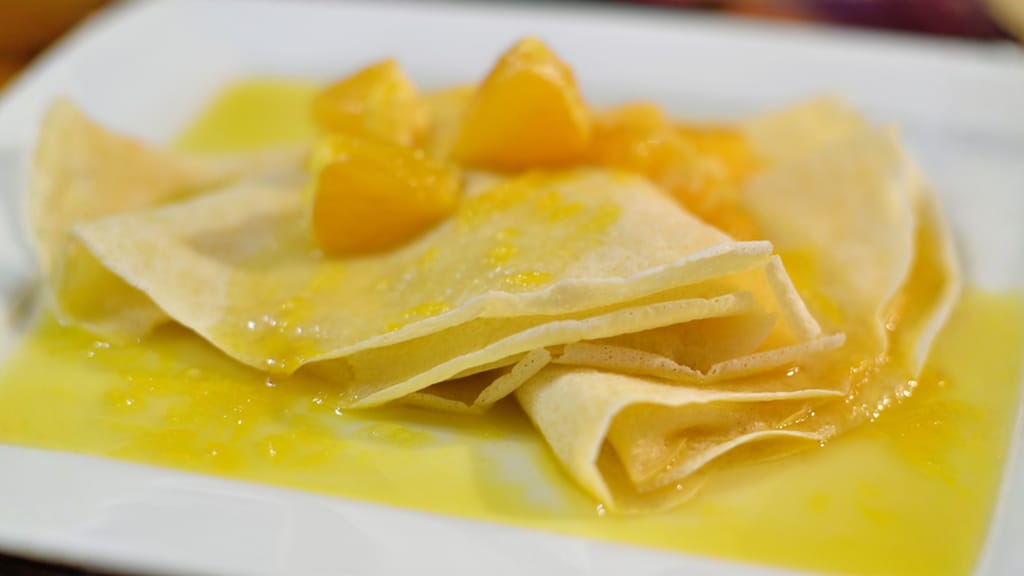
French sweet treat: crêpes suzette
Crêpes Suzette — a French classic for tableside flambéing

The last step is the arrangement: dots of fruit coulis, fresh berries, an edible flower or a mint leaf should go on just before serving, so they stay fresh. Wipe the rim of the plate clean — a greasy or splattered rim gives away that you rushed. A handful of well-considered details will always beat an overcrowded garnish.
The table setting shapes the atmosphere around the dessert. Cloth napkins feel more luxurious and eco-friendlier than paper ones, and you can match them to the colour of your service; a monogrammed napkin or an elegant fold adds a personal touch. Candles bring warm, soft light and an intimate mood, while a small vase of fresh flowers adds colour and scent. But the same rule applies here as on the plate — less is more. Too much decoration only distracts from what really matters: your dessert.
Plate chilled desserts (mousse, tiramisu, panna cotta) no more than 1–2 hours ahead and keep them in the fridge. Add fresh fruit, drizzle and edible flowers just before serving — otherwise the fruit will weep and the flowers will wilt. Finish warm desserts and sugar crusts (crème brûlée, icing sugar) at the very last moment.
Edible pearl lustre dust or silver sugar pearls give a similarly luxurious shine and cost far less. For a sparkle effect, try crisp sugar tuile, caramel glass, or thin white chocolate shavings. If you're mainly after a golden tone, sprinkle the dessert with toasted almond flakes or marigold pollen instead.
Skip toxic ornamental flowers such as foxglove, lily of the valley, oleander, yew, hellebore or sweet pea blossoms — these are poisonous. Also avoid any flowers bought from a florist or garden centre, as they're usually treated with pesticides. Only use flowers you know for certain are edible, ideally grown yourself from a clean, chemical-free source.
A sauce with the consistency of runny honey works best — thick enough not to spread, but still pourable. Loosen fruit coulis with a quick reduction or a pinch of pectin, and thin a chocolate ganache with cream in roughly a 1:1 ratio. Too thin and the sauce just looks like a smear on the plate; too thick and you won't be able to drag it into fine lines.
No — plain white plates you already own work perfectly well; white porcelain is the most versatile backdrop for any dessert. More important than an expensive service is size (go one size up for extra breathing room) and a clean rim. You can add dessert glasses for layered treats and small plates for petits fours later, once you actually need them.
One recipe worth heating the oven for, one tip, and one deal from the shop. Nothing else.