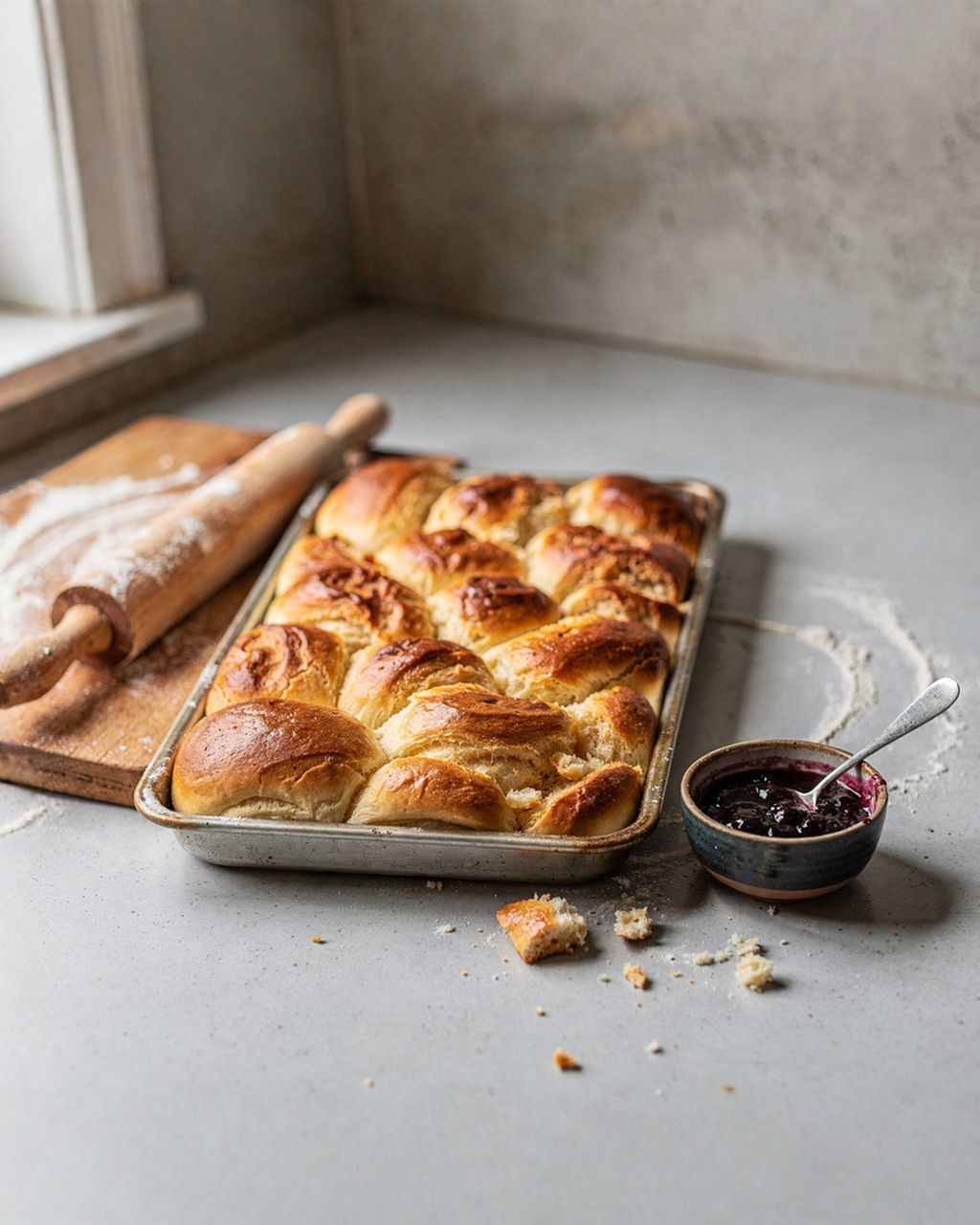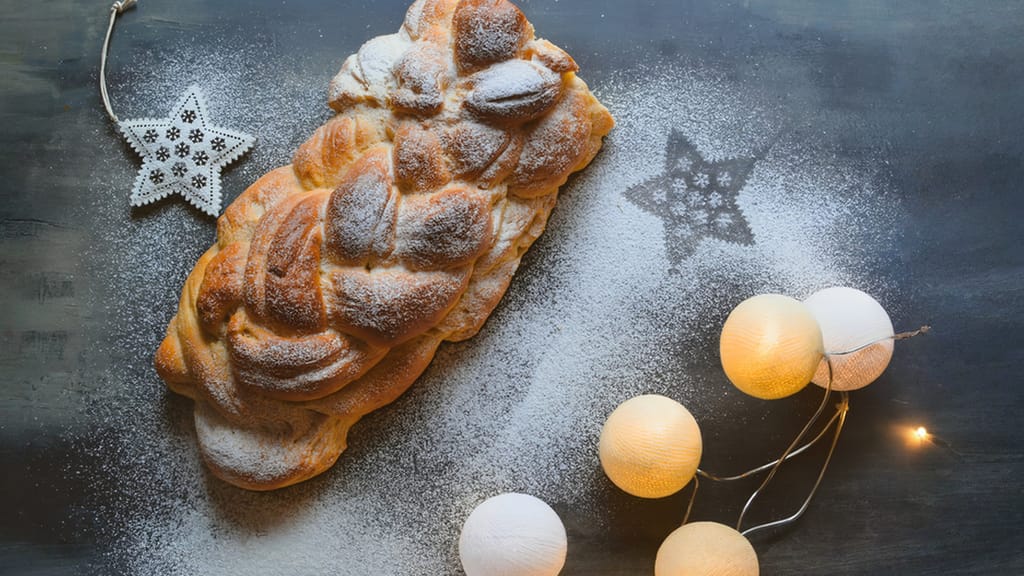
Mom's christmas braid
Dried vs. Fresh Yeast: How to Convert and Proof Dough with Each
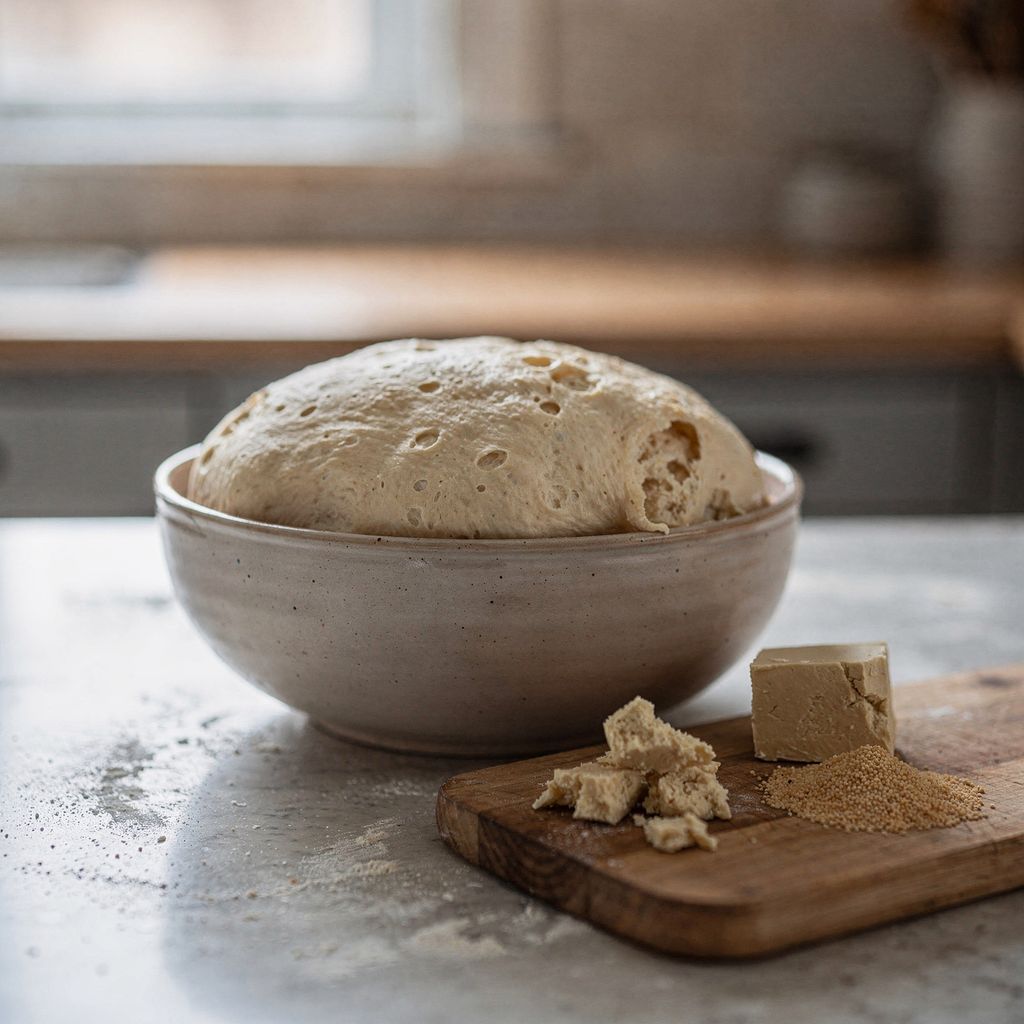
Updated Oct 24, 2026
To convert fresh yeast to dried yeast, divide by three: a 42 g cube equals roughly 14 g of instant dried yeast, or two 7 g packets. It works in reverse too: one 7 g packet replaces half a cube, or 21 g of fresh. That's all the math. The rest is about what the swap does to your rise: instant dried yeast gets going almost as fast as fresh, only active dry yeast starts more slowly (it's traditionally rehydrated first), and either type behaves differently in a sweet dough than in a bread dough.
A 42 g cube of fresh yeast equals 14 g of instant dried yeast, or two 7 g packets. Divide fresh by three, multiply dried by three.
42 g fresh (a whole cube) = 14 g instant dried = 2 packets of 7 g (17 g active dry)
21 g fresh (half a cube) = 7 g instant = 1 packet (8.5 g active dry)
7 g instant (1 packet) = 21 g fresh
14 g instant (2 packets) = 42 g fresh
The reason is simple, and worth knowing, because then you can work out the ratio without a cheat sheet: fresh yeast is about 70% water, while instant dried yeast has only around 4–6%. You aren't converting yeast cells, you're converting water. Dried yeast has roughly three times as much dry matter, hence the factor of three.
One thing to watch: the rule of three applies to instant dried yeast, the fine granules in 7 g packets that are the most common kind in Czech shops. Instant yeast is dried gently, so most of the cells survive. Active dry yeast (coarser beads, common in recipes from abroad) is dried longer and under harsher conditions, some of the cells die off, and the same weight leavens less. That's why you divide by 2.5, not 3. The difference between 2.5 and 3 won't ruin a home-baked dough, but you will notice it in a bread with a long rise.
A quarter of a fresh yeast cube (10.5 g) is replaced by 3.5 g of instant dried yeast, which is half a packet. Other common smaller amounts (fresh → instant; active dry; packets):
Quarter cube (10.5 g) → 3.5 g instant; 4 g active dry; ½ packet
10 g fresh → 3.3 g instant (about 1 level teaspoon); 4 g active dry; just under ½ packet
15 g fresh → 5 g instant; 6 g active dry; about ¾ packet
20 g fresh → 6.7 g instant; 8 g active dry; effectively 1 packet (you're short 0.3 g, and the dough won't notice)
Going the other way, for amounts that aren't whole packets:
1 level teaspoon instant (about 3 g) → 9 g fresh, just under a quarter cube
7 g active dry → 17.5 g fresh, round it to 18 g
You don't need to agonize over tenths of a gram: a deviation of ±0.5 g of instant yeast gets lost in a home batch made with 500 g of flour. Be precise only for cold overnight rises, where you're working with single grams.
Multiply fresh yeast by 0.33 for instant dried and by 0.4 for active dry; going the other way, multiply instant by three. Four multipliers that cover every recipe:
fresh → instant dried: × 0.33 (divide by three)
fresh → active dry: × 0.4 (divide by 2.5)
instant dried → fresh: × 3
active dry → instant: × 0.8 (you'll see 0.75 and 0.83 quoted, and in a home batch the difference is negligible)
Example: a recipe calls for 30 g of fresh yeast. 30 ÷ 3 = 10 g instant, or roughly a packet and a half. If your scale doesn't read tenths of a gram, count on a level teaspoon of dried yeast weighing about 3 g, so 10 g is about three teaspoons.
And the other way around: a recipe from an English-language site calls for "2 tsp instant yeast." That's about 6 g, or roughly 18 g of fresh, which is a bit less than half a cube. A whole 7 g packet is 2¼ teaspoons.
For 500 g of flour, count on 10–15 g of fresh yeast (3–5 g instant) for ordinary white bread and rolls; 20–25 g for sweet dough; and just 1–2 g for an overnight rise in the fridge. In more detail, by dough type and rise time:
Sweet yeast dough (buchty, koláče, vánočka): 20–25 g fresh, or 7–8 g instant
White bread and rolls (1.5–2 hour rise): 10–15 g fresh, or 3–5 g instant
Bread with a 3–4 hour rise at room temperature: 5–8 g fresh, or 1.7–2.7 g instant
Dough rising overnight in the fridge (pizza, bread): 1–2 g fresh, or 0.3–0.7 g instant
In baker's percentages, meaning percent of the flour weight, these are the same amounts: fresh yeast at 2–3% for white bread, 1–1.6% for bread with a longer rise, and 4–5% for a rich sweet dough; instant at 0.6–1%, 0.3–0.5% and 1.4–1.7% respectively. For a cold overnight rise you go down to 0.2–0.4% counted as fresh (that is, 0.07–0.13% instant). The yeast has eight to twelve hours, so you need only a fraction.
And the key point most recipes don't say out loud: more yeast is not better yeast. An overdosed dough rises fast, but ends up with a coarser crumb, a shorter shelf life, and that typical yeasty aftertaste people wrongly blame on dried yeast. If you want the dough ready in an hour, add warmth, not yeast.
"Dried yeast" in the shop can mean three different products (instant, active dry, and nutritional yeast), and only the first two make dough rise:
Instant dried yeast: fine granules that you sprinkle straight into the flour, with nothing to dissolve. These are the Czech 7 g packets. The ratio to fresh is 1:3.
Active dry yeast: coarser beads, traditionally left for 10 minutes in lukewarm liquid before going into the flour. Common in recipes from abroad. The ratio to fresh is 1:2.5.
Nutritional (flaked) yeast: inactive, and it won't make dough rise at all. It's a cheesy-tasting seasoning, not a leavener. What to do with it in the kitchen is covered in nutritional yeast: what it is and what to add it to. Mixing it up with baker's yeast is the fastest way to lose a whole batch of dough.
How to tell them apart without testing: go by the package directions. "Add directly to the flour" means instant. "Dissolve in lukewarm liquid and leave for 10 minutes" means active dry. You can recognize nutritional yeast by its flakes, and it's usually sold in larger packs than baker's yeast. You won't find any rising instructions on the package; instead it often says "non-leavening" along with suggestions for seasoning spreads, sauces, or popcorn.
You start fresh yeast with a proofing mixture of lukewarm liquid, sugar, and flour, and within 10–15 minutes you know whether it's alive. The method:
Crumble the fresh yeast into 50–100 ml of lukewarm milk or water at 30–35 °C (86–95 °F).
Add a teaspoon of sugar and a tablespoon of plain flour, and stir.
Leave it in a warm spot for 10–15 minutes.
Check for a foamy cap: if one forms on top and the mixture grows in volume, the yeast is fine and you can pour it into the flour.
Why it pays off even when you're in a hurry: proofing isn't magic, it's a test. In a quarter of an hour you find out what you'd otherwise only learn after two hours of pointless rising over the bowl. The yeast doesn't need the sugar, since it can manage with the starch in the flour, but the sugar makes the reaction more visible and faster. When this step is really worth it, and when you can skip it with fresh yeast, we cover in proofing yeast: why you do it and when to skip it.
If nothing happens after 15 minutes and the surface stays calm, the yeast is dead. Don't try to save it by waiting longer or by adding more sugar.
You don't have to activate instant dried yeast. Mix it straight into the dry flour, then add the liquid. That's exactly why it's called instant: the granules are so fine that they rehydrate right in the dough.
Active dry yeast is traditionally stirred into lukewarm liquid and left to stand for 10 minutes. Today's products mostly don't require it, but proofing at least shows you that the yeast is alive, so follow the package directions.
You can proof instant yeast too (the method above, just with a third of the amount), and it's the cheapest way to check a packet that's been lying in your drawer for a year.
Instant dried yeast gets going almost as fast as fresh. Sprinkled straight into the flour, it rehydrates in the dough and lengthens your first rise by a few minutes at most. Only count on a delay for the time it takes to dissolve it with active dry yeast, which is traditionally dissolved in lukewarm liquid first, and even that catches up: by the second rise the difference is practically zero, because by then the yeast population is fully up and running in both cases.
What doesn't change: the structure of the crumb, the height of the loaf, or the dough's ability to hold its shape. Both are the same yeast, Saccharomyces cerevisiae, just preserved differently.
And flavor? The difference is smaller than people say. A stronger "yeasty" smell is usually caused not by the type of yeast but by the amount of it and by too short a rise in too warm a place. If your baking tastes of yeast, cut the amount by a third and let it rise longer and cooler.
Go by the dough, not the clock. You know the first rise is done when the dough has doubled in volume and a dent left by your finger springs back only slowly and not completely. For ratios and times for specific doughs, see the article on yeast dough for buchty and dumplings.
Once sugar goes above roughly 5% of the flour weight, the rise slows down. Sugar is hygroscopic and pulls water out of the yeast cells, which then slow their metabolism. It isn't a defect in the yeast or a mistake in your conversion; it's chemistry.
Do the math: 500 g of flour and 100 g of sugar is 20%, a clearly sweet dough. A dough like that can easily take twice as long to rise as a bread dough with the same amount of yeast. Fat and egg yolks slow it down too, because they coat the gluten network and slow its formation.
What to do about it:
Give it time. The simplest and tastiest fix. For vánočka or a rich sweet dough, plan on 90–120 minutes for the first rise. You can try it with Mom's vánočka.
Raise the yeast by a third. Instead of 7 g of instant, use 9–10 g. It works, but at the cost of a more delicate flavor.
Reach for osmotolerant yeast. A special strain of instant yeast (sold abroad as "gold") is designed precisely for doughs with sugar from about 5% of the flour weight.
Split the sugar. Add part of it only after the first rise, if the dough's consistency allows.
And don't put sugar directly on the yeast in concentrated form: a teaspoon in the proofing mixture is fine, a handful is not. How to fine-tune a sweet sheet-pan dough so it stays tender even with a filling, we show in yeast dough for koláče.
Mom's christmas braid
Mom's vánočka: a rich sweet yeast dough that needs time, not more yeast
Fresh yeast suits rich sweet doughs best if you bake often; instant dried is best for bread, pizza, and long cold rises if you bake in occasional bursts.
Fresh yeast is easy to portion by eye (a cube cuts easily into halves and quarters), and in traditional Czech recipes it's the default ingredient, so the ratios work without any conversion.
Instant dried yeast wins where you bake only now and then. It keeps in a drawer for a year, you don't have to make a trip to the shop for it, and for doughs with a long cold rise it's far easier to measure to the tenth of a gram: you can't cut off 1.5 g from a cube, but you can shake it out of a packet.
A few specific cases:
Bread and bread rolls: little yeast, long rise. Ideal for instant; try it in homemade bread or homemade sandwich bread.
Overnight pizza: 1–2 g fresh per 500 g of flour, or 0.5 g instant. Here a packet is more practical than a cube; try it in perfect homemade pizza.
Sweet yeast dough: vánočka, buchty, yeasted koláče. Fresh yeast is the classic, but instant works just as well, whether you're baking Mom's vánočka or tender buchtičky with šodó (vanilla custard).
Yeasted dumplings: they need a soft, well-risen dough, for example for yeasted fruit dumplings. The type of yeast doesn't decide it here; the rising temperature does.
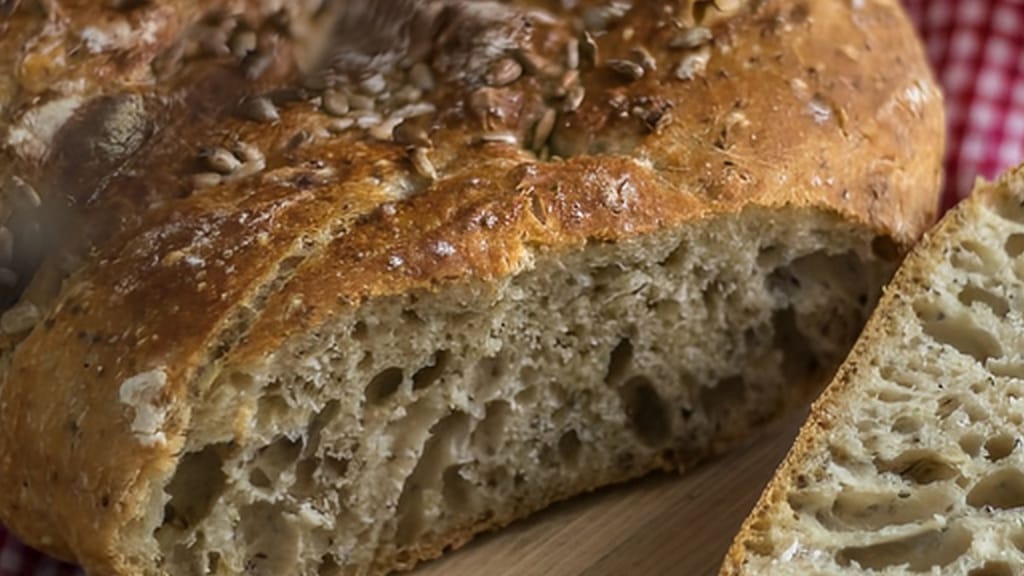
Homemade bread
Homemade bread: little yeast, long rise, exactly the case for instant dried
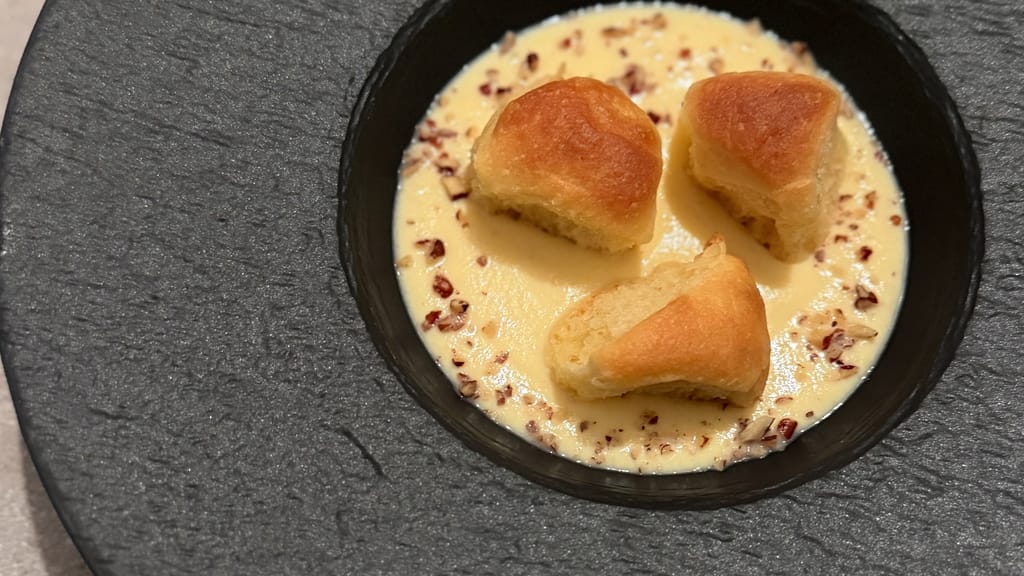
Fluffy sweet buns with chaudeau (egg custard) sauce
Tender buchtičky with šodó (vanilla custard): sweet yeast dough made with fresh or dried yeast
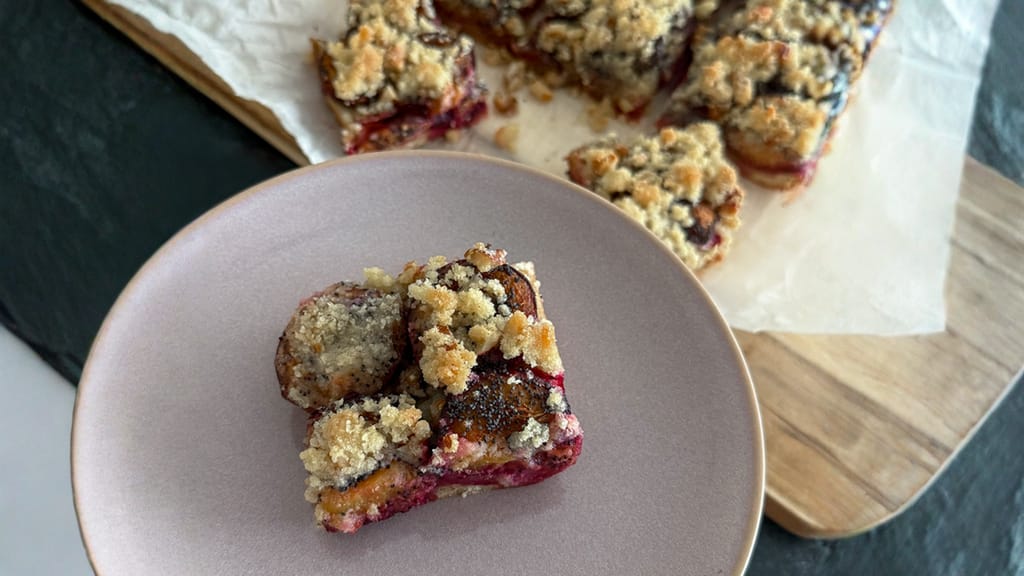
Classic yeasted plum sheet cake with crumble topping
Classic yeasted plum koláč with streusel: a sweet dough where it pays not to rush the rise
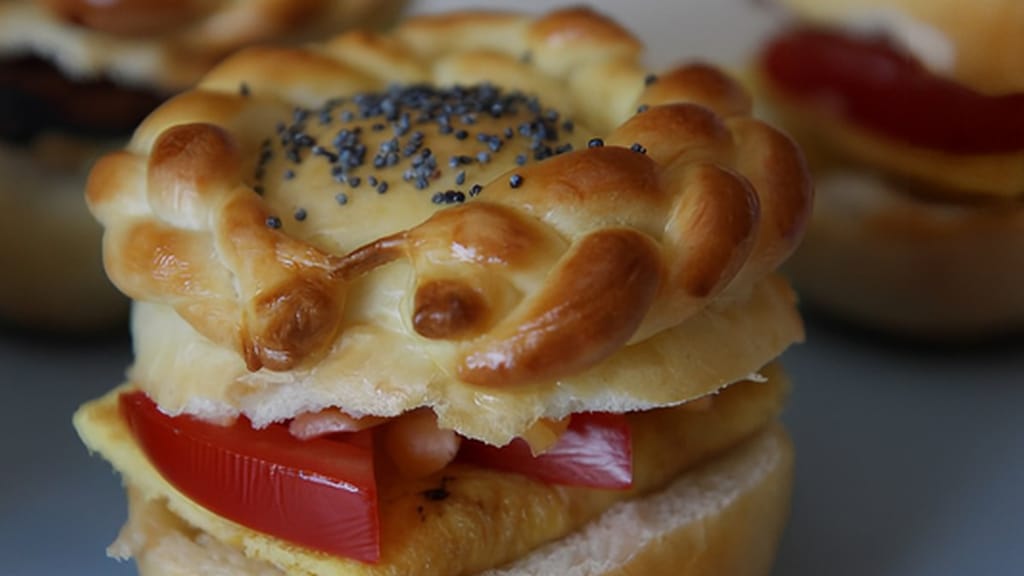
Bread rolls – not just for breakfast
Bread rolls, and not just for breakfast: white bread dough with 10–15 g of fresh yeast per 500 g of flour
The most common yeast mistakes are swapping 1:1 when converting, using nutritional yeast instead of baker's yeast, hot liquid, thawed yeast used without testing, and yeast poured directly onto salt.
A 1:1 swap when converting. You add 42 g of dried instead of 42 g of fresh, which is three times too much. The dough shoots up, collapses, and tastes of yeast.
Nutritional yeast instead of baker's yeast. It won't make dough rise at all, no matter how long you wait.
Hot liquid. Above 50 °C (122 °F) you damage the yeast, and above 60 °C (140 °F) you kill it. See the warning above.
Thawed yeast used blind. Freezing reduces leavening strength, and you can only tell how much is left with a proofing test. How to do that after thawing is in the storage section.
Pouring yeast directly onto salt. Salt won't kill yeast in an ordinary dough; at the usual 2% of flour weight it only slows it slightly, which is desirable for flavor and structure. But direct contact can kill it: don't leave yeast sitting in a pile of salt. Put it on the other side of the bowl and mix it in with the flour.
Unopened fresh yeast keeps in the fridge until the date on the package, and once opened for about a week, while unopened dried yeast keeps for a year or longer at room temperature. In detail:
Fresh, unopened: fridge at 2–8 °C (36–46 °F), until the best-before date on the package (manufacturers count on roughly 4 weeks from production).
Fresh, opened: within a week, well wrapped in foil or sealed in a container, since it dries out even in the fridge.
Fresh, in the freezer: cut the cube into 10–20 g portions and wrap them individually; they keep for about 3 months. Thaw slowly in the fridge, never in the microwave, and proof it after thawing, because the foam shows how much strength is left. You usually need to increase the amount slightly, as some of the yeast doesn't survive freezing.
Dried, unopened: a year or more, somewhere dry and away from the stove. Moisture is a worse enemy than heat.
Dried, opened packet: transfer it to an airtight container: about 4 months in the fridge, up to 6 months in the freezer.
Not sure whether a packet still works after a year? Test it with a proofing mixture made with a third of the amount (method above). It costs one teaspoon of flour and can save a whole batch of dough. How to recognize dead fresh yeast by sight and smell is covered in how long yeast keeps and how to tell it no longer works.
No, yeast and baking powder can't stand in for each other in a yeasted dough. Baking powder releases carbon dioxide within minutes and mostly in the oven, while yeast works for hours, building flavor compounds and stretching the gluten network as it goes. A sweet bun dough made with baking powder turns out as a dense, flat, flavorless disc. It works the other way around too: you can't sensibly leaven a creamed batter with yeast.
Yes, feel free to combine them. It's the same yeast, and the two work together in a dough without any problem. Just convert everything to one "currency": if the recipe calls for 42 g of fresh and you only have 21 g (half a cube), make up the rest with one 7 g packet of instant. Mix the fresh into the liquid, sprinkle the instant into the flour, and let the dough rise by how it looks, not by the clock.
Both work, and water and milk give the same leavening power. Milk adds a softer crumb and a more golden crust thanks to its milk sugar and fat, so it suits sweet doughs; water gives a cleaner flavor and a crisper crust, which is what you want in bread and pizza. One practical difference: the foamy cap is much easier to see in water, so if you're testing old yeast, reach for water.
Often yes. The date on the package guarantees full leavening strength; it isn't a hard cutoff for usability. Dried yeast stored somewhere dry is often usable for months past its date, just weaker, so test it first with a proofing mixture and, depending on how quickly and vigorously the foam rises, increase the amount slightly. With fresh yeast, trust your senses: it should be light cream-colored, crumbly, and smell clean and yeasty. A cube that is darkening, sticky, or smells stale or sour doesn't belong in your dough, even if the date is still good.
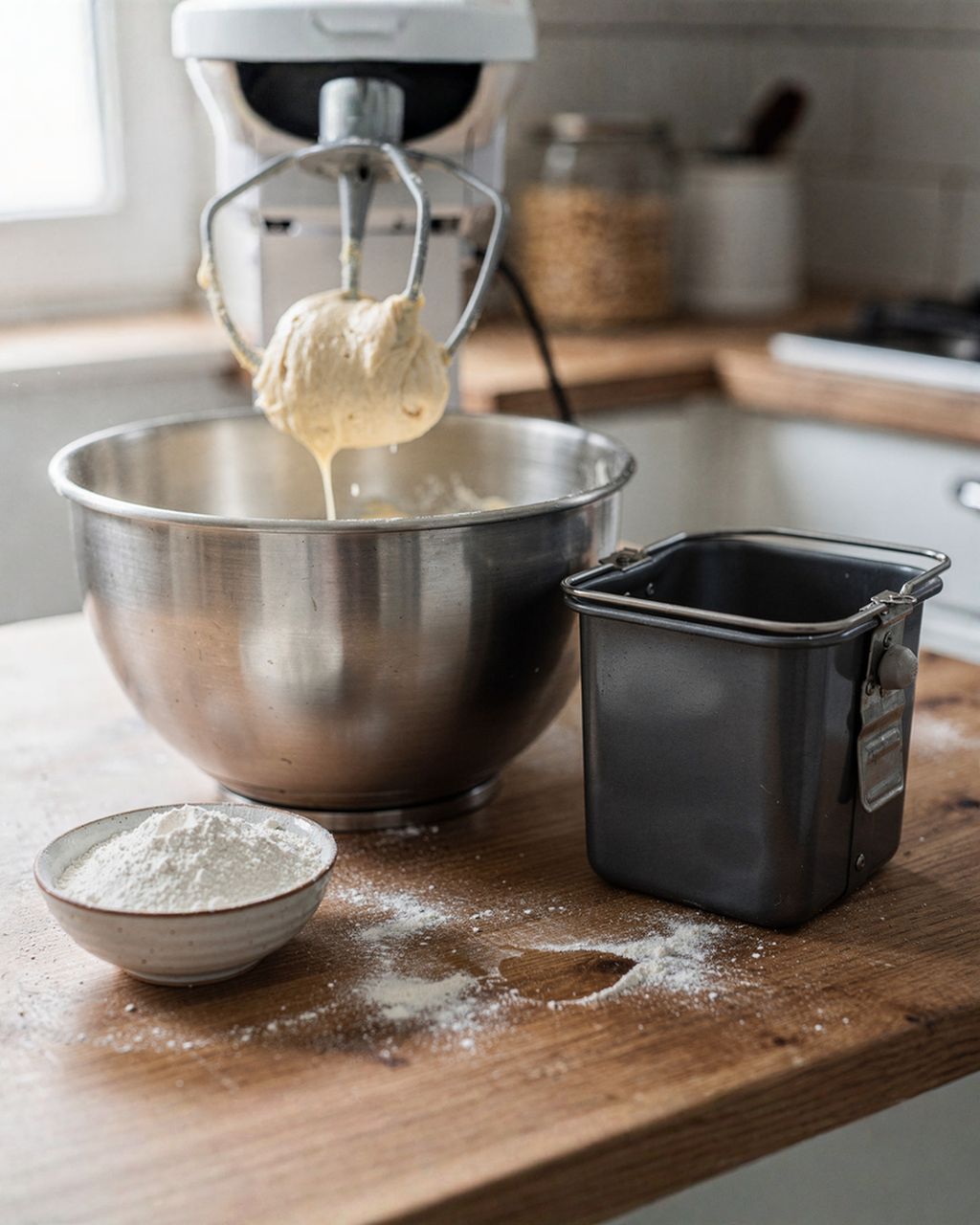
In a bread machine, instant dried yeast is actually better suited than fresh, because it goes in with the dry flour and nothing has to be dissolved beforehand. The order of ingredients is key: liquid on the bottom, flour on top of it, and the yeast in a small well in the flour at the very top, as far as possible from the salt and the liquid so it doesn't kick off before the program starts mixing. In a stand mixer it doesn't matter which you use. Just make sure kneading doesn't warm the dough above 28 °C (82 °F), which can easily happen with longer kneading in a metal bowl.
Yeast dough collapses because it overproofed: the gluten network has stretched past its elasticity and can no longer hold the gas the yeast produced. You can tell when a finger poke leaves a dent that doesn't spring back at all and the dough smells sharp, almost like alcohol. It can be rescued: knead it again, let it rest for 20–30 minutes, and then shape it. Next time, shorten the rise, use less yeast, or let it rise at a lower temperature. A collapsed dough is almost always a sign of too much warmth or too much yeast, not bad ingredients.
One recipe worth heating the oven for, one tip, and one deal from the shop. Nothing else.