Slow-roasted pork with red cabbage
Updated Sep 5, 2026
Raw pork keeps in the fridge at 0–4°C (32–39°F) for roughly 3–5 days, minced/ground pork for 1–2 days, and cooked pork for 3–4 days. That's the short answer — but those numbers only hold if the meat sits in the coldest part of the fridge, is wrapped properly, and isn't sitting in its own juices. Below you'll find the timeframes broken down by cut, the reason they vary so much, and a clear rule for when to bin it without a second thought.
At 0–4°C (32–39°F), pork keeps in the fridge as follows:
Whole cuts (leg, shoulder, roasting joints, belly, tenderloin) — 3–5 days
Chops, cutlets and steaks — 3–4 days, thin, tenderised/pounded cutlets more like 2–3 days
Diced pork for goulash or skewers — 2–3 days, because cutting into cubes dramatically increases the surface area
Ribs — 3–4 days
Minced/ground pork — 1–2 days
Offal (liver, kidneys, heart) — 1–2 days
Marinated raw pork — 2–3 days
Cooked or roasted pork — 3–4 days
Treat this as the upper limit, not a target. If you buy a leg joint on Tuesday, cook it by Thursday — day five is the ceiling only for meat that went straight from the shop into the fridge and stayed properly chilled the whole time.
The gap between 5 days and 1 day comes down to the meat's surface, not the cut itself. The bacteria that spoil meat live almost entirely on the surface — the inside of a healthy muscle is nearly sterile at the point of slaughter.
A whole cut has a small surface area relative to its volume. It spoils from the outside in, and that takes days.
Mincing spreads the surface through the entire mass of meat. Everything that was on the surface is suddenly mixed all the way through — and the mincer also warms the meat slightly. That's why minced pork gets 1–2 days, not 5.
Cutting does the same thing on a smaller scale. Diced goulash meat has several times more surface area than the same piece left whole.
Offal is its own category. It's high in water, enzymes and iron, so it spoils and oxidises faster than muscle meat. It's no coincidence that EU hygiene rules set a lower storage temperature for offal than for other meat.
Cooked meat isn't protected forever, either. Boiling or roasting reliably kills common bacteria, but any spores that survive the heat get going again once the food sits warm — and after cooking, meat gets re-contaminated from hands, boards and utensils. That's where the 3–4 days comes from.
And finally, temperature. As a rule of thumb, bacterial growth roughly doubles with every few degrees warmer — so a fridge running at 8°C (46°F) can quietly shrink that five-day window down to two, with no visible change to the meat.
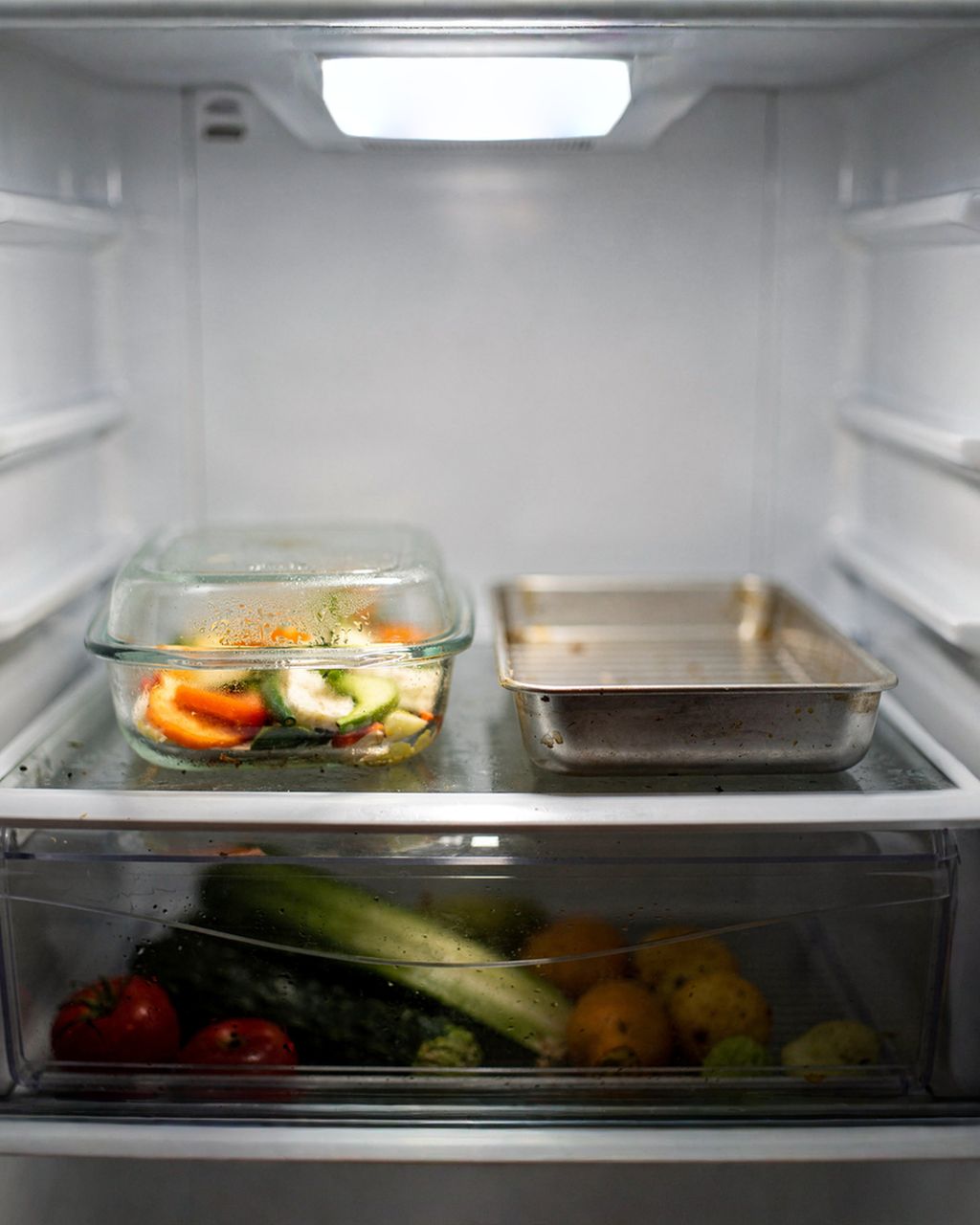
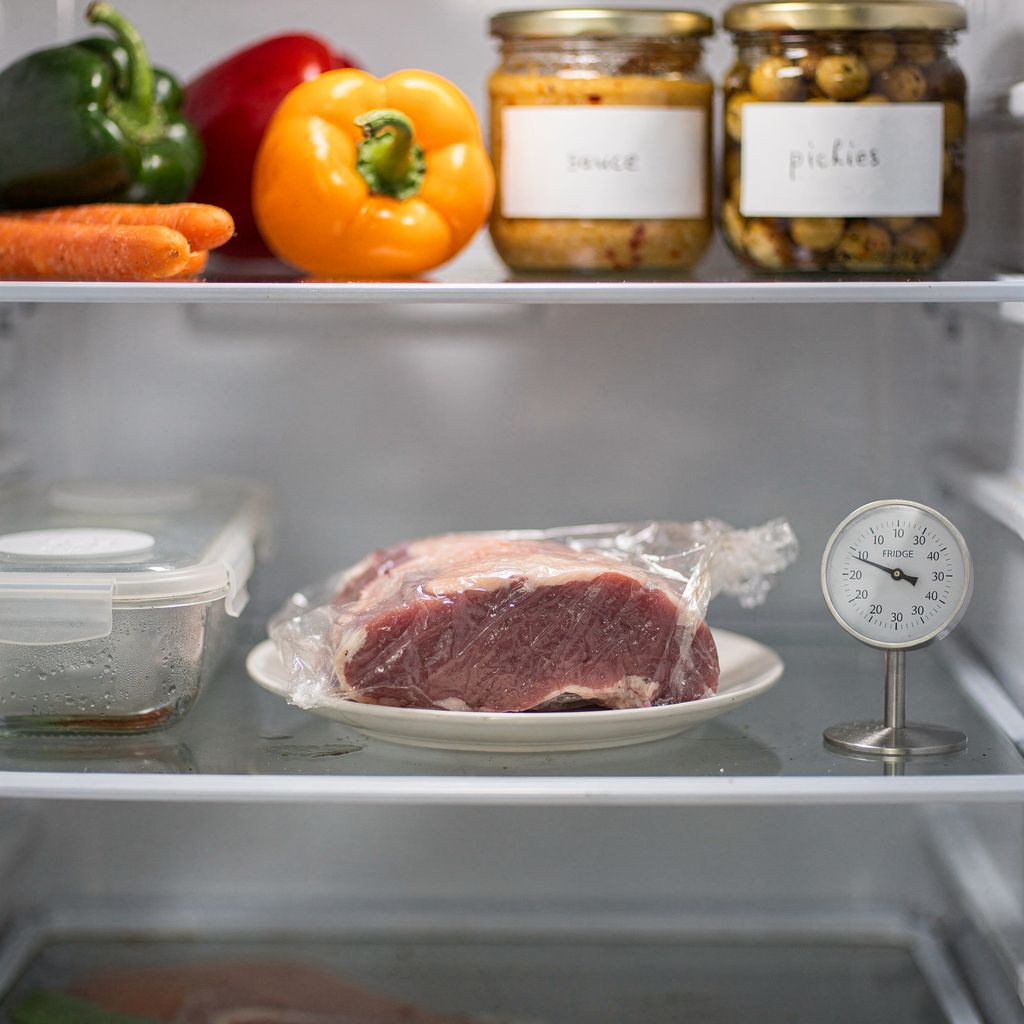
Pork belongs at 0–4°C (32–39°F), on the bottom shelf of the fridge — that's the coldest spot, and any drips can't land on anything stored below it.
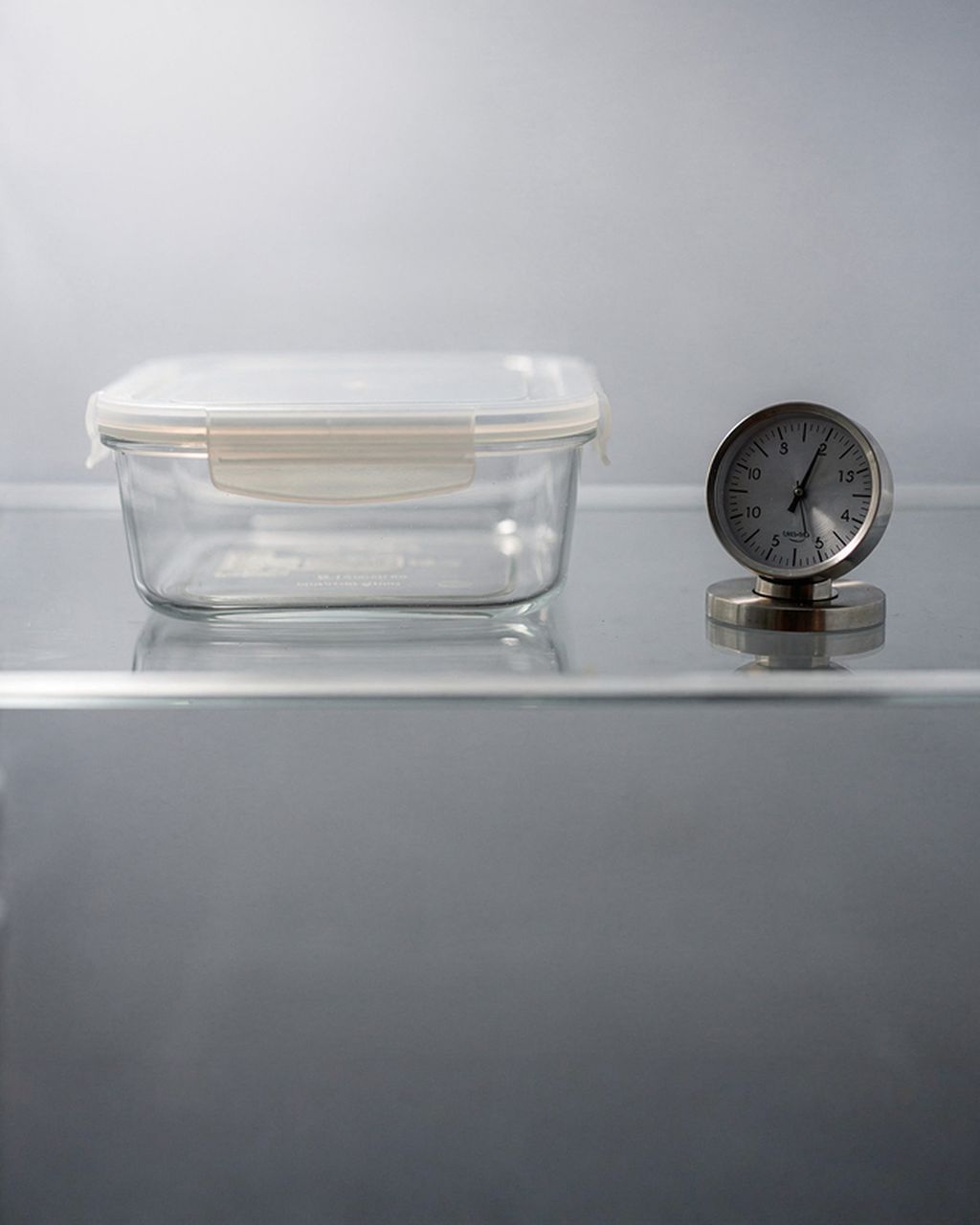
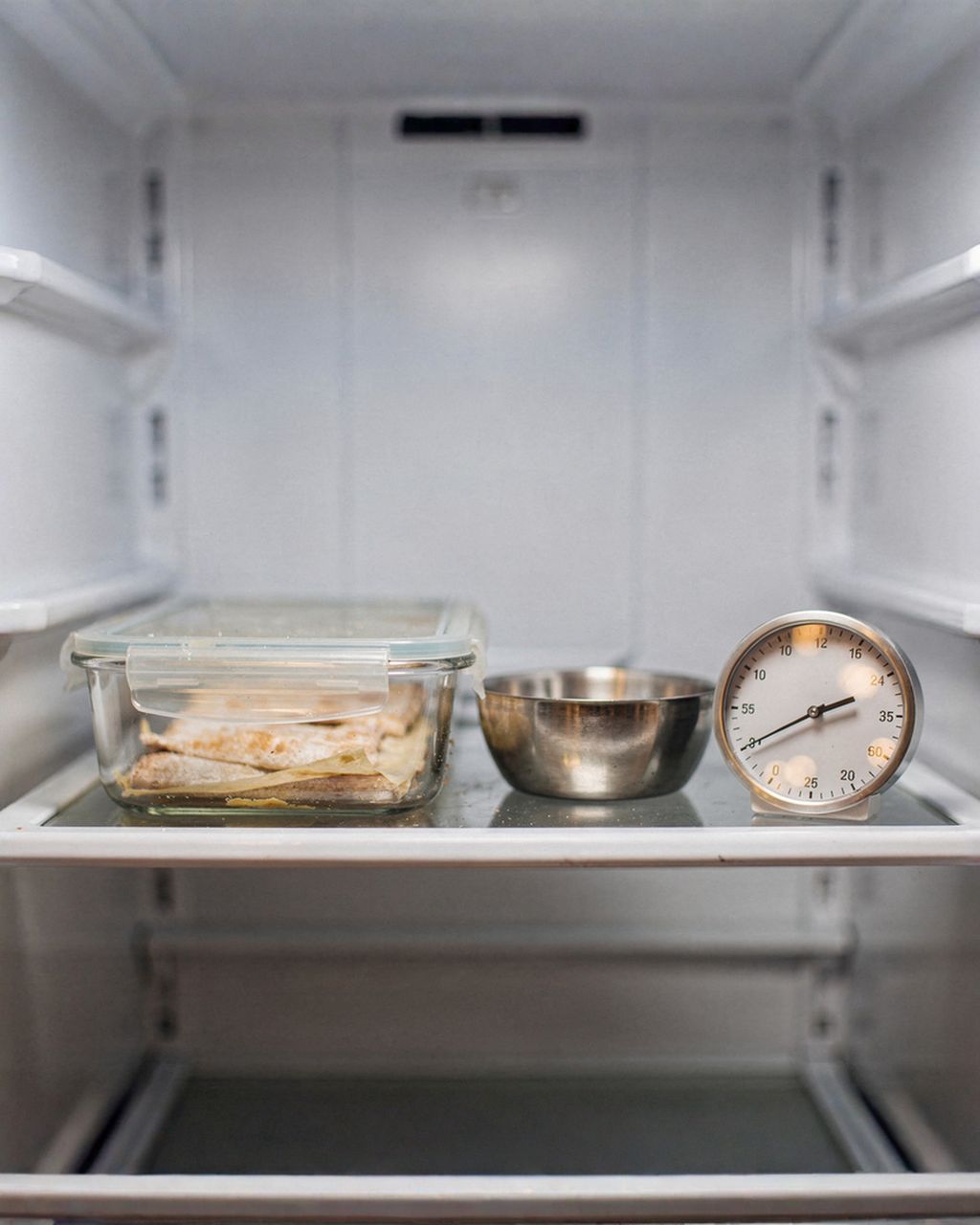
Home fridges tend to run warmer than we think. The door can easily sit at 8–10°C, the top shelf at 5–7°C, and the bottom shelf above the veg drawer at 2–4°C. A cheap thermometer left on the bottom shelf for a few hours will tell you more than the display on the front of the fridge.
If you have a zero-degree/chill drawer (often called a fresh zone, typically −1 to +2°C), that's the best spot in the whole fridge for pork. But it's a guarantee you'll actually reach the top end of the timeframes above — not a reason to push them further; whole cuts still top out at five days.
For comparison, EU rules for retail and processing set 7°C as the maximum permitted temperature for meat and 3°C for offal, with even tighter limits for mince and prepared meat products. But those are upper limits for transport and sale — at home, if you want meat to still be good in three days, aim for the lower end, around 0–2°C.
It also helps to think about where else you store things in the fridge — raw meat should always go below ready-to-eat food, never above it.
Meat needs to be covered, but it can't be sitting in its own juices — two things that seem to contradict each other, and that difference is worth an extra couple of days.
Unwrap it from the butcher's plastic bag. Meat left in one steams in its own liquid, which is a perfect environment for bacteria.
Move it into a sealable container, ideally propped on a small rack or an upturned saucer so juices drain away and the meat stays dry.
Or use the old two-plates trick — meat sandwiched between two plates, into the fridge. Air circulates, the surface dries out, nothing drips.
Paper instead of clingfilm. Butcher's paper or baking paper wicks away moisture better than clingfilm stretched directly over the meat.
Dried meat lasts longer. Pat the surface with a paper towel before storing. A dry surface also browns far better in the pan.
Vacuum-packed meat is a different story. Without oxygen, everyday spoilage microbes develop more slowly, which is why the pack might state ten days to two weeks — always go by the use-by date printed on it. That only applies until you open the pack: once opened, normal counter-from-the-butcher timeframes kick in. We cover this in more detail in our article on vacuum-packed meat in the fridge.
Marinating doesn't extend the timeframe. Oil, wine, mustard and herbs aren't preservatives — marinated raw pork still gets 2–3 days, and it should marinate in a sealed container in the fridge, never on the counter. A very acidic marinade can also break down the meat's surface, so long marinating times can actually hurt quality rather than help.
Pork packaging carries a 'use by' date — and that's a hard safety cut-off, not a suggestion. It's different from a 'best before' date, which appears on shelf-stable goods and only speaks to quality.
Two things people often get wrong about that date:
The date applies to an unopened pack stored as instructed. Once you open it, the usual timeframes above kick in — 3–5 days for a whole cut, but never longer than what's printed on the pack. Whichever limit comes first wins.
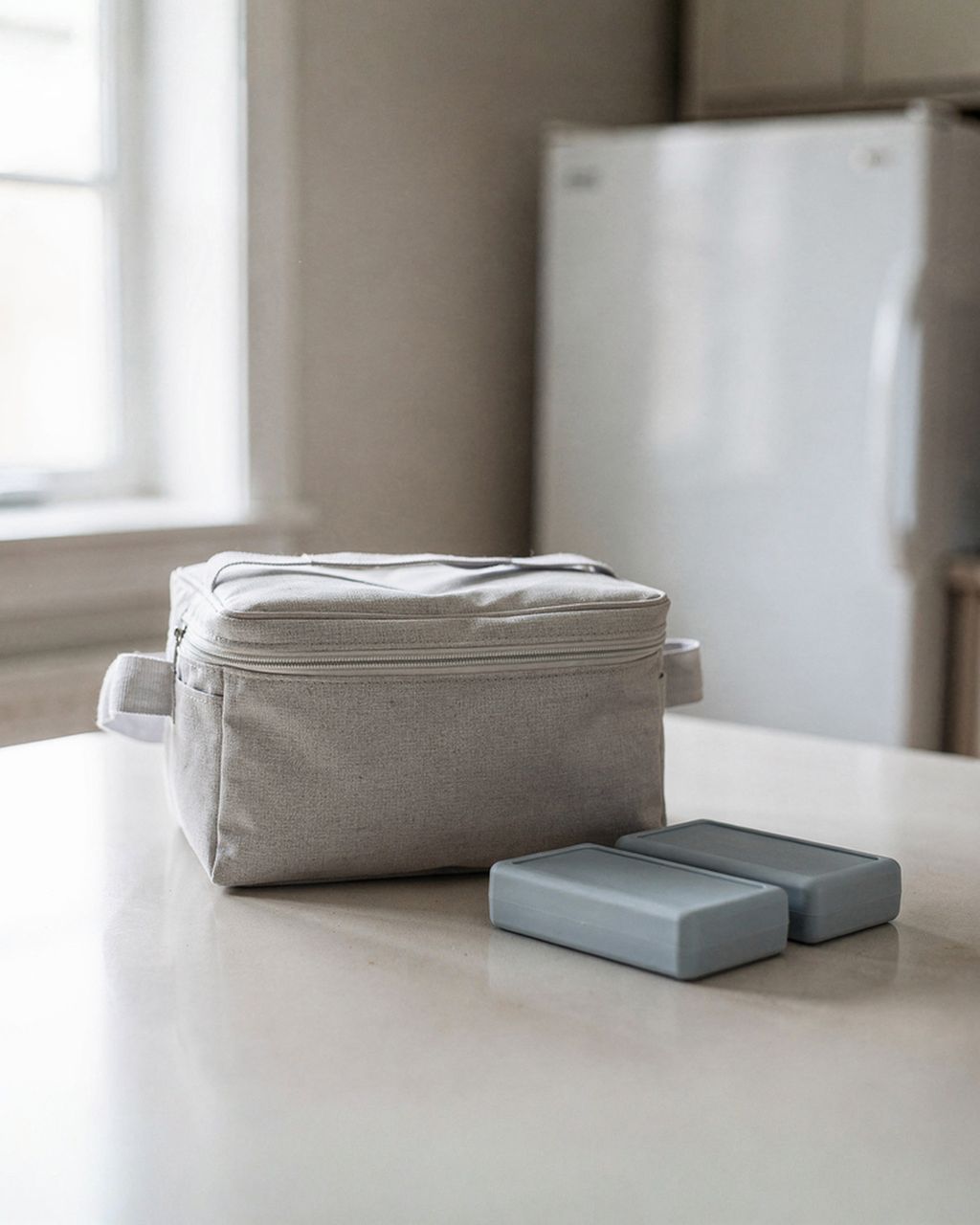
The date doesn't account for the trip home. Half an hour in a warm car eats into shelf life more than you'd think. Buy meat last on your shopping trip, and use a cool bag in summer.
Don't cook pork past its use-by date. You can freeze it any time before that date and legitimately extend its life that way.
Spoiled pork shows up as a sticky/slimy surface, a sour or ammonia-like smell, and a greyish-green tinge — and the only correct response is to throw it out.
What to look and smell for:
Surface. Fresh pork is moist but not slick. A sticky, slimy film that clings to your fingers is a clear sign it's done.
Smell. Fresh pork smells neutral, faintly milky. A sour, sickly-sweet or ammonia-like smell means it's over — as does an odour that lingers for more than a minute after you open the pack.
Colour. Healthy pork is pink to pale red. A greyish-green or iridescent sheen belongs in the bin.
Don't panic over darker colour on its own. Vacuum-packed meat often looks dark red to purple from lack of oxygen, and brightens back up within minutes of hitting the air. That's completely normal and has nothing to do with spoilage.
If you're not sure, throw it out. Cooking, roasting or rinsing with vinegar won't rescue spoiled meat — the toxins bacteria have already produced don't break down with heat. Never taste spoiled meat, not even a tiny bit. One portion of pork isn't worth two days on the toilet, and definitely not an A&E visit.
At −18°C (0°F) or below, pork keeps in the freezer as follows: roasts and large whole cuts, 4–12 months; chops and steaks, 4–6 months; minced/ground pork, 3–4 months. These are quality limits, not safety ones — held at a steady −18°C, pork stays safe indefinitely, it just loses flavour and juiciness over time.
Fatty cuts like belly or ribs are best used sooner, around 3–4 months. They don't spoil, but the fat gradually turns rancid and the meat picks up an off, stale flavour.
Freeze it as soon as you realise you won't get through it within the fridge timeframe — not on the last possible day, when it's already borderline. Freezing doesn't kill microbes, it just pauses them, so whatever quality goes into the freezer is exactly what comes back out.
Freeze in flat, individual portions, with as little air trapped as possible. A flat package freezes faster, forms smaller ice crystals, and the meat releases less liquid once thawed.
Thaw in the fridge, not on the counter. It can take a full night for larger cuts, but the meat never passes through the temperature zone where bacteria multiply fastest.
Meat thawed in the fridge should be cooked within 1–2 days and can be refrozen (quality drops, safety doesn't). Meat thawed in cold water or the microwave should be cooked straight away and not refrozen.
Cooked or roasted pork keeps in the fridge for 3–4 days — but the clock starts once it's cooled down, not from the moment you take it out of the fridge.
Cool it quickly. Food needs to be in the fridge within two hours of finishing cooking — within one hour on a hot summer day. Split a large roast into smaller portions in shallow containers — it'll cool far faster than one big pot.
Reheat it properly. Bring the meat back up to 75°C (167°F) at the centre, not just 'until warm'. Lukewarm reheating is worse than not reheating at all.
Reheat only once. Every heat-then-cool cycle is another opportunity for bacteria to take hold. Only reheat the portion you're actually going to eat.
Treat gravy and juices just as strictly. Thanks to their water and protein content, they can spoil even faster than the meat itself.
If you're wondering how to get a big pot safely from the stove into the fridge, we've got a dedicated guide on storing hot food.
By the way, proper cooking temperature also matters for shelf life: whole cuts of pork are done at 63°C (145°F) plus a few minutes' rest, while minced pork needs 71°C (160°F).
For pork that's on day three in the fridge, slow-roasting, braising and goulash are your best bets — long, slow cooking pulls flavour out of meat that's no longer perfectly juicy-fresh, and uses up a whole cut in one go. Save quick methods like a fast pan-fry or grilling for meat from the first couple of days, since you'll notice every extra day with those.
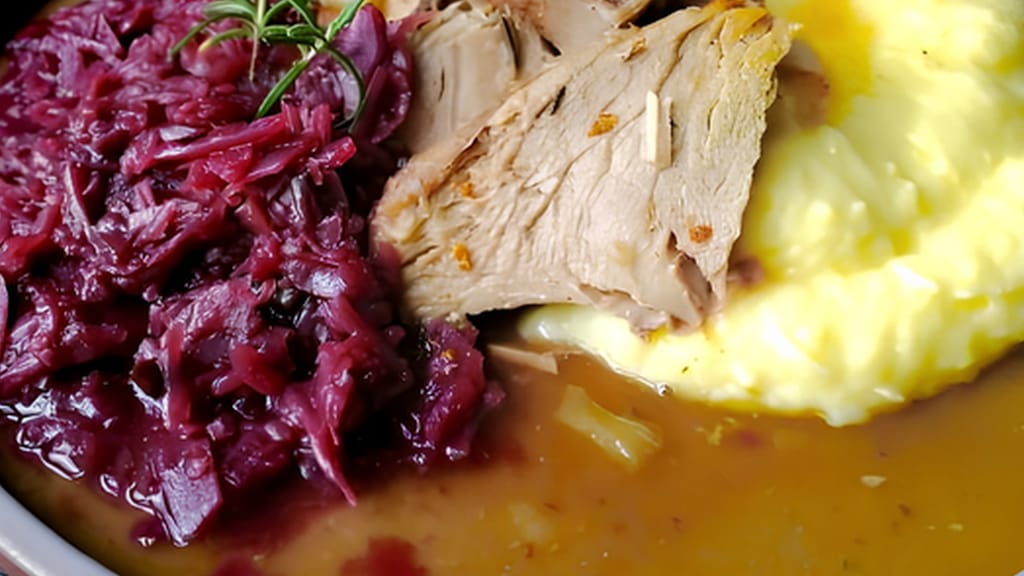
Slow-roasted pork with red cabbage
Slow-roasted pork with red cabbage — perfect for a larger leg or shoulder joint
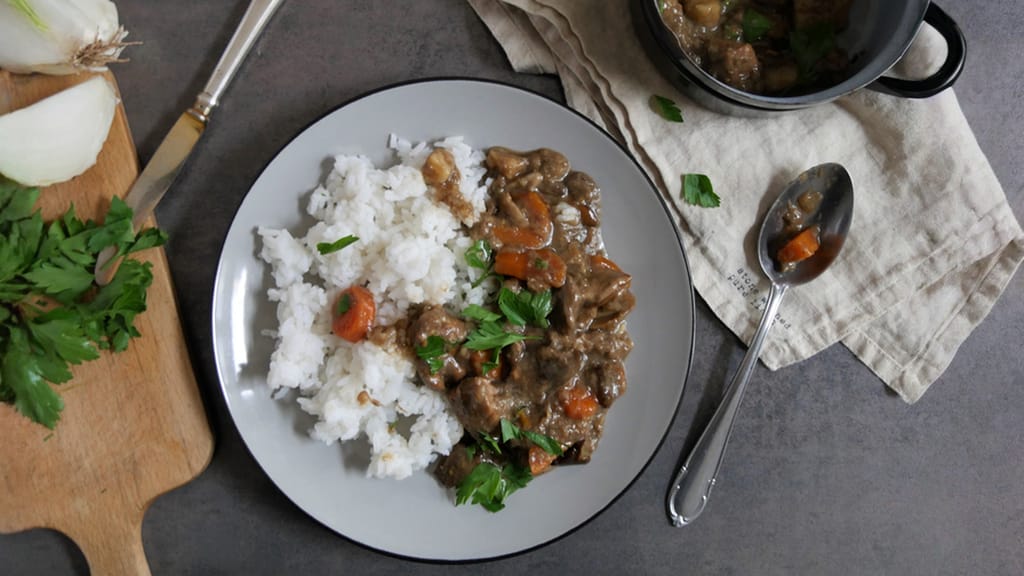
Pork leg with mushrooms
Pork leg with mushrooms: a classic that uses up a whole cut of pork in one dish
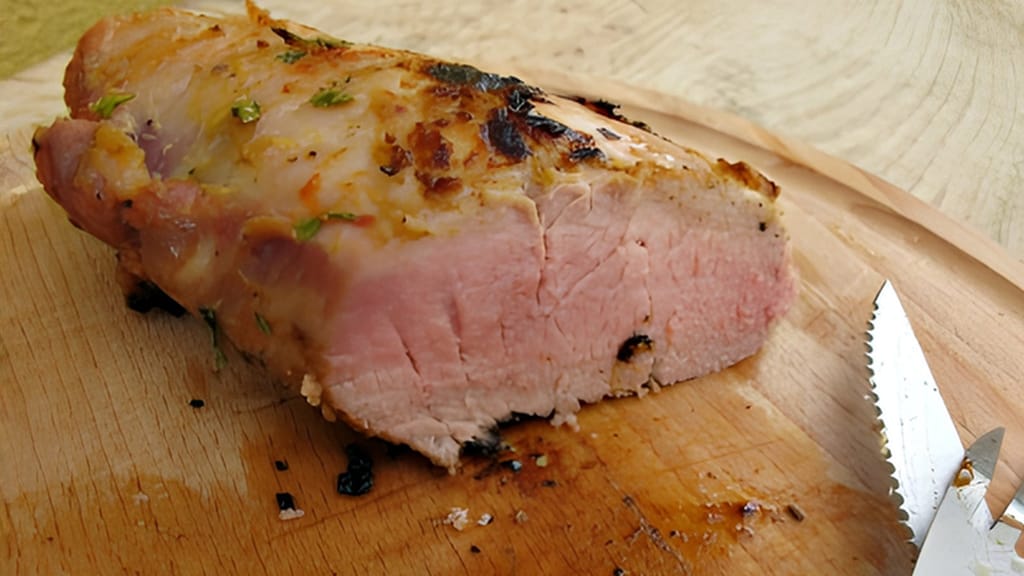
Grilled pork tenderloin in mustard marinade
Grilled pork tenderloin with mustard — a quick fix when your tenderloin is running out of time
For pork ribs and tenderloin that are running out of time, here are two dishes ready in under an hour. If you've got ribs, go for oven-baked pork ribs with cider and BBQ sauce. For thin tenderloin slices, try pork tenderloin with prunes and bacon.
At 0–4°C (32–39°F), the fridge shelf life is: raw chicken and turkey, 1–2 days; beef whole cuts (steaks, roasts), 3–5 days; and mince/ground meat of any kind, 1–2 days. So pork isn't a universal yardstick: poultry has a wetter texture and is more often contaminated with campylobacter, whole beef cuts behave much like pork, and mince is its own category regardless of which animal it comes from.
No — don't rinse raw pork before storing or cooking it. Running water sprays droplets across the sink, worktop and tea towels — studies show splashback can travel half a metre or more, depending on tap height and water pressure. Washing won't make it last longer either — if anything, a wet surface spoils faster. Just pat the meat dry with a paper towel instead; any surface bacteria will be killed off reliably by cooking.
Both raw and cooked pork should spend no more than two hours out of the fridge — and if the room is above 32°C (90°F), just one hour. Between 5°C and 60°C (41–140°F) bacteria multiply fastest, and time spent in that zone adds up: half an hour on the counter after shopping, an hour on the table at lunch, and your meat has already burned through half its safe window. Use a cool bag on the way home in summer.
Pork thawed in the fridge should be cooked within 1–2 days — the clock doesn't reset to zero, it picks up from wherever the meat's timeline was before freezing. The surface thaws before the centre does, so surface microbes get a head start even before the meat is fully defrosted. Pork thawed in cold water or in the microwave shouldn't go back in the fridge at all: cook it straight away.
Salting pork a day ahead doesn't extend its fridge life — salt only works as a preservative at concentrations far beyond what you'd use in home cooking. Salted meat also releases juice and sits in it, which is exactly the environment you want to avoid: rest it on a rack or small plate inside a closed container so the liquid drains away. Treat it the same as unsalted meat, timeframe-wise.
Yes — whole cuts of pork can stay slightly pink as long as they reach 63°C (145°F) at the centre and rest for a few minutes. The old rule that pork must always be cooked through to grey-white dates back to when trichinosis was a real risk; in EU-inspected pork today it's exceptionally rare according to veterinary data. The exception is minced/ground pork and meatloaf mixtures, which need a firm 71°C (160°F) — mincing drags surface bacteria right through the meat.
Smoked and cured pork lasts longer in the fridge than fresh, but not indefinitely: unopened, follow the use-by date on the pack; **once opened, 3–5 days for sliced deli meat and ham, and around 7 days for bacon or whole cured cuts**; home-smoked pork without preservatives is more like 3–4 days. Salt and smoking reduce water availability, so common spoilage bacteria grow more slowly — but cold-loving listeria can still multiply even in sliced cured meats, so keep it in a sealed container in the coldest part of the fridge. Use up sliced smoked meat first.
One recipe worth heating the oven for, one tip, and one deal from the shop. Nothing else.