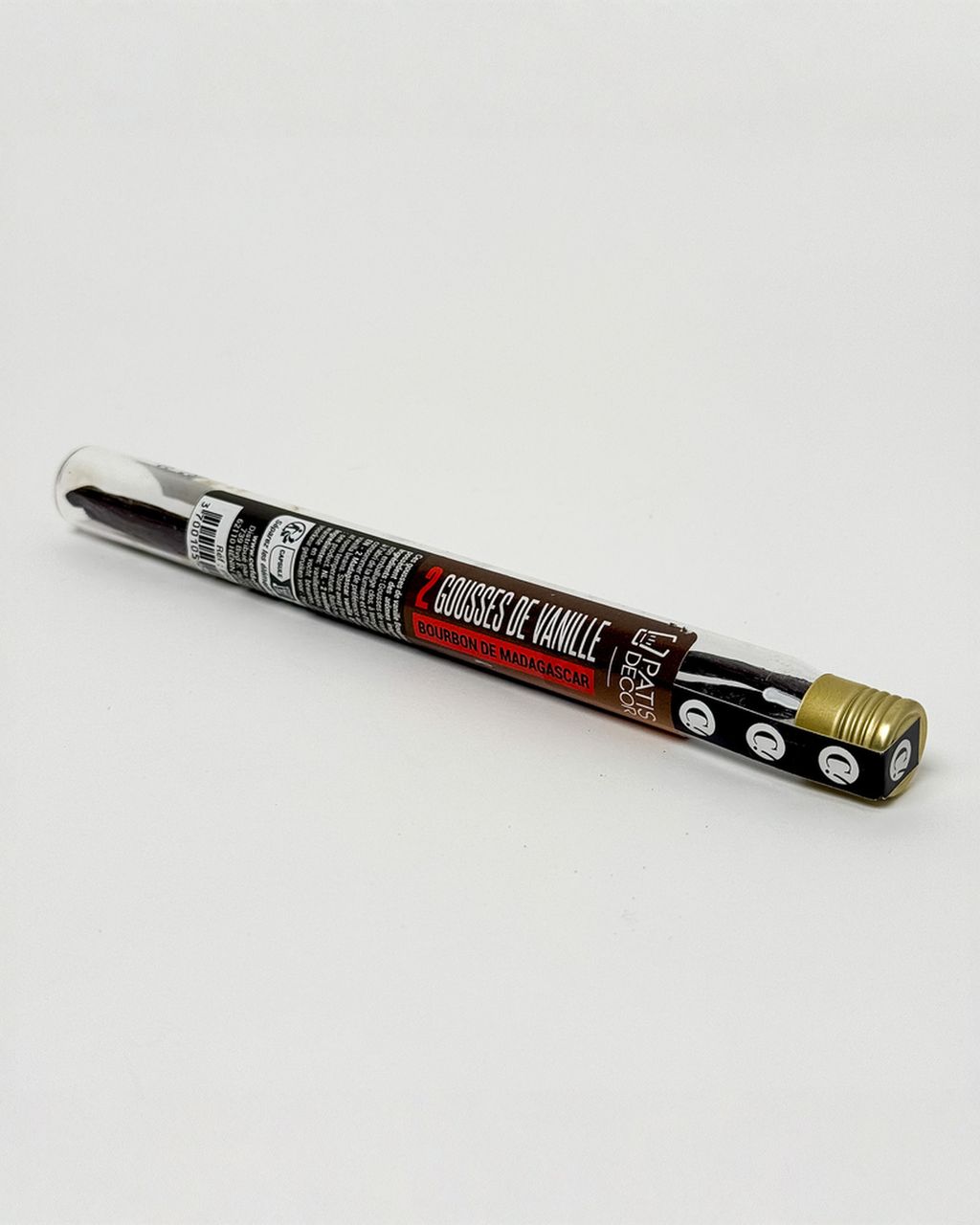
Madagascar Bourbon Vanilla Beans, 2 pcs
Homemade Coffee Syrups: Vanilla, Caramel and Gingerbread
Updated Oct 15, 2026
Homemade coffee syrup is just sugar dissolved in water and flavored, nothing more. Vanilla, caramel and gingerbread all start from the same base: vanilla and gingerbread use a 1:1 ratio, while caramel uses a bit more water. What sets them apart is what you add and when. In about 15 minutes of hands-on work (plus 30 to 60 minutes of steeping), you get a syrup that smells of real vanilla and toasted sugar, not of flavoring from a giant jug. And you know exactly what's in it. Below you'll find the ratios, tricks to prevent crystallization, how to avoid burns when working with hot caramel, and how to store the syrup so it doesn't spoil.
The base is always the same: sugar and water at 1:1 (light syrup) or 2:1 (rich syrup), by weight. Heat them until the sugar dissolves completely, then flavor the syrup and let it cool.
Light 1:1 syrup (for example 250 g sugar + 250 ml water) stirs easily into iced coffee. It sweetens gently, is thin, almost like water, and disperses in coffee right away.
Rich 2:1 syrup (for example 300 g sugar + 150 ml water) needs only a small amount per cup, holds its flavor longer, and has less free water for anything to grow in. It crystallizes more easily in the fridge, though (more on why below).
You only need to dissolve the sugar; there's no need to boil the syrup for long. Boiling evaporates water, shifts the ratio and thickens the syrup more than you want. Caramel is the exception, since there you cook the sugar to color on purpose.
Work in a clean pot and fill a washed, steamed glass bottle. The cleaner your equipment, the smaller the chance of introducing yeast into the syrup.
Syrup crystallizes when it holds more sugar than the water can keep dissolved when cold, and sucrose molecules start lining up into crystals again. With a light 1:1 syrup it hardly ever happens. With rich 2:1 syrup and with caramel it does, especially in the fridge or when undissolved grains are left on the side of the pot.
You have three ways to prevent it:
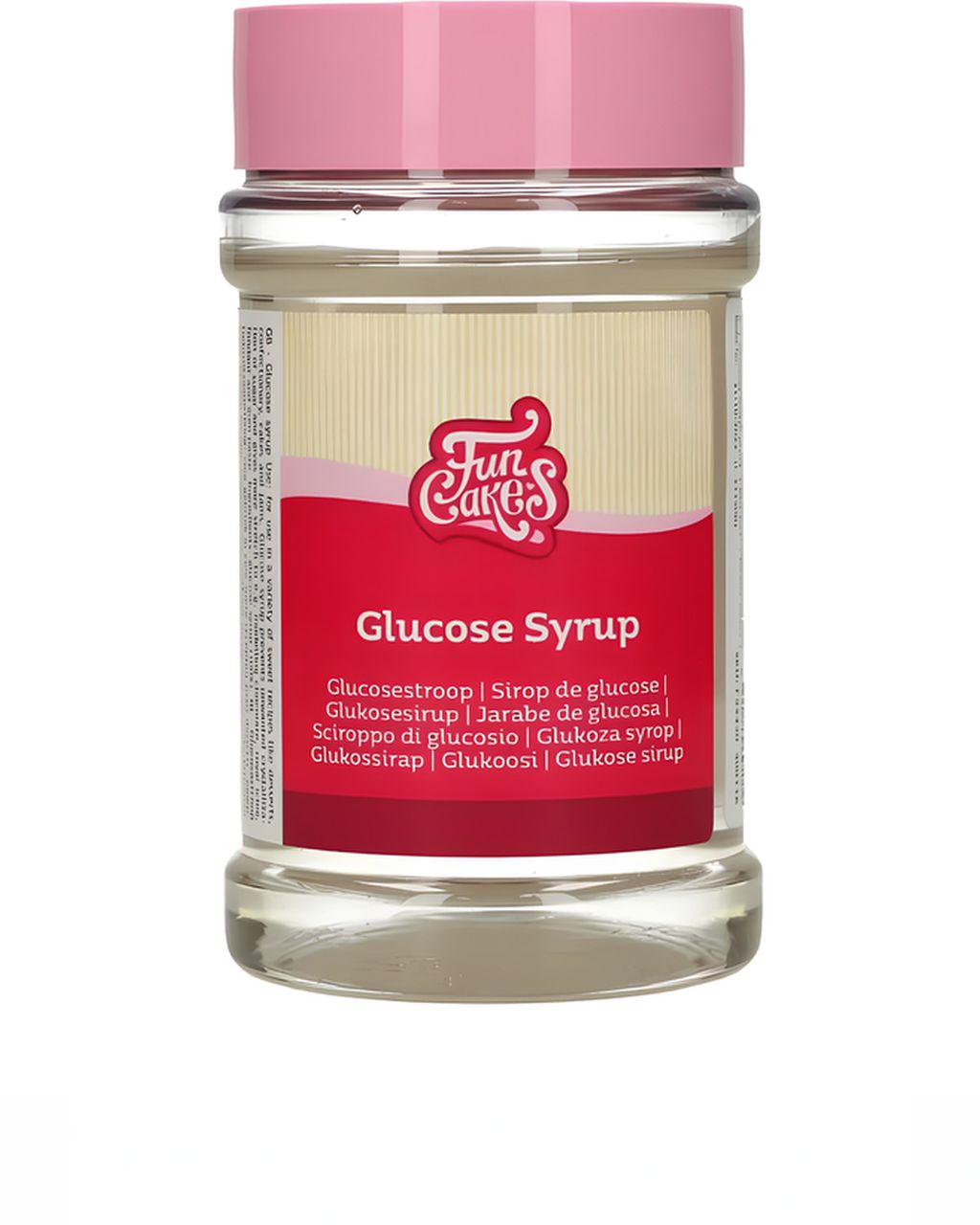
Glucose syrup. Glucose molecules get in sucrose's way, so the crystals can't form. About 10% of the sugar's weight is enough, which is 30 g for 300 g of sugar. Add it right at the start. Glucose syrup has no flavor of its own and won't cloud the syrup. Read more in our article what glucose syrup is and how to use it.
Invert sugar. It works in a similar way, only it's sweeter. It's handy if you already have it at home for gingerbread or ganache. Read more in invert sugar: what it is and why pastry chefs use it.
A few drops of lemon juice. The acid splits some of the sucrose into glucose and fructose as it cooks, so a little invert sugar forms right in the pot. It costs next to nothing, but the effect is harder to predict, and you may taste a slight tartness in the finished syrup.
If you don't have glucose, see what to substitute for glucose syrup. If your caramel has already crystallized, here's how to rescue grainy caramel.
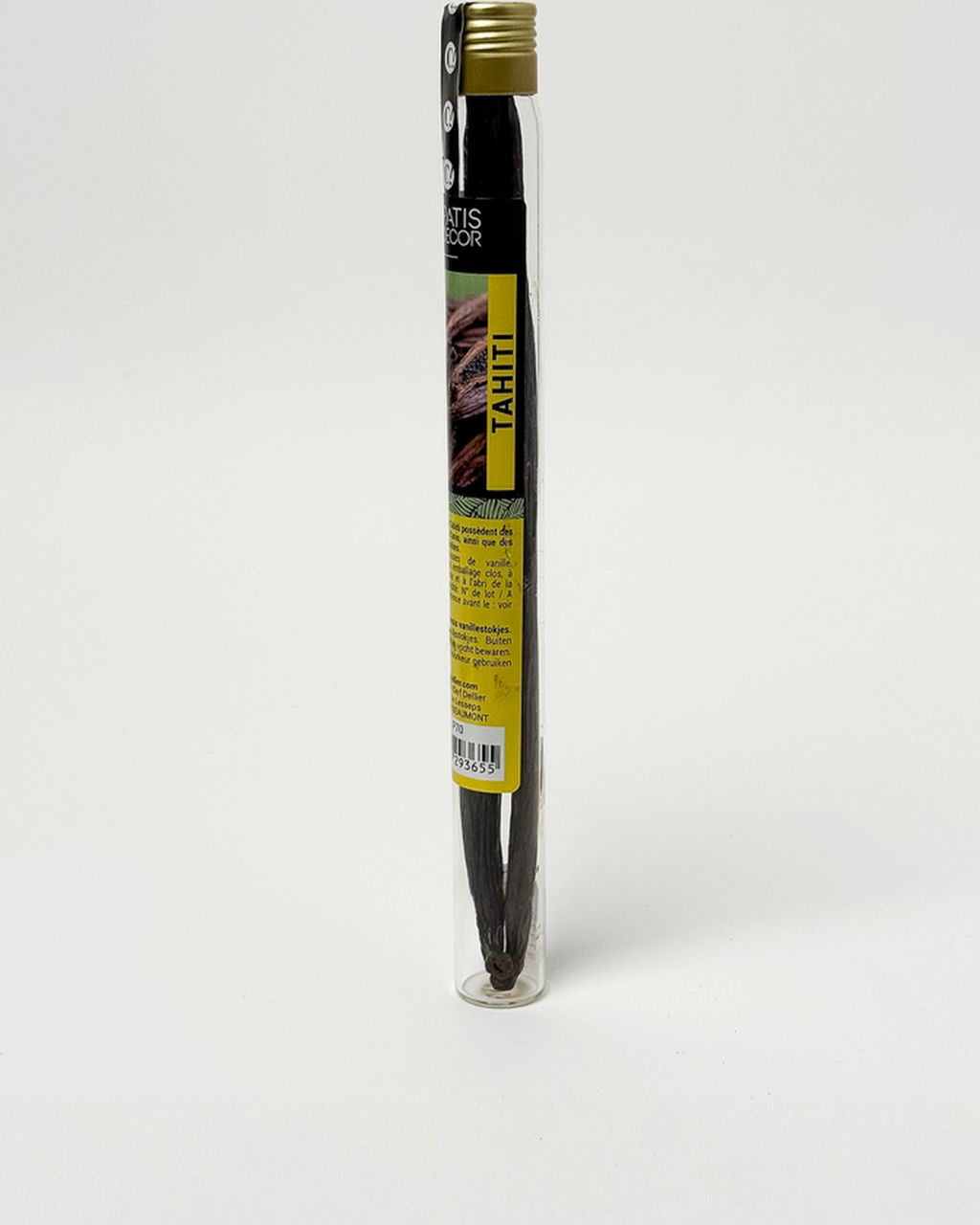
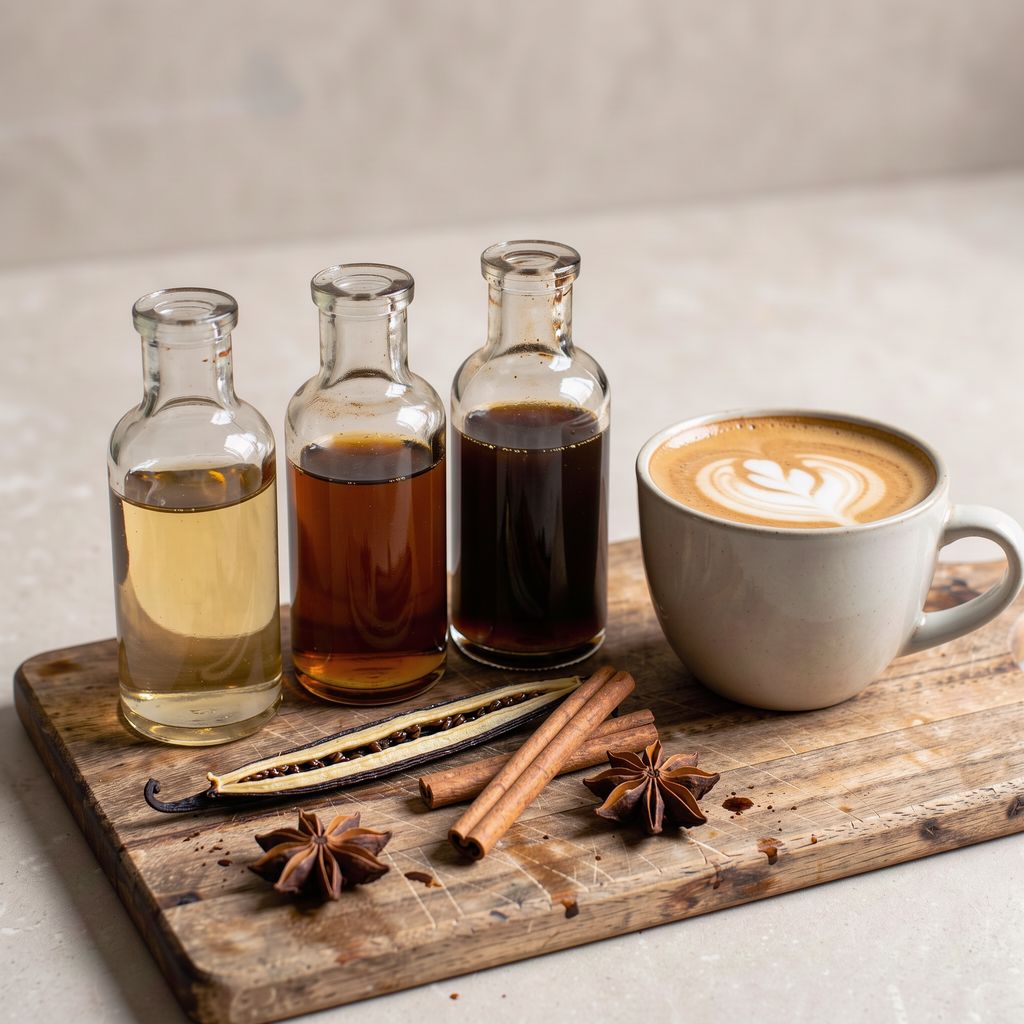
For vanilla latte syrup, choose Madagascar Bourbon (creamy, classic vanilla), and go for Tahitian if you want a floral aroma; one bean is enough for 250 ml water and 250 g sugar. Split the bean lengthwise, scrape out the seeds and put both the seeds and the empty pod into the syrup. A large share of the aroma is in the scraped pod.
The variety changes the flavor of the syrup more than you might expect:
Madagascar Bourbon vanilla beans smell the way most people imagine vanilla: sweet, creamy, a little like caramel. According to available analyses, vanillin predominates in them. They can handle a short simmer, so feel free to add them to the syrup right at the start. For latte syrup, they're the safest bet.
Tahitian vanilla beans are plumper and smell of cherries with a hint of anise. They contain less vanillin and more anisaldehyde and anisyl alcohol, which gives them their floral, anise-like aroma. Add them only after taking the pot off the heat so the aroma doesn't cook off, and let them steep in hot, not boiling, syrup. They're great in a flat white or iced coffee, where you want the vanilla to stand out.
Instead of a bean, you can use:
Vanilla extract, stirred into the cooled syrup, about 1–2 teaspoons per 250 ml. It's quick and the syrup stays clear, but the flavor is flatter and depends on the quality of the extract.
Vanilla paste gives you the seeds and the flavor without any scraping, though it tends to settle toward the bottom.
Vanillin (flavoring) is cheap and one-dimensional. In coffee, it won't come close to a real bean.
Steep for at least 30 minutes, ideally with a lid on. If you leave the bean in the bottle, the syrup will get stronger over time. For more detailed vanilla dosing, see vanilla beans: types, prices and how to use them. You can find our full range of vanilla (beans from Madagascar, Tahiti, Uganda and Papua New Guinea) on the vanilla beans and vanilla page.
Caramel coffee syrup is made by first caramelizing sugar to an amber color and then dissolving it in hot water. You'll need 200 g sugar, 20 g glucose syrup and 50 ml water for the pot, then 200 ml hot water for dissolving and a pinch of salt.
Put the sugar, glucose and 50 ml water in a heavy-bottomed pot. Heat without stirring, just swirl the pot now and then. Stirring and grains on the sides lead to crystallization.
Cook until the caramel is the color of dark honey or hazelnut. That's roughly 170–180 °C (340–355 °F). Past this point caramel turns bitter fast, and below it, it tastes only sweet.
Take the pot off the heat and pour in the hot water a little at a time, at arm's length with your face turned away. The caramel will bubble up violently and steam will shoot out.
Some of the caramel may harden into a lump. Put the pot back on low heat and stir until it dissolves. Add the salt.
This syrup is made purely of water and sugar, with no cream. It stirs into coffee better than a sauce and keeps better, too. If you want a thick caramel sauce with cream for ice cream or cake, reach for homemade caramel sauce with 4 ingredients or the article salted caramel at home.
Make gingerbread syrup with whole spices, because ground spices cloud the syrup and settle at the bottom of the bottle. For 250 ml water, use 250 g cane sugar, 2 cinnamon sticks, 4 cm of fresh ginger in slices, 5 cloves, 1 star anise and 3 allspice berries. While it steeps, before straining, add a pinch of freshly grated nutmeg (about ¼ teaspoon). The strainer catches most of it, but the syrup may turn very slightly cloudy.
Cane sugar gives the syrup a dark color and a molasses note, which makes it taste like gingerbread rather than spiced water. If you want more gingerbread flavor, add a spoonful of honey.
Simmer the spices gently for 10 minutes, then take the syrup off the heat, cover it and let it steep for 30–60 minutes. Then strain it through a fine sieve.
Cloves and star anise are strong. If you're not sure, use less. You can always add more spice to the syrup later, but you can't take out too much clove.
If you only have ground spices at home, one teaspoon of homemade gingerbread spice mix will do for this batch. Then strain the syrup through a coffee filter or thick cloth, and expect it to be cloudier. Spiced pumpkin syrup is made in a similar way if you're craving a pumpkin spice latte. Gingerbread syrup also works in authentic masala chai in place of sugar.
For a 250–300 ml latte or cappuccino, use 10–15 ml of syrup, which is 2–3 teaspoons. Rich 2:1 syrup needs about a third less.
Put the syrup in the cup first and pour the espresso over it. It mixes in before you add the milk.
For iced coffee, add it to the cold milk. Light 1:1 syrup needs just a quick stir and dissolves even in cold milk. Try it in an iced frothy caffè latte.
Caramel and gingerbread syrups go well together: a teaspoon of each tastes like a Christmas latte.
There's no verified shelf life for homemade coffee syrup; store it in the fridge at 4 °C (40 °F) or below, in a clean, sealed glass bottle, make small batches and watch for signs of spoilage. No food authority, neither the USDA nor the Czech SZPI, issues a shelf-life figure for homemade flavored syrup.
Here's what can be backed up:
Keep your fridge at 4 °C (40 °F) or below. The US USDA FSIS points to this limit for refrigerating food. Cold slows down the yeasts and molds that survive best in sugary solutions.
The freezer (−18 °C / 0 °F) stops microbial growth completely. According to USDA FSIS, food kept frozen at −18 °C stays safe and only loses quality over time. Freeze light syrup in portions in ice cube trays. Rich 2:1 syrup doesn't freeze solid in the freezer, but it stays thick and you can scoop it with a spoon.
Store-bought syrups are a different category. The manufacturer Monin states a shelf life of 90–180 days for its opened syrups at room temperature of 18–27 °C (64–81 °F) with the cap on, and 30–60 days with a dispensing pump. That applies to industrially made and filled syrup, not to what you cook at home.
In practice: make smaller batches that you'll use up quickly, scoop the syrup with a clean spoon and always close the bottle. A vanilla bean, pieces of ginger or spices in the bottle add moisture to the syrup and give microbes surfaces to settle on. If you want to keep the syrup longer, strain it or freeze it.
You can make coffee syrup with honey, but usually not with sugar substitutes like erythritol. Stir honey into water at a 1:1 ratio and either don't heat it or heat it only briefly. The result tastes strongly of honey, so it suits the gingerbread syrup best. Erythritol and similar sweeteners often crystallize in the fridge and don't give you a syrupy thickness.
Bubbles, a fermented or boozy smell, new cloudiness and fuzzy clumps on the surface mean yeast or mold is growing in the syrup. Throw the whole batch out; skimming the top isn't enough. The exception is the haze from ground spices in gingerbread syrup, which is there from the start and has nothing to do with spoilage.
Yes, a steeped vanilla bean can still be turned into vanilla sugar. Rinse the bean, let it dry completely for a few days, then bury it in sugar in a jar. After a few weeks the sugar will be scented. For the full method, see the article [homemade vanilla extract and vanilla sugar: how to make them](/cs/articles/domaci-vanilkovy-extrakt-a-vanilkovy-cukr).
Yes, brown and coconut sugar dissolve in water just like white sugar; the syrup will simply be darker, with a note of molasses or caramel. Stick to the same 1:1 ratio. They work best in gingerbread and caramel syrups; in vanilla syrup they overpower the delicate vanilla. Coconut sugar dissolves more slowly, and the syrup may stay slightly cloudy.
The black specks are vanilla seeds, and the dark color comes from the steeped bean. Both are fine. The longer you leave the bean in the bottle, the darker and stronger the syrup gets. If you want a light, clear syrup, strain it through a coffee filter. Spoiled syrup looks different: bubbles, a fermented smell and fuzzy clumps on the surface.
One recipe worth heating the oven for, one tip, and one deal from the shop. Nothing else.