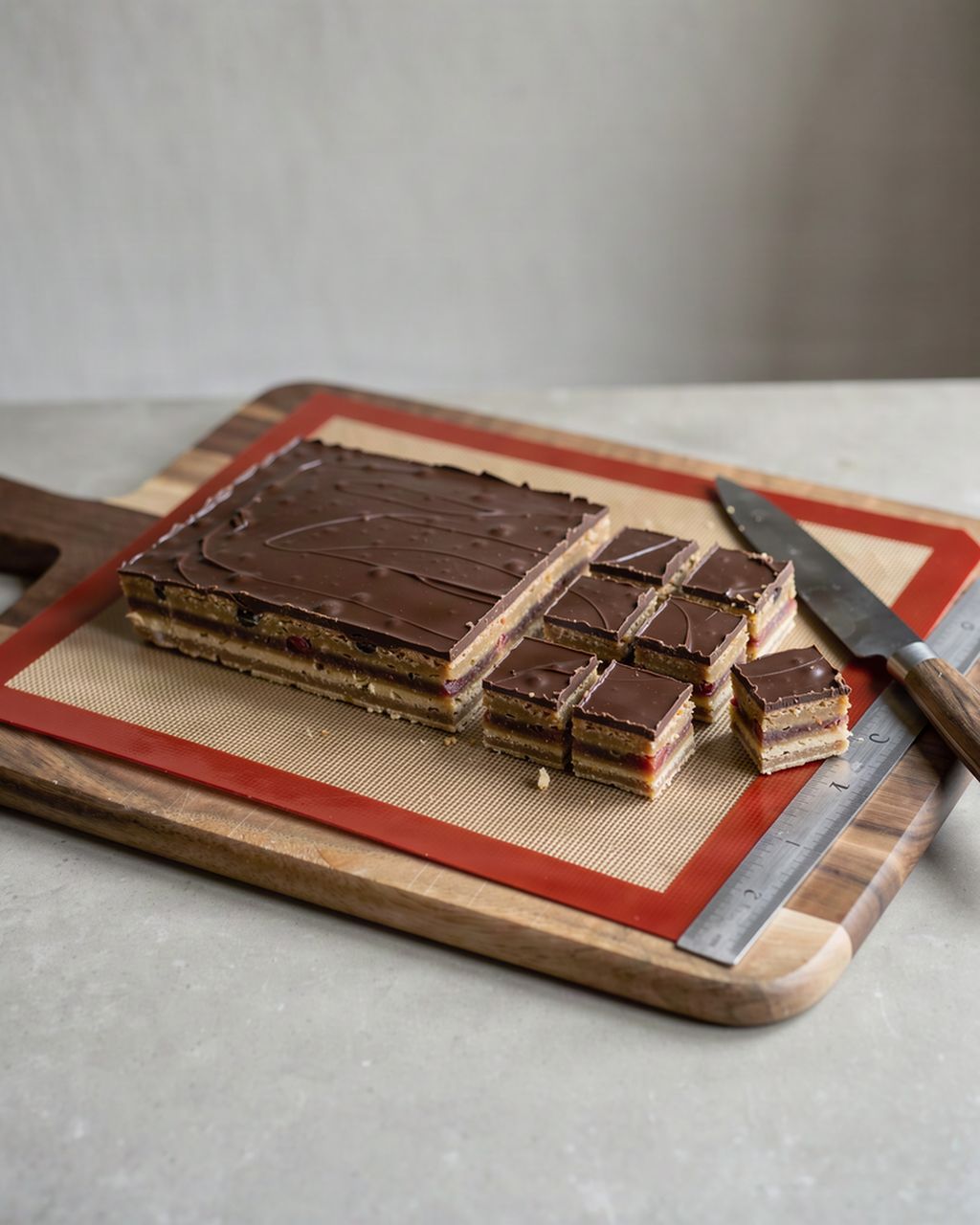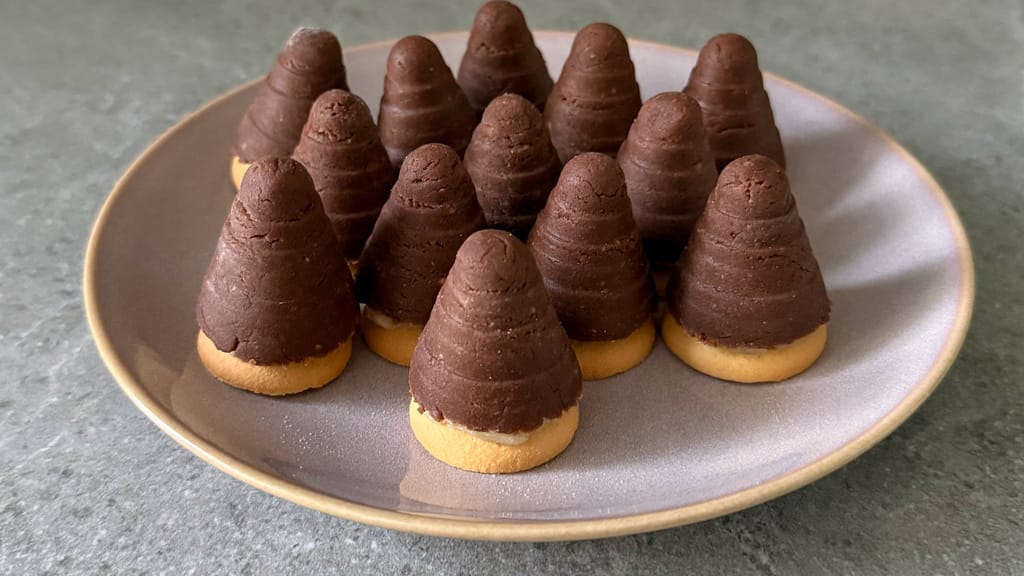
Grandma's traditional wasp's nest cookies with rum cream
Cookie Filling That Holds Its Shape: Buttercream, Pudding Cream, Nut Cream & Ganache
Updated Oct 27, 2026
Cookie filling holds its shape when it has enough fat to balance the water and when every ingredient is at the same temperature as you whip, ideally around 20°C (68°F). So there are only two things to watch: ratio and temperature. Below you'll find the numbers and method for the four most common fillings: buttercream, pudding cream, nut cream and ganache. You'll also learn how to pipe them so they don't ooze out between the cookies.
Choose your filling by firmness and shelf life: buttercream or ganache for delicate sandwich cookies, pudding cream for wasp nests, nut cream for a richer flavour.
Buttercream: the easiest and firmest, and it takes flavouring and colour well. It suits sandwich cookies that should stay crisp.
Pudding cream: lighter and smoother. The water from the milk softens the cookies, which is why it's popular for wasp nests and little cups.
Nut cream: a buttercream base with toasted ground nuts. Richer flavour, slightly softer texture.
Ganache: just chocolate and cream. Once set, it's the most stable and the easiest to pipe.
One simple rule applies: the more water in the filling (milk, cream, pudding), the faster the cookies soften and the shorter their shelf life. For how many days each filling lasts, see how long cream-filled cookies keep and what to fill them with. Here we focus on how to make the filling. You'll find more cookies that are filled with cream among the Christmas cookie recipes.
Basic cookie buttercream uses 250 g (9 oz) butter to 150–200 g (1¼–1½ cups) icing sugar. Less sugar gives a softer, less sweet filling; more sugar firms it up.
Let the butter (buy one with 82% fat) soften to 18–20°C (64–68°F). A finger should press into it easily, but it shouldn't look shiny or runny.
Beat it on its own for 4–5 minutes, until it turns pale and increases in volume.
Add the icing sugar a spoonful at a time, beating after each addition.
Finally, add the flavouring: vanilla, rum, cocoa or a flavouring paste.
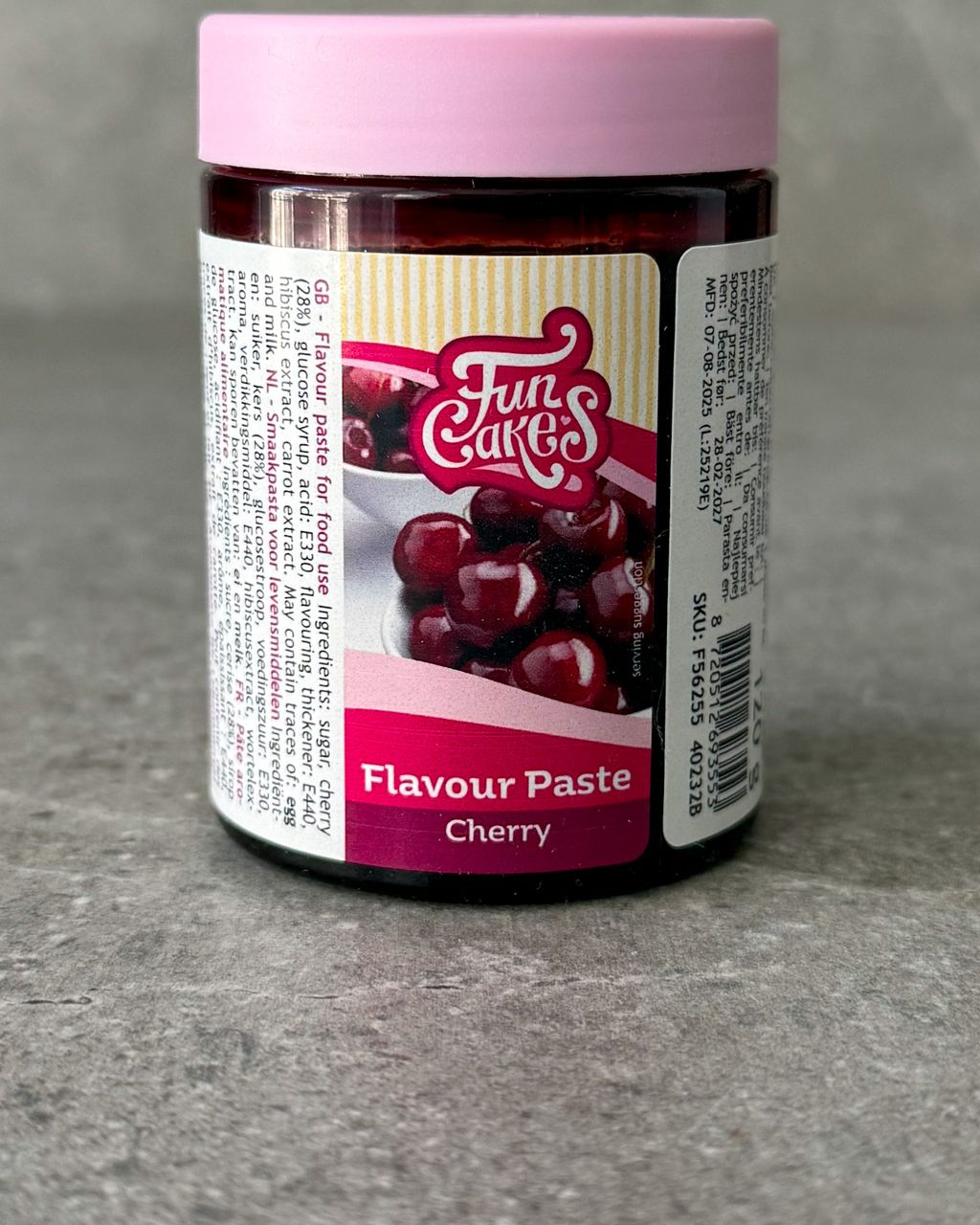
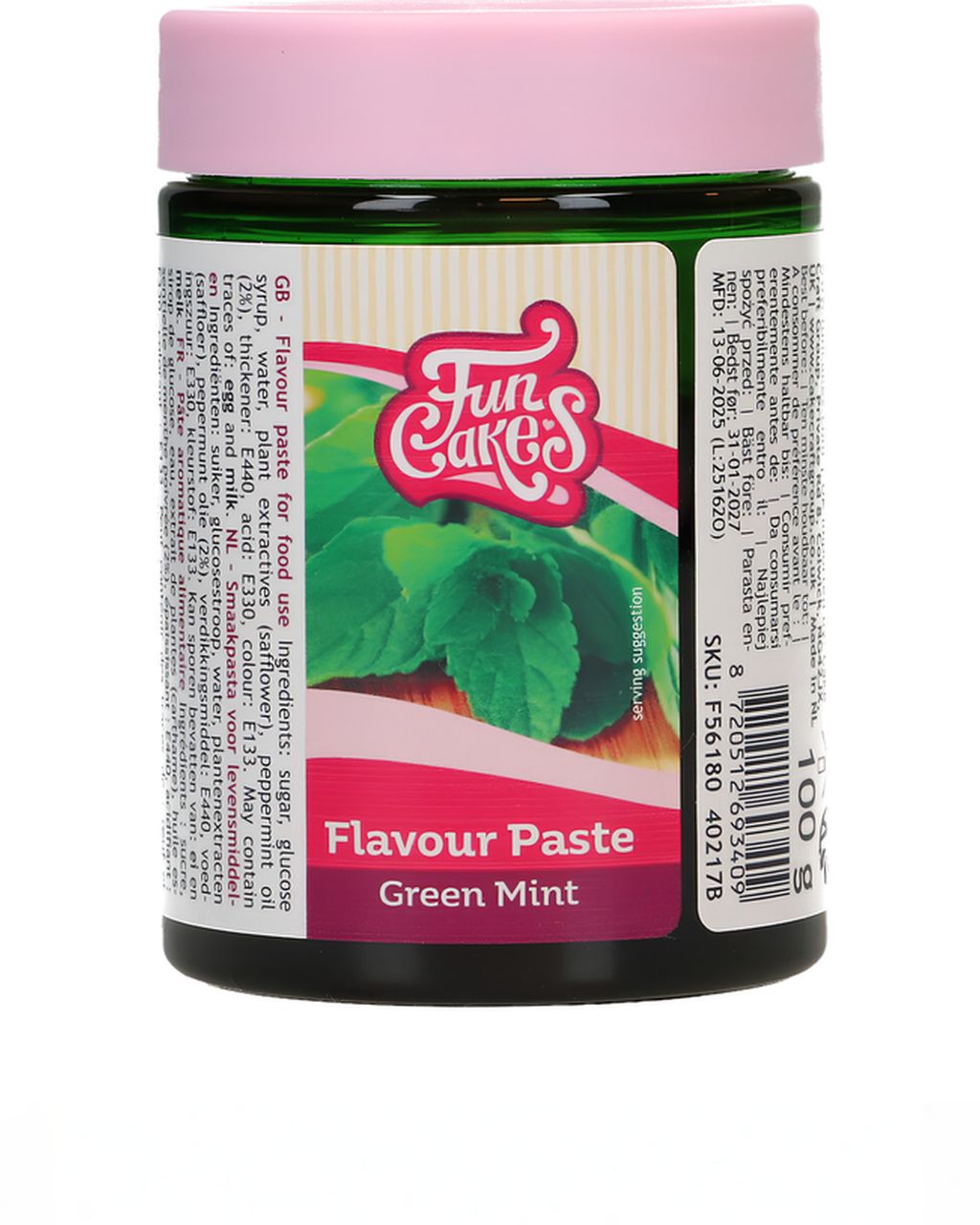
Flavouring without thinning: liquid essences and juice don't belong in buttercream, because the water thins it and can make it curdle. A thick flavouring paste adds flavour and colour without diluting it. FunCakes cherry flavouring paste gives the filling a pink colour and a sweet cherry flavour. FunCakes mint paste goes well with cocoa cookies. Start with about a teaspoon per 250 g (9 oz) of butter, taste, and add more as needed. You'll find the recommended dosage on the packaging. A homemade route works too: finely sieved plum butter or freeze-dried fruit powder. Paste is more convenient, though, and the flavour stays consistent.
Older recipes add raw egg yolks to buttercream. If you want to use them, first read how to reduce the risk of salmonella with raw eggs in fillings. For a more detailed comparison of buttercreams, see buttercream: classic, Swiss, or with pudding.
Pudding cream won't curdle when the pudding and the butter are at the same temperature when you combine them, ideally 20–22°C (68–72°F). Nearly every curdled filling is down to warm pudding and cold butter, or the other way round.
Ratio for cookies: 500 ml (2 cups) milk, 1½ sachets of pudding powder (about 55 g), 3–4 tablespoons sugar and 250 g (9 oz) butter. Cook the pudding thicker than the packet instructions say (1 sachet per 500 ml). The filling then stays put between the cookies and doesn't run out.
Cook a thick pudding and cover the surface right away with cling film, pressed against it. No skin forms, so there won't be lumps in the filling.
Let it cool to room temperature. Not in the fridge, and not overnight outside in the frost.
Beat butter at the same temperature into a pale, fluffy cream (4–5 minutes).
Add the pudding a spoonful at a time, beating it in fully before adding the next.
If it curdles anyway, you can tell from how it looks what happened:
The filling is grainy and lumpy because it's cold and the butter has set into little beads. Warm the bowl over a water bath for 10–20 seconds, or for a few seconds in the microwave, and beat again.
The filling is thin, glossy and greasy because it's too warm and the butter has melted. Put it in the fridge for 15 minutes, then beat again.
Pudding cream contains a lot of water, so cookies soften within two to three days. That's why it suits traditional wasp nests with rum cream, where that's expected. For delicate Linzer-style sandwich cookies, buttercream or ganache is the better choice.
Grandma's traditional wasp's nest cookies with rum cream
Traditional wasp nests with rum pudding cream
Nut cream for cookies is buttercream with toasted, finely ground nuts beaten in, roughly 80–100 g per 250 g (9 oz) of butter. More nuts thicken the filling, but make it crumbly and harder to pipe.
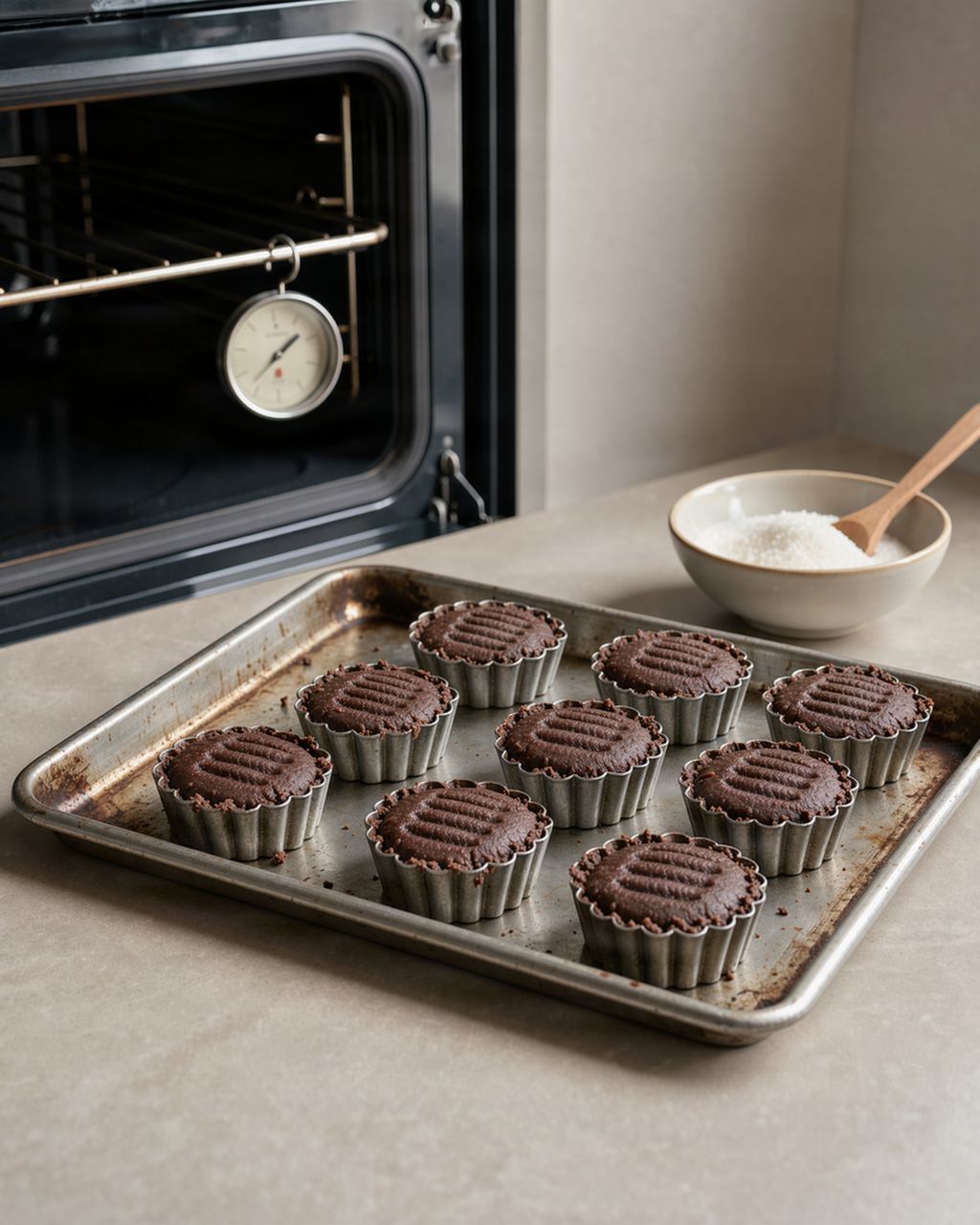
Toast the nuts for 8–10 minutes at 160°C (320°F). Toasting wakes up the flavour; raw walnuts tend to be bitter.
Let them cool completely. Warm nuts melt the butter and the filling goes limp.
Grind them as finely as possible, almost to a flour. Coarse bits clog the nozzle and even a snipped piping bag.
A teaspoon of rum or a little cocoa rounds out the flavour. Add the rum at the end and only a little, because it counts as liquid.
A cooked nut filling is something different: ground nuts simmered with milk and sugar into a thick paste. It's softer and moister, so it suits baked pockets and crescents better than sandwiching between two cookies. Nut and butter cream, on the other hand, fills pastries nicely, such as hollow nut crescents.
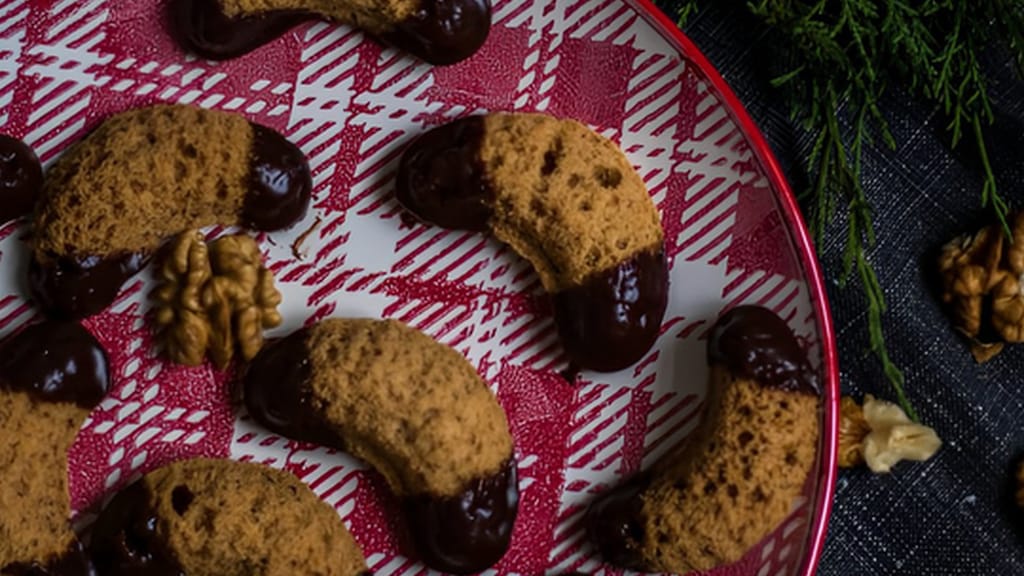
Hollow walnut crescents
Hollow nut crescents filled with cream
Cookie ganache uses a chocolate-to-cream ratio of 2:1 for dark, 2.5:1 for milk and 3:1 for white chocolate. It's firmer than a glaze because it has more chocolate than cream.
Dark chocolate: 2:1, for example 200 g (7 oz) chocolate and 100 g (scant ½ cup) cream (33% fat).
Milk chocolate: 2.5:1.
White chocolate: 3:1, because it contains no non-fat cocoa solids (only cocoa butter), which thicken ganache, and it has more sugar. So it needs less cream.
A cake glaze, by contrast, uses a 1:1 ratio, so it's too runny for cookies.
Method: heat the cream to just below boiling and pour it over the chocolate. Let it sit for a minute, then stir with a spatula from the centre outward in circles until it comes together into a glossy mass. Don't whisk, because that would work air in. Then let the ganache set at room temperature for about 2–4 hours. It's ready to pipe when it has the consistency of peanut butter. Don't use the fridge, as the ganache would set unevenly.
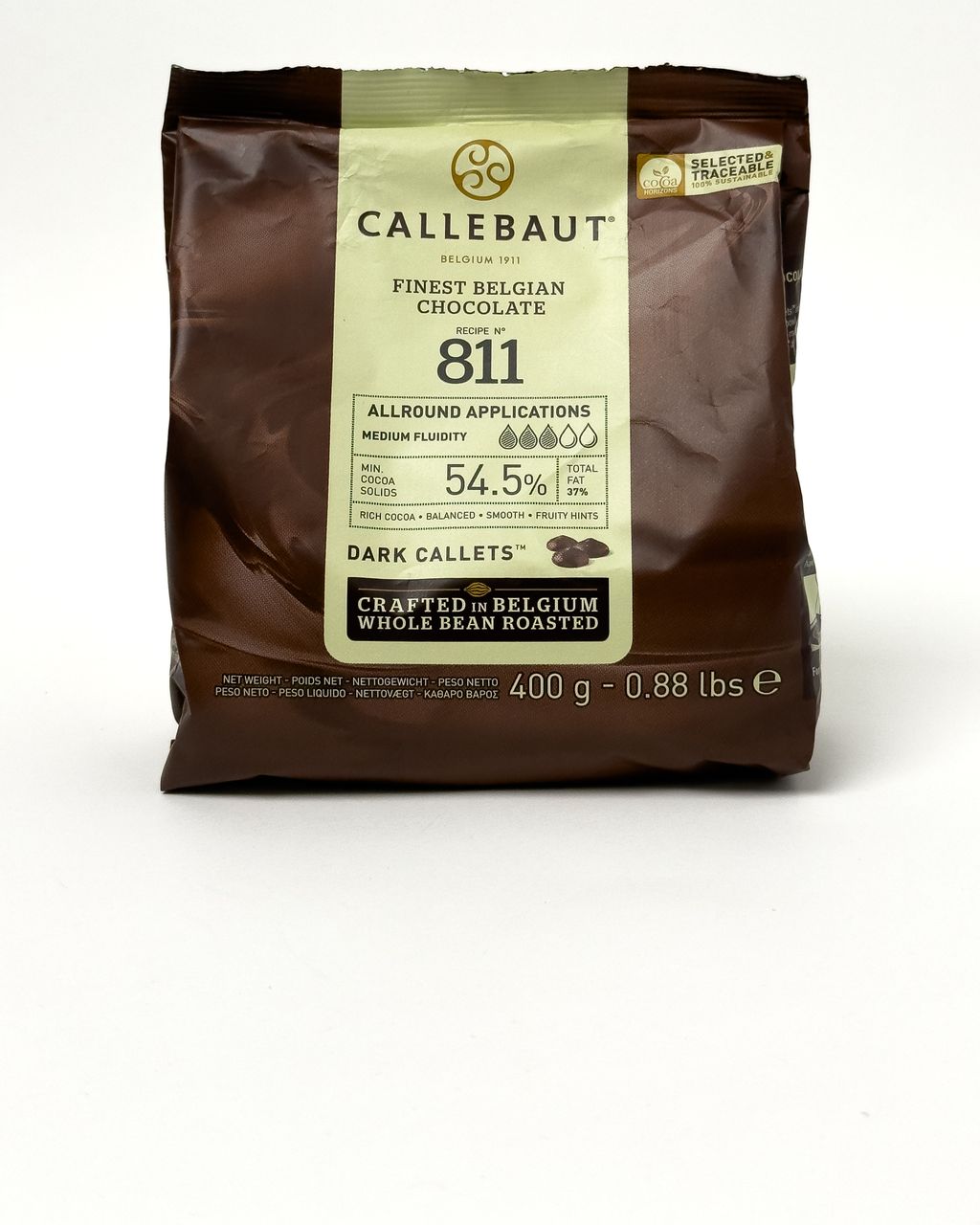
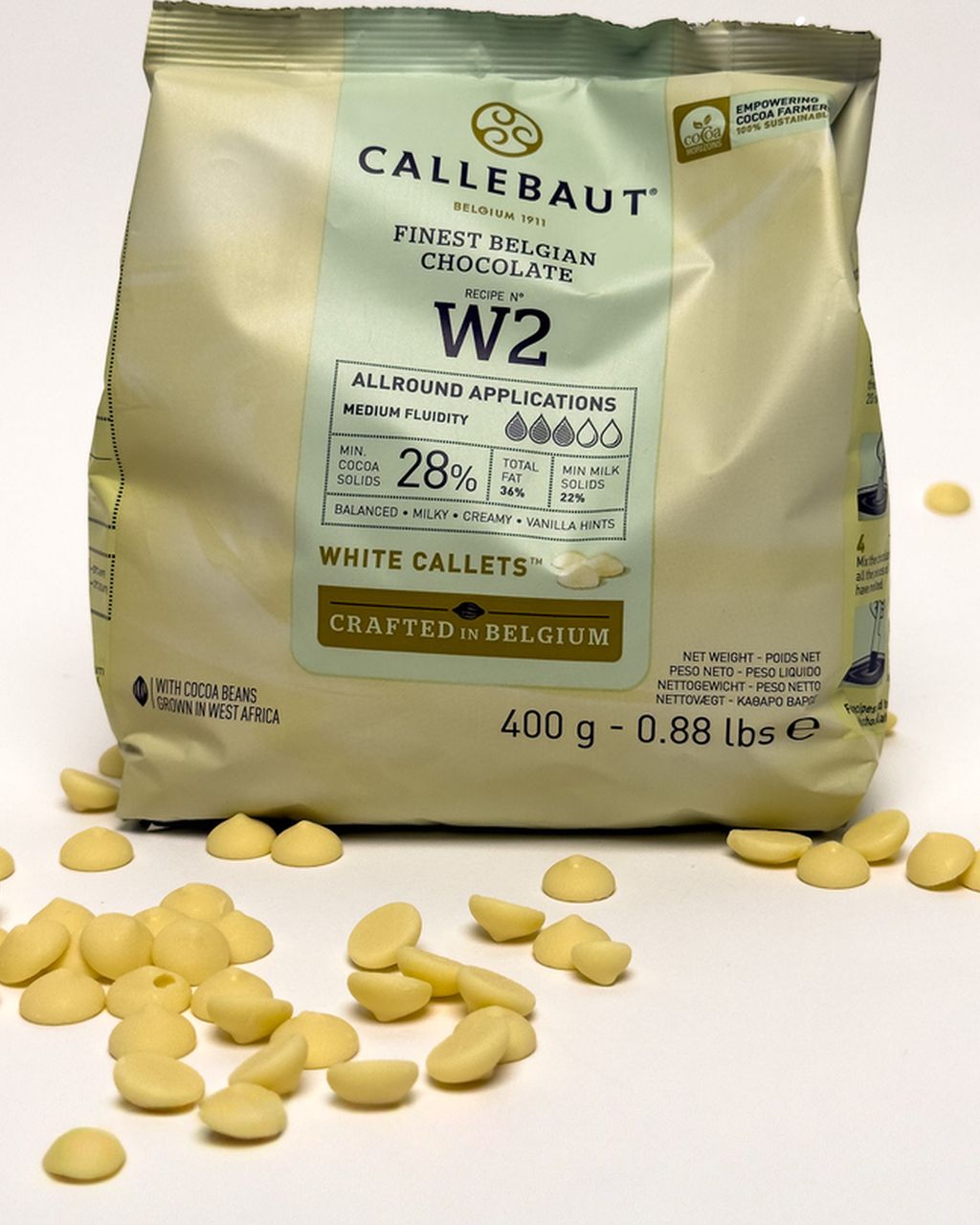
Which chocolate: any good chocolate containing cocoa butter will do, not confectionery coating made with vegetable fat. Chocolate drops are handy, because you don't need to chop them and they melt evenly. For dark ganache we have Callebaut 811 dark chocolate with a balanced flavour that won't overpower sweet Linzer cookies. For white ganache there's Callebaut W2 white chocolate. If you want a more intense dark ganache, reach for chocolate with 65–70% cocoa and add a little more cream, because more cocoa solids thicken the ganache.
Flavouring: mint paste suits dark ganache, cherry paste suits white. Stir the paste into the finished, lukewarm ganache. If your ganache splits (greasy and grainy), stir in a spoonful of warm milk and blitz it briefly with a hand blender.
For more on white chocolate, see whipped white chocolate ganache. Similar fillings in a smaller format are covered in macaron fillings.
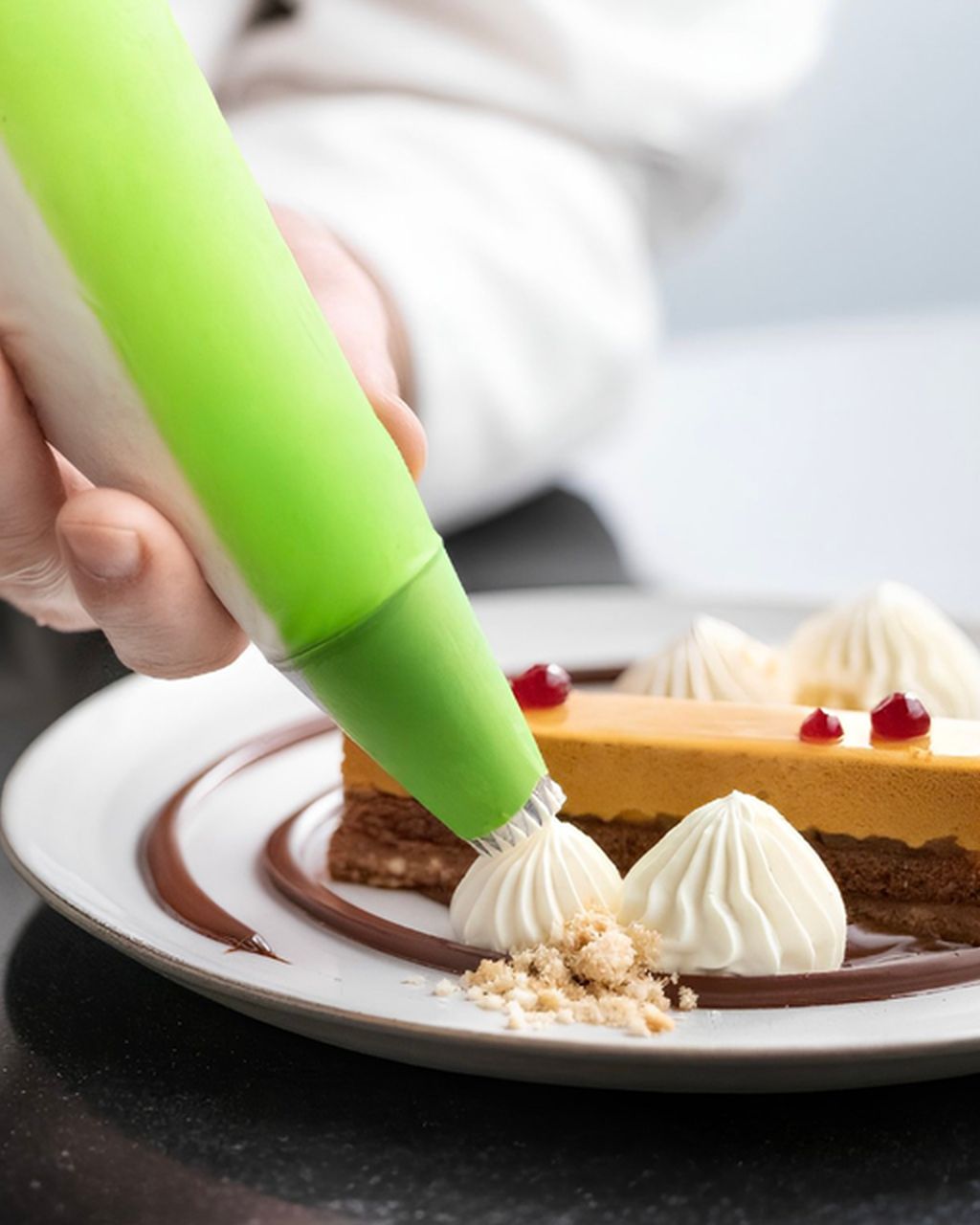
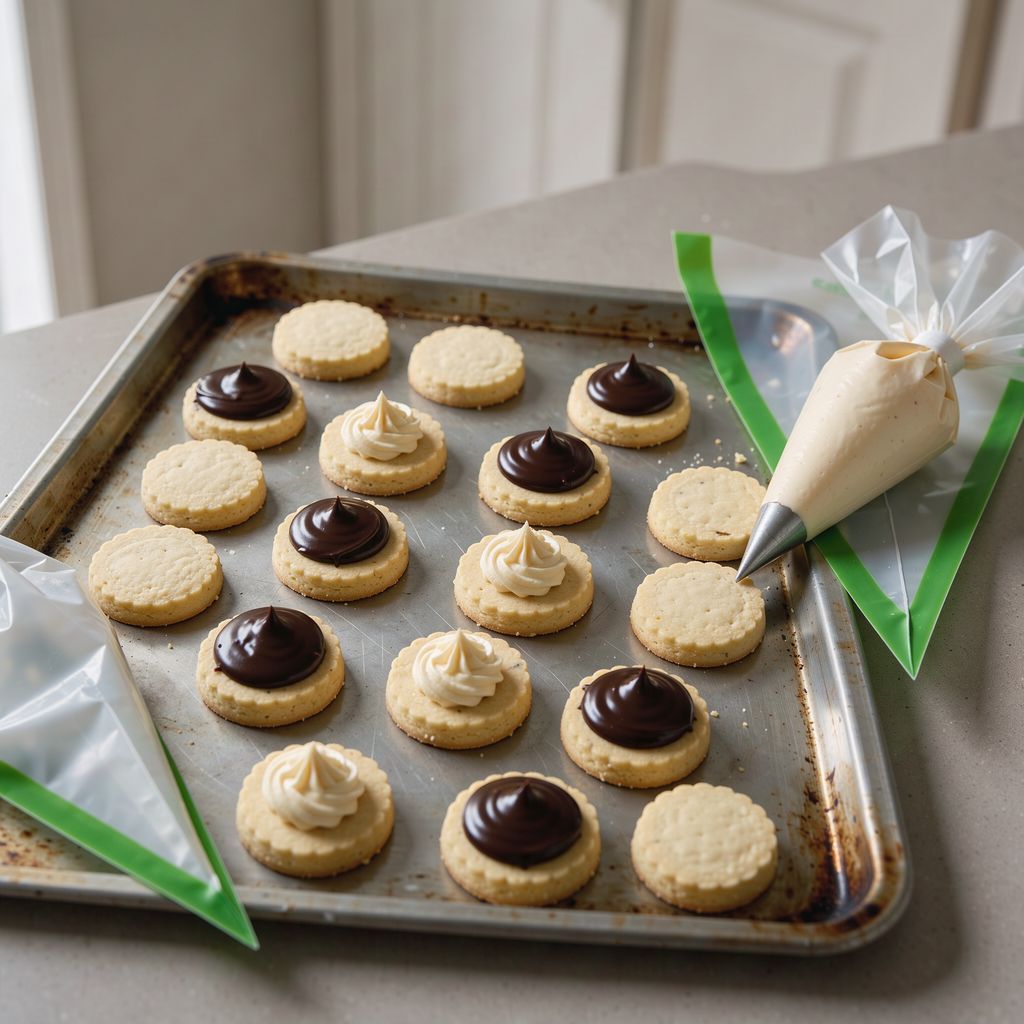
Neat filling is piped straight down in a single go. The piped mound is smaller than the cookie: it should end up about 3–5 mm (⅛–¼ in) from the edge only once you press the second half on top and the filling spreads out toward the rim.
Bag: a smaller one is enough for cookies, such as 30 × 17 cm piping bags. It sits comfortably in your palm, and the filling warms up from your hand less than in a large bag. Fill it no more than two-thirds and twist the top.
Tip: for smooth mounds, snip an opening of 6–8 mm. For decorative stars, fit a star nozzle. Nut cream needs at least 8 mm, otherwise it clogs.
Motion: hold the bag vertically about 1 cm (½ in) above the cookie. Squeeze until the mound is about half the diameter of the cookie, then stop pressing and pull the bag away with a quick twist to the side.
Amount: for a cookie 4–5 cm (1½–2 in) across, allow about 5 g of filling. 250 g (9 oz) of butter makes enough filling for roughly 80 sandwiched cookies.
Heat from your hand: buttercream in the bag softens after a few minutes. Keep a second bag in the cold and swap them.
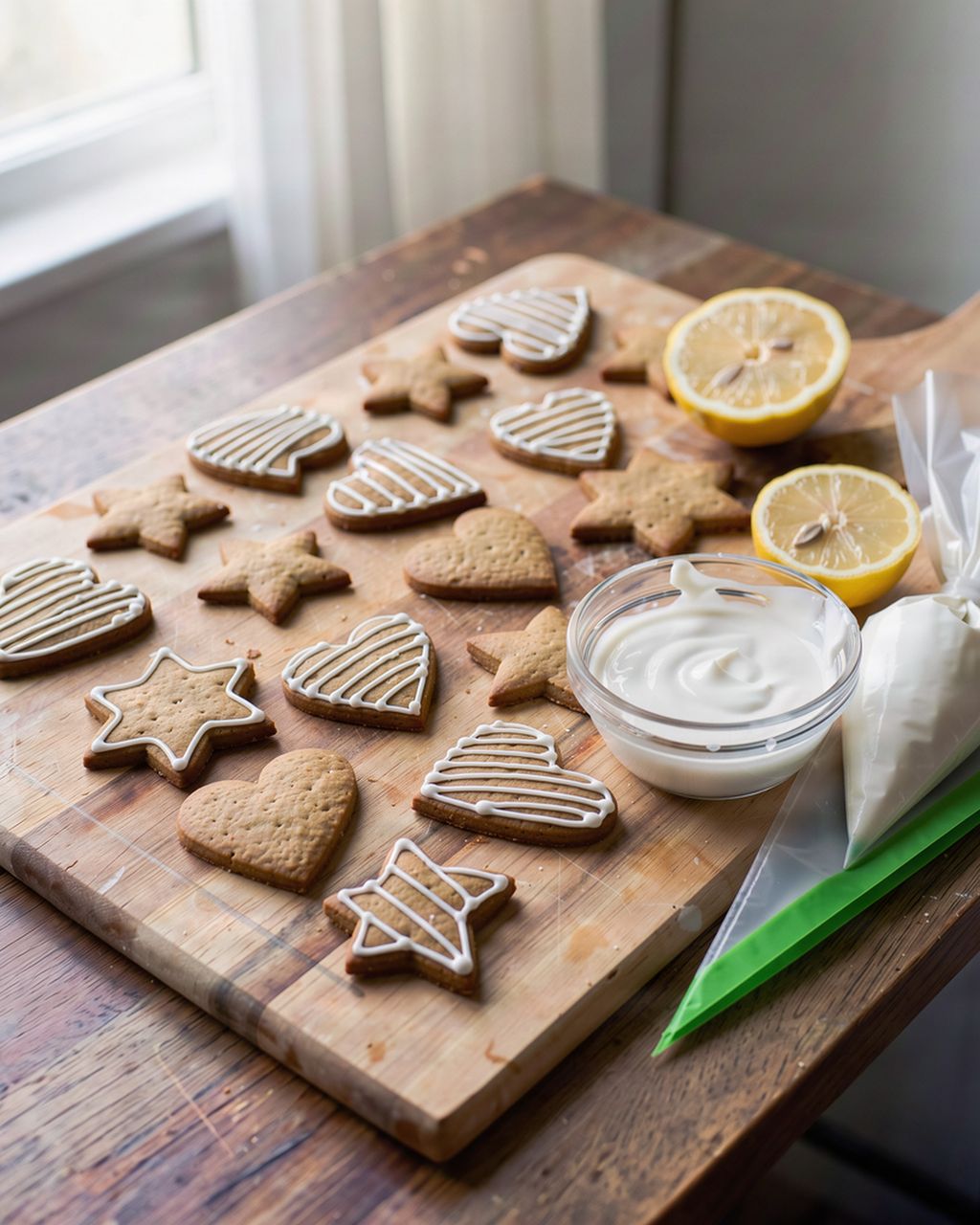
Then leave the cookies in a cool place for at least 1–2 hours so the filling sets, and only then decorate them or layer them in a box. When to decorate with icing and when with chocolate, and whether to do it before or after sandwiching, is covered in how to decorate Linzer cookies.
Filling most often runs because it's warm or doesn't have enough fat. In most cases it comes down to one of these causes:
Too little sugar or too much liquid in the buttercream. Add icing sugar 20 g at a time.
Runny pudding. Next time cook it thicker, so it stands up on a spoon.
Ganache with too much cream. Stick to a 2:1 or 3:1 ratio, depending on the chocolate.
A warm room. Store sandwich cookies with buttercream or ganache below 18°C (64°F).
Warm cookies. If you fill cookies that haven't cooled yet, the filling melts on them. Fill them only when cold.
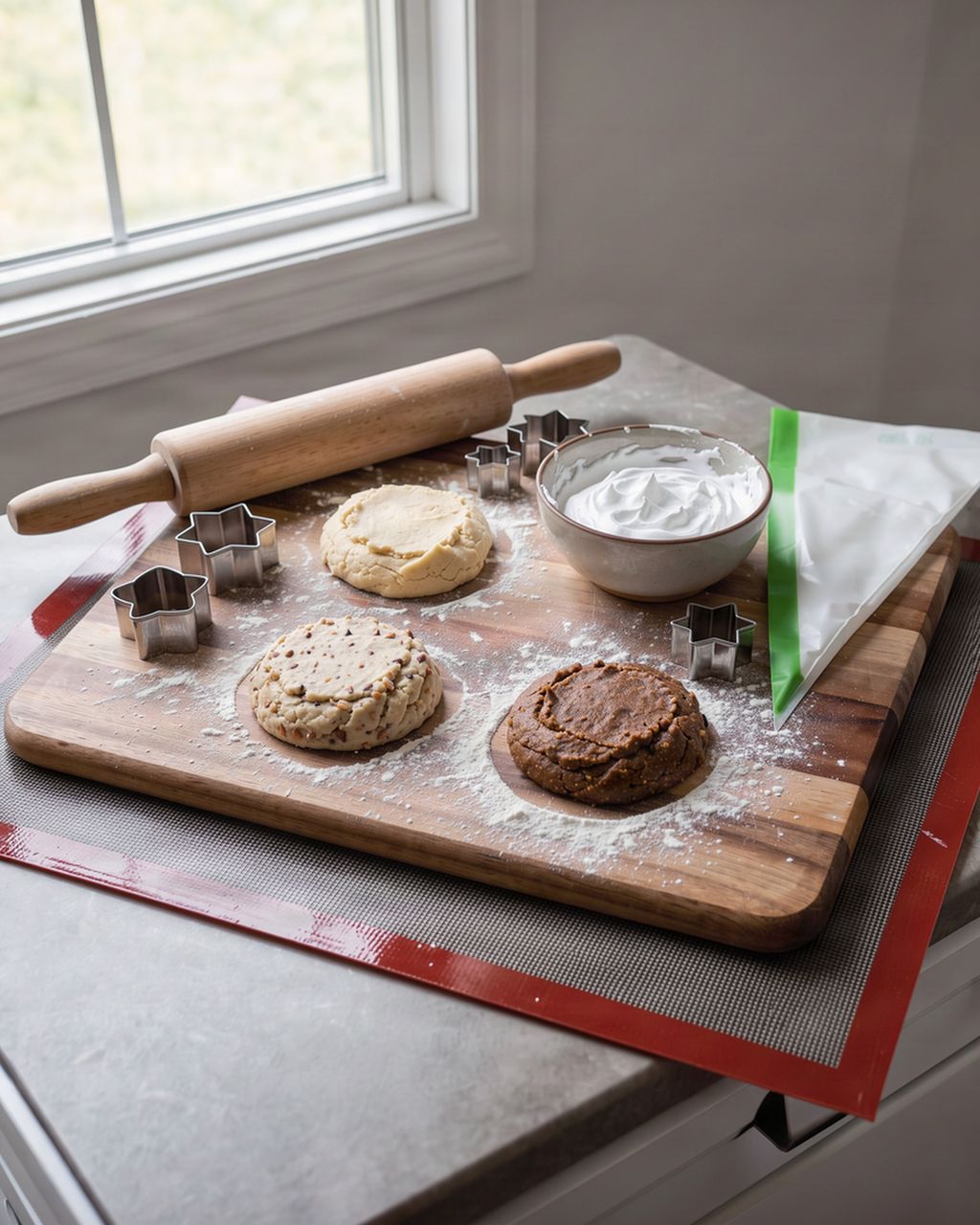
The dough matters too. A delicate Linzer dough with a lot of butter absorbs moisture more slowly than a softer nut or cocoa dough. The differences are explained in cookie doughs: Linzer, nut, coconut and gingerbread. A nice example of a dark dough with a light filling is cocoa stars with coconut cream.
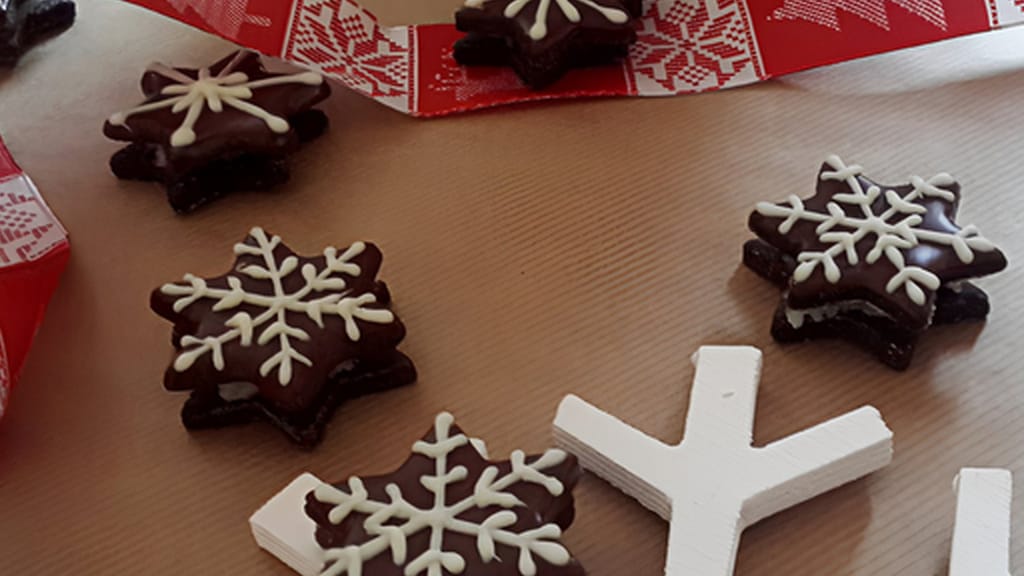
Cocoa star cookies with coconut cream
Cocoa stars with coconut cream
Yes. Buttercream and nut cream keep in the fridge for 2–3 days. Before using, let them soften to room temperature and whip them again. Ganache just needs to sit covered overnight at room temperature. Pudding cream is best combined right before filling, because it firms up in the fridge and curdles easily when whipped again.
Buttercream and ganache can be frozen for up to 2–3 months. Pudding cream isn't suitable for freezing: after thawing it releases water and turns grainy. Thaw the filling slowly in the fridge, then let it come up to room temperature and whip it again.
You can replace the butter with margarine (by law it contains 80–90% fat), a spreadable fat with at least 75% fat (look for "spreadable fat 75%" on the label), or a confectionery vegetable fat. The filling then holds its shape even in a warmer room, but the flavour is less pronounced. Don't use traditional spreadable butter, reduced-fat or three-quarter-fat butter, dairy spreads, reduced-fat or three-quarter-fat margarine, or any other spreadable fats under 75% fat. They contain a lot of water, so the filling turns runny and curdles.
Colour cookie filling with gel or powdered food colouring, or with a flavouring paste that adds colour and flavour at once. Liquid colours add water, thin out buttercream and can make white ganache seize. Add colour drop by drop to the finished filling. Butter has a yellowish tint of its own, so you can't get a pure white or bright blue from buttercream, but pastel shades work well.
Ganache made with dark chocolate travels best, followed by buttercream. Both hold their shape once set, but they soften above roughly 20°C (68°F), so chill the cookies well before the trip and pack them in a sturdy box in a single layer or separated with paper. Pudding cream contains milk and water, so it belongs in the cold and isn't suitable for a longer journey.
One recipe worth heating the oven for, one tip, and one deal from the shop. Nothing else.