Salted caramel cream - great for macarons and more
Macaron Fillings: Ganache Ratios, Buttercream, Fruit Pastes and Maturing
Updated Oct 15, 2026
Macaron fillings come down to three basics: ganache (chocolate and cream), buttercream and a fruit element. Dark chocolate ganache works at a ratio of 1.5 : 1, white chocolate needs 2 : 1 to 3 : 1, and fruit is best added to the filling as a paste rather than on its own. Then leave the macarons in the fridge for 24 hours, because that's when the crisp shell and dense filling become one. Below you'll find ratios in grams, a comparison of the fillings and how long filled macarons keep, according to USDA FoodKeeper.
Ganache is the most reliable macaron filling, buttercream is the quickest, and fruit only works combined with one of them. Bake the shells following our guide to step-by-step macarons. Then choose based on what you want from the filling:
Ganache holds its shape, is the least sweet, and softens the shells exactly as it should while they mature. It takes the longest, though, as it needs several hours to set.
Buttercream is ready in 10 minutes and carries colour and flavour well. It softens first in warm conditions, and the American version tends to be very sweet.
Fruit filling adds the tartness that balances macarons. Jam or purée on its own will make the shells soggy, though, so use it only as a "heart" in the middle of a ring of ganache or buttercream.
For creamy fillings in practice, vanilla and chocolate, see the recipe for macarons with vanilla and chocolate cream.
For macaron ganache, use dark chocolate to cream at 1.5 : 1, milk chocolate at 2 : 1 and white chocolate at 2 : 1 to 3 : 1 by weight. The filling needs to be firmer than a cake ganache so it can keep two shells apart. The less cocoa solids the chocolate has, the more of it you need for the same amount of cream (33–35% fat):
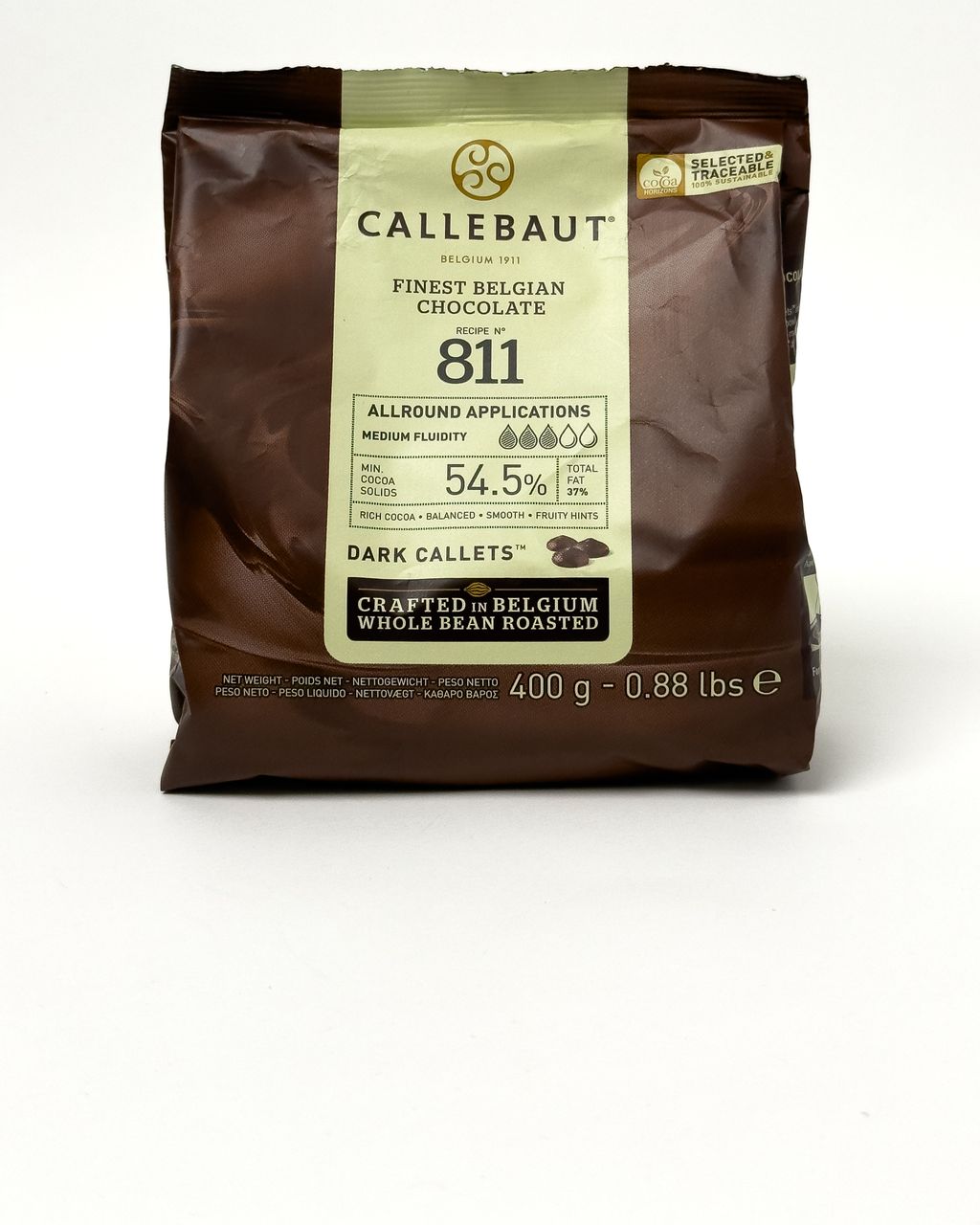
Dark chocolate with around 54% cocoa solids (e.g. Callebaut 811): 150 g chocolate to 100 g cream, a ratio of 1.5 : 1. Callebaut itself gives a basic ganache of 1 : 1 for 811. That's great for a cake, but in a macaron it will spread out.
Milk chocolate: roughly 2 : 1.
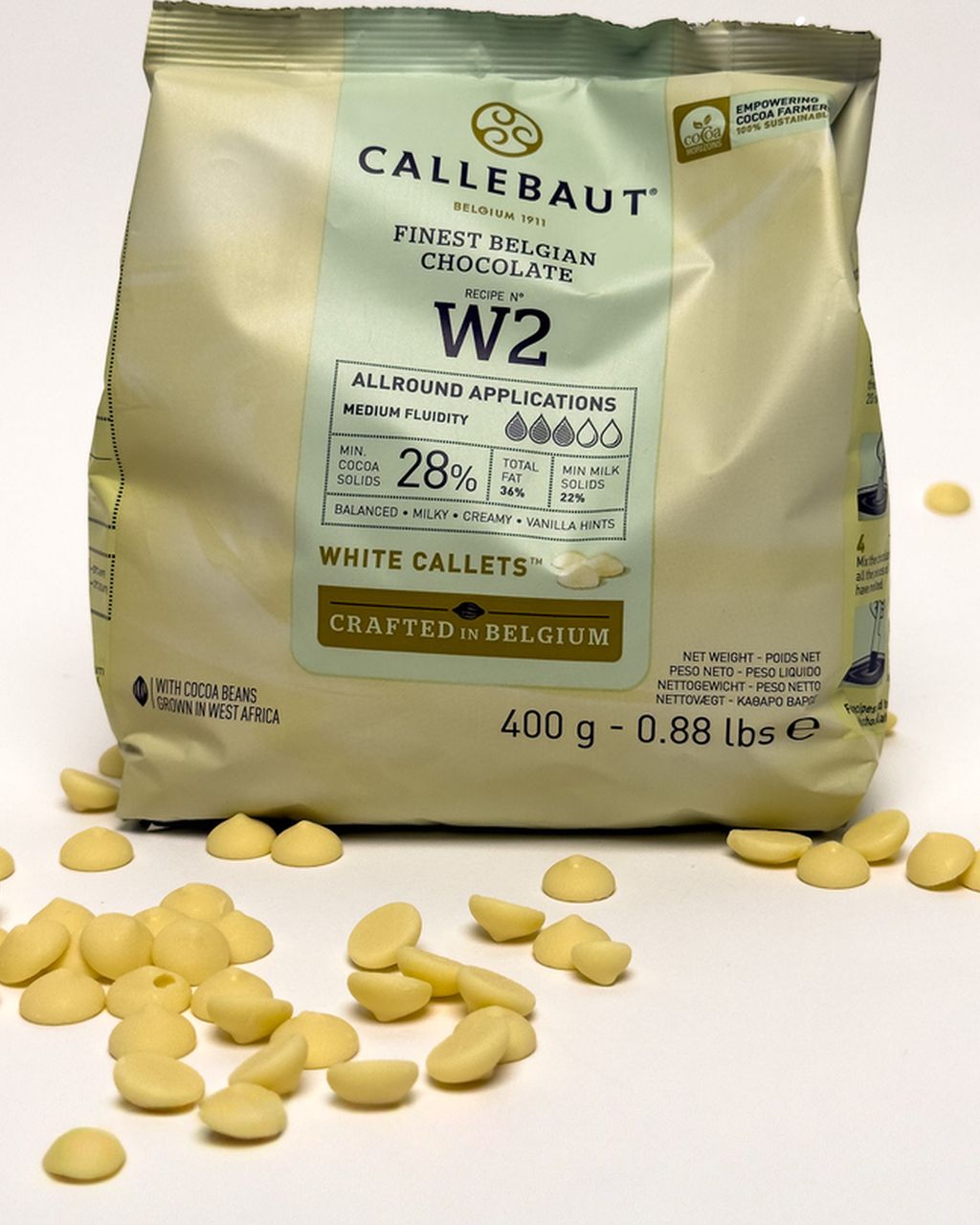
White chocolate (e.g. Callebaut W2, around 28% cocoa butter): 2 : 1 for a softer filling that can still be piped, and 3 : 1 when you're adding fruit paste or need it to hold in a warmer room.
Method: heat the cream to just below boiling (around 80 °C / 175 °F), pour it over chopped chocolate or chocolate callets and leave it for a minute. Then blend with an immersion blender into a glossy, smooth emulsion, keeping the blender below the surface so you don't whip in bubbles. Press cling film onto the surface and let the ganache set in the fridge until it reaches the consistency of toothpaste. Dark chocolate needs roughly 2–3 hours for this, white chocolate can take all night. You'll find the whole range of chocolates for ganache in the cooking and baking chocolate category.
If the ganache is too firm, stir it briefly or leave it for 15 minutes at room temperature. If it splits and fat appears on the surface, add a spoonful of warm cream and blend it again. A teaspoon of invert sugar keeps ganache softer and glossier for longer.
Swiss buttercream is better for macarons: it's less sweet, smoother and holds its shape. American is quicker, but its sweetness adds up with the sweet shells.
American buttercream: beat softened butter (room temperature, around 18–20 °C / 64–68 °F) with icing sugar at roughly 1 : 1 to 1 : 1.5 until smooth. It's ready in 10 minutes. It takes gel colour well, but can turn grainy if you don't sift the sugar.
Swiss buttercream: whisk egg whites with sugar over a water bath to 70 °C (158 °F), whip into a cool, glossy meringue and gradually beat in the butter. The rough ratio is egg whites : sugar : butter = 1 : 2 : 3 by weight.
A quick middle ground between buttercream and ganache is buttercream softened with melted white chocolate. Our white chocolate and coffee cream and salted caramel macaron cream are built on this.
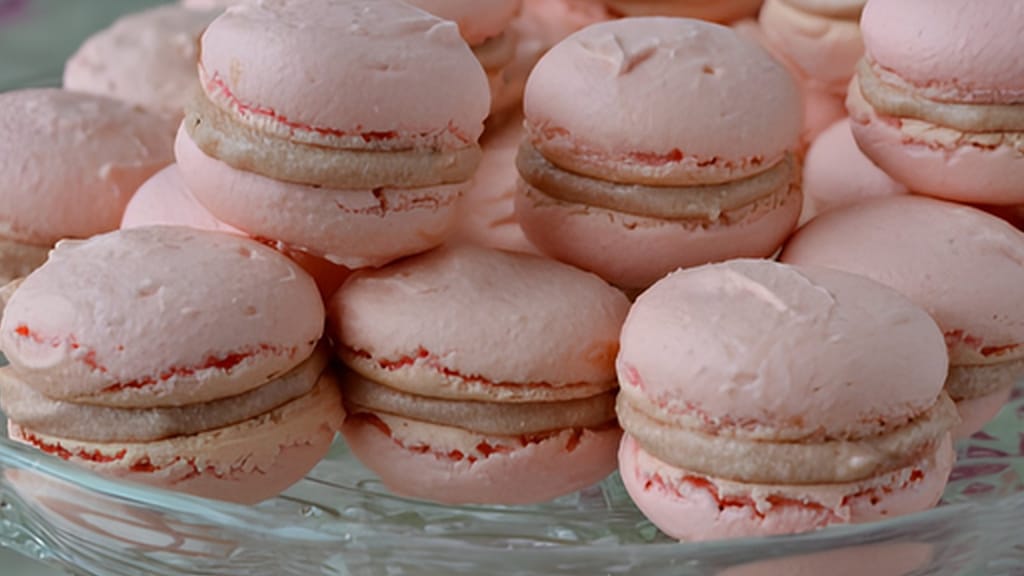
Salted caramel cream - great for macarons and more
Salted caramel macaron cream
You can add fruit flavour to macarons without the risk of soggy shells in three ways: a flavouring paste, freeze-dried fruit powder, or a thickened jam in the middle of a ring of cream. Each suits something different:
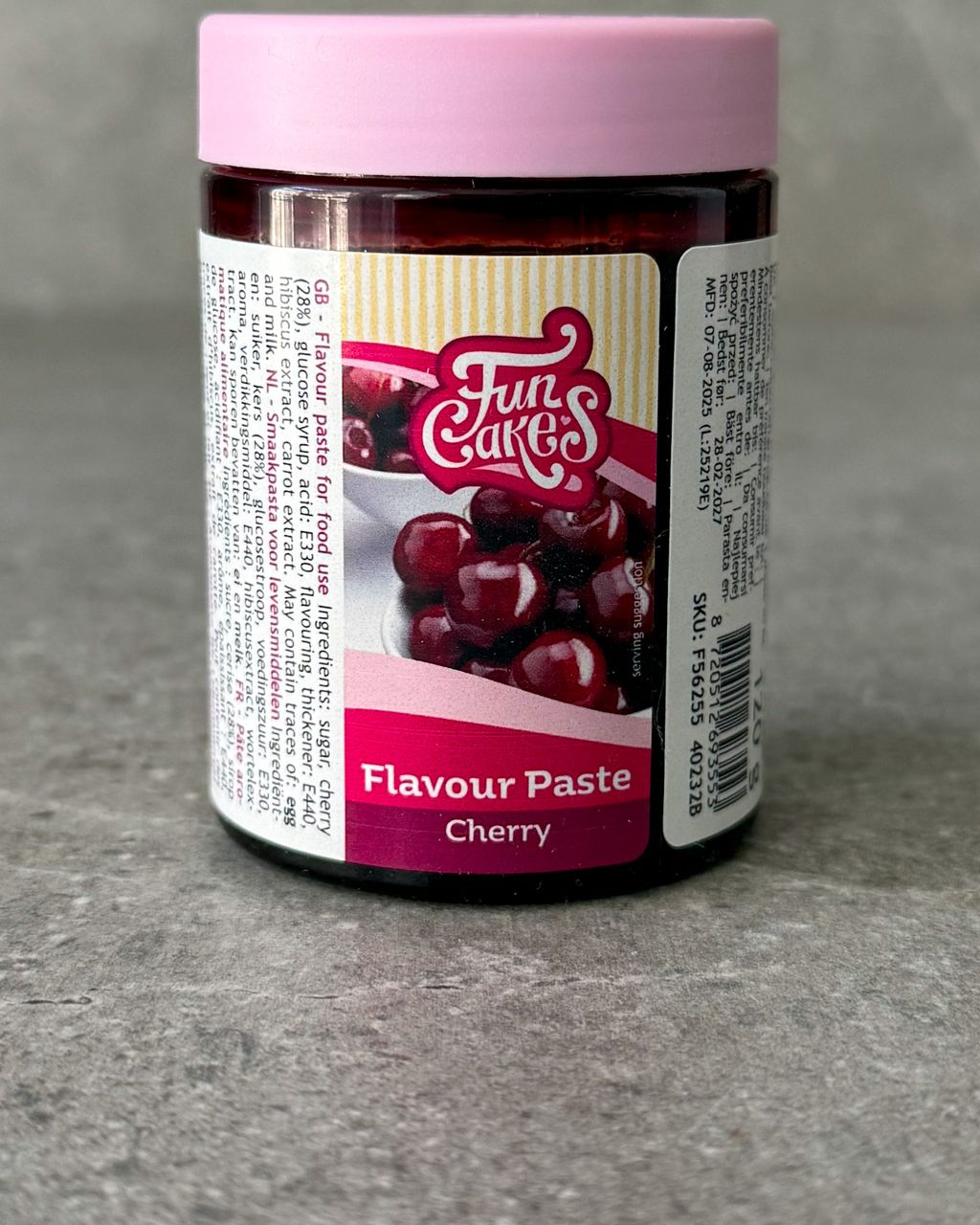
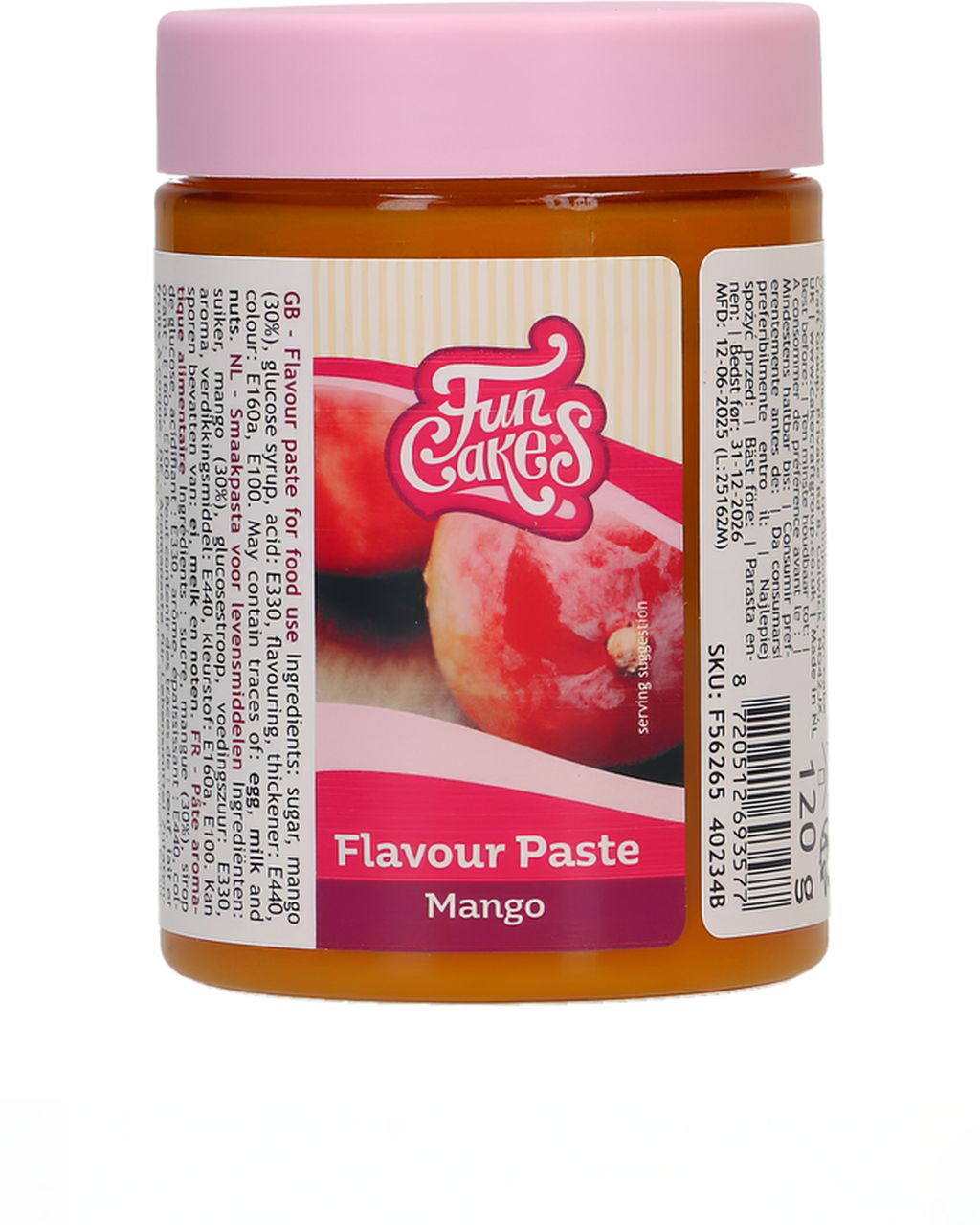
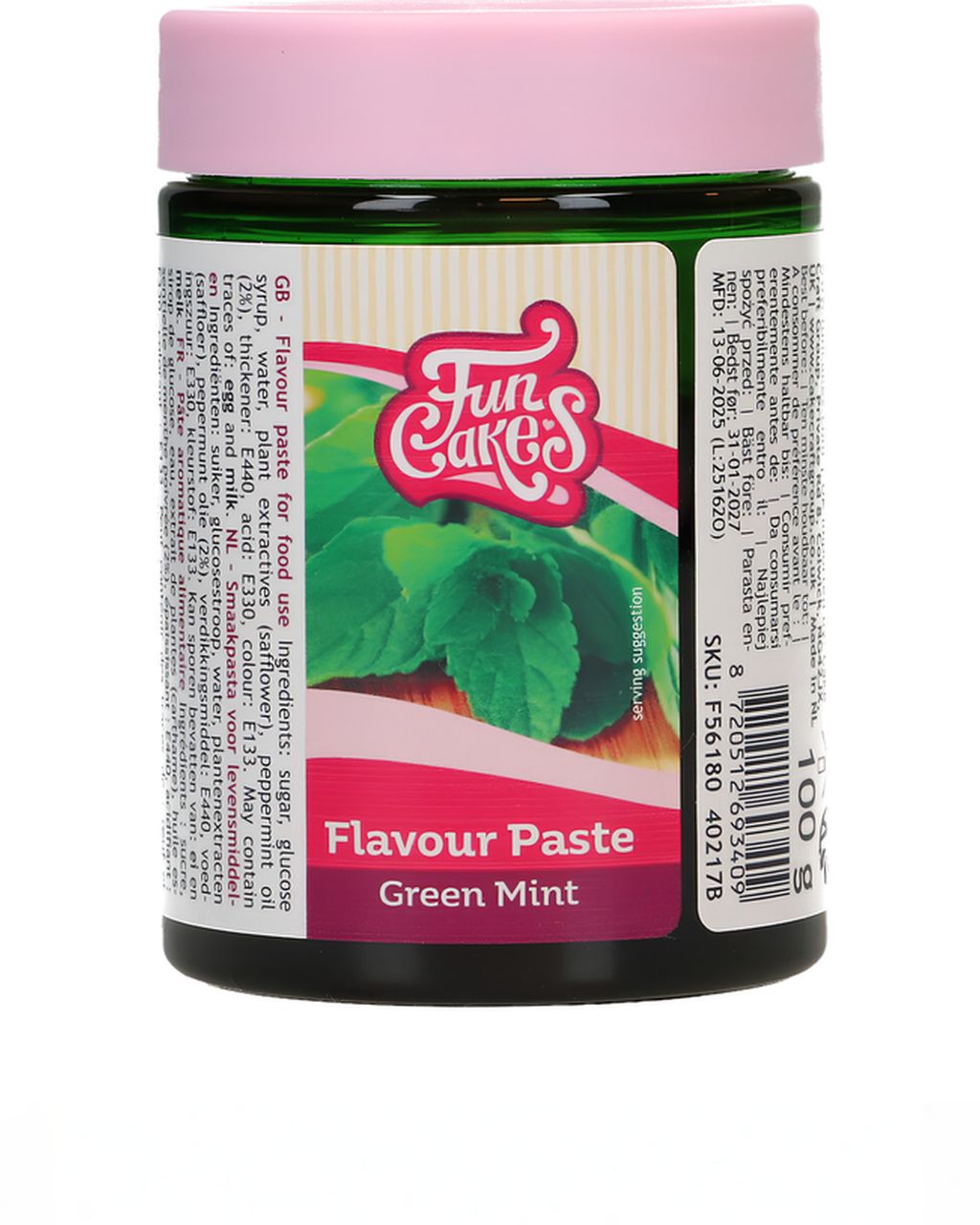
Flavouring paste is the simplest and most stable. It has the thickness of a cream and little free water, so it won't thin out ganache or buttercream. FunCakes recommends 30 g of paste per 500 g of cream, so roughly 15 g for one batch of filling (around 250 g). Add it by the spoonful and taste as you go. According to the manufacturer, FunCakes cherry paste contains no colourings, so colour the cream yourself. Mango paste already contains colouring and turns the cream yellow right away. Mint gives the cream a green tint.
Freeze-dried fruit (raspberries, strawberries, mango powder) gives the most intense natural flavour and tartness. Add 5–10% to ganache or buttercream, as more will thicken the filling. Health food shops sell it; we don't stock it.
Jam, curd or thickened purée tastes the most "homemade", but contains a lot of water. Pipe it only as a 1–2 g dot into the middle of a ring of ganache that seals it in, otherwise the shells will turn to mush by the next day.
Proven combinations: cherry + dark 811 (a Black Forest gateau flavour), mango + white W2 (white chocolate rounds out tart fruit beautifully) and mint + dark 811, the classic mint chocolate. For white ganache with paste, keep the ratio at 3 : 1, because the sugar and moisture from the paste will soften it. Stir the paste into the finished emulsion of lukewarm ganache (around 35 °C / 95 °F).
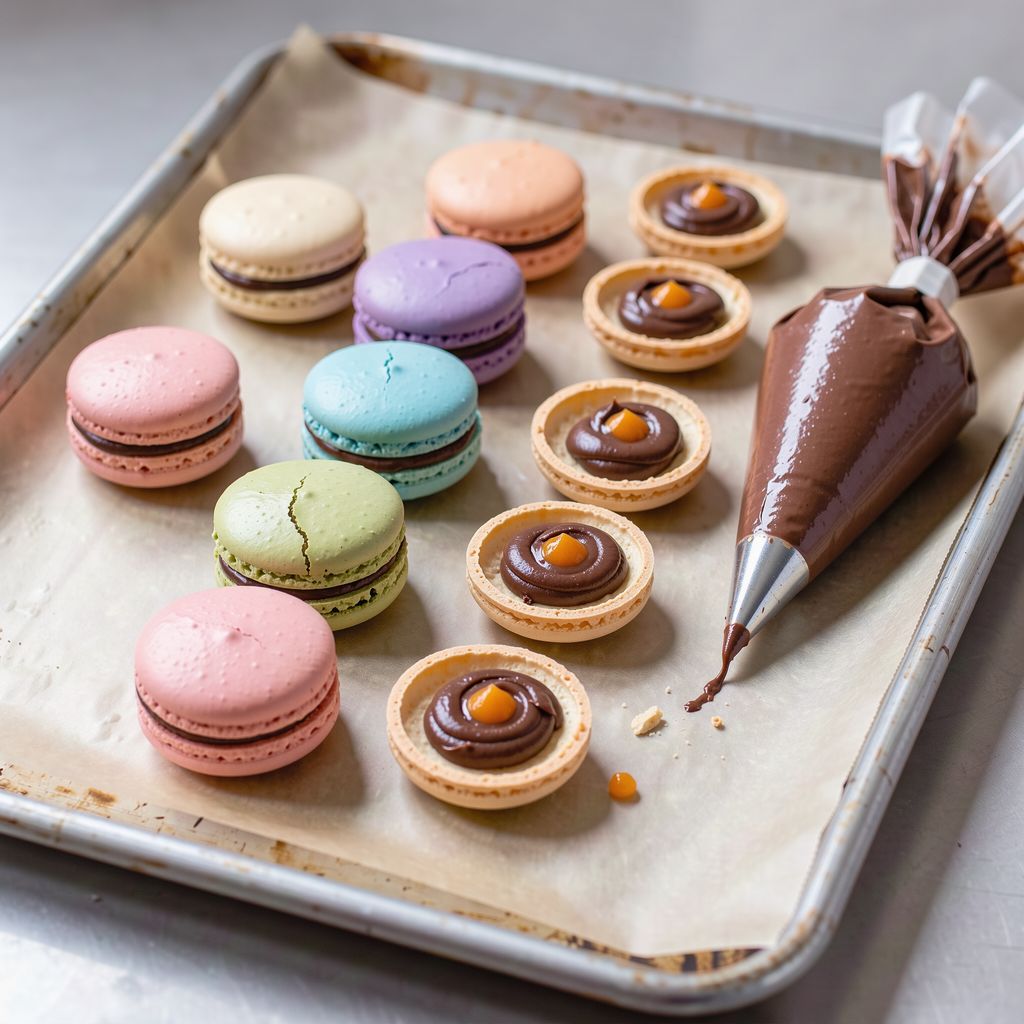
Pipe the filling from a piping bag with a round tip (8–10 mm) straight into the middle of the shell, leaving a little of the edge free. Press gently with the second shell, twisting slightly, until the filling reaches the edge.
Match up the shells by size before you start.
For a macaron 3.5–4 cm across, allow 8–10 g of filling. The layer should be about as tall as one shell.
For a fruit heart, pipe a ring of ganache or buttercream, drop jam in the middle and top with the second shell.
The filling should have the consistency of toothpaste. If it runs, put the bag back in the fridge for 10 minutes.
Leave filled macarons for 24 hours in a closed container in the fridge. During that time, moisture from the filling partly passes into the shell: the inside softens and turns chewy, while the surface stays thin and delicate. A freshly filled macaron is hard and dry; only after maturing is it what it should be. This is how macarons are matured in French pâtisseries, too.
Maturing happens in the fridge, not on the counter. According to USDA/FSIS, fillings made with cream and butter are perishable foods (more in the storage section).
The container must be closed, otherwise the shells will pick up smells from the fridge.
Before serving, leave them for 20–30 minutes at room temperature so the filling softens and the flavour opens up.
Filled macarons with ganache or buttercream keep in the fridge for 2–3 days, including the maturing day. Frozen, they keep for up to 3 months. Leave them at room temperature for no more than 2 hours.
Fridge (up to 4 °C / 40 °F): 2–3 days. USDA FoodKeeper (USDA/FSIS, FMI and Cornell University) lists 2–3 days in the fridge for pastries with a dairy filling, such as éclairs. For macarons with a cream or butter filling, it's the closest official category. The maturing day counts towards this.
Freezer (−18 °C / 0 °F): up to 3 months according to the same FoodKeeper table for éclairs with a dairy filling. Freeze them in a closed container in a single layer and thaw in the fridge, not on the counter.
Room temperature: 2 hours at most, only 1 hour above 32 °C / 90 °F. USDA/FSIS advises returning perishable foods to the fridge within 2 hours, because bacteria multiply fastest between 4 and 60 °C (40–140 °F). That's also why we let ganache set in the fridge, not overnight on the counter.
FunCakes flavouring pastes: according to the manufacturer, store in a cool, dark place at 8–25 °C (room temperature, not the fridge). You'll find the best-before date on the packaging.
These are all general guidelines for home cooking. Professional ganache with a shelf life of weeks is made with laboratory-measured water activity, and a home recipe can't replace that.
For 30 macarons 3.5–4 cm across, you need 250–300 g of filling, or 8–10 g per macaron. For dark chocolate ganache, that's roughly 150 g chocolate and 100 g cream.
Whipped cream isn't suitable as a macaron filling because it won't hold its shape and makes the shells soggy. Mascarpone works if you firm it up with melted white chocolate or whip it with butter. That kind of filling is moister, though, so eat the macarons within 2 days and keep them in the fridge the whole time.
Macarons most often turn soft after filling because the filling contains too much water, such as plain jam, purée or a runny ganache. Add fruit only as a small centre sealed in a ring of cream, use more chocolate in your ganache, and let the macarons mature for no more than 24 hours.
Yes, you can make both ganache and buttercream a day ahead and keep them covered in the fridge. Before piping, let them soften at room temperature for 20–30 minutes and stir briefly; buttercream can be given a quick re-whip. The day the filling spends in the fridge counts towards the total of 2–3 days, so eat filled macarons within about 2 days of filling.
The easiest chocolate-free macaron filling is Swiss buttercream flavoured with a fruit paste, freeze-dried fruit or coffee. The cream holds its shape thanks to the butter, not chocolate, so store filled macarons in the fridge and let them sit at room temperature for 20–30 minutes before serving.
One recipe worth heating the oven for, one tip, and one deal from the shop. Nothing else.