Perforated Silicone Baking Mat
Sheet Pan Cookie Bars: Which Types Bake in One Piece and How to Cut Them into Neat Squares
Updated Oct 27, 2026
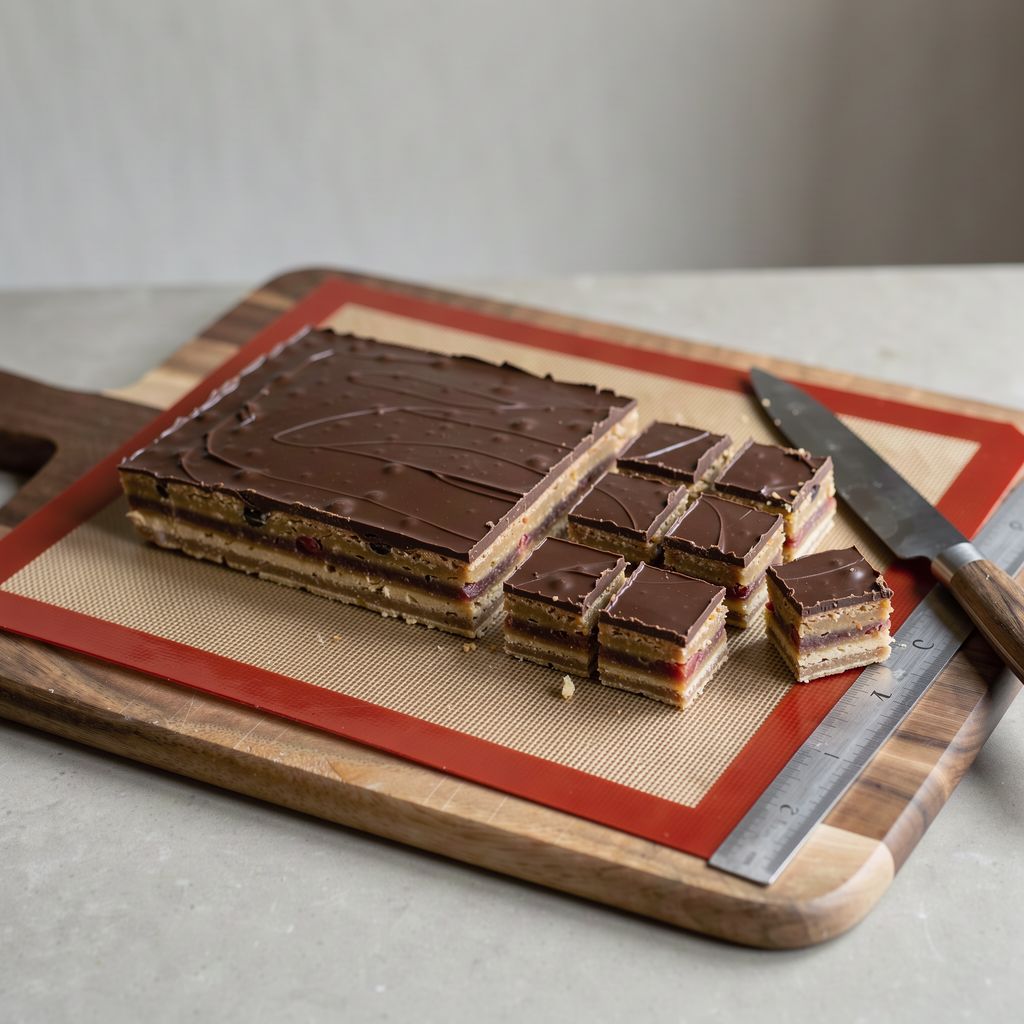
Sheet pan cookies are cookies you bake as one big slab and only then cut into squares, rectangles or slices – bars, layered squares, tray-baked gingerbread or egg-white loaf slices. Instead of an hour of cutting out shapes, you have a slab ready in twenty minutes, and once you trim the edges it gives you around a hundred pieces measuring 3 × 3 cm. To make it work, you need to get three things right: choose a type that bakes well in one piece, roll the slab to an even thickness from corner to corner, and cut it at the right moment with the right knife. This article is mostly about the cutting.
Any cookie whose flavor comes from its layers rather than its shape works well on a sheet pan. In practice, that means five groups:
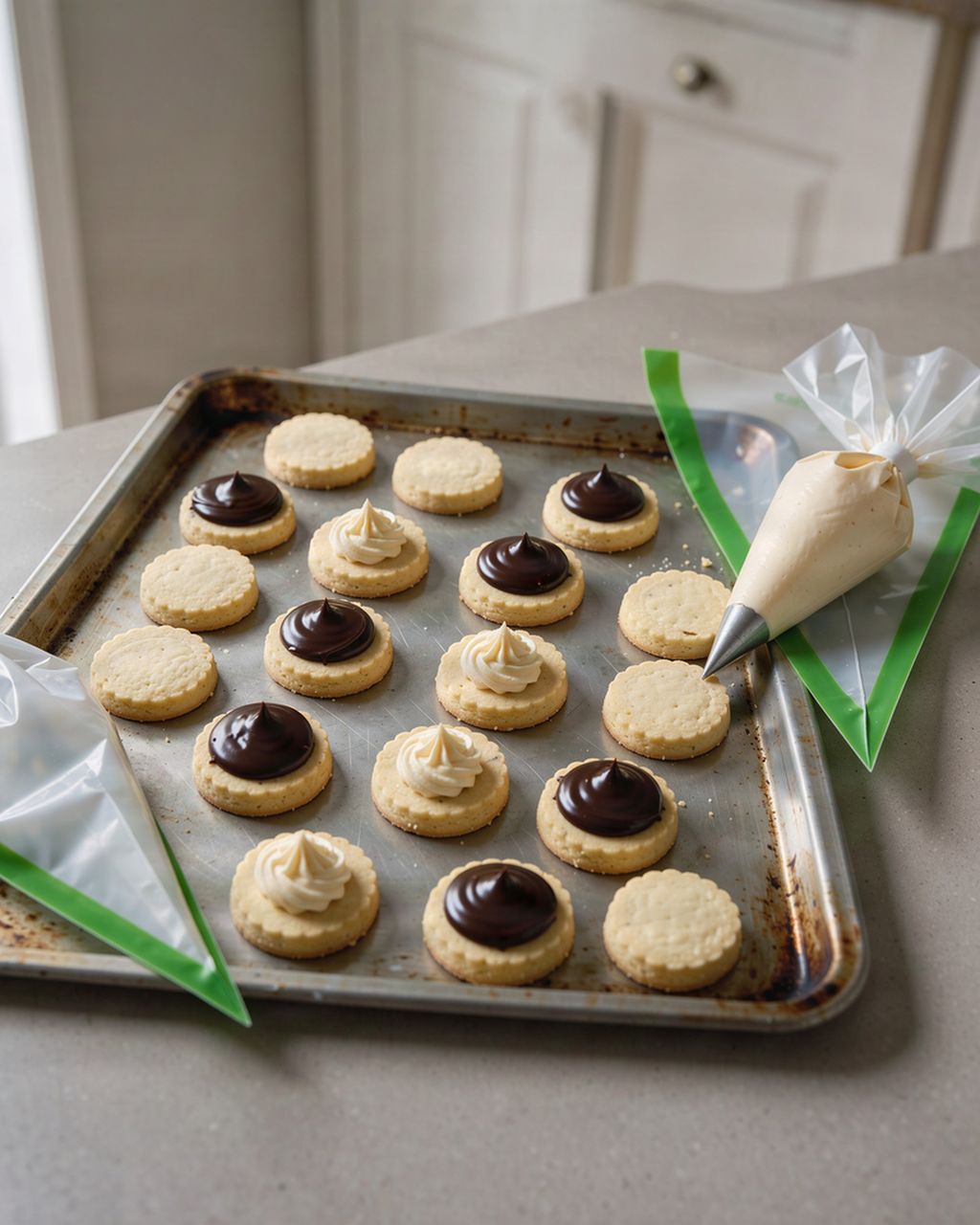
Linzer-style bars – a tender, crumbly slab sandwiched with jam or filling and topped with chocolate.
Walnut bars – a linzer-style base, a nut filling and a chocolate glaze.
Coconut and meringue bars – a linzer-style base, jam, and a topping of coconut whisked with egg whites, baked until golden.
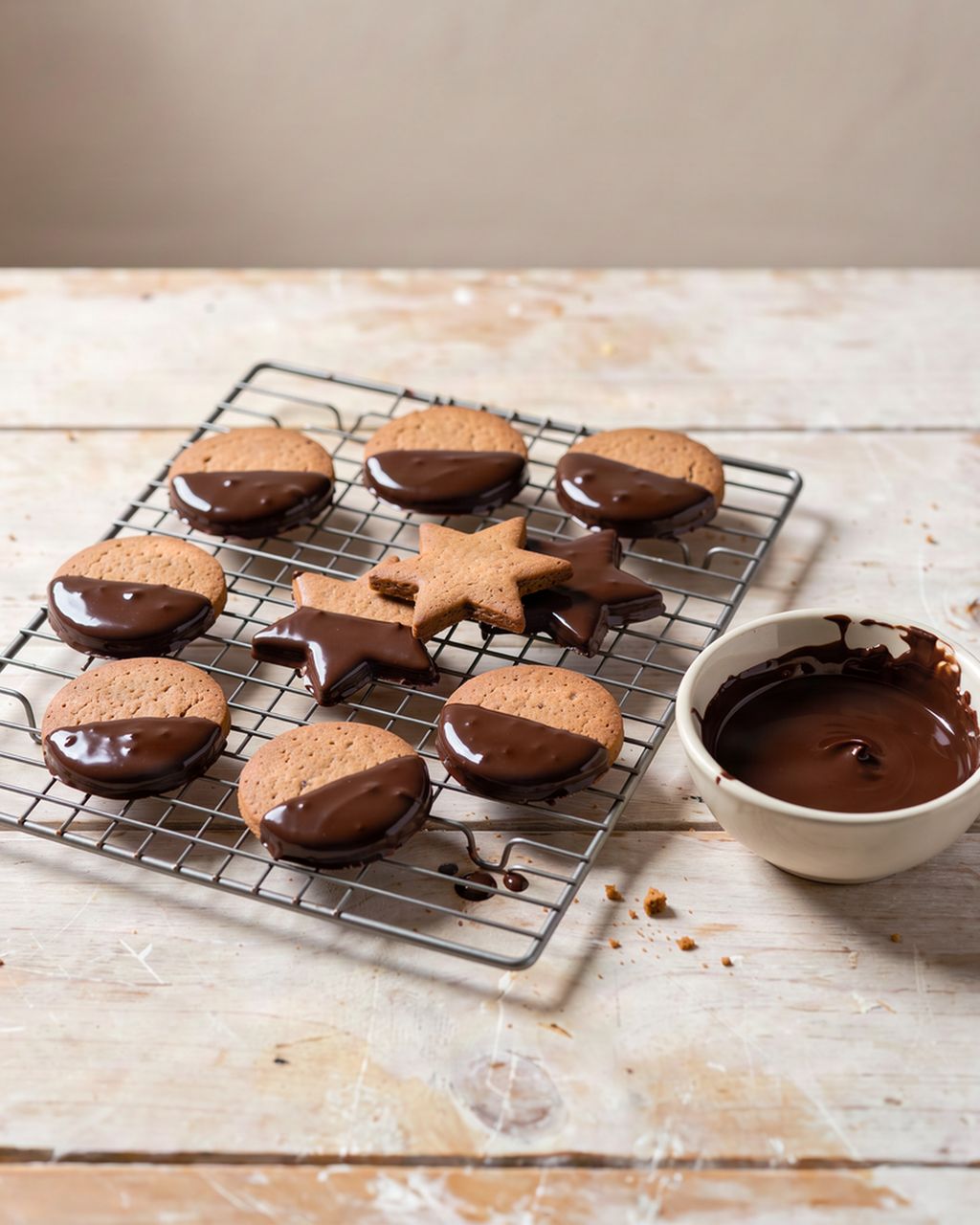
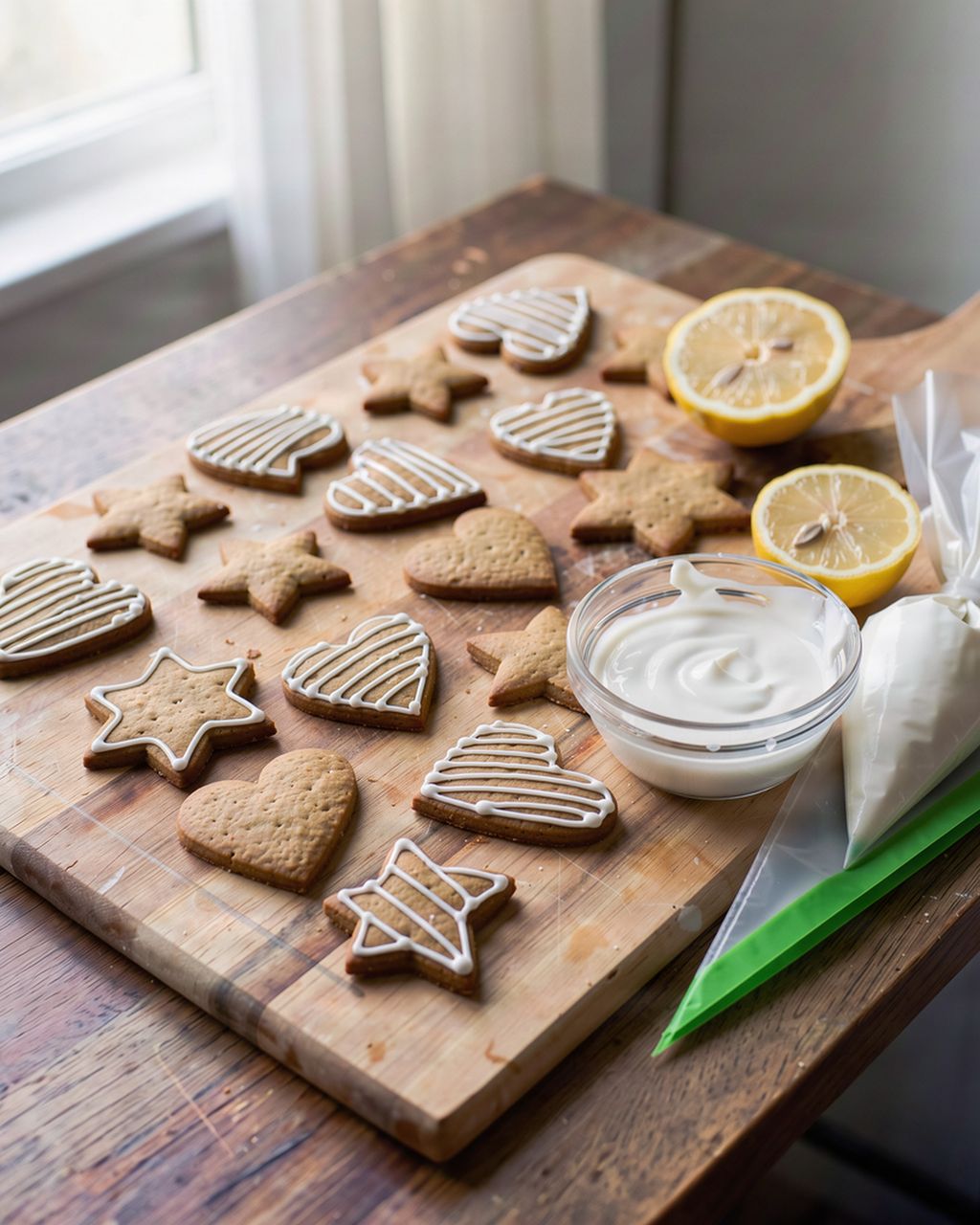
Tray-baked gingerbread – honey dough baked in one piece, covered in chocolate and cut into little squares. Lactose-free sheet pan gingerbread is a good example – just bake it in a thinner layer and cut smaller pieces.
Loaf slices – dough baked in a loaf pan and cut into thin slices, typically an egg-white loaf with nuts. It's sliced the next day, once the crumb has set.
What they have in common is that each layer is thin and flat, and the squares hold together thanks to a sticky layer in between (jam, cream, filling). We cover which dough suits which base in Cookie Doughs: Linzer, Nut, Coconut and Gingerbread.
Skip the sheet pan for cookies where the shape is the whole point, or that spread as they bake:
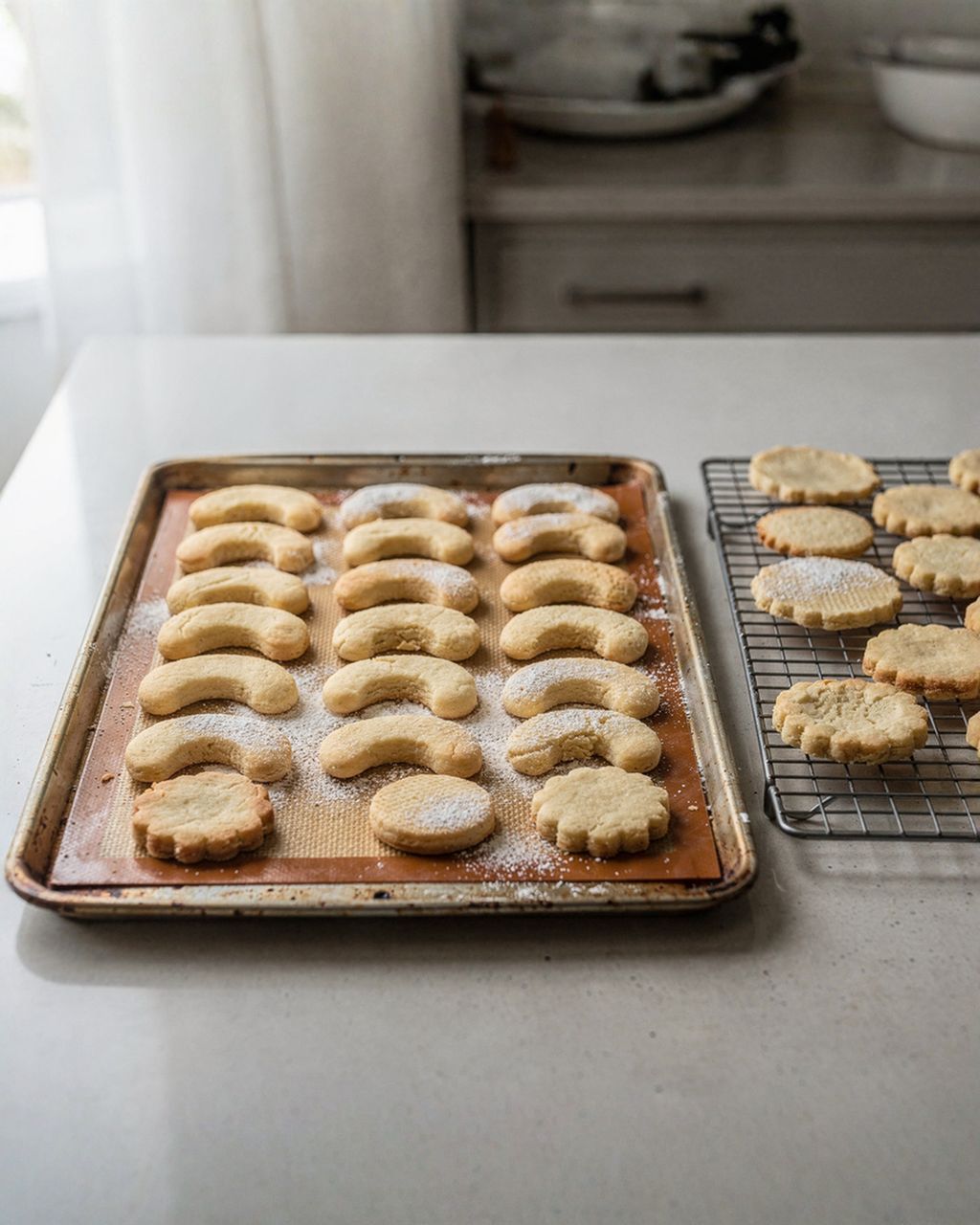
shaped and cut-out cookies – vanilla crescents, "pracny" or linzer rounds – without their shape they're just crumbs,
cookies made from a loose, very sugary dough – the slab spreads and the cut edges crumble,
meringues and meringue cookies without a base – meringue can only be cut when it sits on a firm base.
If you're more interested in baking several kinds of cut-out cookies at once, that's a different question – see Cookies on One Baking Sheet: What Bakes Together and What Doesn't.
Roll the base slab to 4–5 mm. Once all the layers are in, the finished square should be 1.5–2.5 cm tall. Anything taller is a pastry rather than a cookie, and you can't eat it in one bite.
Approximate amounts for a 30 × 40 cm baking sheet:
linzer-style base, 4–5 mm: roughly 600–700 g of dough,
nut or coconut layer: 8–10 mm, if you aren't baking it separately,
jam: a thin layer, about 150–200 g, warmed and strained so it spreads easily,
chocolate glaze, 2 mm: about 250–300 g of chocolate.
An even thickness matters more than the exact thickness. A thinner corner overbakes and turns bitter before the middle is done. The most reliable method is to roll straight onto parchment or a mat, with two wooden strips or guides on either side of the rolling pin. You then move the dough to the baking sheet along with the paper, with no folding or transferring. Prick it with a fork about every 3 cm before baking so it doesn't puff up in the middle.
Bake a thin linzer-style slab at 170–180 °C (about 340–355 °F) for 10–14 minutes, until the edges are light golden. The middle should look dry, not dark – it firms up further as it cools.
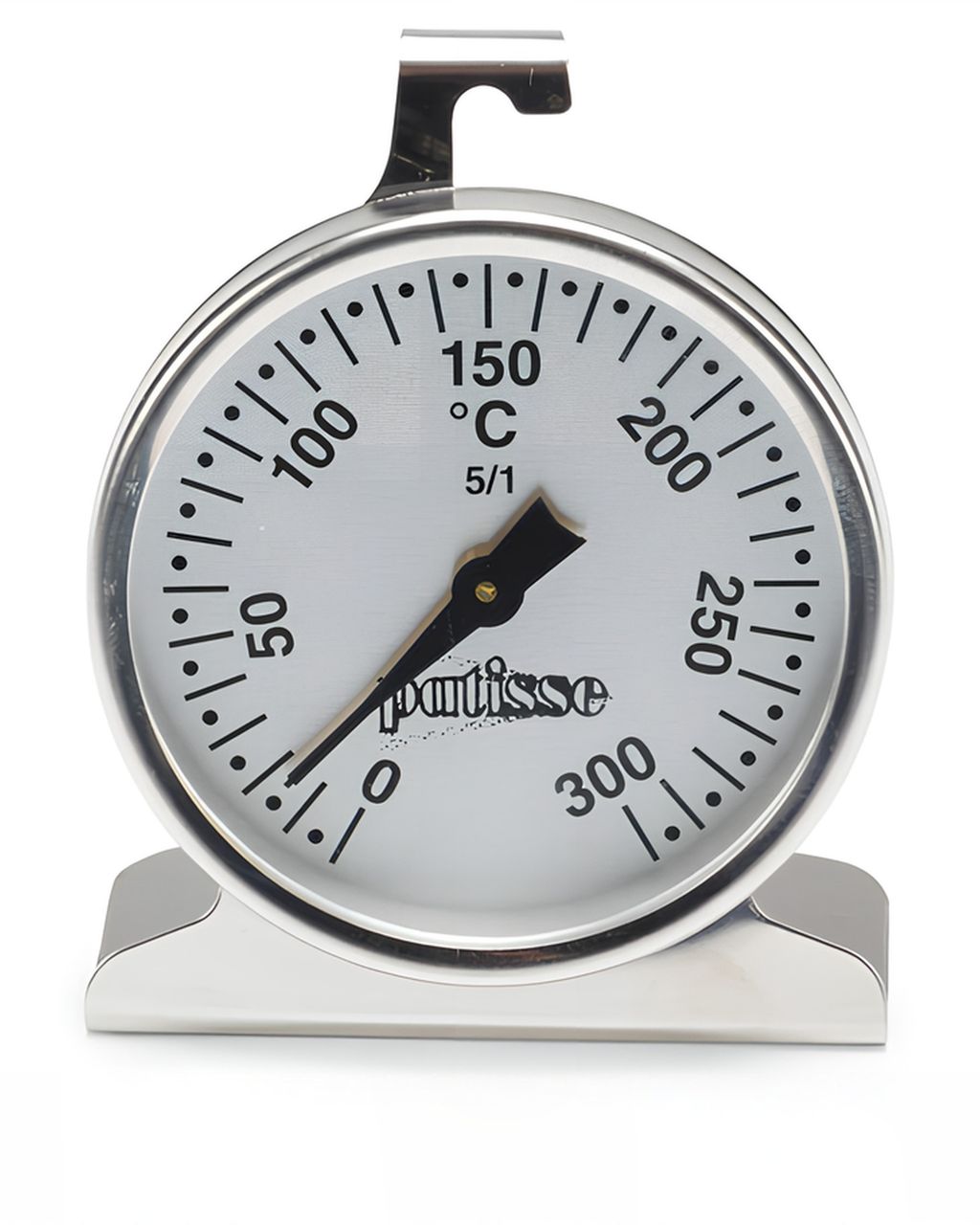
Oven temperature: home ovens commonly differ from the set temperature by 10–20 °C. With a 5 mm slab, that's the difference between golden and brown. An inexpensive Patisse oven thermometer shows you what's really going on, and then you just adjust the dial.
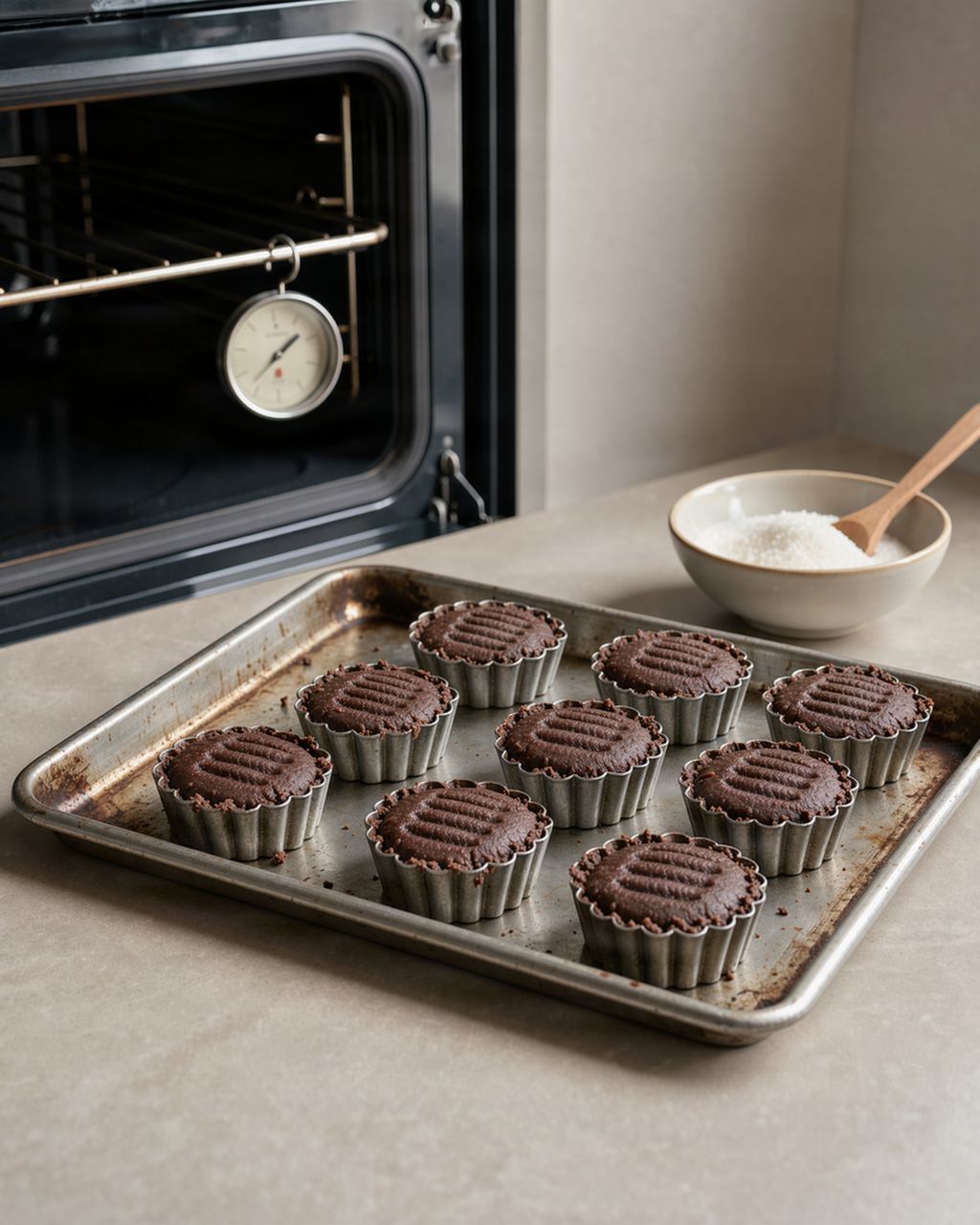
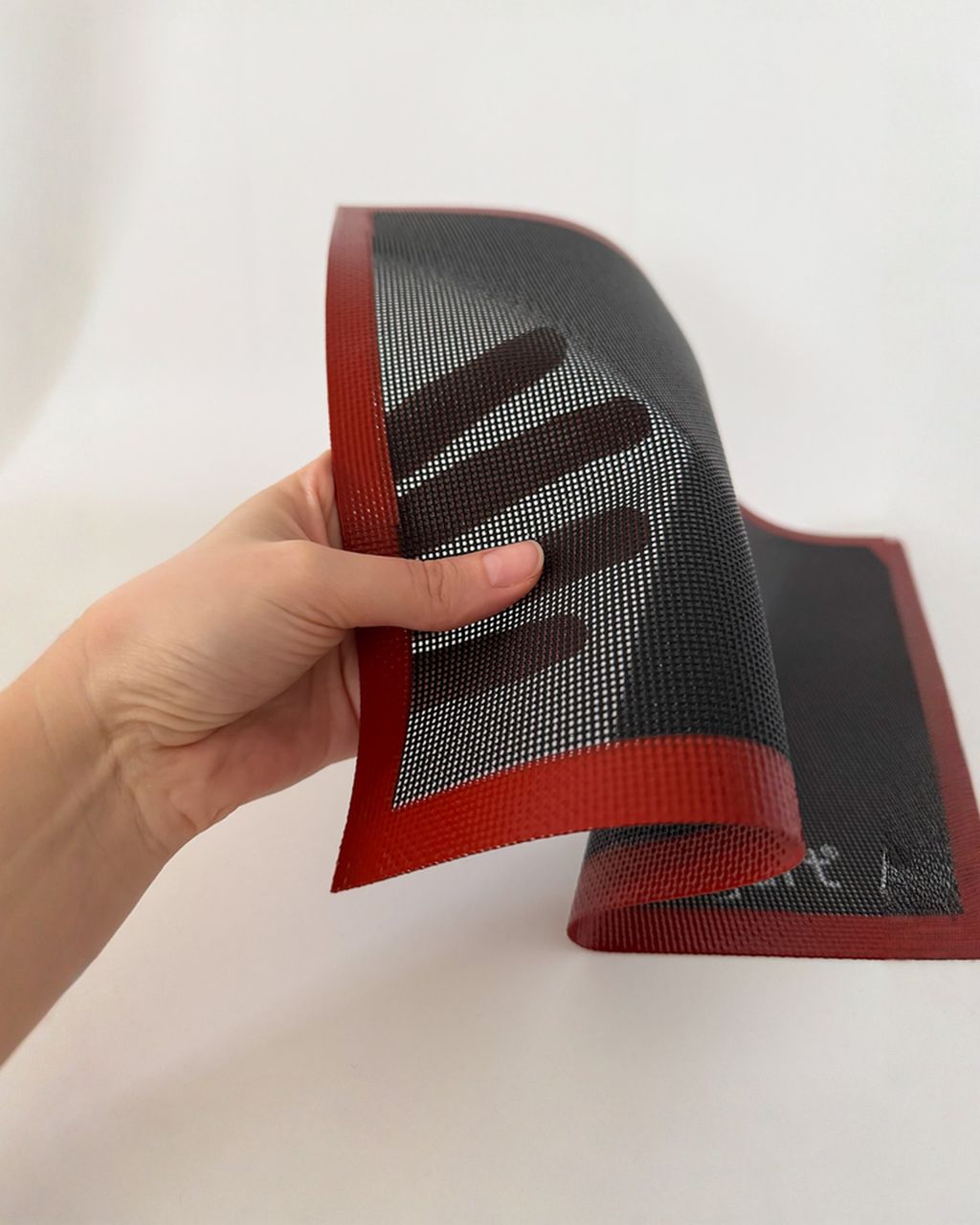
Surface: plain parchment works well. A perforated silicone mat lets steam escape from the dough through the holes, so the bottom bakes evenly and crisp and the slab doesn't warp. You'll also use it all season. Never cut on the mat, though – the knife will slice through the silicone – so always move the slab to a board.
Meringue topping (coconut bars) goes on only once the base is partly baked, and finishes at a lower temperature, around 150–160 °C (about 300–320 °F), so it turns golden without scorching.
Let the slab cool on the baking sheet. A warm linzer-style base breaks easily; once cooled, it's firm and can be moved.
Score the chocolate when it has set but isn't hard yet, then cut all the way through once it has set completely, using a hot, dry knife. Most cracked glazes happen because rock-hard chocolate is cut straight from the fridge.
Let the filling set first. Leave bars with cream or jam in a cool place for at least 2 hours, ideally overnight. A soft middle layer gets squeezed out under the pressure of the knife.
Pour the glaze over the chilled slab and spread it in one stroke. A thin 2 mm layer is much easier to cut than a thick one.
Score it at the right moment. At room temperature that's usually after 10–20 minutes: the surface turns matte and doesn't stick to your finger, but a fingernail still leaves a mark. Using a ruler, score lines only as deep as the glaze.
Let it set completely and only then trim the edges. The edges tend to be taller and harder; the even squares start about 1 cm in from the edge.
Finish the cuts with a hot knife. Dip a long knife in hot water, wipe it dry and press it straight down along the scored lines – don't saw. Reheat and wipe it again after every cut.
If you're cutting bars straight from the fridge, let them sit for 10–15 minutes first. The base stays firm, but the chocolate stops being brittle as glass.
The cleanest cuts come from dark chocolate with over 50% cocoa, mixed with roughly 10% fat – for 200 g of chocolate, 20 g of coconut oil or butter. This softens the glaze so it cuts cleanly even when cold. The trade-off is a slightly softer edge and less shine. Pure tempered chocolate, on the other hand, is beautifully glossy and snaps crisply, but almost always cracks unless you score it first. We explain exactly how much fat and why in Chocolate Glaze for Gingerbread: Which Chocolate and How Much Fat.
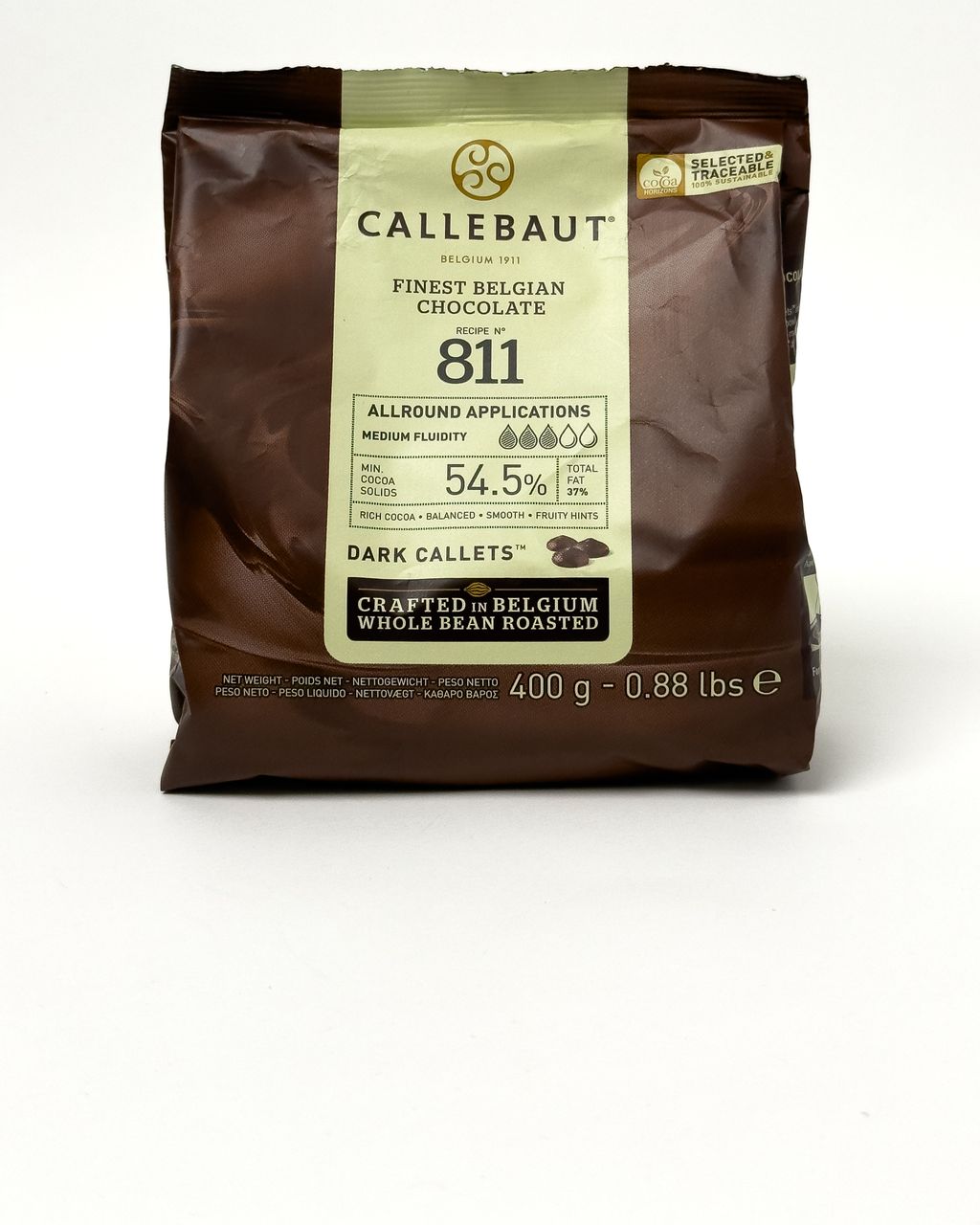
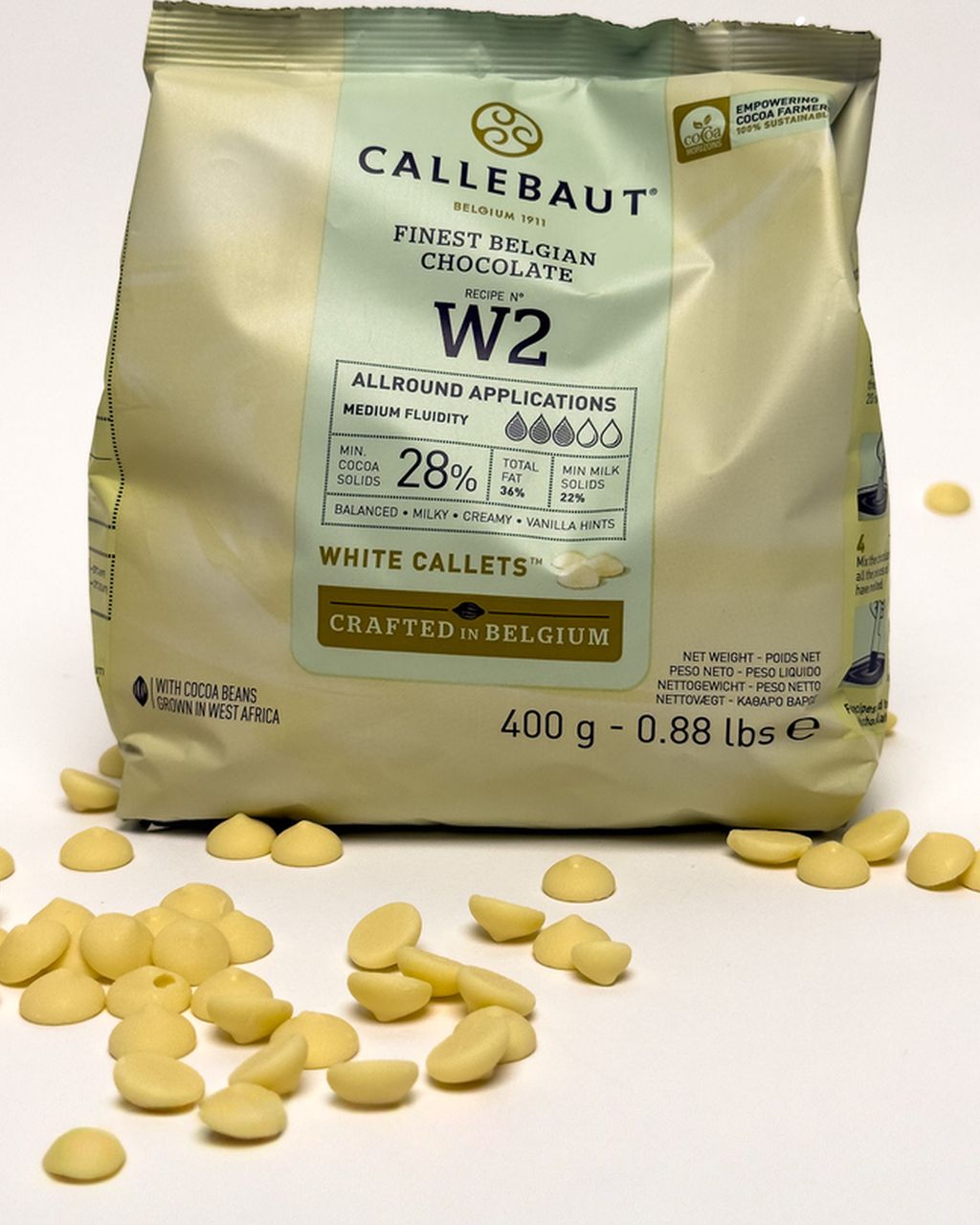
For the glaze, a good-quality chocolate in drops that melts evenly is all you need – for example Callebaut 811 dark: a 400 g bag is enough for one baking sheet (you need 250–300 g) with some left over for stripes. For contrasting stripes over the dark layer, Callebaut W2 white works well. Ordinary dark chocolate bars work too – just avoid cocoa (compound) coatings where the cocoa butter is replaced by vegetable fat: they taste waxy.
The best-looking pieces are 3 × 3 cm squares or 2 × 4 cm rectangles – both are one or two bites and look like proper cut-out cookies on a plate.
From a 30 × 40 cm sheet, after trimming 1 cm off the edges, you get roughly:
3 × 3 cm squares: about 108 pieces,
2.5 × 2.5 cm squares: about 165 pieces,
2 × 4 cm rectangles: about 126 pieces.
For straight rows, mark every 3 cm along both the long and short side with a skewer or the tip of a knife, and cut from mark to mark along a ruler rather than by eye. Cut full strips in one direction first, then across. Don't throw away the trimmed edges – crumbled, they're great in a filling or as a topping. Store the finished squares in a box in a single layer, or separate the layers with paper so the glaze doesn't rub off. You'll find more tips for festive baking in the Christmas cookies category.
You don't need any special equipment for sheet pan cookies, just a few things that decide how flat the slab and how clean the edges turn out:
a baking sheet with a low rim or an adjustable cake frame (sold in baking supply shops) – a frame keeps the layer edges straight, but you can manage without it; a folded edge of parchment will do,
a long, straight knife (at least 25 cm) and a metal ruler – both available at any hardware store,
a mat or parchment to roll the slab out on and bake it on,
an oven thermometer, if you're not sure how your oven heats,
chocolate for the glaze, ideally in drops or chopped into evenly sized pieces.
If you need the filling in your bars to be firm so it doesn't squeeze out when you cut, take a look at cookie filling that holds its shape.
Bars with a shortbread-style base and jam keep in a sealed box in a cool place for roughly 2–3 weeks, and they often improve with time. Bars with a buttercream or custard filling belong in the fridge and should be eaten within a week. Don't cut the glazed slab into pieces for storage any earlier than you need to – cut edges dry out faster than an uncut slab.
Yes, you can freeze them, ideally as the whole baked base without the glaze, wrapped in cling film, for 2–3 months. Thaw it slowly in the fridge so moisture doesn't condense on the surface, and pour the glaze on afterwards. We don't recommend freezing finished chocolate-topped squares – after thawing, the chocolate often turns white and loses its shine.
Yes, just scale the amount of dough and chocolate to the surface area. A 20 × 30 cm pan has half the area of a 30 × 40 cm baking sheet, so for the same thickness you need half the dough and half the chocolate. The baking time stays almost the same, because thickness matters, not pan size.
First cut parallel strips 3 cm wide along the long side, then cut across them with a second set of parallel cuts at an angle of roughly 45–60°. Measure the diagonal marks with a ruler along both edges of the pan so the rows don't drift. Keep in mind that diamonds leave more trimmings in the corners, so you'll get about a tenth fewer pieces than with squares.
Chocolate glaze usually turns white because of a sudden temperature change – either the chocolate overheated and set untempered, or moisture condensed on it when it went from the fridge into a warm room. The taste doesn't change, only the look. It helps to melt the chocolate slowly, stir a little fat into it, and store the squares somewhere cool but not freezing.
One recipe worth heating the oven for, one tip, and one deal from the shop. Nothing else.