Walnut milk
How to Store Nuts So They Don't Go Rancid
Updated Sep 17, 2026
Nuts go rancid because the fat in them reacts with air — and you can slow that reaction down with three things: cold, darkness, and a genuinely airtight container. At room temperature, storage life varies a lot by type: shelled walnuts, pecans and pine nuts last 2–4 weeks, shelled almonds, hazelnuts and pistachios 6–9 months, and in-shell nuts 3–6 months. In the fridge at 0–4°C (32–39°F), shelled nuts keep for 3–12 months depending on the type; anything you won't use up within a few months should go in the freezer at −18°C (0°F), where it'll keep for one to two years. An open bag left out on a warm kitchen counter is the fastest route to that bitter, old-paint taste.
Nuts go rancid through fat oxidation: the unsaturated fatty acids in their oil react with oxygen, forming unstable hydroperoxides that break down into aldehydes and ketones. These are the tiny volatile compounds you taste and smell as bitterness, cardboard, and dried-out oil paint. It's a chain reaction — once it kicks off, it speeds itself up, which is why nuts don't turn bitter gradually but seemingly overnight.
Four things drive this reaction forward:
Heat. Temperature is the factor you have the most control over at home — a container limits oxygen and light, while the fridge handles temperature. As a rough rule of chemistry, every +10°C roughly doubles the reaction rate, so the difference between a 20°C pantry and a 4°C fridge is an order of magnitude, not a minor tweak.
Oxygen. A half-empty bag is worse than a full one: the more air left around the nuts, the more there is to oxidise with.
Light. Daylight and UV kick-start the chain reaction even at low temperatures. That's why a clear jar on the windowsill performs worse than an opaque one in a drawer.
Moisture. Water triggers a second type of spoilage (fat hydrolysis) and above roughly 65% relative humidity, it opens the door to mould.
And then there's the nut itself. The more polyunsaturated fat it contains, the more fragile it is — walnuts and pecans fare worst, while almonds and pistachios, with mostly monounsaturated fat, last considerably longer.
Store nuts airtight, in the dark, and as cool as possible — rough shelf lives vary by type and look like this:
Pantry or cupboard, up to 20°C (68°F), in the dark: shelled walnuts, pecans and pine nuts, 2–4 weeks; shelled almonds, hazelnuts and pistachios, 6–9 months; in-shell nuts, 3–6 months.
Fridge, 0–4°C (32–39°F): walnuts, pecans and pine nuts, 3–6 months; almonds, hazelnuts and pistachios, 6–12 months.
Freezer, −18°C (0°F): almonds, hazelnuts and pistachios, up to 24 months; walnuts, pecans and pine nuts more like 12.
There's no single rule for 'nuts' as a category: walnuts left at room temperature are done within weeks, while almonds in the same spot last 6–9 months. If you remember nothing else, remember that soft, oily varieties need to go cold straight away.
Two things people get wrong: the freezer isn't an emergency fix for nuts that are 'on the edge' — it's a normal way to store them, and it protects both quality and flavour better than months at room temperature. And the best-before date on the bag only applies to an unopened pack. Once you open it, your own clock starts running.
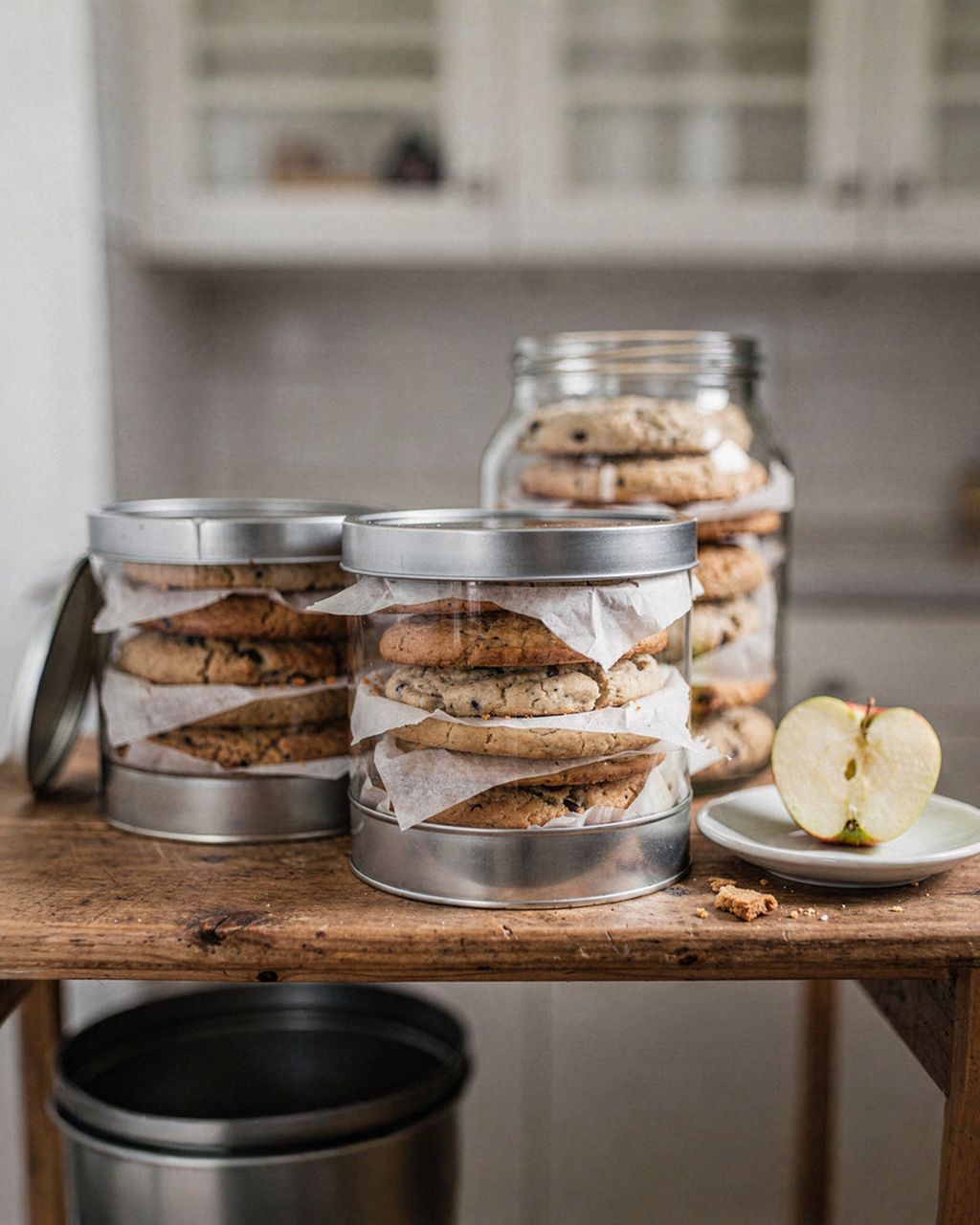
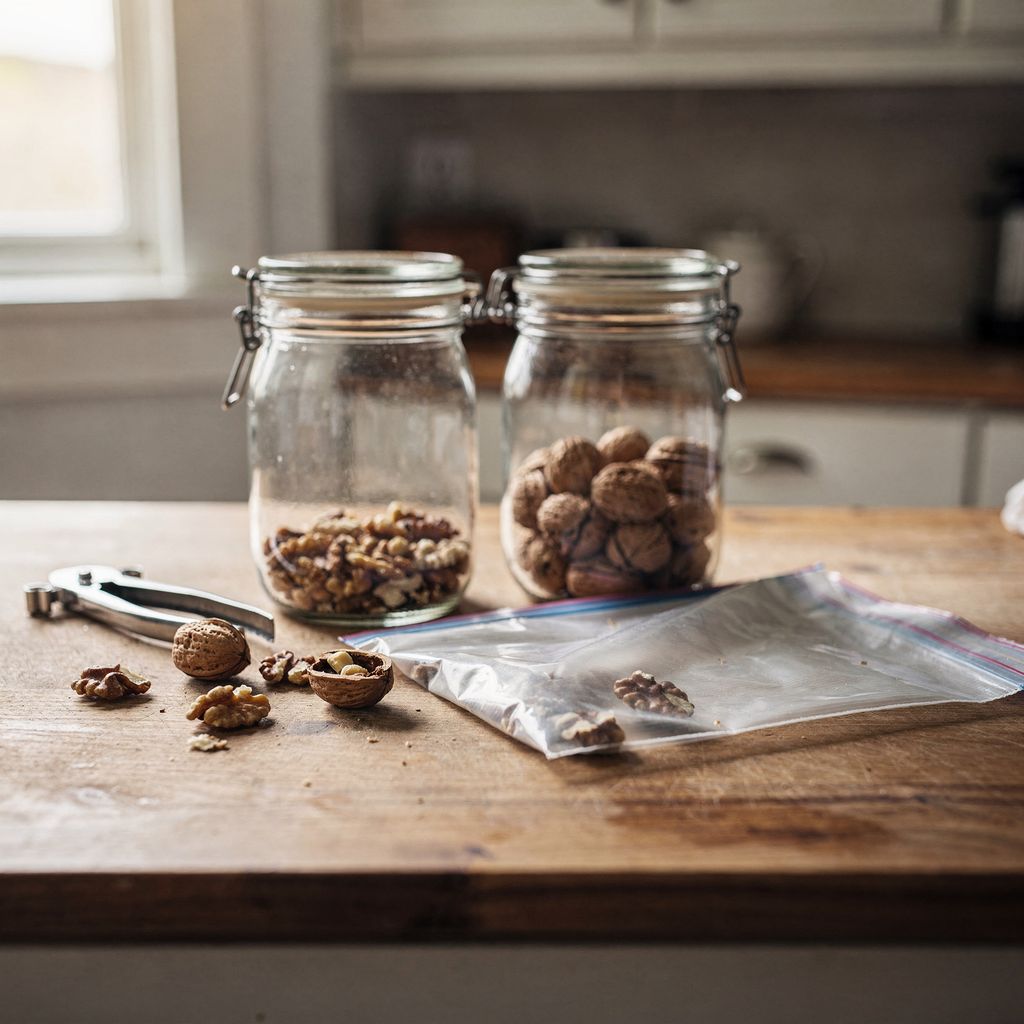
The cheapest upgrade you can make for your nuts is simply tipping them out of the bag and into glass or a tin with a sealing gasket. A bag twisted shut with a rubber band, or a paper bag, won't keep air out — and in the fridge it'll let odours in too.
Container size: pick the smallest one that will do, so as little air as possible sits above the nuts.
Split a big purchase into portions you'll get through in two or three weeks, and only ever open one at a time.
A vacuum sealer or vacuum-seal lid extends shelf life more than any other tool — it removes the one thing nuts need in order to go rancid.
Before refilling a container, wash it and dry it completely. Leftover traces of old, already-oxidised oil on the walls speed up spoilage of the new batch.
The fridge is the right place for shelled nuts you want on hand and plan to use within a few months. At 0–4°C (32–39°F), fat oxidation slows down considerably, and the moulds that produce aflatoxins (mainly Aspergillus flavus) barely grow below 10°C (50°F) — so cold tackles both risks at once.
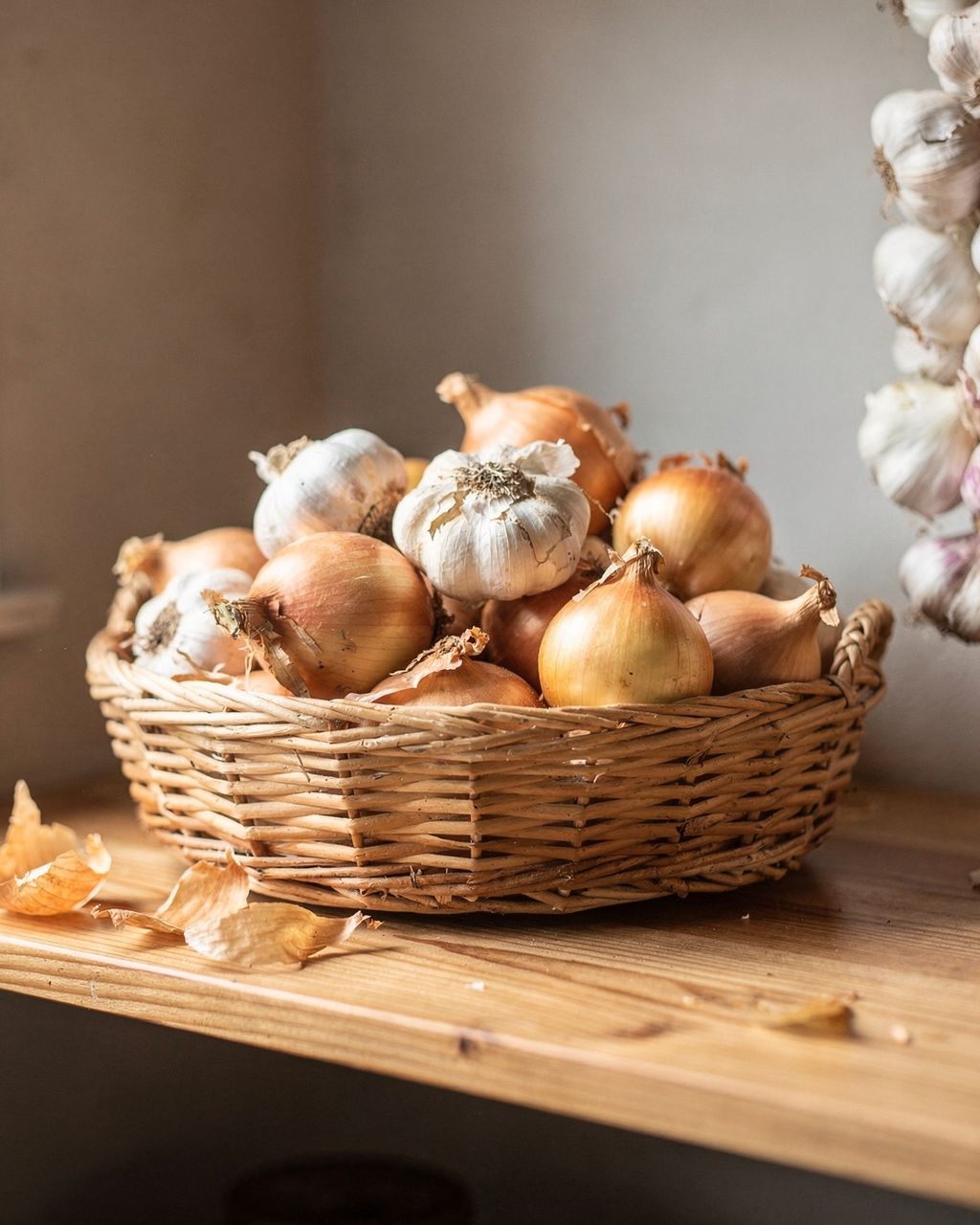
There's one weak spot: fat is an excellent odour absorber, and fridge air is shared between everything inside it. Fridges tend to be fairly dry, but humidity swings depending on how full it is and when it was last defrosted, so you can't rely on it either way. An open bag sitting next to an onion or a ripening cheese will pick up their smell within a week. An airtight container solves this entirely.
At −18°C (0°F), fat oxidation almost stops completely, and nuts keep for 12–24 months depending on the type with no noticeable loss of flavour. Freezing doesn't harm them — they contain little water, so no ice crystals form to damage their structure, and once thawed they're just as crunchy as before.
Freeze in single-use portions. Every thaw-and-refreeze cycle condenses moisture on the surface of the nuts, and that does more damage than temperature fluctuation alone.
Press the air out of the bag, or use a vacuum-seal bag.
Label the bag with the type and date. A year on, you won't be able to tell by looking whether those hazelnuts are from last year or the year before.
You can add them straight from frozen to dough, a pan, or the oven. Only if you want to eat them on their own should you let them come up to temperature in a closed container, so any condensation forms on the container rather than on the nuts.
The most reliable way to tell if nuts have gone rancid is by smell and taste, not by sight. Open the container and smell it right away — fresh nuts smell sweet, buttery and milky, while rancid ones smell like oil paint, old glue, or burnt frying oil. If you're not sure, bite into one and spit it out: rancid fat tastes sweetish-bitter, catches the back of your throat, and that off-flavour lingers long after swallowing.
Other clues:
Grease stains soaking through a paper bag mean oil is leaking out of the nuts — and that oil oxidises fastest of all.
A kernel that's darkened to brown or turned grey is usually older than it should be, but colour alone isn't proof. Smell is what decides it.
A musty, cellar-like or mouldy smell is a different category from rancidity altogether, and means you should throw the whole batch out immediately.
And here's the key point: rancid nuts cannot be saved. Roasting, rinsing, soaking, or mixing them into dough won't remove the bitterness — it'll only mask it briefly, and then it'll show up in the finished gingerbread, filling, or porridge. The chemical change has already happened and can't be undone. Throw them out, and don't try to turn them into anything you'd have to eat.
Walnuts, pecans, pine nuts and Brazil nuts go rancid fastest; almonds, pistachios and hazelnuts last longest. The difference comes down to fat composition — the more polyunsaturated fatty acids, the more fragile the oil.
Walnuts contain more alpha-linolenic acid than any other nut (around 9g per 100g) — and of all fats, that's the one that oxidises fastest. Give them 3–6 months in the fridge; for longer storage, go straight to the freezer.
Pecans, pine nuts and Brazil nuts are in the same league. Pine nuts, on top of that, are usually bought in small packs long after harvest anyway.
Almonds, hazelnuts and pistachios are mostly monounsaturated fat and keep for 6–12 months in the fridge.
Cashews are, by fat composition, on the more stable side — roughly 24g monounsaturated to 8g polyunsaturated fat per 100g — but their soft fat is especially quick to soak up odours: airtight, or nothing.
Peanuts are botanically a legume, and their main risk isn't rancidity but mould. Moisture is their biggest enemy.
Ground oily seeds should be stored just as strictly as nuts — ground flaxseed keeps for around four months at room temperature, ground poppy seed for considerably less. If you only bake seasonally, keep them in the freezer.
In-shell nuts last longest, ground nuts the shortest time — it comes down to surface area exposed to air. The shell is the perfect wrapper: it blocks light, slows oxygen, and protects the kernel from knocks that would release its oil.
In-shell: 3–6 months in the pantry, easily 6–9 months in the fridge. Freezing them isn't worth it — they take up space and the shell can crack.
Shelled, whole: the figures from the table above apply, ranging from two weeks for walnuts to nine months for almonds. Unbroken halves last longer than broken pieces.
Ground: count in weeks, not months — and in the warmth, even in days. Grinding spreads the oil across a huge surface area, and oxidation takes off in full force.
The practical takeaway for baking: grind nuts just before you use them. Pre-ground nuts bought in a bag are often already stale and flat-tasting by the time you buy them — which is why nut-based Christmas biscuits sometimes taste bland even when you've done everything else right. If you must store ground nuts for some reason, keep them airtight in the freezer.
Roasted nuts have a shorter shelf life than raw ones because roasting kick-starts oxidation. Heat disrupts the cell structure, brings oil to the surface, and uses up some of the compounds that naturally protect the oil from oxidation (mainly tocopherols). Salt, sugar and caramel make things worse — they draw in moisture from the air, and the sticky surface then holds onto water exactly where you don't want it.
Three rules follow from this:
Only roast as much as you'll use within a week or two. Keep the rest raw and roast fresh as needed.
Let roasted nuts cool completely on the tray before sealing them away. Warm nuts in a closed container create condensation, and that's a reliable route to mould.
Treat salted and caramelised nuts as a fresh snack, not a pantry staple.
Nuts that have gone soft but still smell normal and have just lost their crunch can be revived with a quick roast: oven at 150–160°C (300–320°F), nuts in a single layer on a tray, 8–12 minutes, stirring halfway through. The dry heat drives off the moisture they've absorbed and restores their texture. It also works in a dry pan — medium heat, 5–7 minutes, stirring constantly, since the edges will scorch before you notice.
Then let them cool completely on the tray, and only transfer them to a container once fully cool.
There's a clear line here: this works for soft nuts, not rancid ones. The moment you taste bitterness, oil paint, or mustiness, roasting won't fix it — heat just masks the smell for a few minutes, and the flavour comes back once the food cools. Nuts like that belong in the bin, not the oven.
Seven mistakes ruin nuts most often: a hot, bright spot near the cooker, a bag twisted shut with a rubber band, the whole stock in one container, grinding ahead of time, sealing warm roasted nuts into a container, mixing old and new batches, and relying on the date on the pack. In detail:
A glass jar on the counter next to the cooker. Heat and light together — the two strongest accelerators in one spot. Lovely to look at, bad for flavour.
An open bag twisted shut with a rubber band. Doesn't keep out air or odours, and picks up moisture in the fridge too.
A big bulk buy kept in one container. Every time you open it, fresh oxygen reaches the whole stock. Portion it out.
Grinding nuts ahead of time to have on hand. You save five minutes and sacrifice the flavour of the whole batch of biscuits.
Sealing warm roasted nuts into a container. Condensation inside is an open invitation for mould.
Mixing an old batch with a new one. Oxidised oil from the old nuts speeds up spoilage of the new ones — keep batches separate.
Relying on the date printed on the pack. Once opened, how you store them matters far more than what's printed on the bag.
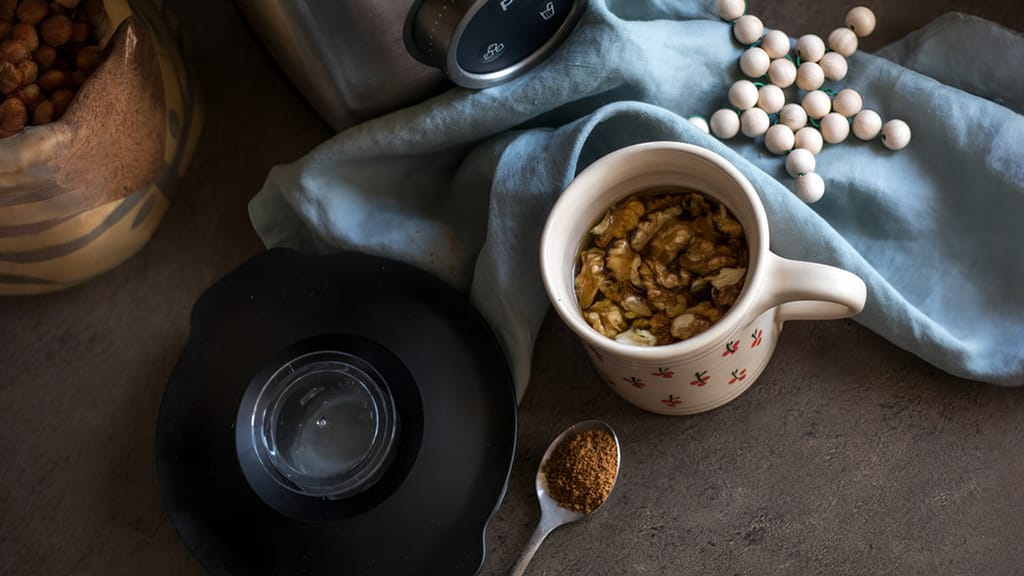
Nut quality matters most where nuts aren't hidden under sugar or spice. In walnut milk, the nuts are the entire recipe — the smallest hint of bitterness comes through in full, which makes it the ultimate freshness test. Just as unforgiving are roasted beetroot and walnut salad and blue cheese dip with walnuts, where the nut carries the whole flavour.
For baking, grinding at the last minute is key — hollow nut crescent biscuits live or die by whether the ground nut filling actually smells like nuts, or just tastes like 'bulk'. And if you've got a surplus of nuts and want to use them up before storage even becomes a question, homemade almond granola bars or baked figs with goat's cheese, walnuts and honey are a good way to go.
Walnut milk
Walnut milk: the recipe that reveals whether your nuts are truly fresh

Hollow walnut crescents
Hollow nut crescent biscuits with freshly ground nut filling
Yes, but only in the fridge or freezer. Between the September–October harvest and December baking, two to three months pass — and shelled walnuts simply can't survive that long in the pantry, since at room temperature they only last two to four weeks. An airtight container in the fridge at 0–4°C (32–39°F) covers it comfortably, and the freezer at −18°C (0°F) is a sure bet. If you're planning to grind them, leave that until baking day.
Because they've already been through months you can't see from the packaging. Shelled nuts are cracked by the processor, then travel and sit in warehouses and on shelves at ordinary room temperature, so their 'clock' has been running long before they ever reach your kitchen — and some of what's on the shelf may even be from a previous harvest. The best-before date doesn't tell you when they were shelled, only how long the unopened pack is guaranteed for. The practical fix: buy small packs from shops with fast turnover, favour in-shell nuts where possible, and transfer them straight into an airtight container in a cool spot once home.
Freeze them — the freezer is usually roomier than the fridge, and −18°C (0°F) is the best place for nuts, full stop. If you have to leave nuts out of the cold, pick the coolest, darkest corner of your home — definitely not the cupboard above the cooker or a shelf by the window — and split your stock into small airtight containers, opening just one at a time. Decide by type: at most, leave almonds, hazelnuts and pistachios out; walnuts, pecans and pine nuts need cold straight away. In summer, also buy smaller packs so nothing sits around for months.
No — a mix only lasts as long as its most fragile ingredient. If a mix contains walnuts, pecans or pine nuts, count the whole batch in weeks, even if the rest is almonds. Chopped or ground pieces speed things up further, since they expose more surface area to air. So mix smaller batches and store them airtight, dark and cold, timed to the most delicate nut in the blend.
Throw the finished bake out — the bitterness doesn't cook out, and you can't mask it with gingerbread spice, filling, or icing. Rancid flavour fades briefly under heat, but comes right back once the food cools, so baking it anyway 'just for the Christmas cake' isn't worth it. You can avoid this next time with one second of effort: before adding nuts to dough, bite into one and smell the whole batch. If it catches the back of your throat or smells like old paint, none of it belongs in the mix.
Dry them first, then store them. Freshly harvested walnuts are too moist and will start moulding within days in a sealed bag. Remove the green husks, spread the nuts in a single layer on a sieve or sheet somewhere dry and airy (not in direct sun), and let them dry for two to three weeks. You'll know they're ready when the kernel snaps rather than bends when cracked, and the inner membrane is brittle. Then store them in-shell in a crate or cloth sack somewhere cool, dry and dark.
One recipe worth heating the oven for, one tip, and one deal from the shop. Nothing else.