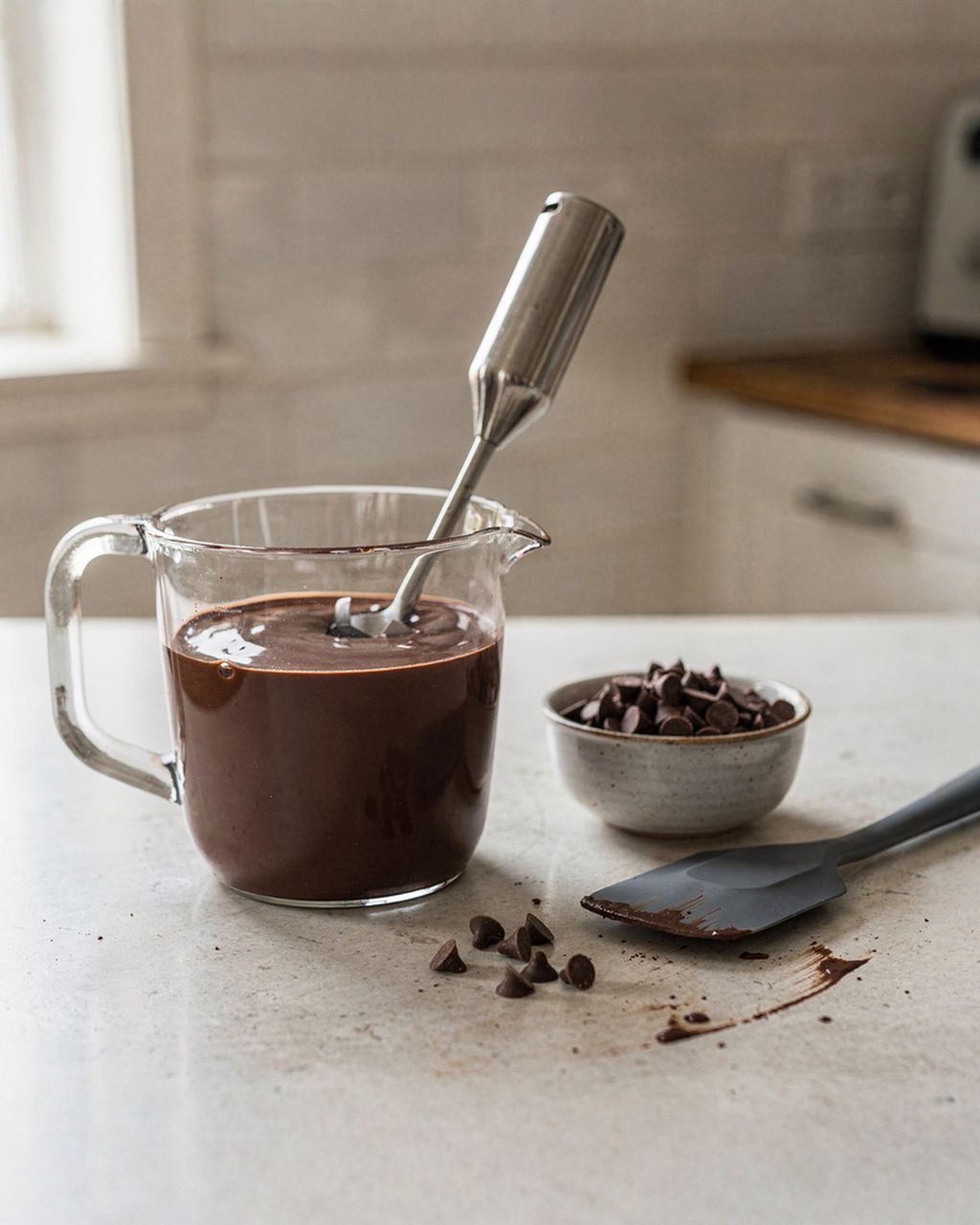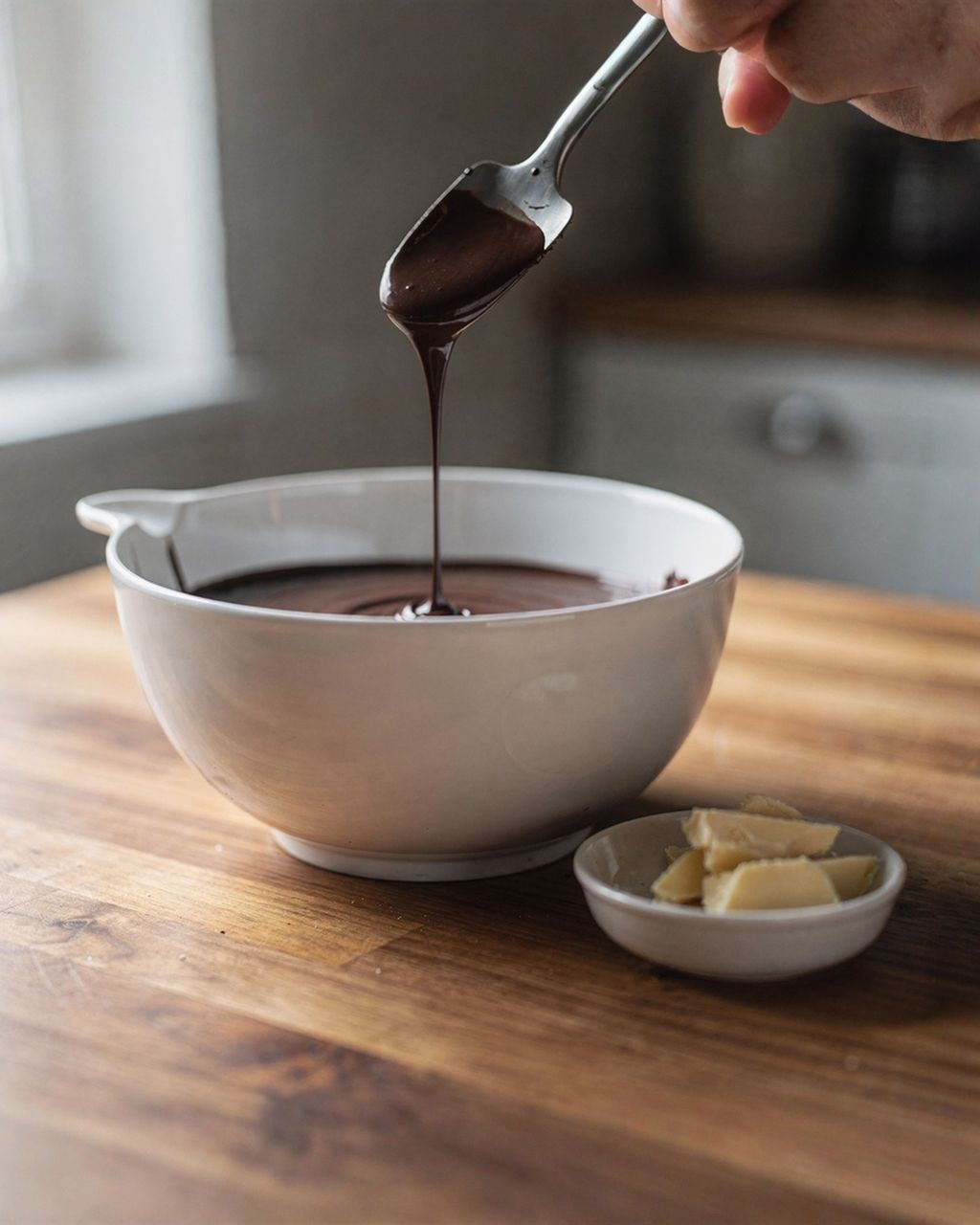
White chocolate mousse – light and fluffy
How to Melt White Chocolate Without It Seizing
Updated Oct 4, 2026
Melting white chocolate without it seizing comes down to chopping it finely and heating it slowly to no more than 40–45°C (104–113°F), either over a water bath or in the microwave in short bursts. It needs to stay completely dry throughout, and you need to keep stirring. White chocolate is more delicate than dark chocolate: it's packed with milk solids and sugar and has no cocoa mass to hold it together. Just a few degrees too hot, or a single drop of steam, and instead of a glossy mixture you're left with a lumpy paste. Here's why that happens and what to do if it happens to you anyway.
To stop white chocolate from seizing, stick to four rules: low heat, no water, small pieces, frequent stirring.
Keep the temperature at 40–45°C (104–113°F) max. Callebaut recommends this same range for white chocolate. Dark chocolate can handle 45–50°C, but white chocolate can't.
Your bowl and spatula must be completely dry. A single drop of water or steam is enough to make the chocolate clump up.
Chop it finely, into pieces no bigger than 1 cm. Chocolate callets can go straight in as they are.
Stir as you go, and stop heating before it's fully melted. Residual heat will finish melting the last few pieces.
Follow these four points and it won't matter whether you melt it over a water bath or in the microwave.
White chocolate seizes for one of two reasons: it overheats, or a bit of water gets into it. The two look similar, but each has a different cause.
Overheating. White chocolate is made of cocoa butter, sugar and milk powder. Above roughly 45–50°C it starts to thicken, and if it keeps overheating, the milk solids begin to brown, the chocolate turns yellowish and starts to crumble. Dark chocolate has more cocoa solids, so it copes with heat better.
Water. Just a few drops of water (steam from the pot, a damp spoon, condensation from a lid) dissolve the surface of the sugar crystals. These stick together and the cocoa butter separates away from them. The result is a dull, grainy mass that holds its shape like wet sand.
Oddly enough, a small amount of water is worse than a large one. A few drops will seize the chocolate, while plenty of liquid, such as cream in a ganache, fully dissolves the sugar and creates a smooth emulsion.
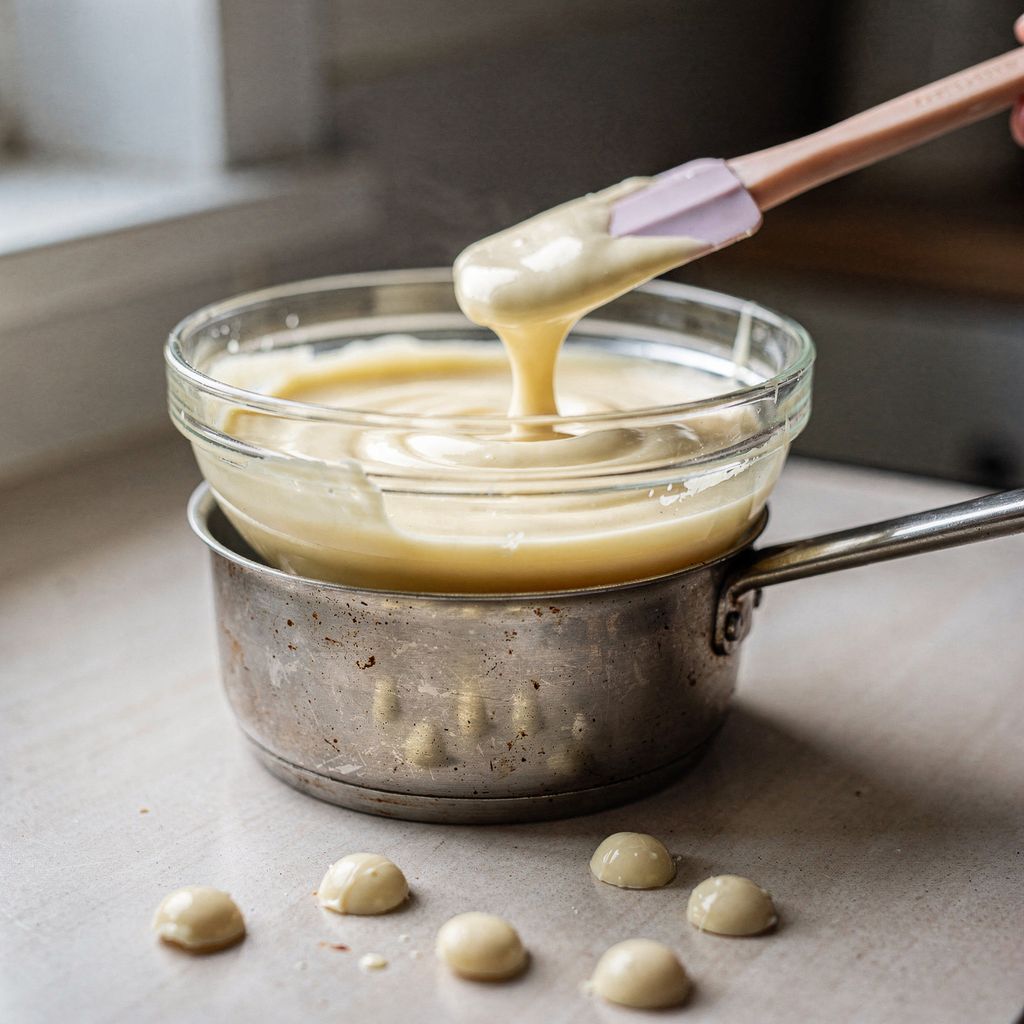
A water bath is the safest way to melt white chocolate, because the temperature rises slowly and is easy to keep under control.
Pour 3–4 cm of water into a smallish pot and bring it to a gentle simmer, not a boil.
Put the chopped chocolate into a dry glass or stainless steel bowl that sits snugly on top of the pot and doesn't touch the water.
Turn the heat right down or off completely. For 100–300 g of chocolate, the heat already in the water is enough.
Stir with a silicone spatula. Once just a few unmelted pieces remain, take the bowl off the heat and stir the rest through off the stove.
Once off the heat, wipe the bottom of the bowl with a tea towel so no water drips into the chocolate or onto your work surface.
If you have a probe thermometer, keep it between 40–45°C. Without one, use your lip as a guide: melted white chocolate should feel just lukewarm to slightly warm, never hot.
The microwave is the fastest way to melt white chocolate, but only in short bursts at a lower power setting, stirring in between.
Put the chopped chocolate or callets into a dry glass or ceramic bowl (plastic holds heat unevenly).
Set the power to 400–600 W, roughly half power.
Heat for 30 seconds, then take it out and stir, even if the chocolate still looks solid. The pieces hold their shape even after they've melted inside.
Continue in 10–15 second bursts, stirring after each one.
Stop once most of it has melted and stir the rest through. This usually takes about 1–2 minutes for 200 g.
The most common mistake is setting a full minute at full power straight away. Microwaves heat unevenly, so the centre will scorch before the edges have even started to melt.
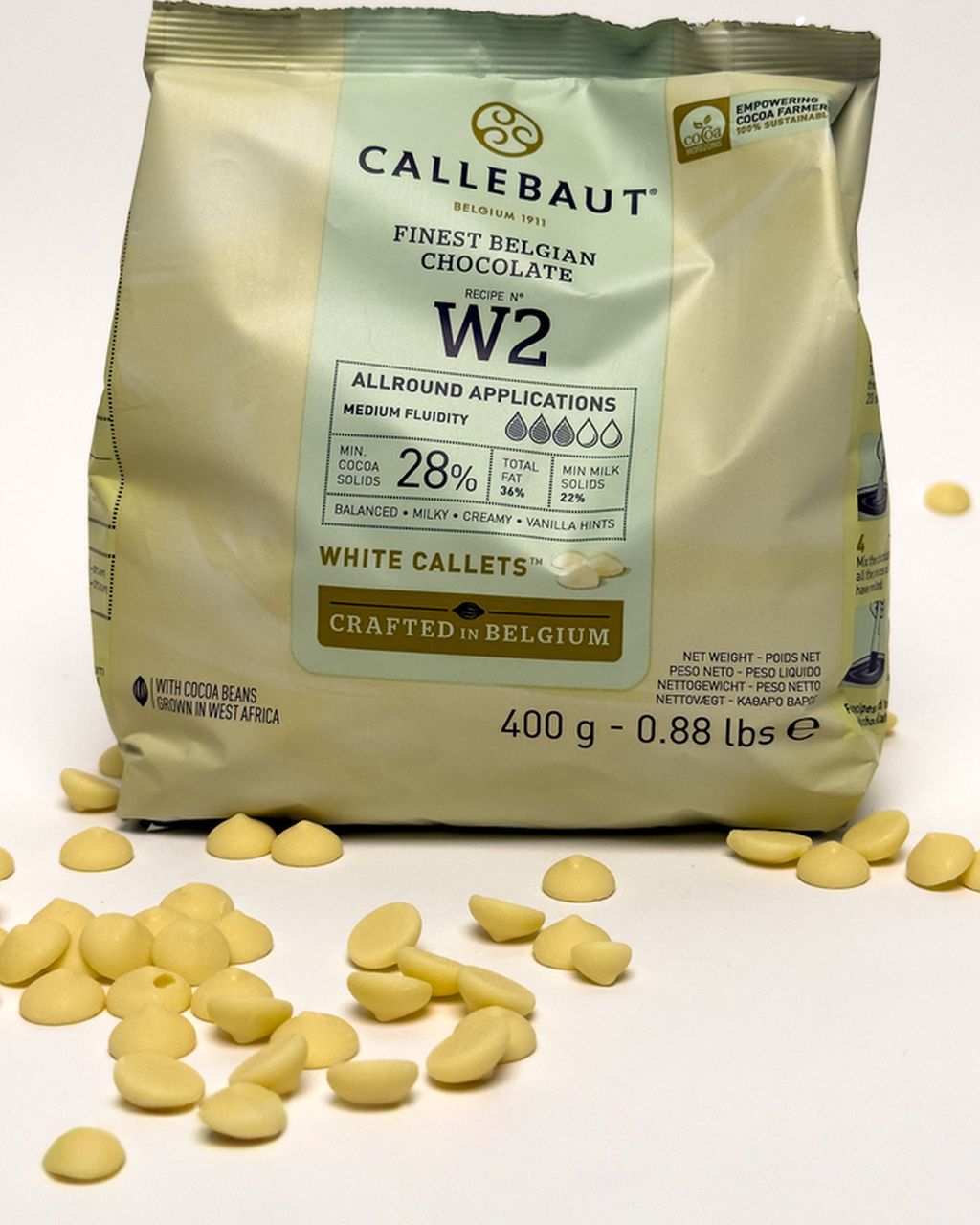
White chocolate with a high cocoa butter content melts best, ideally couverture callets made for baking. Check the ingredients list: cocoa butter should appear near the top, with cocoa solids at around 28% or more. Callebaut's W2, for example, has 28%.
Callets melt evenly and don't need chopping.
Shop-bought chocolate bars work too, just chop them finely and watch them more closely. They tend to have less cocoa butter, so they're denser and overheat faster.
"White coating" or "white chocolate flavoured coating" isn't actually chocolate. It usually contains vegetable fat instead of cocoa butter. It melts easily, but tastes different and can't be tempered.
You'll find baking-grade white chocolate callets in our white chocolate for baking category. For a deeper look at how dark, milk and white chocolate differ in composition, melting and use, see Dark, milk and white chocolate: differences in composition, melting and use.
Only add things that are fat-based or completely dry to melted white chocolate. Anything containing even a little water can seize it.
Colours: use only oil-based chocolate colours or powder colours. Regular gel colours contain water and will thicken the chocolate. Find out more in our article on food colourings for baking.
Flavourings: oil-based flavourings or seeds scraped from a vanilla pod work well. Alcohol-based extracts and water-diluted flavourings will seize the chocolate even in small amounts.
Dry ingredients: freeze-dried fruit powder, matcha, grated lemon zest (well dried), ground nuts.
Butter: add it softened, in small pieces, to lukewarm melted chocolate. It won't seize it the way a drop of water would.
Liquids (cream, liqueur): fine, but go big or skip it. Add cream warm and in a ratio that makes sense for a ganache — for white chocolate, roughly 1 part cream to 2–3 parts chocolate. Cold liquid or just a splash of liqueur will seize the mixture.
Need the chocolate to flow better for dipping or drizzling? Don't add water or milk. Read How to thin chocolate so it flows better for the right way to do it.
Seized white chocolate can usually be rescued, though you won't be able to use it as a glaze or temper it anymore. What you can do depends on what caused it to seize.
Seized by water (grainy, dull, stiff): add hot cream or milk a teaspoon at a time, stirring vigorously until it comes together into a smooth, creamy mixture. You'll end up with a sauce or ganache suitable for creams, pancakes, or a white chocolate mousse.
Overheated but not browned (thick, slightly lumpy): take it off the heat, stir in a handful of unmelted callets to cool it down quickly, then push it through a fine sieve. If it's still thick, loosen it with a teaspoon of melted cocoa butter or neutral oil.
Scorched (brown lumps, burnt-milk smell): unfortunately there's no fixing this. You won't be able to get rid of the bitter taste.
Seized ganache is a related problem with a similar fix — see Chocolate ganache: ratios, preparation and uses.
You only need to temper white chocolate when it has to set glossy, crisp and firm at room temperature — for pralines, chocolate bars, decorations, or a glaze meant to snap.
For creams, mousses, ganache, batters, or drizzling, you don't need to temper it. Plain melted chocolate is all you need there.
Here's the rough temperature curve for white chocolate recommended by Callebaut:
melt to 40–45°C
cool to 27°C
work at 28–29°C
The easiest method is seeding: once the chocolate has melted to 45°C and cooled to around 40°C, stir in roughly a quarter to a third of its weight in unmelted callets, and keep stirring until it drops to 28–29°C. Untempered chocolate turns grey and soft once set. Find out why this happens in our article How to store chocolate and why it turns grey.
Melted white chocolate most often goes into creams and mousses, or becomes a glaze or decoration. Here are a few recipes where this method comes in handy:
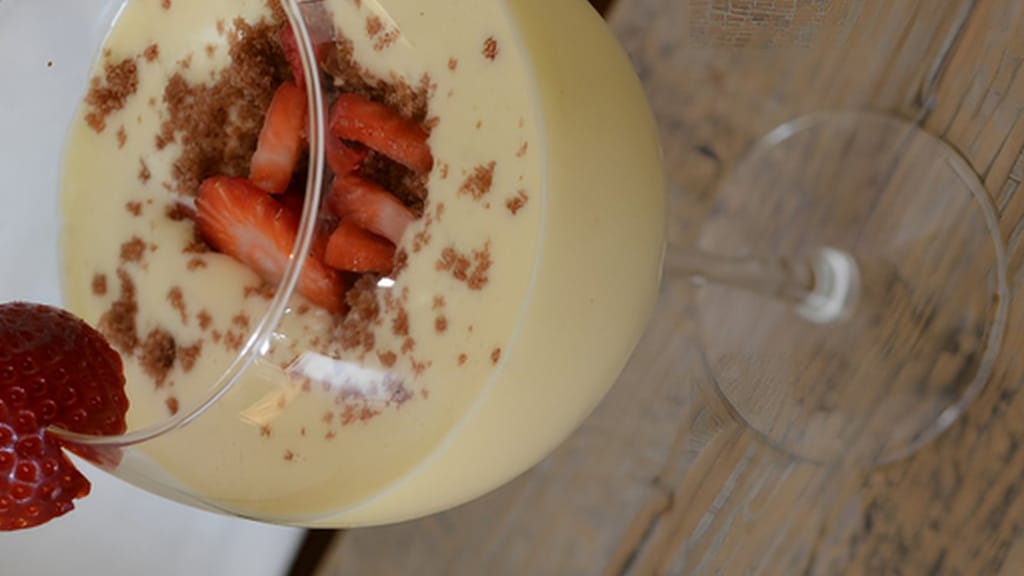
White chocolate mousse – light and airy: the melted chocolate is folded into whipped cream, so it needs to be lukewarm, not hot.
White chocolate and coffee cream – not just for macarons: a smooth white chocolate cream for filling.
White chocolate wasp nests with mango and passion fruit: here the melted chocolate is wrapped around the filling.
White chocolate mousse – light and fluffy
White chocolate mousse: put melted white chocolate to the test
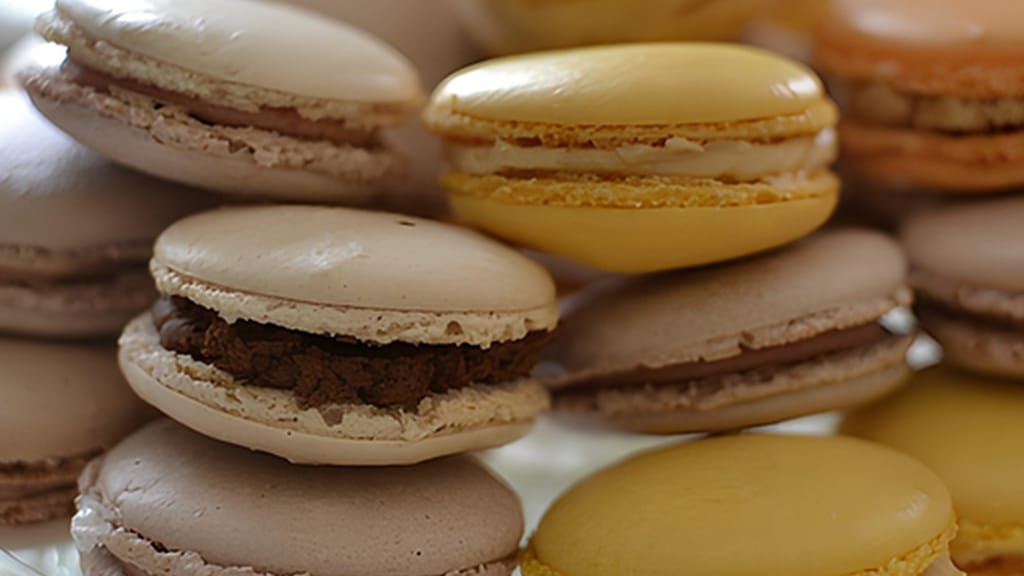
White chocolate and coffee cream - great in macarons and beyond
White chocolate and coffee cream for macarons and cakes
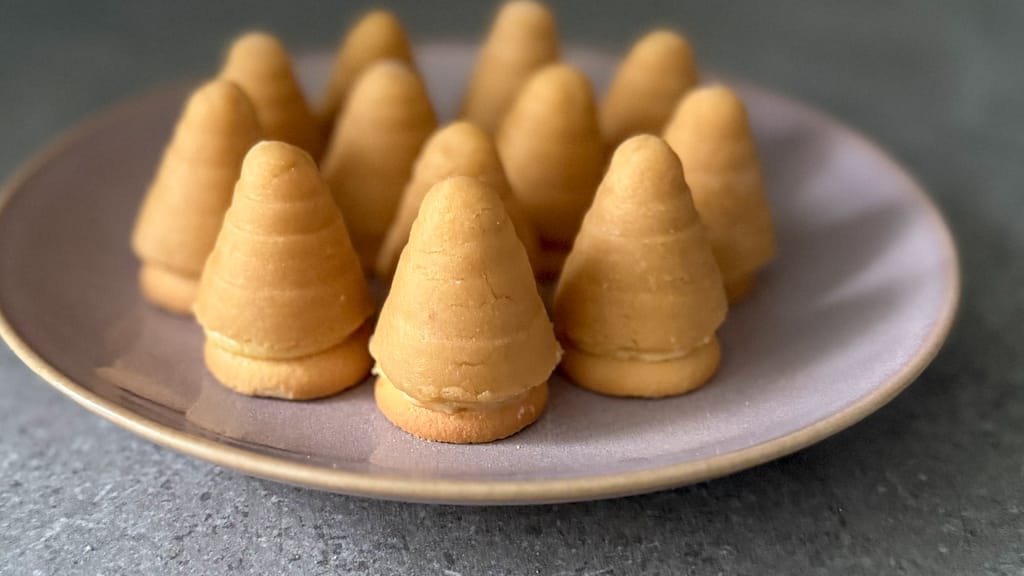
White chocolate wasp nests with mango and passion fruit
Melted white chocolate wasp nests with mango and passion fruit
Melting white chocolate directly in a pan on the stove isn't a good idea, because the bottom heats up well past 45°C before the top has even melted, scorching the chocolate underneath. If you've got no other option, use a heavy-bottomed pan, the lowest heat setting, and turn the burner off as soon as it starts to melt.
Yes, you can re-melt set white chocolate using the same method, as long as it wasn't overheated or exposed to water the first time around. Each extra round of heating does raise the risk of overheating though, so go slowly again and stay under 45°C.
Yes, as soon as you re-melt tempered white chocolate to 40–45°C, the temper is lost, and it won't set glossy or crisp again. If you need it tempered again for pralines or decorations, you'll have to re-temper it; for creams and mousses, you can use it as is.
A yellowish tinge is completely normal in white chocolates with a high cocoa butter and milk solids content, so it's not a sign of a mistake on its own. But if the chocolate darkens to a beige colour and thickens while melting, that means the milk solids have started to brown from overheating.
At room temperature around 20°C, melted white chocolate starts to thicken after about 10–20 minutes, depending on the amount and the container. To keep it liquid longer, set the bowl over lukewarm (not hot) water, or give it a 5–10 second blast in the microwave.
One recipe worth heating the oven for, one tip, and one deal from the shop. Nothing else.