Carrot cake with cream cheese frosting
No Added Sugar Birthday Cake for a One-Year-Old: Sponge, Cream & Decorating
Updated Oct 3, 2026
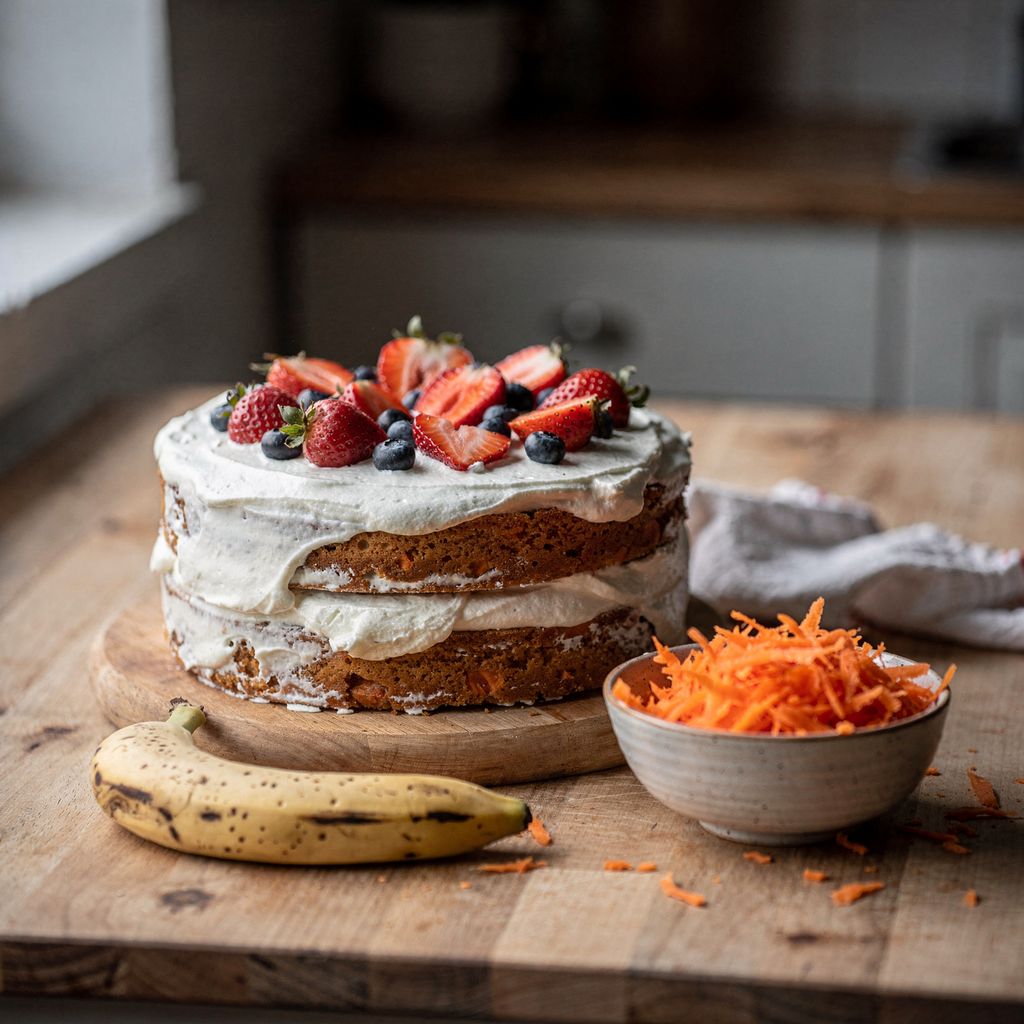
A no added sugar cake for a one-year-old comes down to three things: fruit for sweetness (ripe banana, dates, apple purée), grated carrot or full-fat yoghurt for moisture, and drained curd cheese instead of whipped cream with icing sugar for the filling. A first-birthday cake is baked with no added sugar — sweetness comes from ripe banana, dates and apple purée instead. And the cake for a first birthday is usually the first time this turns into a real practical challenge. Here's how to pull it off: a sponge that doesn't turn rubbery, a cream that doesn't run, and decorations with not a single sugar sprinkle in sight.
You can sweeten a first-birthday cake with five ingredients: ripe banana, date paste, no added sugar apple purée, grated carrot and vanilla with a pinch of cinnamon. The first three bring both sweetness and moisture, carrot sweetens gently while keeping the sponge moist, and vanilla with cinnamon simply fake sweetness — the brain reads them as "sweet" even though they contain no sugar at all.
Here are the exact ratios, so you don't have to guess:
Banana: one large ripe banana (about 100 g mashed) replaces roughly 50 g of sugar. Cut back on liquid by 20 ml to compensate. The darker the peel, the sweeter the flesh.
Date paste: pour 60–80 ml of hot water over 100 g of pitted dates, let them soften for 10 minutes, then blend until smooth. Swap it in for sugar 1:1 by weight, but reduce the milk by 30 ml.
No added sugar apple purée: 100 g replaces 50 g of sugar — again, cut the liquid by 30 ml.
Finely grated carrot, courgette or apple: 100–150 g per 250 g of flour. On their own they add little sweetness, but they hold onto moisture and keep the cake from going stale overnight.
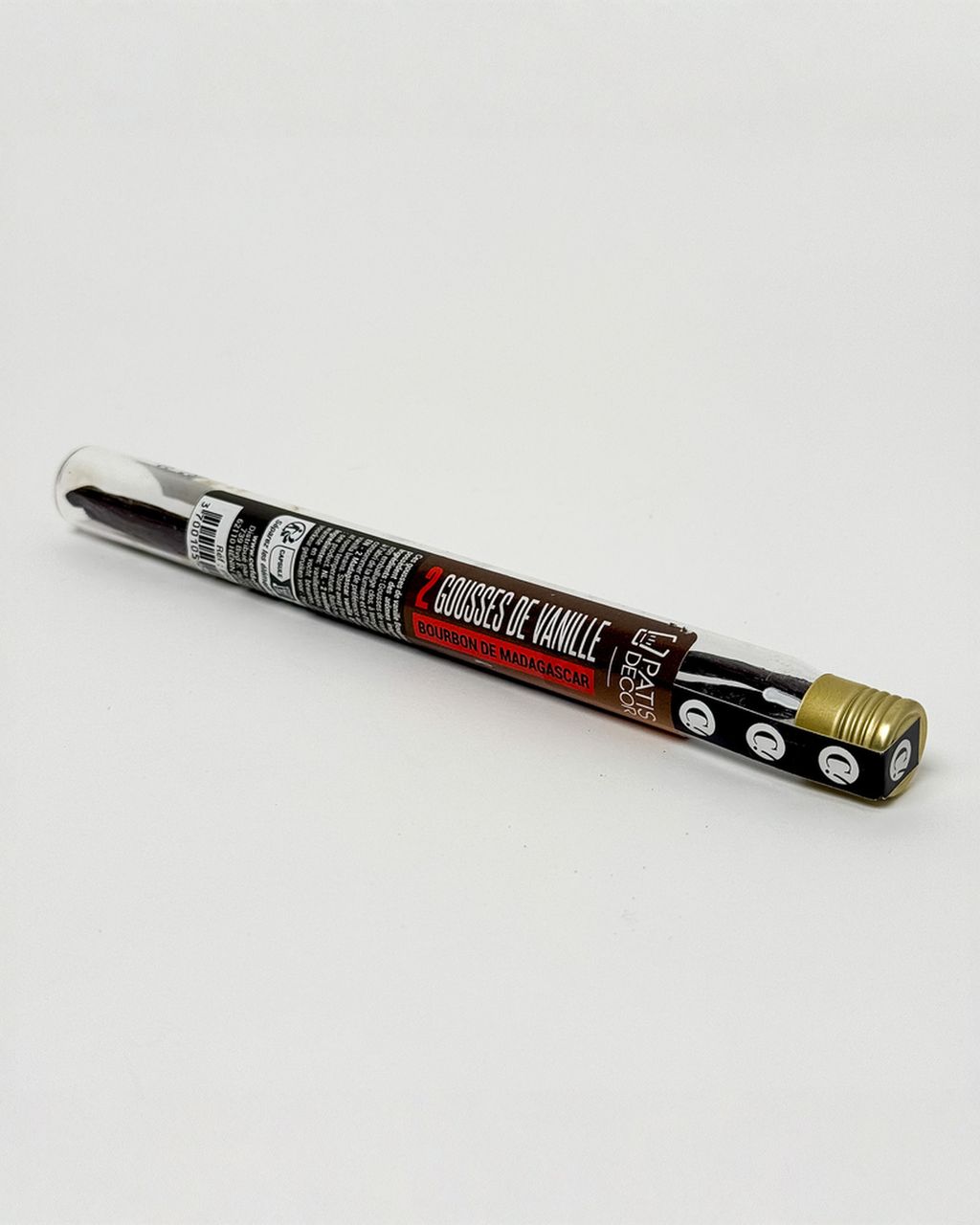
Vanilla and cinnamon: half a pod or a pinch of cinnamon per cake. Zero sugar, big difference in flavour.
One honest note: date paste, date syrup and maple syrup all count as free sugars — once the fruit is blended, its structure is broken down. For a one-year-old, the simplest option is whole fruit, mashed or grated straight into the batter — besides sweetness, it adds moisture and keeps the sponge soft. Save a proper date syrup for the cake you make for the rest of the family.
The most reliable batters are the ones that carry their own moisture: carrot, banana and oat-based ones. A classic whisked sponge really struggles without sugar — sugar stabilises the egg foam and binds water, so without it you end up with a sponge that comes out of the oven low, dry and a bit rubbery.
A tried-and-tested base for a 15 cm tin — just right for one toddler plus a handful of adults: 150 g finely grated carrot, 2 eggs, 120 g mashed banana, 60 ml oil or melted butter, 140 g plain or spelt flour, 1 teaspoon baking powder, a pinch of cinnamon. No salt. Baby food isn't salted, and this cake doesn't need it either — cinnamon and vanilla carry the flavour instead.
Bake at 170°C (340°F) for about 35–40 minutes — a touch lower and longer than you would for a sugared cake. The reason: without added sugar, the sponge browns more slowly and differently, so it won't colour the way you're used to — go by the skewer test, not the colour. Waiting for a "nicely golden" top is the most common way to end up drying out a no added sugar cake.
A no added sugar cake goes stale faster because sugar is hygroscopic — it holds onto water in baked goods and slows down starch going stale; the fix is grated vegetables in the batter, wrapping the sponge while it's still slightly warm, and baking it only one day ahead. Specifically:
Add grated vegetables or fruit (carrot, courgette, apple) — 100–150 g per 250 g of flour.
Wrap it while still slightly warm in food-safe plastic wrap and let it cool inside the wrap. That keeps the steam in.
Bake it the day before, not two days before. A no added sugar cake is fine in the tin for one day, after that it noticeably declines. If you need more lead time, freeze the unfilled sponges instead.
Keep a finished cake with cream in a sealed container in the fridge for no more than 2 days — a no added sugar sponge dries out faster, and a banana-based cream will brown by the second day. It's just a cosmetic flaw, but it does show up in photos.
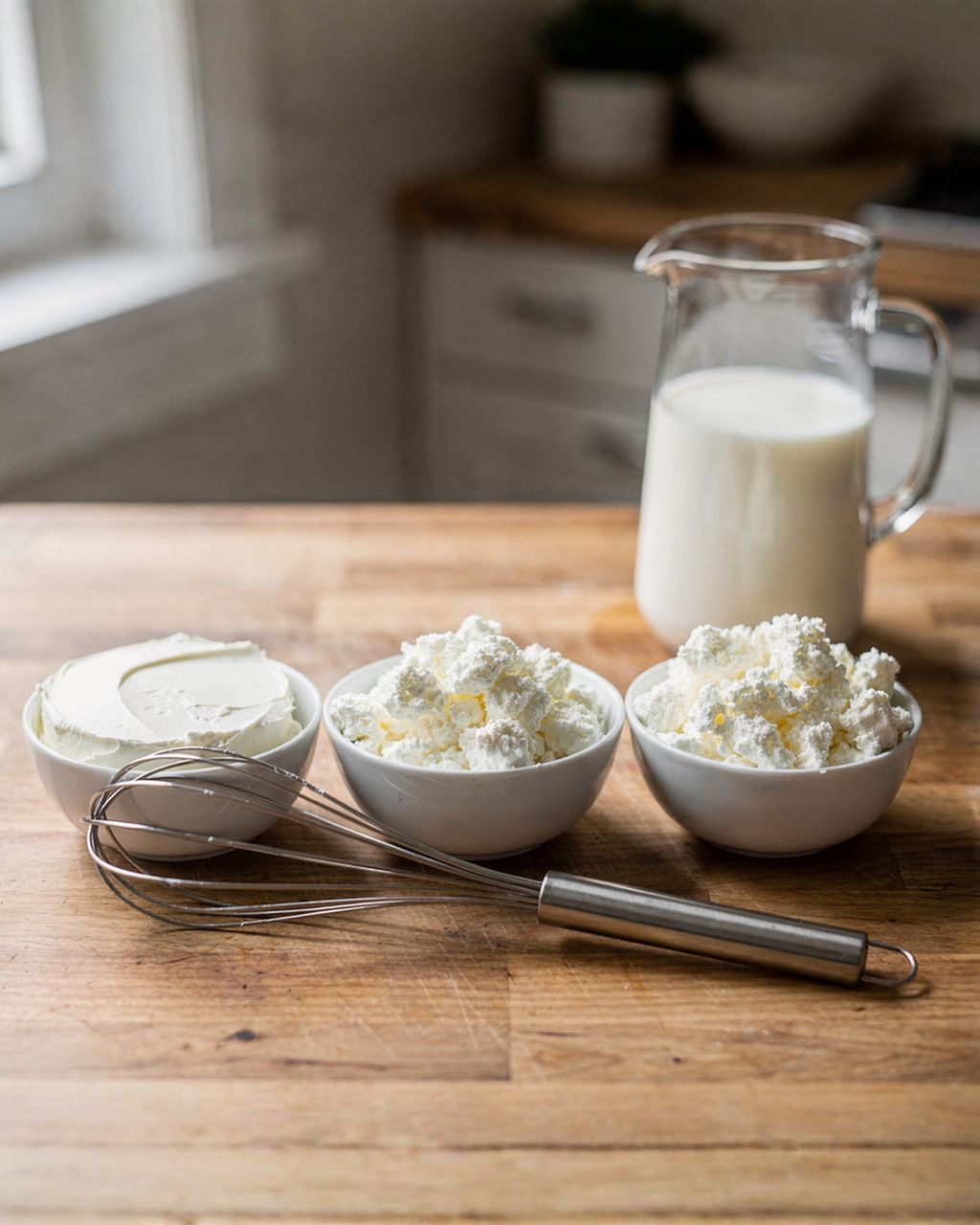
The best no added sugar cream is drained full-fat yoghurt mixed with curd cheese in a 1:2 ratio — it holds its shape, has a mild tang, and contains no added sugar. Whipped cream with icing sugar is off the table, and you don't need it anyway.
What works, starting with the most reliable option:
Curd cheese and Greek yoghurt (2:1). Firm, easy, tastes good. You can sweeten it with a spoonful of apple purée or mashed banana — but banana cream browns by the next day, so make it on the day itself.
Ricotta whipped with vanilla. The mildest flavour, least tangy. Let it drain for a while first, or it'll be too runny.
Mascarpone thinned with yoghurt (1:1). The creamiest and richest option — holds its shape, but noticeably more filling.
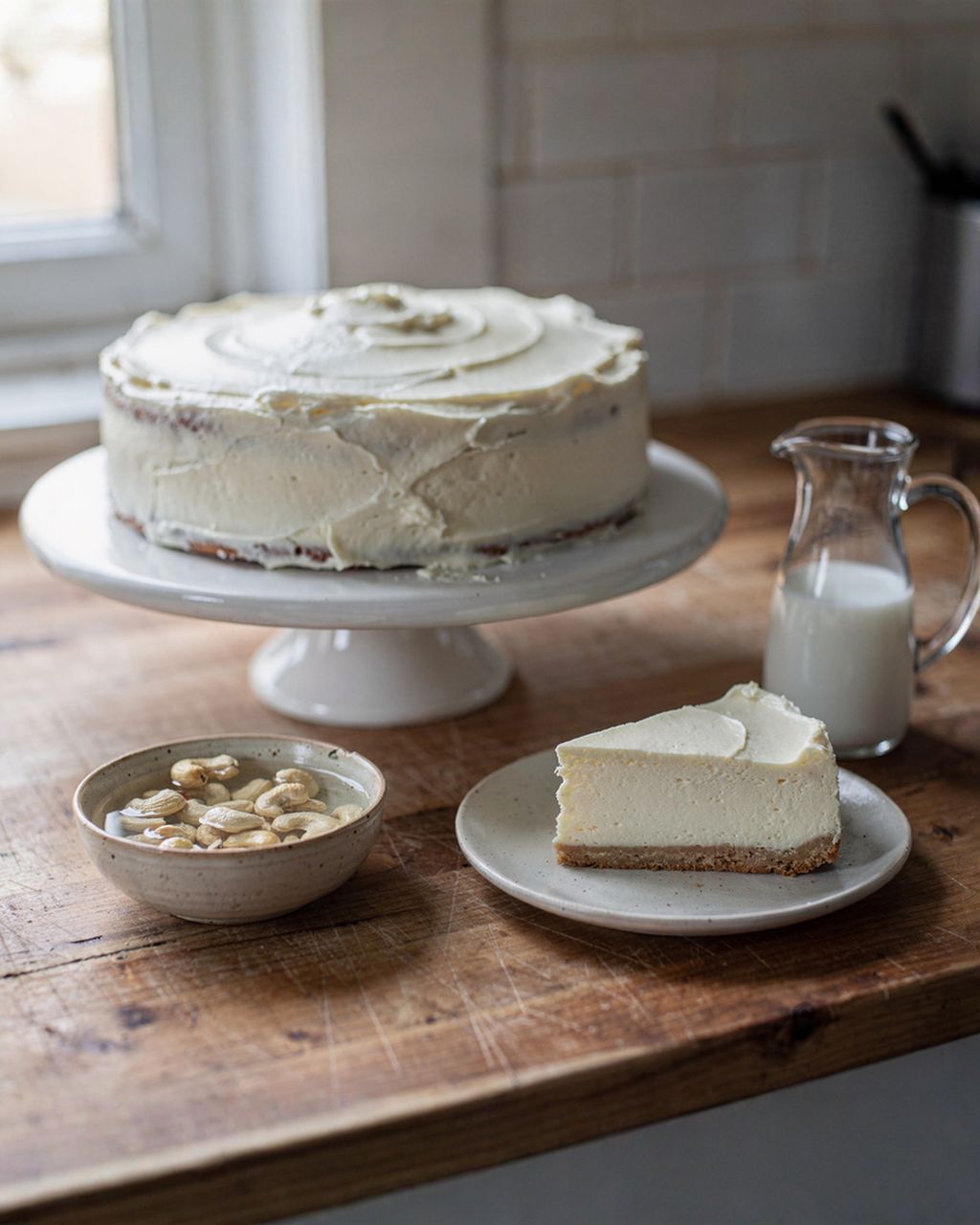
Chilled full-fat coconut milk. A fix for a dairy allergy: chill the can for 24 hours, open it and scoop out just the solid white part, leaving the liquid behind.
Things to avoid: instant pudding mixes (sugar and flavourings), plant-based whipping creams (sugar plus refined vegetable fats, usually palm or coconut), and white chocolate — it's made from cocoa butter and milk solids and in practice tends to be roughly half to sixty percent sugar. If you want to explore more options, we've put together a full guide to the five basic types of cake cream.
Tip plain yoghurt into a sieve lined with muslin or doubled-up gauze, set it over a bowl, and leave it in the fridge for at least 4 hours, ideally overnight. It'll lose around a third of its volume in whey, and the thin yoghurt turns into something firm enough to hold fruit on top.
Plan for this when shopping: 500 g of yoghurt will leave you with roughly 330 g of cream base. And don't pour the whey down the sink — it's great stirred into pancake batter or porridge.
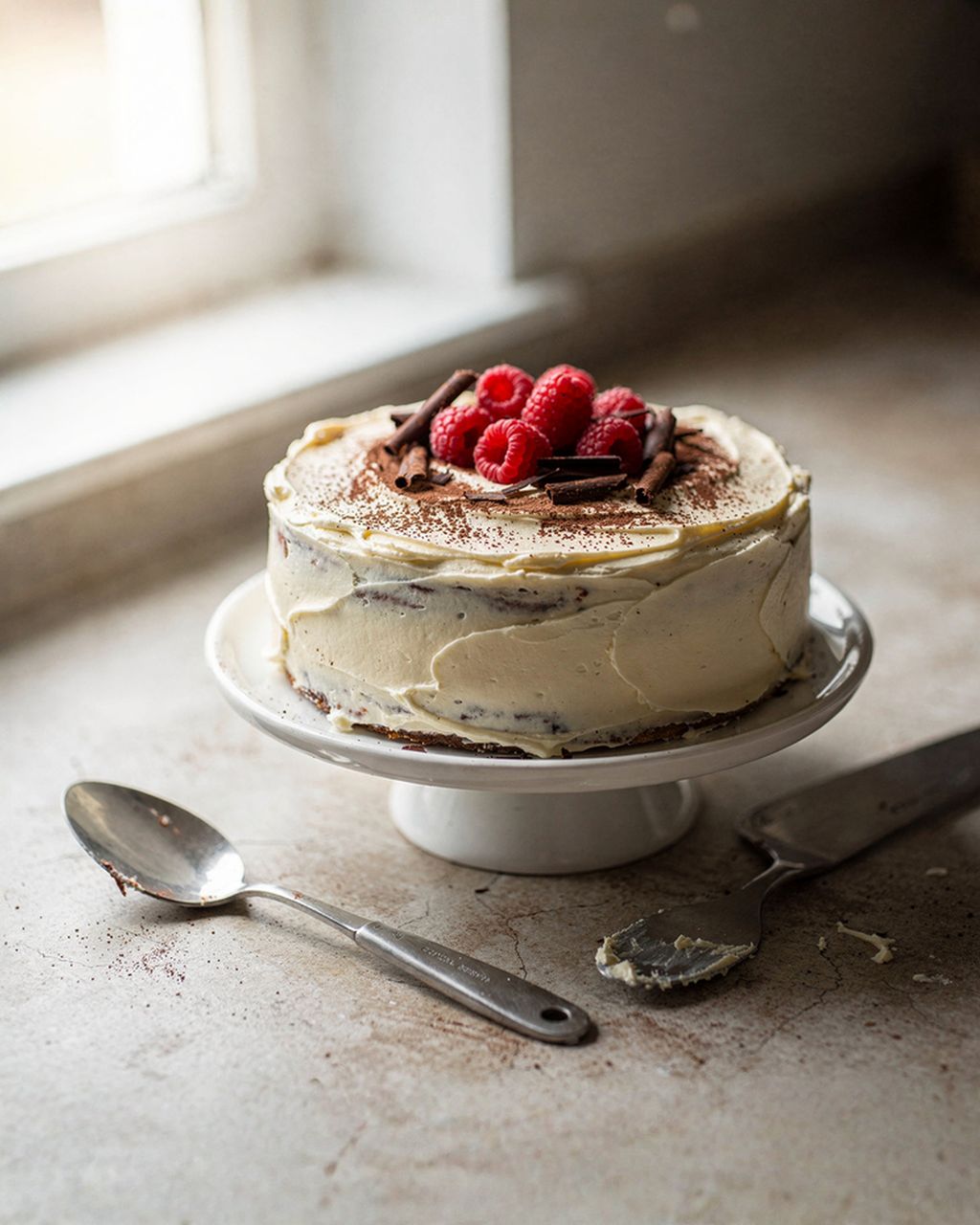
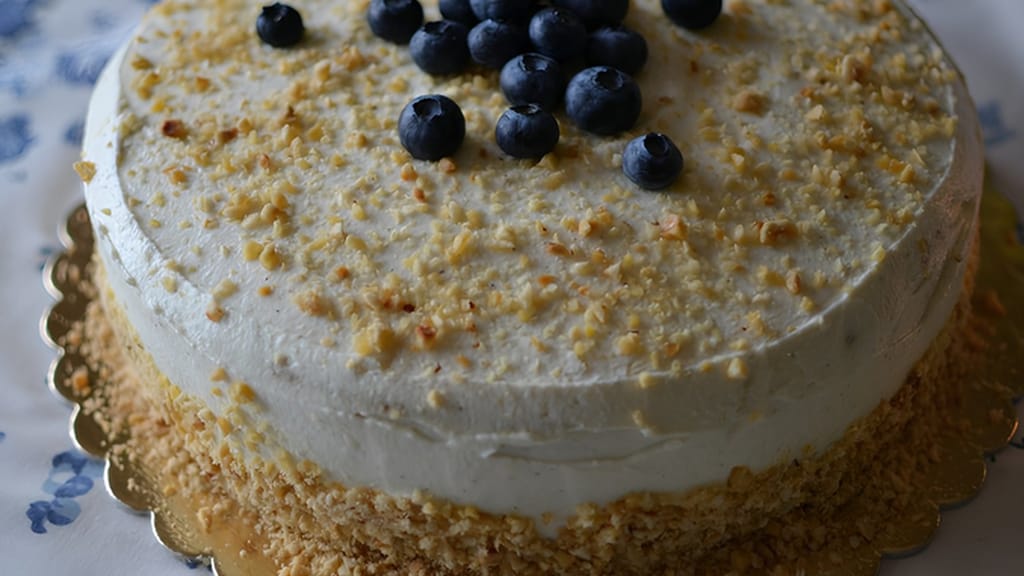
Carrot cake with cream cheese frosting
Carrot cake with curd cheese — a great starting point for a no added sugar kids' version
Decorate it with fresh fruit, fruit purée and ground nuts — and leave the sugar pearls, marzipan and coloured sprinkles in the cupboard. They're not just unnecessary sugar; small, hard sprinkles are also a choking hazard for a one-year-old.
What looks good and is safe:
Raspberries, blueberries and strawberries cut into quarters and arranged in a ring around the edge.
Raspberry purée pushed through a sieve — a few drops swirled onto white cream with a toothpick.
Ground almonds or hazelnuts scattered along the side of the cake. Never whole.
Thin slices of fresh banana or pear arranged into a rosette in the centre.
Homemade fruit leather (dried fruit purée) cut into strips and stood upright like a little crown.
A candle is fine too — just one, and push it into a piece of fruit rather than straight into the cream, so you can pull it out quickly before little hands get to it.
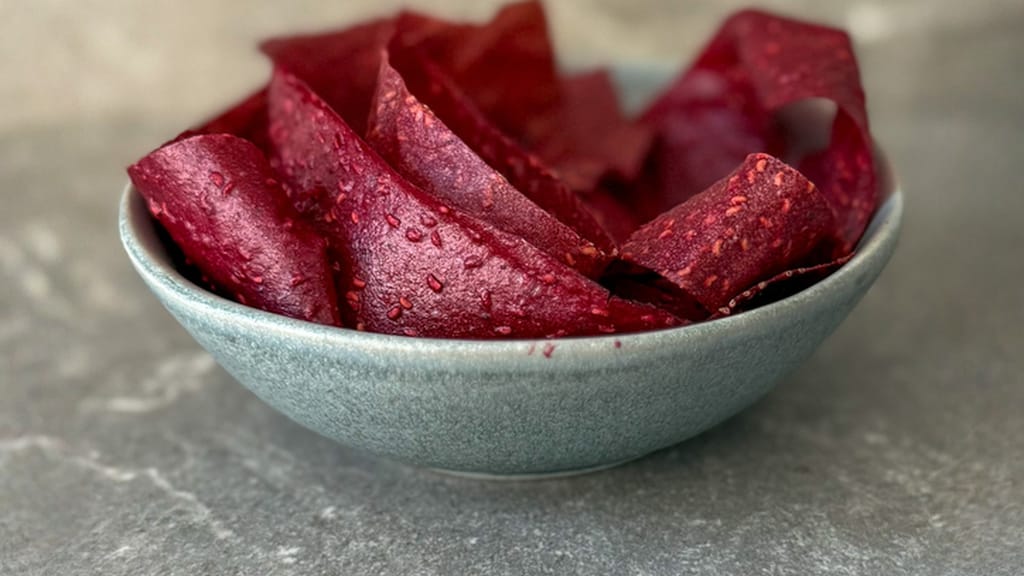
Homemade raspberry & banana fruit leather (no added sugar)
Raspberry and banana fruit leather with no added sugar as a decoration for a kids' cake
For a smash cake — the cake a child gets to squash with their hands at the table — bake a small, low, soft sponge about 10–12 cm across, with no hard crust and no loose decorations. A tall, tiered cake collapses at the first touch, and half of it ends up on the floor.
Practical rules that work well in real life:
Keep it low and soft. One or two layers, no taller than 4 cm. Go for a thinner layer of cream rather than a thick cap.
Cut the fruit ahead of time, including whatever goes under the cream. Anything round and whole on top of a cake a baby will be grabbing at is a risk.
Protect your floor. A sheet under the highchair and some wipes ready to go will save you twenty minutes of cleanup.
Serve it after the meal, not instead of it. A one-year-old will fill up after a couple of bites, and the rest will just get mashed for fun.
Don't expect delight. Plenty of babies are startled by a sticky cake. Think of it as a photo opportunity, not a course.
An alternative that often works better than a whole cake: muffins or mini cakes — everyone gets their own, the baby gets just the right amount, and nobody has to deal with cutting slices.
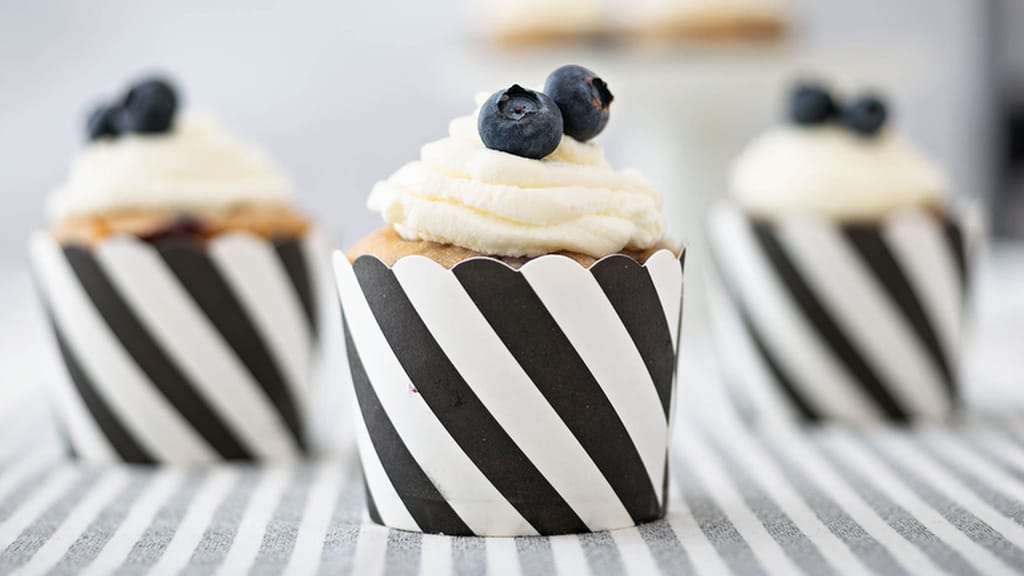
Yogurt & banana cupcakes
Yoghurt and banana cupcakes as a smash cake for a one-year-old
Added sugar has no place in a cake for a one-year-old — and sugar substitutes can't replace it, either in flavour or in how the batter behaves. WHO guidance for infants and toddlers aged 6 to 23 months is clear on added sugar: no sugar or salt should be added to complementary foods or meals. This doesn't apply to sugars naturally found in fruit, vegetables and milk.
A no added sugar cake tastes different from a sugared one — next to sugar pearls, the natural sweetness of carrot, banana and apple in the cake would simply get lost. A one-year-old doesn't actually need sweetness to enjoy a celebration — the attention, the candle, and everyone being there together matter far more than how much sugar is on the plate.
Erythritol and xylitol don't belong in this cake either — banana and dates already provide the sweetness. Under EU Regulation 1169/2011, foods with a higher content of polyols must carry the warning "excessive consumption may cause a laxative effect".
One or two pieces about the size of a child's palm is plenty — and serve them after a regular meal, not instead of it. A one-year-old has a small stomach, and a slice of cake that looks like a reasonable adult portion will take up their entire dinner. Just share the rest with the adults or freeze it.
Yes — freeze the plain sponges without any cream, and they'll keep for 2–3 months. Let them cool completely, wrap each one individually in plastic wrap, and thaw overnight in the fridge the day before, still wrapped. Don't freeze the finished cake with curd cheese cream, though: the cream separates and goes watery once thawed. Ideally, fill and decorate it on the morning of the celebration.
Realistically, not before their first birthday — and even then, only in a version with no added sugar and no honey. Honey is off-limits before 12 months because of the risk of *Clostridium botulinum* spores, and a regular cake is, for a younger baby, mostly just sugar anyway. If someone else is celebrating and your baby isn't one yet, give them a piece of ripe fruit instead of cake — the atmosphere of the party is what they'll enjoy anyway, not the dessert course.
Replace the wheat flour with a 1:1 mix of gluten-free rice flour and oat flour, plus a teaspoon of ground millet or buckwheat flour for binding. Gluten-free batters need more moisture, so add an extra 30 g of grated apple or 20 ml of milk to the base recipe in the article (for a 15 cm tin), and let the batter rest for 10 minutes before baking so the flour can absorb the liquid. Bake for 5 minutes longer, and let the cake cool completely in the tin — a warm gluten-free sponge tends to fall apart.
Replace one egg with 60 g of mashed banana or 3 tablespoons of apple purée plus an extra quarter teaspoon of baking powder — this works reliably in carrot and banana batters. Swap cow's milk for unsweetened oat or almond milk in a 1:1 ratio (almond only if your child tolerates nuts), and instead of curd cheese cream, whip up the solid part of chilled full-fat coconut milk. If there's a confirmed allergy, always talk through the menu with your paediatrician first.
A teaspoon of unsweetened cocoa in the batter is fine; chocolate is best avoided. Unsweetened cocoa is quite bitter, so a single teaspoon is enough for a whole sponge. Chocolate, even dark chocolate, is mostly sugar and fat, and a one-year-old doesn't need it.
One recipe worth heating the oven for, one tip, and one deal from the shop. Nothing else.