Broccoli and Cauliflower: How Long to Cook, Store and Freeze Them
How to Freeze Vegetables: Blanching, Times and What Not to Bother Freezing
Updated Nov 17, 2026
You can freeze almost any vegetable, just not always the same way. Briefly blanch celery, cabbage, kale, leeks and carrots before freezing (scald them in boiling water, then chill them straight away in ice water). Onions, garlic and scallions can go into the freezer raw, and there's no point freezing radishes or raw salad greens. Here you'll find blanching times for each type, how to pack vegetables so they don't freeze into a solid block, and how long they keep in the freezer.
Blanch any vegetables you want to keep in the freezer for months. Alliums you'll use within a few months can be frozen raw. In short:
Blanch: celery (root and stalks), cabbage (head cabbage, kale and Brussels sprouts), leeks, carrots, whole onions.
Freeze raw: chopped onion, garlic, scallions.
Don't freeze: radishes, head lettuce, cucumbers and anything you want to eat raw and crisp afterward.
Why it matters: enzymes keep working in vegetables and slowly spoil the color, flavor and texture even at −18°C (0°F). According to the US National Center for Home Food Preservation (NCHFP, University of Georgia), a short scald stops them, brightens the color and rinses some dirt and microorganisms off the surface. NCHFP doesn't require blanching for chopped onion. Garlic, onions and scallions lose their crunch in the freezer, but they still work well in cooked dishes.
Fruit is frozen differently, mostly with no blanching at all. You'll find that in our article on how to freeze fruit so it stays loose.
Seasonal baking plans, tested recipes and kitchen tricks that save you time. Unsubscribe in one click.
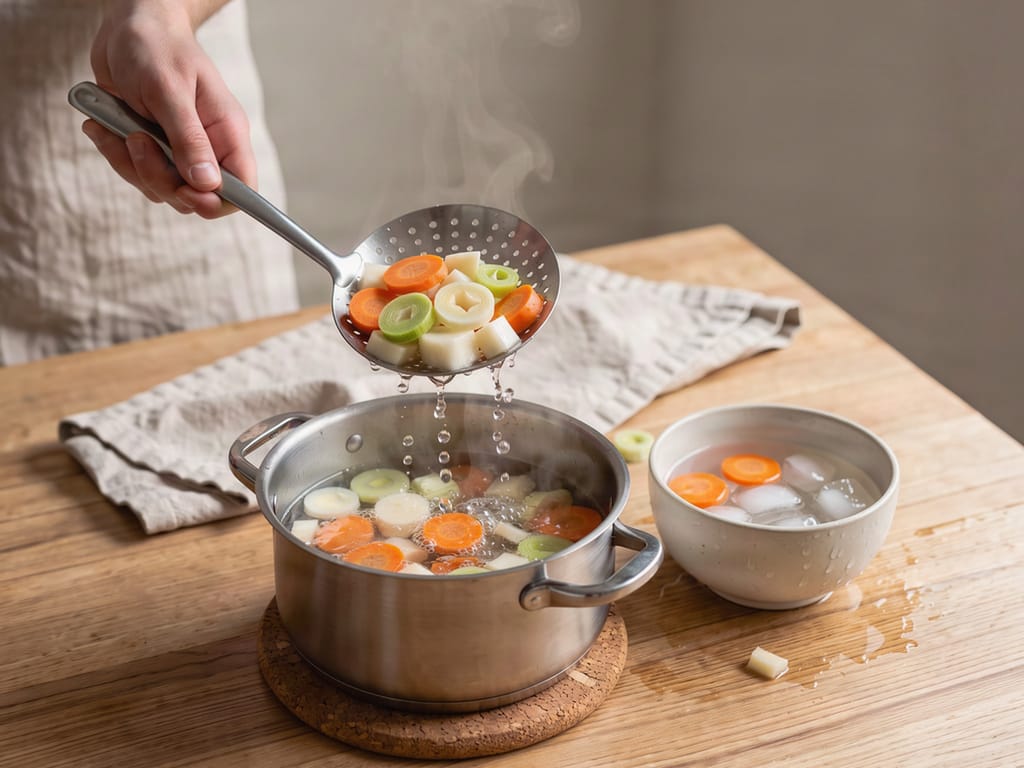
Blanching means briefly scalding vegetables in boiling water and chilling them straight away in ice water. The method, following NCHFP:
Prepare plenty of water. About 4 liters (4 quarts) for every half kilo (1 lb) of cut vegetables. In a small pot the water stops boiling for a long time after the vegetables go in, and they end up steaming rather than scalding.
Start timing only when the water returns to a boil. Not from the moment you add the vegetables.
Chill immediately. Move them to cold water (15°C/59°F at most), ideally with ice, roughly as much ice as vegetables. Chill them for as long as you blanched them.
Dry thoroughly. Drain them and spread them on a kitchen towel. Every drop of water turns to ice in the freezer and the vegetables stick together.
Stick to the times exactly. NCHFP warns that under-blanched vegetables are worse off than ones you didn't blanch at all, because lukewarm heat actually stimulates the enzymes. Blanch them too long, on the other hand, and they lose flavor, color and some of their vitamins and minerals.
Vegetables are blanched for 1½–7 minutes depending on type and size: cabbage 1½–2 min, sliced carrots 2 min, leeks 2–3 min, celery 3–4 min, Brussels sprouts 3–5 min, whole baby carrots 5 min, whole onions 3–7 min. Time it from the moment the water returns to a boil, then chill the vegetables in ice water for the same length of time and put them in the freezer (−18°C/0°F).
Carrots, sliced into rounds, diced or cut into sticks: 2 minutes (NCHFP)
Small whole baby carrots: 5 minutes (NCHFP)
Celery stalks, 2–3 cm (1 in) pieces: 3 minutes (NCHFP)
Celeriac (celery root), cubes or slices: 4 minutes (Montana State University Extension)
Head cabbage, shredded: 1½ minutes (NCHFP)
Kale: 2 minutes (NCHFP)
Brussels sprouts: 3 / 4 / 5 minutes depending on the size of the sprouts (NCHFP)
Leeks, sliced into rounds: 2–3 minutes (Utah State University Extension)
Whole onions: 3–7 minutes, until the center is heated through (NCHFP)
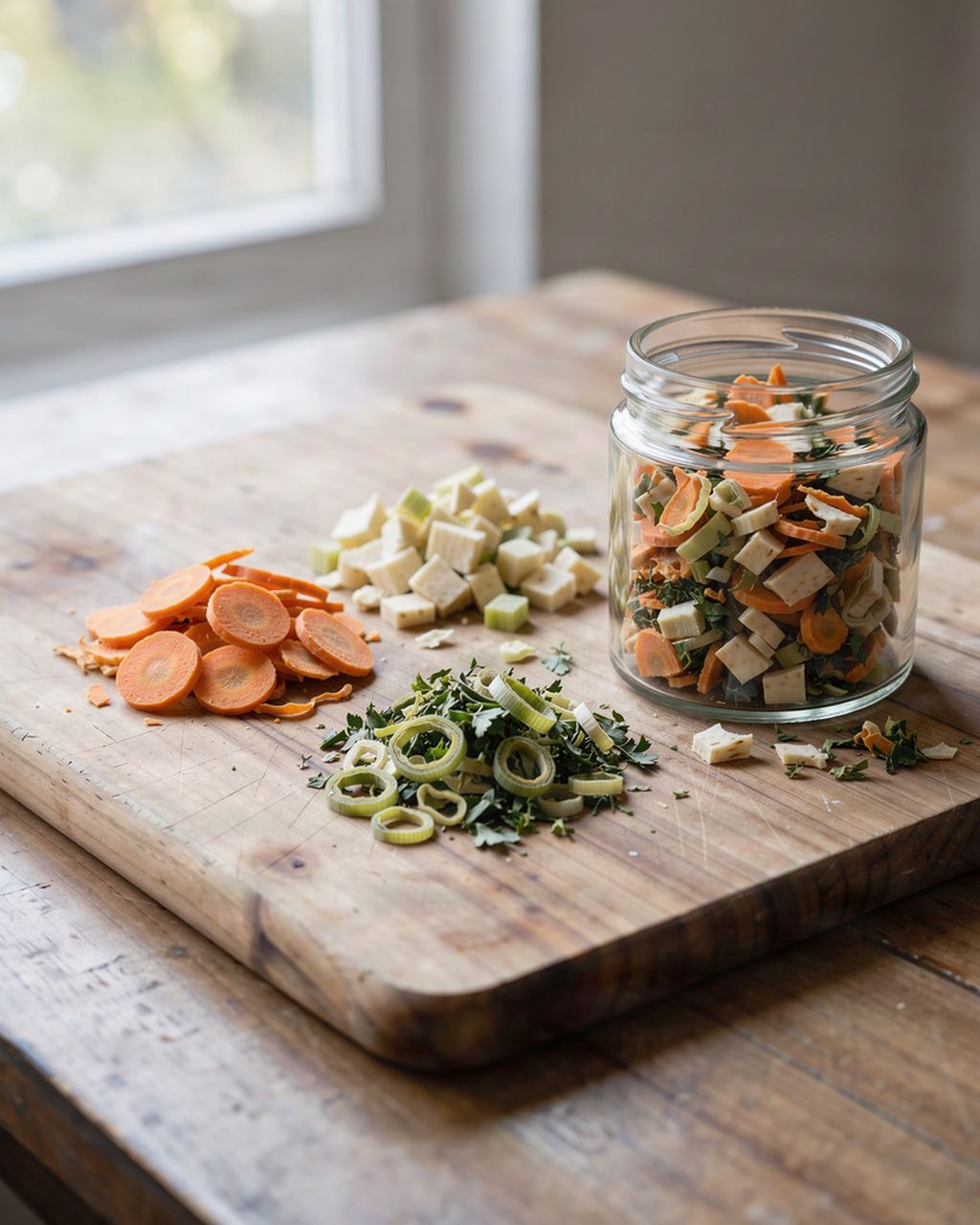
Carrots freeze brilliantly and stay firmer after thawing than most vegetables. Cut them before blanching into the shape you'll cook them in: rounds for soup, small dice for risotto. Once they're frozen, you can't cut them anymore. They're great in a thick, creamy roasted carrot soup.
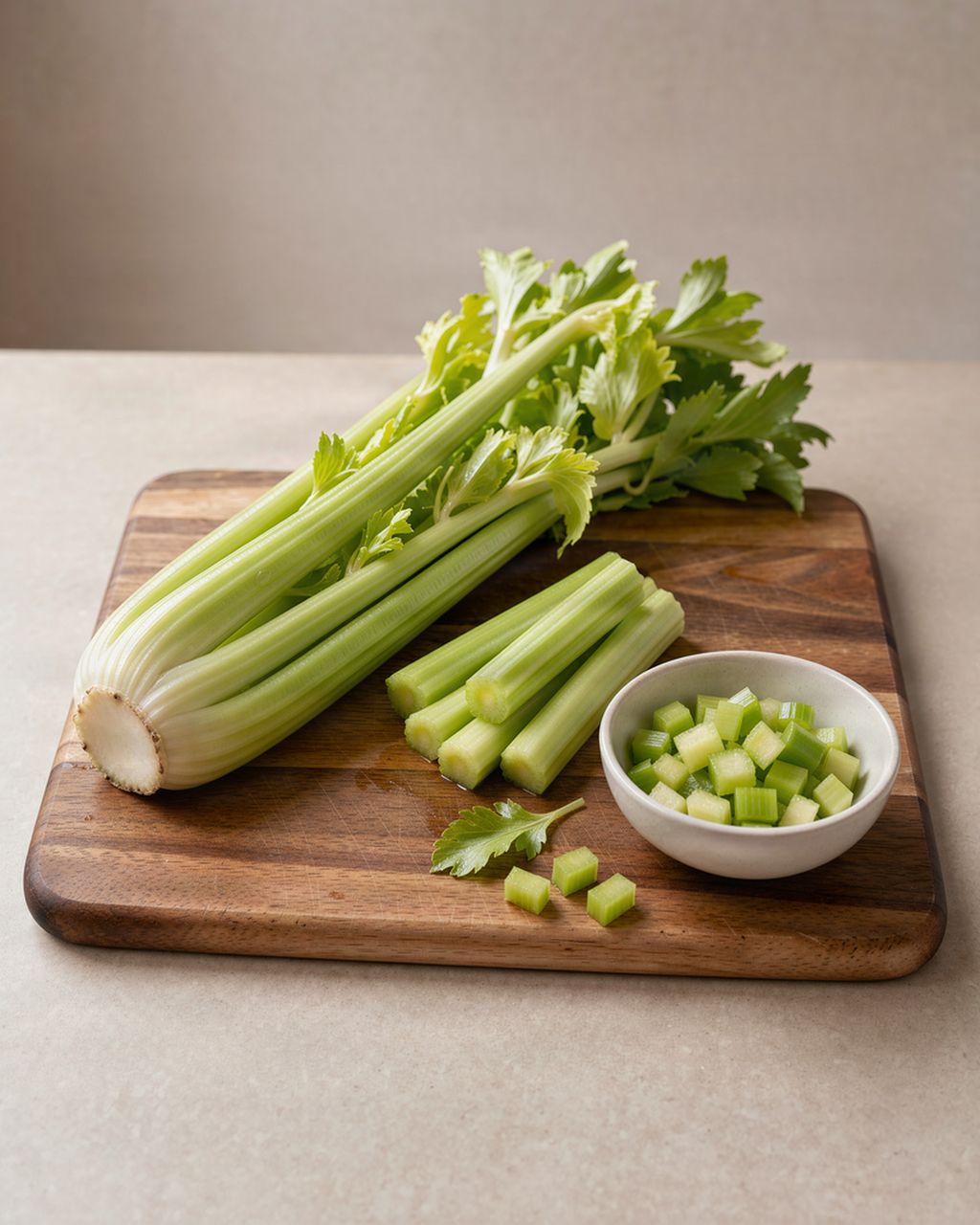
You can freeze celery, but only for cooking. NCHFP says outright that celery stalks lose their crispness in the freezer and are only good for cooked dishes. Cut celeriac into cubes, blanch it and use it in stock, sauces or a creamy roasted celeriac soup. For a celery Waldorf salad with Greek yogurt, buy it fresh.
Montana State University Extension recommends blanching celeriac for 4 minutes in 4 liters (4 quarts) of water. Add about 120 ml (½ cup) of lemon juice to the blanching water so the celeriac doesn't turn brown. Then chill it in ice water for the same length of time you blanched it.
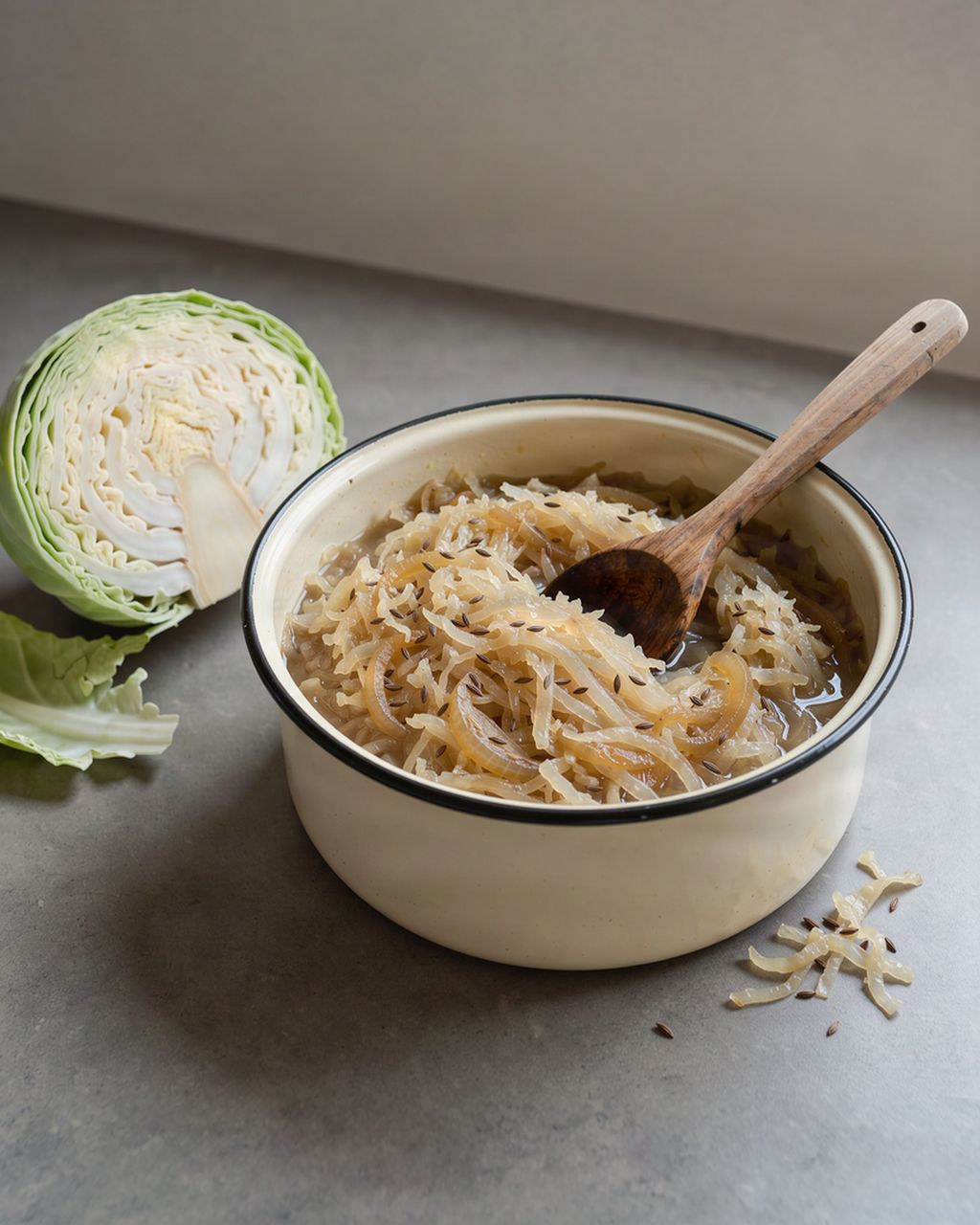
Cut cabbage before freezing and blanch it briefly: head cabbage 1½ minutes, kale 2 minutes, Brussels sprouts 3–5 minutes depending on size. Shred head cabbage into strips. Strip kale of its tough center ribs and tear it into pieces. Trim the outer leaves off Brussels sprouts and sort them by size so they all blanch evenly. Add the frozen cabbage straight to a soup, such as a soup with shredded turkey and kale, or sauté it in a pan.
White cabbage freezes in a similar way, and best of all as a finished braised dish. You'll find more in our article on how to cook and freeze braised cabbage.
Freeze leeks sliced into rounds and blanched for 2–3 minutes; from the freezer they're only good in cooked dishes such as soups, quiche and stews. Blanching is recommended by Utah State University Extension.
Leeks hide a lot of dirt between the leaves, so slice them into rounds first and only then rinse them. Put the rounds in a bowl of cold water and swish them around. The grit sinks to the bottom, so lift the leeks out by hand rather than pouring them through a colander. Then blanch, chill and dry them thoroughly.
You don't need to blanch chopped onion, garlic or scallions. Put them in the freezer raw and use them within a few months. They lose their crunch, but they still work well in cooked dishes.
According to NCHFP, you don't need to blanch chopped onion. Pack it into a freezer bag or container, leaving about 1 cm (½ in) of headspace. Or freeze it first spread out on a tray (see below) so it stays loose. NCHFP recommends using it within a few months. Whole onions need blanching for 3–7 minutes, until the center is heated through, and after that they're only good for cooking.
If you just want to store onions in the pantry, without the freezer, see our article on how to store garlic and onions.
You can freeze garlic raw, in three ways listed by Oregon State University Extension:
whole unpeeled cloves: take them out one at a time as you need them,
chopped or grated: packed tightly, ideally in a thin layer from which you can break off a piece,
blended with oil: 2 parts oil to 1 part garlic.
Frozen garlic goes soft and its flavor can change. Use it in cooked dishes and add it more cautiously. For a raw dressing or garlic toast, use fresh.
Slice scallions into rounds and freeze them raw, both the white part and the green tops. NCHFP notes that they won't be crisp and may be a little tougher, but they keep their flavor. Add them straight from the freezer to soup, eggs or a sauce. They're not suited to garnishing a finished plate, because they go limp after thawing.
Don't freeze radishes, head lettuce, cucumbers, watercress or anything you want to eat raw and crisp. NCHFP lists them among foods that don't stand up to the freezer: after thawing they go limp, release water, darken quickly and lose their aroma. Raw cabbage and celery meant for salads are on the same list.
Why is that? These vegetables are high in water and have thin cell walls. Water expands as it freezes and tears the walls, so a thawed radish ends up a watery, rubbery little ball. Even blanching won't help radishes. Buy only as many as you'll eat and keep them in the fridge.
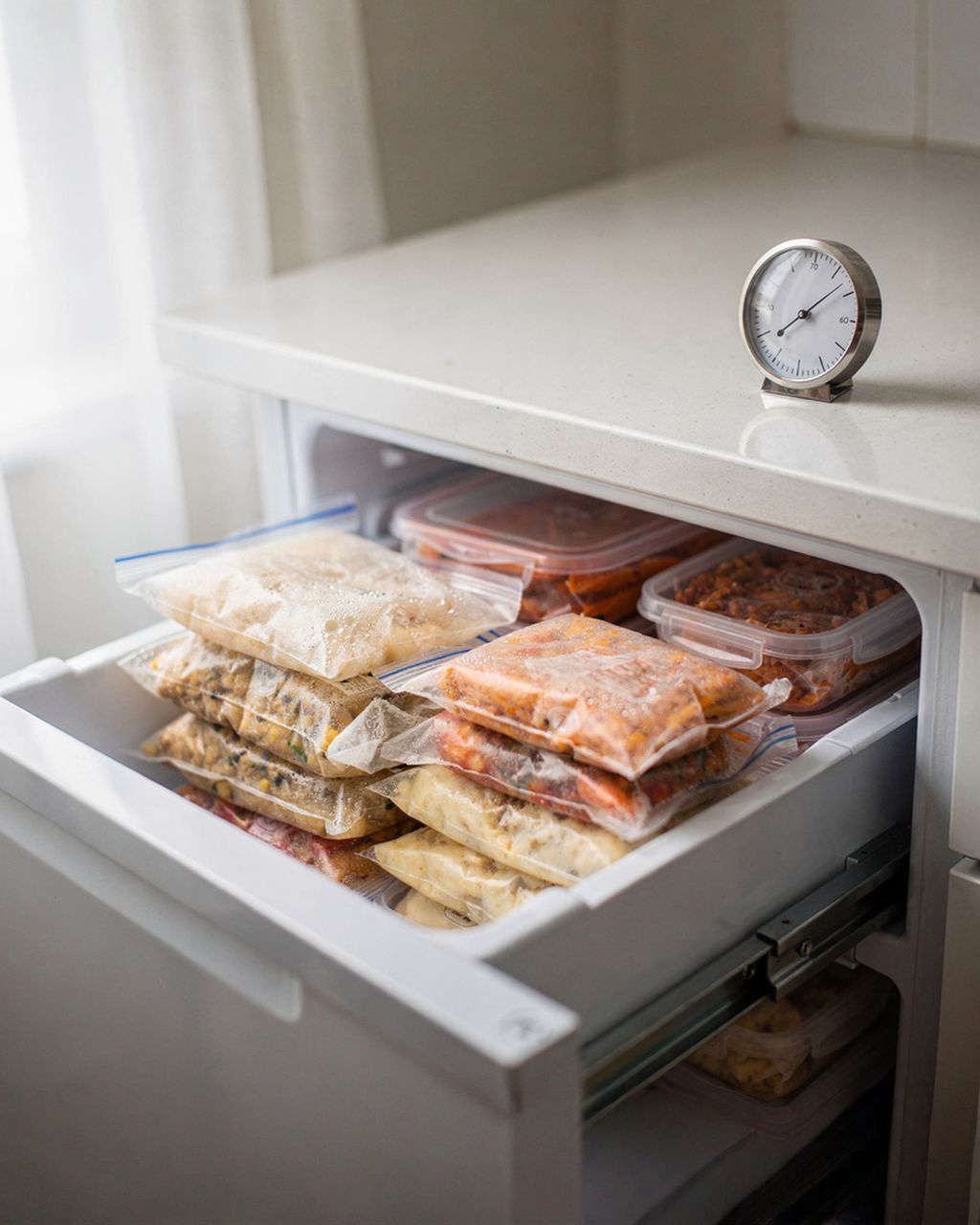
Blanched vegetables keep in full quality for 8–12 months in the freezer at −18°C (0°F), raw alliums only a few months (both NCHFP). The US food safety agency USDA/FSIS adds that food kept constantly at −18°C (0°F) stays safe. Over time it loses flavor and texture, but it doesn't spoil.
To help vegetables keep as well as possible:
Tray-freeze them first. Spread the dried pieces in a single layer on a baking sheet lined with parchment paper and put them in the freezer for 1–2 hours. Only then tip them into a bag. They stay loose and you can take out just a handful.
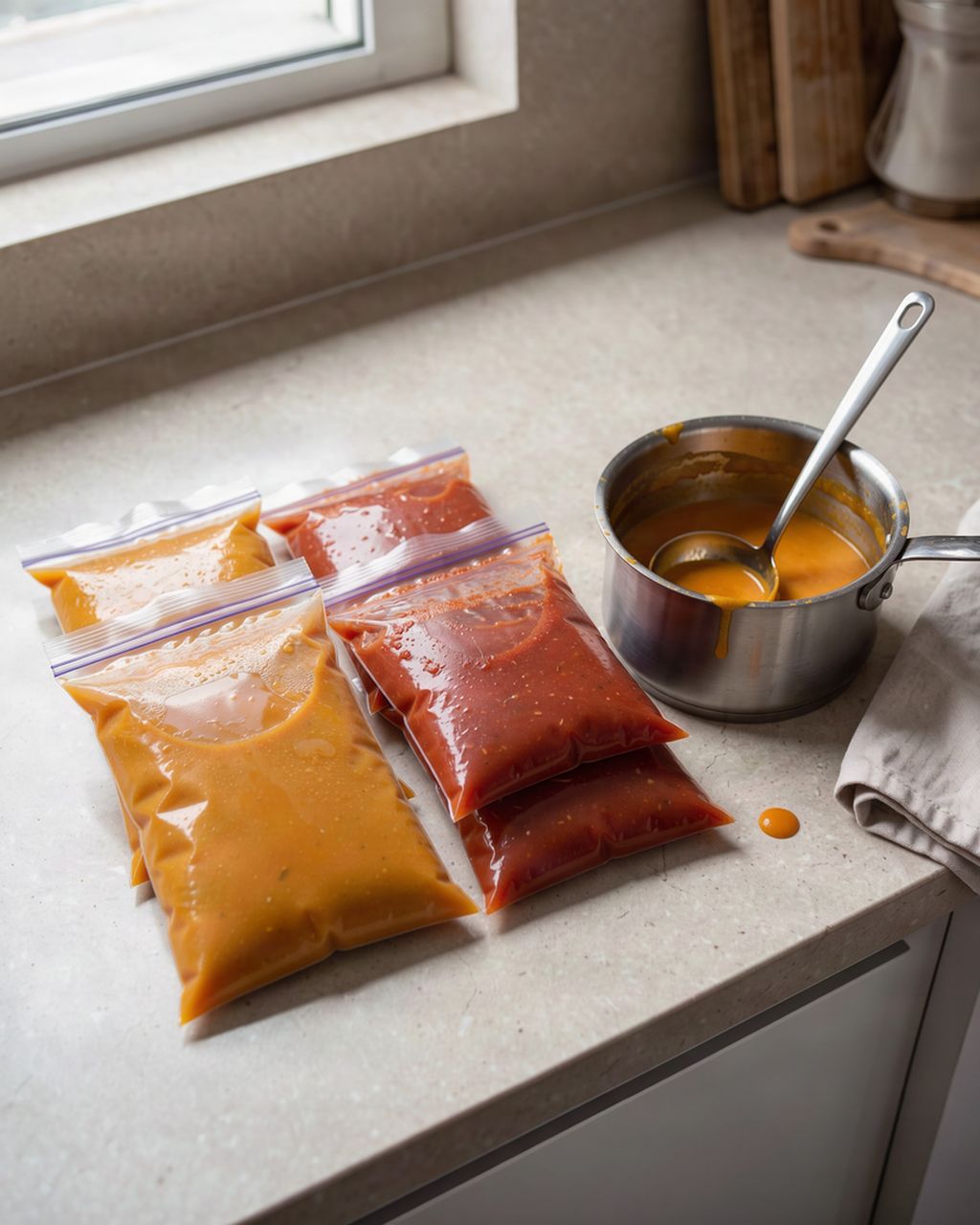
Press out the air. Air in the bag causes freezer burn, those dry grayish-white patches. Squeeze the bag flat, or seal it with a vacuum sealer.
Pack in portions. Put in each bag only as much as you'll use at once.
Label it. Write the vegetable and the date on it. In six months you won't be able to tell leeks from scallions.
Double-wrap onion and garlic. Otherwise their smell creeps into your ice cream and ice.
For how long other foods keep and how to pack them, see our article on storing food in the freezer.
Don't thaw frozen vegetables; put them straight into the pot or pan. Thawing on the counter would make them release water and go even limper. Because they're already blanched, they cook faster than fresh, so add them to soup toward the end. In a pan, add them to hot fat and in small batches so they brown rather than stew in their own juices.
Potatoes and broccoli freeze in a similar way. You'll find them in our articles broccoli and cauliflower: how to cook, store and freeze them and cooked potatoes: can you freeze them?.
Yes, you can freeze braised carrots like any other cooked dish. According to USDA/FSIS, get them into the fridge within 2 hours of cooking. They keep 3–4 days in the fridge and hold their quality for 3–4 months in the freezer at −18°C (0°F). Freeze them in a flat container or bag and reheat straight from frozen in a pan with a little butter. They'll be a bit softer than freshly made ones.
Whole, unwashed leeks keep their best flavor in the fridge for 7–10 days (SDSU Extension). Wrap them loosely in a bag and put them in the vegetable drawer. The same source says they can last a month, but they gradually lose quality. Wash them only right before cooking, and use sliced leeks as soon as you can.
You can refreeze thawed vegetables if they thawed in the fridge. According to USDA/FSIS this is safe, but the vegetables release more water with every thaw and get even softer. Don't refreeze vegetables that have sat outside the fridge for more than 2 hours. The safest route is to cook the thawed vegetables and freeze the finished dish instead.
Freezer-burned vegetables show dry, grayish-white or faded patches and ice crystals on the surface. According to USDA/FSIS, freezer burn doesn't make vegetables unsafe, it just dries out the flavor and texture in the affected spots. Cut off or throw away heavily affected pieces, and use the rest in a soup or stew, where the change in texture doesn't matter.
You can freeze cabbage without blanching, but it's not worth it if you want to store it for months. Without scalding, enzymes keep working in the cabbage, so it gradually loses flavor, color and texture. Blanching takes 1½ minutes for shredded cabbage and 2 minutes for kale (NCHFP), and the cabbage then keeps 8–12 months in the freezer at −18°C (0°F).
One recipe worth heating the oven for, one tip, and one deal from the shop. Nothing else.