How to Dry Mushrooms at Home: Temperatures, Times & Storage
Dried Soup Vegetables: How to Dry Them in the Oven or a Dehydrator
Updated Nov 17, 2026
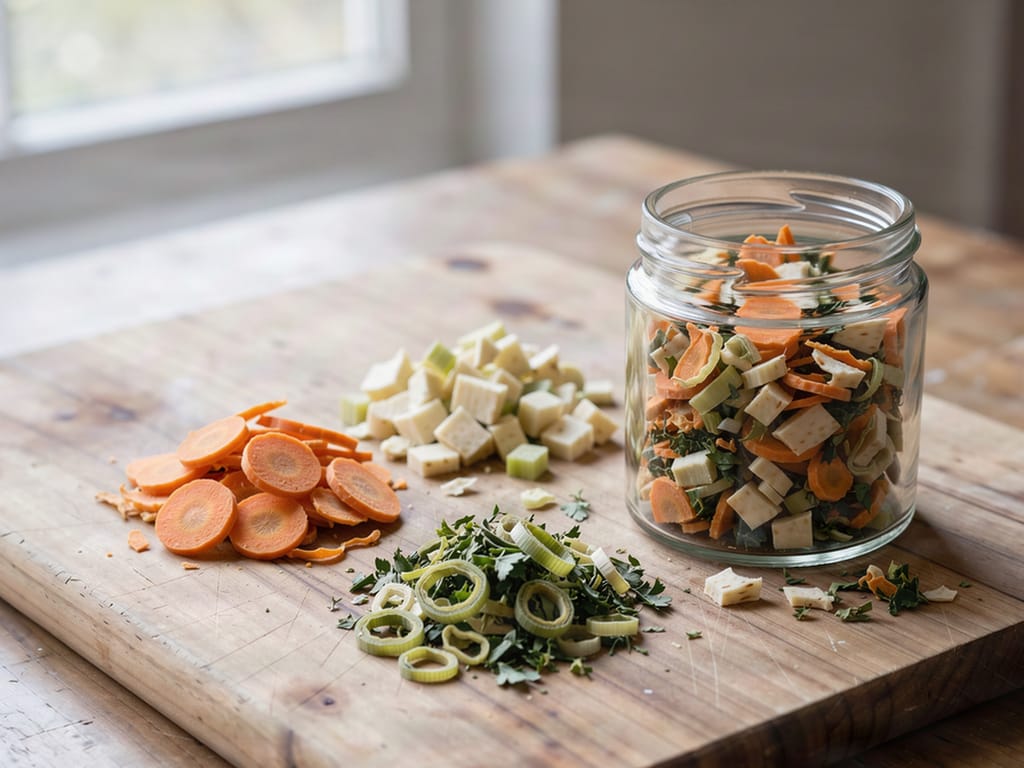
Dry soup vegetables at about 60°C (140°F), cut into slices 3–6 mm (about 1/8–1/4 inch) thick, until they're brittle and snap when bent. In a dehydrator, carrots take about 10–12 hours; in an oven with the door ajar, up to twice as long. Then seal them in a dry, airtight jar and keep it somewhere cool and dark. Below you'll find temperatures and times for each vegetable, which ones to blanch and which not to, and how to build your own soup mix.
Dry vegetables at 60°C (140°F), the temperature the US National Center for Home Food Preservation (NCHFP, funded by the USDA) and related university guides give as optimal. The times below come from Montana State and North Dakota State University guides and apply to an electric dehydrator; in the oven, allow up to double.
Carrots – slices or sticks about 3 mm thick, blanch 3½ minutes, dry 10–12 h; done when tough to brittle.
Celery stalks – slices, blanch 2 minutes, dry 10–16 h; they must be very brittle.
Onion – slices 3–6 mm, no blanching, dry 3–9 h; very brittle.
Garlic – peeled, finely chopped, no blanching, dry 6–8 h; brittle.
Zucchini – 6 mm rounds, blanch 1½ minutes in boiling water (2½–3 minutes in steam), dry 10–12 h; leathery to brittle. It's the least suited to soup, though, as it tends to be bland once dried.
Parsley leaves – separated into sprigs, no blanching, dry 1–2 h; brittle and crumbly.
These tables don't list celeriac and parsley root, leeks or celery leaves separately. Treat the roots like carrots, leeks like onion and celery leaves like parsley, and for all of them the brittleness test decides, not the kitchen timer.
Seasonal baking plans, tested recipes and kitchen tricks that save you time. Unsubscribe in one click.
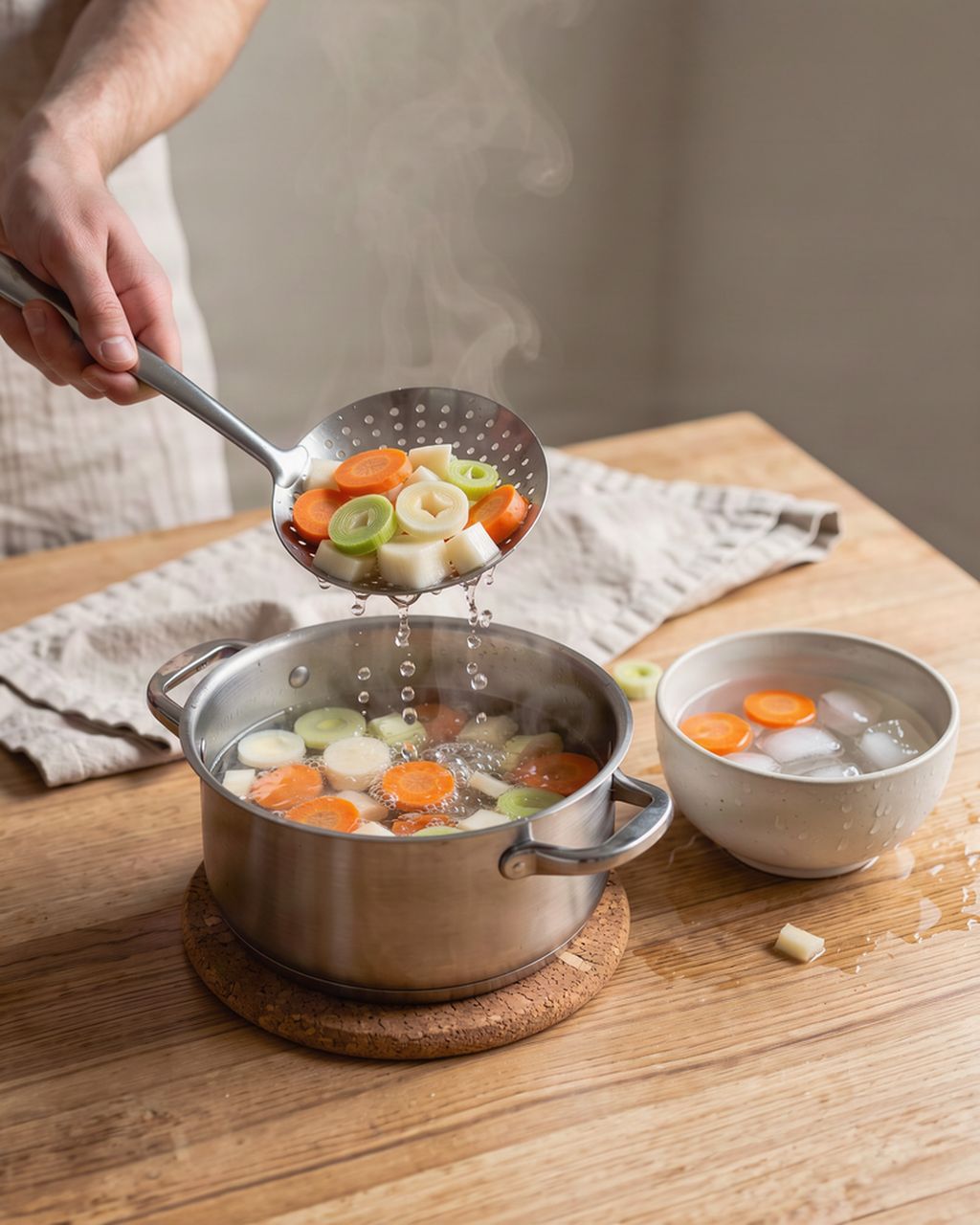
Blanch root vegetables, celery stalks and zucchini; don't blanch onion, leeks, garlic or herbs. According to NCHFP, a brief scald stops the enzymes that would otherwise rob the vegetables of color and flavor during drying and storage, and it shortens both the drying and the later cooking in soup.
Bring water to a boil, add the vegetables and start timing only when the water returns to a boil.
When time is up, drain them and chill right away in cold water so they don't overcook.
Dry them thoroughly with a kitchen towel. Every drop on the surface means an extra hour of drying.
Cut evenly. Thin and thick slices on the same tray will never finish drying at the same time: the thin ones scorch while the thick ones stay moist inside.
In a dehydrator, spread the vegetables in a single layer, set it to 60°C (140°F) and let it run until they're brittle. It's the most reliable method: the temperature holds and the fan carries the moisture away.
Slices must not overlap; leave a small gap between them.
Give each type its own tray. Carrots take longer than herbs, so you can take finished trays out as you go.
Rotate the trays during drying (bottom to top) unless your dehydrator blows air from the side; follow the manufacturer's instructions.
Ideally dry onion, leeks and garlic separately, otherwise their smell soaks into everything else.
In the oven, dry at 60°C (140°F) with the door propped open 5–15 cm (2–6 inches) so the moisture has somewhere to escape, as Montana State University's guide advises. The oven has to hold this low temperature; check it with a thermometer placed on the rack.
Spread the vegetables in a single layer on a baking sheet lined with parchment paper, or directly on the rack.
Turn on the convection fan if you have one. Without air circulation, vegetables steam more than they dry.
Allow up to double the time of a dehydrator, and more energy.
If the oven can't hold 60°C and runs much hotter, you're roasting the vegetables rather than drying them: the surface hardens while moisture stays inside. In that case a dehydrator is more reliable.
Watch the end of drying. Garlic and onion on a baking sheet can easily go from brittle to scorched, and then they turn bitter.
Finished vegetables are brittle: a carrot slice snaps when bent and herbs crumble between your fingers. According to university extension guides (for example Clemson University), about 10% water remains at this stage, which is too little for microorganisms to multiply. Vegetables contain fewer acids than fruit, so you dry them further, until crisp rather than leathery.
Test a slice only after it has cooled; a warm one bends even when it's done. If a cooled slice still bends without snapping, put the tray back.
Store them in dry, tightly sealed jars in a cool, dry, dark place. NCHFP recommends canning jars or freezer containers and bags; glass is best because you can see right away whether any moisture has got in.
How long they keep (according to NCHFP and Clemson University, at room temperature):
about 6 months at 16°C (61°F) (a cool pantry or cellar),
about 3 months at 27°C (81°F) (a warm kitchen above the stove).
According to the same source, dried fruit keeps about a year at 16°C and half a year at 27°C, so vegetables last about half as long as fruit. For that reason, don't put jars above the stove or next to the oven. Fill smaller jars instead, so you don't air out the whole supply every time you open one. For the first week, look at them every day: condensation reveals an underdried batch before mold sets in.
The base of a classic soup mix is carrot, celeriac and parsley root, leek and onion, topped up with leaves. A ratio of roughly 2 parts carrot, 1 part celeriac, 1 part parsley root, 1 part leek and ½ part onion works well, plus a handful of parsley or celery leaves. Add garlic only to the individual pot; in a mix it quickly overpowers everything else.
For broths and soups, add the mix straight to the boiling liquid, 2–3 tablespoons (about 10–15 g) per 1 liter. It softens during cooking. For clear beef broth, add it in the last 40 minutes of cooking.
For a quick cup of soup, dried vegetables are exactly what makes a homemade instant soup with dried vegetables taste good.
For vegetable and potato soups, try it in milk-based potato soup or chestnut vegetable soup when you happen to run out of fresh root vegetables.
Ground to a powder, it becomes a homemade vegetable seasoning. Add salt only to taste in individual dishes.
Soup made from dried vegetables tends to be thinner. If you want it thicker, thicken it at the end with a roux or mash a cooked potato into it.
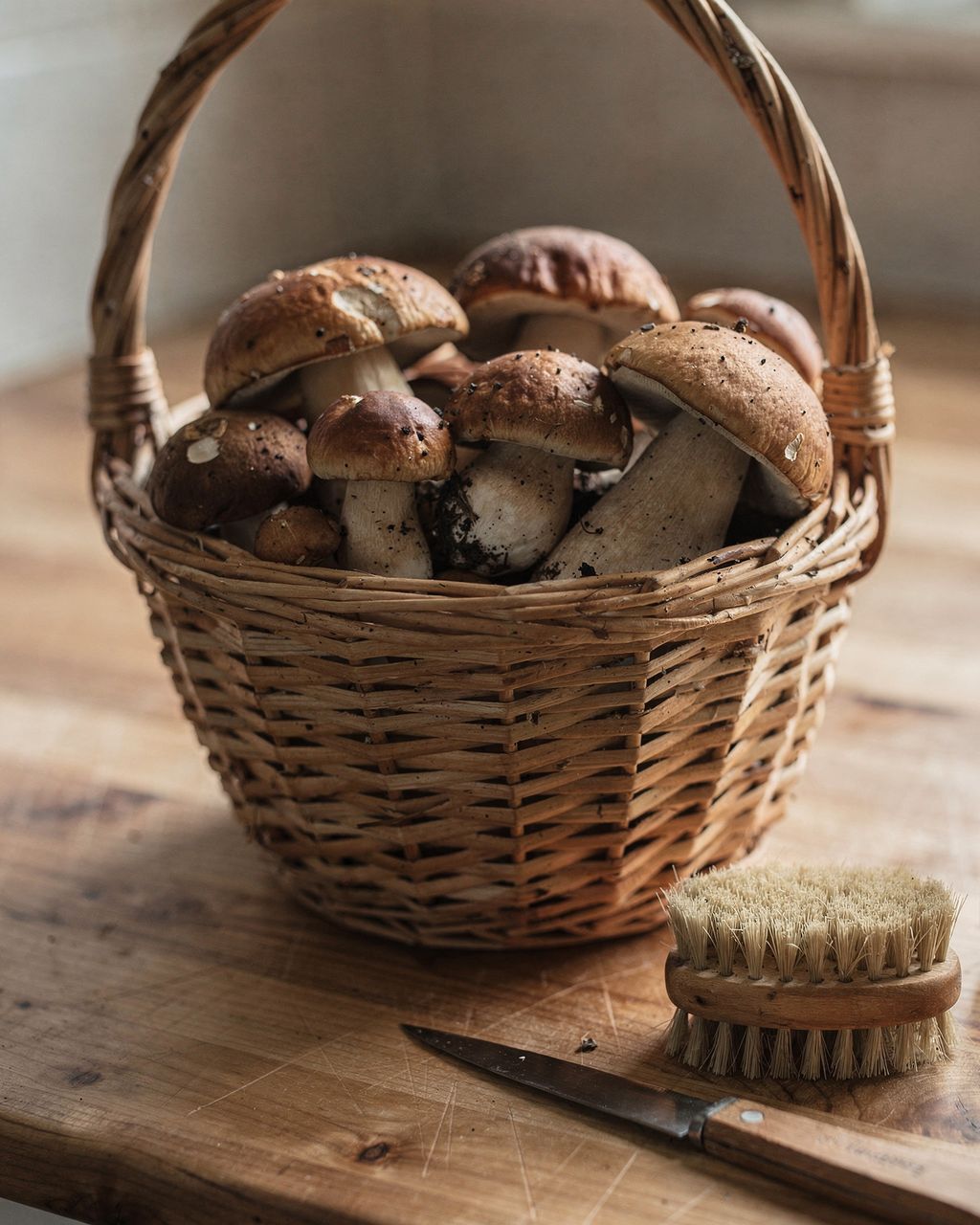
Besides vegetables, the best things to dry at home are mainly mushrooms, fruit and herbs. The method is similar; only the times and the doneness test differ. Porcini and other mushrooms are covered in how to dry mushrooms at home: temperatures, times and storage, and fruit with no added sugar in how to preserve summer fruit without sugar: freezing, drying and fermenting. Dry herbs the same way as parsley leaves. And if you have fresh garlic and onions left over, read how to store garlic and onions so they don't sprout.
Dry onion on its own, in a separate batch from the other vegetables. In a closed dehydrator its aroma spreads to everything around it, so carrots or herbs end up tasting of onion. Ideally put the dehydrator on a balcony or by an open window, and wash the trays afterward. Cut the onion into slices 3–6 mm thick, don't blanch it, and dry at 60°C (140°F) until brittle (about 3–9 hours according to university guides based on NCHFP/USDA).
Dry garlic in the oven at about 60°C (140°F) and check it more often toward the end, because scorched garlic turns bitter. Peel it, then finely chop it or cut it into thin slices, spread it in a single layer and leave the oven door slightly ajar. It's done when it's brittle and still a pale cream color. Once it browns, it tastes bitter and is no longer good for soup.
You can dry celery leaves in the oven at a low temperature, or tie them in small bunches and hang them in a dry, airy, dark place. In the oven they dry quickly, much like parsley leaves (1–2 hours in a dehydrator according to NCHFP-based guides), so keep an eye on them. They're done when they crumble between your fingers. Then store them in an airtight jar.
Slit the leek lengthwise, rinse it, slice it into rounds and dry without blanching at 60°C (140°F) until brittle. The light green part is fine too. Dry it thoroughly before slicing so the drying doesn't drag on. Save the dark, tough leaf ends for stock, since they stay leathery when dried. Put the green and white parts on separate trays, as the green dries faster.
From 1 kg of trimmed root vegetables, onion or leek you get roughly 100–200 g dried, and from celery stalks only about 50–60 g. Fresh vegetables are around 80–95% water, and drying brings that down to roughly 10%. Go by the trimmed weight: peels and offcuts will lower the yield from the vegetables you actually bought.
One recipe worth heating the oven for, one tip, and one deal from the shop. Nothing else.