How to Store Arugula and Salad Greens So They Don't Wilt
Celery: How to Store, Freeze, Cook and Substitute It
Updated Nov 17, 2026
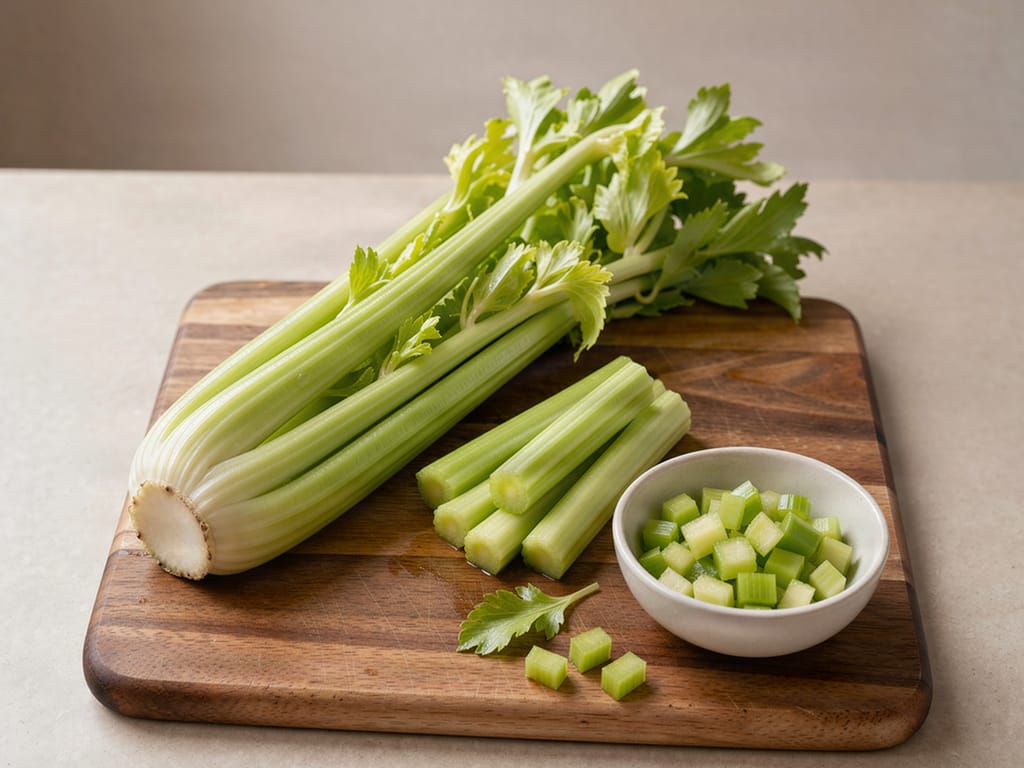
Celery keeps 1–2 weeks in the fridge and 10–12 months in the freezer (per the USDA FoodKeeper charts). It stays crisp if you wrap it and keep it from drying out. You can freeze it, but it turns soft once thawed, so it's only good for cooking. Below you'll find how to store it, how to blanch it before freezing, how to cook it, and what to use instead in a soup or sauce.
Celery belongs in the fridge, wrapped and kept in the crisper drawer. According to the USDA FoodKeeper charts, it keeps 1–2 weeks in the fridge. USDA/FSIS recommends keeping your fridge at 40°F (4°C) or below. At room temperature, celery wilts within a day because it loses water quickly.
What works:
Whole bunch, unwashed, wrapped. Don't break off stalks until you need them. Wrap the bunch in aluminum foil or a kitchen towel and put it in a loose bag. The goal is to keep it from drying out without letting it suffocate in its own moisture.
Wash it just before using. Water that stays trapped between the stalks speeds up rot at the base of the bunch.
Keep cut sticks in water. Stand them in a jar or container of clean cold water, cover it and refrigerate. They stay juicy and crisp, so you can serve them with a dip right away. Change the water every day.
Keep it away from apples and pears. Ripening fruit gives off ethylene, which can make celery turn yellow when it's warm. In a cold fridge this is less of a risk.
Snap off the leaves and use them separately. They wilt sooner than the stalks. Use them as an herb in broth, salad or pesto.
Check celery before using it. A limp but otherwise healthy stalk is fine. A slimy surface, an unpleasant smell or rot at the base of the bunch means it belongs in the compost.
Ice water will revive limp celery. Trim a little off the bottom of the stalks, submerge them in a bowl of ice water and leave them for 15–30 minutes, or up to about 1 hour for very limp stalks, until they firm up again. The cells draw water back in and the stalk crunches again.
This only works for celery that has lost water. Slimy or smelly celery can't be saved.
Seasonal baking plans, tested recipes and kitchen tricks that save you time. Unsubscribe in one click.
Yes, you can freeze celery, but only for cooking. According to the National Center for Home Food Preservation (NCHFP), freezing makes celery lose its crispness, so thawed celery is only good for hot dishes. Don't freeze it for salads or dipping.
The NCHFP method:
Choose firm, tender stalks without tough strings and wash them thoroughly.
Cut them into pieces about 1 inch (2.5 cm) long.
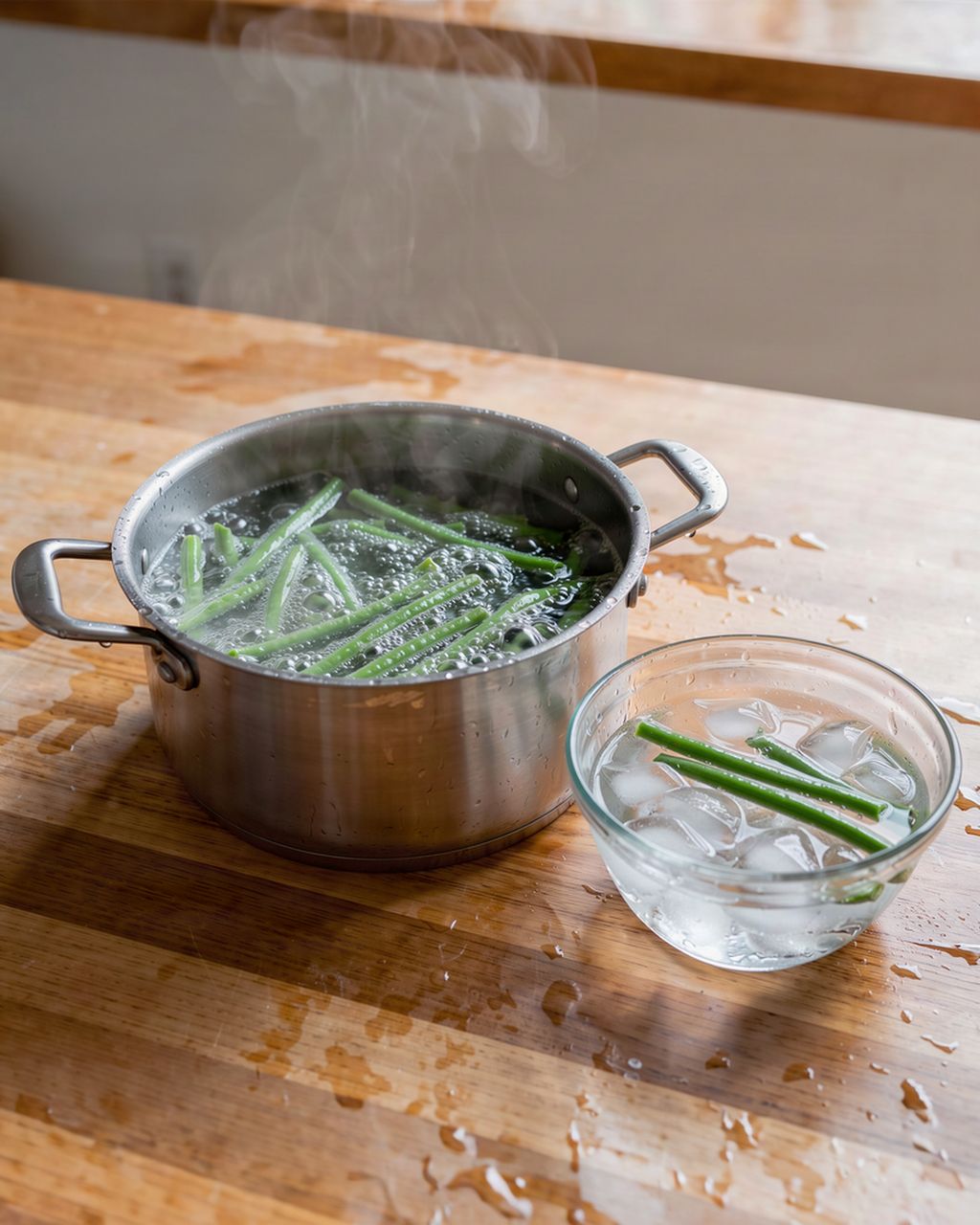
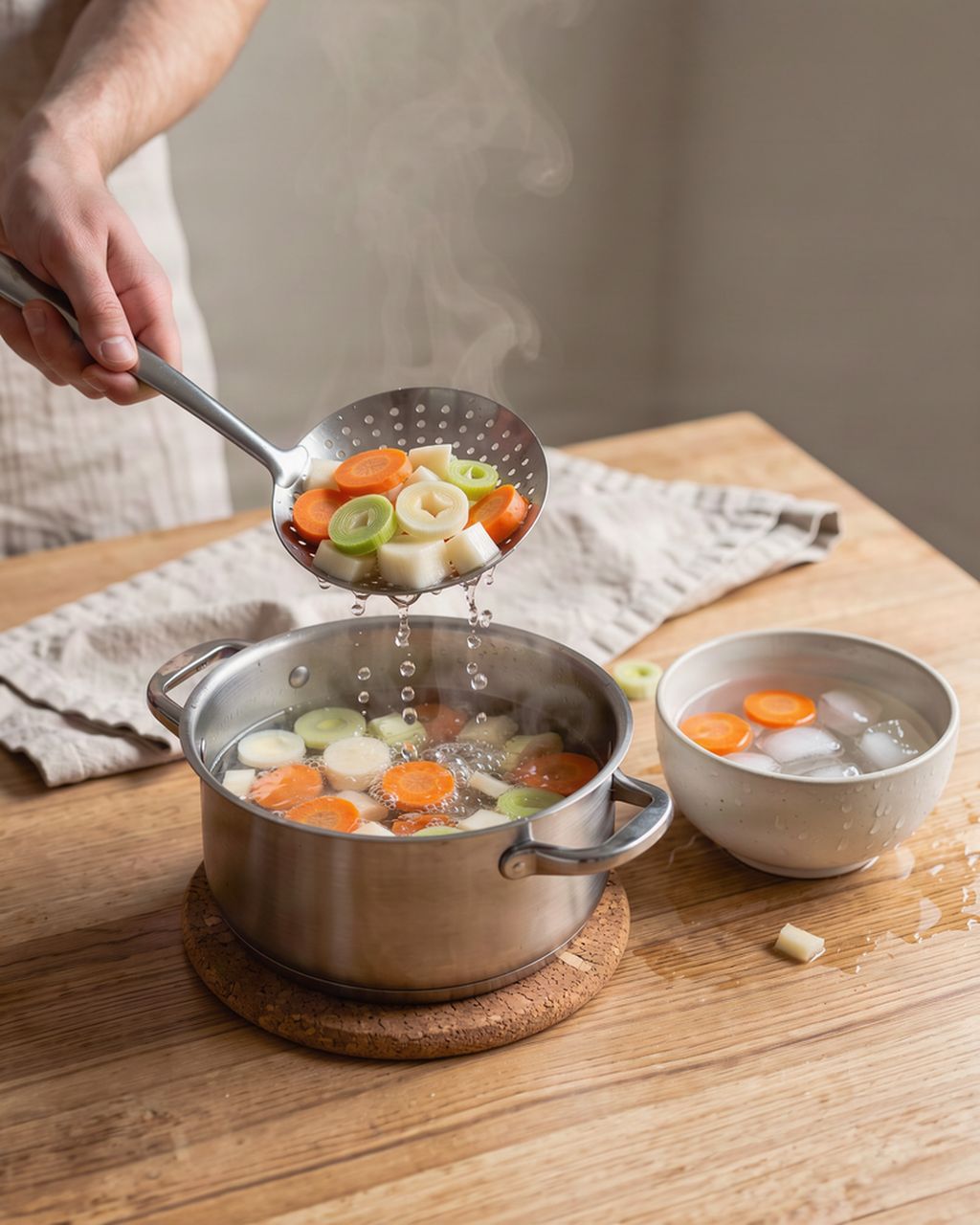
Blanch them for 3 minutes in boiling water. Blanching stops the enzymes that would otherwise make celery lose flavor, color and texture in the freezer.
Cool them right away in ice water and drain well.
Pack them into bags or containers with no air space, seal and freeze.
In the freezer at 0°F (−18°C), the temperature USDA/FSIS recommends, celery keeps 10–12 months according to the USDA FoodKeeper. After that it's still safe, just gradually losing flavor.
Don't thaw frozen celery. Add it straight to the pot. As it thaws, water seeps out and it turns rubbery. It's worth freezing it already diced, together with carrot and onion, as a ready-made base for soups and sauces.
You can cook celery in four ways:
sweat it as a sauce base
simmer it in broth
braise it as a side dish
blend it into a creamy soup
Always start the same way: pull the tough strings off the outer stalks with a vegetable peeler. Even long cooking won't soften them, and they'd stay in the finished dish as tough threads.
Sweated as a base. Finely dice celery, carrot and onion and cook them slowly in oil or butter. They're done when the onion turns translucent and the celery softens and smells sweet. This trio is the Italian soffritto, the base for dishes such as bolognese sauce (sugo bolognese) or pork ragù braised in red wine.
In broth. Add large pieces of stalk and the leaves straight to the pot along with the rest of the vegetables. Celery gives broth a fresh, slightly salty flavor. Fish it out at the end, because it has given up everything it had. It works well in chicken broth with meat and mushrooms.
Braised as a side. Cut the stalks into longer pieces, brown them briefly in butter, add some broth and braise under a lid for about 10–15 minutes. They're done when a knife slides through with no resistance. At the end, reduce the pan juices uncovered so the stalks stay glossy. Braised celery goes well with roast meat and fish.
Creamy soup. Cook celery with potato in roughly a 2:1 ratio until tender and blend. If you haven't pulled off the strings beforehand, pass the soup through a sieve to make it smooth.
Add celery leaves at the end. Heat quickly dulls their aroma, so stir them into the finished dish or sprinkle them on top like fresh herbs.
The best substitutes for celery in soup and sauce are celeriac, fennel, leek, parsley root with its leaves, lovage or celery seeds. Which one to choose depends on whether you want mainly the flavor of celery or its crunch too.
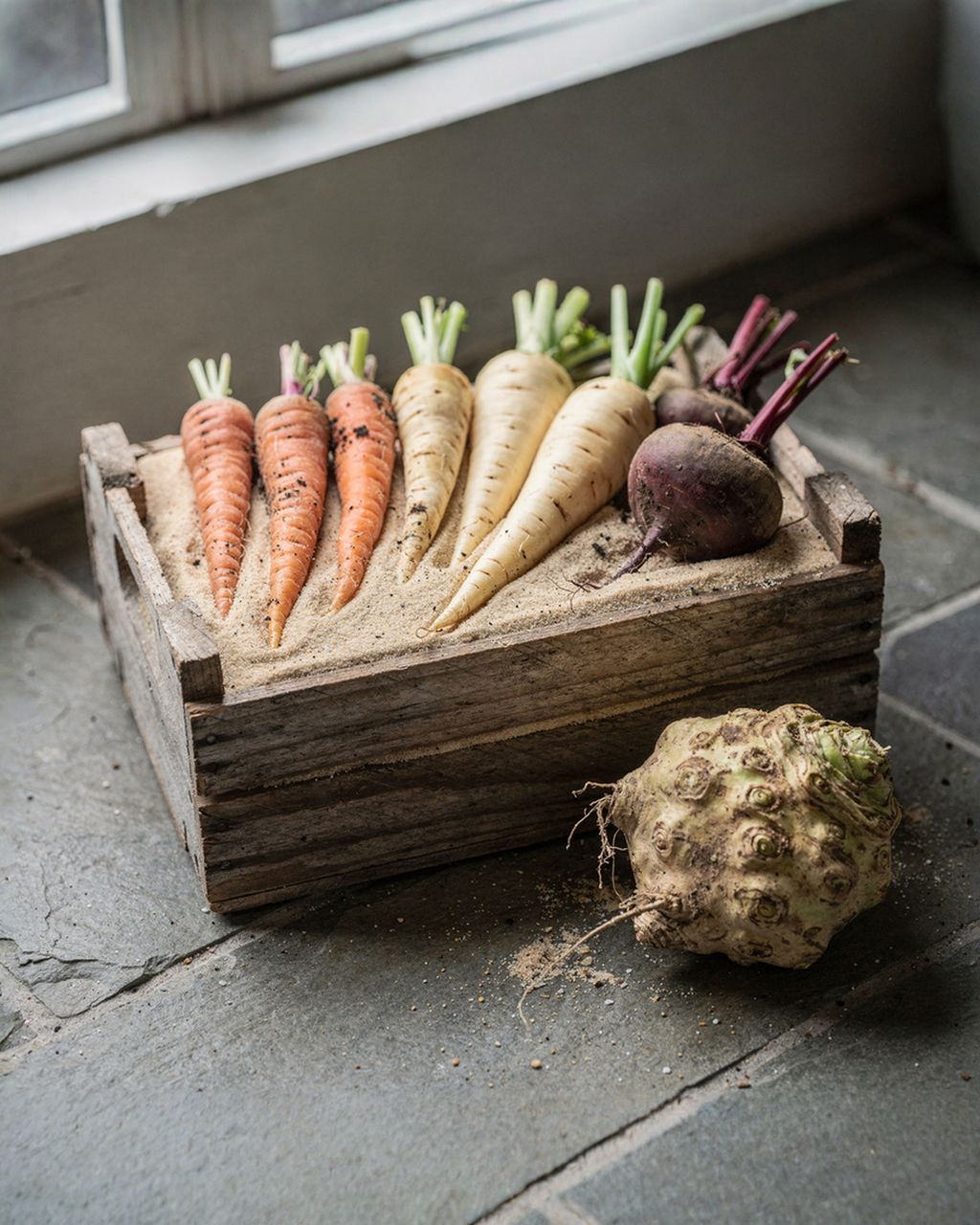
Celeriac. Tastes almost the same, just denser and stronger. Cut it into smaller dice and use about a third less. You'll find how to store celeriac over the winter in the article on storing root vegetables.
Fennel. Similarly juicy and crisp, so it works in place of raw celery too. It has a mild anise note that fades with cooking.
Leek (white part). In soffritto and broth, it gives a similar mild vegetable flavor, just without the celery note.
Parsley root and parsley leaves. The root adds sweetness and the leaves a fresh green aroma. Best in broth.
Lovage. Tastes very similar but is much stronger. A few leaves are enough for a whole pot.
Celery seeds or celery salt. They add celery flavor without the vegetable. If you use celery salt, salt the dish itself less.
For raw celery in a salad or with a dip, use something else crunchy: kohlrabi, cucumber, radishes or fennel.
If you have extra celery in the fridge, you don't have to hunt for a recipe. A classic where celery plays the lead is celery Waldorf salad with Greek yogurt. For bread, you can make a celery spread.
Yes, celery leaves are edible and work well as an herb in broth, salad or pesto. They wilt sooner than the stalks, so snap them off and use them separately. In cooked dishes, add them at the very end, because heat quickly dulls their aroma.
You can freeze celery without blanching, but it loses flavor, color and texture faster in the freezer. That's why the NCHFP recommends blanching celery for 3 minutes before freezing. Only freeze unblanched celery for dishes you'll cook.
Celery doesn't need peeling. Just pull the tough strings off the outer stalks with a vegetable peeler. Even long cooking won't soften them, and they'd stay in the finished dish as tough threads.
Celery is cooked when a knife slides through with no resistance and a fork pierces it easily. In a soffritto, it's done when it turns soft and sweet. If tough strings are left on it, pull them off with a peeler next time before cooking.
Leave celery out completely and choose a substitute based on what the allergic person can safely tolerate. Check this with them or their doctor. Celeriac and celery salt are not safe, because they are celery, and bouillon often contains it, so always read the ingredients. Be careful with lovage, fennel, carrot, parsley and bell pepper too: in sensitive people, especially those allergic to mugwort or birch pollen, they can trigger a cross-reaction.
One recipe worth heating the oven for, one tip, and one deal from the shop. Nothing else.