Apple, spinach and caramelized onion quesadilla
How to Store Garlic and Onions So They Don't Sprout
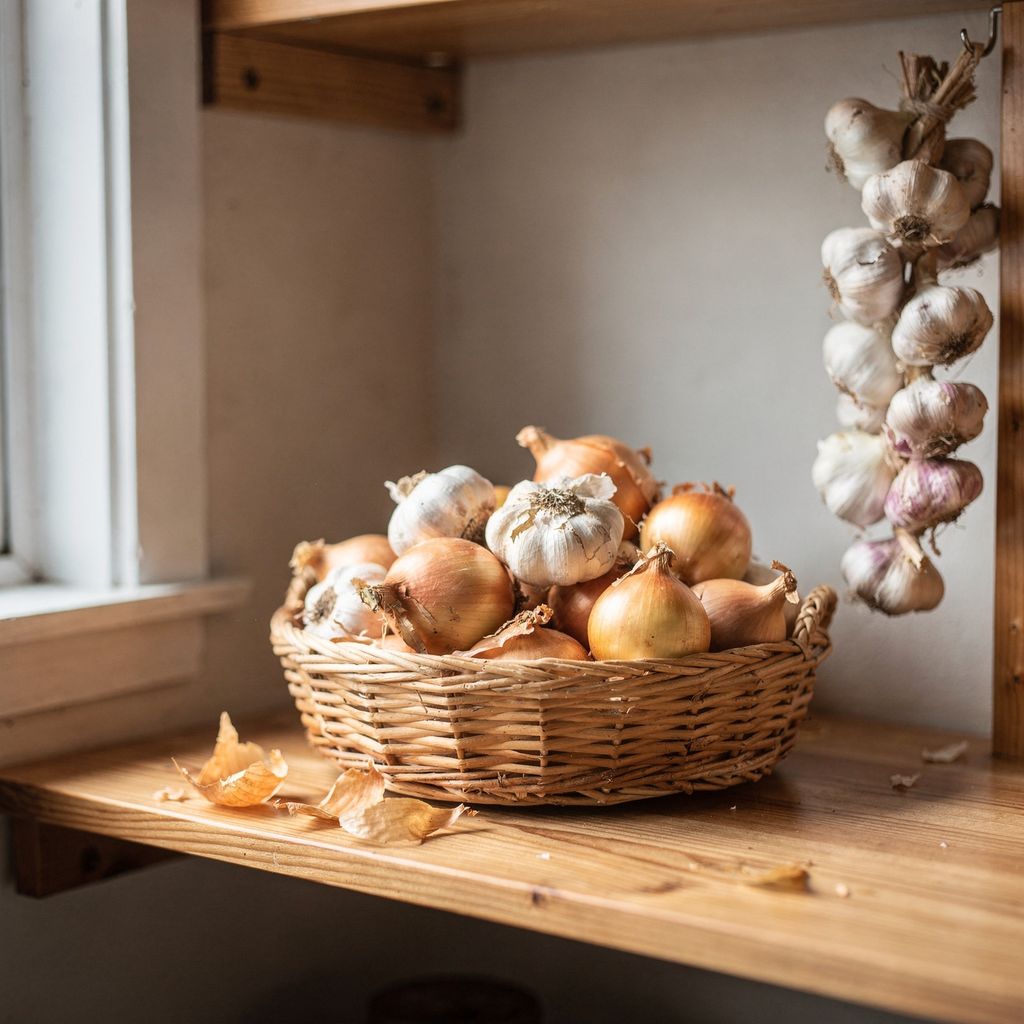
Updated Sep 25, 2026
Garlic and onions keep best whole, dry and unpeeled in a cool, dark, airy spot – ideally around 0°C/32°F (as close to freezing as possible without actually freezing) with humidity around 60–70%, or at least in the coldest corner of your pantry, away from the fridge and far from potatoes. Sprouting kicks in above roughly 5°C/41°F (garlic sprouts fastest between 5–18°C/41–64°F, onions up to 25°C/77°F) and moisture. Keep them out of those conditions and they'll last weeks to months.
Garlic and onions sprout because they're storage organs of the plant that simply "sleep" after harvest – and warmth combined with moisture signals to them that it's time to grow. That dormancy lasts a different length of time depending on the variety, and your job is to stretch it out for as long as possible.
According to post-harvest research from the University of California, Davis, garlic sprouts fastest at moderate temperatures of roughly 5–18°C (41–64°F). That's exactly the range most cellars sit at in autumn, as well as fridges and cooler pantries. Sprouting slows down near 0°C (32°F) and, oddly enough, also in warmth above 25°C (77°F), though there it dries out faster instead.
The second trigger is humidity. Above roughly 70% relative humidity, onions start putting out roots, sprouting and going mouldy. That's why they belong in dry air, not a sealed bag.
Store onions and garlic somewhere cool (as close to 0°C/32°F as possible), dry (60–70% humidity), dark, with air circulating around them – a cellar, an unheated pantry, or the coldest corner of your kitchen cupboard. In practice, that boils down to four things:
Cool – ideally around 0°C/32°F, definitely below 5°C/41°F (a dry cellar, unheated pantry, or a garage that doesn't freeze), otherwise the coldest spot in your home.
Dry – relative humidity around 60–70%.
Dark – mainly because a dark spot also tends to be cooler and more stable.
Airflow – a net bag, wicker basket, perforated paper bag, or wooden crate. Never plastic.
In an average home at 20°C/68°F, whole onions and garlic usually last a few weeks. In a genuinely cold, dry cellar, that stretches to months – well-cured garlic can easily make it through to spring.
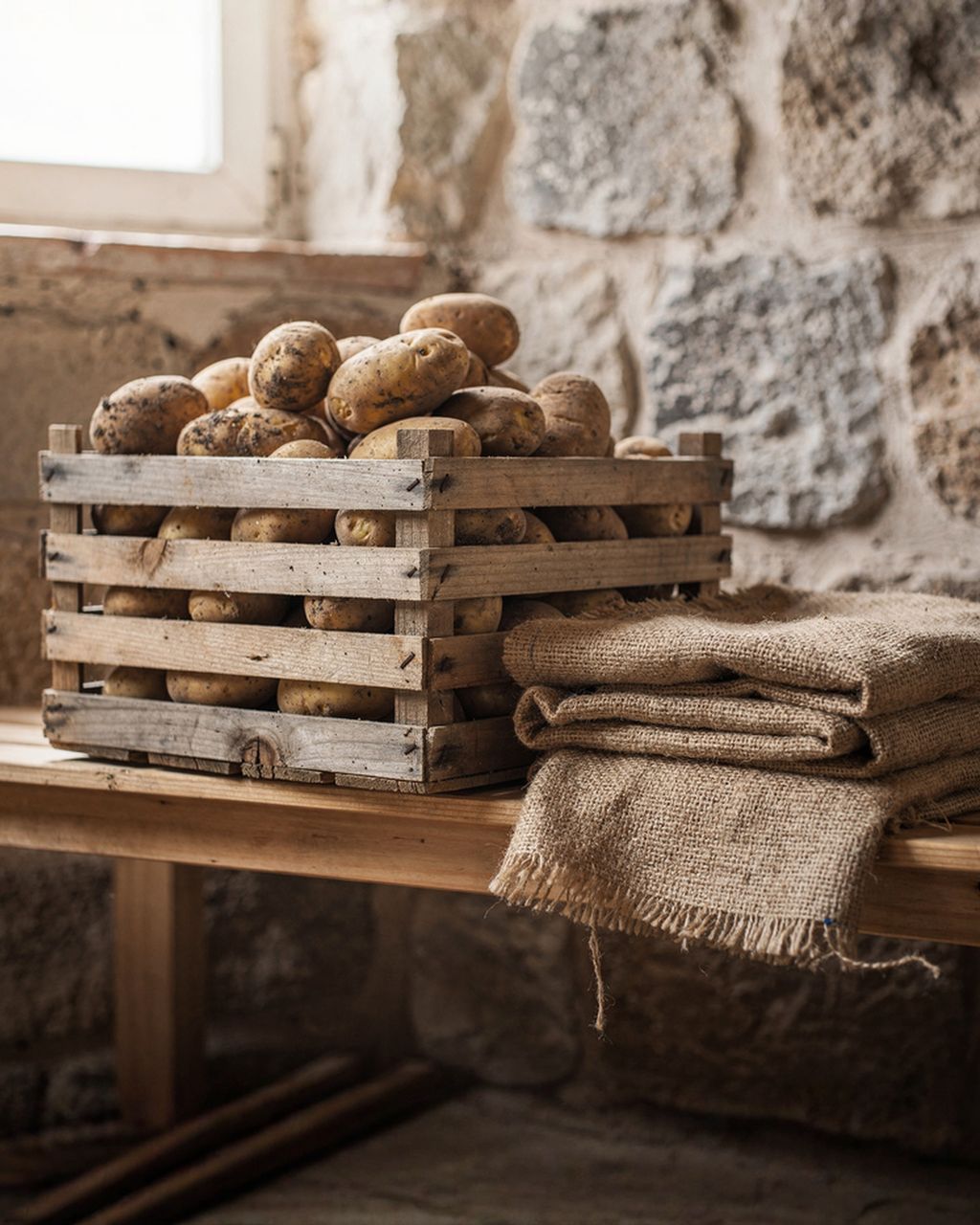
It's fine to store onions and garlic side by side, but not next to potatoes. Potatoes hold onto and give off moisture, and onions stored beside them sprout and rot faster. We cover how to keep potatoes fresh in our article How to Store Potatoes So They Last Until Spring.
Don't put whole, unpeeled onions or garlic in the fridge. The main reason is moisture: fridges tend to have damp air, condensation forms on the papery skins, and the onion starts putting out roots and going mouldy. The second reason is the return to warmth – garlic that's sat in the cold for a while and then goes back into a warm kitchen sprouts faster than it would have if it had never been refrigerated at all. And a typical home fridge (usually 4–5°C/39–41°F) simply isn't close enough to freezing to reliably slow sprouting the way a proper cold cellar does.
Exceptions that do belong in the fridge:
chopped or peeled onion and cloves – see the next section,
spring onions and young (green) garlic with their green tops still on – these are fresh vegetables, not storage crops, and keep for about a week in the fridge,
a partially used onion or shallot if you won't use it up within a few hours. A whole shallot, though, doesn't belong in the fridge – store it like an onion.
Put chopped onion and peeled cloves in a sealed container in the fridge at 5°C/41°F or below and use them within 7 days. Once you strip away the papery skin, that natural protection disappears, and bacteria multiply quickly on the moist cut surface if left warm – hence the need for cold and a closed container (which also keeps the smell from leaching into your butter or desserts).
For a longer-lasting stash, freeze it at −18°C/0°F: spread chopped onion or crushed garlic on a tray, let it freeze solid, then transfer it to a bag. It'll hold its quality for roughly 3–6 months. Freezing stops microbes and enzymes, but it does break down the cells, so thawed onion is best used in cooking (sauces, stews, soups) rather than in a salad.
Watch out with garlic in oil. Never leave homemade garlic covered in oil (without any added acid) at room temperature. The oil cuts off oxygen, and garlic from the soil can carry spores of Clostridium botulinum, which can produce toxin in exactly that kind of oxygen-free environment. Per the USDA and university extension services (such as Oregon State University), keep it in the fridge at 4°C/39°F or below for a maximum of 4 days, or freeze it instead. Store-bought garlic-in-oil pastes are usually acidified or otherwise preserved – follow the label, and if it says "refrigerate after opening," put it straight in the fridge.
Homegrown onions and garlic only keep well if you cure them properly after harvest. A freshly pulled onion has a juicy neck and damp skins – and that's exactly where mould will later find its way in.
Harvest in dry weather, once most of the tops have flopped over and turned yellow.
Leave them for 2–3 weeks in a warm, airy, shaded spot (ideally around 25°C/77°F) – under a shelter, in an attic, or on a rack. Never in direct sun, as it'll scorch them.
They're ready once the neck is completely dry and thin, the skins rustle, and the roots have dried out.
Then trim the tops down to about 2–3 cm (1 inch), or leave them long and plait them into a braid. A braid isn't just decorative – each bulb hangs separately with air circulating around it.
Only put healthy, firm, unbruised bulbs into storage. One rotting onion in a crate will spread moisture and mould to its neighbours.
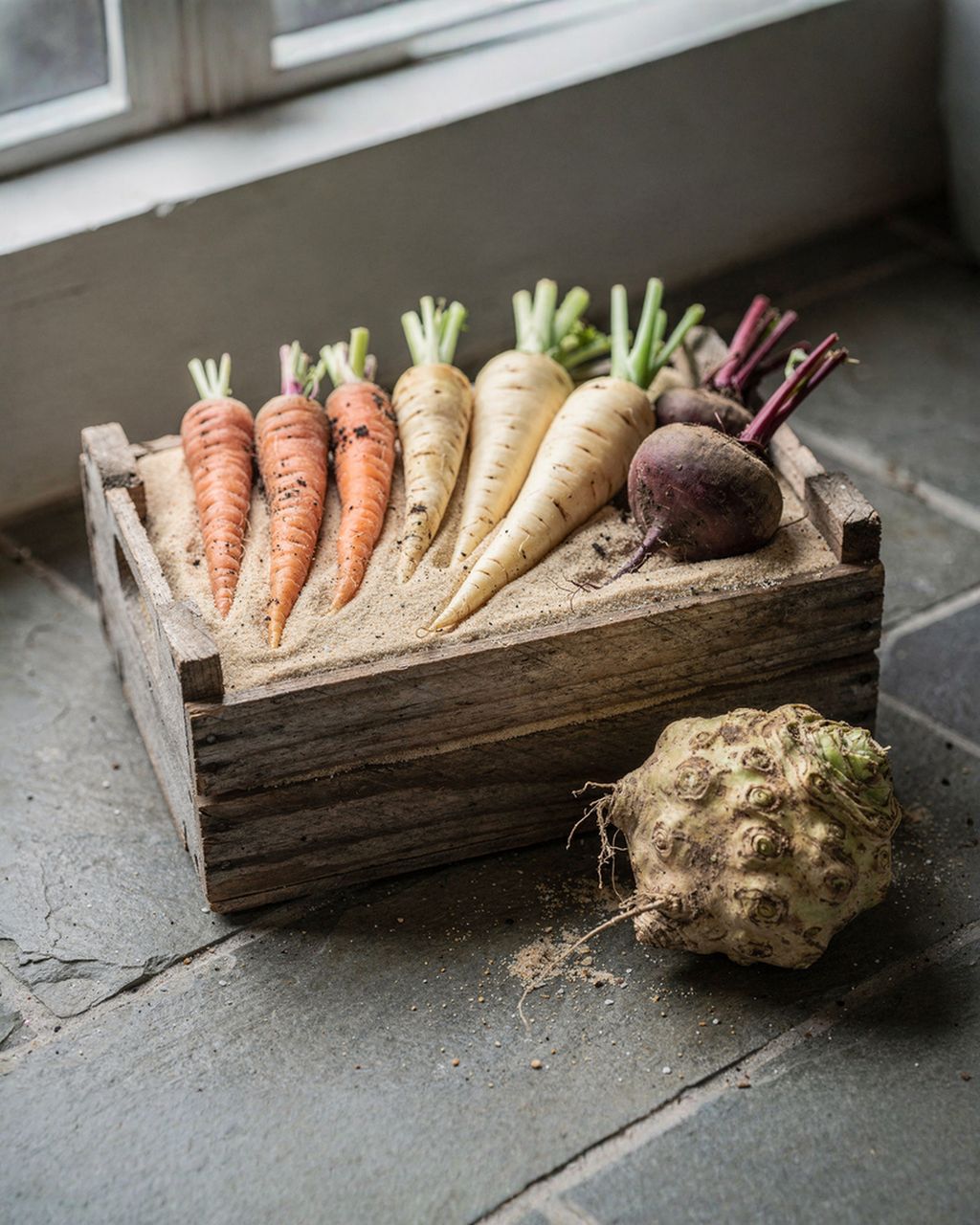
The same principle – cure first, then keep cool and moderately humid – applies to other winter stores too. Take a look at how to keep root vegetables fresh through winter.
The longest-lasting are sharp yellow onions with firm, dry skins and firm, well-cured garlic – ideally softneck varieties. As a rule of thumb: the sharper and drier, the longer it stores.
Yellow onions – best for winter storage, sharp-flavoured, with more layers of skin.
Red onions – keep slightly less well.
White and sweet ("salad") onions – higher water content and fewer sharp sulphur compounds, so they last weeks rather than months. Use these up first.
Shallots – store well, similarly to yellow onions.
Garlic – softneck varieties (with a soft neck) usually keep longer than hardneck garlic, which peels beautifully but starts drying out and sprouting sooner.
Practical tip: store varieties separately, and use up the shorter-keeping ones – and any bulbs with a softer neck – first.
Yes – as long as the bulb is still firm, dry and mould-free, both sprouted garlic and sprouted onions are safe to eat. The green shoot inside a clove is just a bit more bitter and sharp, so slice it out lengthways as you chop. Use sprouted onion up as soon as possible while it's still firm; you can even snip the green shoots and use them like chives.
But throw it out without a second thought if it's:
gone soft, mushy or slimy,
showing mould – black powder under the skin, or a white or blue-green coating,
smelling rotten, sour, or otherwise off, rather than cleanly of garlic or onion,
got cloves that are brown, translucent or sunken.
Don't try to rescue a bulb like that by just cutting off the bad bit – mould and rot spread deeper than you can see, and bacteria multiply unchecked in a softened onion.
When several bulbs in your net bag start sprouting at once, cook something where onion and garlic take centre stage. A big batch of onions gets used up in quesadillas with caramelised onion, apple and spinach or slow-roasted pork shoulder with apples and onion. Garlic and shallots together get put to good use in rabbit roasted on a bed of shallots and garlic, and a quick classic is trout baked in foil with butter and garlic. And if you've got a big pile of cloves left, make a proper garlic soup.
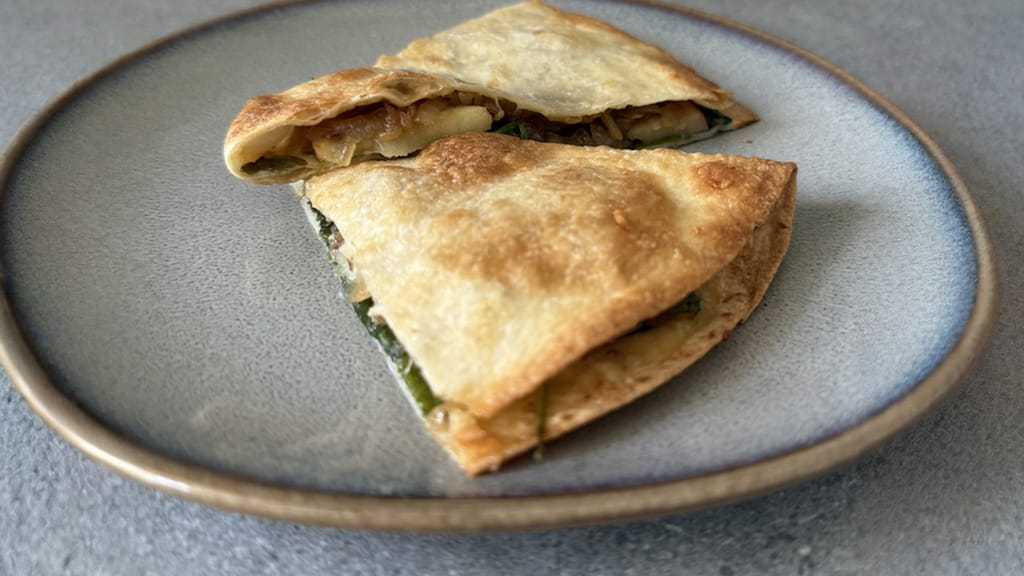
Apple, spinach and caramelized onion quesadilla
Quesadillas with Caramelised Onion, Apple and Spinach
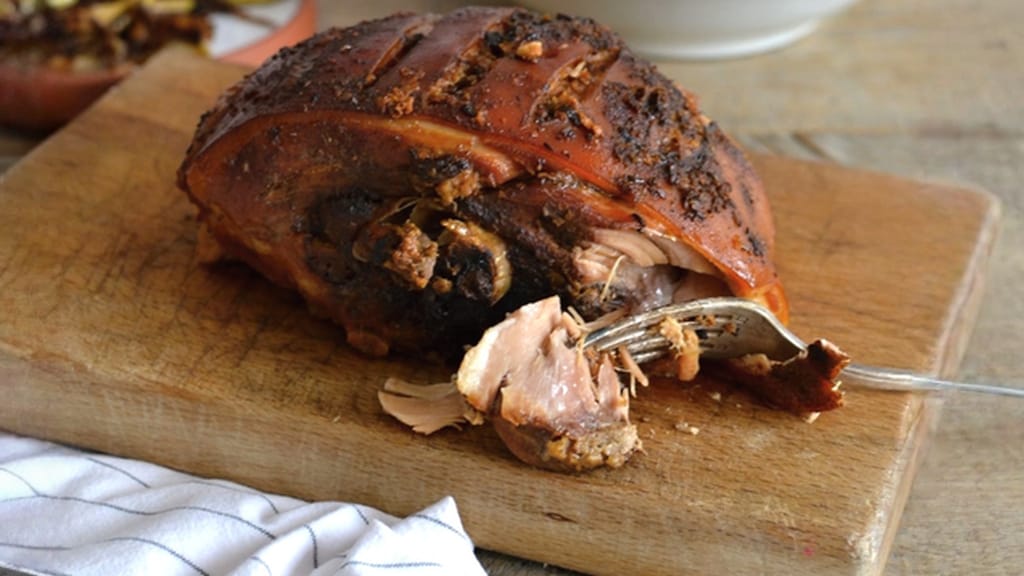
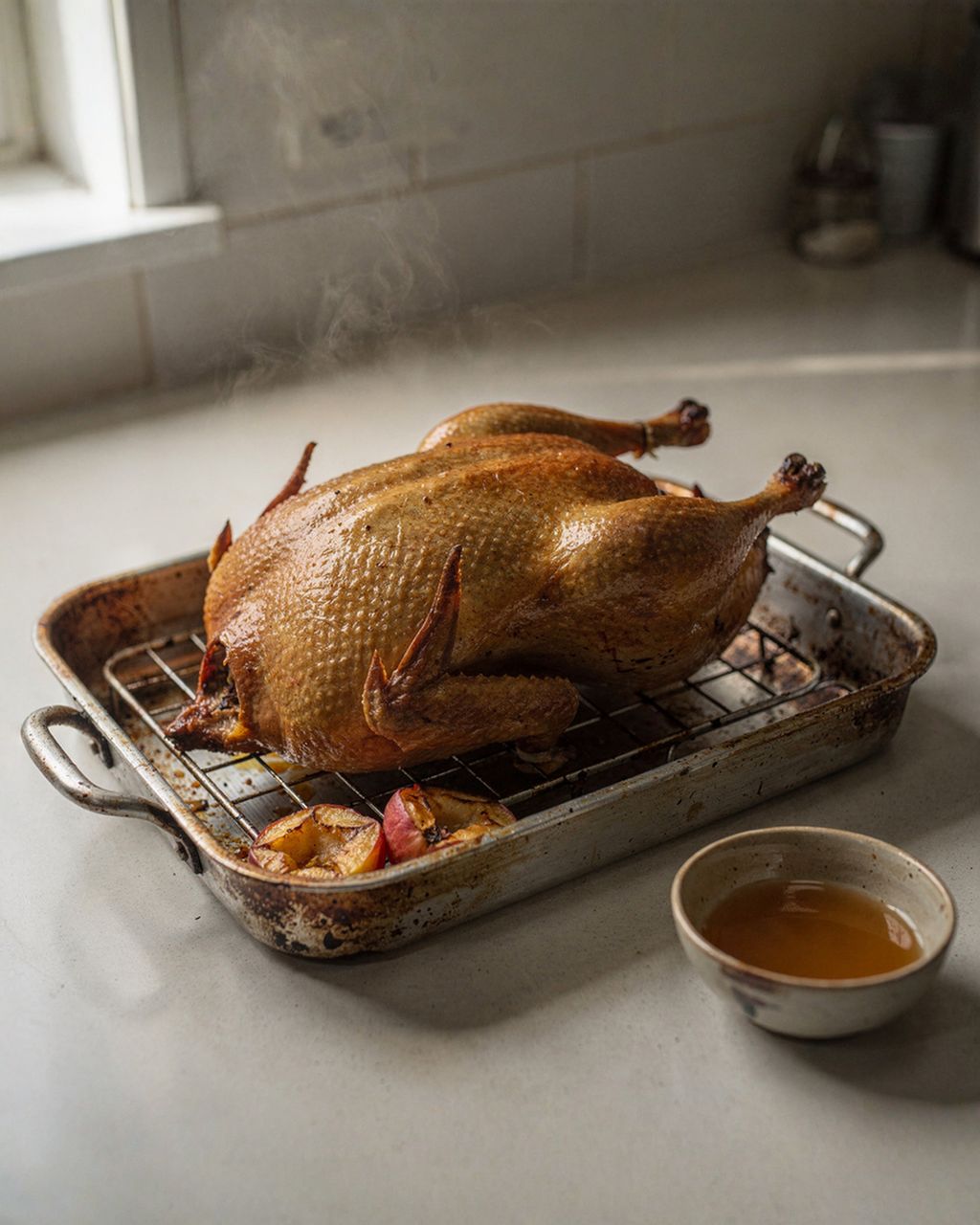
Extra slow-roasted pork shoulder with apples and onions
Slow-Roasted Pork Shoulder with Apples and Onion
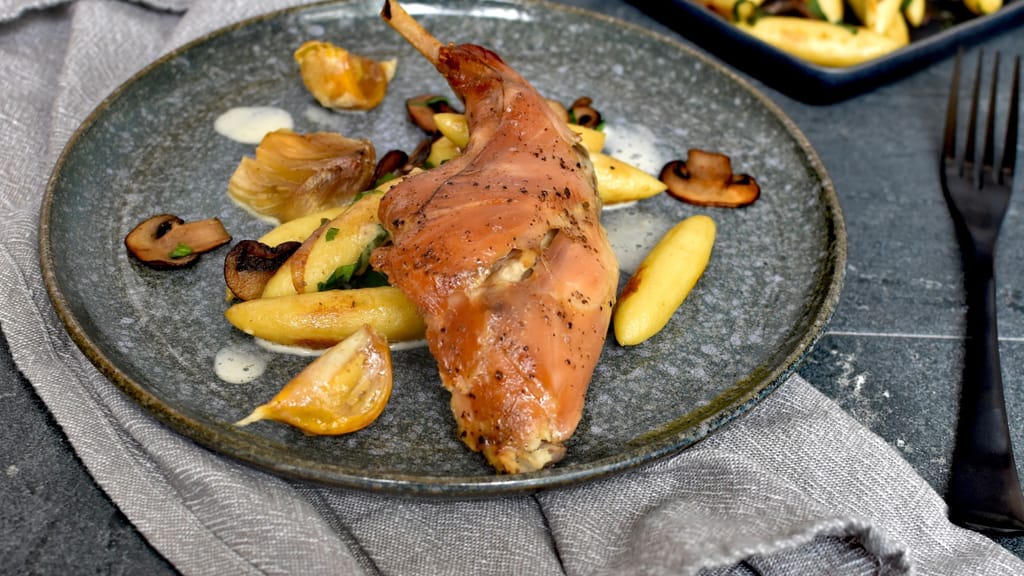
Roast rabbit with shallots and garlic
Rabbit Roasted on a Bed of Shallots and Garlic
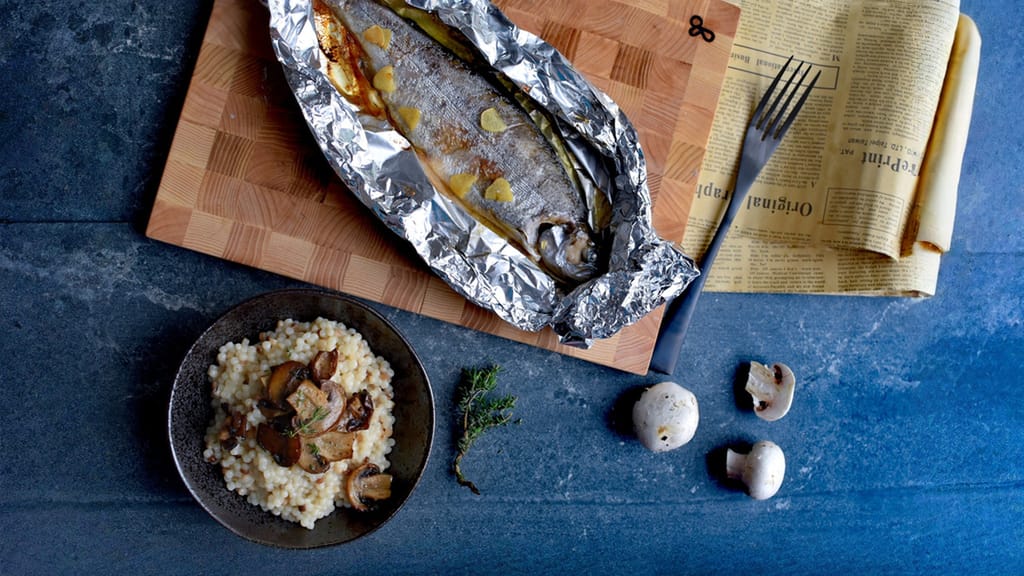
Perfect trout baked in foil with butter and garlic
Trout Baked in Foil with Butter and Garlic
A whole, unpeeled head of garlic usually lasts 3–5 weeks at room temperature (around 20°C/68°F) if kept dry and with airflow. Individual unpeeled cloves dry out faster and last a shorter time, typically just a few days to a couple of weeks.
Well-cured yellow onions typically last several months in a cool, dry cellar close to 0°C/32°F – roughly 2 to 6 months depending on the variety. Sweet and white onions keep for less time. Sorting through your stash every few weeks and pulling out any softening onions helps the whole batch last longer.
No – in a sealed plastic bag, onions sweat, then start sprouting and going mouldy. Transfer them straight from the shopping bag into a net, basket, or a paper bag with holes.
You can – garlic and onions don't harm each other and need the same conditions. That said, it's better to give each its own net or bin so air can circulate freely and one rotting piece doesn't spoil the whole batch.
Freezing whole heads isn't really worth it, since they turn soft after thawing and become hard to peel and slice. It's far more practical to freeze chopped onion and crushed or minced garlic at −18°C/0°F and use them straight in cooking.
One recipe worth heating the oven for, one tip, and one deal from the shop. Nothing else.