Halloween cheesecake
Updated Sep 18, 2026
The best ways to decorate a cheesecake are fruit coulis, fresh fruit set with glaze, chocolate ganache, caramel, whipped cream rosettes, crunchy crumble, toasted nuts, freeze-dried fruit, or edible flowers — and always once the cake is completely chilled. Decorating a cheesecake is a different game from decorating a sponge cake: the surface is moist, soft and cold, so a firm glaze cracks on top of it and fresh fruit weeps juice within the hour. Below you'll find nine toppings, complete with ratios, temperatures and the step order that solves exactly these problems.
Nine toppings that reliably work on cheesecake:
Fruit coulis – a strained purée made from 300g fruit and 40–60g sugar, chilled. The fastest way to add a tangy note to a sweet, creamy filling.
Fresh fruit set with glaze – berries arranged tightly and brushed with a thin nappage glaze so they don't dry out or weep juice.
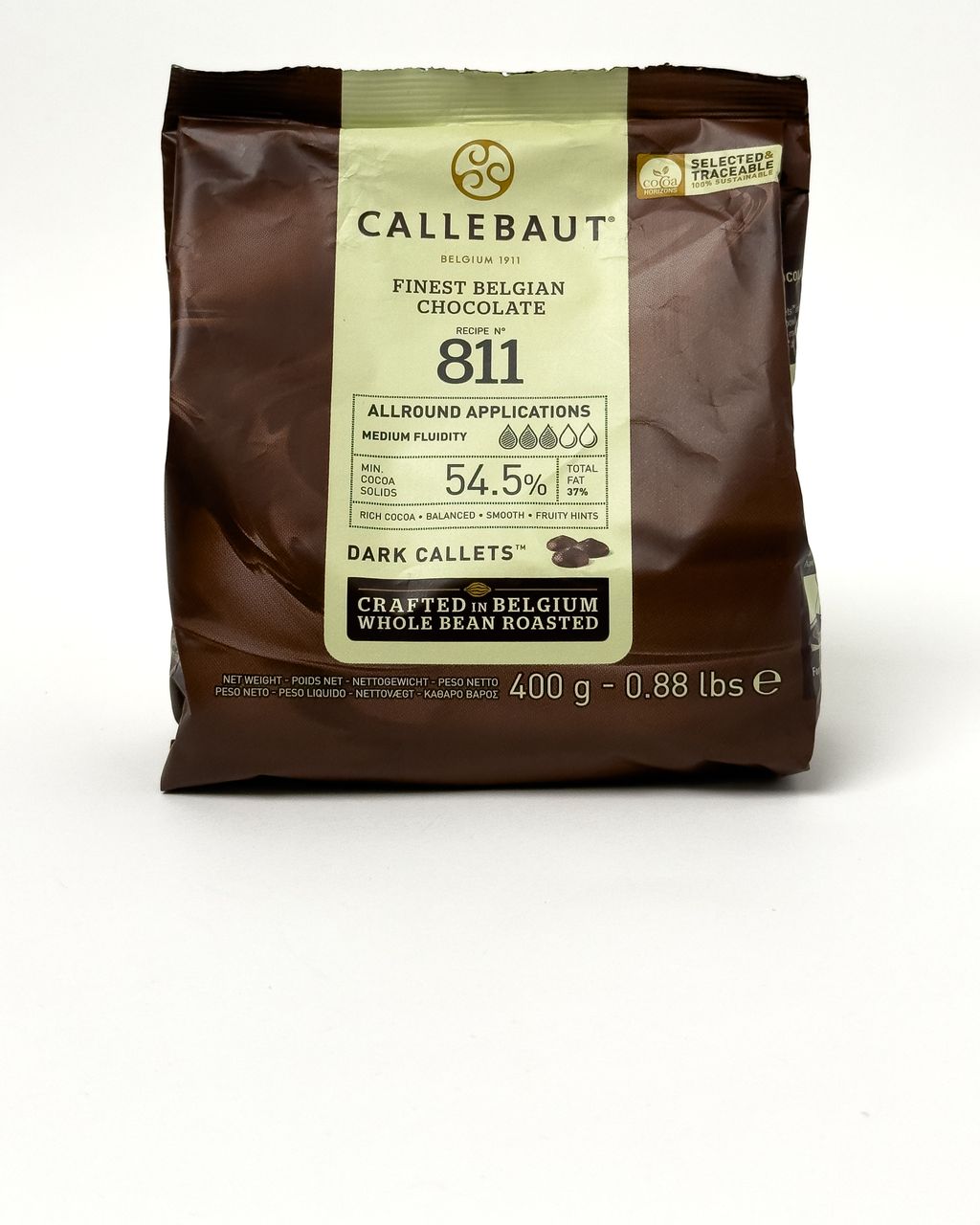
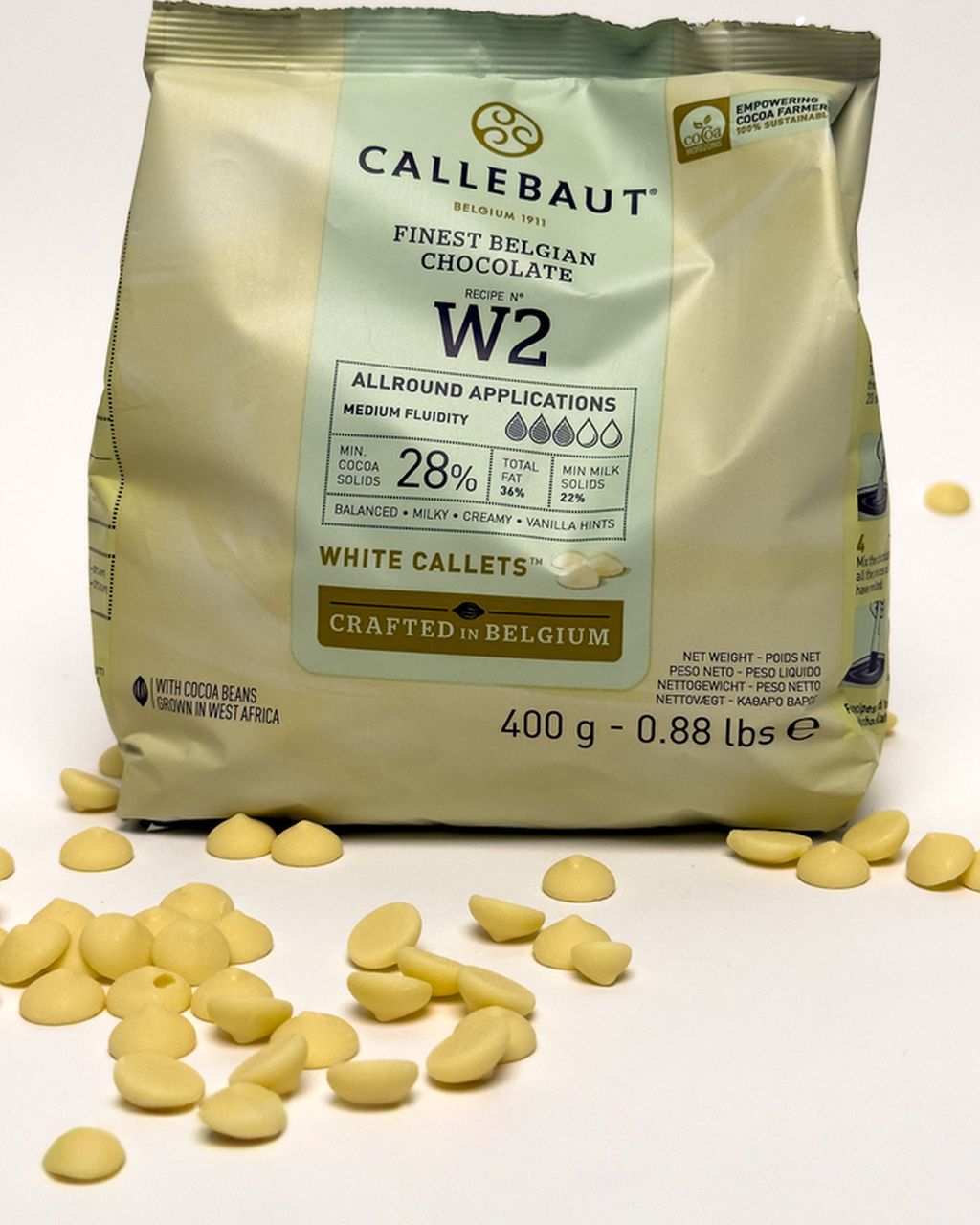
Chocolate ganache and drip – dark 1:1, milk 2:1, white 3:1 (chocolate to cream); it starts to drip nicely at 30–35°C.
Salted caramel – thick, cooled to room temperature, poured in the centre and spread out to the edge.
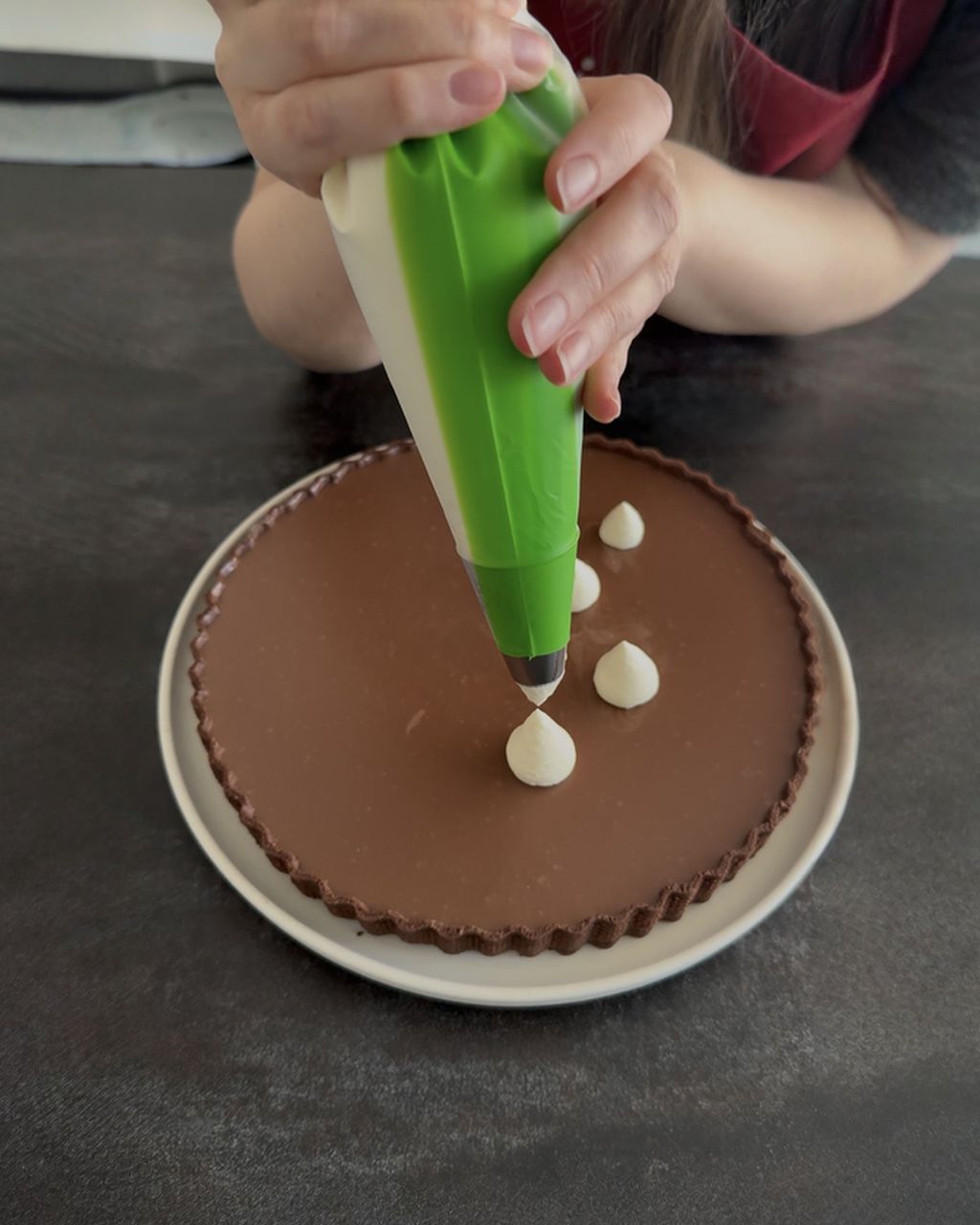
Whipped cream rosettes– whipping cream (at least 30% fat), chilled below 6°C, stabilised with mascarpone in a 2:1 ratio.
Crunchy crumble – butter, flour and sugar 1:1:1, baked separately at 180°C and scattered on only just before serving.
Toasted nuts – pecans, almonds or pistachios, toasted 8–10 minutes at 160°C, roughly chopped.
Freeze-dried fruit – raspberry powder sifted through a sieve. Vivid colour and tang without a single drop of water.
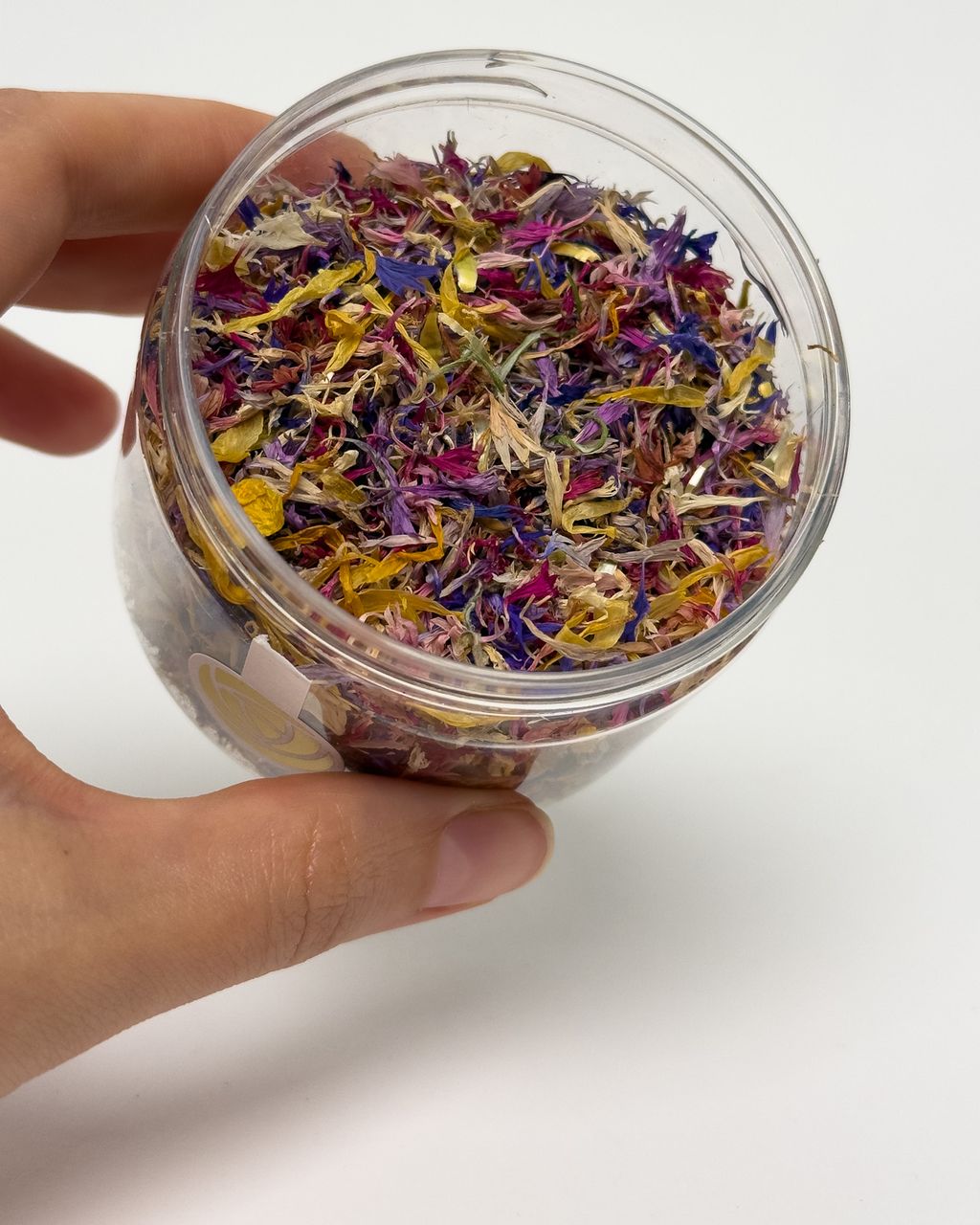
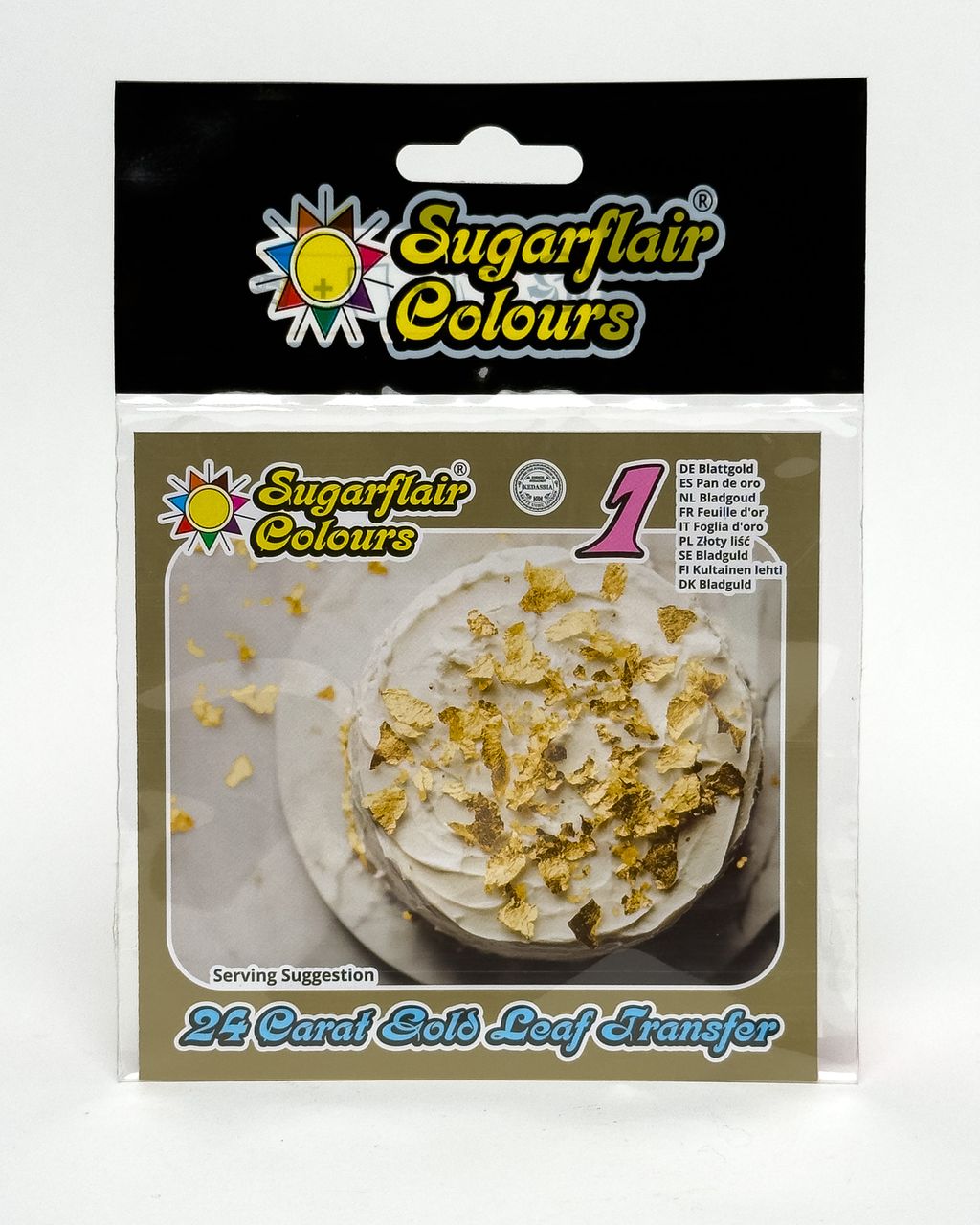
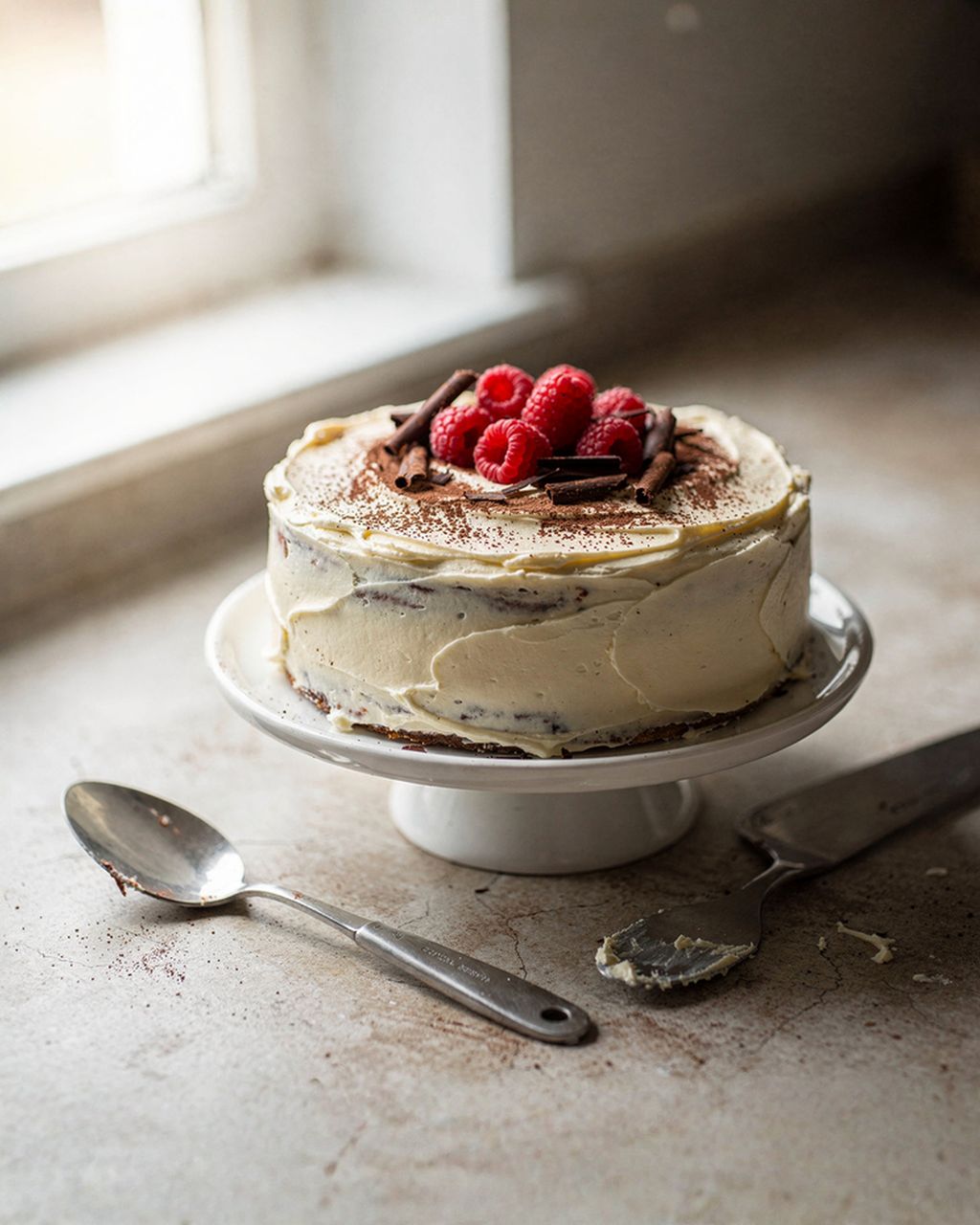
Edible flowers, gold leaf and chocolate shavings – a finishing touch in three to five spots, not scattered across the whole surface.
You can combine any of these, but stick to two layers: one base layer (coulis, ganache, caramel, whipped cream) and one accent layer (fruit, nuts, flowers). Three layers or more starts to taste like a jumble, and the slice falls apart.
Only decorate a cheesecake once it's fully chilled — leave a baked one in the fridge for at least 6 hours, ideally overnight, and a no-bake one for at least 4 hours. The core should be below 8°C. A lukewarm surface will melt whipped cream and ganache alike, and fruit juice will soak in instead of sitting on top.
The order that works:
Chill the cake in its tin, and only remove the ring afterwards. Run a thin knife dipped in hot water between the filling and the tin wall.
Pat the surface dry with a paper towel — condensation is the main reason toppings slide off.
Apply the base layer (coulis, ganache, caramel) and return the cake to the fridge for 20–30 minutes to firm up.
Add the accents — fruit, nuts, flowers — right at the end.
Scatter anything crunchy no more than 15 minutes before serving.
Always add toppings to the cake cold or at room temperature, never hot. Hot caramel poured onto a cold cheesecake will crack the surface, and the filling will seep up through the cracks.
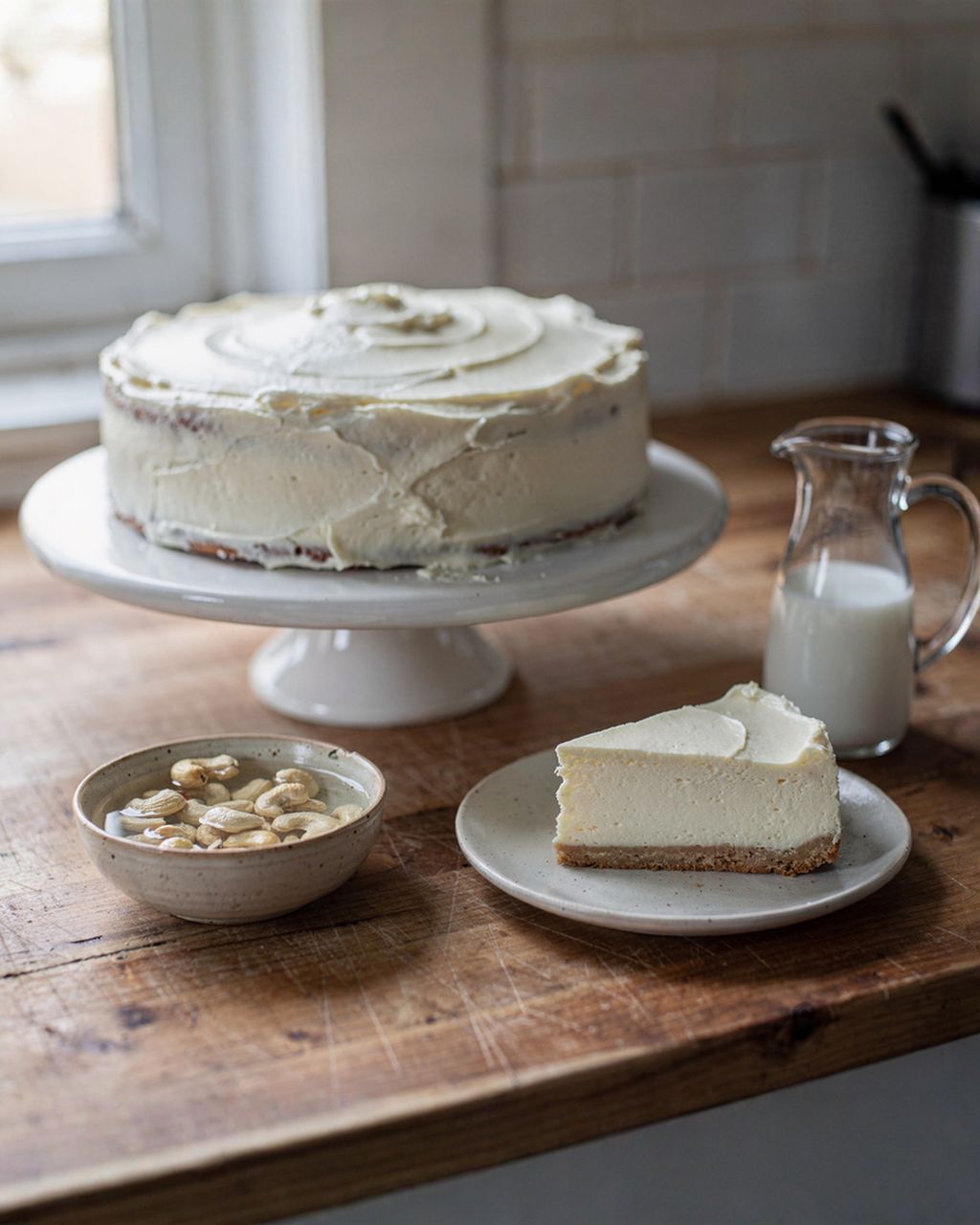
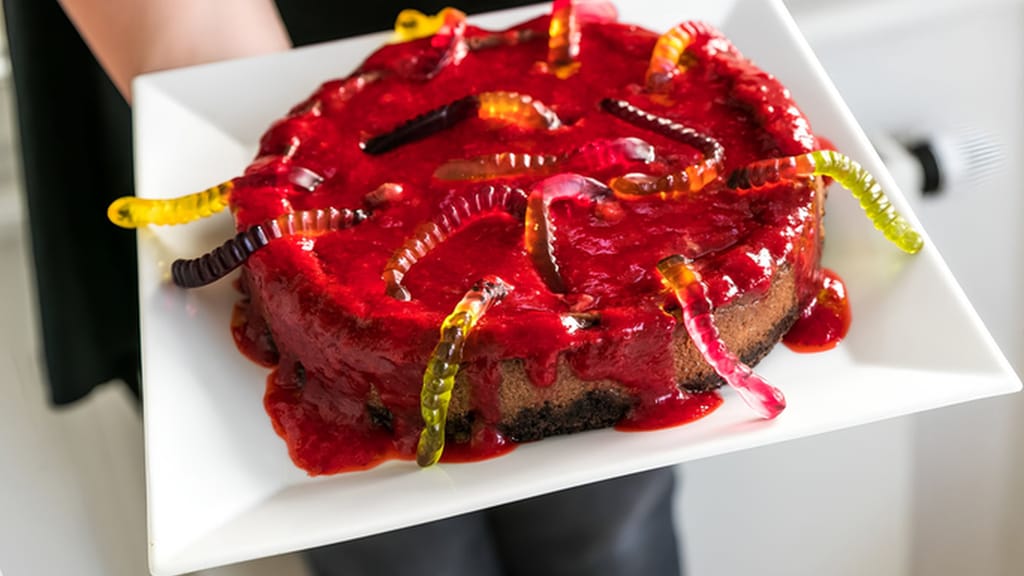
Halloween cheesecake
Halloween cheesecake – a baked base to practise your decorating on
Fresh fruit only stays looking good on a cheesecake if you pat it dry, arrange it tightly, and brush it with a thin layer of glaze — left on its own, fruit starts weeping juice and staining the surface within the hour.
Here's exactly what to do:
Dry it thoroughly. Spread washed fruit on a tea towel and let it air-dry for 20 minutes. Wet raspberries are a lost cause.
Arrange from the edge inwards, pieces should touch each other. Gaps will show up every dip and bump in the filling.
Turn raspberries hollow-side down, otherwise air gets trapped inside and they wilt quickly.
Slice strawberries only right before decorating, cut-side down. A cut surface loses juice fastest of all.
Blueberries and redcurrants can stay whole — the unbroken skin acts as a barrier, so they'll keep for a whole day.
One extra snag: raw kiwi, pineapple, papaya and fresh figs contain enzymes that break down gelatine, so the glaze will never set. Either briefly cook them first, or use a starch- or pectin-based glaze instead. For mango, simply arrange ripe slices into a rosette, as shown in the mango cheesecake.
Nappage is a thin, clear glaze you brush over fruit to stop it drying out and keep it in place. The key ratio is 4g gelatine — or 1.5g agar, which needs a two-minute simmer — per 250ml of fruit juice.
Application temperature matters just as much. Let a gelatine glaze cool to around 25°C, when it's still liquid but no longer warm to the touch. Apply an agar glaze while it's still hot, around 50–60°C — agar starts setting at just 32–40°C, so at 25°C it's too firm to brush on. Either way, apply the glaze in one thin layer with a soft pastry brush.
If you'd rather not mix your own glaze, there's a shortcut: warm clear jam (apricot or redcurrant) with a splash of water, then strain it.
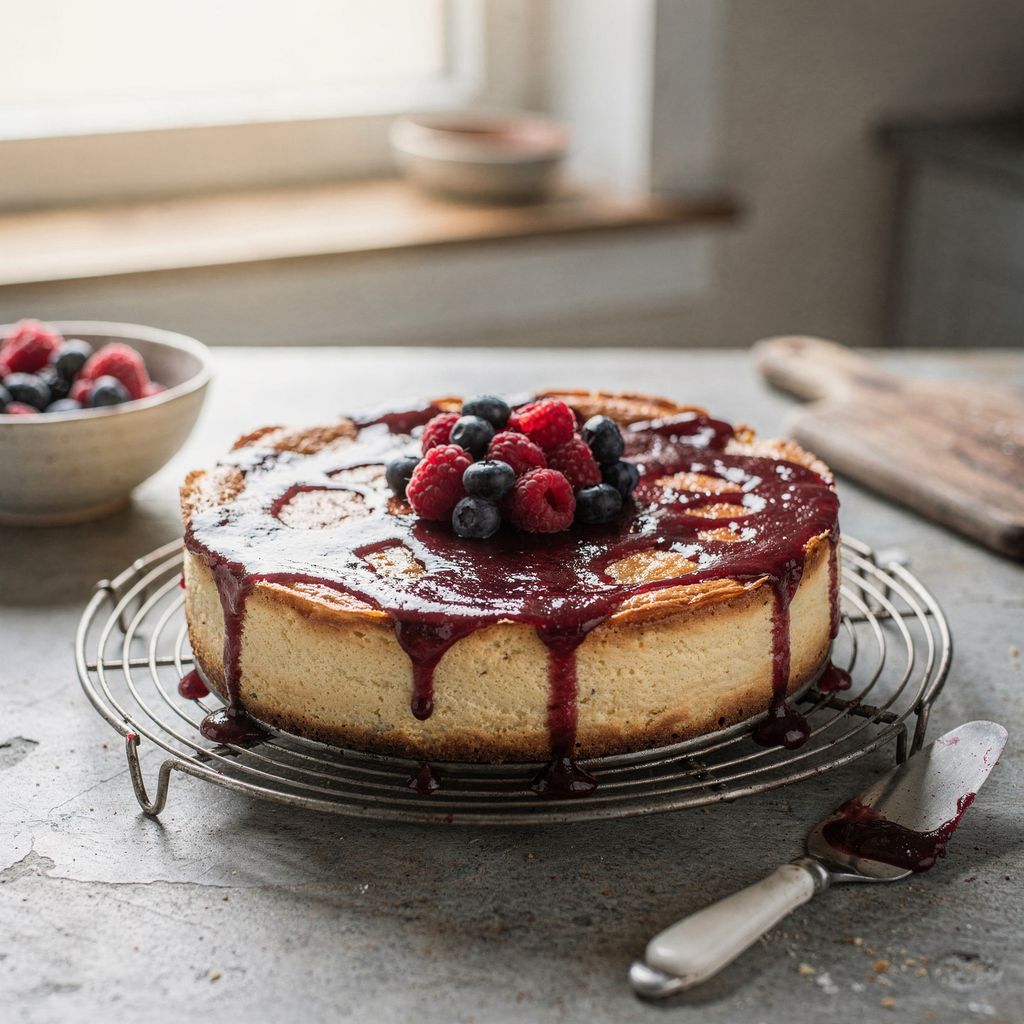
Coulis is simply a strained fruit purée, and the ratio is straightforward: 300g fruit to 40–60g sugar depending on tartness, plus a tablespoon of lemon juice. Briefly simmer the fruit, blend it, and — crucially — pass it through a fine sieve; straining is what separates a glossy sauce from a grainy, seedy mush.
A few numbers that make or break the result:
Thickening: 1 teaspoon of cornflour mixed with cold water per 250ml of coulis, simmered for 1 minute. Without thickening, a thin coulis will run straight down the sides.
Sugar to suit the fruit: raspberries and redcurrants can take 60g, while sweet strawberries or peaches only need 40g.
Pouring temperature: no more than 20°C. Warm coulis will melt the surface of the filling, and by the next day the cheesecake will be watery.
Quantity: allow 150–200ml for a 24cm cake. Any more won't fit and will overflow.
It looks best poured into the centre and spread out in a spiral towards the edge, so that only three or four drips run down the sides. A surface flooded evenly all over ends up looking like a tinned pie filling.
Mix your ganache ratio to match the chocolate: dark 1:1, milk 2:1, and white 3:1 (chocolate to cream). White chocolate contains no cocoa solids beyond fat (it has at least 20% cocoa butter), and milk chocolate has only a fraction of the solids dark chocolate has. Both contain more sugar and milk solids instead, which is why they set firm with far less cream.
Melt white chocolate no higher than 45°C — any hotter and it scorches and turns grainy. Keep it away from even a drop of water too, or it will seize.
You can make chocolate shavings with a potato peeler run over a room-temperature block. For more elaborate decorations made with tempered chocolate, check out our guide to homemade chocolate pralines.
A drip — those trickles running down the edge — only works when the ganache is at 30–35°C and the cake comes straight from the fridge. Watch three things:
Ganache temperature of 30–35°C. A simple test: if it feels warm on the back of your hand, it's too hot. It should feel barely lukewarm.
A cheesecake chilled straight from the fridge. A cold edge will stop a drip halfway down. On a lukewarm cake, it will run all the way onto the plate.
Test on one spot first. Add a single drip, wait 10 seconds and see where it stops. If it runs too far, let the ganache cool for another 2–3 minutes; if it seizes up immediately, warm it for a few seconds in the microwave.
Caramel for cheesecake needs to be thick enough to hold a fingertip trail on a spoon at 20°C — anything thinner will run into every crack and leave nothing but a wet patch within the hour. Cool it to room temperature, pour it into the centre and spread it out to the edge.
Sprinkle flaky salt on top of the cake, not into the sauce. Mixed into the sauce it just dissolves and you lose the crunch, leaving only saltiness; on top, it keeps its bite and the contrast.
Caramel pairs beautifully with extras: toasted peanuts, pecans, crushed biscuits, or a pinch of ground coffee. You'll find the full caramel-and-nuts combo dialled in perfectly in our salted caramel and peanut cheesecake recipe, while a thicker salted caramel cream can be piped into rosettes instead of whipped cream.
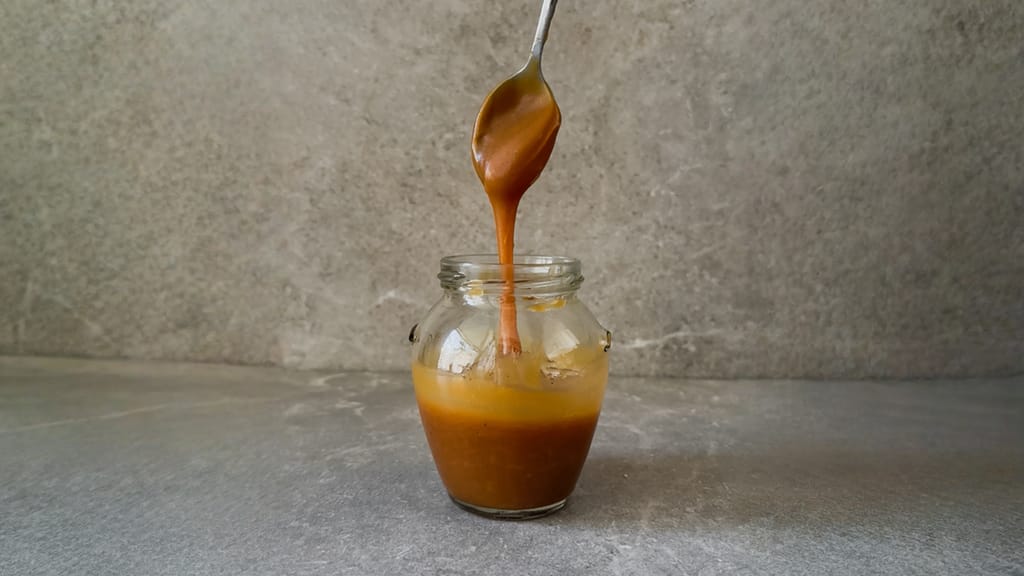
Homemade caramel sauce with just 4 ingredients
Homemade 4-ingredient caramel sauce – your go-to for drizzling over cheesecake
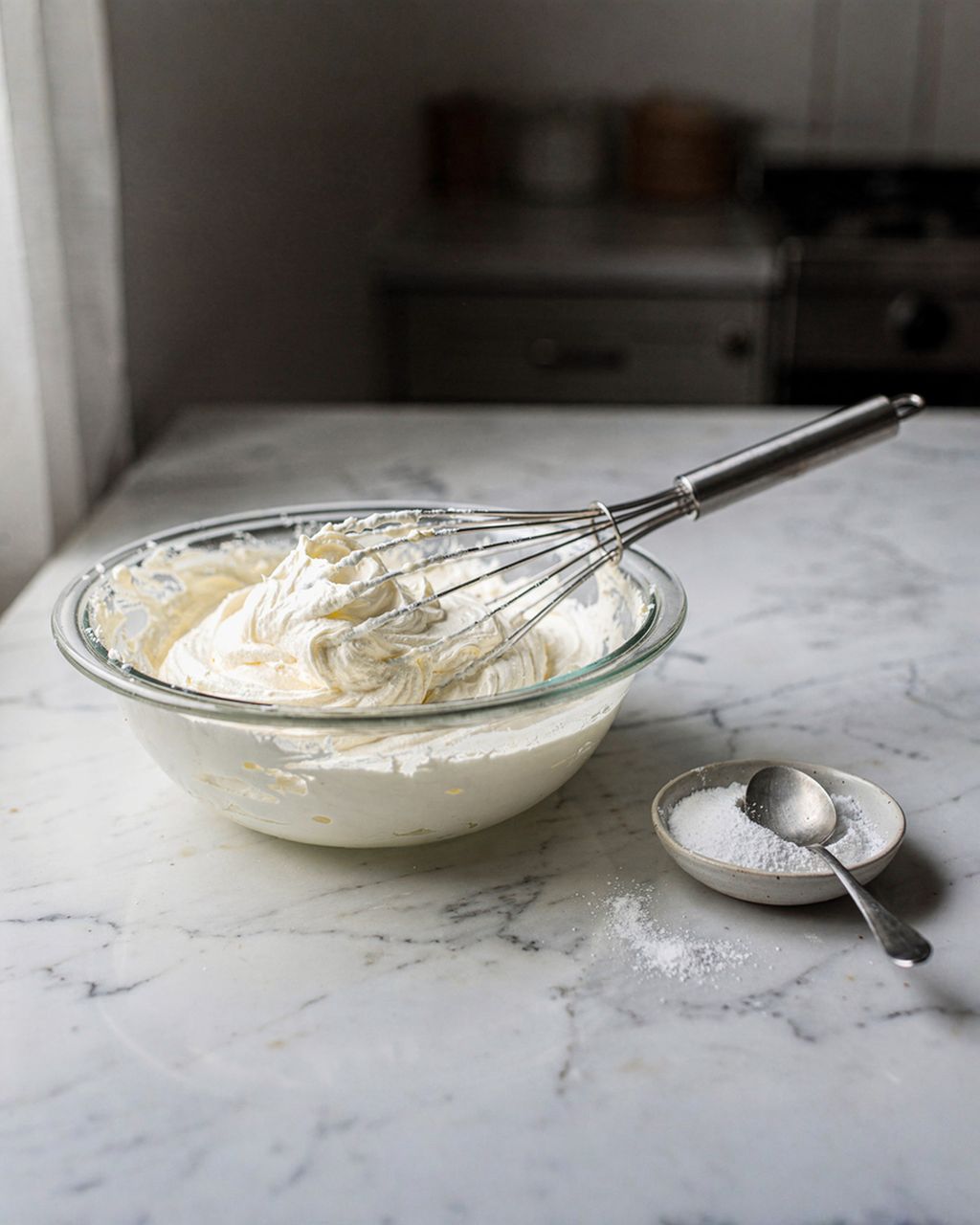
Plain whipped cream on a cheesecake will deflate and weep water within 3–4 hours, so always stabilise it: the simplest method is 2 parts cream to 1 part mascarpone, whipped together.
What needs to be right:
Whipping cream with at least 30% fat — for firmer rosettes, go for a high-fat 35% cream. Single or pouring cream won't whip up.
Everything below 6°C — the cream, the bowl and the beaters. Chill them all in the freezer for 15 minutes.
Whip to soft peaks, then fold in the mascarpone and whip briefly to finish. Overwhipped cream tears in the piping bag and rosettes come out grainy.
Mascarpone-free alternative: 1 teaspoon gelatine soaked and dissolved in 2 tablespoons of cream, folded into 250ml of whipped cream at the end of whipping.
For a 24cm cake, pipe 10 to 12 rosettes around the edge, topping each with a single berry — that gives you a natural guide for where to slice. Fill the centre of the ring with coulis or fruit. For a lighter cream that works well on a cheesecake base, see our summer cake with mascarpone, curd cheese and fresh fruit.
Crunchy toppings belong on a cheesecake only 10–15 minutes before serving — in the moist filling, they soften up faster than you'd expect.
Butter crumble: butter, plain flour and sugar in a 1:1:1 ratio, rubbed together with your fingers, baked separately on a tray for 12–15 minutes at 180°C, then cooled completely. Never bake it directly on the cake.
Toasted nuts: 8–10 minutes at 160°C, until fragrant. Pecans, almonds, hazelnuts or pistachios all work. Chop them roughly — if you grind them too fine, they'll leave a grey film on the surface.
Crushed biscuits: ideally the same kind used in the base, so the flavours match. Crush them roughly into pea-sized pieces.
Caramelised nuts: 100g nuts and 50g sugar melted dry, poured onto baking paper, left to set and broken into shards. They'll stay crunchy for hours, since the caramel shields them from moisture.
Keep the crunchy layer near the edge or across half the cake. Scatter it over the whole surface and the knife will just drag it all to one side when you slice.
Freeze-dried fruit is the cleanest way to bring bold colour and tang to a cheesecake without adding a drop of water. Crush raspberries in a mortar and sift them through a fine sieve to get a pink powder — dust it through a stencil into a crescent shape, or just a light veil near the edge.
Other accents worth using:
Dried edible flowers (cornflower, pansy, daisy, rose petals) — scatter them with tweezers only just before serving, since they wilt within half an hour in the moisture.
Sheets of edible gold leaf — lift with dry tweezers only, never your fingers. Two or three small flecks are enough; more looks cheap.
Chocolate shavings and crunchy sprinkles — scatter them in a strip, not spread evenly over everything.
Lemon or lime zest — grate it straight over the cake so the essential oils land on the surface too.
One rule applies across the board: toppings belong in three to five spots, with at least a third of the surface left bare. It's the empty space that makes a cake look like it came from a pâtisserie, not how densely it's decorated.
Pick a topping that plays against the base flavour, not with it — a sweet filling needs tang or bitterness, not more sugar.
Classic vanilla: raspberries, redcurrants, passion fruit. Tart fruit cuts through the richness of the filling.
Chocolate: salted caramel, orange zest, toasted hazelnuts.
Lemon: blueberries and mint, or just a thin layer of nappage glaze and nothing more.
Pumpkin and gingerbread: caramelised pecans, a pinch of cinnamon in the whipped cream.
No-bake yoghurt or curd cheese: a light coulis, fresh fruit. Heavy ganache will crush the soft filling and sink straight into it.
The reverse holds true too: if the base flavour is bold (lemon, coffee, strong vanilla), keep the topping neutral. Two strong flavours fighting each other cancel each other out.
Most decorating disasters come down to one of seven things:
Decorating a lukewarm cake. Everything slides and melts. Wait out the full 6 hours in the fridge.
Hot topping on a cold surface. Pour caramel and ganache only just warm, or they'll crack.
Wet fruit. Undried berries weep juice and stain the filling within the hour.
Thin, runny coulis. Skip the teaspoon of cornflour and it'll run down the sides and pool on the plate.
Adding crunchy elements too early. Crumble scattered in the morning turns to mush by evening. Add it right at the table.
Covering the whole surface. With no bare space, the cake looks cluttered and is harder to slice.
A thin layer over a big crack. Either fill the crack with a thicker cream and smooth it with a palette knife, or hide it entirely under an opaque layer — coulis, ganache, or a full layer of fruit.
A decorated cheesecake keeps in the fridge for 2–3 days, though each topping ages at its own pace. Coulis, ganache and caramel still look good after all three days. Fresh fruit set with glaze holds up for about a day, while unset berries start weeping juice within the hour. Crumble, nuts and edible flowers are a matter of hours — add those at the very last minute. Store the cake covered with an upturned bowl or a cake dome, not with cling film pressed onto the surface.
You can freeze a cheesecake topped with ganache or caramel, but not one with fresh fruit or whipped cream. Fruit turns watery once thawed, and cream separates. The best approach is to freeze the undecorated cake (wrapped in two layers of cling film, it keeps for 2 months), let it thaw overnight in the fridge, and only decorate it afterwards. Never thaw it at room temperature — condensation will form on the surface.
Use a long, thin knife dipped in hot water and wiped dry before every cut. Push the blade straight down and pull it out towards you rather than lifting it up — that way you won't drag the topping with it. On a cake with a firm ganache shell or caramelised nuts, score the surface first with the tip of the knife before slicing through, or the top layer will peel off in one piece. A 24cm cake yields 12–16 slices.
The closest substitute is mascarpone loosened with a little milk and icing sugar — it holds its shape even better than whipped cream and doesn't release water. Thick Greek yoghurt strained through muslin (drained for at least 4 hours) also works, as does sweetened sour cream, or whipped coconut cream from a can of full-fat coconut milk for a vegan version. Plant-based whipping creams hold their shape very well, just expect a sweeter result.
Yes — most cheesecake toppings need no piping tips at all. Spread coulis and ganache into a spiral with a spoon or the back of a ladle, pour caramel straight from the pan, arrange fruit by hand, and dust freeze-dried raspberry powder through a fine sieve. For a simple drip, a zip-lock bag with a 3–4mm corner snipped off is enough. You can create waves in whipped cream just by turning a spoon over the surface and lifting it slightly as you go.
One recipe worth heating the oven for, one tip, and one deal from the shop. Nothing else.