What to Use Instead of Raisins: Best Substitutes for Baking, Salads and Muesli
Homemade Granola: What Temperature to Bake It at for Crunchy, Clumpy Results
Updated Nov 17, 2026
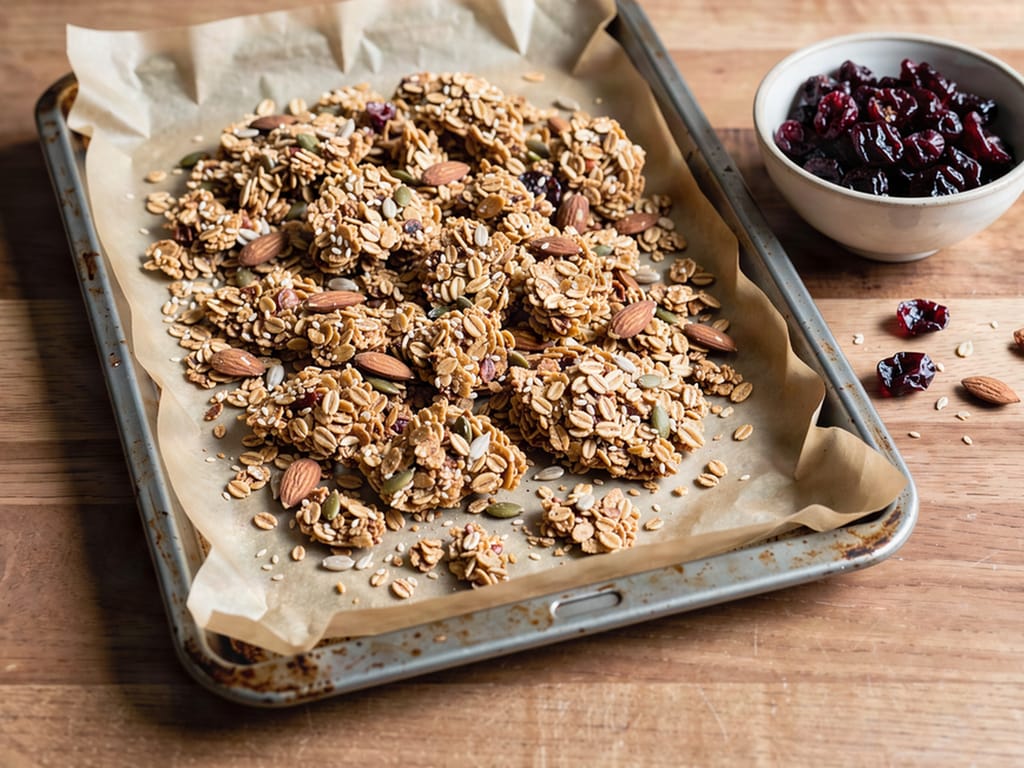
Bake homemade granola at 150–160°C (300–320°F), or 140–150°C (285–300°F) with a fan oven, for about 25–35 minutes, until evenly golden. If you want big clusters, don't stir it while it bakes, and let it cool completely on the pan once it's out. Granola only turns crunchy as it cools, not straight out of the oven. Below you'll find the ratio of oil to sweetener, when to add dried fruit and how to store granola so it doesn't go soft.
Bake homemade granola at 150–160°C (300–320°F) with conventional top and bottom heat, or at 140–150°C (285–300°F) with a fan oven, for 25–35 minutes. Low heat is the whole trick. Oats and nuts need time to dry out all the way through before they turn golden. At 180°C (350°F), the honey and syrup burn around the edges before the center dries, and the result is bitter on the outside and chewy inside.
150–160°C (300–320°F), 25–35 minutes: the standard for one baking sheet, with a layer about 1 cm (about 1/2 inch) thick.
130–140°C (265–285°F), 40–50 minutes: slower but safer when you're using a lot of honey or coconut, which burn the fastest.
A full sheet, or two sheets at once: allow 5–10 extra minutes and swap the sheets halfway through.
Every oven heats a little differently, so take a first look after 20 minutes. You can tell granola is done by its color. It should be an even golden brown, the nuts should smell toasted and the edges of the pan shouldn't be dark brown. It will still feel soft and sticky to the touch, and that's fine.
Seasonal baking plans, tested recipes and kitchen tricks that save you time. Unsubscribe in one click.
To get clusters, press the granola down on the baking sheet, don't stir it while it bakes, let it cool in one piece and only then break it up. Stirring breaks clusters apart, so stir only if you want loose, muesli-style granola.
Press the mixture down. Spread it on the sheet in an even, dense layer and press it with a spatula or the bottom of a cup. The syrup glues the oats into a single slab.
Don't stir. Instead of stirring, just rotate the sheet 180° halfway through baking so the granola bakes evenly.
Let it cool on the pan. Leave it for at least 30–45 minutes at room temperature and don't touch it. As it cools, the sugar hardens and the oats stick together.
Break it up last. Break the slab by hand into pieces as big as you like.
If you want truly big clusters, add one whisked egg white to the mixture for about 300 g of oats. The protein sets in the oven and works like glue. Granola made with it will be lighter and more delicate.
A reliable ratio is about 60–80 ml oil and 80–120 ml liquid sweetener (honey, maple or agave syrup) for 300 g rolled oats. Add 100–150 g nuts and seeds and a pinch of salt. How exactly you put it together is up to you. Here's what each ingredient does:
Oil coats the oats and fries them in the oven. Without fat, granola just dries out and stays papery. Neutral canola oil or melted coconut oil works well. Butter tastes great, but it contains water and milk proteins, so it burns sooner. If you use it, keep the temperature at the low end.
Liquid sweetener is the glue for the clusters. Less than about 80 ml per 300 g of oats gives you loose granola. More caramelizes faster and risks burning.
Salt brings out the sweetness and the flavor of the nuts. 1/2 teaspoon is enough.
Spices (cinnamon, cardamom, vanilla): mix them into the liquid part so they spread evenly.
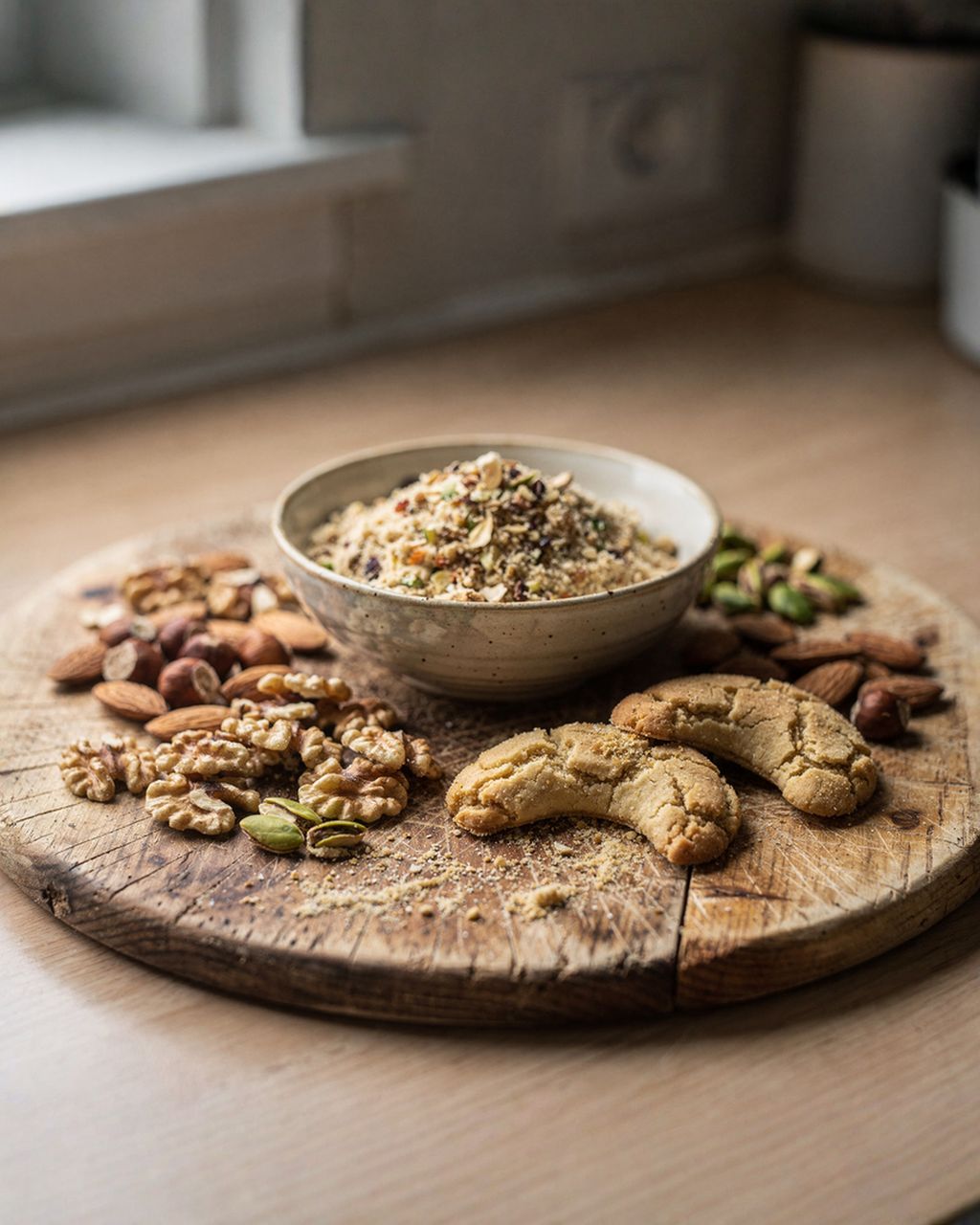
Use large (thick) rolled oats. Fine or instant oats crumble and won't form clusters. Add the nuts raw; they'll bake along with the oats. If you'd like to toast them separately for a deeper flavor, see our guide on how to toast nuts for baking. Then bake them in the granola only briefly so they don't overcook.
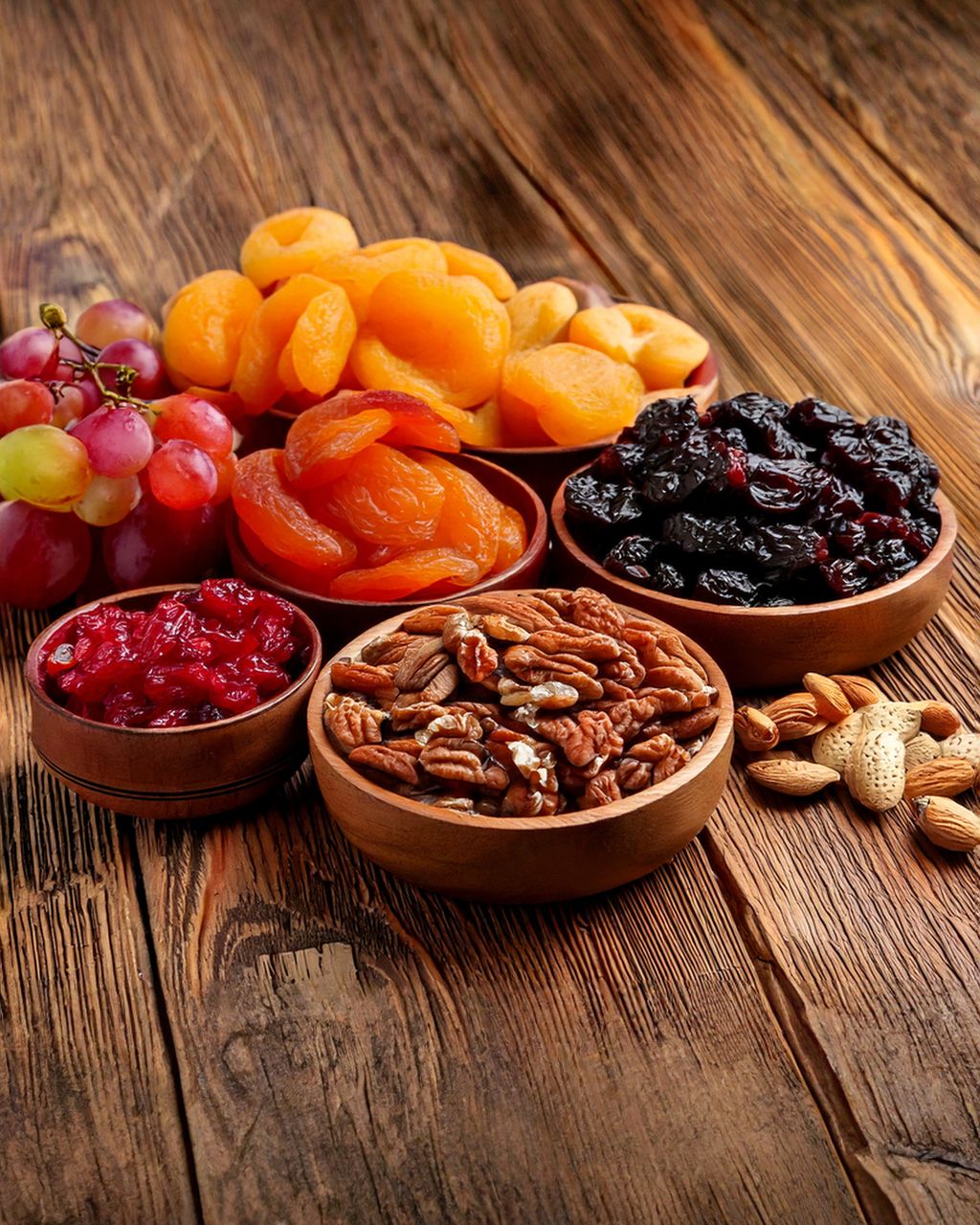
Add dried fruit after baking, to the cooled granola. In the oven it would harden into little pebbles, burn (raisins and cranberries contain a lot of sugar) and release moisture that softens the granola.
Raisins, cranberries, chopped apricots, dates: stir them in once you've broken up the cooled granola.
Coconut chips: add them for the last 5–8 minutes of baking. They turn golden but don't burn.
Chocolate: only into completely cooled granola, otherwise it melts and glues everything together.
Freeze-dried fruit (raspberries, strawberries): right before serving, or in a separate sealed container. It draws moisture from the air and softens quickly.
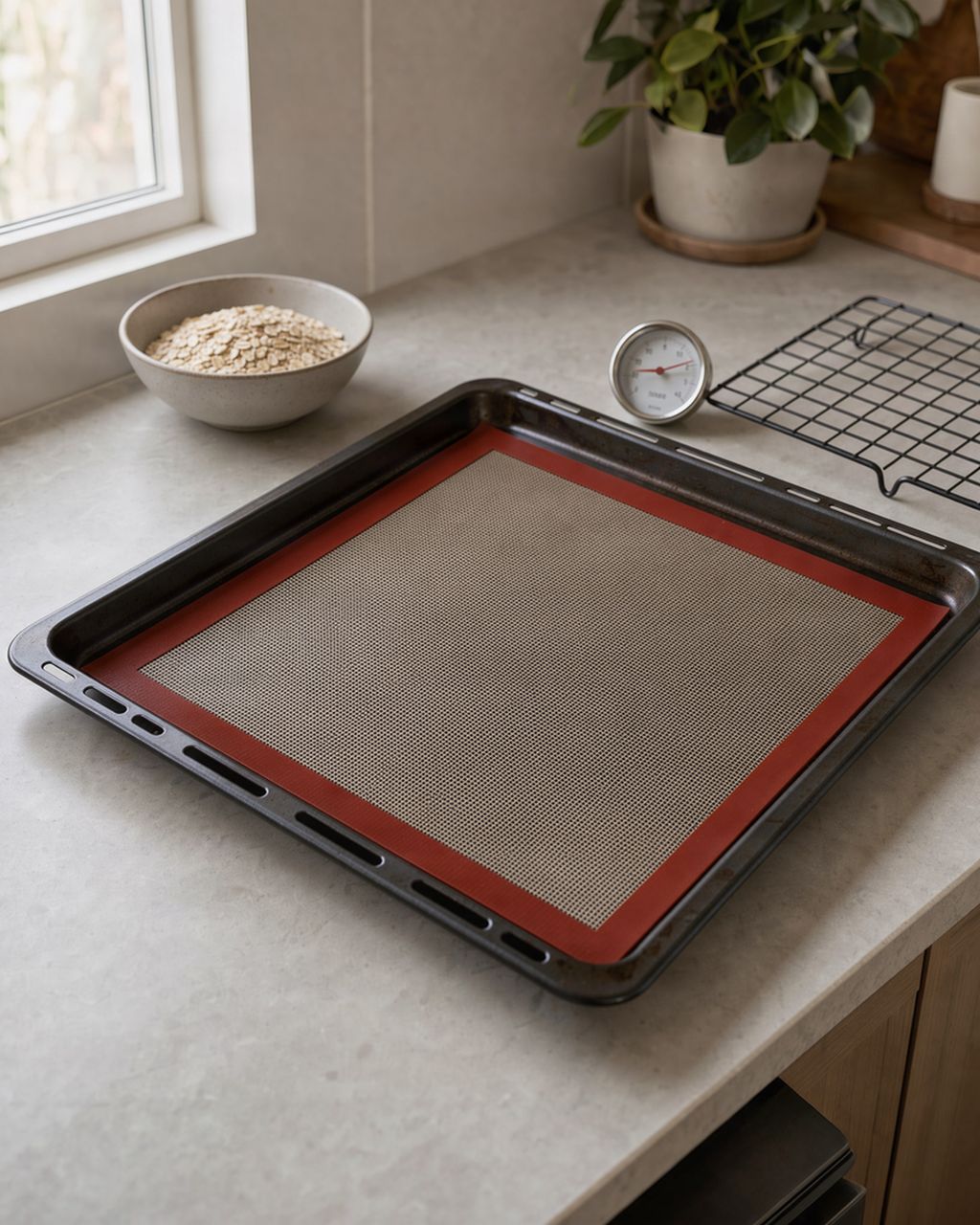
Bake on parchment paper or a silicone mat, never directly on the pan. The syrup would stick to the pan and the bottom would scorch. A perforated silicone baking mat works well. The holes let warm air reach the layer from underneath too, so the bottom dries as well as the top, and the cooled slab peels off easily. You'll find baking sheets, mats and other helpers in the baking pans and baking tools category.
Choose a large baking sheet with a low rim. A layer thicker than 1.5 cm (about 1/2 inch) won't bake through in the middle and will stay damp, so it's better to divide the mixture between two sheets.
The most common reason is tasting the granola while it's warm. It only crisps up once it has cooled completely. If it's soft even when cool, this overview will help:
Soft in the middle of the sheet: the layer was too thick, or the granola came out of the oven too soon. Put it back in the oven at 140°C (285°F) for 10 minutes.
Burnt edges, pale center: the temperature was too high. Next time go 10–20°C lower and rotate the sheet halfway through.
Loose, no clusters: too little sweetener, stirring during baking, or breaking up the granola while it was still warm.
Went soft after a few days: the fruit was baked along with it, or it wasn't sealed well. Spread it on a baking sheet and dry it for 5–10 minutes at 140°C (285°F).
Bitter aftertaste: burnt honey. Honey burns faster than maple syrup, so bake at the low end of the temperature range when you use it.
Store cooled granola in a well-sealed glass jar at room temperature, somewhere dry and away from the stove. A useful guide is the US USDA FoodKeeper database: opened ready-to-eat cereal keeps its quality for 2–3 months at room temperature in the pantry. That figure is for factory-packaged cereal. Homemade granola has no protective atmosphere or packaging, so expect it to be closer to the low end.
With granola, rancidity worries you sooner than spoilage. The fats in nuts and oil oxidize over time. According to the same USDA database, walnuts last 2–4 weeks in the pantry, but 9–12 months in the fridge and 24 months in the freezer. If you put a lot of nuts in your granola and bake a bigger batch, store part of it in the freezer. Frozen, it stays crunchy and you don't need to thaw it; just pour it straight from the container. Don't put it in the fridge, where it absorbs moisture and odors.
According to USDA FoodKeeper, dried fruit keeps in the pantry for about 6 months, so the shelf life of granola is limited more by the fat from the nuts and oil than by the fruit. Whenever granola smells like old paint or tastes bitter, it's rancid and should be thrown out.
Granola is best sprinkled over yogurt, skyr, oatmeal or a smoothie bowl just before eating. It goes soft in milk within minutes, so pour the milk over it only when you're about to eat. For a contrast of crunchy and creamy, try it on a raspberry chia pudding with yogurt. If you want a chocolate version that's already tried and tested, take a look at homemade cocoa muesli. And if you prefer bars you can take in your pocket, make homemade almond muesli bars.
You can also cook a warm breakfast from the same oats. You'll find the ratios in our guide on how to cook oatmeal. And if you'd like to give someone an edible gift they bake themselves, find inspiration in cookie mix in a jar.
One standard oven baking sheet holds a batch made with 300 g rolled oats and 100–150 g nuts and seeds, spread in a layer about 1 cm (about 1/2 inch) thick. If you're baking a double batch, split the mixture between two sheets rather than piling it onto one. A thicker layer won't bake through in the middle.
You can make granola without oil by replacing the fat with applesauce or a whisked egg white. It will be less crunchy and more dried out than toasted. Bake it at 140–150°C (285–300°F) and allow a longer time, because the moist applesauce has to evaporate first.
You can make homemade granola without syrup or honey by using a whisked egg white or blended dates, which bind it into clusters. You'll get fewer, smaller clusters, though, because it's the melted sugar hardening as it cools that holds the oats together. Cinnamon, vanilla and dried fruit added after baking provide the sweetness.
Yes, you can bake homemade granola in an air fryer, but only in a small batch and at a lower temperature, about 140–150°C (285–300°F). Press the mixture into a small baking dish or pan, or onto parchment paper weighed down with the mixture all the way to the edges. Never put loose parchment paper in an air fryer without food on it, because the fan can blow it onto the heating element. Check it every 5 minutes: an air fryer heats close up and fiercely, so granola burns much faster than in the oven.
Yes, you can make homemade granola from rye, spelt or buckwheat flakes, or a mix of them with oats. Thicker flakes need a few minutes longer, while buckwheat flakes are more delicate and darken faster.
One recipe worth heating the oven for, one tip, and one deal from the shop. Nothing else.