- Season
- Year-round
- Price
- Medium
- Nutrition per 100 g
- 450 kcal
- 9 g protein
- 19 g fat
- 60 g carbs
Granola
Pantry staples
Granola
Baked granola is a breakfast cereal and snack food composed of rolled oats, nuts, seeds, and sweeteners such as honey, maple syrup, or brown sugar, baked with oil until crisp, toasted, and golden brown. The mixture is stirred during baking to ensure even browning and a loose, crunchy consistency, often forming satisfying clusters.
In practice
How to store
- On the counter
Store in an airtight container at room temperature for 2-3 weeks. Glass jars or OXO pop-top containers work excellently to maintain crispness.
- In the fridge
Refrigeration is generally unnecessary and may introduce unwanted moisture. However, granolas with high nut content can be refrigerated for up to 1 month to prevent rancidity in warm climates.
- In the freezer
Freeze in airtight freezer bags or vacuum-sealed containers for up to 3 months. Thaw at room temperature; re-crisp in a 150 °C oven for 5-10 minutes if needed.
How to choose
When purchasing baked granola, scrutinize the ingredient list: opt for products where whole oats appear first, followed by nuts and seeds rather than sugars or oils. Avoid granolas where added sweeteners (sugar, corn syrup, honey) dominate the first three ingredients. Look for visible clusters, which indicate proper baking technique. The best granolas contain recognizable whole ingredients—almonds, walnuts, pumpkin seeds, coconut flakes—rather than mysterious "natural flavors." For homemade, source thick-cut rolled oats (not instant) for superior texture and freshness.
What to swap in
Best swap
Muesli—an unbaked cousin made from the same base ingredients (oats, nuts, seeds, dried fruits) but with a chewier texture and less sweetness. Soak briefly in milk or yogurt for a similar breakfast experience.
In a pinch
Toasted oats mixed with chopped nuts and a drizzle of honey, or a combination of puffed rice cereal with seeds and coconut flakes for a lighter, lower-calorie alternative.
Preparation
For homemade granola, combine 270 g rolled oats with 140 g mixed nuts and seeds, 80 ml oil, 80 ml honey or maple syrup, and a pinch of salt. Spread on a parchment-lined baking sheet and bake at 150 °C for 40-50 minutes, stirring every 10-15 minutes for even browning. The crucial step: allow granola to cool completely on the baking sheet without stirring—this is when clusters solidify. Add dried fruits only after cooling to prevent them from becoming leathery.
Don't toss it
Transform stale granola into a crunchy topping for fruit crisps and crumbles, or pulse into a coating for baked chicken or fish. Granola "dust" at the bottom of the bag makes an excellent addition to muffin or pancake batter, or can be mixed into homemade energy balls with nut butter and dates.
In the kitchen
Cooking
Baked granola is primarily prepared through oven baking at low temperatures (150 °C) for 40-50 minutes with regular stirring to ensure even toasting. Microwave baking at 300W offers a faster alternative, though with different textural results. Granola can also be pressed into bars before baking for portable snacks. Beyond its role as a standalone cereal, use granola as a crunchy topping for baked fruit desserts, fold into cookie dough, layer in parfaits, or sprinkle over smoothie bowls. It can be incorporated into homemade energy bars or used as a coating for baked goods.
Goes well with
- Greek yogurt
- Fresh berries (strawberries, blueberries, raspberries)
- Sliced bananas
- Honey and maple syrup
- Milk and plant-based alternatives
- Açaí bowls
- Vanilla ice cream
- Nut butters
- Cinnamon and warm spices
- Dark chocolate chips
- Coconut (flaked or shredded)
- Apple slices and pear
Recipes with this ingredient
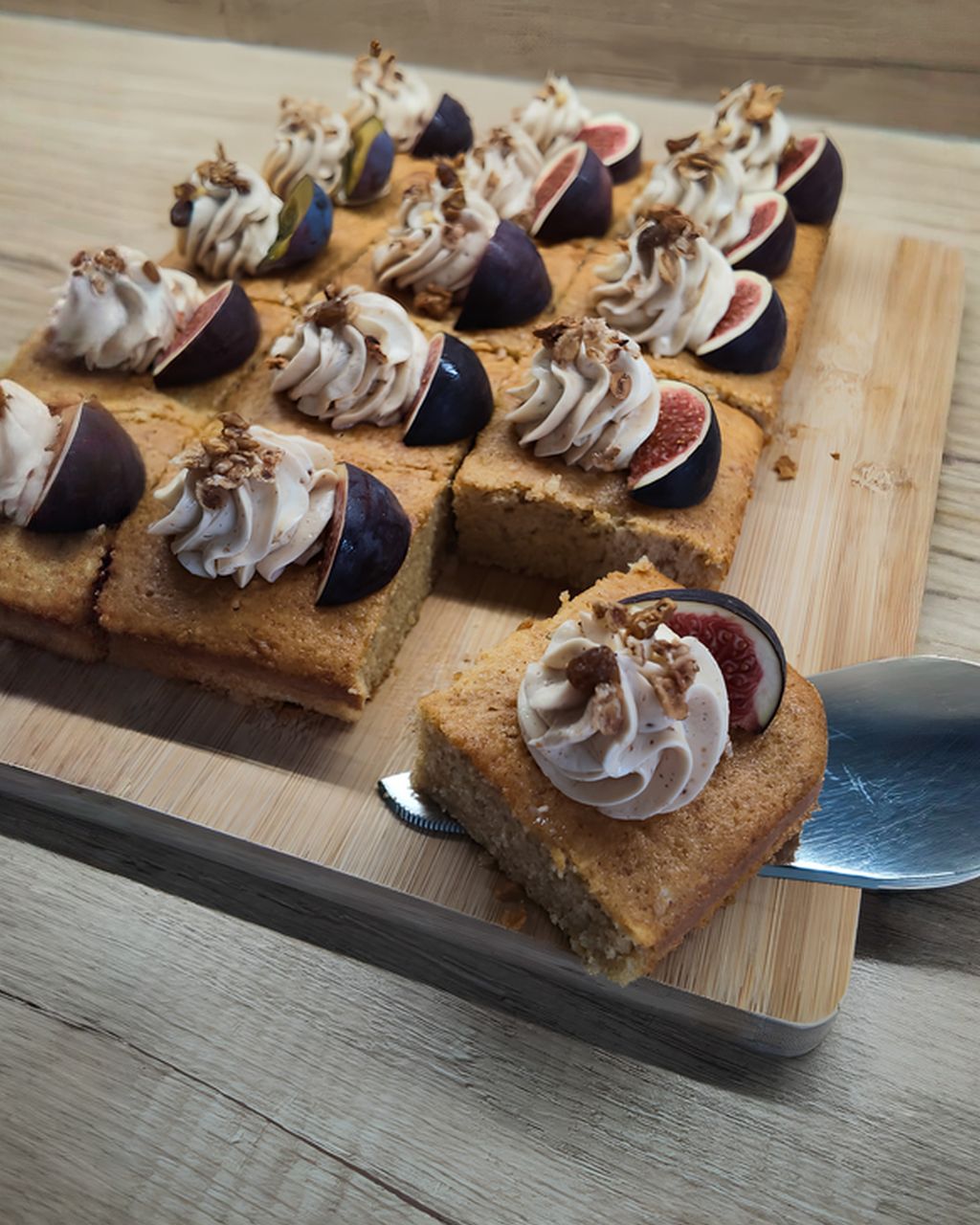
What it is
Baked granola is a breakfast cereal and snack food composed of rolled oats, nuts, seeds, and sweeteners such as honey, maple syrup, or brown sugar, baked with oil until crisp, toasted, and golden brown. The mixture is stirred during baking to ensure even browning and a loose, crunchy consistency, often forming satisfying clusters. Dried fruits, chocolate, or spices are frequently added after baking.
How it tastes
Baked granola delivers a deeply satisfying sensory experience: the dominant notes are toasty and nutty, underscored by a honeyed sweetness that deepens into caramel undertones during baking. The Maillard reaction and caramelization impart a rich, complex flavor with hints of butterscotch and warm spice. Each bite offers a satisfying crunch that gives way to the earthy depth of whole oats and the buttery richness of toasted nuts.
Did that help? We’ll send you more tips by email.
Seasonal baking plans, tested recipes and kitchen tricks that save you time. Unsubscribe in one click.
Common questions
What is the difference between granola and muesli?
How do I keep homemade granola crunchy?
Is granola healthy or high in sugar?
Can you freeze granola?
Why does my homemade granola burn on the edges?
Deep dive
5 min read
Varieties
Commercial and homemade granolas span an impressive range of styles. Classic honey-oat granola remains the benchmark, featuring golden clusters sweetened with honey and enriched with almonds. Maple-pecan varieties showcase the amber depth of pure maple syrup with buttery pecans. Tropical granolas incorporate coconut flakes, macadamia nuts, and dried mango or pineapple. Chocolate-lovers gravitate toward varieties studded with cocoa nibs or dark chocolate chips. Other options include low-sugar versions sweetened with stevia or erythritol, high-protein iterations packed with hemp seeds and nuts, and grain-free granolas built on coconut and seeds for paleo adherents. Ancient grain granolas incorporate quinoa flakes, amaranth, or buckwheat for added nutritional complexity.
History
Granola's origin story begins in 1863 at Our Home on the Hillside, the sanitarium in Dansville, New York, where Dr. James Caleb Jackson created "granula"—twice-baked graham flour crumbled into nuggets that required overnight soaking in milk. Jackson, a health reformer who believed illness originated in the digestive system, positioned his creation as a virtuous alternative to the heavy, meat-laden breakfasts of Victorian America. In 1877, Dr. John Harvey Kellogg developed a similar product at his Battle Creek Sanitarium in Michigan, combining oats, wheat, and cornmeal. After Jackson sued, Kellogg renamed his version "granola," and by 1889 he was selling around two tons a week. The cereal faded from prominence until the counterculture movement of the late 1960s resurrected it. The pivotal moment came at the 1969 Woodstock festival, when food scarcity threatened to derail the event. Hugh "Wavy Gravy" Romney of the Hog Farm commune famously announced "breakfast in bed for four hundred thousand" and distributed thousands of cups of granola to hungry festival-goers. This act cemented granola's association with the health-food and hippie movements. Heartland Natural Cereal and Quaker 100% Natural both launched in 1972 as some of the first mass-market granolas, and the industry has expanded exponentially since.
Science
The alchemy of baked granola hinges on two fundamental chemical reactions that transform humble oats into a symphony of flavor and texture. The Maillard reaction—that magical dance between amino acids and reducing sugars discovered by French chemist Louis-Camille Maillard in 1912—creates the complex, toasty flavors and golden-brown color that define quality granola. Simultaneously, caramelization of sugars, which starts at around 110 °C for the fructose in honey and at around 160 °C for sucrose, produces hundreds of flavor compounds and contributes to the characteristic crunch. Water activity is the third critical variable: baking gradually removes moisture from the oats and other ingredients, while fats and sugars further lower water activity, creating the conditions for crispness. The cooling phase is equally important—as the granola cools on the baking sheet, the sugars solidify into a glassy matrix that binds oats into clusters and delivers that satisfying snap. Research has shown that sweetener choice significantly impacts the final product: honey and agave syrup produce different sugar profiles (fructose-dominant) compared to stevia-sweetened versions (saccharose and maltose-dominant). Notably, hydroxymethylfurfural (HMF), a compound formed during the Maillard reaction, varies considerably based on baking method and sweetener, with microwave-baked stevia granola showing the lowest levels.
Sourcing and ethics
Conscious granola consumption requires attention to several sourcing considerations. Oats are generally a sustainable crop with lower environmental impact than many grains, though conventional cultivation, particularly in North America, may involve pre-harvest glyphosate desiccation—look for the EU organic logo if this concerns you. Nut sourcing presents more complex challenges: almonds, a granola staple, require significant water resources, primarily in drought-prone California. Seek out brands that prioritize sustainable almond farming practices or consider granolas featuring lower-impact nuts like hazelnuts or locally-sourced walnuts. Honey sourcing matters for both ethical and quality reasons—raw, locally-sourced honey from apiaries practicing sustainable beekeeping supports pollinator health. For vegan granolas, maple syrup from certified sustainable operations offers an excellent alternative. Palm oil occasionally appears in commercial granolas; if present, ensure it carries RSPO (Roundtable on Sustainable Palm Oil) certification. Fair trade certifications matter for ingredients like chocolate, coconut, and certain dried fruits.