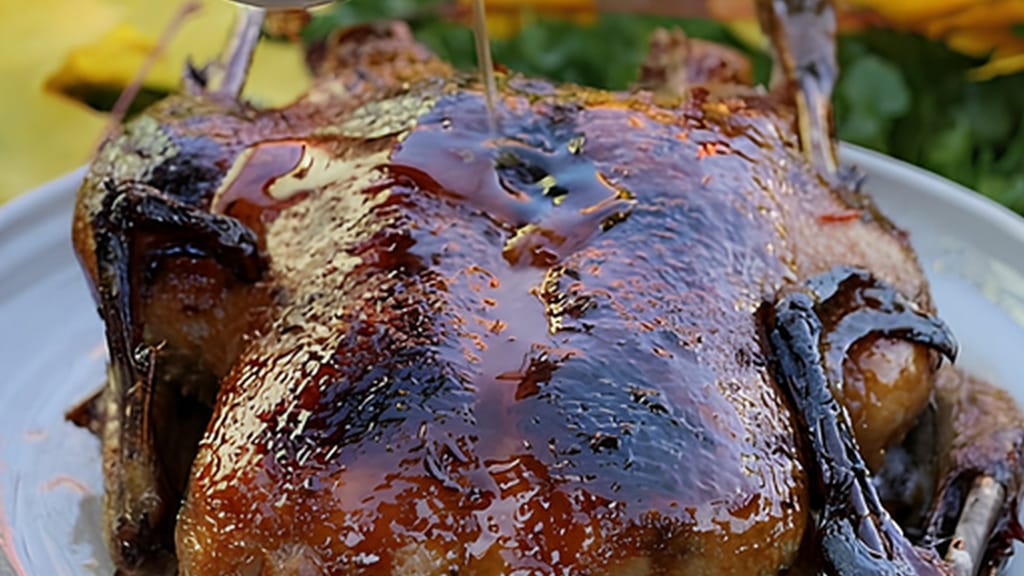
Slow-roasted honey duck
Duck Recipes: Roast Duck, Pan-Seared Duck Breast and What to Make with Leftovers
Updated Nov 20, 2026
At home, duck works best in three ways: a whole duck roasted low and slow under a lid and glazed with honey at the end, duck breasts seared skin-side down in a pan, and pulled duck from a slow-roasted bird, which you can turn into burgers or gnocchi. For each method you'll find a tested recipe, an explanation of why it works, and the mistakes to avoid. At the end there's also wild duck, which behaves very differently in the kitchen from farmed duck.
Every good roast duck recipe rests on two stages: first long and gentle under a lid, so the meat turns tender and the fat renders out, then short and hot with the lid off, so the skin crisps. Duck has a thick layer of fat under the skin. If you roast it at high heat from the start, the skin burns before the fat has melted, and the meat near the bone stays tough. If you braise it under a lid the whole time, the meat is tender but the skin turns rubbery.
What to watch for in the first stage:
Don't rinse the duck, just dry it. The UK Food Standards Agency warns that rinsing raw chicken splashes bacteria around the kitchen in water droplets, and that only cooking kills them. The same goes for duck, as in our honey duck recipe: pat it dry with paper towels, then wash your hands and everything the raw poultry touched with warm water and dish soap.
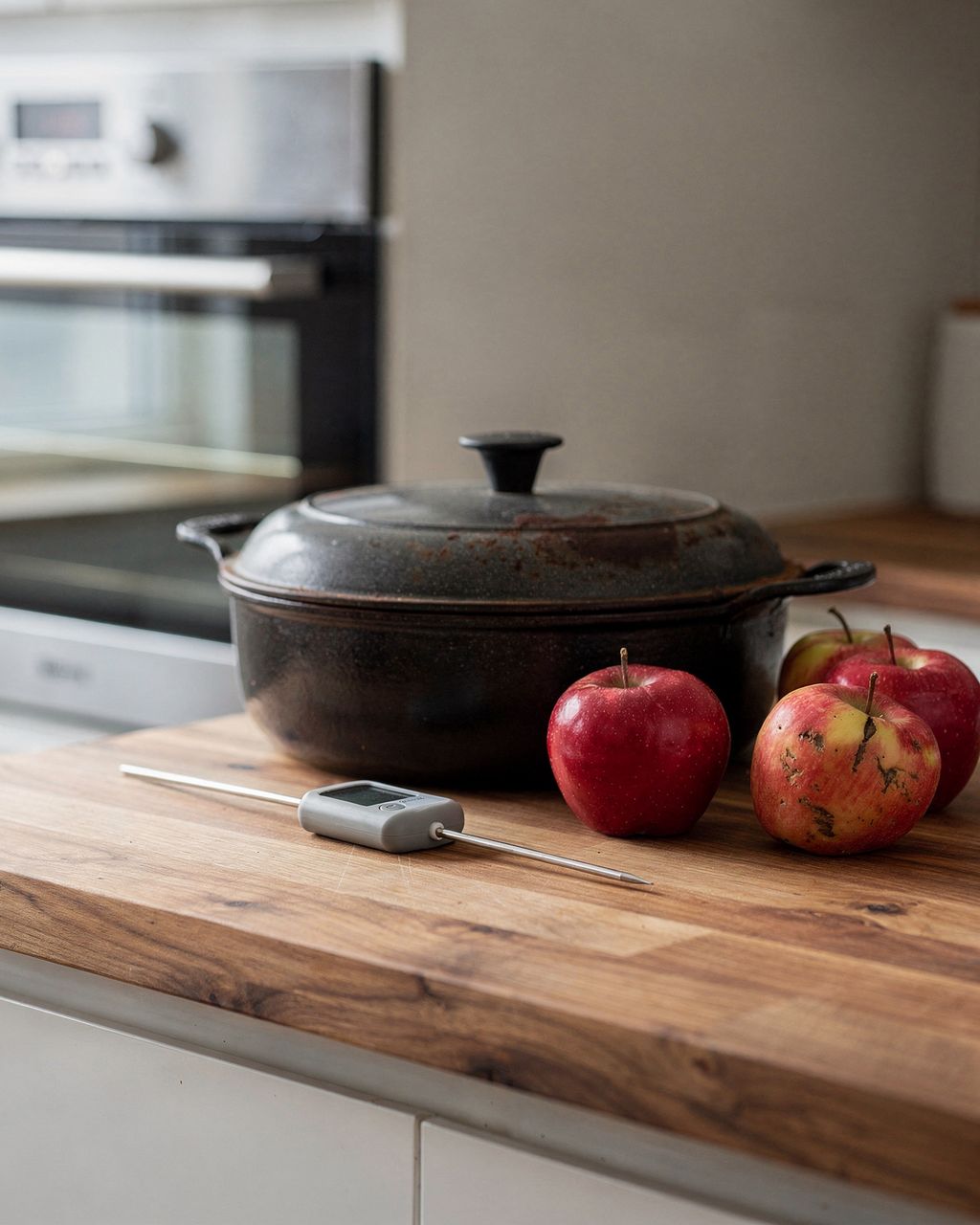
A roasting pan with a lid. Steam under the lid keeps the meat moist. A cast-iron pan holds heat for a long time, so the temperature doesn't swing as much during slow roasting.
Salt and pepper are enough. Add caraway if you want the Czech classic; leave it out of the honey version.
The second stage takes about half an hour at 220°C (425°F) with no lid. Before that, pour off the fat that has rendered out into a jar: skin sitting in fat won't crisp, it fries in it and stays soft. For an exact chart of temperatures and times by duck weight, see our article how long to roast a duck and at what temperature.
How to tell when it's done: the meat comes away from the bone with a fork and no resistance. If you want certainty, measure the temperature in the thickest part of the thigh. The US food safety agency USDA FSIS gives a minimum internal temperature of 165°F (74°C) for duck, measured in the thickest part of the thigh and breast. For low-temperature roasting it's worth having an oven thermometer: a home oven can easily be off by ten degrees from the dial, and with slow roasting that shows up as an hour more or less in cooking time.
Which duck to buy: for whole-duck recipes you need a whole duck with skin and bones, while for quick dishes skin-on duck breasts are enough. A whole duck of about 2.5 kg (5.5 lb) feeds four people, which matches the number of servings in our recipes. Bones and fat make up a large part of the weight, so the duck looks bigger than what you end up eating.
If you have time, salt the duck a day ahead. Salt on the skin draws out moisture, the meat is seasoned evenly right to the bone, and a duck left uncovered overnight on a rack in the fridge has dry, taut skin in the morning, the kind you'd otherwise only find in a restaurant. Put it on a rack over a tray on the bottom shelf of the fridge so nothing drips onto other food. Add pepper and other spices just before roasting, as overnight they would turn bitter on the surface. You can put a halved apple, an onion or a piece of orange in the cavity; it scents the meat and keeps it moister from the inside.
The most common roast duck mistakes:
Wet skin. The water has to evaporate first, and only then does the skin start to crisp. A dried duck left uncovered in the fridge for a few hours crisps best.
Too high a temperature from the start. The skin browns and the fat stays trapped under it.
The duck sits in fat. Pour off the drippings before the final roasting, or the underside stays soft.
Carving straight out of the oven. Let the duck rest for ten minutes so the juices settle in the meat and don't run out onto the board.
Seasonal baking plans, tested recipes and kitchen tricks that save you time. Unsubscribe in one click.
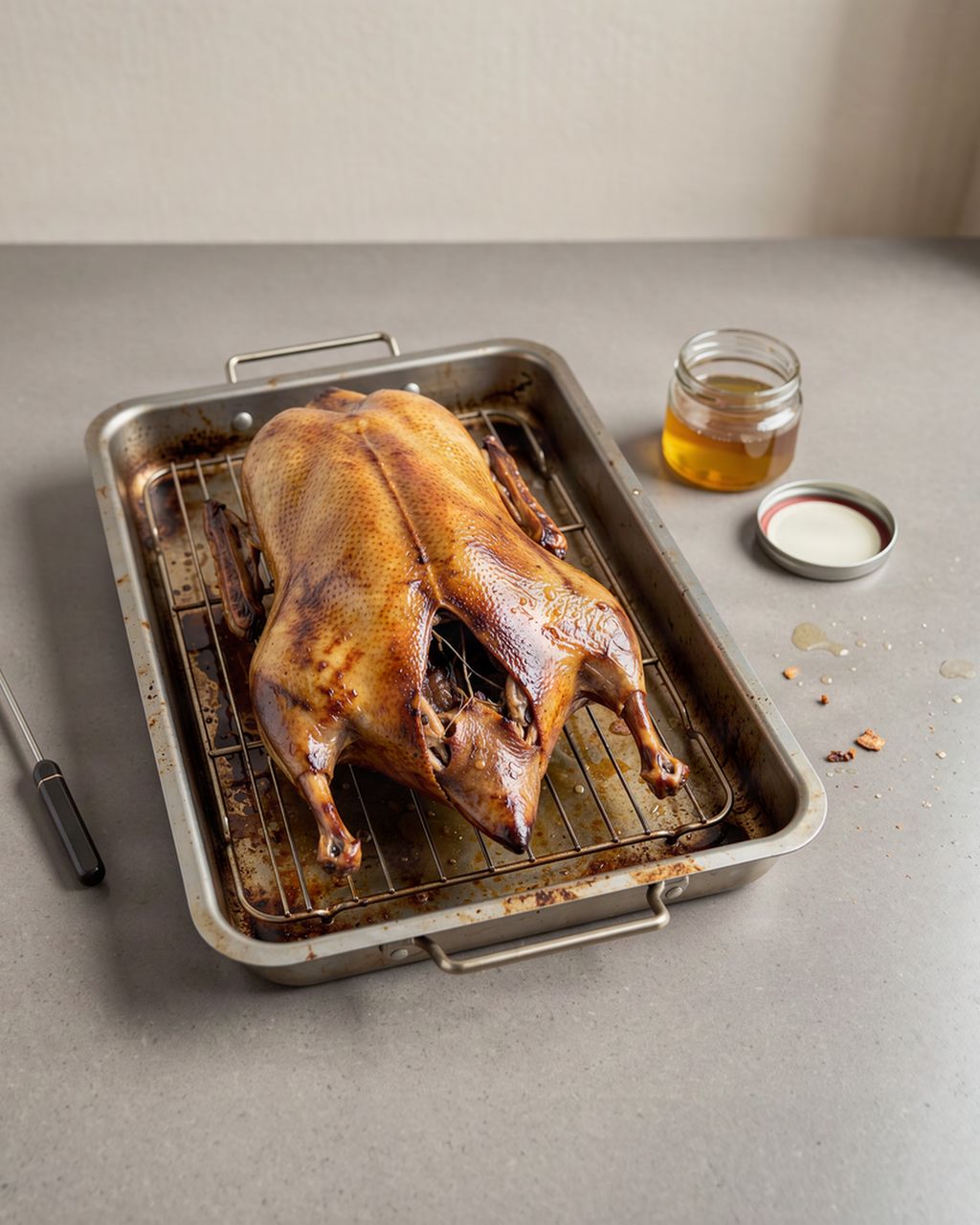
Honey duck is glazed only in the last half hour of roasting, never from the start. Honey is sugar, and at 220°C (425°F) it browns within minutes. If you brushed it on at the beginning, after five hours it would be a bitter black crust.
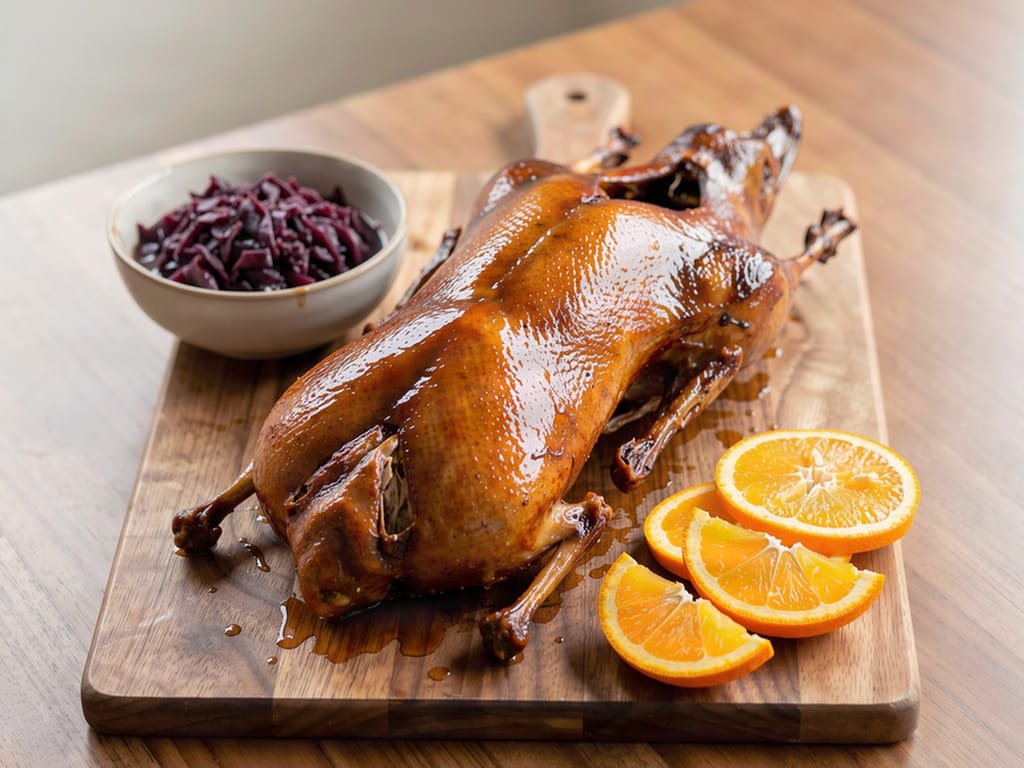
Our recipe for slow-roasted honey duck shows how little you need: duck, salt, pepper and, for the glaze, 50 g honey, 20 ml light soy sauce and 20 ml sweet white wine. You dry the duck, season it with salt and pepper and roast it under a lid. Then you uncover it, brush it with the glaze, turn the oven up to 220°C (425°F) and finish it for about 30 minutes, brushing it a few more times. The whole thing takes about five and a half hours, of which only a few minutes are hands-on work.
Why this trio:
Honey gives shine and caramel color.
Soy sauce adds saltiness and depth, so the glaze doesn't taste like dessert.
Sweet white wine thins the glaze so it can be brushed on, and adds a gentle acidity against the fat.
Brush the glaze on thinly and several times. One thick layer runs into the pan and burns on the bottom; three thin layers build a glossy, sticky surface. If one spot colors too fast, usually the wing tips, cover it with a piece of aluminum foil. A finished glaze is glossy, dark amber and tacky to the touch, not runny; if it's still dripping off the duck, leave it in the oven for a few more minutes.
The glaze works on a simple sweet + salty + sour principle, and within that framework you can play with it: use orange juice instead of wine, stir a teaspoon of mustard into the honey, or swap the honey for maple syrup. The rule stays the same: brush it on only at the end.
There are three ways to cook duck slowly:
Five hours at 150°C (300°F), when you want to slice it into portions.
Overnight at 100°C (210°F), about 13 hours, then three more hours at 120°C (250°F), when you want meat that falls apart into shreds on its own.
Duck breasts in a slow cooker, when you want lean meat that won't dry out.
The principle is the same for all of them: low heat and time melt the connective tissue and the fat. They differ only in how far you let it go.
Five hours at 150°C (300°F). This is how the duck is roasted in the burger recipe discussed below: the salted and peppered duck goes into a lidded baking dish in an oven heated to 150°C (300°F), and you leave it alone for five hours. Then you uncover it, brush it with a mix of honey, soy sauce and white wine and finish it at 220°C (425°F) for about 30 minutes until crisp. The meat is tender but still holds together.
Overnight. A duck in a lidded roasting pan spends about 13 hours in a 100°C (210°F) oven, from seven in the evening to eight in the morning. In the gnocchi recipe it's first seasoned with salt, pepper and caraway, and in the morning, around eight, you turn the oven up to 120°C (250°F) and roast for three more hours, until the meat comes off the bone without resistance and a thermometer in the thigh reads at least 74°C (165°F). The result isn't for slicing; it's meat for pulling. We cover why and how to roast meat overnight in general in our article on roasting meat overnight.
Slow roasting has a benefit that's easy to overlook: you're left with plenty of duck fat and drippings in the pan. Strain them through a sieve and save them. The fat is great for frying potatoes, dumplings (noky) and onions, and the drippings add flavor to a sauce or salad, as you'll see in the recipes below.
Slow cooker. Slow cooker duck breasts with oranges are marinated overnight in a mixture of orange liqueur, water, white pepper, rosemary sprigs and slices of orange. The next day you dry them, sear them skin-side down, pour the marinade over them (boil it hard for about a minute first, because raw meat sat in it) and cook them in the slow cooker for an hour on high or an hour and a half on low. Don't lift the lid unnecessarily: every time you open it heat escapes and the cooking time gets longer. They're done when they're tender, clear juices run out when pierced, and they reach at least 74°C (165°F) in the thickest part. Finally, you crisp the skin in a hot dry pan, reduce the sauce and serve with sweet potato purée, leeks fried in butter, crispy fried onions and cream.
Which route to choose? Five hours at 150°C (300°F) is for a Sunday lunch, when you want to carve the duck and serve it with a side. Overnight roasting is for pulled meat and for a day when you want it nearly done by itself in the morning. The slow cooker suits duck breasts, which are otherwise easy to overcook and dry out in a pan.
Slow-roasted honey duck
Slow-roasted honey duck with a soy sauce and white wine glaze
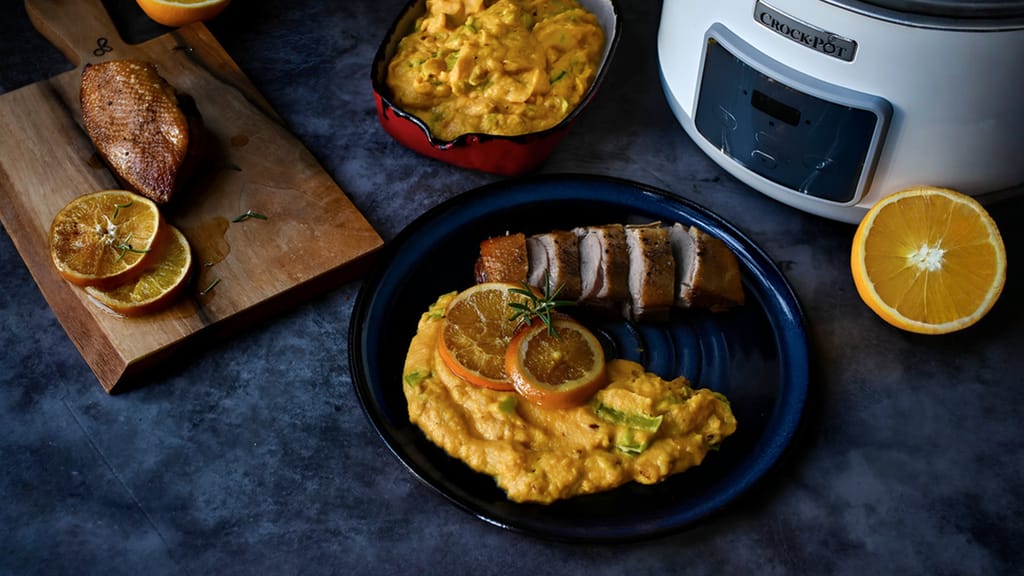
Slow cooker duck breast with orange
Slow cooker duck breasts with oranges and sweet potato purée
Asian-style duck rests on three things: a sweet-salty glaze, aromatic spices (star anise, cinnamon, ginger, Sichuan pepper) and very crisp skin. You already have half of that: the honey and soy sauce glaze in the honey duck recipe is every bit as sweet-salty as the glazes you know from Asian bistros.
How to take it further east, for now without a separate recipe on Yumsto:
Five-spice duck breasts. Score the skin in a crosshatch, rub the breasts with salt and a teaspoon of Chinese five-spice, and leave them uncovered in the fridge for at least an hour so the skin dries out. Sear them as in the pan-seared duck breast section below, skin-side down starting in a cold pan. At the end, add a spoonful of honey and a spoonful of soy sauce to the pan and turn the breasts briefly in it so a glossy coating sticks. Add the honey only right at the end; in a pan it burns even faster than in the oven.
Spiced glaze for a whole duck. Add grated ginger and a pinch of five-spice to the honey glaze, or sharpen it with a drop of rice vinegar. It's brushed on just like the basic one, at the end and thinly.
Asian duck goes well with jasmine rice, thin pancakes for wrapping the meat and plenty of fresh vegetables: cucumber cut into strips, scallions, cilantro. The sharpness of the cucumber and scallion does the same thing against the fatty skin that sauerkraut does in the Czech version. You'll find more ideas in our article Asian dishes at home.
You can make three types of dishes from duck: quick pan-seared duck breasts in under an hour, dishes from the pulled meat of a slow-roasted duck (burgers, gnocchi) and classic roast duck with cabbage. Which way to go depends mainly on time: breasts are for a weeknight, a whole duck for the weekend.
How to use each part of the duck:
Breasts are the leanest and quickest; a short time in the pan and they're ready in a quarter of an hour.
Legs are fattier and firmer; they need long roasting or braising, and then they're the juiciest part of the whole duck.
Skin and fat render into duck fat and crisp cracklings.
The carcass and wings are the base for a stock that you can turn into a sauce or soup.
A weekend plan that covers everything: on Saturday evening cook the red cabbage and put the duck in to roast overnight, on Sunday morning change the temperature, and serve at noon. Pull whatever is left over, and on Monday you have gnocchi.
Duck breasts are seared skin-side down first, until the fat renders and the skin crisps, and only then briefly turned over. High heat is a mistake: the skin blackens and the fat stays under it. Before searing, dry the breasts, leave them at room temperature for an hour and score the skin with diagonal cuts through the fat only, not into the meat. A drop of oil in the pan is enough; the skin gives off more than enough of its own fat.
Cold pan or hot pan? Both work; it comes down to how much fat and time you have:
Starting in a cold pan is the most reliable route to thin, glassy-crisp skin. You place the breasts skin-side down in a cold pan and gradually heat it to medium. The fat renders slowly before the surface of the skin sets, and the breasts don't curl. It suits breasts with a thick layer of fat above all.
A pan preheated to medium is quicker, and it's the method our recipes below rely on: 5–8 minutes skin-side down. It suits breasts with a thinner layer of fat, or when you're in a hurry. In a hot pan, though, the skin mustn't start sizzling and shrinking right away; that's already too hot.
As a guide: a typical duck breast weighing 250–300 g (9–10 oz) needs 5–8 minutes skin-side down in a preheated pan, a few minutes more if you start from a cold pan, and then 2–4 minutes on the other side, or you can finish it in the oven. Keep spooning off the fat that collects in the pan into a bowl, or the skin starts to fry and darkens before it has rendered. Whether it's done isn't decided by color but by a thermometer: USDA FSIS recommends 165°F (74°C) in the thickest part for duck. After searing, let the breasts rest for five minutes skin-side up and slice them across the grain into diagonal slices. That way the skin stays dry and crisp on top and the meat loses less juice.
Duck breasts with cabbage and bacon. The recipe for duck breasts with a crunchy cabbage and bacon salad is a Czech classic in a quick form. White cabbage with bacon, caraway and wine vinegar isn't braised here but fried for about ten minutes over the highest heat you can manage, so it stays crunchy and its acidity balances the fatty skin.
Beluga lentil salad with duck breasts. The beluga lentil salad with duck breasts is ready in about an hour and twenty minutes and tastes good warm or lukewarm. Its trick: beluga lentils cooked for only about 20 minutes hold their shape, and the juices and fat from the roasting pan go into the salad too, giving it a duck flavor. You'll find more warm salads for winter in our article winter salads.
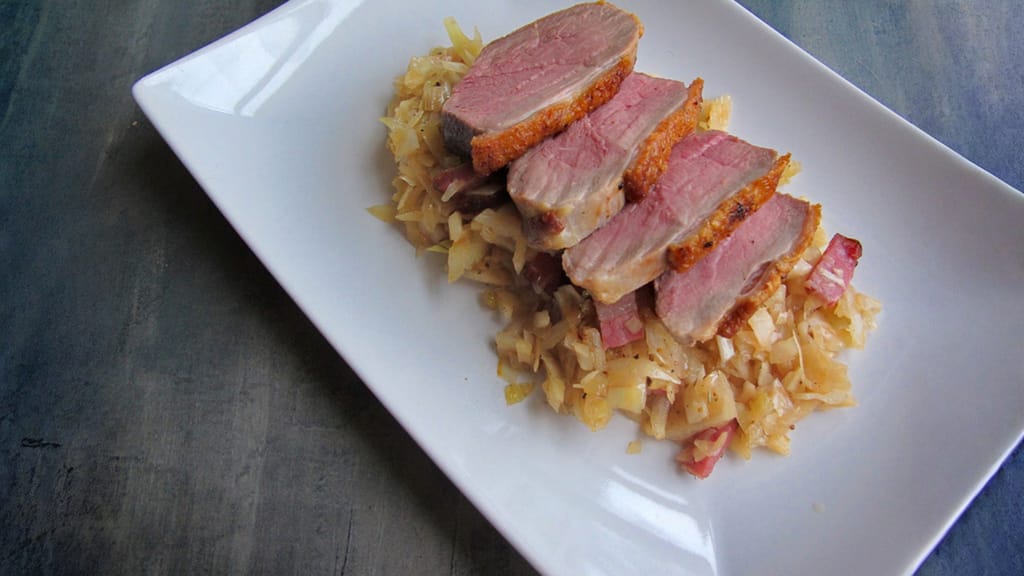
Duck breast with crispy cabbage and bacon salad
Duck breasts with a crunchy cabbage and bacon salad
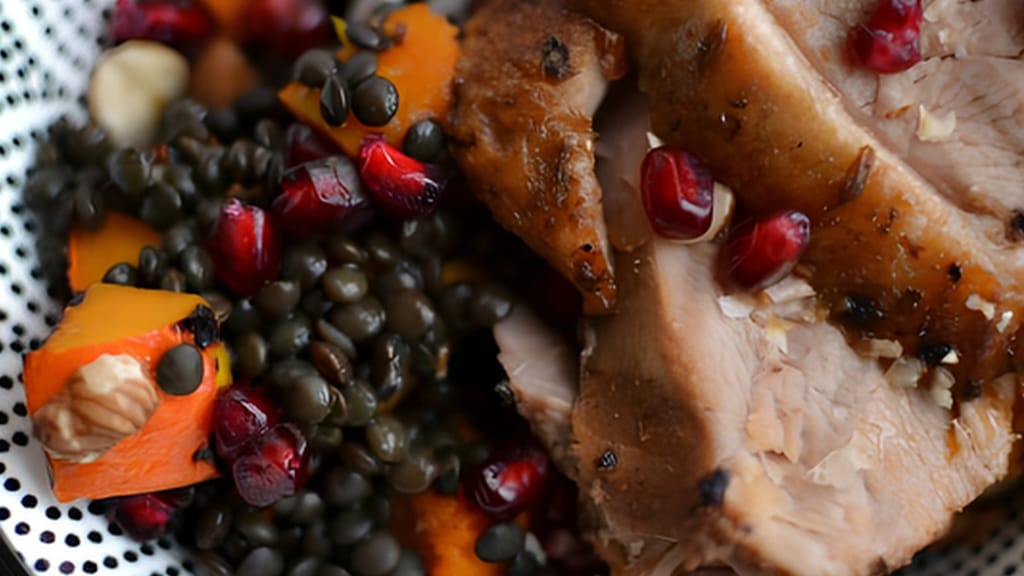
Beluga lentil salad with duck breast
Beluga lentil salad with roasted pumpkin and duck breasts
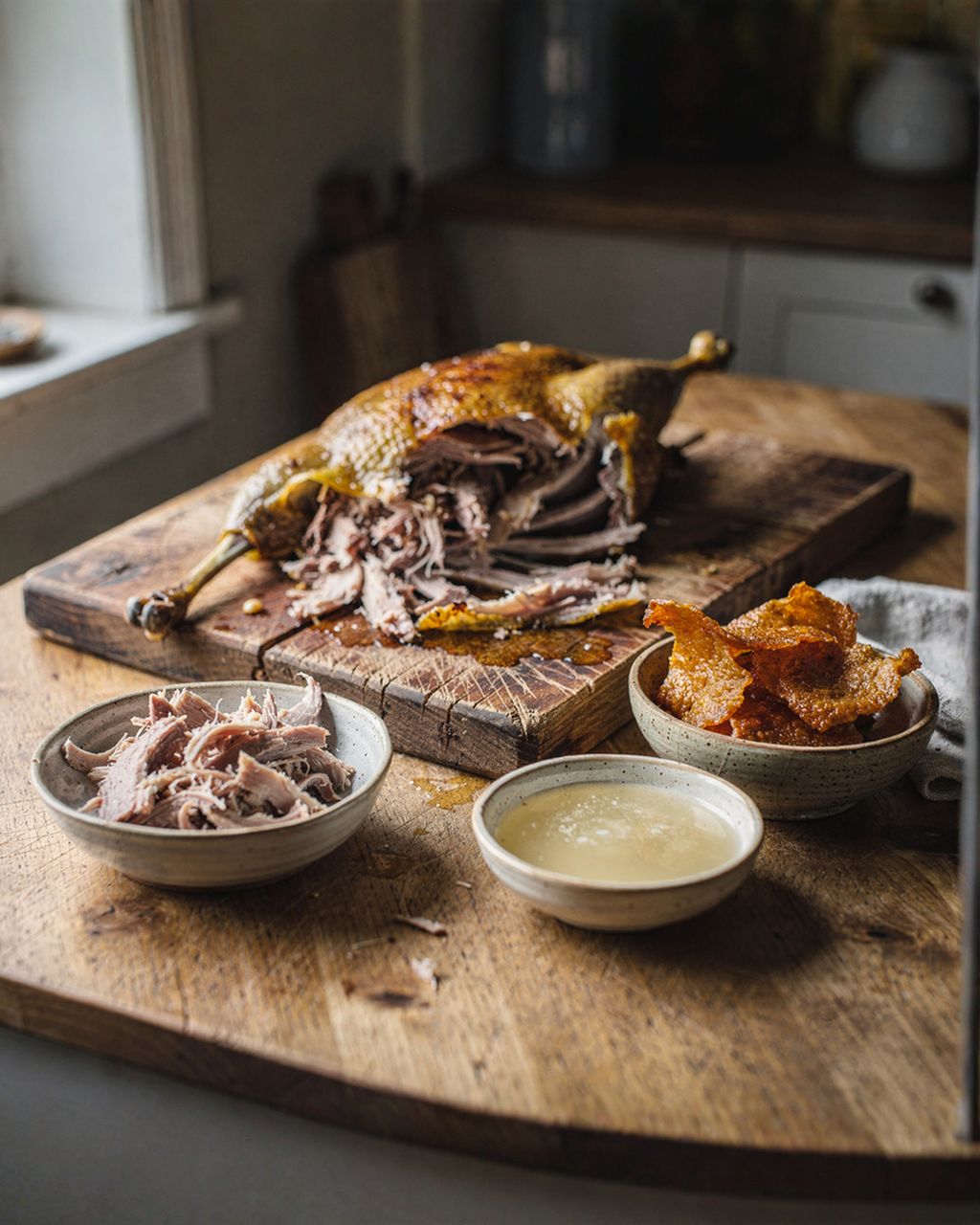
Pulled duck comes from a duck roasted for so long that it can be taken apart into shreds with two forks. You remove the skin, pick the meat from the bones and strain the drippings. One duck gives you meat for four.
Pulled duck burger. The pulled duck burger on a homemade bun is a weekend project of about ten hours, though half of that the duck roasts by itself, five hours at 150°C (300°F). The flavor is tied together by onions cooked for a good hour until brown and simmered with red wine: their sweetness balances the rich meat. For burgers in general, from the meat to the buns, see our article homemade burger.
Gnocchi with pulled duck. The potato gnocchi with pulled duck start with a duck roasted overnight with salt, pepper and caraway. The key is to fry the gnocchi in a pan in a single layer so they crisp rather than steam, and then to do everything in the duck fat and drippings left over from the roasting.
If you have meat, skin, carcass or fat left over after a Sunday roast duck, you don't need to roast a new one: what to do with each of them is covered in our article leftover roast goose and duck. Shredded leftover meat works just as well in a burger as in gnocchi.
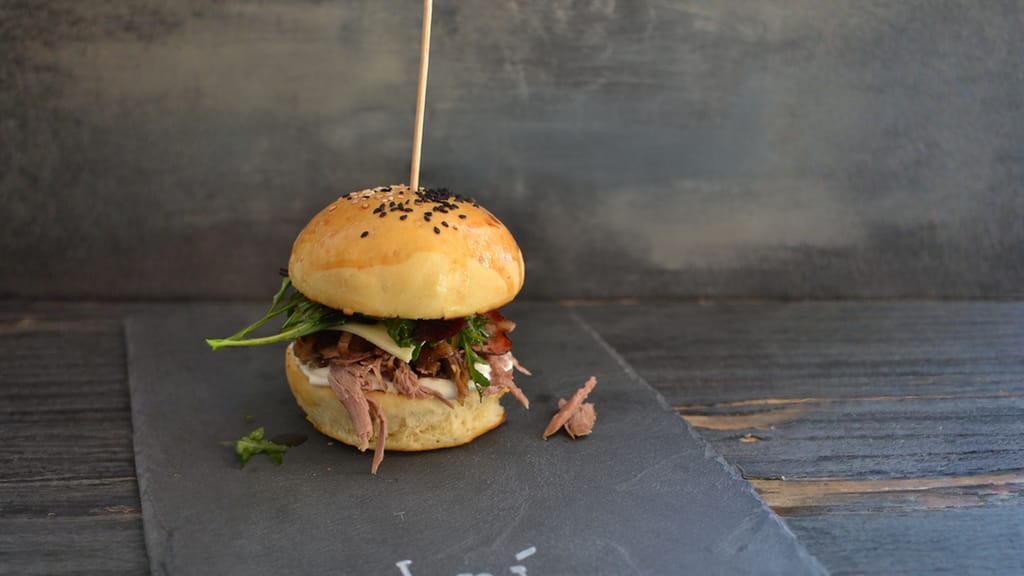
Pulled duck burger on homemade buns
Pulled duck burger on a homemade bun with red wine onions
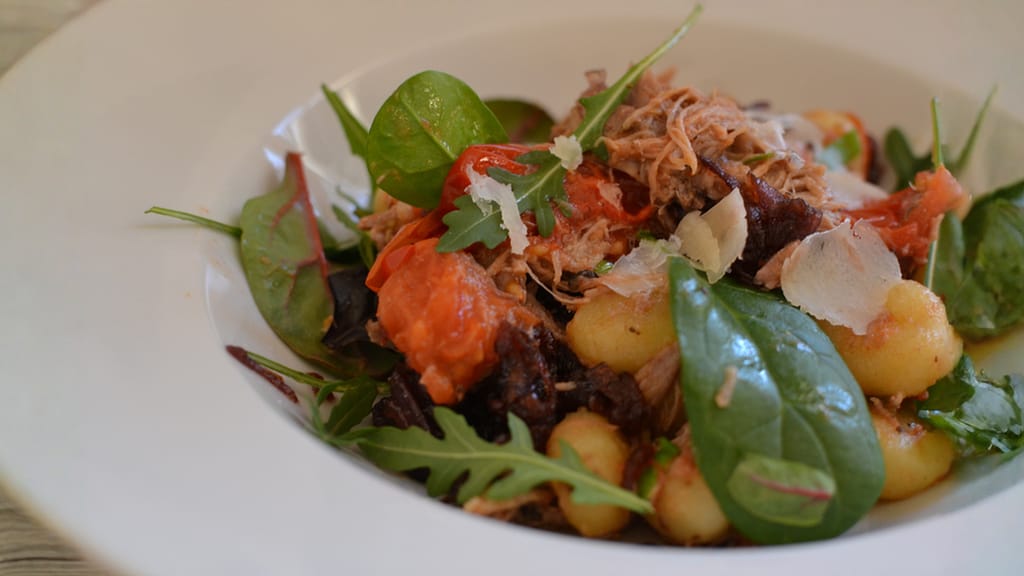
Potato gnocchi with pulled duck
Potato gnocchi with pulled duck, red wine onions and cherry tomatoes
Duck calls for a sweet-and-sour side that balances the fat, and in Czechia that's most often braised red cabbage. The acidity of vinegar and wine together with the sweetness of sugar balances rich meat better than any sauce.
Sweet-and-sour braised red cabbage made from a head of red cabbage braises for about half an hour and is best when it then rests for at least an hour, or even until the next day, so the flavors come together. So cook it a day ahead: on the day you roast the duck you have one less thing to worry about, and the cabbage will be better.
Add the sugar and vinegar only at the end and little by little, tasting and looking for the point where the cabbage is neither sour nor sweet but both at once. You can add duck fat from the roasting pan to the cabbage in place of some of the fat; it will then go even better with the duck.
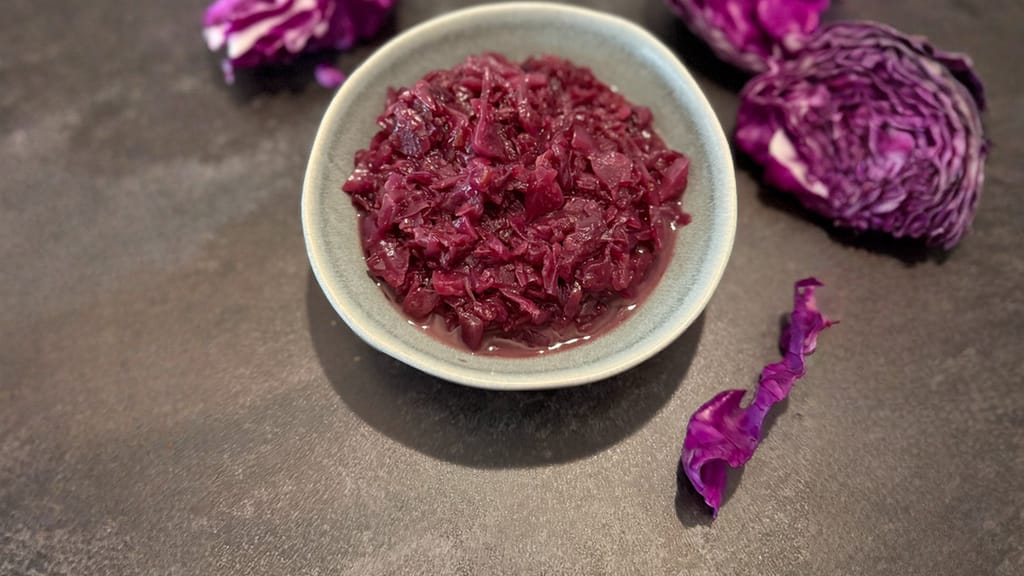
Sweet and sour braised red cabbage
Sweet-and-sour braised red cabbage for duck
With wild duck, the best approach is breasts seared briefly in a pan and legs braised for a long time in wine; don't roast it whole like a farmed duck. Wild duck is smaller and leaner, with darker, stronger-tasting meat. It lacks the thick layer of fat that protects a farmed duck during long roasting, and a whole one would dry out in the oven. The most common game duck here, the mallard, usually weighs around a kilo (2.2 lb), at most a kilo and a half (3.3 lb), so one bird is roughly enough for two.
We don't have a separate recipe for it on Yumsto yet, but the principle is simple: breasts short, legs long.
Breasts short. Bone them and sear them like duck breasts, only for less time, because there's little fat under the skin: roughly 3–4 minutes skin-side down in a preheated pan and 2–4 minutes on the other side, until a thermometer in the thickest part reads 74°C (165°F). Let them rest for five minutes and slice thinly. In the pan drippings, then reduce orange juice with a teaspoon of honey until it thickens, and you have a quick tangy sauce for them.
Legs long. The legs and carcass are tough and belong in a slow braise. Brown them until golden, pour in red wine and stock, add root vegetables, juniper and a bay leaf, and braise under a lid for 2–3 hours, either on the stovetop over low heat so the liquid barely trembles, or in the oven at 160°C (320°F), until the meat comes off the bone. Strain the juices and reduce them into a sauce. You can then pick the meat from the bones and return it to the sauce, or serve the legs whole.
Against the "gamey" flavor it helps to soak the meat overnight in buttermilk, or in a marinade of red wine and juniper.
The same internal temperature applies as for farmed duck: USDA FSIS gives 74°C (165°F) for wild duck too.
Restaurants often serve duck breast pink, but the US agency USDA FSIS recommends an internal temperature of 165°F (74°C) for duck, measured with a thermometer in the thickest part. Color alone doesn't tell you whether it's cooked: according to USDA, meat can still look pink even after it has reached a safe temperature, so rely on a thermometer, not your eyes.
Use raw duck within one to two days of buying it, according to USDA FSIS; if you can't get to it in time, freeze it. Store it on the bottom shelf of the fridge so the juices can't drip onto other food.
Thaw frozen duck in the fridge, not on the counter. According to USDA FSIS, a whole duck takes a day or two in the fridge, sometimes longer, and cut-up pieces about a day. Once thawed, pat the duck thoroughly dry again before roasting, because wet skin won't crisp.
Strain the duck fat through a sieve into a clean jar, let it set and keep it in the fridge. It's one of the best fats for frying potatoes, dumplings (noky) and onions, because it handles high heat and gives food a subtle duck flavor.
Duck is most often paired with a lighter red wine with pronounced acidity, such as Pinot Noir (Rulandské modré) or Saint Laurent (Svatovavřinecké), because the acidity brightens the rich meat and the tannins don't overpower it. For honey duck or Asian-style duck, an off-dry white wine with a fruity aroma works too.
Yes. You can roast the duck a day ahead, refrigerate it within 2 hours of cooking and crisp the skin just before serving. Reheat the portions in the oven until they reach at least 165°F (74°C) in the middle (USDA FSIS guidance for reheated leftovers), then put them under 220°C (425°F) for a few minutes so the skin crisps up again.
One recipe worth heating the oven for, one tip, and one deal from the shop. Nothing else.