What to Cook with Ground Meat: Ideas with Potatoes, Pasta and Rice, by Type of Meat and for Kids
How to Season Ground Meat: Spices for Meatballs, Meatloaf, Burgers and Stuffed Peppers
Updated Nov 17, 2026
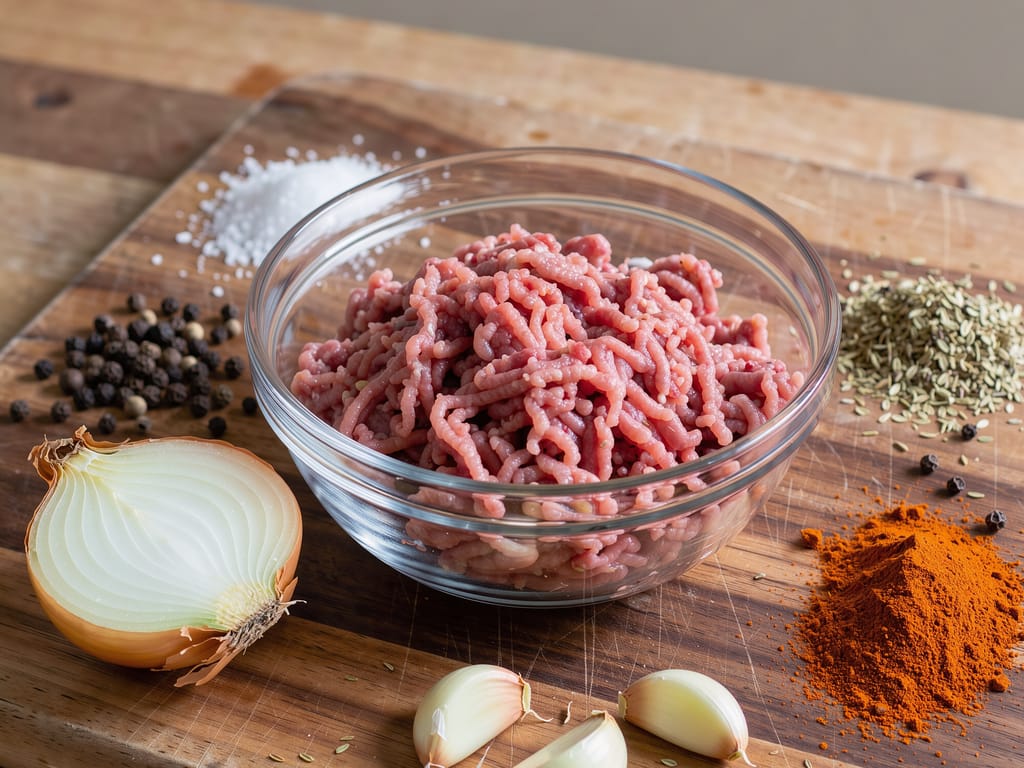
How do you season ground meat? The base is always the same: salt at roughly 1–1.5% of the meat's weight (for 500 g, about 5–7 g, or roughly one level teaspoon of fine salt), freshly ground pepper, garlic and onion. Only then do you build on it: marjoram for meatballs, mustard and sweet paprika for meatloaf, nothing but salt and pepper on the outside for burgers, sweet paprika and rice for stuffed peppers. Below you'll find an exact breakdown for each dish, how to adjust the seasoning without tasting raw meat, and how to keep the meat juicy.
For 500 g of ground meat, use 5–7 g of salt, ½ teaspoon of pepper and 1–3 cloves of garlic, then add marjoram, mustard or sweet paprika depending on the dish. All amounts below are for 500 g of ground meat; 1 teaspoon = 5 ml.
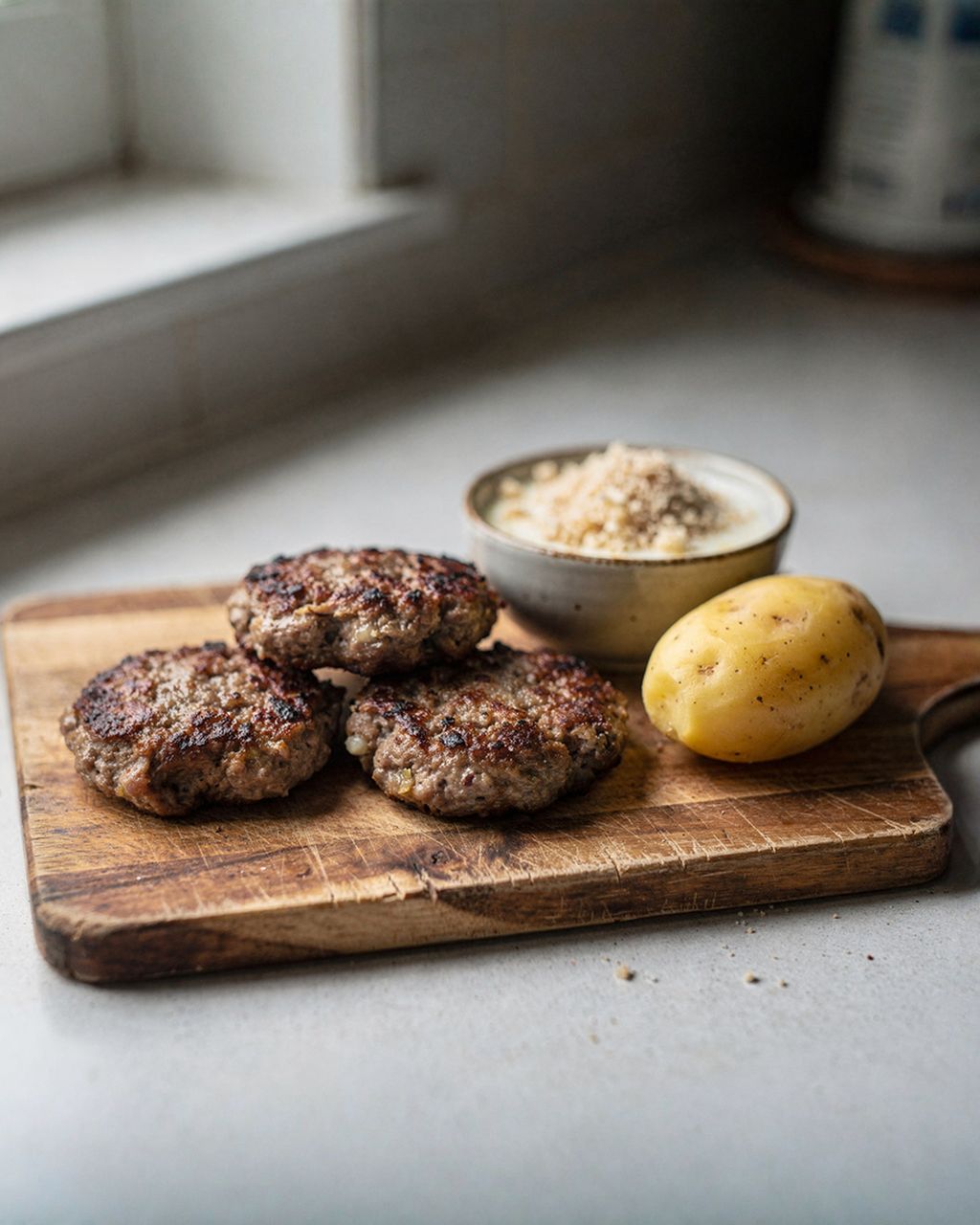
Meatballs (karbanátky): 6–7 g salt, ½ teaspoon pepper, 2 cloves garlic, 1 teaspoon dried marjoram, ½ onion, very finely chopped, 1 egg, 1 bread roll soaked in milk.
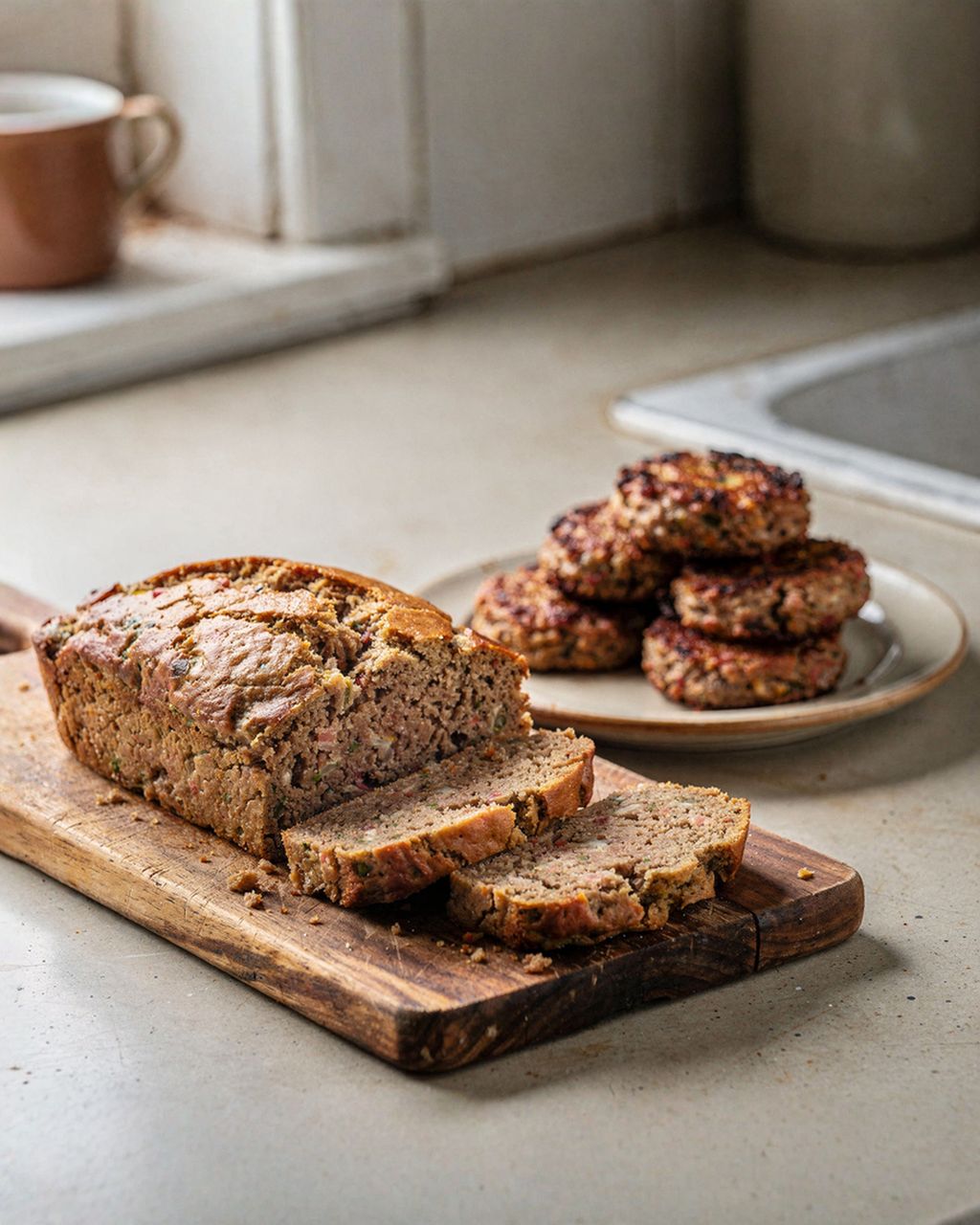
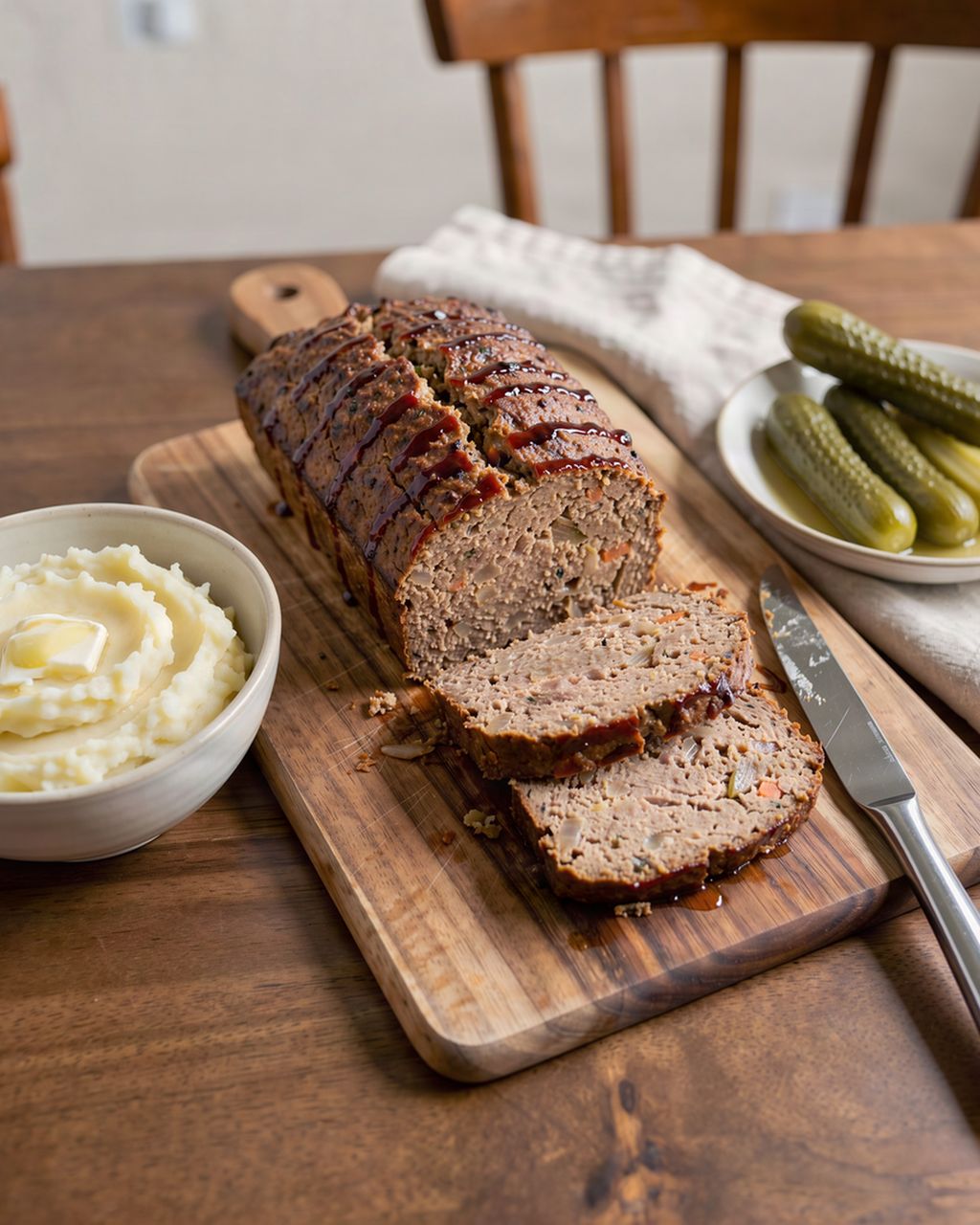
Meatloaf: 7 g salt, ½ teaspoon pepper, 2–3 cloves garlic, 1 teaspoon marjoram, 1 teaspoon sweet paprika, 1 tablespoon whole-grain or full-fat mustard, 1 sautéed onion, a pinch of ground caraway.
Burger (beef): nothing in the meat. Sprinkle about 5 g salt and the pepper on the outside of the patties just before cooking.
Stuffed peppers: 5–6 g salt, ½ teaspoon pepper, 1 teaspoon sweet paprika, 1 clove garlic, ½ onion, 1 egg, 60–80 g raw rice (or roughly double that cooked).
Keep the salt toward the low end when the dish will cook in a sauce (peppers in tomato sauce, meatballs in vegetables), because the sauce will season it for you. Go toward the high end for meat you eat on its own, like meatloaf.
Seasonal baking plans, tested recipes and kitchen tricks that save you time. Unsubscribe in one click.
Ground meat needs roughly 1–1.5% salt by weight, that is 10–15 g per kilo and 5–7 g per 500 g. It's the most reliable guide because it doesn't change with the dish, only with whether a sauce will season the meat afterward.
Don't rely on measuring by eye: a level teaspoon of fine salt weighs about 6 g, while a teaspoon of coarse sea salt usually weighs less, depending on the size of the grains. If you have a kitchen scale, weigh the salt. It's the one seasoning where a few grams make the difference.
Salt does more in ground meat than add flavor. It draws out proteins that bind the meat together, which is why well-salted meatloaf doesn't fall apart. The article why meatloaf and meatballs fall apart covers this in detail. For flavor, the takeaway is simple: mix the salt into meatballs and meatloaf right away, but not into burgers (more on why below).
Classic meatballs get salt, pepper, garlic, marjoram and onion. That's the Czech flavor you expect. Rub the marjoram between your fingers before adding it to release more aroma.
Onion: grated or chopped really finely. Large pieces tear the meatballs apart and stay crunchy.
Garlic: pressed, 2 cloves per 500 g. More will overpower the marjoram.
Extras, if you like: a pinch of nutmeg for pork, a little sweet paprika for color, chopped parsley for freshness.
Beef meatballs suit a bolder addition, such as vegetables mixed right into the meat as in the recipe for beef meatballs with beetroot. If you don't have an egg or can't eat one, you'll find substitute ratios in the article what to use instead of egg in meatloaf and meatballs.
Season meatloaf with the same base as meatballs, adding mustard, sweet paprika and sautéed onion. Meatloaf is baked whole and for a long time, so it can handle, and needs, more flavor than a small patty from the pan.
Mustard (1 tablespoon of full-fat) adds tang and helps bind the meat.
Sautéed onion instead of raw: in the oven, raw onion wouldn't have time to soften and turn sweet.
Sweet paprika gives color and gentle sweetness; smoked paprika adds a smoky note.
Ground caraway only on the tip of a knife. In meatloaf you want to sense it, not taste it.
Seasonal variation: in spring, replace part of the garlic with wild garlic, as in spring meatloaf with wild garlic.
Season burger meat with only salt and pepper, and only on the surface of the patties just before cooking. Everything else, such as cheese, onion and sauces, belongs in the bun, not in the meat.
Why so strict: if you mix salt into the meat ahead of time, it binds the proteins into an elastic gel, and the cooked burger has a firm, "rubbery" texture more like a sausage. J. Kenji López-Alt of Serious Eats described this in his tests. In meatballs that cohesion is desirable; in a burger it isn't.
Use beef with about 20% fat (chuck, for example).
Shape the meat only lightly, and don't knead it.
Salt and pepper both sides only when the patties are going onto a hot pan or grill.
Inspiration for the whole burger: homemade cheeseburgers with cheddar and onion or homemade mushroom burgers. For how long to cook the patties, see the article ground meat in a pan: how long to fry burgers and meatballs.
Season the meat for stuffed peppers with salt, pepper, sweet paprika, a little garlic and onion, and add rice. Go easier on the salt (5–6 g per 500 g), because the peppers finish cooking in a tomato sauce that's already seasoned.
Rice: raw rice finishes cooking inside the pepper and soaks up the juices; cooked rice gives a softer filling. Use 60–80 g of raw rice per 500 g of meat, as more would dry the meat out.
Sweet paprika ties the filling to the tomato sauce and gives it color.
Just one clove of garlic. More would overpower the sweet paprika and the tomato sauce.
No marjoram. A pinch of thyme suits tomato sauce better, or nothing at all.
If you have extra filling, roll it into balls and simmer them with the peppers, or try meatballs in vegetable sauce, which works on the same principle.
Never taste raw ground meat. Fry a test patty from it instead. Grinding mixes bacteria from the surface of the meat into the inside, which is why ground meat has to be cooked through completely, not just on the outside.
Take a teaspoon of the finished mixture and shape it into a small, thin patty.
Fry it in a little oil on both sides until golden and cooked through.
Taste it and add salt or more seasoning to the rest of the mixture. Taste the patty warm, the way you'll serve the dish.
When you cook the real thing, check doneness with a thermometer: according to the US USDA FSIS, ground beef, pork and lamb must reach 71 °C (160°F) in the center, and ground chicken and turkey 74 °C (165°F). According to FSIS, color inside is not a reliable indicator.
Steak tartare is another matter: it uses a cut of beef that is selected and prepared to be eaten raw. Ordinary ground meat from the counter is not meant for that.
Juicy meatballs and meatloaf depend on three things: enough fat in the meat, a moist binder and not overcooking. Seasoning adds flavor, not juiciness.
Fat: very lean meat dries out. A mix of pork and beef is ideal, or meat with about 20% fat.
Moist binder: a bread roll soaked in milk and squeezed out (1 per 500 g) keeps the moisture inside. Dry breadcrumbs soak it up instead, so if you use them, soak them first.
Vegetables: grated onion, zucchini or carrot add moisture to the meat.
Don't overcook: as soon as the thermometer reads 71 °C (160°F) in the center (USDA FSIS), take it off the heat. Every extra degree pushes out juice.
Wet hands for shaping: the meat doesn't stick and you don't have to press it as much.
For hamburgers, the best choice is ground beef that's coarsely ground and ground only once. Finely ground or twice-ground meat turns dense in a burger and is closer to meatloaf. Ask your butcher for a coarser grind. If you only have leaner shoulder, have it ground with a piece of fattier beef brisket or flank, at roughly 2:1, so the mix has enough fat.
Make the patties a little wider than the bun and press a shallow dimple into the center of each with your thumb. The meat shrinks as it cooks and puffs up mainly in the middle. With a dimple the patty stays flat; without one it bulges into a ball. Don't press the meat too much while shaping.
Yes, you can season meatballs and meatloaf ahead and leave them in the fridge. The salt tends to firm them up and the flavors come together. Don't do this with burgers, as the meat would turn rubbery. For how long ground meat keeps in the fridge, see the article [ground meat in the fridge](/cs/articles/mlete-maso-v-lednici-jak-dlouho-vydrzi).
Soy sauce can replace part of the salt, but ketchup can't. Ketchup mainly adds sweetness and acidity, with little salt. Soy sauce is very salty itself (check the label for how much salt it has), so cut back the salt by the same amount and adjust to taste using a test patty. A spoonful of soy sauce or ketchup works in meatballs and meatloaf, but don't put anything in a burger.
One recipe worth heating the oven for, one tip, and one deal from the shop. Nothing else.