- Season
- Year-round
- Price
- Low
Calories and nutrition per 100 g
- 185 kcal
- 20 g protein
- 10.9 g fat
- 0 g carbs
Ground Beef
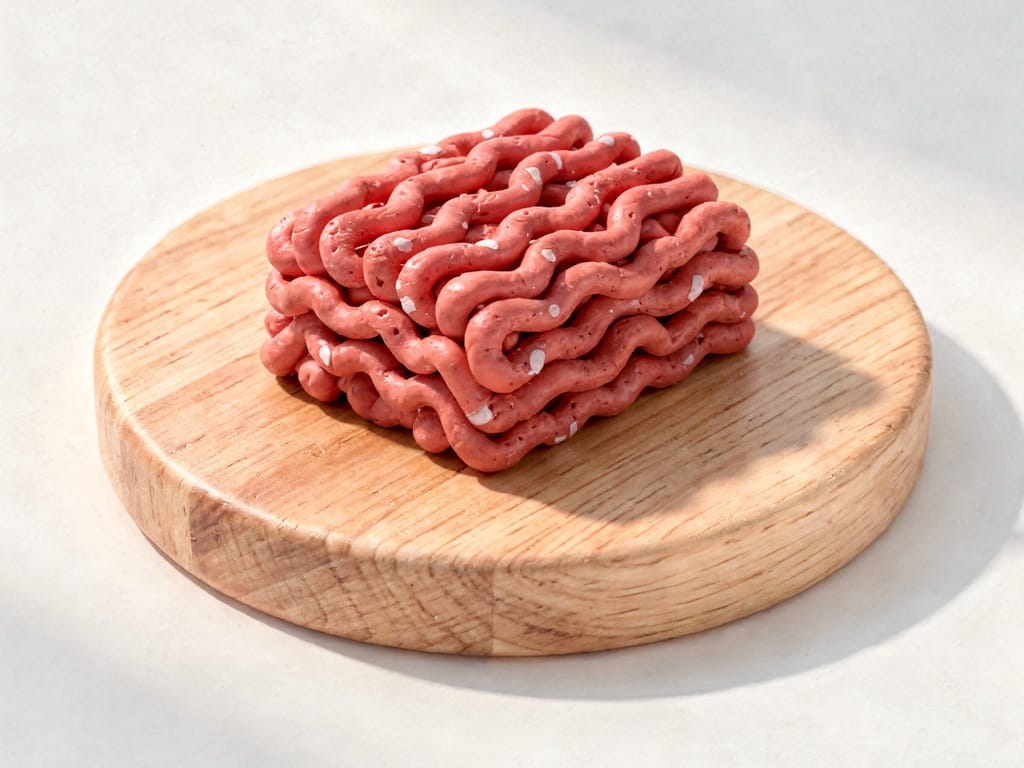
Ground beef (minced beef) is boned beef minced into small fragments. Under EU rules, minced pure beef may contain at most 20% fat and lean minced meat at most 7%; Czech shops also sell it salted as a beef mince preparation (mletý polotovar).
Do not leave raw mince or dishes made from it out of the fridge for more than 2 hours, or more than 1 hour above 30 °C.
Keep raw ground beef at 0–4 °C on the bottom shelf, in its original pack on a plate. Use it within 1–2 days of purchase and never after the use-by date; mince ground at the counter by the next day at the latest. Cooked dishes keep 3–4 days in a closed container.
Whatever you cannot cook within 1–2 days, freeze on the day of purchase, portioned and pressed into patties about 2 cm thick. At −18 °C it keeps its quality for 3–4 months, and cooked mince dishes for 2–3 months. Thaw in the fridge and cook thawed raw mince by the next day; do not refreeze it raw.
Choose by what you are cooking. For burgers and meatballs, mince with 15–20% fat keeps them juicy; for sauces and stuffed vegetables, leaner mince up to 10% is enough. The fat content is on the pack as "fat content under …". The surface should be red; inside the pack the meat is often darker, brownish red, and turns red again in the air. Avoid packs with pooled juice, a grey-green tinge or a sour smell, and watch the use-by date. In the Czech Republic, loose minced meat must be minced in front of the customer.
Ground pork or a half-and-half mix of pork and beef, the usual Czech choice for meatloaf and meatballs.
Ground turkey, cooked lentils, crumbled tofu or textured soy protein.
Do not salt the mince in advance, as salt draws out water; season it just before cooking. For burgers, handle it as little as possible or they turn tough. For sauces, break it up with a wooden spoon in a hot pan and brown it in small batches so it fries rather than stews. Cook ground meat until it has reached at least 70 °C throughout for 2 minutes: no pink should remain inside and the juices should run clear.
Cook Bolognese, chilli or stuffing for vegetables in a bigger batch and freeze half for a quick dinner. Pour the fat that renders out into a jar and use it to fry vegetables or potatoes.
Roughly what one measure weighs, scooped the way you normally would in the kitchen.
In a pan, a burger 1.5 cm thick takes about 4 minutes per side, meatballs 5–6 minutes per side, and crumbled mince for sauce 6–8 minutes until all the pink is gone. Meatloaf and stuffed vegetables bake at around 180 °C until they reach 70 °C inside. Bolognese and chilli simmer long and slowly after the meat is browned so the flavours come together. On the grill, cook burgers over direct heat and cook them through just as in a pan.
Ground beef (minced beef) is boned beef minced into small fragments. Under EU rules, minced pure beef may contain at most 20% fat and lean minced meat at most 7%; Czech shops also sell it salted as a beef mince preparation (mletý polotovar). It goes into meatballs, burgers, meatloaf, Bolognese sauce, stuffed peppers and lasagne. In Czech cooking it is often mixed half and half with ground pork.
Ground beef has a full, meaty flavour, stronger than ground pork. Fattier mince stays juicier and more tender once cooked; lean mince tastes cleanly of meat but dries out more easily. Browned in a hot pan it develops a roasted, slightly sweet crust.
Seasonal baking plans, tested recipes and kitchen tricks that save you time. Unsubscribe in one click.
3 min read
The EU food information regulation (No 1169/2011, Annex VI, Part B) sets how much fat and collagen a product sold as minced meat may contain. Lean minced meat may have at most 7% fat, minced pure beef at most 20% fat, and minced meat containing pork at most 30%. The label must then state "percentage of fat content under …" and "collagen/meat protein ratio under …".
Member states may allow minced meat that does not meet these limits on their own market only under a separate national mark. 100 g of ground beef with about 10% fat has around 170–180 kcal, and with 20% fat considerably more; the exact figure is on the pack.
Under the EU hygiene rules, minced meat is boned meat minced into fragments with less than 1% salt. As soon as salt, spices or other ingredients are added, it becomes a meat preparation. That is why Czech shops sell salted beef "mletý polotovar" next to plain minced beef; allow for the salt when seasoning. How much salt and spice to use is covered in the article how to season ground meat.
Czech Decree No 69/2016 adds that loose minced meat may only be minced in front of the customer, and packed minced meat for Czech retail must be kept at no more than 4 °C.
Ground meat spoils faster than whole cuts: mincing spreads bacteria from the surface through the whole mass and multiplies the surface on which they can grow. Raw ground beef therefore keeps only 1–2 days in the fridge and never past the use-by date. Freeze what you will not use on the day of purchase. Detailed times and signs of spoilage are in the article ground meat in the fridge.
A steak can stay pink inside because bacteria sit only on the surface of a whole piece of meat. In ground meat they are mixed through the whole mass, so it must be cooked all the way through: at least 70 °C throughout for 2 minutes, with no pink inside and clear juices. A probe thermometer is the surest check. How many minutes to fry burgers, meatballs and mince for sauce is in the article ground meat in a pan.
The UK Food Standards Agency (FSA) advises that children, pregnant women, people aged 65 or over and anyone with a weakened immune system should only eat thoroughly cooked burgers. The same goes for meatballs: never pink in the middle. These groups should not eat raw beef such as steak tartare either.
A classic is Bolognese sauce, which simmers slowly after the meat is browned and freezes well. For homemade cheddar and onion burgers use mince with 15–20% fat and shape the patties lightly. Ground beef also goes into meatballs, meatloaf, stuffed peppers and courgettes, lasagne and chilli con carne.