Yeasted blueberry buns with curd cheese and crumble
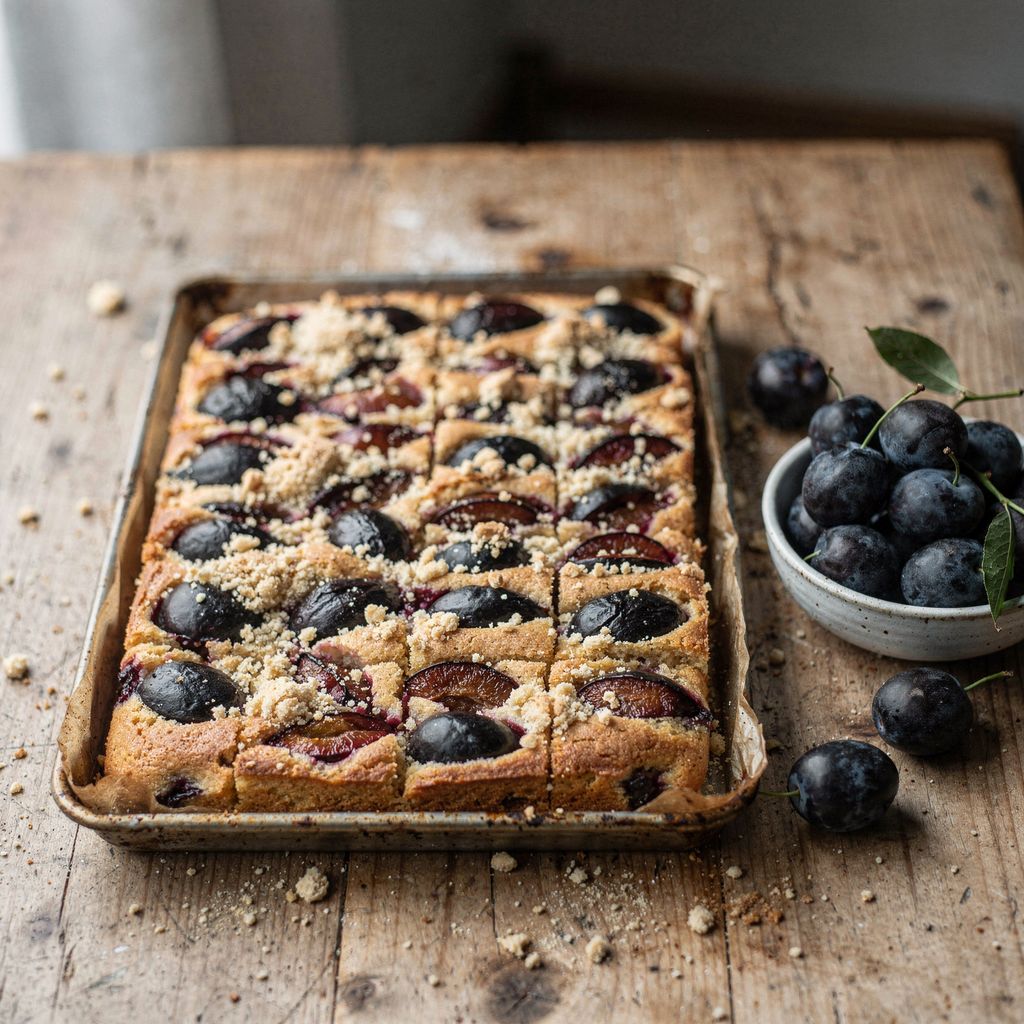
Updated Aug 23, 2026
A plum cake lives or dies on three decisions: which dough you choose, which plums you use, and how you keep the juice under control. Yeasted dough is the classic tray-bake for a crowd, shortcrust gives you a thin, crisp base for a tart-style cake, and creamed batter is the fastest option and forgives so-so fruit. True plums hold their shape and release little juice, while gages and damsons weep juice everywhere — and that's what turns your base soggy. This guide walks through all three doughs, fruit selection, crumble topping, sugar levels by ripeness, baking, and storage.
Three doughs are typically used for plum cake, and each solves a different problem: yeasted for a big tray bake when you're having people over, shortcrust for a thin, crisp tart-style cake, creamed batter for when you've got thirty minutes and a lot of fruit. A quick orientation before we get into the detail:
Yeasted — soft, tender, and holds plenty of fruit. The most work (60–90 minutes proving), best eaten the day it's baked.
Shortcrust (linzer-style) — thin and crisp, copes best with tarter plums. Must be blind-baked first, or the base can't handle the juice.
Creamed batter — butter, sugar, eggs, flour, done. Fastest to make, tastiest the next day, but fruit tends to sink into it.
If you're not sure which to pick, stick to a simple rule: lots of fruit and lots of people → yeasted dough; short on time → creamed batter; very tart or very juicy plums → shortcrust.
Yeasted dough is the best choice when you want a big plum cake on a tray that you can cut into twenty pieces. It holds more fruit than the other two, because the airy, yeasted crumb soaks up the juice without turning mushy.
What actually works:
Roll the dough out thinner than feels sensible — about 0.5 cm. It'll rise further both while proving on the tray and in the oven, and a thick cushion under the fruit is the main reason a plum cake ends up tasting like a bun.
Let it prove on the tray for 20 minutes before you add the fruit. Pile plums onto under-proved dough and they'll sink in; onto over-proved dough and it'll collapse in the oven.
More fat means more tenderness. For every 500 g of flour, use 80–100 g of butter and 2 extra egg yolks — a dough like this stays soft even the next day.
Brush the dough with melted butter or scatter over ground nuts before adding the fruit (we explain why below, in the section on soggy bases).
You don't need prior experience to manage this dough — the method is the same as for yeasted buns with a crumble topping, you're just swapping the fruit.
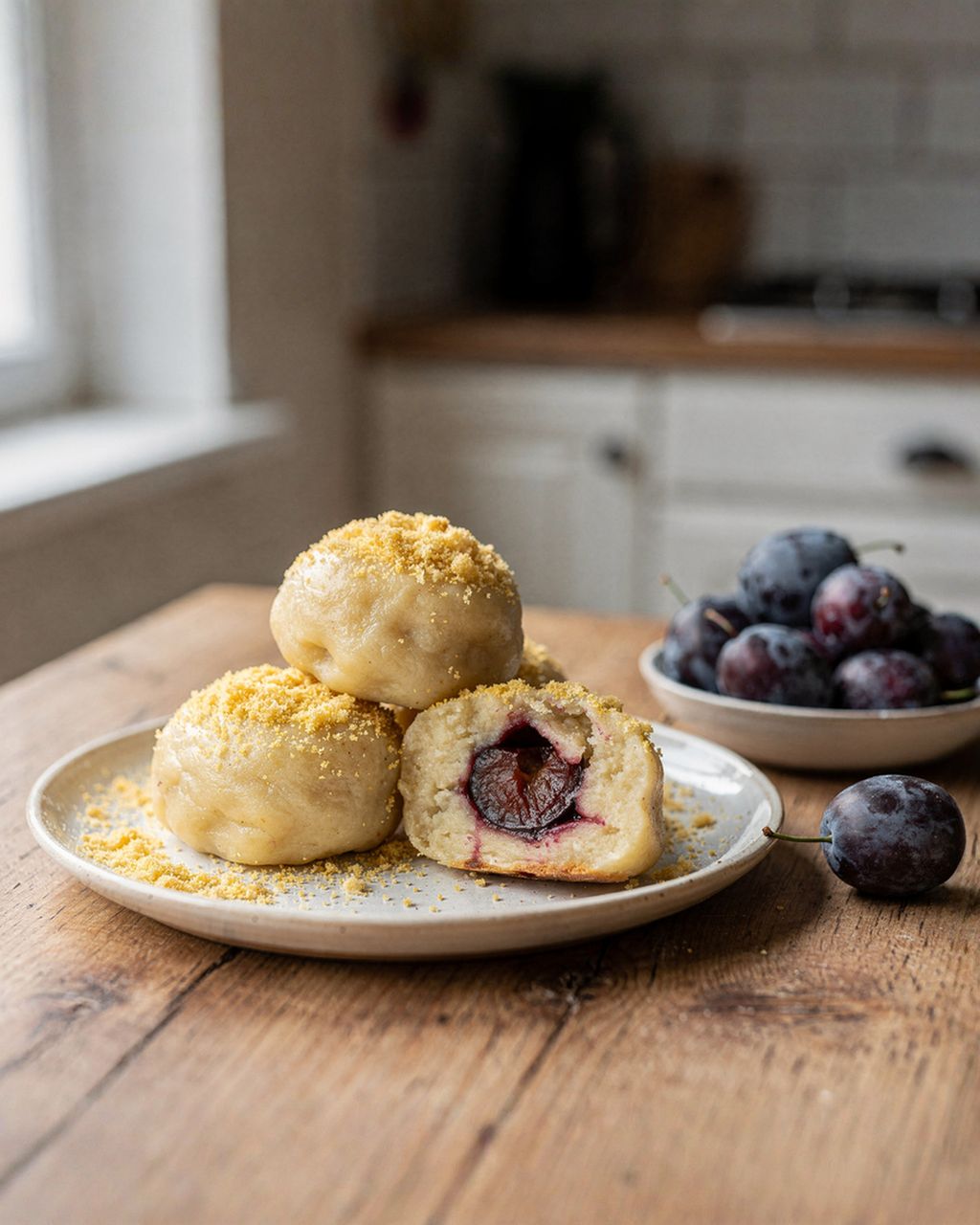
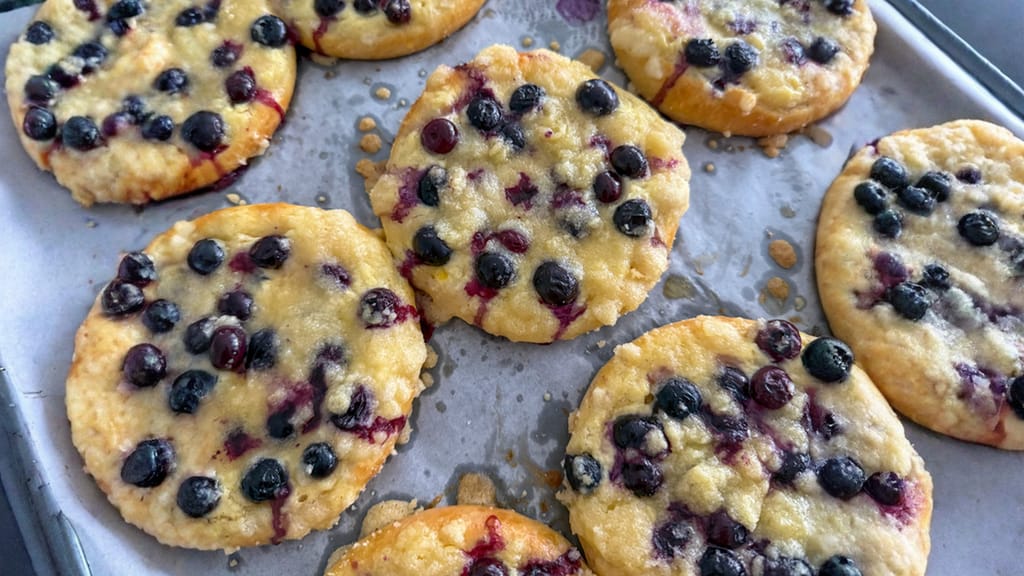
Yeasted blueberry buns with curd cheese and crumble
Yeasted buns with curd cheese and crumble — the same dough and crumble you need for a plum cake
Shortcrust makes a plum cake with a thin, crisp base that lets the fruit shine — and it's the one of the three that reliably fails without blind-baking. The butter creates layers, but those same layers are exactly the path juice seeps down through.
A method that actually holds up:
Work cold butter and flour in a 1:2 ratio, bind with one egg yolk and a tablespoon of ice water. Don't overwork it — stop the moment the dough comes together.
Chill it for at least an hour in the fridge. Cold dough won't shrink and won't slide down the sides of the tin as it bakes.
Blind-bake it: prick with a fork, cover with baking paper, weigh down with ceramic baking beads or dried pulses, and bake for 12 minutes at 190°C. Then remove the weights and bake for another 5 minutes to dry out the base.
Only arrange the plums once the pre-baked base has cooled.
The same logic applies to rustic folded galettes, where the edges are simply folded over the fruit.
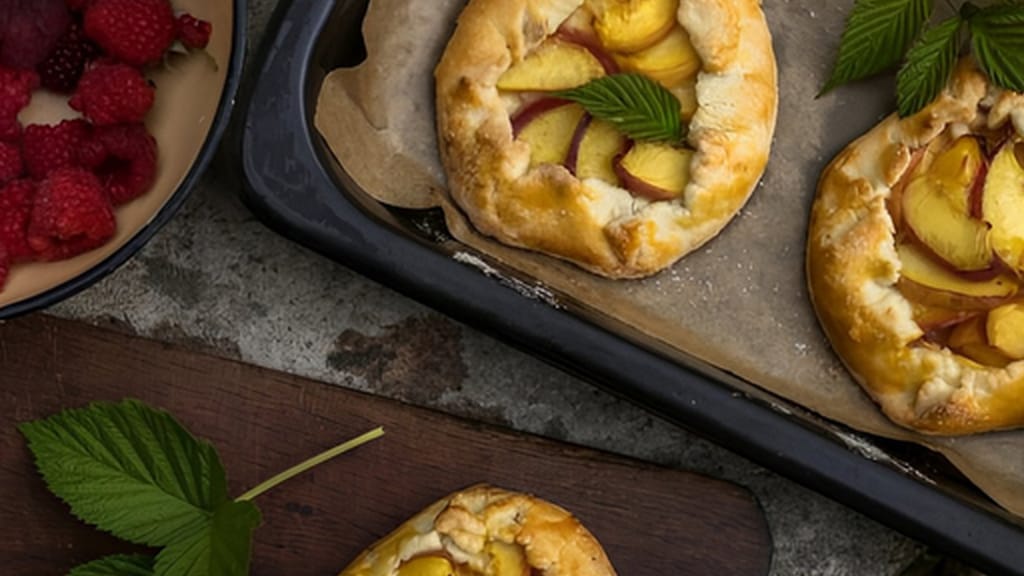
Flaky fruit galettes
Rustic plum galette — the free-form take on shortcrust that suits plums perfectly
Creamed batter is the quickest route to a plum cake — from mixing bowl to oven in ten minutes, no proving required. Beat butter and sugar until fluffy, add the eggs one at a time, then fold in flour and baking powder.
Its only real weakness is that heavy pieces of fruit sink to the bottom in the loose batter. There are two fixes:
Make the batter thicker — it should drop off the spatula in clumps, not pour. Add an extra tablespoon or two of flour.
Toss the plum halves in a spoonful of plain flour or starch and just press them lightly into the surface — don't push them down.
Creamed batter is also the only one of the three that actually tastes better the next day — the fat and moisture even out overnight.
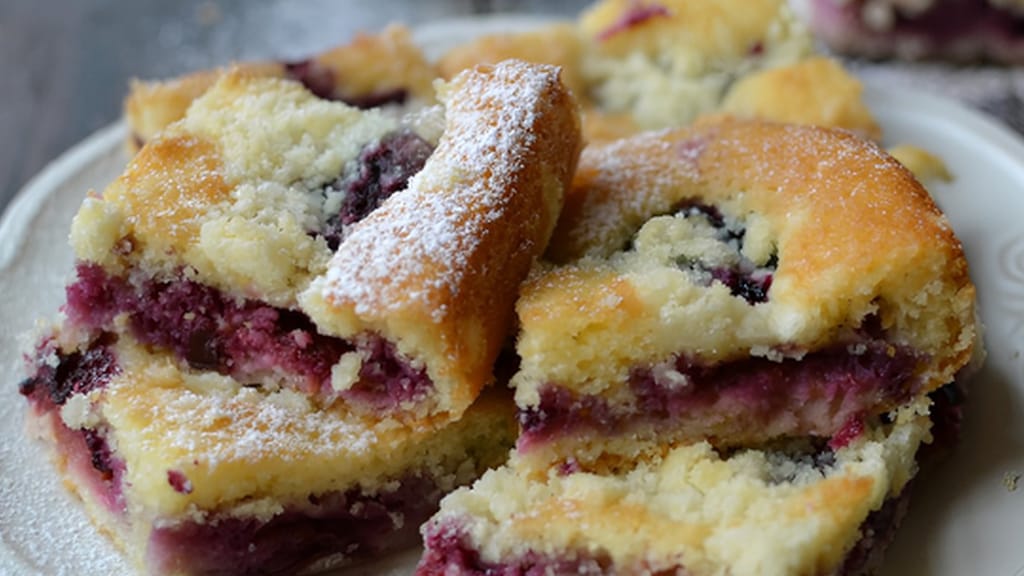
Plum mug cake
Plum mug-style cake — creamed batter with no scales needed, ready in minutes
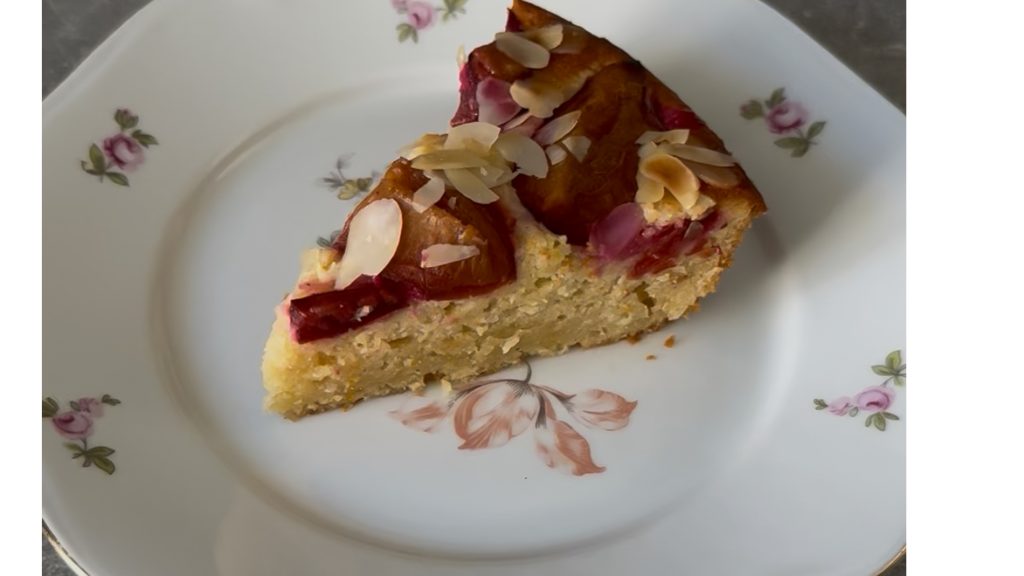
Plum ricotta cake with almonds
Plum and ricotta almond cake — a moist version where the ricotta holds the fruit in place on top
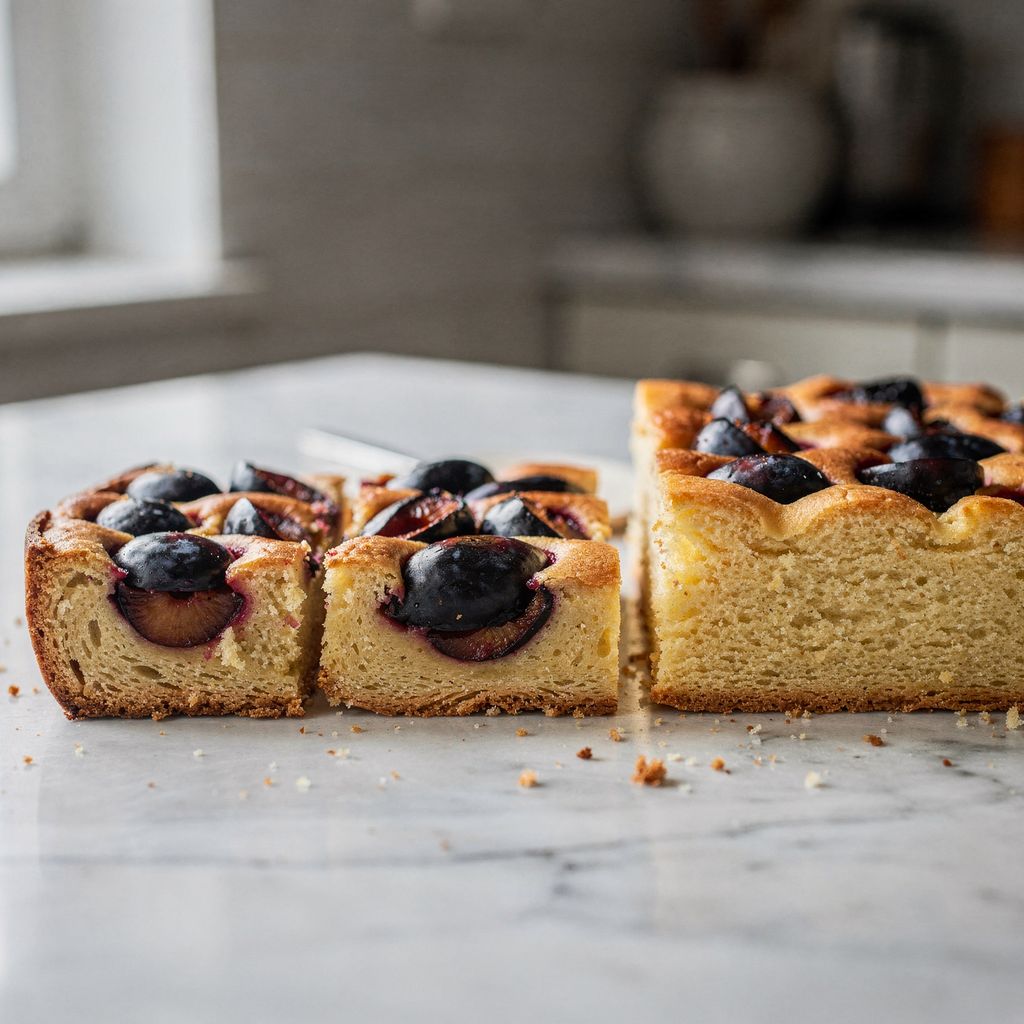
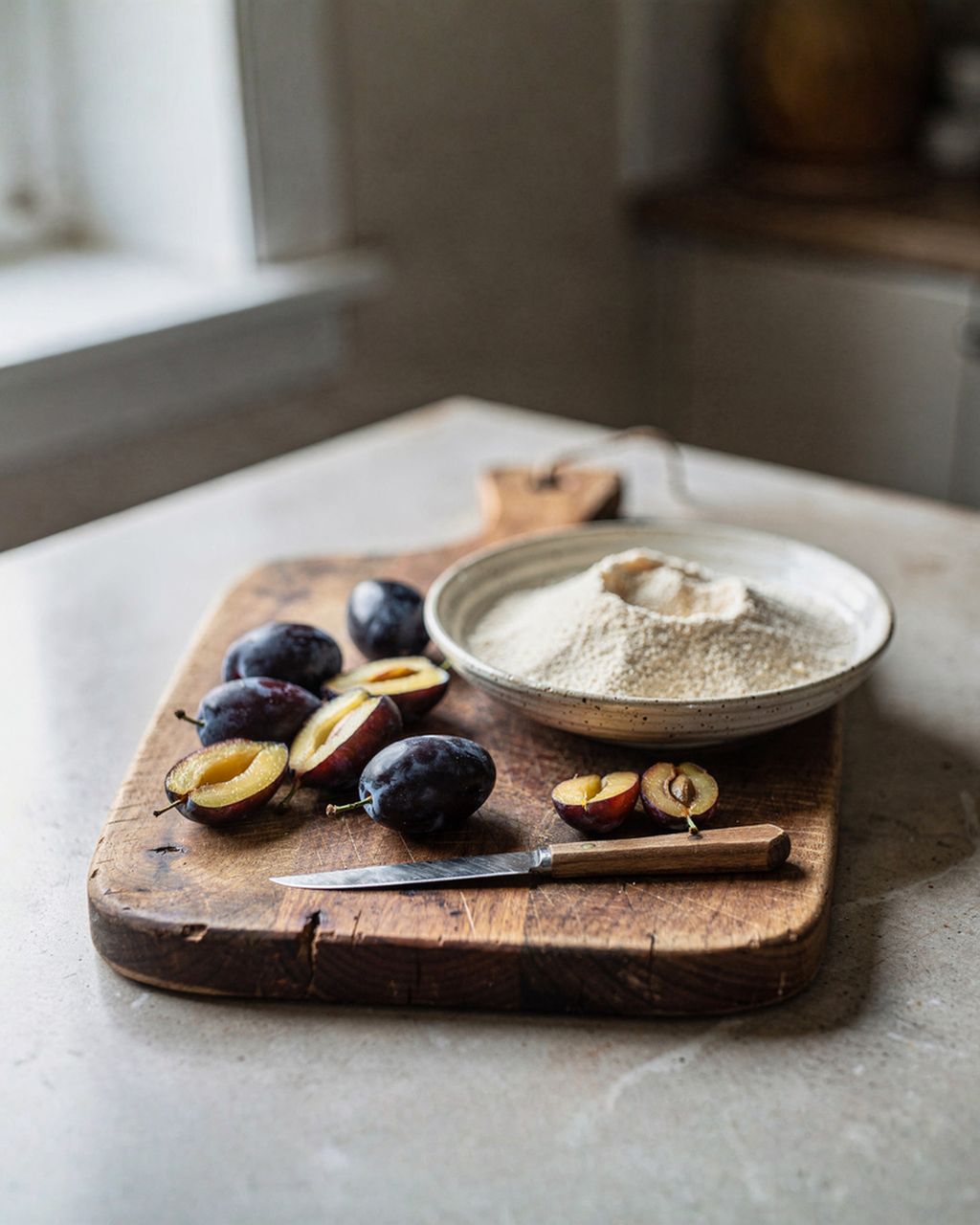
For baking, go for true plums (Prunus domestica) — oblong, deep blue-purple, with firmer flesh that pulls cleanly away from the stone. It's exactly that firm flesh and lower water content that means a plum half won't collapse in the oven — it holds its shape and just caramelises at the edges.
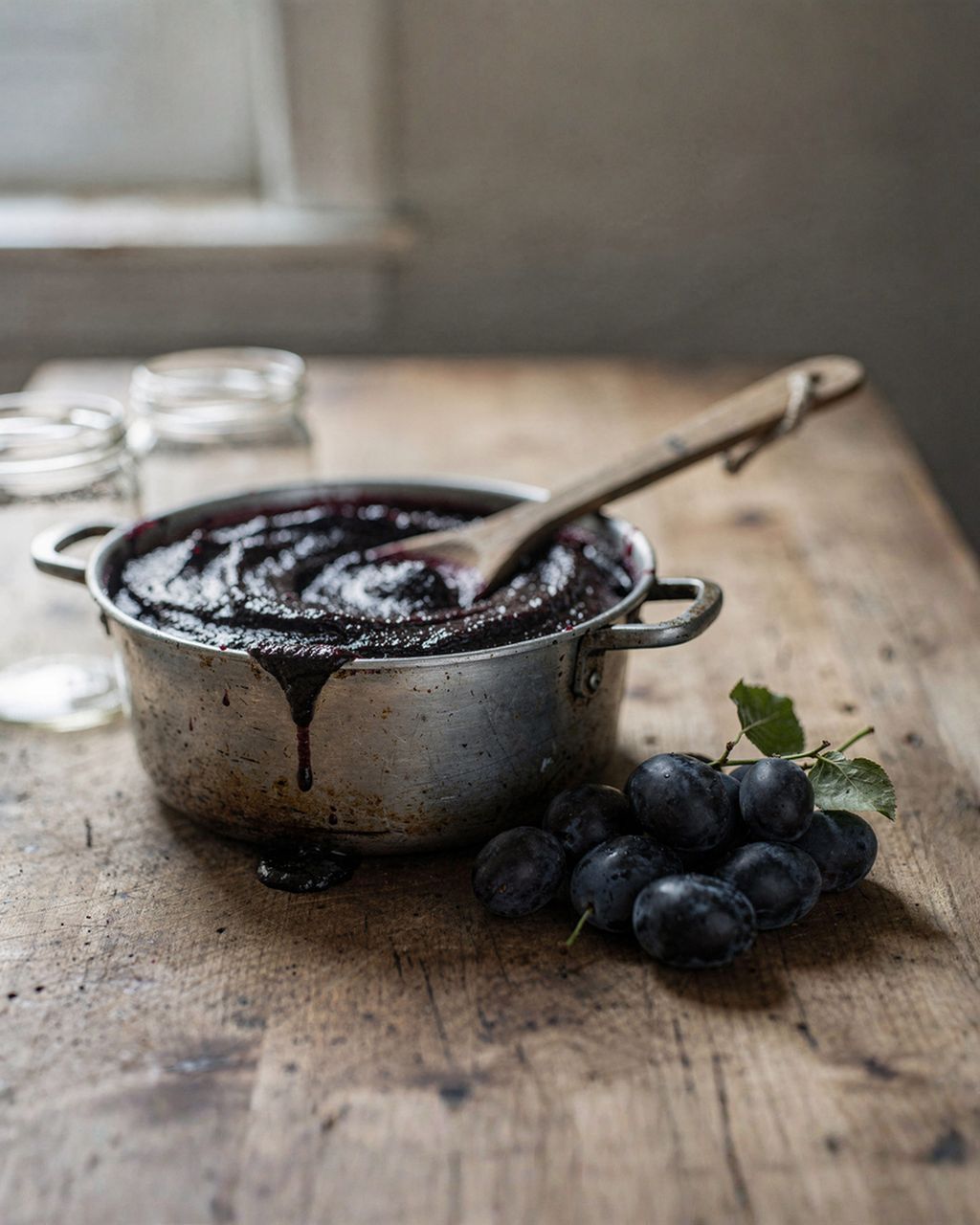
Damsons, gages and mirabelles are round, juicier, and the stone clings tightly to the flesh. They look just as tempting on a cake, but in the oven they release far more juice and the flesh breaks down — leaving you with a soggy base and mush instead of neat halves. They're great for compote or jam; for a cake, look elsewhere.
How to choose at the market:
Shape is the giveaway. Oblong with pointed ends = plum. Round = damson/gage type.
The stone. In a true plum you can pop it out with your thumb; with other varieties you have to cut it out.
The thumb test. The fruit should give slightly but not collapse. A too-soft plum belongs in jam, not on a cake.
The bloom. That white, powdery coating on the skin is natural, and it's actually a good sign — it means the fruit hasn't been over-handled or over-polished.
Varieties and timing. Some early varieties ripen as soon as August, while others ripen only in September. Late varieties tend to be sweeter and drier, so they're better for baking.
We've covered choosing, washing, halving and prepping plums in more detail in our article on how to pick and prep plums for baking.
You avoid a soggy base by putting an absorbent layer between the dough and the fruit, so the juice evaporates upward instead of soaking downward. In order of effectiveness:
An absorbent middle layer. Before adding the fruit, scatter 2–3 tablespoons of ground nuts, almonds, breadcrumbs, semolina, or custard powder over the dough. It soaks up the juice and you won't even notice it in the finished cake.
Place plums skin-side down, cut-side up. The skin acts like a little bowl — the juice stays in the fruit and evaporates up into the crumble rather than down into the dough.
Dry the fruit thoroughly. After washing, spread the plums on a tea towel and let them dry. Leftover water from washing is just extra liquid you don't need.
Toss the fruit in starch. A tablespoon of cornflour or plain flour per 1 kg of plums thickens the juice as it bakes into a glossy glaze.
Bake low and long enough. Tray in the lower third of the oven, and don't cut the time short. An underbaked cake looks wet even when the base technically isn't.
Don't leave it on the tray. Once it's out of the oven, lift the cake (paper and all) onto a wire rack. Steam trapped between the tray and the dough will soften the base within ten minutes.
And one more thing: don't overload the tray. The halves should sit snugly side by side in a single layer, not two. A double layer of fruit won't bake through — it'll just steam.
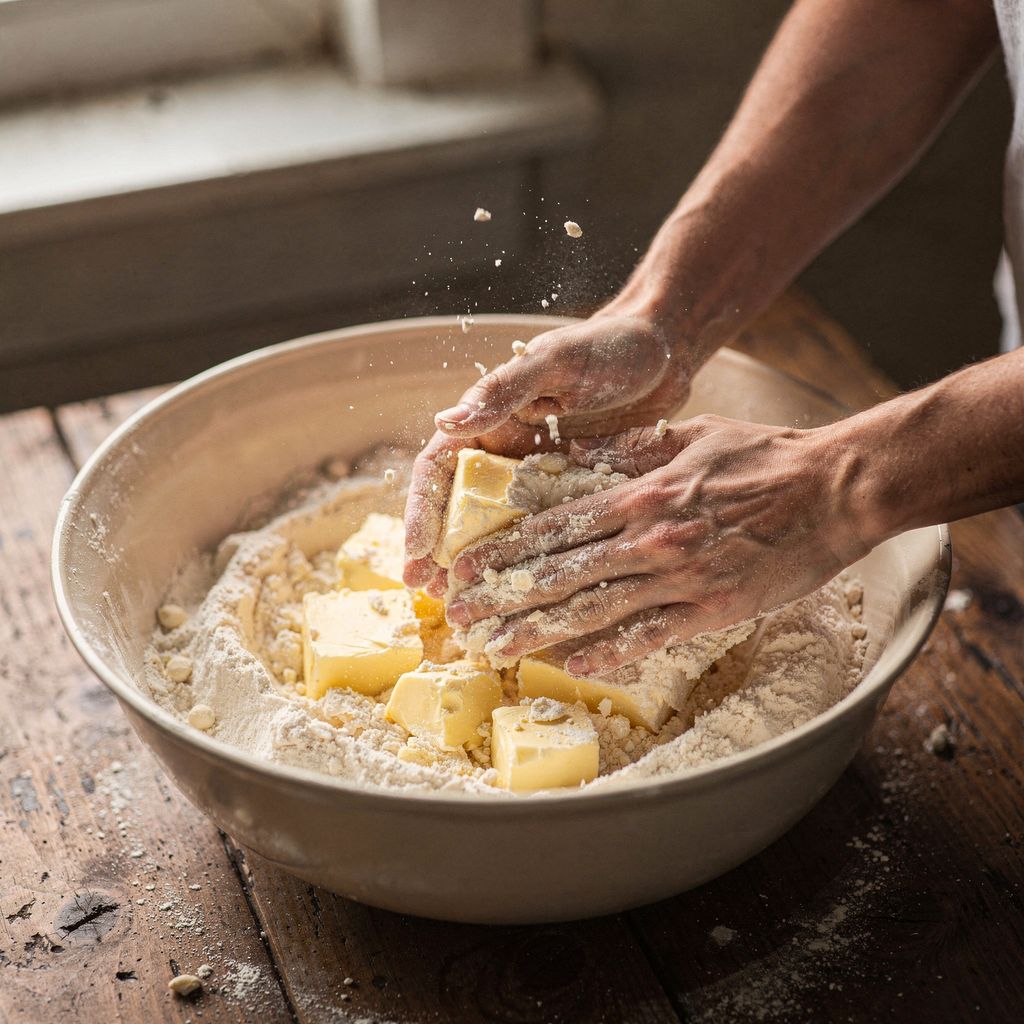
Crumble stays crisp when you use a 2:1:1 ratio (flour : butter : sugar) with ice-cold butter worked into the flour quickly, using just your fingertips. Warmth from your hands is the real enemy here — the moment the butter melts, the crumble turns into dough, and after baking that becomes a hard, flat slab.
How to do it:
The classic ratio: 100 g plain flour, 50 g cold butter cut into small cubes, 50 g caster sugar, a pinch of salt.
The palm test: squeeze a handful of the mixture. It should hold together, then readily break apart into coarse, pea-sized crumbs at a touch. If it looks glossy and greasy, the butter's too soft — pop the bowl in the fridge for 15 minutes.
Chill the finished crumble. Before scattering it over the cake, freeze it for 20 minutes. Cold crumble melts later in the oven, so it holds its shape as crumbs instead of merging into a crust.
Sprinkle it only over the fruit, never underneath it.
For an extra-crisp version: swap a third of the flour for ground almonds, oats, or coarse semolina. Add a teaspoon of cinnamon or some grated lemon zest — both go beautifully with plums.
The thickness of the layer matters more than you'd think: aim for an even layer 0.5–1 cm thick, roughly 200–250 g of crumble for a large 30 × 40 cm tray. A thin dusting will just get soaked up by the fruit juice and disappear, while a layer over a centimetre thick won't cook through underneath in time, leaving a damp, floury layer beneath the crisp top.
Adjust the sugar to match the fruit, not the recipe — an August plum can easily be half as sweet as a September one. Leave the sugar in the dough as it is (it holds the structure); only vary what goes onto the fruit and into the crumble:
Fully ripe, late-season plums (September, dark, soft, sweetly fragrant): 0–40 g sugar per 1 kg fruit. The crumble alone is usually enough. Add a tablespoon of lemon juice instead, so the cake doesn't taste flat.
Ripe but firm plums (late August to early September): 60–80 g per 1 kg. This is the baseline most recipes assume.
Early or slightly tart plums (August, still a bit green around the stone): 100–120 g per 1 kg, and let them sit with the sugar for fifteen minutes separately, away from the dough, in a sieve — then pour off the water they release.
Tart damsons or gages, if that's all you have: 120–150 g per 1 kg, plus a tablespoon of starch to thicken the juice.
Two flavour tricks that work better than adding more sugar: a pinch of salt in the crumble and cinnamon or clove with the fruit. Both bring out the sweetness without making the cake heavy.
Poppy seeds also balance the sweetness of plums nicely — in a poppy-seed dough, the fruit really stands out.
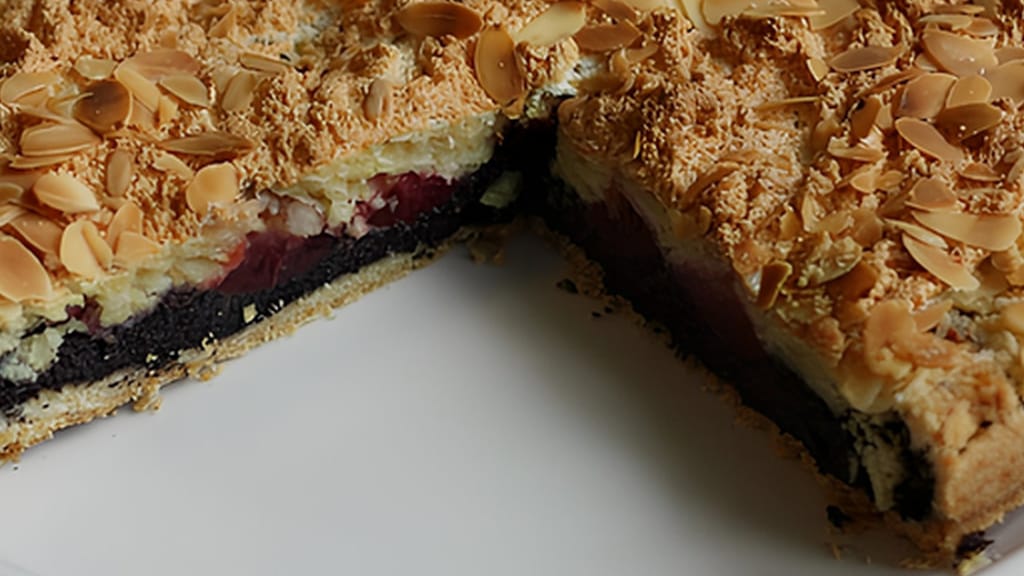
Divine poppy seed and plum cake
Poppy seed and plum cake — poppy seeds and plums, a classic Czech pairing
Plum cake bakes at 175–190°C depending on the type of dough, in the lower third of the oven, for 30–50 minutes. Specifically:
Yeasted, on a tray: 180°C, 30–35 minutes.
Shortcrust base (after blind-baking): 190°C, 25–30 minutes.
Creamed batter: 175°C, 40–50 minutes — a lower temperature and longer time so it cooks through beneath the fruit too.
Fan oven: lower the values above by 15–20°C.
How to tell it's done:
The crumble is golden, not pale and not deep brown.
The juice at the edges bubbles slowly and thickly, not thin like water. That's a sign the starch and pectin have thickened it properly.
A skewer inserted into the dough (not the fruit) comes out dry.
The edge lifts away from the tray with a spatula, without resistance.
And let it rest. The first 20 minutes on a wire rack are part of the baking process — the juices settle back in and the cake can be sliced without falling apart. A warm plum cake cut straight away always seems wetter than it actually is.
Plum cake keeps for 2 days at room temperature, covered with a clean tea towel — not cling film or a sealed container, which will make the crumble soggy. Only move it to the fridge from day three onwards; cold dries out yeasted dough quickly, so you're trading tenderness for shelf life. And only cover it once it's completely cool: steam from a still-warm cake has nowhere to escape, so it condenses on the crumble and turns a crisp topping to mush within the hour.
Yeasted — best the day it's baked, still fine the next day. On day three, slice it and toast it in a dry pan.
Creamed batter — best the next day, keeps for 3–4 days.
Shortcrust — eat it the day it's baked. The crisp base holds for a few hours, then goes soft no matter what you do.
Freezer — once baked, cut the cake into portions, wrap them individually, and freeze for up to 3 months. Thaw at room temperature, then bake for 5–8 minutes at 160°C; the crumble crisps back up almost like new.
And if you've got plums left over before you get round to baking, put them to good use in sweet or savoury dishes.
Besides cake, plums are great in dumplings, chutney, jam, or sorbet — the main difference is how ripe the fruit needs to be. Dumplings need firm fruit that won't fall apart in boiling water; chutney and jam, on the other hand, are perfect for the overripe fruit you'd never use in a cake; sorbet suits sweet, late-season plums, since freezing mutes flavour a little. If you're taking on dumplings, start with choosing the right dough for plum dumplings — potato, curd cheese, and choux-style doughs all behave completely differently.
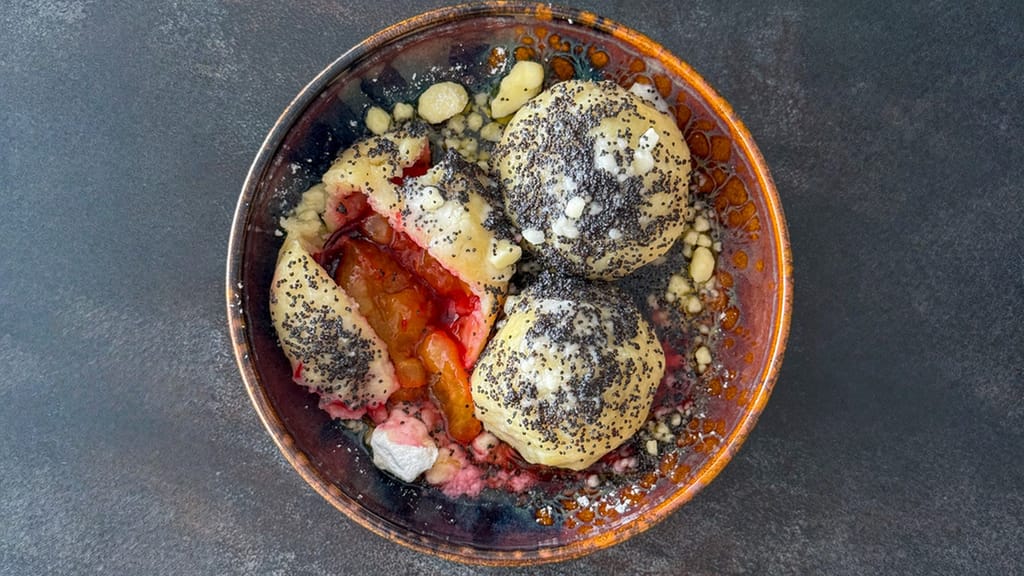
Plum dumplings with potato dough
Potato dough plum dumplings — the classic that can handle a whole plum, sugar and all
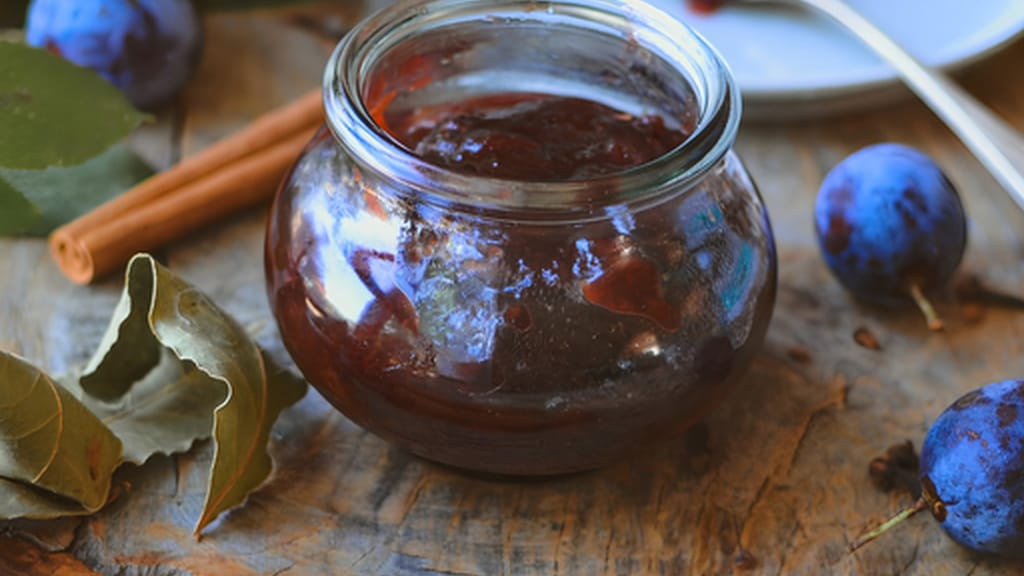
Harvest your plums, skip the slivovitz, and make chutney instead
Plum chutney — the best use for overripe plums that don't belong on a cake
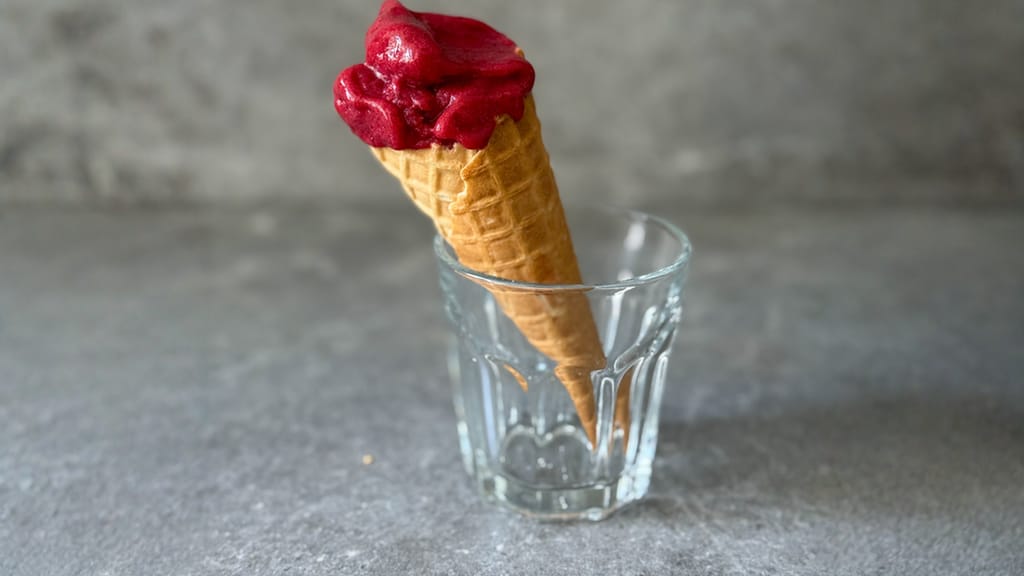
Homemade plum sorbet with cardamom and brandy
Homemade plum sorbet with cardamom and brandy — plums, sweetened, no oven required
Yes, but never thaw them first — lay the halves on the dough still frozen and straight into the oven. Thawed plums release all their juice onto the dough and the base turns soggy. Dust them with a spoonful of starch before arranging, add 5–10 minutes to the baking time, and expect them to be a bit softer than fresh fruit.
No, plums are never peeled for a cake. The skin holds each half together, stops juice leaking into the dough, and caramelises to a deep colour in the oven, which adds flavour to the cake. Peeling is only for jam and compote, where you want a smooth result.
For a large 30 × 40 cm tray, count on 1 to 1.3 kg of plums — roughly 30–40 pieces depending on size. The halves should sit snugly side by side in a single layer; for a smaller 25 × 35 cm tray, 800 g is enough. The fruit will swell slightly during baking, so there's no need to overload the tray.
Yes, but use less fruit and allow more time — in a 26 cm round tin the dough sits deeper, so it takes longer to bake and the base under the fruit can stay underdone more easily. Use roughly 600–700 g of plums, lower the temperature by 10°C compared to a tray bake, and extend the time to 45–55 minutes. Creamed batter works best in a round tin; yeasted dough will rise tall and end up tasting more like a bundt cake. Line a springform tin with baking paper and place a tray underneath — plum juice loves to seep through the join.
The closest substitutes are mirabelles and greengages, followed by firm apricots, and in autumn, firm apples cut into slices. All of these are sweeter and less tart than plums, so cut the sugar by 20–30 g per kilo of fruit and add a tablespoon of lemon juice. Dried plums (prunes) soaked overnight in water or rum also work, but use less of them — they're far more concentrated.
One recipe worth heating the oven for, one tip, and one deal from the shop. Nothing else.