Heart Cake Without a Special Pan: How to Cut It from a Round and a Square Cake and Decorate It with Frosting
Heart Cake Without a Special Pan: How to Cut It from a Round and a Square Cake and Decorate It with Frosting
Updated Nov 17, 2026
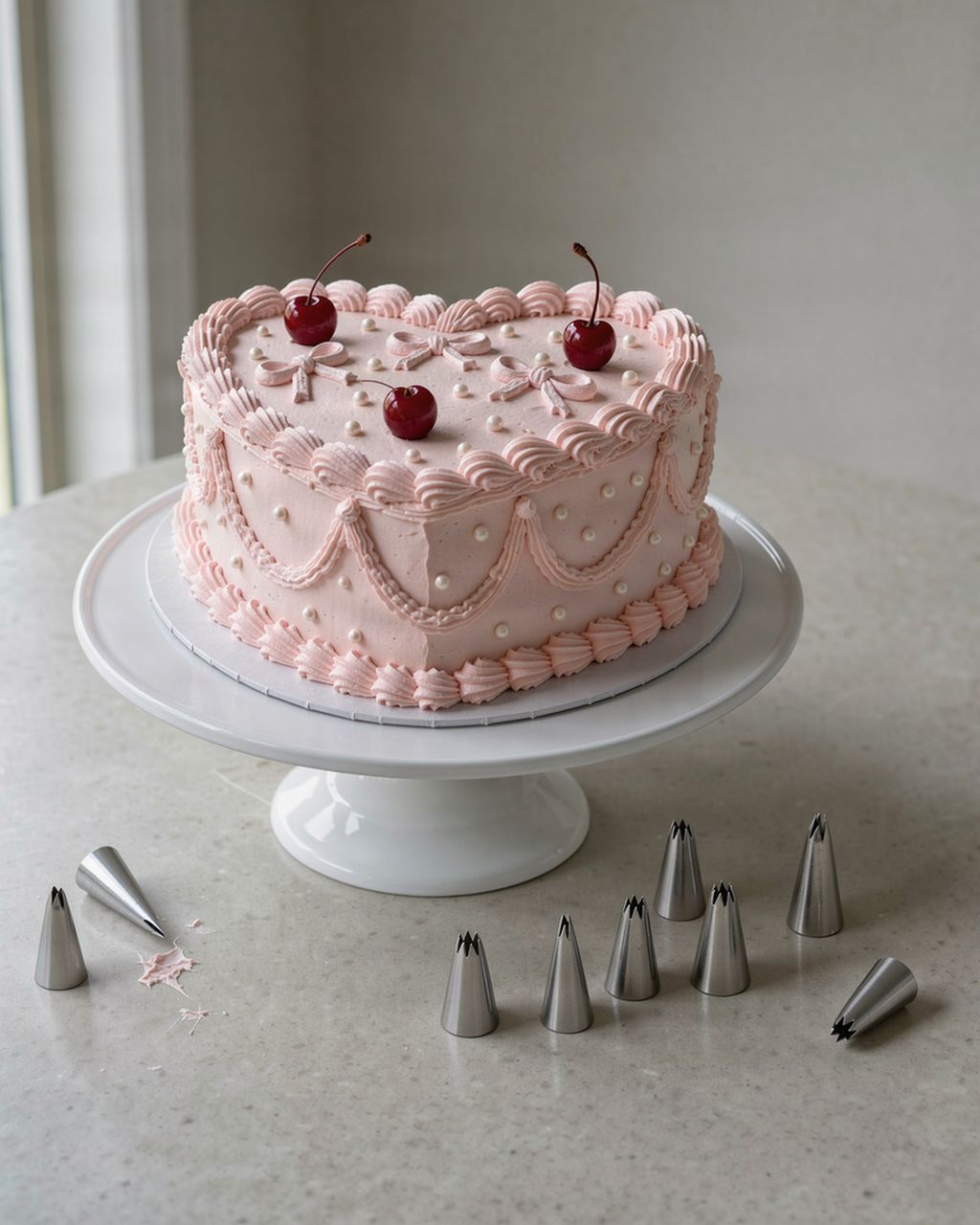
You can build a heart cake without a special pan from one round and one square cake layer of the same size: turn the square 45° into a diamond, cut the round cake in half, and set the two halves with their straight edges against the two upper sides of the diamond. Two 18 cm (7 in) cakes make a heart about 31 × 28 cm (12 × 11 in) that serves 16–20 people; two 22 cm (9 in) cakes make one about 38 × 34 cm (15 × 13 in) that serves 26–30. No scraps, no special pan. Below you'll also find a paper-template variation, how to fill the seams and crumb-coat them so they don't show, which frosting holds its shape, how to decorate the heart with rosettes, ruffles or fruit, and how to transport it in one piece.
How to Make a Heart Cake Without a Special Pan: The Cuts, Step by Step
The heart is a square stood on its corner with two half circles on its upper sides. It only works when the side of the square is the same length as the diameter of the circle. Then the half circle sits exactly against the edge of the square and nothing sticks out.
Bake both cakes to the same height. Bake the round one in a round cake pan and the square one in a square pan or an adjustable cake ring of the same size. A sturdier sponge works best, such as a fluffy Génoise sponge cake.
Let them cool, ideally overnight in the fridge. Wrap them in plastic wrap. A cold cake cuts cleanly and crumbles less.
Trim the tops to the same height, say 5 cm (2 in). If one part ends up a centimeter taller, the seam will show even under the frosting.
Cut the round cake exactly in half. Use a long serrated knife and saw gently without pressing down.
Set the square on the board as a diamond, with one point facing you. That is the bottom point of the heart.
Place the half circles with their straight sides against the two upper edges of the diamond. Done, you have a heart.
Assemble it dry first, before you slice the cakes into layers. You'll see right away whether it fits on your board.
Did that help? We’ll send you more tips by email.
Seasonal baking plans, tested recipes and kitchen tricks that save you time. Unsubscribe in one click.
How Big Is a Heart Cake Made from 18 cm and 22 cm Cakes?
Two 18 cm (7 in) cakes make a heart about 31 × 28 cm (12 × 11 in) serving 16–20, and two 22 cm (9 in) cakes make one about 38 × 34 cm (15 × 13 in) serving 26–30. The heart has about 2.3× the surface area of a single round cake, because you're combining two whole cakes: a square and a circle. The area equals a round cake about 27 cm (10½ in) across (from the 18 cm set) or 33 cm (13 in) across (from the 22 cm set).
18 cm (7 in) round + 18 × 18 cm (7 × 7 in) square: a heart about 31 cm (12 in) wide and 28 cm (11 in) tall, 16–20 servings, a board of at least 35 cm (14 in).
22 cm (9 in) round + 22 × 22 cm (9 × 9 in) square: a heart about 38 cm (15 in) wide and 34 cm (13 in) tall, 26–30 servings, a board of 40–45 cm (16–18 in).
Frosting: for the 18 cm set, count on about 1 kg (2.2 lb) of frosting (filling, crumb coat and decoration), and about 1.5 kg (3.3 lb) for the 22 cm set. For rosettes covering the whole cake, add about a quarter more.
For a small Valentine's heart for two, a 12 cm (5 in) round and a 12 × 12 cm (5 × 5 in) square are enough. That makes a heart about 20 × 19 cm (8 × 7½ in).
Heart Cake Cut with a Paper Template
If you have only one pan, such as a large sheet pan or a 26–28 cm (10–11 in) round pan, you can cut the heart out using a paper template.
Fold a sheet of parchment paper in half and draw half a heart starting from the fold. Once unfolded, it will be perfectly symmetrical.
Lay the template on a chilled cake and trace around it with a small sharp knife held straight up and down.
Don't throw away the trimmings. Crumble them with a little frosting to make cake pops or cake balls.
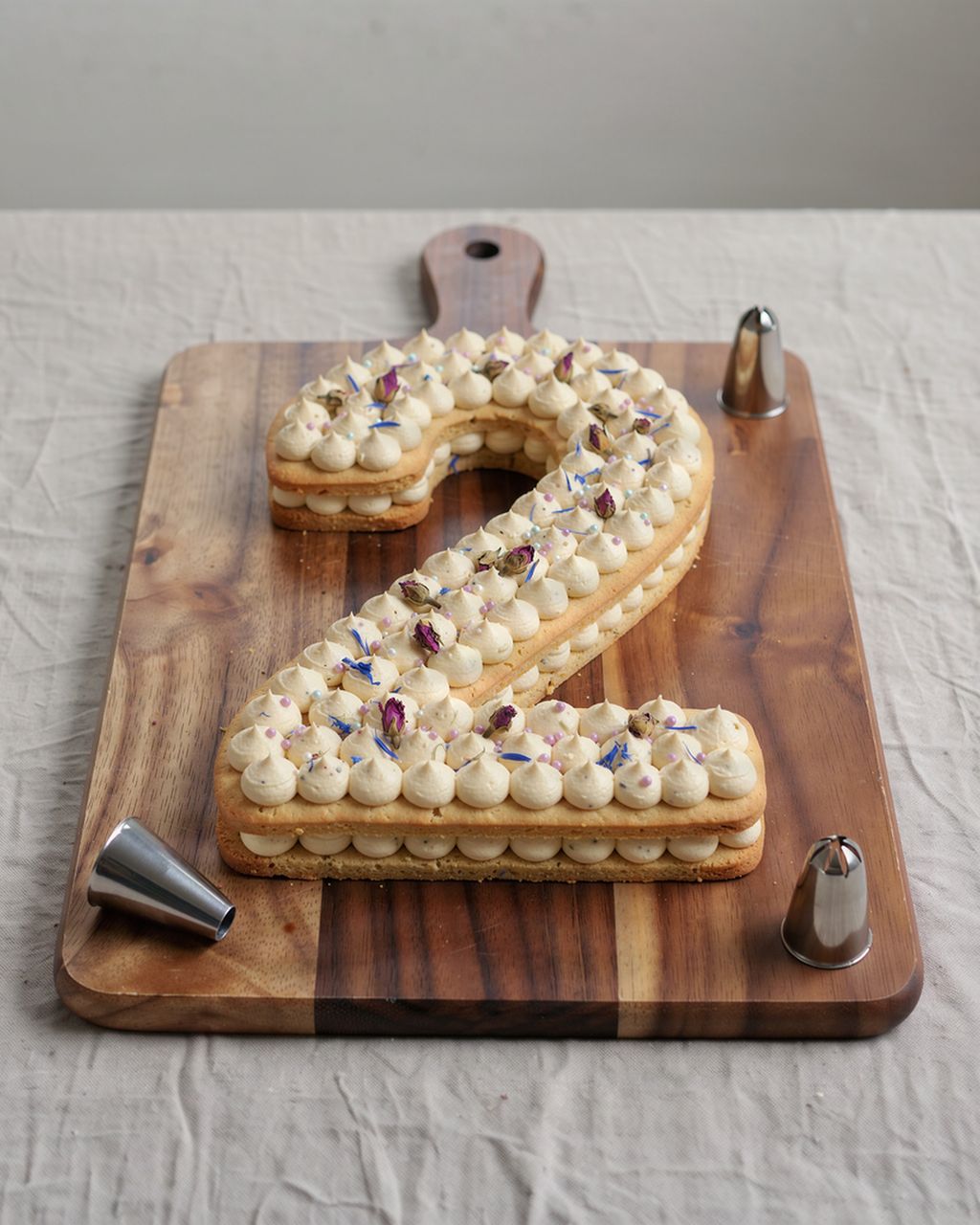
A template lets you make any heart shape you like, say a slimmer one or one with a sharper point. On the other hand, you always get trimmings and cut edges all the way around, so you'll need more frosting to cover them. The same method is used for a number cake made with a template.
How to Fill and Frost a Heart Cake So the Seams Don't Show
A thin layer of frosting right in the seam and a first thin coat of frosting all around (a crumb coat) hide the joins. Build the cake tier by tier directly on the board, not each piece separately.
Slice all three pieces into layers of equal thickness, for example each into 3 layers 1.5 cm (½ in) thick. Keep the layers from one piece next to each other so they don't get mixed up.
Assemble the first tier of the heart on the board from the diamond and the two half circles. Spread a thin layer of frosting on the cut sides where they touch. It works as glue.
Spread the filling over the whole tier, seams included. Frosting across the join holds it together. Put fruit only in the middle, not on the seams or near the edge.
Stack the next tiers the same way and press them down with your palm. The seams sit directly above each other in every tier, so pipe a slightly thicker strip of frosting over them than on the rest of the surface. It ties the tiers together across the seams, and the cake won't split apart there.
Crumb coat: cover the whole cake with a thin layer of frosting and smooth it with a scraper. It seals in the crumbs and evens out any steps at the seams.
Chill it for 30–60 minutes until the frosting is firm to the touch. Only then add the final coat or decorate.
Watch the top notch of the heart, where the two half circles meet. It's the most delicate seam, so fill it well and support it from underneath with frosting.
Which Frosting for a Heart Cake Holds Its Shape
For a heart with piped decorations you need a frosting that firms up when chilled and keeps a crisp edge. The surest choice is buttercream, especially Swiss meringue (heat the egg whites with sugar over simmering water to at least 71 °C / 160 °F), or a firm mascarpone frosting.
Swiss or classic buttercream holds sharp rosettes and ruffles and takes color well. We compare the options in buttercream for cakes: classic, Swiss, or with pudding.
Mascarpone with cream is fluffier and ideal for a filling. For piping, it must be very well chilled or the rosette will melt. Why it curdles or turns runny is covered in the article on mascarpone cream.
Plain whipped cream isn't enough for decorating a heart. After a few hours it softens and the seams underneath start to show through.
For a fruit filling, use a frosting that's been stabilized so it doesn't release water. Otherwise the layers will slide sideways in the fridge and the heart will lose its shape. The article fruit cake filling that doesn't weep will help.
How to Color Frosting Pink and Red
Use gel food coloring, not liquid. Gel gives a rich color from a few drops and doesn't thin the frosting.
Pink: the tip of a toothpick of gel per 200 g (7 oz) of frosting is enough. Add it little by little.
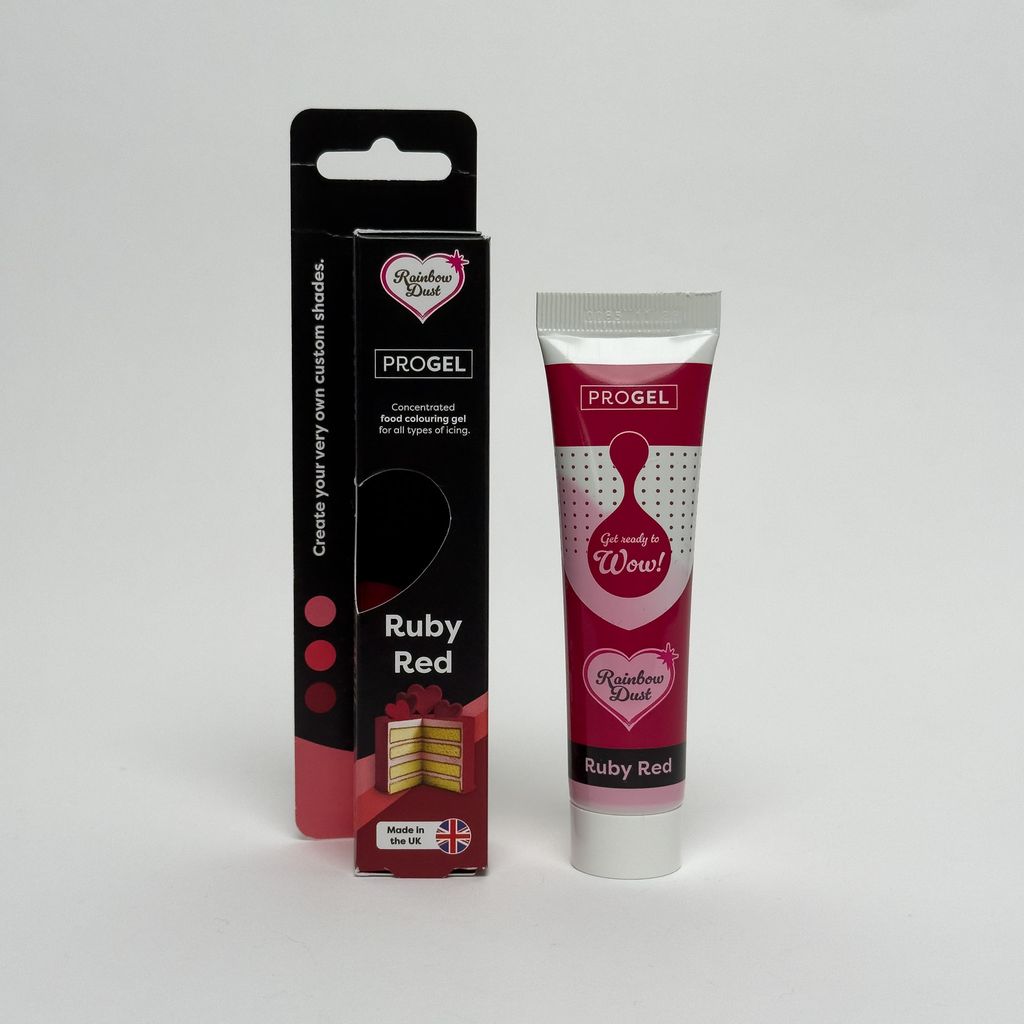
Red: needs much more coloring. Mix it a bit lighter than you want and let the frosting rest, covered, for 1–2 hours. The color in buttercream darkens over time. ProGel Rubínová gives a deep crimson with a wine tone, not a pure red; it contains E122 and E129, which may have an adverse effect on activity and attention in children.
Beat the butter first until it turns almost white. The lighter the frosting, the cleaner the pink you'll get.
How to Decorate a Heart Cake: Rosettes, Ruffles, or Fruit
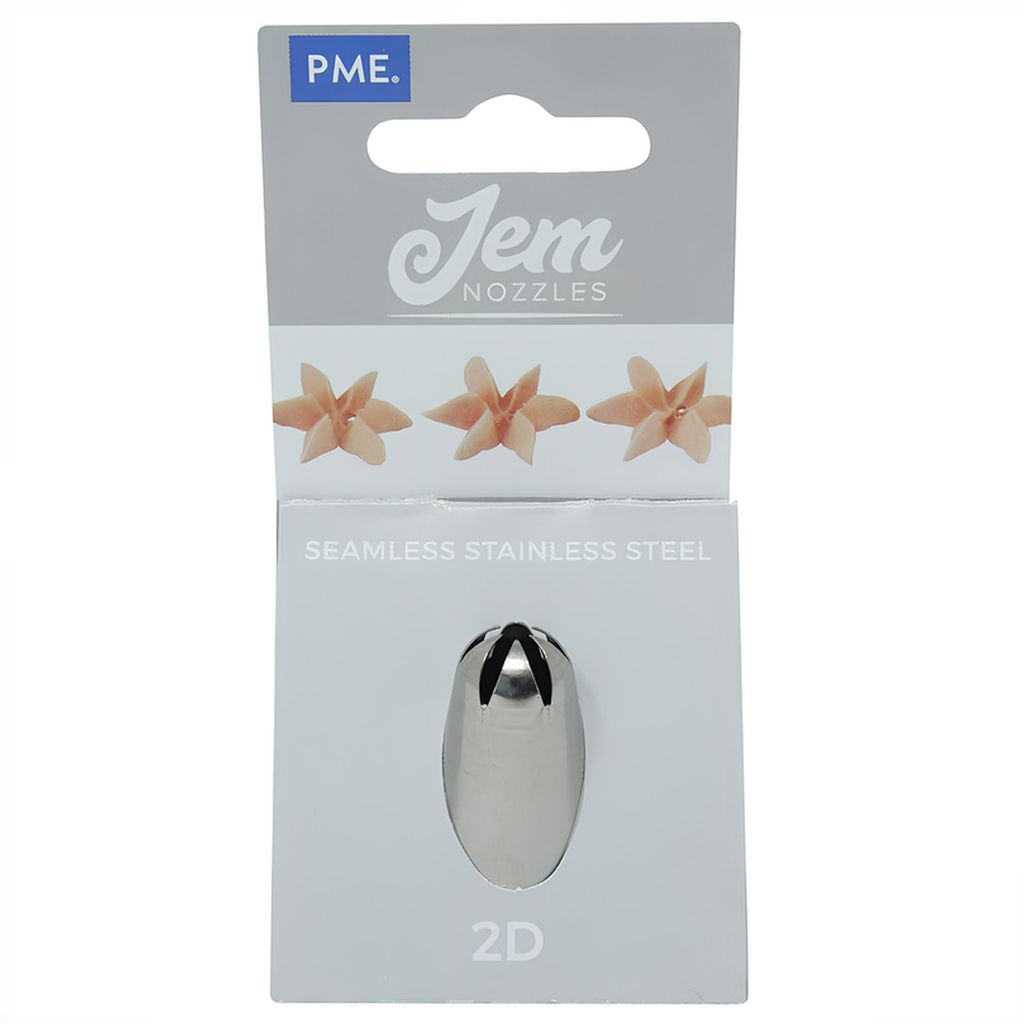
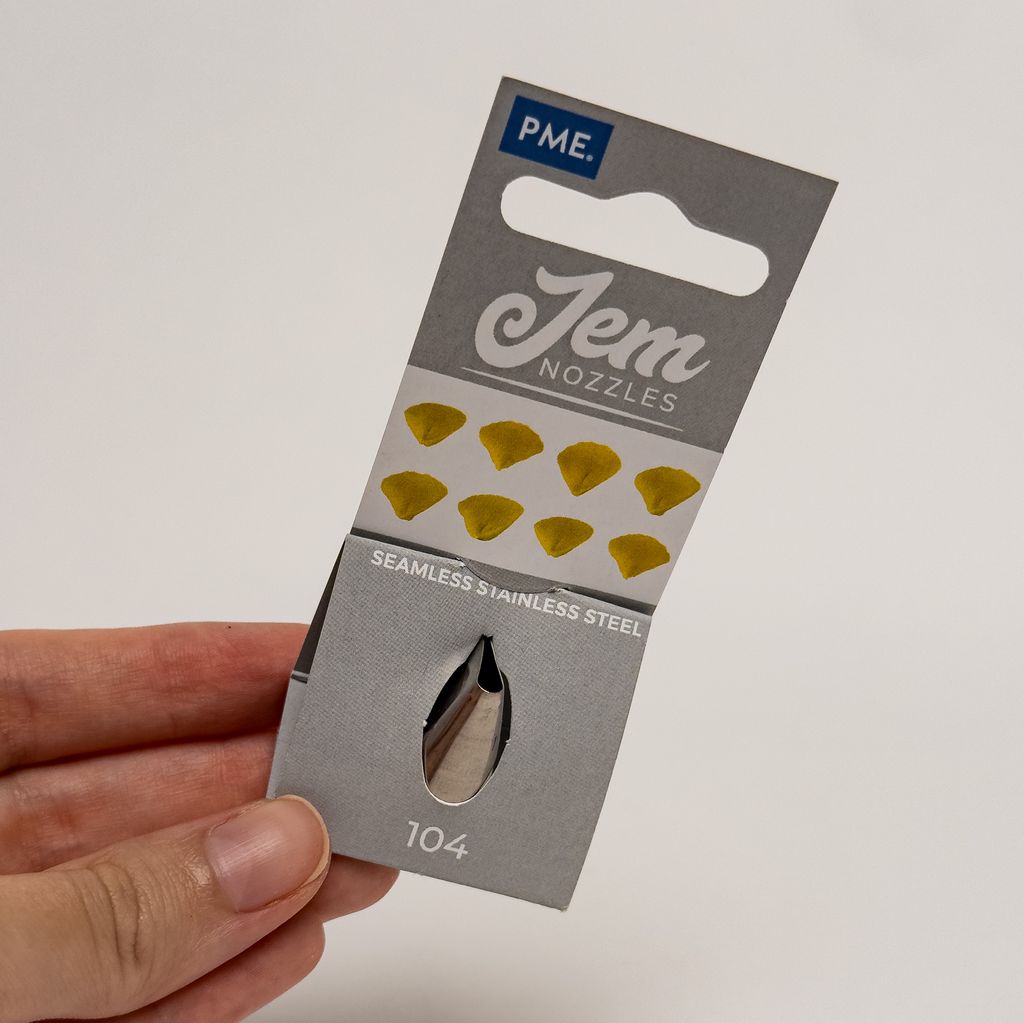
The easiest showy decoration is rosettes piped with a closed star, that is, the Drop Flower #2D tip. Ruffles from a petal tip (#104) look elegant, and fruit with cream is the quickest. If you want rosettes with more open, sharper ridges, take a larger open star tip. You'll find tips for every style in the piping tips for frosting category.
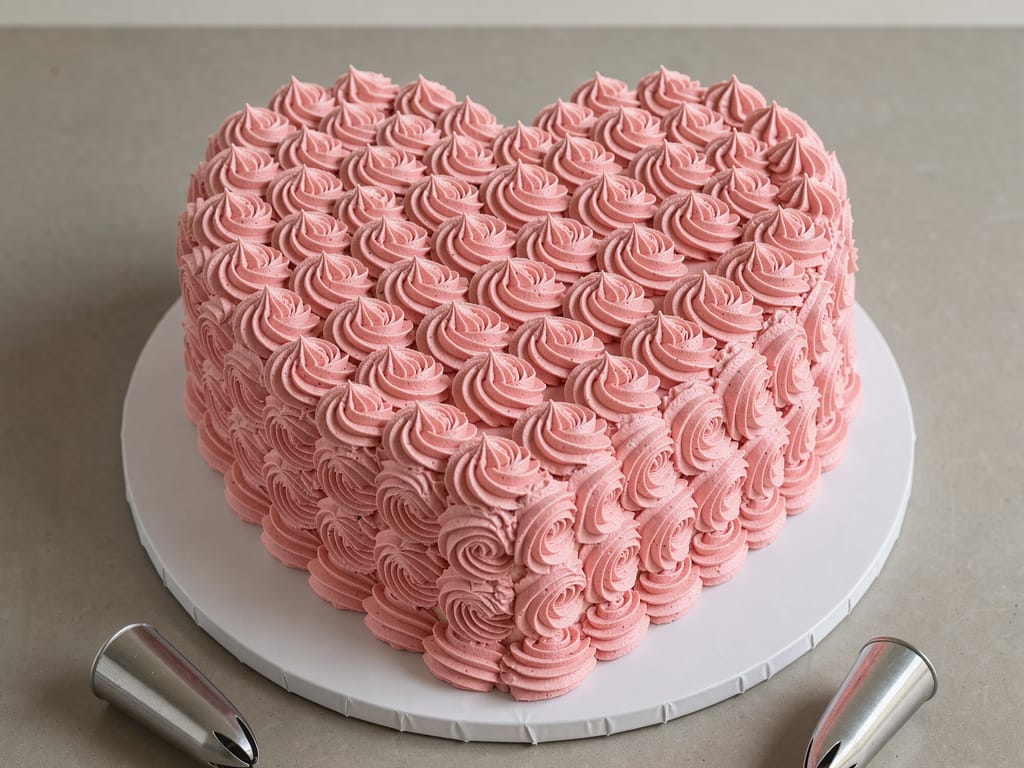
2D Rosettes on a Heart Cake
Rosettes cover the whole heart and hide every imperfection, which makes them the most forgiving choice for a beginner.
Hold the piping bag straight up, with the tip about 0.5 cm (¼ in) above the cake.
Start squeezing in the center and move the tip outward in a counterclockwise circle. One and a quarter turns is enough.
Release the pressure first, then pull the tip away, swinging it along the direction of the circle so no peak is left.
Start with the outline of the heart, then fill in the surface toward the middle. Fill any gaps with smaller stars or sprinkles.
If you combine two or three shades of pink along the edges, the heart gets more dimension. Just fill the bag lengthwise with two colors.
Ruffles with Tip 104 on a Heart Cake
To pipe ruffles on a heart cake, hold tip 104 at a 45° angle with the wide end against the cake and wiggle it gently up and down as you squeeze.
The tip has one wider end. Put the wider end against the cake, the narrower one facing out.
Hold the tip at an angle of about 45° and wiggle it gently up and down as you squeeze. That creates a wavy ribbon.
Pipe ruffles on the sides in horizontal rows from the bottom up. Each new row overlaps the top edge of the one below.
You'll find pearls, garlands and frosting bows in the same style in the article vintage cake step by step.
Heart Cake with Strawberries and Fruit
Strawberries, raspberries and currants look best on a heart when they go on the cake just before serving. They release juice on the frosting, which soaks in and stains it within a few hours.
Wash the fruit ahead of time and dry it thoroughly on a paper towel. A drop of water on the frosting shows.
Halve the strawberries and arrange them cut side out in a circle along the outline of the heart. Fill the middle with raspberries or blueberries.
If you want a shine, brush the fruit with a thin layer of warmed apricot jam. It also slows the fruit from drying out.
In February strawberries are imported and less flavorful. Use fewer of them and add raspberries, which hold their flavor and color better.
How to Transport a Heart Cake in One Piece
A heart travels best well chilled, on a sturdy board 3–5 cm (1–2 in) larger than the cake, in a box, on a flat car floor rather than on a seat.
Chill the finished cake for 2–3 hours, or better still overnight. Firm buttercream tolerates small bumps.
Stick the board to the bottom of the box with a dab of frosting, or set it on a non-slip mat.
In the car, turn on the air conditioning, not the heat. In a warm car the cake softens first at the top notch of the heart.
Bring fruit and delicate decorations separately and finish decorating on site.
If the cake will spend a longer time out of the fridge, choose a frosting that tolerates warmth. You'll find which ones in the article cake frosting that holds up outside the fridge.
A Heart Cake for Valentine's Day and Birthdays
The same pattern works for both occasions. Only the colors and decorations change. For Valentine's Day, pink and ruby red with sugar hearts or dried edible rosebuds suit it well; for birthdays, pastel rosettes and edible flowers or a number piped in the middle.
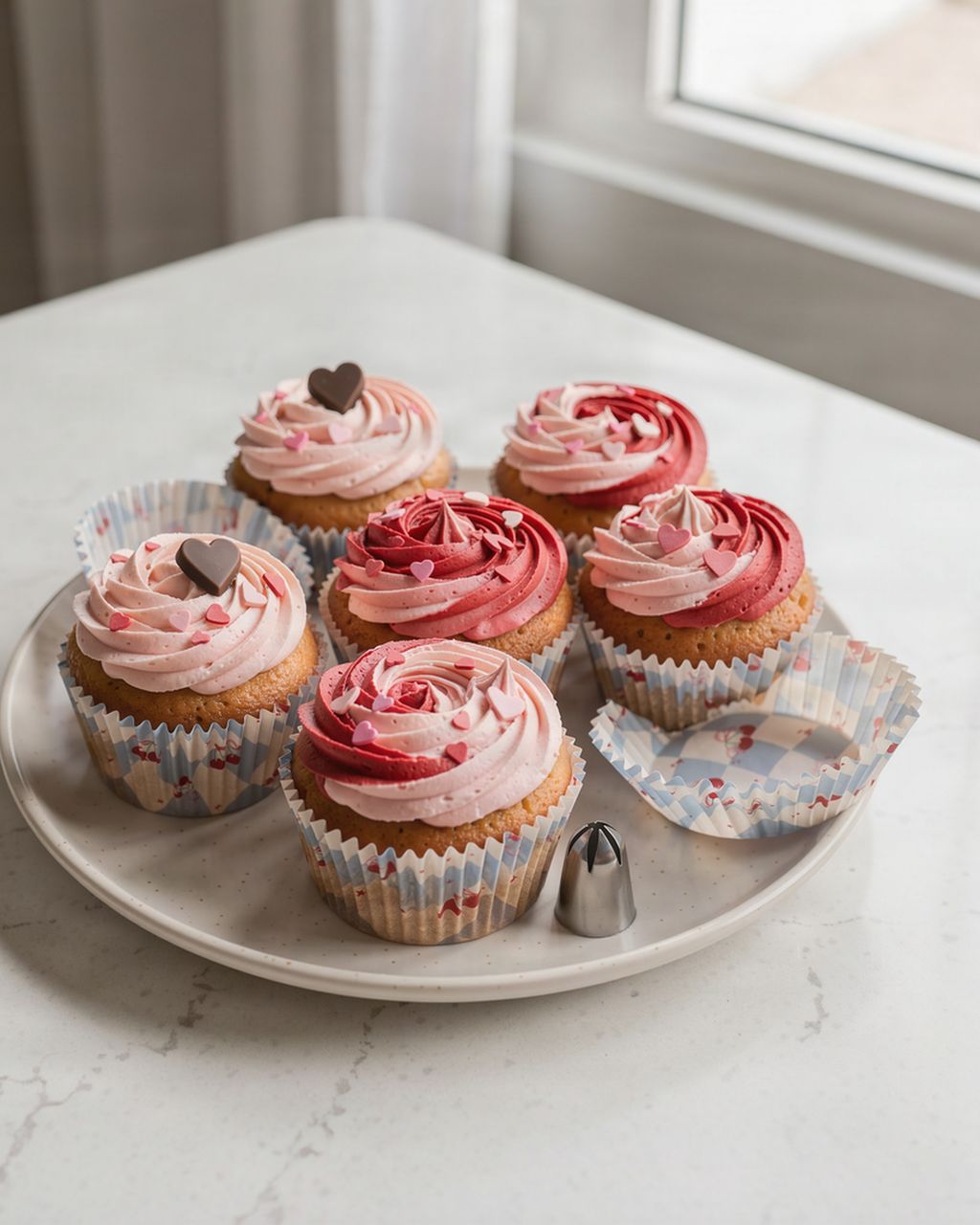
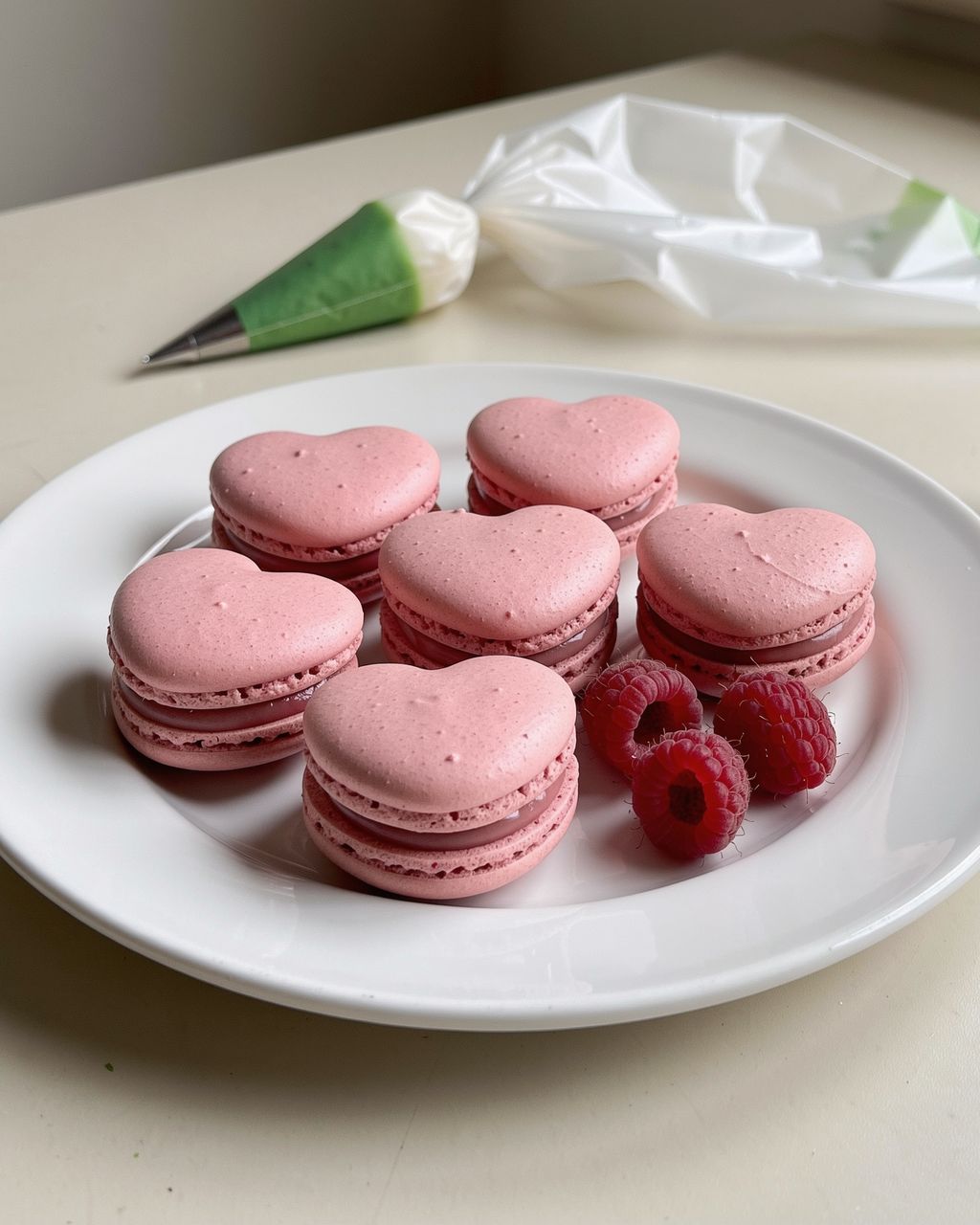
If you're planning a whole evening, put the menu together with the Valentine's at home plan. And if you need smaller sweets to go with the cake, Valentine's cupcakes with pink frosting or heart-shaped macarons fit the bill.
What you'll need to decorate the heart
One Way
Piping Bags 36x20 cm, 100-PackKč 625.00Rosie Rose
Rosebuds Bright PinkKč 212.00



Frequently asked questions
Can I make a heart cake without a special pan from a single sheet cake?
Yes, you can cut it from one sheet cake using a paper template. A 30 × 40 cm (12 × 16 in) pan is enough for a heart about 28 × 26 cm (11 × 10 in). Bake the cake taller (3–4 cm / 1¼–1½ in) so you can slice it into at least two layers, and expect some trimmings from the sides.
How far ahead can I make a heart cake?
Bake the cake layers 1–2 days ahead and keep them wrapped in the fridge, then assemble and frost the cake the day before the celebration. Eat a cake with buttercream or whipped cream within 1–2 days (that's what the University of New Mexico's chart for frosted cakes, based on USDA FoodKeeper, gives), and add fruit just before serving.
Can I freeze the cake layers for a heart cake?
Yes, freeze baked, completely cooled layers wrapped tightly in plastic wrap for up to a month. Thaw them in the fridge overnight, still wrapped, so they don't turn damp. You can cut them while still half-frozen, when they crumble the least.
How do I cut a heart-shaped cake into servings?
First cut off both upper lobes of the heart and slice them into wedges like a round cake, then cut the middle diamond into small squares. The 18 cm (7 in) set gives 16–20 servings, the 22 cm (9 in) set 26–30 servings.
Can I make a no-bake heart cake?
Yes, you can build a no-bake heart cake from ladyfingers or cookies layered with cream, directly on a board inside an adjustable cake ring or a heart-shaped aluminum foil mold. Leave it to set in the fridge for at least 6 hours, ideally overnight, before taking it out of the mold.
Want tips like this every Thursday?
One recipe worth heating the oven for, one tip, and one deal from the shop. Nothing else.