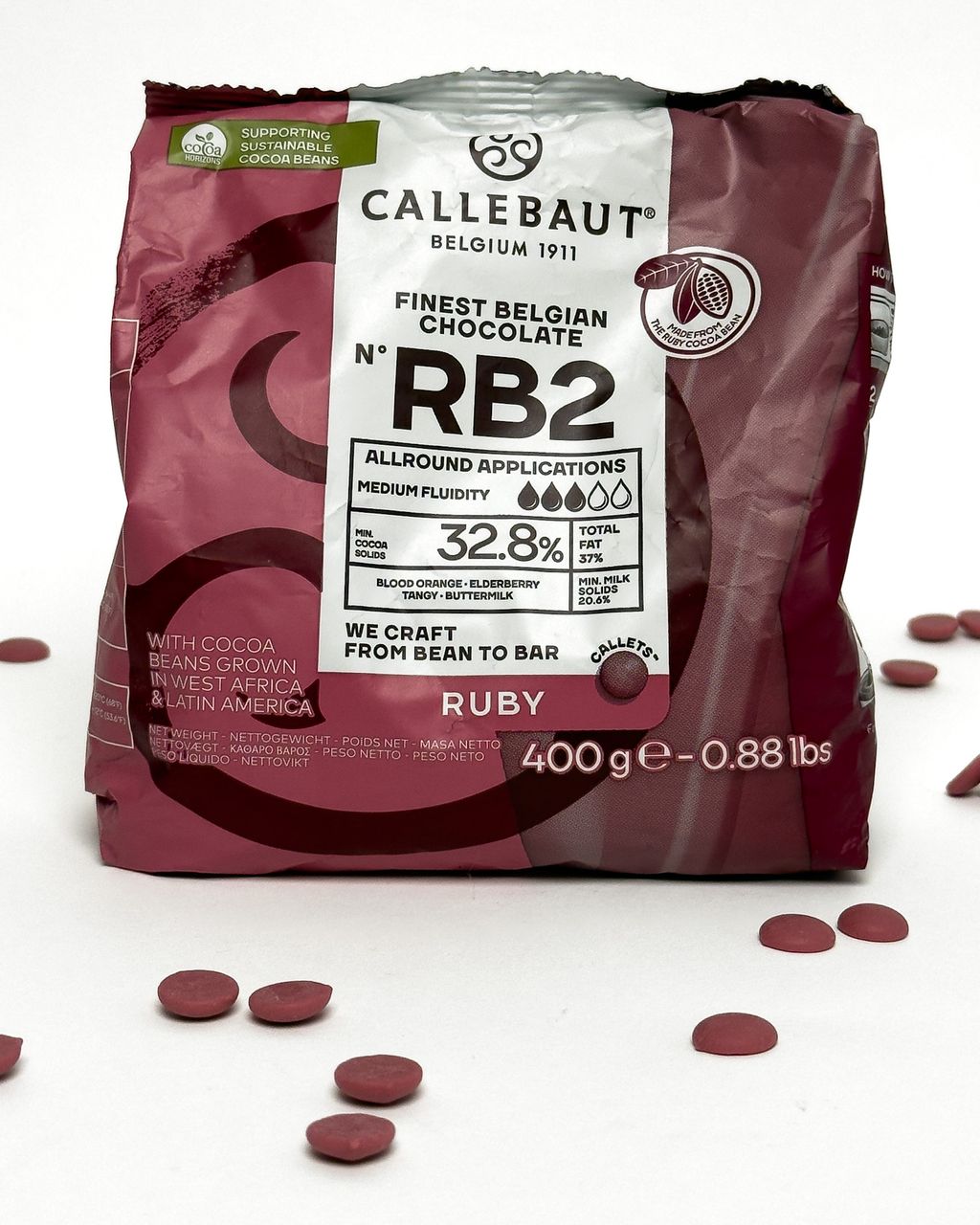
Ruby RB2 Chocolate Callets 400g
Ruby Chocolate: What It Really Is, How It Tastes, and How to Work With It
Updated Oct 6, 2026
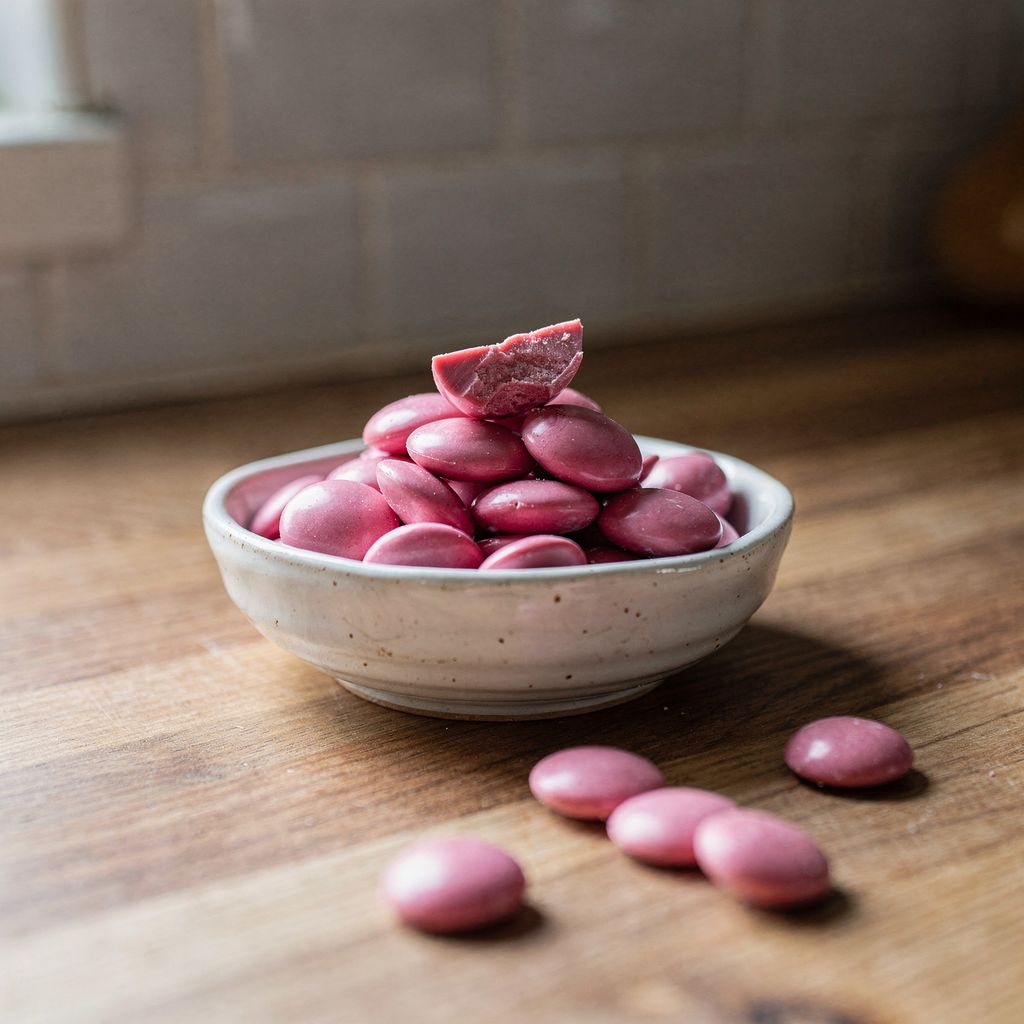
Ruby chocolate is pink chocolate made from cocoa beans. Its colour and fruity flavour don't come from food dye or raspberries, but from the beans themselves and the way they're processed. It was launched by the Belgian-Swiss company Barry Callebaut in 2017, which markets it as a "fourth type" of chocolate alongside dark, milk, and white. Here's what ruby chocolate is actually made of, how it tastes, and how to handle it in the kitchen so it doesn't turn brown on you.
Ruby chocolate is made from cocoa beans that aren't allowed to fully ferment and are instead mildly acidified. This is what lets them keep their pink colour and fruity tartness. No fruit, fruit flavouring, or dye is added to it.
With classic chocolate, beans ferment for several days after harvest and are then roasted. That's when they turn brown and develop the familiar "cocoa" flavour. Ruby skips this step. According to Barry Callebaut's patent application, the beans used are unfermented or only minimally fermented, then acidified, most often with citric acid. The acidic environment preserves the pink pigment in the beans, which would otherwise break down.
The maker launched it in September 2017 in Shanghai, roughly 80 years after white chocolate first appeared. For a long time only Barry Callebaut produced it (sold here mainly under the Callebaut brand), which is why most ruby products on the market share the same origin.
In terms of composition, ruby is closer to milk chocolate: cocoa butter, sugar, milk powder, a touch of cocoa mass, and citric acid. Callebaut Ruby RB1, for example, lists roughly these proportions on its label:
sugar approx. 35.5%
cocoa butter approx. 29.5%
skimmed milk powder approx. 16.5%
whole milk powder approx. 12.5%
cocoa mass approx. 4.5%
soy lecithin, citric acid, and natural vanilla, each under 1%
Cocoa butter and cocoa mass together make up around 34%. You may see a different declared cocoa content on other packaging, since the figure varies by market and local labelling rules. What matters is that most of the cocoa component comes from the butter, with only a few percent being actual cocoa mass. That's why ruby doesn't taste "cocoa-forward" like dark chocolate, but it also isn't blandly sweet like white chocolate. Ruby contains milk powder, so it isn't vegan and isn't suitable for anyone with a milk allergy.
Ruby tastes sweet, creamy, and distinctly tart. People most often compare it to berries, raspberries, or strawberry yoghurt. That tartness is the main feature here, not a side note. A buttery sweetness hits your tongue first, followed by a fresh, almost citrusy tang, with barely any bitterness at all.
Here's how it compares to the other chocolates:
dark: cocoa, bitterness, roasted notes
milk: caramel, milk, cocoa in the background
white: vanilla, milk, pure sweetness
ruby: tart fruit, cream, minimal cocoa
Anyone expecting a "raspberry-flavoured chocolate" is often surprised by just how little cocoa it contains. Anyone who likes a sharper, tangier dessert tends to fall for it right away.
RB2 is the newer, more intense version: it has a deeper pink colour and a stronger fruity tartness. Both have the same medium fluidity (Callebaut rates it as three drops), so both work equally well for dipping, coatings, and moulding. The original RB1 is lighter in both colour and flavour.
Ruby RB1: lighter and milder, medium fluidity. Good for dipping strawberries, coatings, thin shells, and moulded shapes.
Ruby RB2: same medium fluidity, but darker and tangier. Suited to the same uses, and really shines in pralines, bars, and ganache.
At home, you'll mostly notice the difference in colour and flavour. For everyday use, like dipping, ganache, or a nut bar, either one will do the job. Callebaut sells both as couverture, meaning chocolate meant for tempering, which gives it a beautiful shine and snap when tempered correctly.
Ruby is tempered much like milk chocolate: melt it to 40–45°C (104–113°F), cool it to 26–27°C (79–81°F), then warm it back up to a working temperature of 29–30°C (84–86°F). That's the curve Callebaut gives for RB2. For RB1, the working temperature is roughly 28.5–29.5°C (83–85°F).
At home, the easiest approach is the seeding method (adding solid callets):
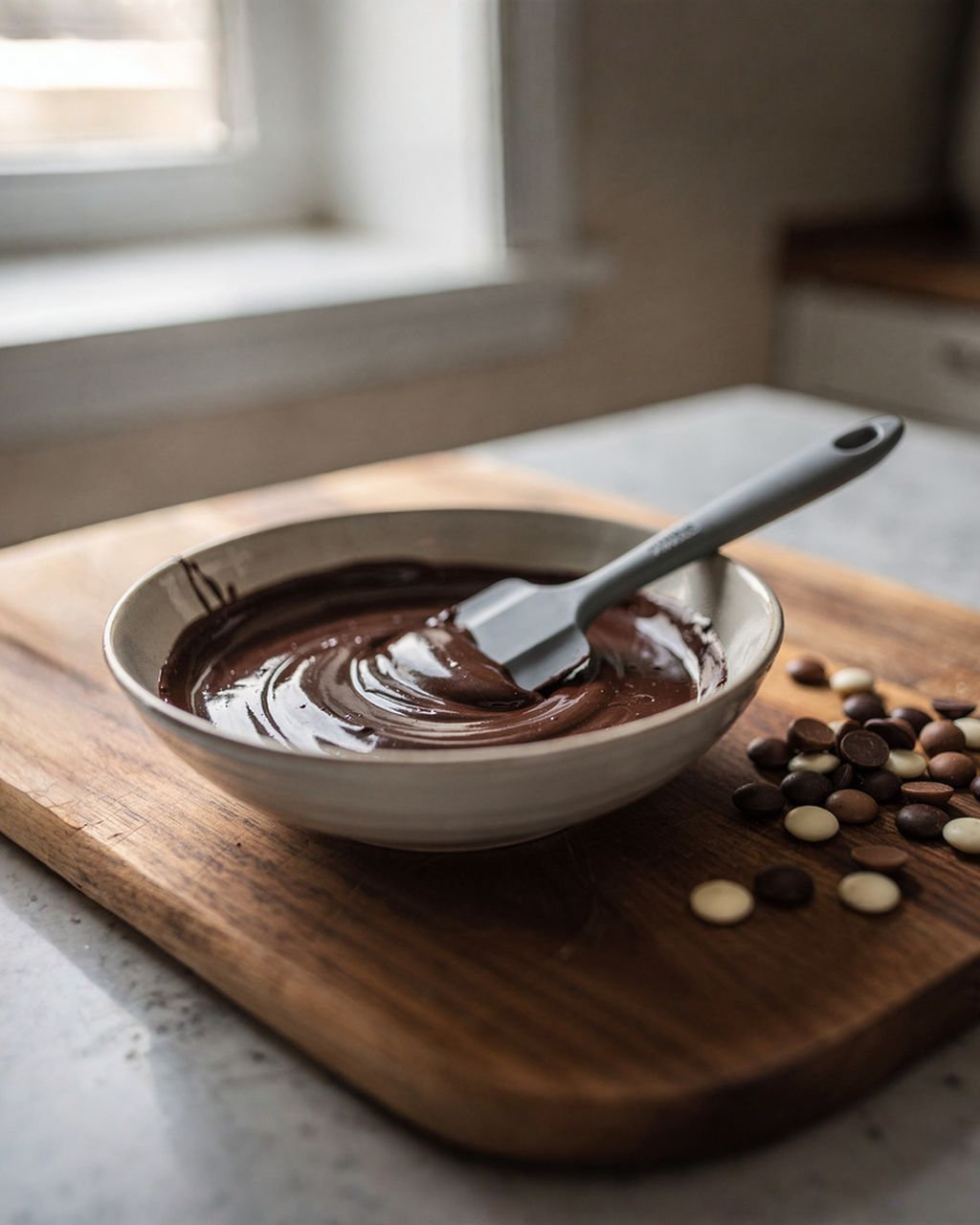
Melt two-thirds of the chocolate in a water bath, or in the microwave in 20–30 second bursts, up to 40–45°C (104–113°F). Stir between each burst.
Stir in the remaining third of the callets and keep stirring until they've melted and the temperature has dropped to 29–30°C (84–86°F).
Run a test: dip the tip of a knife and let it sit at room temperature. If it sets glossy and streak-free within 5 minutes, you're good to go.
Don't overheat it. Ruby is more delicate than dark chocolate. Keep it around 40–45°C (104–113°F) while melting – going much hotter puts unnecessary strain on ruby and can thicken it or strip away its colour and clean flavour. Work with a thermometer, not guesswork.
The pigment in ruby chocolate is sensitive to heat, light, air, and loss of acidity. Each of these gradually breaks it down, turning the chocolate brown or grey. That's why the maker packages it in opaque bags.
Heat. Chunks of ruby baked into cookies or a bundt cake will darken to brown in the oven. For decorating a baked dessert, add it only after it's cooled, as a glaze, drizzle, or shavings.
Light. Pralines in a display case or a bar left on a windowsill will fade within days.
Air. An opened bag left sitting in the kitchen for months loses both colour and aroma.
Loss of acidity. Mixing ruby with ingredients that neutralise its tartness (neutral or alkaline ones) can dull the colour. Tart fruit (raspberries, redcurrants, citrus, passion fruit), on the other hand, actually helps both the colour and the flavour.
Ruby works best anywhere it doesn't have to go into the oven: dipping fruit, coatings, ganache, pralines, bars, and decorations. That's where both its colour and tartness really shine.
Dipped fruit: strawberries, cherries, lychee, dried apricots.
Ganache and creams: ruby ganache made with cream in roughly a 2:1 ratio (chocolate : cream) for filling macarons, pralines, or tarts. For cake decoration, a 1:1 ratio is enough.
Pralines and bars made in moulds. Both RB1 and RB2 work well here.
Glaze and drizzle for cooled muffins, bundt cakes, or cakes.
Shavings and shards as decoration.
If you want to use ruby in a dessert that normally calls for white chocolate, keep in mind it'll be tangier and less sweet. Ruby also pairs beautifully with fruit. You'll find more pairing ideas in our article on chocolate with fruit and nuts: the best combinations.
If you'd like to browse the full range, check out our ruby chocolate for dipping, ganache, and pralines category.
Ruby pairs best with tart, fruity, and floral flavours. Anything strongly cocoa-forward, coffee-flavoured, or caramel-heavy will overpower it.
Good pairings:
raspberries, redcurrants, strawberries, cherries, lychee
passion fruit, yuzu, lemon, lime
pistachios, almonds, hazelnuts
rose, hibiscus, green tea, matcha
white and milk chocolate as a contrast
Better to avoid:
large amounts of dark chocolate or cocoa
espresso and strong spices
salted caramel and dark sugar
The general rule: ruby behaves like fruit, not like chocolate. Pair it the way you would pair raspberries.
Store ruby chocolate in a sealed, opaque container, somewhere dry and dark, at 12–20°C (54–68°F). Don't put it in the fridge.
Once opened, reseal the bag tightly or transfer the callets to an opaque container.
Avoid the fridge. Taking it out causes condensation to form, which turns the chocolate grey (sugar bloom).
Keep finished pralines and decorations out of direct light and eat them within a few days, while they're still pink.
Keep an eye on the best-before date. Ruby's colour fades faster than that of other chocolates.
No, ruby chocolate contains no dye or fruit at all. It gets its pink colour from cocoa beans that aren't allowed to fully ferment and are then acidified, which helps the colour stay put. Watch out, though, for cheap "pink chocolate" at the shops: it's often just white chocolate with added colouring and raspberry flavouring. You can tell the difference by checking the ingredients list.
Colored white chocolate will only match ruby chocolate in looks, since it lacks that signature tartness. If you want to mimic ruby, stir a bit of freeze-dried raspberry powder into melted white chocolate. It'll add both colour and tang, though it still won't be quite the same thing.
No, even tucked inside batter, ruby chocolate won't survive baking: the temperature inside the dough climbs well past what its pigment can handle, so the pieces end up beige to brown. The batter only shields it from direct heat, not from heat in general. If you want ruby inside a dessert, use it in a no-bake filling instead, like a ganache for filling cooled cupcakes or a no-bake cheesecake.
Unopened ruby chocolate lasts until the best-before date on the pack, as long as you store it somewhere dry and dark below 20°C (68°F). Once opened, use it up sooner rather than later, since the colour fades gradually with exposure to light and air. The flavour holds up longer than the colour does.
You'll most commonly find genuine ruby chocolate sold as Callebaut couverture (in RB1 or RB2 callets) at baking and pastry suppliers, including Yumsto. For "pink chocolate" that isn't labelled as ruby, always check the ingredients list so you don't end up with coloured white chocolate instead.
One recipe worth heating the oven for, one tip, and one deal from the shop. Nothing else.