Chocolate cupcakes with salted caramel cream
Valentine's Day Cupcakes: Pink and Red Frosting, Hearts and Sprinkles Step by Step
Updated Nov 17, 2026
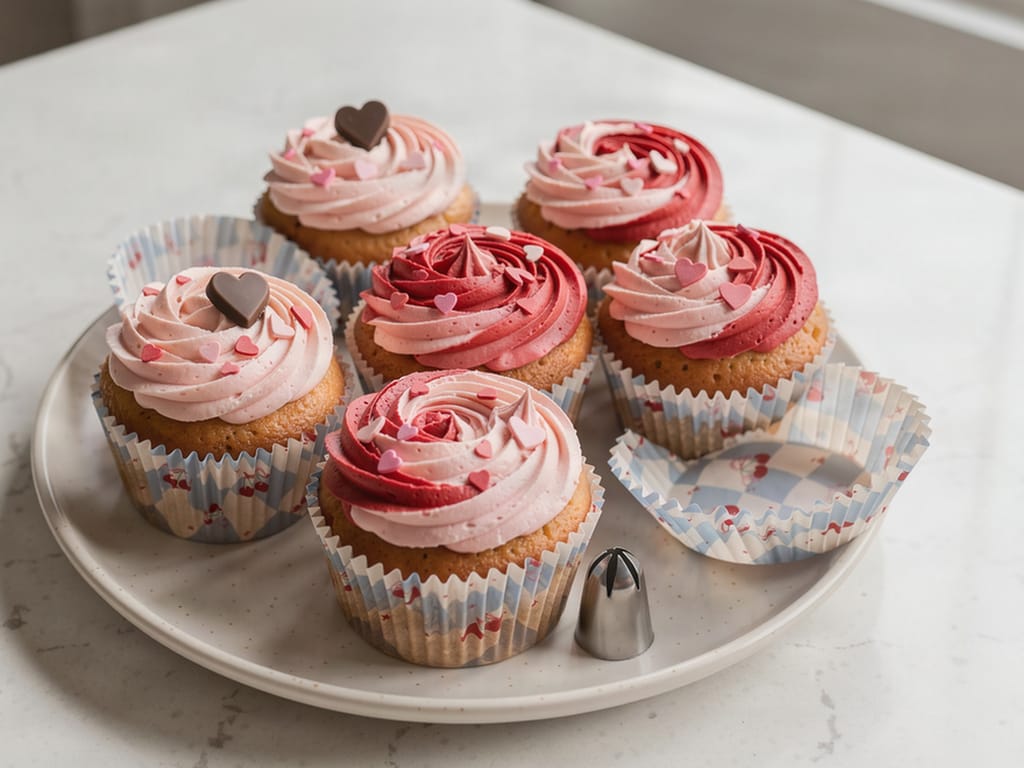
For Valentine's Day cupcakes with a piped rose that holds its shape, you need a firm buttercream or a mascarpone frosting (mascarpone whipped with 33% whipping cream). For 300 g of frosting, pink takes anything from a toothpick tip to 4 drops of gel color, while a deep red takes roughly 1–2 teaspoons of gel and a night in the fridge so the color can develop. The rest comes down to the piping tip, a few turns of the wrist and the right sprinkles. We'll walk through all of it: the frosting, color without a bitter aftertaste, the rose and the heart, the decorations, and cupcake liners that don't show grease through.
A rose is reliably held by buttercream and by mascarpone frosting whipped firm. A soft frosting made from quark (tvaroh, a Czech fresh curd cheese) or loosened cream cheese slumps under its own weight and the edges of the petals run together.
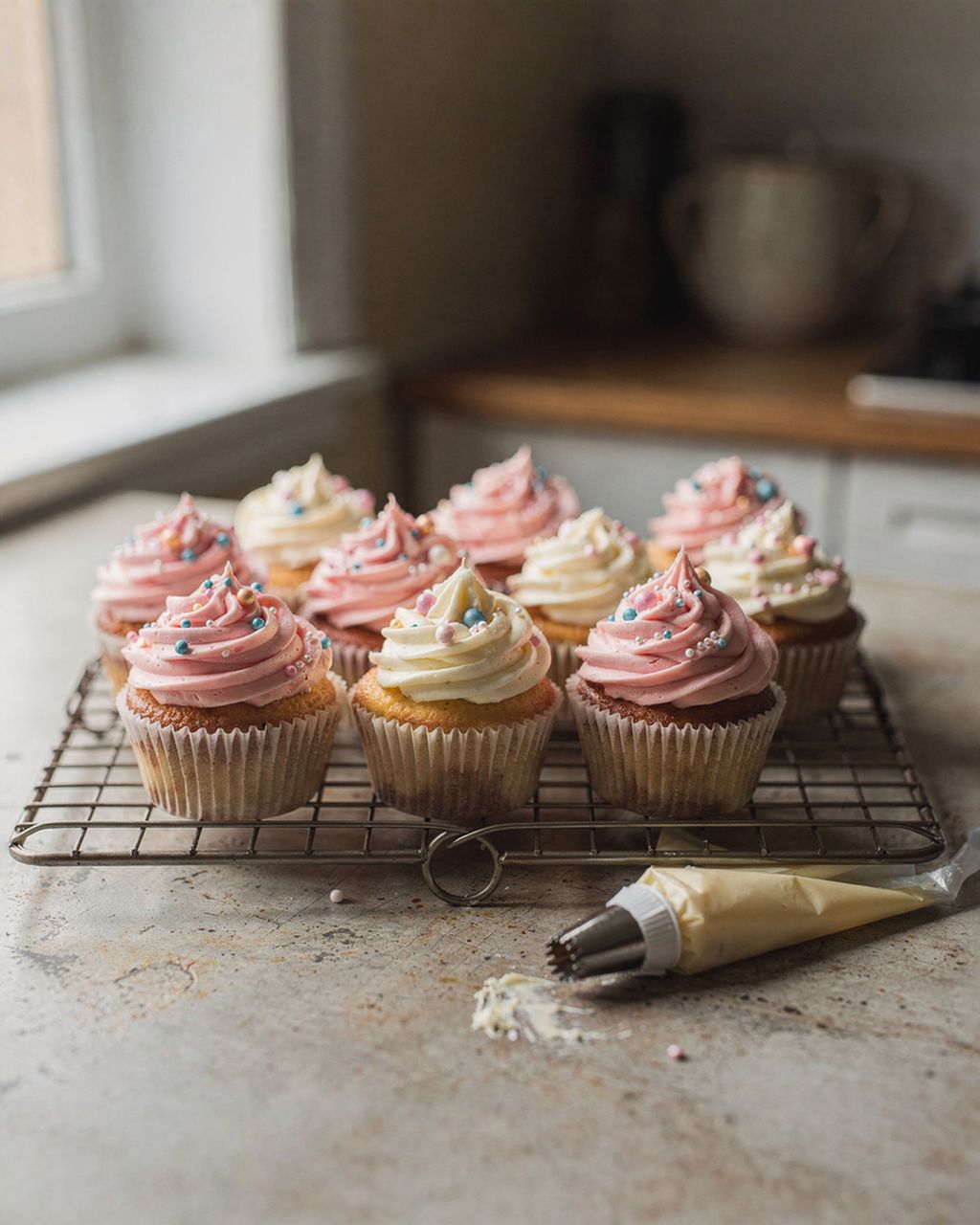
Buttercream — softened butter and powdered sugar at roughly 1 : 1, whipped for 5–7 minutes until pale and fluffy. It's the firmest option, tolerates room temperature and takes color best.
Mascarpone frosting — mascarpone and 33% whipping cream at roughly 5 : 4, sweetened with powdered sugar and whipped cold (both mascarpone and cream straight from the fridge) to stiff peaks. Lighter and less sweet, but it belongs in the fridge.
Temperature matters too: pipe mascarpone frosting straight from the fridge, while buttercream should be around 18–20°C (64–68°F). Warm frosting spreads after piping, and frosting that's too cold tears, leaving the rose petals with ragged edges. If the frosting in the bag softens from the heat of your palms, divide it between two smaller bags and keep one in the fridge for a while.
For the details — ratios, whipping and what to do if the frosting curdles — see our article on cupcake frosting that holds its shape.
Seasonal baking plans, tested recipes and kitchen tricks that save you time. Unsubscribe in one click.
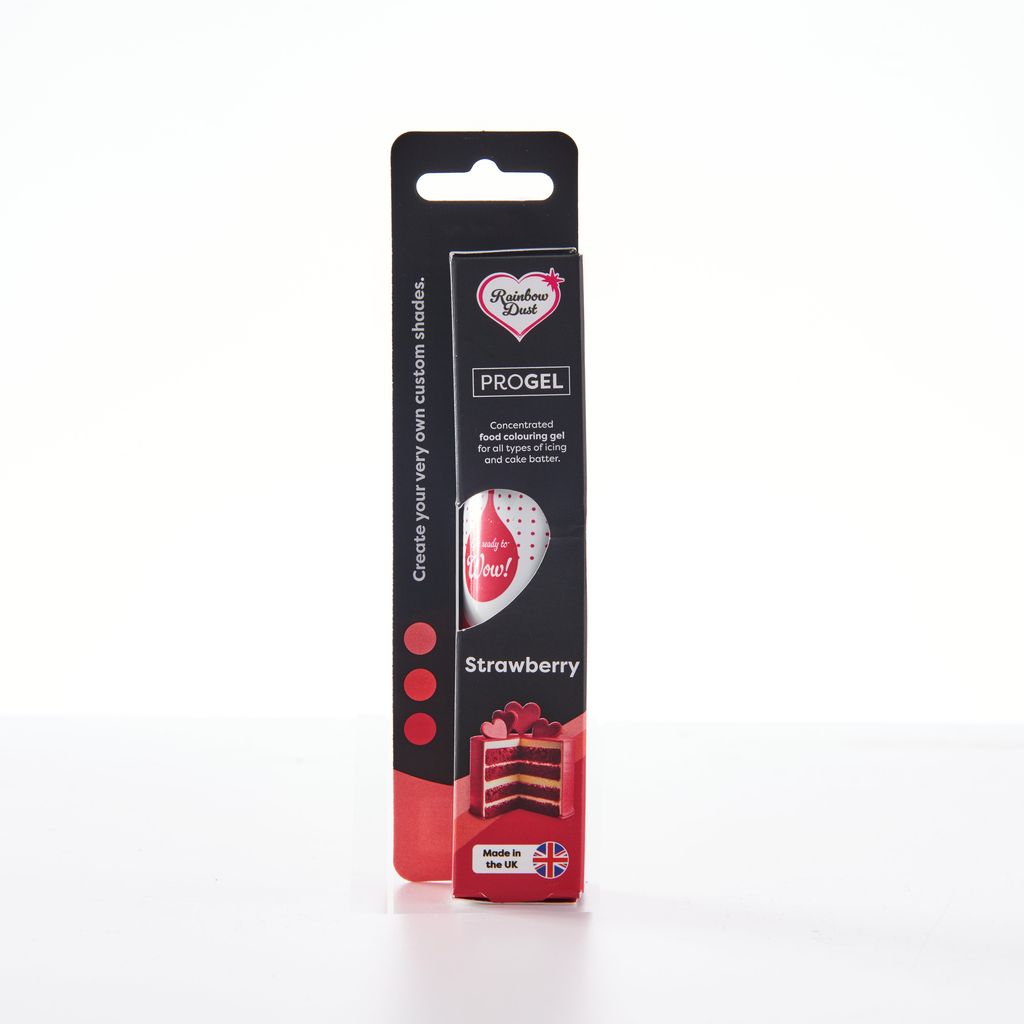
For 300 g of frosting, a powdery pink takes a toothpick tip of gel color, a deeper pink 2–4 drops, and a deep red 1–2 teaspoons (5–10 g) plus a night in the fridge. The strength of gel varies between brands, so add it gradually:
powdery pink: a toothpick tip of gel
deep pink: 2–4 drops
deep red: 1–2 teaspoons (about 5–10 g), then let the frosting rest in the fridge for at least 8 hours, ideally overnight
Use only gel or paste color. Liquid coloring thins the frosting — to get a deep color you'd have to pour in so much that the frosting turns runny and the roses won't hold.
Don't drip the color straight into the whole batch. Color a spoonful of frosting first, mix it smooth and only then fold it into the rest — that way you avoid streaks and dark specks of undissolved gel. And expect the color to darken by roughly one to two shades over a few hours, so mix it a touch lighter than you want it on the table.
You make red frosting without a bitter aftertaste in five steps: color it a day ahead, start from a darker cocoa base, warm a little of the frosting, reach for a concentrated gel and flavor the frosting well. A bitter, "chemical" aftertaste comes from a large amount of red coloring, and each of these steps saves you some color.
Color a day ahead. The color in the frosting develops gradually; what looks dark pink in the evening is red by morning. You can easily save a third of the gel.
Start from a darker base. 1–2 tablespoons of cocoa per 300 g of frosting shift white toward brown, and the red then looks deeper, more wine-like, with less coloring. The cocoa also masks any aftertaste.
Warm a little of the frosting. With buttercream (don't warm mascarpone frosting, it would curdle), take about 2 tablespoons of the colored frosting, microwave it for 5–10 seconds until semi-liquid and stir it back in. The warmth helps the coloring dissolve and the color visibly deepens.
Use a concentrated gel. The stronger the gel, the less you need and the less you'll taste it. At 2 teaspoons per 300 g of frosting, though, you'll always taste the red.
Flavor the frosting boldly. Vanilla, lemon zest or a spoonful of mascarpone reliably hide any remaining aftertaste.
The same principle — less coloring, more patience — applies to batter. For how to get red into the cake itself, see red velvet: deep red batter.
A dark chocolate base suits pink frosting best — the color contrast is striking and the more bitter cocoa balances the sweet frosting. Red frosting, on the other hand, pairs with a lighter base or with red velvet itself, so the cupcake looks like one whole when cut. Bake both bases a day ahead: a cooled cupcake wrapped overnight is easier to decorate than a lukewarm one on which the frosting softens.
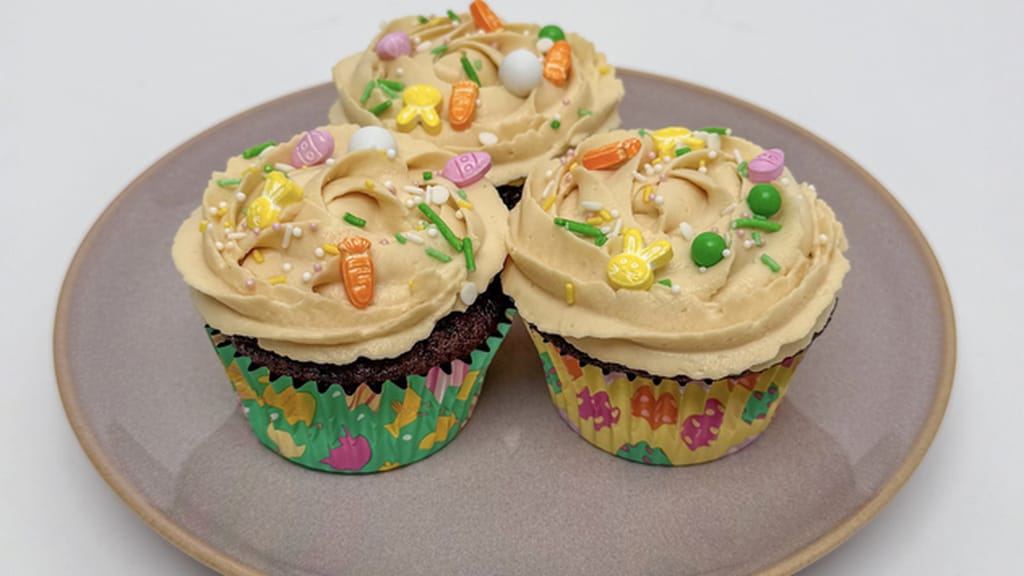
Chocolate cupcakes with salted caramel cream
Chocolate cupcakes with caramel frosting — a cake base that also works under pink Valentine's frosting
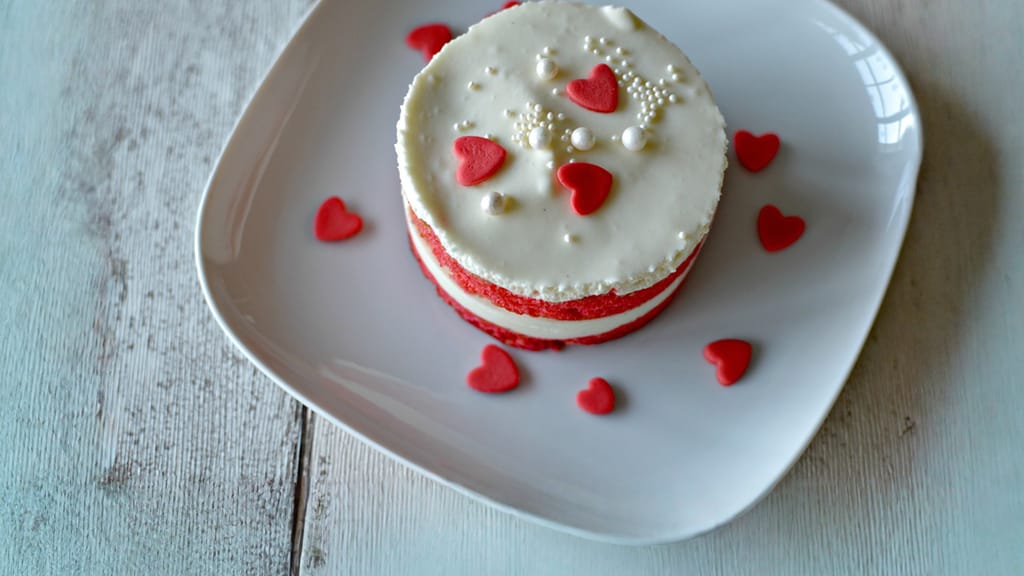
Red velvet mini desserts with mascarpone cream
Red velvet love-themed mini desserts: a red cake base for Valentine's Day
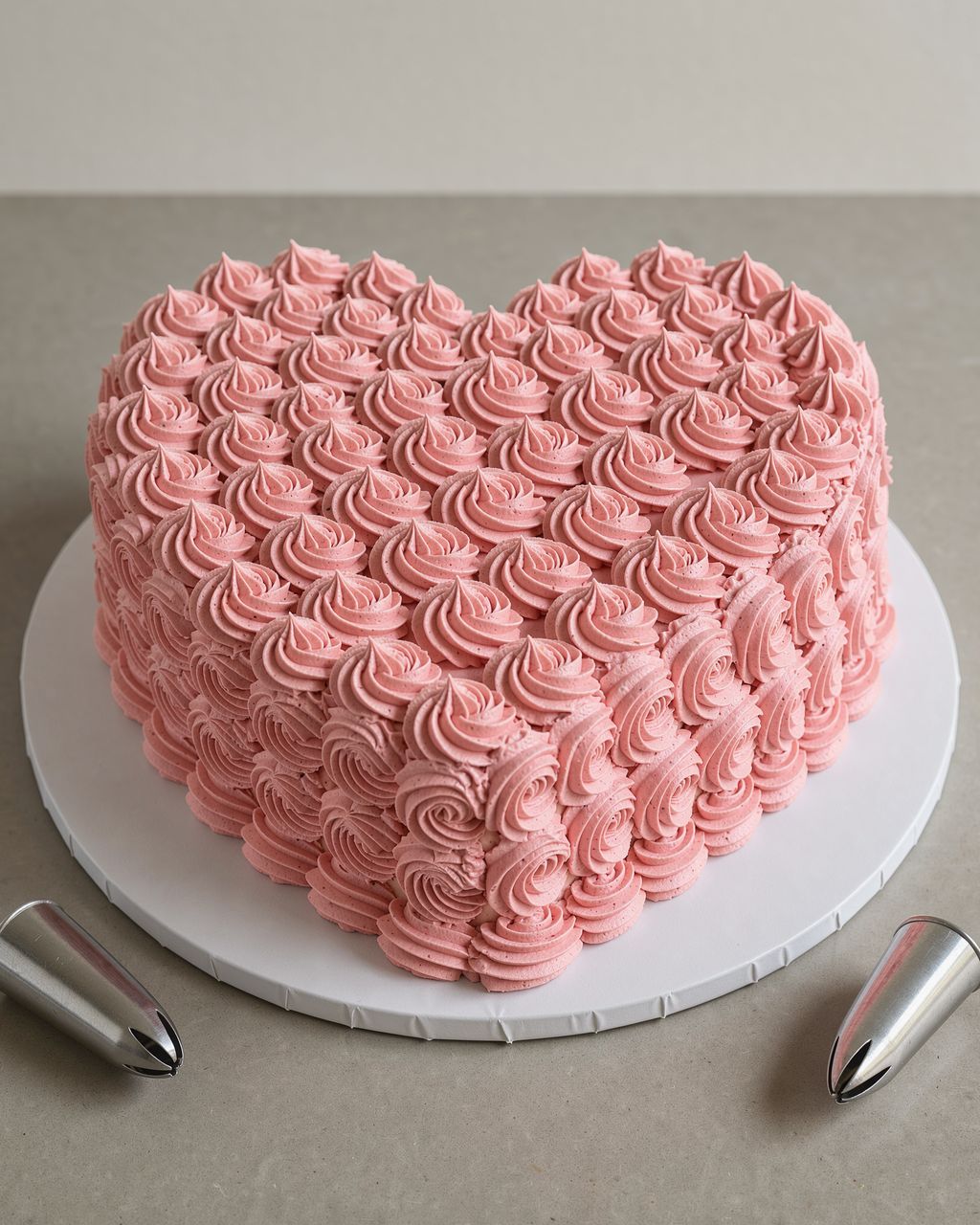
You pipe the rose in one continuous motion: with a Drop Flower 2D tip, start in the center of the cupcake and spiral outward counterclockwise until you've covered the whole surface.
Fill the bag with the tip two-thirds full and push the frosting down toward the tip so there are no bubbles — air in the bag makes holes in the petals.
Hold the bag perpendicular to the cupcake, with the tip about 1 cm above the center.
Squeeze, let the frosting form a small "button" in the middle and, without releasing the pressure, start circling around it.
Make one and a half to two turns, each right against the previous one, until you reach the edge of the liner.
At the edge, release the pressure and pull the tip away in the direction of the spiral — the end disappears under the last petal.
For one rose across the whole cupcake, plan on 40–50 g of frosting. For a two-tone rose, paint a stripe of red frosting along the inside wall of the bag and fill the rest with pink — each rose then comes out with darker petal edges. An open star tip #18 makes smaller rosettes, and several fit on one cupcake.
A frosting heart is made from two drops that join in a point at the bottom. Here's how:
Fit an open star tip #18 (or a round tip if you want a smooth heart).
Hold the bag at an angle, about 45°.
Squeeze, let the frosting form a plump drop and, as you release the pressure, pull diagonally down toward the center — that makes the first half.
Pipe the second drop as a mirror image next to it, pulling to the same point. The two tips meet and the heart is done.
A heart looks best on a smooth surface: first spread a thin layer of frosting on the cupcake and smooth it with a spatula, then pipe. A small red frosting heart on a powdery pink base is easier than a rose and just as impressive.
The best decorations for Valentine's Day cupcakes are chocolate hearts and heart-shaped sugar sprinkles; add both only on top of the finished frosting.
Chocolate hearts: put tempered chocolate in a small bag, snip off the very tip and pipe hearts onto parchment paper (two drops, just like with frosting). After 10 minutes in the fridge they peel off whole. Thin hearts can be pushed upright into the rose, while larger ones lie flat. Ruby chocolate is pink on its own, with no coloring. To learn how to pour a large chocolate heart without a mold, see our article on the Valentine's Day chocolate heart.
Sprinkles: on buttercream, sprinkle right after piping — within 15–20 minutes the surface dries and sprinkles no longer stick. Colorful sprinkles on mascarpone frosting "bleed" color into their surroundings in the fridge overnight, so add them to mascarpone frosting only on the day you serve.
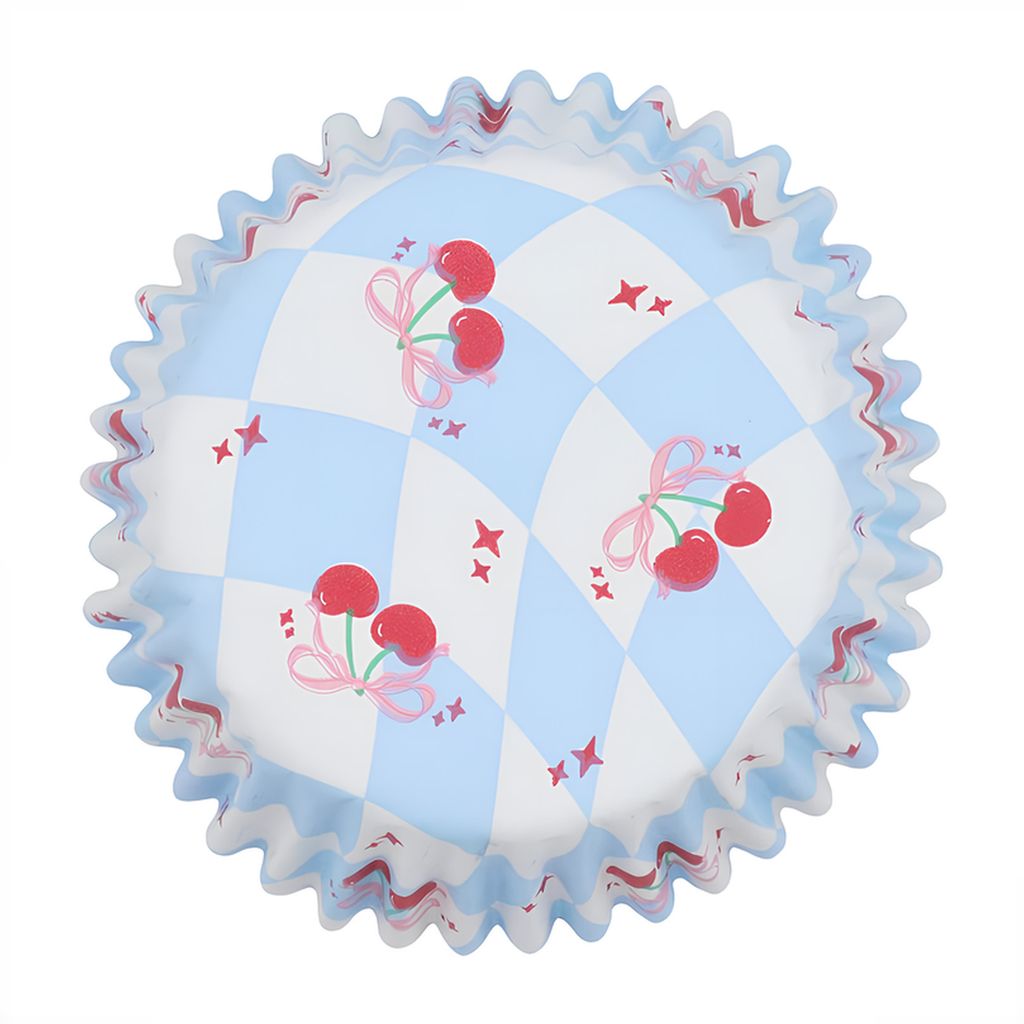
The color holds best in paper liners with aluminum foil (foil liners): the foil doesn't let grease through from the cake, so the color stays bright even the next day. Ordinary thin paper soaks up the grease, turns gray and the color fades.
A solid-colored paper liner looks best when it's just for serving: bake the cupcake in a plain liner and, once it's finished and cooled, place it in a decorative one.
Two liners nested together during baking help even with thinner paper.
Don't seal lukewarm cupcakes in a box — condensing steam will peel the paper from the cake.
You'll find options by size and material among our cupcake liners.
For Valentine's Day cupcakes as a gift, bake them a day ahead, decorate them the evening before February 14 or the morning you hand them over, and pack them in a box with an insert that gives each one its own hole. A box is a lovely stand-in for store-bought chocolates — four rose cupcakes are often just the right portion.
A box at least 3–4 cm taller than the cupcake in its liner, so the rose doesn't touch the lid.
An insert with holes keeps the cupcakes in place; without it they shift during carrying and smear frosting on the walls.
Buttercream handles a trip and a few hours out of the fridge. Give mascarpone frosting only to someone who will refrigerate it within two hours.
Add sprinkles and chocolate hearts just before packing.
To fit the gift in with dinner and other preparations for February 14, see the plan Valentine's Day at home.
Yes, with buttercream you can decorate a day ahead. The roses hold their shape in the fridge and the color deepens even more. Ideally pipe mascarpone frosting on the day you serve, or the evening before, and add sprinkles just before serving so they don't bleed color.
The most reliable way is freeze-dried raspberry or strawberry powder: 1–2 tablespoons per 300 g of frosting gives a powdery pink and a fruity flavor. You can't get a deep red naturally; beet juice thins the frosting and turns brown in butter.
Most often because liquid coloring brought water into the frosting, or because the frosting warmed above 20°C (68°F) during longer mixing. Chill it for 15 minutes and give it a brief whip; next time use gel color.
For 12 cupcakes with a rose across the whole surface, plan on about 500–600 g of frosting, which is 40–50 g per cupcake. Add a 100 g reserve for filling the piping bag and any touch-ups.
Yes, you can freeze buttercream cupcakes for up to a month: first uncovered for an hour so the frosting firms up, then pack them into a box. Thaw them overnight in the fridge. Mascarpone frosting releases water after thawing, so don't freeze it.
One recipe worth heating the oven for, one tip, and one deal from the shop. Nothing else.