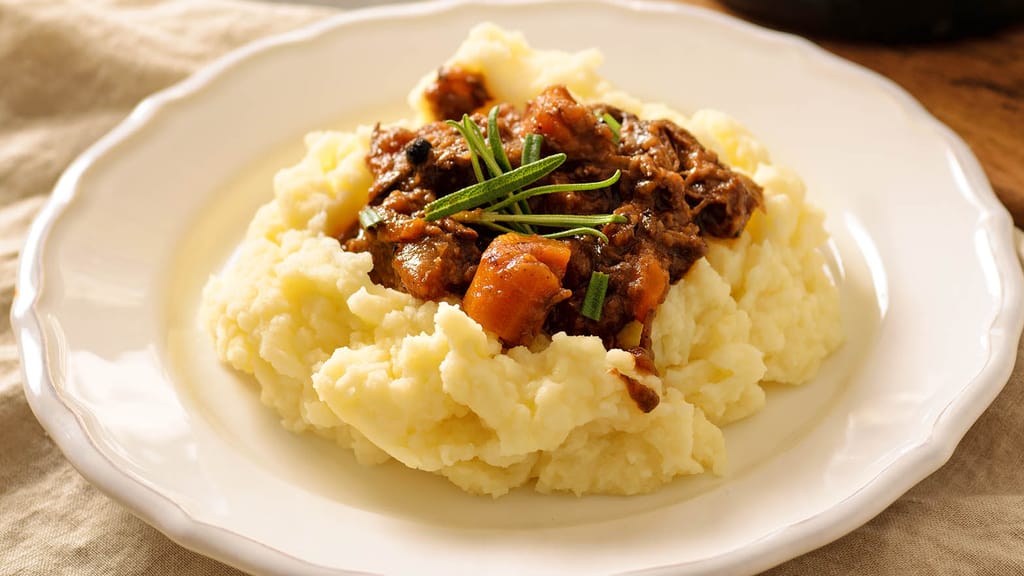
Oven-braised beef in red wine with vegetables
Updated Sep 5, 2026
Raw beef keeps in the fridge for 3–5 days if you store it at 0–4°C (32–39°F): whole cuts or steaks last toward the upper end of that range, while diced stewing beef and minced beef only last 1–2 days, and cooked beef keeps for 3–4 days. What matters isn't how the meat looks, but how much surface area it has and how cold it's actually kept. Below you'll find times by cut, the best spot in the fridge, and the point at which meat simply can't be saved.
At 0–4°C (32–39°F), beef keeps for 3–5 days whole, 1–2 days diced, 1–2 days minced, and 3–4 days cooked. Count from the day of purchase (for whole cuts, from the moment you portion it):
Steak, sirloin, tenderloin, round slices: 3–5 days
Large whole roasting or braising cuts: 3–5 days
Diced stewing beef: 1–2 days
Minced beef: 1–2 days
Beef offal (liver, heart, tripe): 1–2 days
Cooked or roasted beef: 3–4 days
Vacuum-sealed raw beef, unopened: until the use-by date, typically 2–4 weeks
Vacuum-sealed after opening: treat it like fresh meat — 3–5 days
The use-by date on the package always trumps any chart. It's a figure the manufacturer has verified for that specific packaging and temperature, and once it passes, the food is legally no longer considered safe to sell — and you shouldn't eat it either. Don't confuse it with the "best before" date found on shelf-stable goods, which only speaks to quality, not safety. Use the times above for unlabeled meat from the counter, for a package you've already opened, or to double-check whether what's in your fridge still checks out.
Beef lasts longer mainly because bacteria live almost exclusively on the meat's surface — the inside of a healthy muscle is essentially sterile. The more surface area meat has, the faster it spoils, and that explains the whole range of numbers above.
A whole cut has the smallest surface-to-volume ratio. Bacteria can only grow on the outside, and slowly at that.
Diced stewing beef multiplies that surface area many times over. Treat cubes the same as minced meat — 1–2 days.
Minced beef is the extreme case: grinding splits the surface into thousands of tiny facets, mixing what used to be the exterior throughout the whole volume. That's why it only lasts 1–2 days — and why commercial guidelines require mince to be stored even colder, below 2°C.
Chicken also has higher moisture and a milder pH than beef, which suits bacteria even better. That's why even a whole chicken breast has a shorter shelf life.
The practical takeaway: buy beef whole whenever you can, and cut it only right before cooking. A cut you portion at home an hour before braising will last noticeably longer than one that was diced at the counter on Monday.
Keep beef at 0–4°C (32–39°F), ideally toward the lower end, around 0–2°C. That's the temperature range every timeframe in this article — and every date on a label — assumes. Outside that range, none of it applies.
The reason is simple: bacterial growth speeds up sharply with temperature, not gradually. A few degrees too warm can cut the meat's shelf life by days. A steak that lasts five days in the coldest part of the fridge might not even make it two days in the door compartment at 8°C.
Three things worth doing:
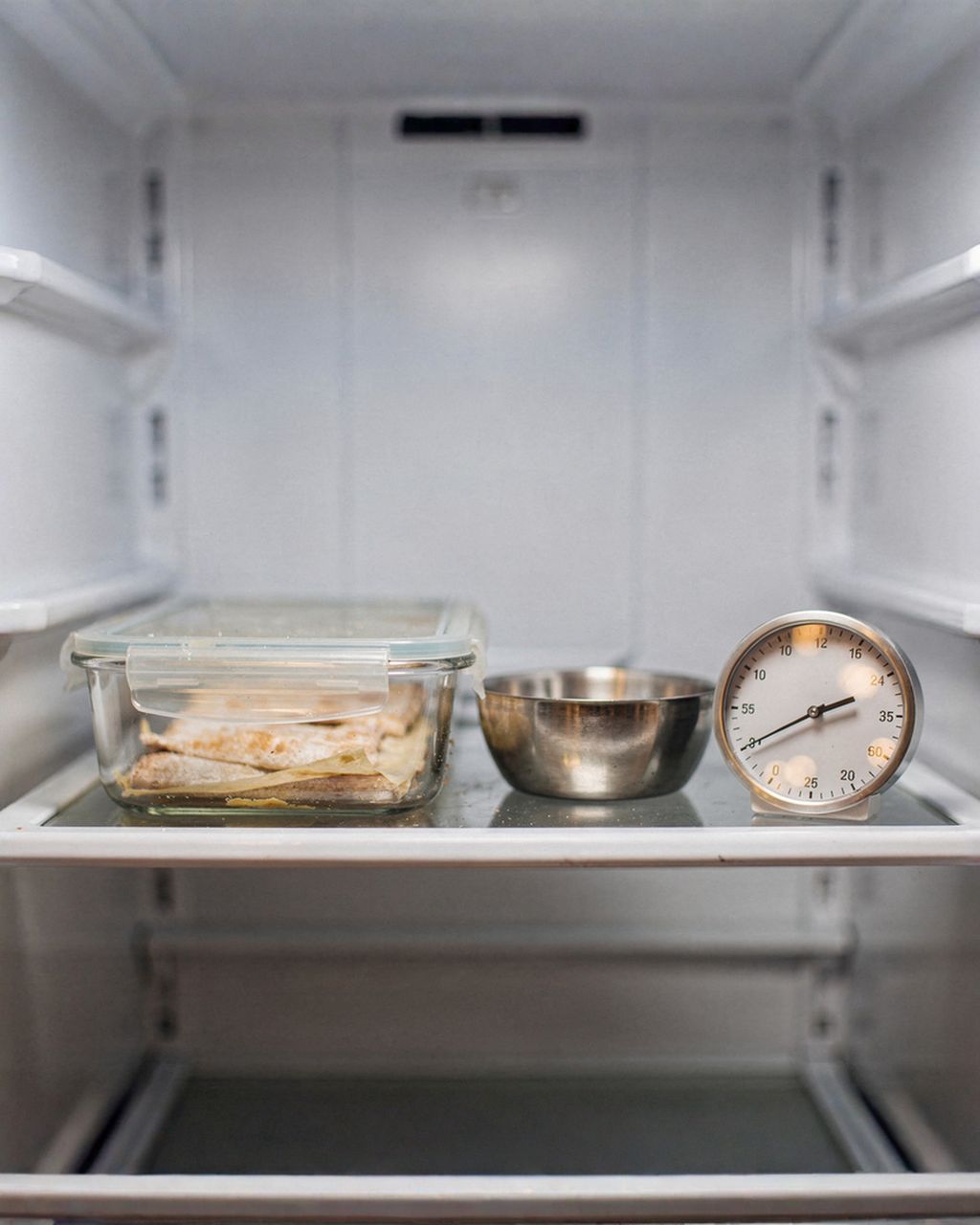
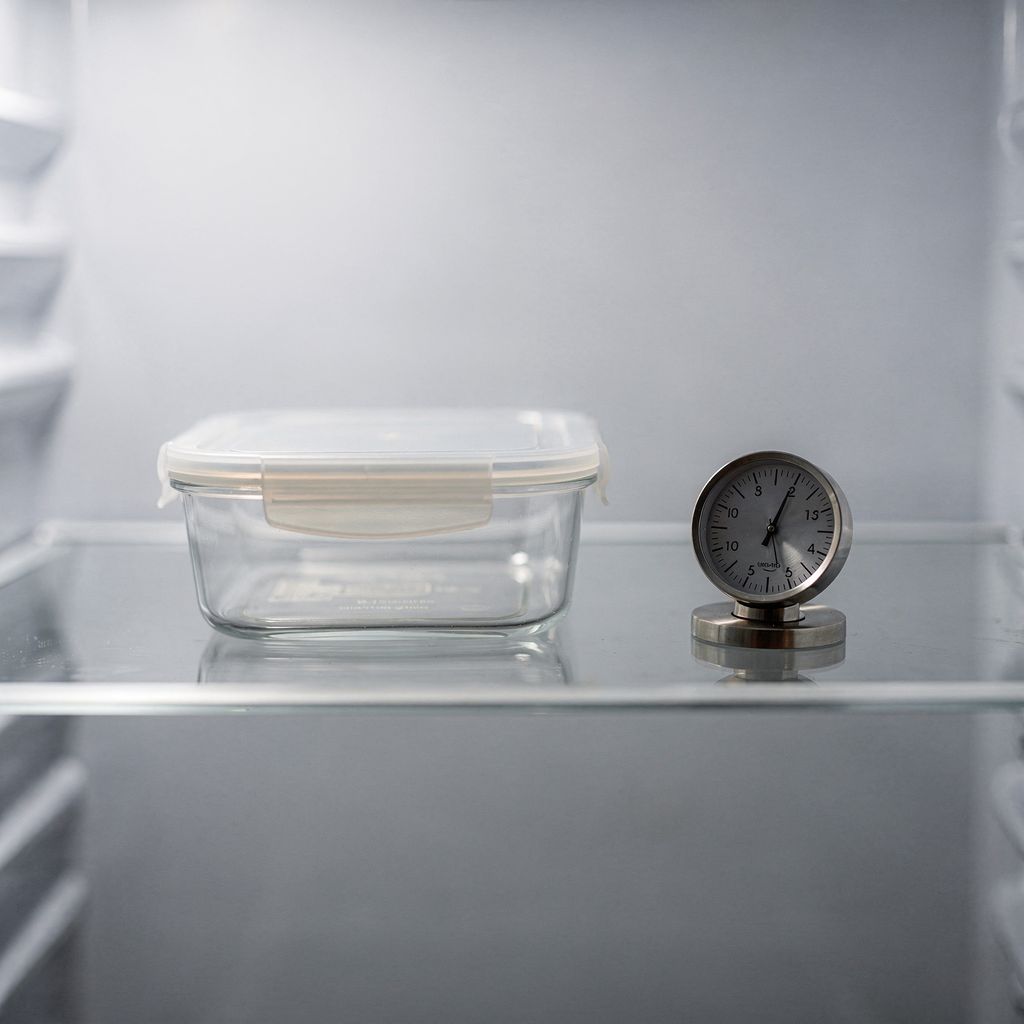
Get a fridge thermometer. The dial on the door shows the setting, not the actual temperature in the warmest corner. Real-world temperatures in typical home fridges often sit around 6–8°C without the owner ever realizing it.
Use the chiller drawer if you have one. It's usually 2–3°C colder than the rest of the fridge and designed specifically for meat and fish.
Don't leave the fridge door open longer than necessary and don't put hot food inside — both raise the temperature throughout the whole fridge.
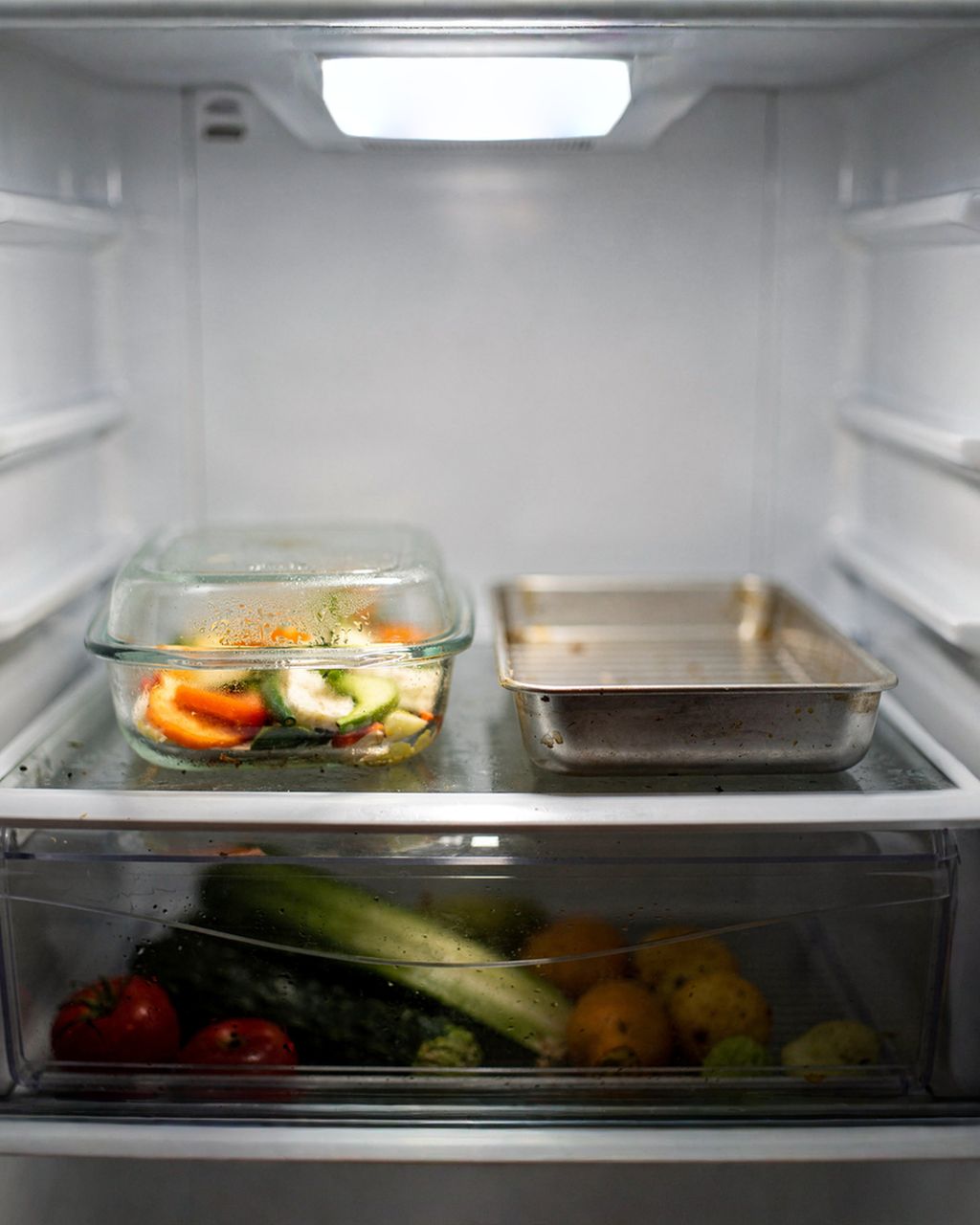
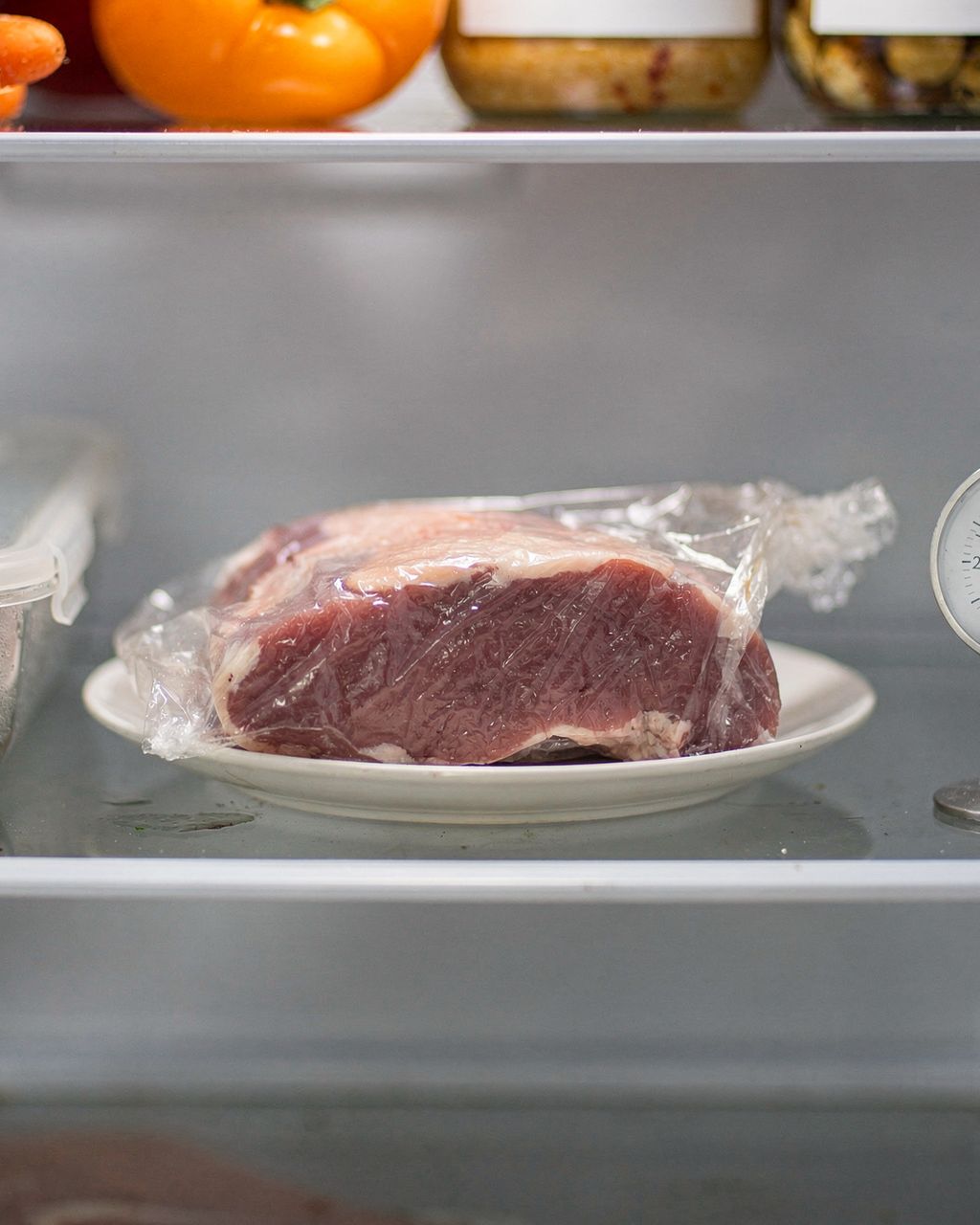
Beef belongs on the bottom shelf, right above the vegetable drawer, or in the chiller zone if you have one. It's the coldest spot in the fridge and the only place where any dripping juices won't land on anything else.
What to stick to:
Always store it below cooked food and raw vegetables, never above them. A drip of raw beef juice is the most common way bacteria end up in your salad.
Set the package on a plate or in a bowl. Packaging leaks in the fridge more often than you'd expect.
Never store it in the door. That's the warmest spot, and the temperature swings every time you open the fridge.
Meat keeps best in its original, unbroken packaging; once you've opened it, transfer the beef to an airtight container or wrap it tightly in foil. The goal is to limit air exposure and keep the surface relatively dry — surface moisture is exactly where bacteria grow fastest.
Don't leave an opened package loosely covered in the fridge, not even for a single day. It dries out, picks up odors, and spoils faster.
Pat the surface dry with a paper towel before wrapping the meat. Bonus: it'll also sear better, since you won't be boiling off surface moisture first.
Don't rinse beef under running water. That won't wash away bacteria — it'll just splash them around the sink and counter.
Keep raw and cooked separate. Always wash the cutting board, knife, and your hands with hot, soapy water after handling raw beef.
Label it with the date. A sticky note with the purchase date on the container is still the most reliable way to avoid guessing three days later whether it was Tuesday or Wednesday.
Spoiled beef is mostly identified by smell and touch, not sight: fresh meat smells neutral to slightly metallic and feels moist but not sticky, while spoiled meat has a sour, sweetish, or ammonia-like odor and a surface that's slimy and tacky to the touch.
Signs that leave no room for debate:
A sticky or slimy surface. Your finger slides across it and leaves a film behind.
A sharp, sour, sweet, or ammonia-like smell that doesn't go away.
A grayish-green or iridescent sheen combined with any of the signs above.
Meat that doesn't spring back after being pressed and stays dented.
Anything that looks like mold. With meat, you can't just cut mold away.
One thing that's not actually cause for concern: brown coloring alone doesn't mean the meat has gone bad. Beef is naturally dark red to brownish-purple inside the packaging and turns bright red within half an hour of hitting air — that's just the muscle pigment reacting with oxygen, not a quality issue. What matters is smell, texture, and time, not shade.
Whether you're seeing one warning sign or three, the move is always the same: throw the meat out.
Vacuum-sealed beef lasts in the fridge for weeks, not days — typically 2 to 4 weeks up to the use-by date, since spoilage bacteria barely multiply without oxygen. The catch is that the seal has to stay intact and the temperature has to stay below 4°C.
Two things that always catch people off guard with vacuum-packed meat:
It smells slightly sour when you open it. That's normal — lactic bacteria are at work inside the vacuum seal, and the smell fades within 15–30 minutes of exposure to air. If it doesn't fade, or the meat is also sticky, throw it out.
Opening it resets the clock. Once air gets into the package, standard fresh-meat timeframes apply: 3–5 days for cuts, 1–2 days for minced meat and diced pieces.
We've covered this in more detail in our article Vacuum-Sealed Meat in the Fridge: How Long It Lasts and How to Store It Safely.
Cooked beef — stew, roast, meat from stock — lasts 3–4 days in the fridge, but what matters most is the first hour after cooking, not how it's stored afterward.
Cool it down within two hours. Between 5°C and 60°C, bacteria grow faster than at any other temperature you'll encounter in the kitchen, so don't leave the pot cooling on the stove overnight. In summer, cut that limit down to one hour.
Split it into shallow containers. A deep pot stays warm in the middle for ages; split into two shallower containers, and you'll easily stay within the time limit. The goal is to get the food into the fridge within two hours of finishing cooking.
Reheat thoroughly, and only once. Heat the food all the way through, not just on top — with stews and sauces, you'll know it's ready when it's bubbling across the whole surface.
Take meat out of stock or broth if you plan to use it on its own. Left in warm liquid, it softens and picks up odors.
Beef in a rich sauce or a more acidic base (wine, tomatoes, vinegar) reliably holds up for the full four days. Roast beef sliced and stored dry, on the other hand, is best the next day and just dries out after that.
Freeze beef as soon as you realize you won't get to cooking it in time — not on the last possible day. Freezing doesn't improve meat, it just locks it in whatever state it was in when it went into the freezer.
At −18°C (0°F), expect these quality windows (not safety limits — those last much longer):
Steaks: 6–12 months
Large roasting cuts: 4–12 months
Diced and cubed meat: 3–4 months
Minced beef: 3–4 months
Cooked beef and sauces: 2–3 months
Two habits that make all the difference: wrap the meat tightly with no air pockets (air causes freezer burn), and always thaw it in the fridge, never on the counter. Thawing a larger cut in the fridge can take up to 24 hours, but the surface never enters the temperature range where bacteria take off. Cook thawed beef within 24 hours.
When the clock's running down, reach for slow braising or roasting. Long, gentle cooking is the most forgiving thing you can do with beef, and it turns it into a dish that'll then keep for another 3–4 days in the fridge.
Oven-braised beef in red wine with vegetables
Oven-braised beef with wine and vegetables — a slow roast that reliably uses up a larger cut of beef
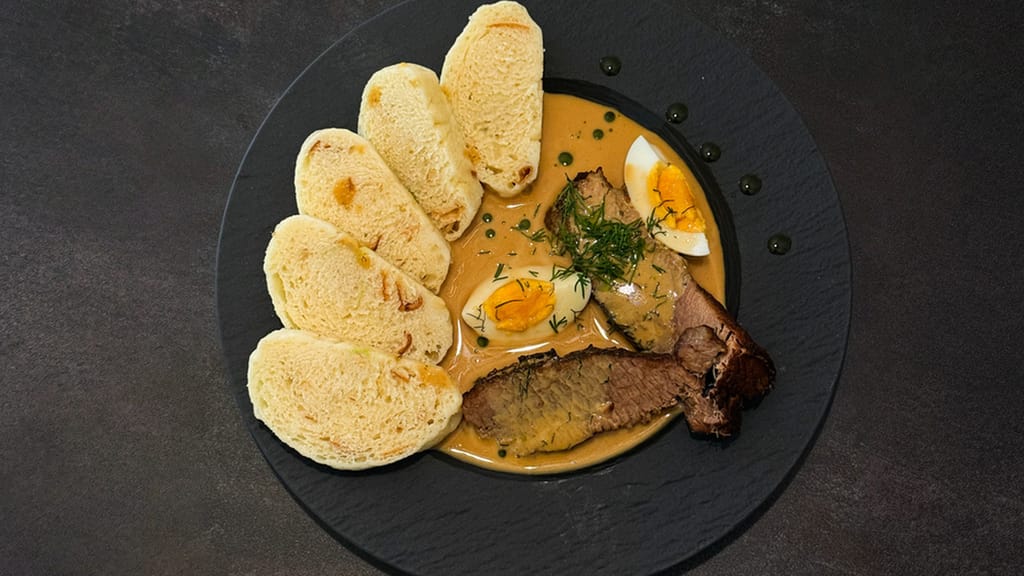
Dill sauce with slow-roasted beef
Dill sauce with slow-roasted beef — a classic where even a cheaper cut becomes fall-apart tender
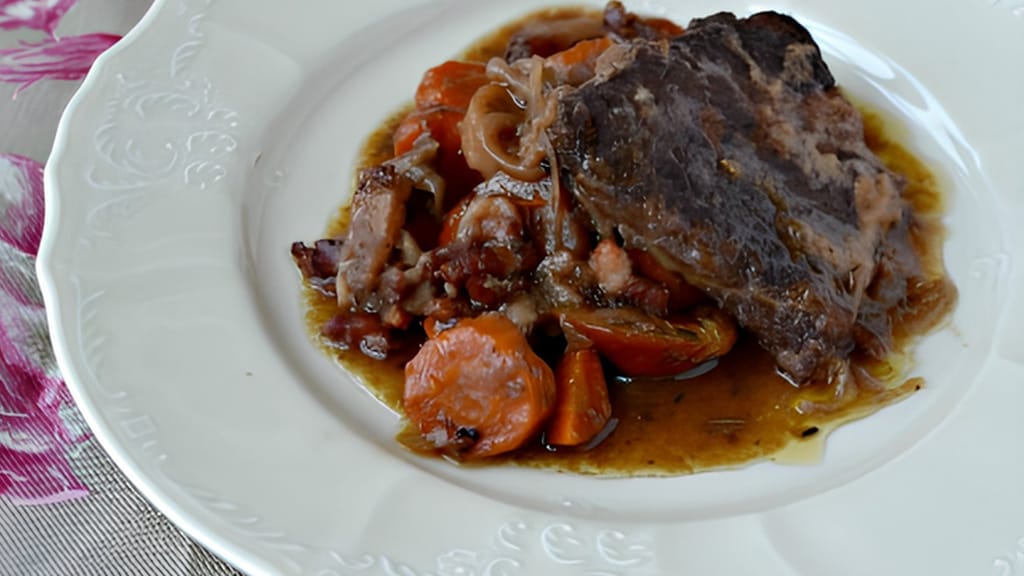
Provençal beef with root vegetables
Provençal beef with vegetables — a one-pot braise that's even better the next day
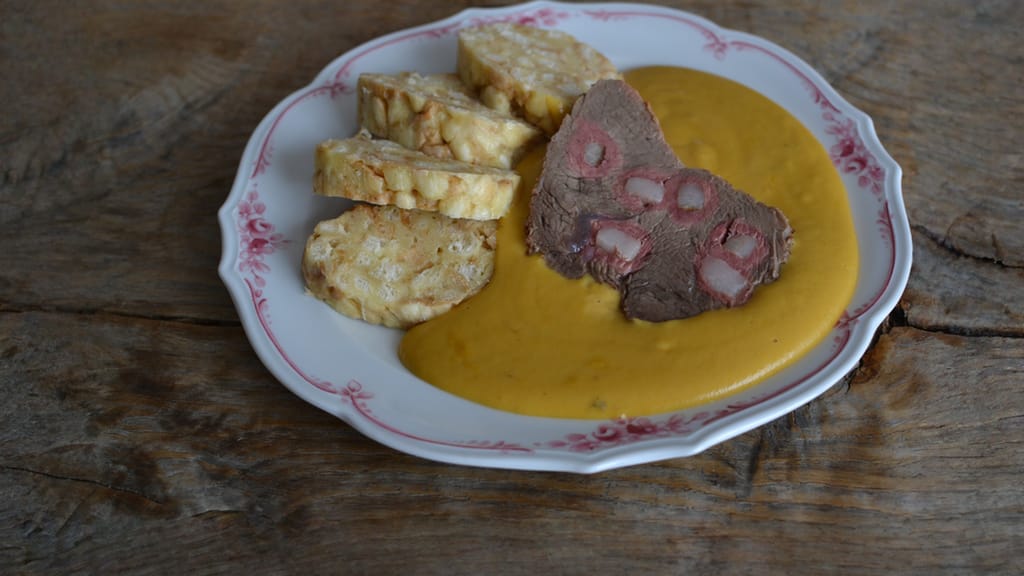
Sunday lunch: perfect homemade svíčková (czech beef sirloin in creamy vegetable sauce)
Sunday lunch: perfect homemade Czech-style beef in cream sauce
No, don't eat beef past its use-by date — for chilled meat, this is a safety cutoff, not a rough guess at quality. Decide the day before it expires: either cook the meat that day or freeze it before the date runs out, because you can't push the deadline back retroactively. And with meat, you really can't eyeball it — the risk is often invisible, so "it still looks fine" is never a reason to stretch the date, not even by one day.
Raw beef that you thawed in the fridge and kept below 4°C (39°F) the whole time can be refrozen, but you'll pay for it in quality — a second freeze-thaw cycle breaks down the meat's structure, so it'll lose noticeably more juice the next time you cook it. Never refreeze meat that was thawed on the counter or in warm water. The best approach is to cook the beef first and freeze the finished dish instead.
No, marinated beef doesn't keep any longer in the fridge — a marinade isn't a preservative; the acidity and oil only slow bacterial growth a little. Treat marinated beef the same as fresh: 3–5 days for cuts, 1–2 days for minced beef. That said, after two days in an acidic marinade the meat turns mushy, so for flavor's sake it's better to marinate for a shorter time anyway. Always toss out any marinade that raw meat sat in, or boil it thoroughly before reusing.
No, not reliably — beef that warmed up on the way home from the shop or during a power cut can still look and smell completely normal. Sliminess and off odors show up later than the bacterial growth itself, so appearance won't tip you off. What actually matters is time and temperature: add up how long the meat was out of the cold, and if it's gone over two hours (one hour in hot weather), or you simply don't know how long it sat out, throw it away.
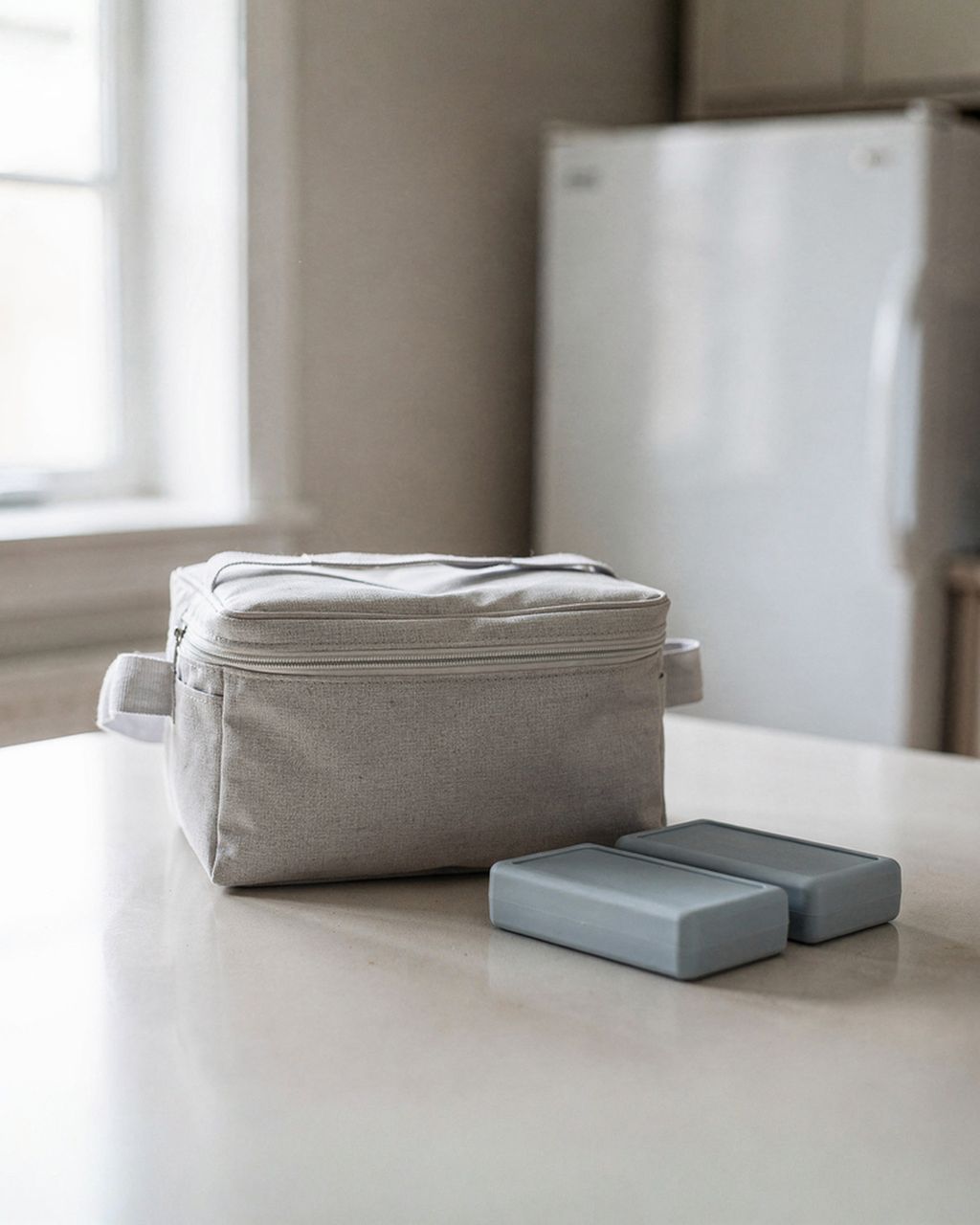
Raw beef can safely sit out of the fridge for a maximum of two hours — just one hour on a hot summer day. Between 5°C and 60°C (41–140°F), bacteria multiply faster than at any other temperature you'll encounter in the kitchen, and this time adds up cumulatively — the trip home from the shop, an hour on the counter before cooking, and letting a steak come to room temperature all count toward the same total. So buy your meat last on your shopping trip and bring it home in a bag with a cooler pack.
One recipe worth heating the oven for, one tip, and one deal from the shop. Nothing else.